

Wealthy Affiliate has been around for years, and plenty of people have used it to learn blogging and affiliate marketing.
But plenty of people have also joined, built a website, published content, and still failed to make meaningful income.
So why does that happen?
I joined Wealthy Affiliate in 2016, and I have experienced some of those frustrations myself.
- I have built websites that went nowhere.
- I have chosen niches that were wrong for me.
- I have focused too much on making money.
- I have created content that did not get the traffic I hoped for.
And I have questioned whether the whole process was worth continuing.
That experience has taught me something important.
When someone fails with Wealthy Affiliate, the answer is rarely as simple as:
“They just didn’t work hard enough.”
- Sometimes the problem is the niche.
- Sometimes expectations were unrealistic.
- Sometimes the content was weak.
- Sometimes the strategy kept changing.
- Sometimes the platform could have made the next step clearer.
And sometimes affiliate marketing simply turns out to be the wrong business model for that person.
[INTERNAL LINK: Is Wealthy Affiliate a Scam in 2026? My Experience Since 2016]
If you are questioning Wealthy Affiliate because you have seen people say it does not work, I would also recommend reading my guide to whether Wealthy Affiliate is a scam. That looks specifically at the legitimacy question, the complaints I think are fair, and why I still use the platform today.
This article is slightly different.
Here, I want to look at why people can follow Wealthy Affiliate, create a website, and still struggle to get results.
Because understanding why people fail can be far more useful than simply looking at the people who succeed.
If you are still researching the platform itself, my full Wealthy Affiliate Review covers the training, tools, pricing, support, pros, cons, and who I think it suits.
Quick Answer: Why Do Some People Fail With Wealthy Affiliate?
There is no single reason people fail with Wealthy Affiliate.
Common problems include:
- Choosing the wrong niche
- Expecting income too quickly
- Focusing on money before helping an audience
- Creating content without understanding search intent
- Assuming more content automatically means more traffic
- Constantly changing strategy
- Completing training without applying it
- Relying too heavily on AI
- Promoting products instead of solving problems
- Discovering that affiliate marketing simply is not the right fit
And there is another point worth making.
Not every failure should automatically be blamed on the member.
Wealthy Affiliate can provide training, tools, hosting, keyword research, and support, but beginners can still become overwhelmed or follow advice that does not suit their situation.
The platform can improve your chances of understanding the process.
It cannot guarantee the outcome.
That distinction matters.
I think the best way to understand why people struggle is to look at each problem individually.
And the first one is something I learned the hard way myself.
Choosing the wrong niche.
Failure Reason #1: Choosing the Wrong Niche
Choosing the wrong niche can make everything harder.
- You can have good training.
- You can publish consistently.
- You can use keyword tools.
- You can follow the process.
But if the niche is a poor fit, you may still struggle.
I know this because I have done it.
I Chose Niches for the Wrong Reasons
In the early days, I was too focused on whether a niche could make money.
That seems logical.
After all, affiliate marketing is supposed to generate income.
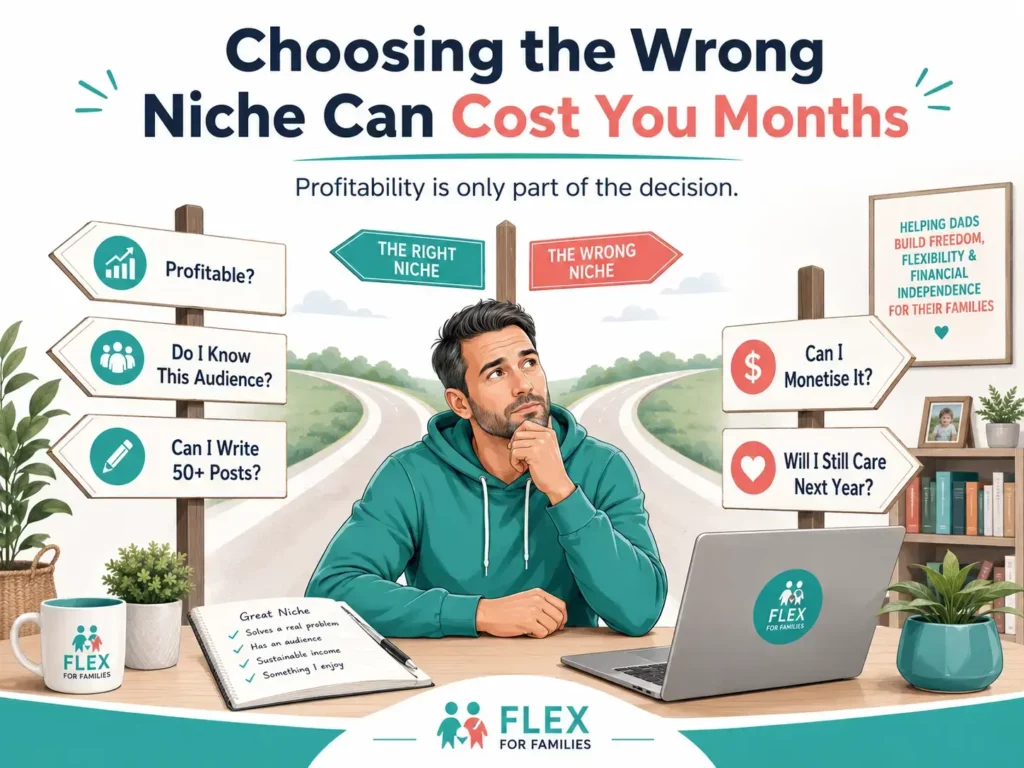
But profitability is only one part of the decision.
You also need to ask:
- Do I understand this audience?
- Can I realistically help them?
- Can I think of enough useful content to keep going?
- Am I interested enough to still be writing about this in a year?
I did not always ask those questions.
And that caused problems.
Running Out of Things to Say Is a Warning Sign
One of the clearest signs that I had chosen the wrong niche was that I started running out of useful things to write about.
At first, almost any niche feels full of possibilities.
You can usually find ten or twenty article ideas.
The real test is what happens after that.
Can you think of fifty useful topics?
One hundred?
Can you answer beginner questions, comparison questions, product questions, problems, tutorials, and follow-up questions?
If the answer is no, the niche may be too narrow or simply the wrong fit for you.
That does not automatically mean the niche itself is bad.
It might be perfectly good for somebody else.
It just may not be right for you.
A Profitable Niche Still Needs the Right Audience
Another mistake is thinking about the subject without thinking about the person.
For example, “fitness” is a subject.
“Helping busy dads improve their fitness with short home workouts” is much closer to an audience.
That difference matters.
When you know who you are helping, it becomes easier to decide:
- What they need
- What they search for
- Which products make sense
- What language to use
- Which content deserves your time
This is one of the biggest lessons I carried into Flex For Families.
I am not simply writing about blogging.
I am writing for busy parents who want more flexibility and realistic ways to build income online.
That makes the content decisions much clearer.
Do Not Choose a Niche Just Because Someone Says It Is Profitable
This is where beginners can get caught out.
You see a list saying:
“10 Most Profitable Affiliate Niches.”
So you pick one.
The problem is that thousands of other people may be doing exactly the same thing.
And profitability does not tell you whether you have anything useful to add.
A better niche sits somewhere between:
- Audience demand
- Your ability to help
- Enough content opportunities
- Relevant products or services
- A subject you can realistically stick with
You do not need to be obsessed with the topic.
But you do need enough interest and understanding to build around it.
Can Wealthy Affiliate Choose the Right Niche for You?
It can help.
The training and research tools can give you ideas and help you assess opportunities.
But no platform can completely make that decision for you.
A tool can show you keywords.
- It can show you competition.
- It can suggest niches.
- It cannot fully judge your experience, motivation, interests, or connection with an audience.
That part still needs you.
What I Would Check Before Committing to a Niche
If I were starting again, I would ask:
- Can I clearly describe who I am helping?
- Can I list at least 30 to 50 useful content ideas?
- Are people actively searching for help in this area?
- Are there relevant products or services I could eventually recommend?
- Do I understand the problems well enough to create useful content?
- Can I imagine still working on this niche twelve months from now?
If several of those answers are no, I would think carefully before committing.
A Wrong Niche Can Look Like a Failed Platform
This is where the Wealthy Affiliate discussion gets interesting.
Imagine somebody joins WA.
- They choose a niche.
- They build a site.
- They publish for six months.
Nothing meaningful happens.
From their perspective, it can feel like:
“Wealthy Affiliate does not work.”
But the problem may have started before the first article was even published.
The niche may never have been a strong fit.
That does not mean the person was lazy.
And it does not mean Wealthy Affiliate is automatically blameless either.
It means the business decision itself mattered.
That is why choosing the niche carefully is so important.
If you are still working out what you want to build, my Parent Blogging Starter Kit can help you think through your niche, audience, content ideas, and realistic blogging plan before you commit too much time or money.
Choosing the wrong niche can make progress painfully slow.
But even with the right niche, there is another problem that catches a lot of beginners.
Expecting results too quickly.
Failure Reason #2: Expecting Money Too Quickly
This is probably one of the biggest reasons beginners become frustrated with Wealthy Affiliate.
- You join because you want to build income.
- You complete some training.
- You publish a few articles.
Then you wait.
And when nothing much happens, it is easy to think:
“This isn’t working.”
I understand that feeling.
I had it too.
The Problem Starts With Expectations
If you join Wealthy Affiliate thinking you will be earning meaningful income within a few weeks, you are setting yourself up for disappointment.
Affiliate marketing usually takes longer than that.
A new site needs time to:
- Build content
- Get discovered
- Earn trust
- Start ranking
- Attract the right visitors
- Test affiliate offers
- Learn what converts
That process is rarely instant.
- How Long Does It Take to Make Money Blogging?
- Why Blogging Feels Slow at First (And Why That’s Normal)
- The First 6 Months of Blogging: What Actually Happens (A Realistic Guide for Parents)
Early Progress Can Be Easy to Miss
One of the frustrating things about blogging is that progress often happens before the money does.
You might see:
- More impressions in Search Console
- More keywords starting to rank
- A few clicks appearing
- Longer time on site
- More internal pages being visited
- More engagement on social media
- Your first email subscribers
Those things may not feel exciting if your only measure is income.
But they can be signs that the site is moving in the right direction.
This is where I think beginners can make a big mistake.
They judge the business too early.
Ten Posts Is Not Enough Evidence
A lot of beginners publish a small number of articles and then expect to know whether the whole niche or strategy works.
That is usually too soon.
Ten posts may tell you something.
Twenty posts may tell you more.
But it often takes much longer before you have enough data to see which topics attract traffic, which formats work, and which pages actually convert.
That does not mean you should blindly publish forever.
It means you need enough evidence before making big decisions.
The First Commission Can Take Time
Some people make an affiliate sale quickly.
Others wait months.
There is no fixed timeline.
The first commission is exciting because it proves the model can work.
But even after that, income may still be inconsistent for a while.
One month may bring a few sales.
The next may bring none.
That is normal early on.
- Is Blogging Passive Income? What Parents Should Really Expect (2026 Guide)
- What Blogging Income Really Looks Like in Year One
Wealthy Affiliate Cannot Speed Up Every Part of the Process
WA can help you learn faster.
It can help with:
- Training
- Keyword research
- Website setup
- Content planning
- Support
- Technical problems
But it cannot force Google to rank your site faster.
It cannot create buyer trust overnight.
It cannot guarantee that your first niche will work.
And it cannot make someone purchase through your affiliate link.
That is why I think the platform is most useful when you treat it as a learning and business-building environment, not as a shortcut.
Chasing Fast Results Can Create Worse Decisions
This is where impatience causes real problems.
When results do not come quickly, you may start:
- Changing niches
- Rebuilding the website
- Switching keyword strategies
- Buying new tools
- Chasing social platforms
- Publishing too much too quickly
- Abandoning content before it has had time to perform
That can leave you constantly restarting instead of building.
I did versions of this myself.
And it slowed me down.
What I Would Measure Instead
If I were starting again, I would not judge the first few months mainly by income.
I would look at:
- Am I publishing consistently?
- Are impressions increasing?
- Are more queries appearing in Search Console?
- Are some pages starting to move up?
- Are people clicking through to other articles?
- Am I getting better at choosing topics?
- Am I improving older content?
- Am I learning what my audience actually responds to?
Those are much more useful early signals.
How Long Should You Give It?
There is no magic number.
But I would think in months, not weeks.
And I would combine patience with review.
Do not simply wait.
Look at the data.
Improve what is not working.
Double down on what is.
Give the site enough time to show you something meaningful.
Slow Does Not Mean Broken
This is the key lesson.
A slow start does not automatically mean:
- Your niche is bad
- Wealthy Affiliate does not work
- Affiliate marketing is dead
- You have failed
Sometimes it simply means you are early.
The challenge is knowing the difference between a strategy that needs more time and one that genuinely needs changing.
That judgement comes with experience.
And it gets much harder if you are constantly switching direction.
Which brings us to another common reason people fail.
They never stick with one strategy long enough to learn from it.
Failure Reason #3: Focusing on Money Before Helping People
This was probably my biggest mistake.
When I first joined Wealthy Affiliate, I was thinking far too much about how the website could make money.
- I wanted commissions.
- I wanted traffic.
- I wanted proof that the process worked.
What I was not thinking about enough was the person on the other side of the screen.
That changed everything.
Affiliate Marketing Starts With a Person, Not a Commission
It is easy to look at affiliate marketing like this:
- Find a product.
- Write a review.
- Add an affiliate link.
- Make money.
But that skips the most important part.
Why would somebody trust your recommendation?
People usually find your content because they are trying to solve a problem, answer a question, compare options, or make a decision.
Your job is to help them do that.
The commission comes later.
- Affiliate Marketing for Parents in 2026: A Realistic Guide for Busy Families
- How To Write Product Reviews That Actually Convert
Money-First Content Usually Feels Like Money-First Content
Readers can normally tell when an article exists mainly to push them towards a product.
Every section leads to the same recommendation.
Every problem has the same solution.
The negatives are brushed aside.
The CTA appears before the reader has enough information to make a decision.
That is not the kind of content I want to create.
A good affiliate article should still be useful if the reader never clicks the affiliate link.
That is a standard I try to apply much more now.
The Better Question Is: Who Am I Helping?
This was the shift that made the biggest difference for me.
Instead of asking:
“How do I make money from this keyword?”
I started asking:
“Who is searching for this?”
Then:
“What do they actually need to know?”
And finally:
“Can I help them make a better decision?”
That creates much stronger content.
It also makes monetisation easier because the recommendation fits the problem naturally.
Flex For Families Is Built Around That Idea
With Flex For Families, the audience is clear.
Busy parents who want more flexibility and realistic ways to build income online.
That gives me a useful filter.
Before creating something, I can ask:
- Will this help a busy parent?
- Does it save them time?
- Does it explain the reality?
- Does it help them avoid wasting money?
- Does it make a confusing decision easier?
If the answer is no, the topic probably does not belong.
That is a much better starting point than asking which affiliate programme pays the highest commission.
You Do Not Need an Affiliate Link in Every Post
This is another lesson that took me time to appreciate.
Some articles should simply help.
You might create:
- Tutorials
- Beginner guides
- Checklists
- Troubleshooting posts
- Realistic expectation posts
- Personal experience pieces
Those posts still support the business.
- They build trust.
- They attract traffic.
- They create internal-link opportunities.
- They help readers move towards more commercial content when they are ready.
That can be far more effective than forcing an affiliate link into every article.
The Recommendation Should Match the Problem
This is where affiliate marketing starts to work properly.
If somebody is searching for:
“How do I start affiliate marketing as a busy parent?”
the best answer may be a beginner guide.
If they are searching for:
“Is Wealthy Affiliate a scam?”
they need reassurance and evidence before a direct WA recommendation makes sense.
If they are searching for:
“Best affiliate networks for parent bloggers”
then comparing programmes may be exactly what they need.
The intent changes.
So the recommendation should change too.
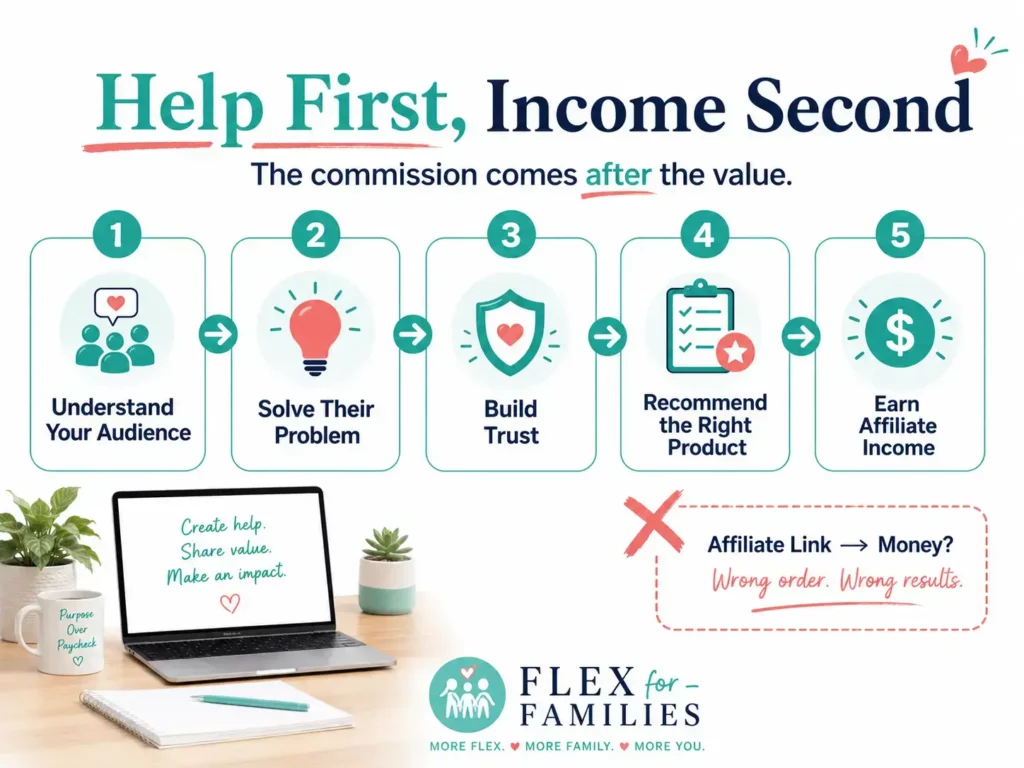
Help First, Trust Second, Commission Third
That is the order I now prefer.
- Help first.
- Build trust.
- Make the recommendation where it genuinely fits.
- Let the commission come after that.
That does not mean you should be embarrassed about monetising your site.
You are building a business.
But the monetisation works better when it sits on top of useful content.
Why This Causes Some WA Members to Struggle
A beginner can complete the training and still misunderstand this part.
They may focus heavily on:
- Which products pay the most
- How many affiliate links to add
- Which keywords look commercial
- How quickly they can monetise
- Whether every article should make money
That can lead to a site full of sales-focused content without enough trust-building content around it.
And without trust, conversion becomes much harder.
What I Would Do Differently Today
If I were starting again, I would build the content plan around the audience first.
I would ask:
- What are their biggest questions?
- What are they worried about?
- What mistakes are they trying to avoid?
- What decisions do they need help making?
- Which products genuinely fit those needs?
Then I would build the affiliate strategy around that.
Not the other way around.
That is the shift I wish I had made much earlier.
And even once you get the audience right, there is another problem that can hold a site back.
You can create content around good keywords and still miss what the searcher actually wants.
That is where search intent comes in.
Failure Reason #4: Publishing Content Without Understanding Search Intent
Finding a keyword is only the start.
You can choose a keyword with decent search volume, relatively low competition, and plenty of potential traffic.
But if your article does not give the searcher what they actually came looking for, it can still struggle.
That is where search intent matters.
A Keyword Tells You What Someone Typed
Search intent helps you understand why they typed it.
For example, these searches are all related to Wealthy Affiliate:
“what is Wealthy Affiliate?”
“is Wealthy Affiliate a scam?”
“Wealthy Affiliate pricing”
“Wealthy Affiliate vs Hostinger”
But those people want very different things.
- Someone searching “what is Wealthy Affiliate?” probably wants an explanation.
- Someone searching “is Wealthy Affiliate a scam?” wants reassurance, evidence, and a balanced look at the concerns.
- Someone searching “Wealthy Affiliate pricing” wants current costs and membership differences.
- Someone searching “Wealthy Affiliate vs Hostinger” is trying to choose between two options.
If you create the same type of article for every keyword, you miss the reason behind the search.
- Is Wealthy Affiliate a Scam in 2026? My Experience Since 2016
- How Does Wealthy Affiliate Work? A Beginner-Friendly Explanation (coming soon)
- Wealthy Affiliate Premium vs Premium Plus: Which Membership Makes Sense? (coming soon)
I Used to Think More About the Keyword Than the Person
This is another area where my approach has changed.
When you first learn keyword research, it is easy to become obsessed with the numbers.
- Search volume.
- Competition.
- QSR.
- SEO scores.
- Potential traffic.
Those numbers can help you identify opportunities.
But they do not tell you exactly what the reader needs from the page.
You still have to think.
- Who is searching this?
- What do they already know?
- What decision are they trying to make?
- What would satisfy them enough that they do not immediately return to Google?
That is the part a keyword tool cannot completely answer for you.
Jaaxy Helps Me Find the Question, Not Write the Answer
I still use keyword research.
Jaaxy is particularly useful for helping me find questions and related topics around an idea.
I often use the Questions view because it shows me the language people are actually using.
But once I find the keyword, I still need to work out what the best answer should look like.
That might mean:
- A tutorial
- A comparison
- A review
- A quick-answer article
- A detailed guide
- A list
- A personal experience post
The format should follow the intent.
Search Intent Can Change the Entire Article
Take the post you are reading now.
The search:
“Why do people fail with Wealthy Affiliate?”
does not need another general Wealthy Affiliate review.
The reader wants to know why people struggle.
So this article needs to talk about:
- Wrong niches
- Expectations
- Content
- Strategy
- Search intent
- Consistency
- AI
- The limitations of the platform
Sending that reader straight into a sales pitch would miss the point.
The same applies across your whole website.
Commercial Intent Does Not Always Mean Sell Immediately
This matters particularly for affiliate marketers.
A search can have commercial intent without the reader being ready to buy.
Someone searching:
“Is Wealthy Affiliate a scam?”
is clearly researching a product.
But they are sceptical.
Their first need is trust.
That is why, in my Wealthy Affiliate scam guide, I point readers towards my full review early on rather than immediately pushing them towards an affiliate link.
The direct recommendation makes more sense later, once the article has answered the concerns.
That is search intent affecting conversion strategy too.
Google Results Can Give You Clues
Before creating an article, it can help to look at what types of pages already appear for the search.
Are they:
- Tutorials?
- Reviews?
- Lists?
- Videos?
- Comparison pages?
- Product pages?
That can tell you something about what Google currently believes searchers want.
You should not simply copy what everybody else has done.
But completely ignoring the search landscape can make ranking harder.
The goal is to understand the expected answer, then find a way to make yours more useful.
Search Console Can Show You Intent You Did Not Expect
This becomes even more useful after your content is published.
Google Search Console can show you the queries your page is actually appearing for.
Sometimes those are exactly what you expected.
Sometimes they are not.
That data can help you:
- Add missing sections
- Answer related questions
- Improve headings
- Build supporting articles
- Strengthen internal links
- Identify entirely new content opportunities
This is something I now pay much more attention to.
A published article is not necessarily finished.
Sometimes Google tells you what the next version of that article should contain.
One Article Does Not Need to Target Every Intent
This is another trap.
You discover several related keywords and try to cram everything into one enormous article.
That can make the page less focused.
Sometimes the better approach is a content cluster.
For example:
Main Wealthy Affiliate Review
↓
Is Wealthy Affiliate a Scam?
↓
Why Do People Fail With Wealthy Affiliate?
↓
Wealthy Affiliate Complaints
↓
How Does Wealthy Affiliate Work?
↓
Is Wealthy Affiliate Worth It?
Each post answers a different question.
Then internal links connect them.
That gives the reader a clearer journey and allows each article to properly satisfy its own search intent.
The Keyword Gets Them There. The Answer Makes the Page Useful.
That is how I think about keyword research now.
The keyword helps you understand the opportunity.
Search intent tells you what you need to create.
And your own experience, judgement, and usefulness determine whether the content deserves to perform.
If you ignore that middle step, you can publish a lot of content that looks SEO-friendly but never quite connects with the people searching for it.
And that leads into another common problem.
Assuming that publishing more content automatically means getting more traffic.
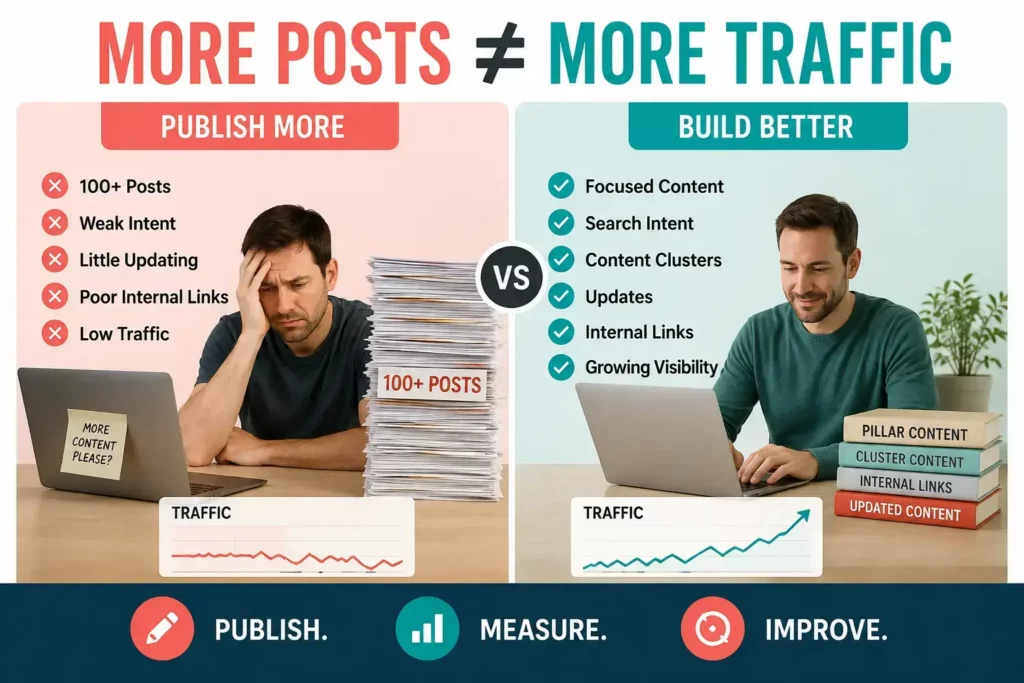
Failure Reason #5: Thinking More Content Automatically Means More Traffic
Publishing more content can help you grow.
But more content does not automatically mean more traffic.
That is an easy trap to fall into, especially when you are new.
You look at a successful website with hundreds of posts and think:
“I just need to publish more.”
So you chase volume.
Ten posts become twenty.
Twenty become fifty.
But if those articles are targeting weak topics, missing search intent, or adding very little value, publishing more simply creates more pages that struggle.
Quantity Only Helps When the Content Is Useful
There is nothing wrong with publishing consistently.
I think consistency is important.
The problem comes when the goal becomes:
“How many posts can I publish?”
instead of:
“How many useful problems can I solve?”
A website with 100 weak articles is not automatically stronger than one with 30 focused, helpful pieces of content.
You still need:
- The right topics
- Clear search intent
- Useful answers
- Strong internal links
- Relevant experience
- Good structure
- Regular updates
Volume supports those things.
It does not replace them.
I Used to Think Publishing Was the Main Job
This is another area where my thinking has changed.
When you are learning blogging, publishing feels productive.
- You finish an article.
- You hit publish.
- You move on to the next one.
That feels like progress.
And sometimes it is.
But a blog is not a collection of finished articles.
It is something you need to keep reviewing.
- Some content will work.
- Some will not.
- Some will rank for keywords you never expected.
- Some will sit on page three and need improving.
- Some will become outdated.
- Some will start getting impressions and show you an entirely new opportunity.
That is why publishing should be the beginning of the feedback loop, not the end of it.
Search Console Can Tell You What Deserves More Attention
This is one of the biggest changes in how I now approach content.
Once an article has had time to gather data, I look at what Google Search Console is showing me.
Questions like:
- Is the page getting impressions?
- Which queries is it appearing for?
- Are any keywords sitting around positions 10 to 30?
- Is the CTR weak?
- Is Google associating the page with topics I did not originally target?
That data can tell you where your next opportunity is.
Sometimes the best thing you can do is not publish article number 101.
It is improve article number 37.
Updating Older Content Can Be More Valuable Than Publishing Something New
This is something I think beginner bloggers often underestimate.
Imagine you have an article sitting around position 15 for a useful keyword.
Google already understands the page.
It already has impressions.
It may already have some authority.
Improving that article could potentially move it much closer to page one.
Compare that with publishing something completely new that Google knows nothing about yet.
Both approaches matter.
But new content should not always win by default.
More Content Can Also Create More Problems
If you publish very quickly without enough structure, you can create:
- Multiple posts targeting the same search intent
- Weak internal linking
- Thin articles
- Outdated information
- Repetitive content
- Articles competing with each other
- Too many pages to maintain
That can make the site harder to manage as it grows.
This is where content planning becomes important.
Build Clusters, Not Just a Pile of Posts
I much prefer thinking in related groups now.
Take Wealthy Affiliate as an example.
Instead of one enormous review trying to answer everything, we can build separate content around:
- Is Wealthy Affiliate a scam?
- Why do people fail with Wealthy Affiliate?
- Wealthy Affiliate complaints
- How Wealthy Affiliate works
- Whether Wealthy Affiliate is worth it
- Wealthy Affiliate training
- Wealthy Affiliate tutorials
- Wealthy Affiliate comparisons
Each article has a clear job.
Then internal links connect them.
- Is Wealthy Affiliate a Scam in 2026? My Experience Since 2016
- Wealthy Affiliate Review
- Wealthy Affiliate Complaints: The Good, The Bad and What Beginners Should Know (coming soon)
- How Does Wealthy Affiliate Work? A Beginner-Friendly Explanation (coming soon)
That is much more useful than publishing disconnected articles purely to increase the post count.
One Good Post Can Create Several Opportunities
A strong article can also tell you what to write next.
Search Console may reveal related questions.
Comments may show where readers are confused.
Internal links may expose a topic that needs a deeper explanation.
A review may reveal a comparison people want.
That means your content plan can become more informed as the site grows.
You are no longer guessing everything from scratch.
This Matters Even More With AI
AI makes producing content faster than ever.
That can be brilliant for a busy blogger.
But it can also make it tempting to chase output.
Five posts a week sounds better than one.
Twenty posts a month sounds impressive.
But if you then need to rewrite half of them, fix inaccuracies, improve weak intent, and untangle overlapping topics, the speed did not necessarily save you anything.
I would rather use AI to improve the workflow around useful content than simply increase the number of pages I publish.
What I Would Focus on Instead of Post Count
If I were starting again, I would still set publishing goals.
But I would also track:
- Are impressions growing?
- Are rankings improving?
- Are readers moving between related posts?
- Are older articles being updated?
- Are I covering topics deeply enough?
- Is my topical authority improving?
- Are commercial posts supported by helpful informational content?
- Is the site becoming more useful overall?
Those tell you far more than the number next to “Published Posts.”
More Is Useful. Better Is More Important.
Publishing consistently does matter.
A blog with three articles is unlikely to become a major authority site.
But the goal is not simply to create as many pages as possible.
The goal is to build a useful resource around a clear audience.
That takes enough content.
It also takes review, improvement, internal linking, and patience.
And if results still feel slow, there is another temptation that can derail all of that progress.
Changing strategy every time something new comes along.
Failure Reason #6: Constantly Changing Strategy
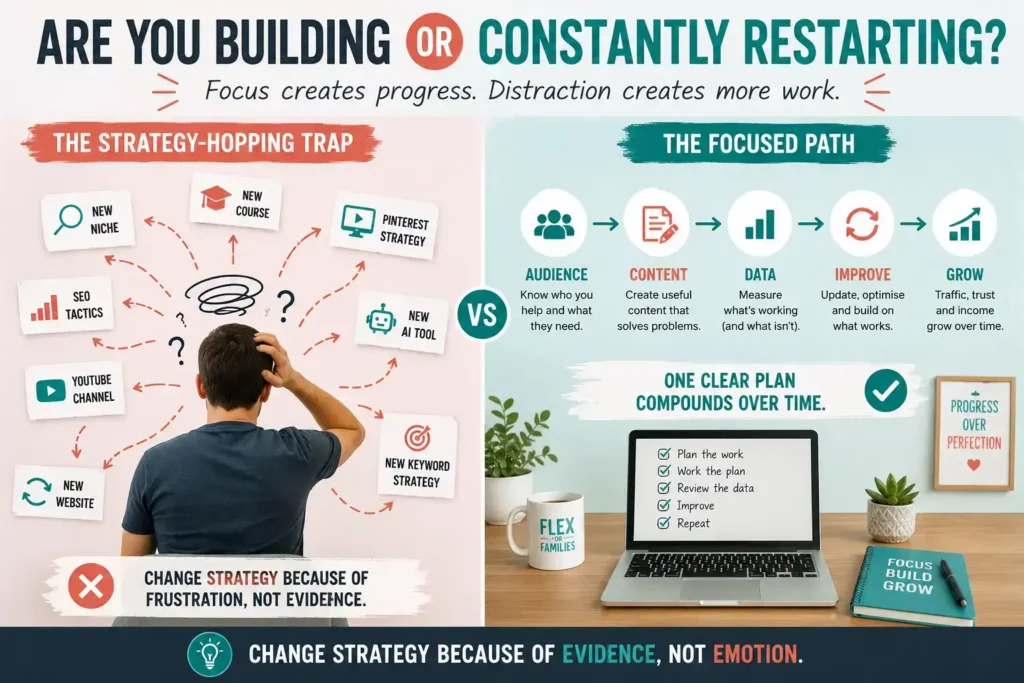
One of the easiest ways to slow down a blog is to keep changing direction.
A new strategy appears.
- Someone says Pinterest is the answer.
- Someone else says YouTube is better.
- Another person says SEO is dead.
- Then a new AI tool promises to speed everything up.
Before long, you are spending more time changing your plan than building the business.
I have definitely been guilty of this in the past.
Every New Idea Can Feel Like the Missing Piece
When your traffic is low or income is slow, new strategies are very tempting.
You start thinking:
“Maybe I chose the wrong niche.”
“Maybe I need a different keyword tool.”
“Maybe I should stop blogging and focus on video.”
“Maybe I need to publish every day.”
“Maybe this new AI workflow will fix everything.”
Sometimes a change is genuinely needed.
But sometimes the existing strategy simply has not had enough time to produce useful data.
That is the difficult part.
Constantly Restarting Means You Never Get Enough Evidence
Every strategy needs some time before you can judge it properly.
If you:
- Change niches after a month
- Rewrite the entire content plan every few weeks
- Switch traffic sources constantly
- Keep replacing tools
- Start new sites before the old one has developed
you rarely get enough information to understand what actually worked.
You are always back at the beginning.
That can create the impression that nothing works when the real problem is that nothing was followed for long enough.
Patience Does Not Mean Refusing to Change
This is important.
I am not saying:
“Pick a strategy and stick with it forever, regardless of the results.”
That would not make sense either.
Sometimes the data tells you that something needs changing.
- A niche may genuinely be wrong.
- A traffic source may not suit your audience.
- An article may target the wrong intent.
- A product may not convert.
The difference is whether you are reacting to evidence or reacting to frustration.
Use Data Before Making Big Changes
Before changing direction, I would ask:
- What does Search Console show?
- Are impressions growing?
- Are some posts moving up?
- Are certain topics clearly outperforming others?
- Are visitors engaging with the site?
- Are there pages sitting close to page one?
- Which affiliate links are getting clicks?
- Which content gets no traction at all?
That gives you something concrete to work with.
You may discover that the overall strategy is fine.
You simply need to improve certain parts.
Shiny Object Syndrome Is Expensive
Changing strategy does not only cost time.
It can cost money too.
You buy:
- Another course
- Another SEO tool
- Another AI subscription
- Another theme
- Another hosting package
- Another keyword platform
Each purchase feels like progress.
But the business itself may barely move.
This is particularly risky for beginners because there are endless products aimed at people who feel stuck.
That is one reason I prefer adding tools when there is a clear problem they solve.
Not simply because someone else says I need them.
AI Has Made Strategy Hopping Even Easier
AI has increased this problem.
New tools appear constantly.
- One promises better blog posts.
- Another promises automated SEO.
- Another creates videos.
- Another builds Pinterest pins.
- Another claims it can run most of your business.
Some of those tools are genuinely useful.
But adopting every new tool can destroy your workflow rather than improve it.
You spend your time:
- Learning the tool.
- Changing the process.
- Fixing its output.
Then replacing it when something newer arrives.
AI should reduce workload.
If it creates more editing and more confusion, it is not helping.
Wealthy Affiliate Can Create This Problem Too
There is a lot available inside Wealthy Affiliate.
- Training.
- Classes.
- Community advice.
- Research tools.
- AI tools.
- Different strategies.
That is useful.
But it also means beginners can keep finding another thing to try.
One member recommends one approach.
Another recommends something else.
A new class introduces another tactic.
Suddenly the simple process becomes complicated.
This is why I think beginners need a clear core plan.
- Wealthy Affiliate Training Explained: What Beginners Actually Learn (coming soon)
- Wealthy Affiliate Community Review: Is the Support Actually Helpful? (coming soon)
What I Would Do Instead
If I were starting again, I would choose a simple strategy and give it enough time to produce evidence.
Something like:
- Choose one clear audience.
- Build one main website.
- Follow the core training.
- Create useful content consistently.
- Build related content clusters.
- Review Search Console regularly.
- Improve posts showing potential.
- Add new traffic channels gradually.
- Introduce new tools only when they solve a real problem.
That does not mean ignoring opportunities.
It means avoiding unnecessary resets.
Add Channels Instead of Replacing Everything
This is how I prefer to think about diversification now.
If blogging is working, starting YouTube does not mean blogging has failed.
You can use YouTube to support the same content.
One blog post can become:
- A long-form video
- Several short videos
- Pinterest content
- Facebook posts
- Email content later
The strategy becomes stronger because the channels support each other.
You are building on the work already done instead of constantly starting again.
Know the Difference Between Testing and Drifting
Testing is intentional.
You decide what you want to learn.
- You try something.
- You measure it.
- You make a decision.
Drifting is different.
You keep changing direction because the latest idea sounds better than the previous one.
That is where progress gets lost.
Give the Strategy Time to Teach You Something
This is probably the main lesson.
You do not need to follow a bad strategy forever.
But you do need to stick with a reasonable strategy long enough to learn from it.
Otherwise, every disappointment becomes another reset.
And every reset puts the results further away.
There is another version of this problem too.
You can spend so much time learning new strategies that you feel productive without actually building anything.
That brings us to Failure Reason #7.
Treating training and membership as progress instead of applying what you learn.
Failure Reason #7: Treating Premium Membership as Progress
Paying for Wealthy Affiliate Premium can feel like a big step.
- You have committed.
- You have unlocked more training.
- You have access to more tools.
- You have made a decision to take the business seriously.
That can feel productive.
But paying for the membership is not the same as building the business.
Access Is Not Action
A Premium membership gives you access to more resources.
That can be useful.
But access only matters if you use it.
You can have:
- Training
- Hosting
- Keyword research
- AI tools
- Live classes
- Community support
- Business tools
And still make very little progress if you are not applying any of it.
That is the key distinction.
Completing Training Can Feel Productive Too
This is another easy trap.
- You complete a lesson.
- Then another.
- Then another.
Your progress bar moves.
You feel like you are getting somewhere.
And you are learning.
But there comes a point where learning has to turn into action.
If you spend five hours watching training and zero hours creating anything, the business itself has not moved very far.
The real progress happens when you:
- Build the website
- Publish the article
- Research the keyword
- Create the internal link
- Improve the old post
- Join the affiliate programme
- Review the data
- Test the recommendation
Watching Classes Is Not the Same as Applying Them
Live classes can be useful.
Community training can be useful.
Tutorials can be useful.
But it is very easy to spend so much time consuming information that you never give yourself enough time to build.
This is especially true for beginners.
There is always another lesson you could watch.
Another strategy you could learn.
Another tool you could understand better.
At some point, you need to stop researching and start doing.
Buying Better Tools Does Not Fix a Weak Strategy
The same principle applies to tools.
Upgrading does not automatically improve the business.
A more advanced keyword tool does not fix the wrong niche.
A better AI tool does not fix weak search intent.
More hosting features do not fix poor content.
More training does not fix a lack of consistency.
That is why I think beginners should be careful about assuming the next upgrade is the thing holding them back.
Often, the bigger problem is execution.
What Real Progress Looks Like
If I were measuring progress inside Wealthy Affiliate, I would focus less on how much training I had completed and more on what I had actually built.
For example:
- Is the website live?
- Do I have a clear audience?
- Have I published useful content?
- Are my articles starting to get impressions?
- Am I improving older posts?
- Have I joined relevant affiliate programmes?
- Do I understand which pages are attracting visitors?
- Am I creating related content around the topics that work?
Those are business milestones.
They matter more than how many lessons have a tick next to them.
This Matters Even More for Busy Parents
Time is limited.
If you only have five hours a week to work on your blog, spending all five consuming training can leave you with nothing published.
You need a balance.
Learn enough to understand the next step.
Then use the rest of the time to apply it.
That is probably a better use of limited hours than trying to complete every available lesson before doing anything.
- How Wealthy Affiliate Helps Parents Start a Blog Without Tech Stress
- The Smart Way For Busy Parents To Learn Affiliate Marketing
Premium Should Support the Work, Not Replace It
This is how I think about the membership now.
The tools should make the work easier.
The training should make the decisions clearer.
The support should help when you get stuck.
But none of those things replaces:
- Writing
- Research
- Publishing
- Updating
- Testing
- Learning from data
That is still where the business is built.
Could Wealthy Affiliate Make This Clearer?
I think this is a fair question.
Any large training platform risks creating a sense that consuming more content equals making more progress.
Beginners can easily become overwhelmed by everything available.
That is why I think clear prioritisation matters.
- What should I do this week?
- What should I ignore for now?
- What is the next useful action?
Those questions are often more helpful than:
“What else can I learn?”
What I Would Do If I Joined Today
If I were starting again, I would use a simple rule.
- Learn one thing.
- Apply it.
- Then move on.
For example:
Learn how to research a keyword.
- Find one.
- Create the article.
- Publish it.
Then learn the next skill.
That keeps the training connected to the business.
Membership Is a Resource, Not a Result
That is probably the simplest way to put it.
Wealthy Affiliate Premium can give you more resources.
It cannot turn those resources into results for you.
You still need to build.
And in 2026, there is another tool that can make beginners feel productive very quickly without necessarily improving the business.
AI.
That brings us to Failure Reason #8: Relying Too Heavily on AI.
Failure Reason #8: Relying Too Heavily on AI
AI can make blogging much faster.
- It can help you brainstorm ideas.
- It can create outlines.
- It can help with research.
- It can draft content.
- It can repurpose articles into social posts, videos, emails, and other formats.
Used well, that can save a huge amount of time.
But AI can also make it easier to produce a lot of content that looks finished without actually being very useful.
That is where the problem starts.
Faster Content Does Not Automatically Mean Better Content
A few years ago, creating 20 articles took a lot of time.
Now you can generate drafts far more quickly.
That sounds like an advantage.
And it can be.
But if the strategy is weak, AI simply helps you execute that weak strategy faster.
You can end up with:
- More articles targeting poor keywords
- More generic content
- More factual mistakes
- More overlapping posts
- More content that sounds like everybody else
- More pages that need editing later
Speed only helps when you are moving in the right direction.
AI Does Not Know Your Audience Like You Do
This is one of the biggest limitations.
AI can analyse information about an audience.
- It can suggest pain points.
- It can generate personas.
- But it does not have your lived experience.
- It does not know the conversations you have had.
- It does not know which questions keep appearing in your comments.
- It does not know what your readers respond to unless you give it that context.
That matters.
For Flex For Families, I know the audience is not simply:
“People who want to make money online.”
It is busy parents who want more flexibility and need realistic advice that fits around family life.
That changes how I approach the content.
AI can help me work faster within that strategy.
It should not be the thing deciding the strategy for me.
AI Can Make Generic Content Look Polished
This is another trap.
AI is very good at producing something that sounds complete.
- The headings are there.
- The grammar is clean.
- The structure looks professional.
That can create a false sense that the article is finished.
But you still need to ask:
- Is there anything original here?
- Does this reflect real experience?
- Does it answer the question properly?
- Would I trust this advice?
- Is anything missing?
- Is anything wrong?
- Does this actually help someone make a decision?
Those questions matter far more than whether the draft reads smoothly.
Your Experience Is Often the Most Valuable Part
This is especially important with reviews and affiliate content.
A generic AI-generated Wealthy Affiliate review can explain the features.
It can list pros and cons.
It can talk about affiliate marketing.
But it cannot replace years of actually using the platform.
That is where your own experience becomes valuable.
For example:
- What did you misunderstand when you joined?
- Which niches did not work?
- Which parts of the training helped?
- What frustrated you?
- What changed over time?
- What would you do differently now?
Those details are difficult to replicate because they come from actual experience.
AI Should Help You Add Value, Not Remove It
This is how I prefer to use AI.
Let it help with the repetitive parts.
Use it for:
- Brainstorming
- Structuring
- Research assistance
- Drafting
- Repurposing
- Editing
- Content planning
- Video ideas
- Social content
Then use your judgement for the parts that matter most.
- The positioning.
- The experience.
- The recommendation.
- The final decision about what gets published.
AI Can Also Encourage Over-Publishing
Because content becomes easier to produce, the temptation is to create more.
- Five posts this week.
- Ten next week.
- Twenty next month.
But that takes us back to the previous problem.
More content does not automatically mean more traffic.
If AI helps you publish twice as much weak content, you have not necessarily improved the business.
You may simply have created twice as much to maintain.
Accuracy Still Matters
AI can make mistakes.
It can misunderstand a product.
It can mix outdated and current information.
It can state something confidently that is simply wrong.
That is especially risky in:
- Product reviews
- Pricing
- Platform features
- Legal topics
- Financial topics
- Health content
- Technical tutorials
You still need to verify important facts.
This matters with Wealthy Affiliate too because the platform has changed considerably over the years.
A draft based on outdated information could describe a version of WA that no longer exists.
[PLANNED INTERNAL LINK: Wealthy Affiliate Then vs Now: What Has Changed Since 2016?]
AI Can Make Every Site Sound the Same
This is another risk for affiliate bloggers.
If ten people ask an AI tool to write:
“Best blogging platform for beginners”
they may get very similar structures.
- Similar introductions.
- Similar pros and cons.
- Similar recommendations.
That makes it much harder to stand out.
Your advantage comes from adding things AI cannot easily manufacture:
- Real experience
- Original screenshots
- Personal examples
- Actual results
- Strong opinions backed by reasoning
- Specific workflows
- Mistakes you have made
- Advice tailored to your audience
That is where trust comes from.
Wealthy Affiliate Now Uses AI Too
AI is now part of the wider Wealthy Affiliate ecosystem.
That can be useful for beginners because it can make some parts of research, planning, and content creation faster.
But the same rule still applies.
The tool should support your thinking.
It should not replace it.
How I Would Use AI If Starting Today
I would absolutely use it.
But I would give it a defined role.
I would use AI to:
- Help identify content opportunities
- Organise research
- Build outlines
- Create rough drafts
- Repurpose finished content
- Suggest improvements
- Speed up repetitive tasks
Then I would add:
- My own experience
- Examples
- Screenshots
- Opinions
- Audience knowledge
- Fact checking
- Final editing
That is the combination I think works best.
If AI Creates More Editing, It Is Not Saving You Time
This is probably my simplest test.
A tool should make the workflow easier.
If you spend longer:
- Fixing the facts.
- Removing generic wording.
- Rewriting awkward sections.
- Adding missing context.
- Untangling duplicated ideas.
then the tool is not really saving you time.
It is creating another job.
AI Is a Tool, Not the Business
That is the main lesson.
AI can make a good content strategy more efficient.
- It cannot rescue a weak niche.
- It cannot create trust automatically.
- It cannot guarantee rankings.
- It cannot replace your understanding of the audience.
And it cannot build the business for you.
Used properly, AI is a huge advantage.
Used without enough judgement, it can help you produce the wrong things faster.
And that leads nicely into another mistake.
Even when the content is good, some bloggers still struggle because every article is built around selling something instead of solving a problem.
That brings us to Failure Reason #9: Promoting Products Instead of Solving Problems.
Failure Reason #9: Promoting Products Instead of Solving Problems
Affiliate marketing involves recommending products.
So naturally, you need commercial content.
- Reviews.
- Comparisons.
- Buying guides.
- Tutorials that include relevant tools.
There is nothing wrong with that.
The problem starts when the entire website feels like it exists to push people towards affiliate links.
People Usually Arrive With a Problem First
Someone rarely opens Google thinking:
“I would really like to click an affiliate link today.”
They are usually trying to do something.
They might want to:
- Start a blog
- Fix a problem
- Compare two products
- Learn a skill
- Find the right tool
- Avoid wasting money
- Understand whether something is legitimate
The product recommendation comes after that.
If your content solves the problem first, the affiliate link can feel helpful.
If the product comes first, the article can feel like a sales pitch.
Not Every Search Needs a Product Recommendation
This is something I think affiliate bloggers can easily forget.
Some searches are naturally commercial.
For example:
“best keyword tools for bloggers”
Or:
“Wealthy Affiliate vs Hostinger”
A product recommendation makes sense.
But other searches are informational.
For example:
“why is my blog not getting traffic?”
The reader may need help understanding:
- Search intent
- Content quality
- Competition
- Indexing
- Internal linking
- Site age
Immediately recommending a paid tool might not be the best answer.
Sometimes the most useful article has no affiliate link at all.
Too Much Commercial Content Can Weaken Trust
Imagine visiting a website where every article ends with:
“Buy this.”
“Join this.”
“Use this tool.”
“Get this course.”
Eventually, you start questioning whether the recommendations are genuinely based on what is best for you.
That is especially true if every problem somehow leads to the same product.
This is one reason I want Wealthy Affiliate to sit within the wider Flex For Families strategy rather than become the answer to everything.
- Sometimes WA makes sense.
- Sometimes another tool makes sense.
- Sometimes the reader does not need to buy anything yet.
That balance matters.
Helpful Content Supports Commercial Content
Informational posts are not wasted opportunities.
They can support the money-making parts of the site.
For example, someone might first find:
“How Long Does It Take to Make Money Blogging?”
Then read:
“How To Start Affiliate Marketing As A Busy Parent”
Then eventually arrive at:
That reader has had several opportunities to understand how you think before reaching the recommendation.
That is a much stronger relationship than hoping somebody lands directly on a review and immediately buys.
Product Reviews Should Help Someone Decide
A review should not simply list features and add a button.
The real job is helping the reader answer:
Is this right for me?
That means discussing:
- What the product does
- Who it suits
- What it costs
- What it does well
- What could be better
- Alternatives
- Who should avoid it
- What you would personally choose
A balanced review may occasionally convince someone not to buy.
That is fine.
If the product is wrong for them, pushing the sale is unlikely to build long-term trust anyway.
Affiliate Links Should Feel Like the Next Logical Step
This is how I prefer to think about Call-To-Actions (CTAs).
The link should appear when the reader has enough information for it to make sense.
Take my:
“Is Wealthy Affiliate a Scam?” article.
At the beginning, the reader is sceptical.
So the early CTA points towards my detailed Wealthy Affiliate Review.
Later, after I have discussed the concerns, my experience, the complaints, and who WA suits, a direct Wealthy Affiliate link makes more sense.
The content earns the CTA.
The CTA should not drive the content.
Build Different Types of Affiliate Content
A healthy affiliate site can include a mix of:
- Informational guides
- Tutorials
- Product reviews
- Comparisons
- Problem-solving articles
- Personal experience posts
- Lists
- Case studies
- Beginner guides
That mix gives people different ways to discover your site.
It also means every article does not feel like another attempt to sell something.
The Highest Commission Is Not Always the Best Recommendation
This is another easy mistake.
Affiliate programmes pay different rates.
Naturally, a higher commission can look more attractive.
But the best product for the reader should still come first.
If Product A pays £100 but Product B genuinely suits your audience better and pays £20, recommending Product A purely for the commission can damage trust.
You might make more on one conversion.
But you are building a brand, not chasing one sale.
Your Own Experience Makes Recommendations Stronger
Where possible, explain why you recommend something.
Not:
“This is the best.”
But:
“This is why I use it.”
“This is where I think it works well.”
“This is where I think it struggles.”
“This is who I think should consider it.”
That context makes the recommendation much more useful.
Help First Does Not Mean Never Selling
This is important too.
You are allowed to make money from your website.
Affiliate marketing is a business model.
There is nothing wrong with recommending a product and earning a commission when that recommendation genuinely helps someone.
The point is not to avoid selling.
The point is to earn the recommendation.
Solve Enough Problems and the Monetisation Becomes Easier
That is probably the lesson I would take from this.
Build a website people find useful.
- Answer their questions.
- Help them avoid mistakes.
- Show them options.
Then recommend products when those products genuinely help.
That creates a much stronger foundation for affiliate income.
But there is one final reason someone can follow the training, create good content, and still decide Wealthy Affiliate has not worked for them.
Affiliate marketing may simply not be the right business model for them.
That brings us to Failure Reason #10.
Failure Reason #10: Affiliate Marketing Simply Isn’t Right for Them
Sometimes the problem is not Wealthy Affiliate.
Sometimes the problem is not the niche.
Sometimes the person simply discovers that affiliate marketing is not the right business model for them.
And that is completely valid.
Not Everyone Enjoys Creating Content
Affiliate marketing usually relies heavily on content.
That might mean:
- Blog posts
- Reviews
- Tutorials
- Videos
- Social content
- Email content
- Comparison guides
Some people love that.
Others hate it.
If creating content feels like a constant chore, it becomes very difficult to stay consistent long enough to build momentum.
That does not mean the person lacks discipline.
It may simply mean their strengths are better suited to something else.
Some People Hate Waiting for Traffic
Affiliate marketing can be slow.
You may spend weeks or months creating content before it starts bringing in meaningful traffic.
Some people are comfortable with that.
Others would rather choose a business model where the path from work to payment is much shorter.
For example, freelancing or offering a service can sometimes generate income faster because you are paid directly for the work.
If waiting for SEO, rankings, and audience growth constantly frustrates you, affiliate blogging may not be the best fit.
- How Long Does It Take to Make Money Blogging?
- Why Blogging Feels Slow at First (And Why That’s Normal)
Some People Prefer Service-Based Work
Not everyone wants to build an asset slowly.
Some people would rather:
- Write for clients
- Manage social media
- Design websites
- Offer virtual assistant services
- Freelance
- Coach
- Consult
- Sell a specialist service
That can be a better fit for someone who wants a clearer link between the work they do and the income they receive.
Affiliate marketing is different.
You often do the work first and get paid later, if the traffic and conversions come.
Others Prefer Ecommerce or Physical Products
Some people enjoy products more than content.
They may prefer:
- Ecommerce
- Print-on-demand
- Handmade products
- Digital products
- Marketplace selling
- Local businesses
Again, that does not mean Wealthy Affiliate failed them.
It may simply mean they found a model that better fits their interests and strengths.
The Right Side Hustle Needs to Fit Your Life
This matters particularly for busy parents.
The best side hustle is not automatically the one with the highest theoretical income.
It needs to fit around your life.
That might mean asking:
- How much time do I realistically have?
- Do I enjoy writing or creating content?
- Do I need income quickly?
- Do I want to deal directly with customers?
- Do I want something location-independent?
- Am I comfortable building slowly?
- Do I want to learn SEO and digital marketing?
Those answers can point you towards very different options.
Affiliate blogging works well for some people because it can be built around flexible time blocks.
For somebody else, the slow feedback loop may drive them mad.
Leaving Wealthy Affiliate Does Not Automatically Mean You Failed
I think this distinction matters.
Someone might join Wealthy Affiliate.
Learn how affiliate marketing works.
Build a website.
Then realise:
“I don’t actually enjoy this.”
That person has learned something valuable.
Continuing for another two years purely because quitting feels like failure would not necessarily be the smart decision.
Sometimes changing direction is the right move.
There Is a Difference Between Quitting Too Early and Choosing a Better Fit
This is where judgement matters.
Giving up after three weeks because you have not made money is probably too soon to judge the entire business model.
But working at something long enough to understand what it involves and realising it does not suit you is different.
The important thing is knowing why you are stopping.
Are you frustrated because progress is slow?
Or have you genuinely learned that you dislike the work?
Those are not the same thing.
Wealthy Affiliate Is Not the Only Route to Flexible Income
This is another reason I do not want Flex For Families to become solely about Wealthy Affiliate.
- WA is one option.
- Blogging is one option.
- Affiliate marketing is one option.
The wider goal is finding something that can realistically fit around your family and your strengths.
If blogging still interests you but you are not sure whether affiliate marketing is the right direction, the Flex For Families Starter Kit can help you think through your audience, niche, content ideas, and available time before committing further.
Some People May Still Use the Skills Elsewhere
Even if somebody decides affiliate blogging is not for them, the skills they learned may still be useful.
They may have learned:
- WordPress
- SEO
- Keyword research
- Copywriting
- Content planning
- Analytics
- Affiliate marketing
- Basic website management
Those skills can transfer into freelancing, employment, ecommerce, or another online business.
So the experience is not necessarily wasted.
Failing at One Business Model Does Not Mean You Cannot Build Something Else
This is probably the biggest point.
Affiliate marketing is not a test of whether you are capable of building an online income.
It is one model.
If it fits you, great.
If it does not, there are other options.
And recognising that can be much more useful than forcing yourself to continue with something you genuinely dislike.
The harder question is whether Wealthy Affiliate itself shares any responsibility when members struggle.
Because blaming every poor result on the individual would not be fair either.
Does Wealthy Affiliate Share Any Responsibility?
Yes, to a degree.
I do not think it is fair to blame every poor result on the member.
Wealthy Affiliate can provide training, tools, hosting, keyword research, and support.
But beginners can still become confused, overwhelmed, or overly optimistic about what those resources will lead to.
That matters.
Beginners Can Easily Misread What Progress Looks Like
When you join a training platform, it is natural to think:
- Complete the lessons.
- Follow the steps.
- Get the result.
Real online businesses are messier than that.
You can follow good advice and still:
- Choose a weak niche
- Target the wrong search intent
- Publish content that does not rank
- Pick offers that do not convert
- Struggle to build traffic
- Take longer than expected to earn
A beginner may not fully understand that when they start.
I think any training platform has a responsibility to keep expectations realistic.
The Amount of Information Can Be Overwhelming
Wealthy Affiliate gives members access to a lot of training, tools, classes, and community content.
That can be a strength.
It can also make it harder for a beginner to know what actually matters today.
You can start asking:
- Should I focus on SEO?
- Should I learn AI?
- Should I watch more classes?
- Should I change my content strategy?
- Should I work on social traffic?
- Should I improve the website first?
The more options you have, the more useful clear prioritisation becomes.
Community Advice Is Not Always Consistent
The community can be helpful.
But it is still a community.
- Different members have different levels of experience.
- Different niches behave differently.
- Different strategies can work.
That means you may ask one question and receive several conflicting answers.
A beginner can find that confusing.
I think members need to understand the difference between:
Official platform guidance.
Experienced-member opinion.
And somebody simply sharing what worked for them.
Those are not always the same thing.
Some Members Promote Wealthy Affiliate Too Aggressively
I think this can create unrealistic expectations around the platform.
If a beginner keeps seeing messages that suggest:
- WA changed everything.
- WA is the answer.
- WA is the best platform for everyone.
Then naturally they may expect the membership itself to create results.
That is not realistic.
Wealthy Affiliate can be useful.
It can still be the wrong fit for someone.
And it cannot replace the work.
More Training Does Not Always Mean More Clarity
A large training library can create another problem.
You keep learning.
But you become less certain about what to do.
This is where I think beginners benefit from a very simple question:
What is the next useful action?
Maybe it is:
- Publish the article.
- Research five related topics.
- Improve an existing page.
- Build an internal link.
- Review Search Console.
That practical next step often matters more than another hour of training.
The Platform Cannot Prevent Every Bad Niche Decision
This is where responsibility has limits.
Wealthy Affiliate can help you think about niche selection.
It can provide research tools.
It can suggest ideas.
But it cannot fully understand:
- Your interests
- Your experience
- Your motivation
- Your audience connection
- Whether you will still care about the niche next year
That decision ultimately sits with you.
So I would not blame the platform because somebody chose a niche that turned out to be wrong.
But I do think beginner training should make the risks of poor niche selection very clear.
Wealthy Affiliate Cannot Control Google
This matters too.
No training platform can guarantee rankings.
- Search algorithms change.
- Competition changes.
- Search behaviour changes.
A strategy that worked well several years ago may need adapting today.
That means training needs to evolve.
And members need to evolve with it.
This is another reason I think blindly following old tactics without checking current results can cause problems.
So Where Does the Responsibility Sit?
I think it is shared.
Wealthy Affiliate should:
- Provide clear training
- Keep that training relevant
- Avoid unrealistic expectations
- Help beginners prioritise
- Provide useful tools and support
The member still needs to:
- Choose carefully
- Apply the training
- Create useful content
- Review the data
- Adapt when necessary
- Stay realistic about timelines
- Decide whether the business model actually fits them
That feels like a fairer way to look at it.
Struggling Does Not Always Mean Somebody Is to Blame
Sometimes a business just does not work.
That can happen even when:
- The training is reasonable.
- The person works hard.
- The niche looked promising.
- The content is decent.
Business results are never completely predictable.
That is why I think the conversation around failure needs more nuance.
It should not be:
“Wealthy Affiliate is a scam.”
And it should not be:
“You failed because you were lazy.”
There is usually more going on than that.
The better question is what Wealthy Affiliate can realistically do to improve your chances of succeeding.
And that is what we should look at next.
What Wealthy Affiliate Can Do to Improve Your Chances
Wealthy Affiliate cannot guarantee success.
But it can make some of the early mistakes easier to avoid.
That is where I think the platform has value.
It Gives You a Clearer Starting Point
One of the hardest parts of starting online is knowing what to do first.
You could spend days comparing:
- Hosting
- Website builders
- Keyword tools
- SEO courses
- Affiliate programmes
- AI tools
- WordPress plugins
That can slow you down before you have even published anything.
Wealthy Affiliate gives beginners a more structured place to start.
It Teaches the Core Affiliate Marketing Process
You need to understand the basics before you can improve them.
That means learning how to:
- Choose an audience
- Build a website
- Research keywords
- Create useful content
- Attract traffic
- Find affiliate programmes
- Add recommendations naturally
- Improve the site over time
Wealthy Affiliate gives you training around that process.
That can reduce the amount of guesswork at the beginning.
It Gives You Somewhere to Build the Website
Learning is much easier when you can apply it.
You are not simply watching lessons about WordPress.
You can build the site alongside the training.
That matters for beginners because website setup is one of the first areas where people can get stuck.
Keyword Research Can Help You Stop Guessing
Jaaxy and the wider research tools can help you identify what people are searching for.
That does not guarantee rankings.
But it gives you better information than choosing every topic based on instinct.
I particularly like using keyword research to find questions.
Those questions can help you understand what your audience actually wants help with.
The Community Can Help When You Get Stuck
Sometimes you need a second opinion.
You might be unsure about:
- A niche
- A keyword
- A website problem
- A content idea
- A technical issue
Being able to ask other members can help you move forward.
As I mentioned earlier, community advice can vary.
You still need judgement.
But having somewhere to ask can be useful.
Technical Support Can Save Time
This is another practical advantage.
Website problems can eat into the limited time you have available.
If something breaks, being able to get technical support can stop a small problem turning into a weekend of frustration.
That is especially useful for beginners who do not want to become WordPress technicians before they start creating content.
It Can Help You Stay Focused
A structured platform can reduce the temptation to build everything from scratch.
You have a place to:
- Learn
- Research
- Build
- Ask questions
- Review progress
That can help you avoid some of the constant strategy hopping we talked about earlier.
The platform cannot force you to stay focused.
But it can give you a clearer route.
AI Tools Can Speed Up Some of the Work
In 2026, AI is part of the wider Wealthy Affiliate workflow too.
That can help with things such as:
- Idea generation
- Planning
- Drafting
- Research
- Images
- Business setup
Used properly, that can save time.
But the same rule applies.
AI should support your judgement.
It should not replace it.
It Gives You More Chances to Learn From Real Data
Once the site is live and content is published, you start getting feedback.
You can see:
- Which topics attract impressions
- Which posts get clicks
- Which keywords appear
- Which content needs improving
- Which ideas deserve more attention
That is where the business starts becoming less theoretical.
Training gives you the foundation.
Data helps you refine it.
It Can Reduce Some Beginner Mistakes
This is probably the most useful way I would describe Wealthy Affiliate.
It does not remove risk.
It can help reduce avoidable mistakes.
For example:
- Starting without a clear plan
- Guessing every keyword
- Getting stuck on website setup
- Not understanding affiliate marketing
- Jumping between random tutorials
- Having nowhere to ask questions
That can improve your chances.
But it still does not guarantee the outcome.
What Wealthy Affiliate Cannot Do
- It cannot choose the perfect niche for you.
- It cannot make weak content useful.
- It cannot force Google to rank your site.
- It cannot guarantee affiliate sales.
- It cannot make you stay consistent.
- It cannot decide whether affiliate marketing fits your life.
That responsibility still sits with you.
The Platform Can Improve the Process. You Still Build the Business.
That is the balance I would use.
Wealthy Affiliate can give you a better framework.
- It can save you time.
- It can reduce some beginner confusion.
- It can help you learn faster.
But you still need to apply what you learn.
And if I were starting again today, there are several things I would do very differently from day one.
What I Would Do Differently If Starting Wealthy Affiliate Today
If I joined Wealthy Affiliate today, I would approach the whole process differently.
I would still use the training.
I would still use the tools.
But I would be much more deliberate about where I put my time.
I Would Choose the Audience First
Before thinking about money, products, or keywords, I would decide who I wanted to help.
That would come first.
I would ask:
- Who is this site for?
- What are they struggling with?
- What do they want to achieve?
- What can I realistically help them with?
- Can I keep creating useful content for them?
That one decision influences almost everything else.
I Would Validate the Niche Before Going Too Far
I would not build fifty articles before asking whether the niche made sense.
I would look at:
- Search demand
- Content depth
- Competition
- Monetisation options
- Whether I could think of 30 to 50 useful topics
- Whether I actually understood the audience
That does not guarantee success.
But it can reduce the chance of spending months building something that was a poor fit from the start.
I Would Follow the Core Training, Then Apply It
I would avoid trying to complete everything available.
Instead, I would focus on the training that helps me make the next useful move.
- Learn keyword research.
- Use it.
- Learn content structure.
- Publish something.
- Learn internal linking.
- Apply it.
That would keep the training connected to the actual business.
I Would Ignore Most Shiny Objects Early On
I would not immediately start chasing:
- Every new AI tool
- Every traffic source
- Every course
- Every SEO tactic
- Every social platform
I would build one clear strategy first.
Then add new channels when the site had enough structure to support them.
I Would Publish Consistently, But Not Obsess Over Volume
I would still aim for a regular publishing rhythm.
But I would not measure success purely by post count.
I would focus on creating useful content around clear search intent.
Then I would review how that content performs.
I Would Use Search Console Earlier
This is one thing I would pay much more attention to.
Once the site had enough data, I would regularly check:
- Which queries were appearing
- Which posts were close to page one
- Where CTR was weak
- Which topics Google associated with the site
- Which older posts deserved updating
That feedback can shape the next stage of the content plan.
I Would Update Instead of Constantly Starting Again
This is a big one.
I used to think new content was always the answer.
Now I would spend more time improving what already showed potential.
If an article was sitting around positions 10 to 30, I would look at how to strengthen it.
If a topic was getting impressions, I would build supporting content.
If a page had weak CTR, I would review the title and description.
That is often more useful than starting another disconnected article.
I Would Build Internal Links From the Start
I would think in clusters.
Not isolated posts.
For example, one Wealthy Affiliate topic can connect to:
- Scam concerns
- Complaints
- Training
- Tutorials
- Pricing
- Success expectations
- Comparisons
That gives both readers and search engines a clearer route through the content.
I Would Monetise Later and More Carefully
I would not rush to add affiliate links everywhere.
I would build trust first.
Then add recommendations where they genuinely fit.
Some posts would have strong commercial intent.
Others would simply help.
That is a healthier mix.
I Would Use AI to Assist, Not Replace My Thinking
AI would absolutely be part of the workflow.
But I would use it with clear boundaries.
I would let it help with:
- Research
- Outlines
- Drafting
- Repurposing
- Content planning
Then I would add the things that matter most:
- Experience
- Opinions
- Examples
- Fact checking
- Audience insight
- Final judgement
That keeps the content useful and personal.
I Would Build an Email List Later, Not Immediately
I would still want an email list.
But I would not make it the first priority.
I would first build:
- Useful content
- Search visibility
- A clear audience
- A reason for people to subscribe
Then I would strengthen the email funnel once there was enough traffic to make it worthwhile.
I Would Keep the Business Simple
If I had to reduce everything to one process, it would look like this:
- Choose a clear audience.
- Validate the niche.
- Follow the core training.
- Publish useful content.
- Build related content clusters.
- Review Search Console.
- Improve what shows potential.
- Add monetisation where it fits.
- Use AI to save time.
- Add new channels gradually.
That is much closer to how I would build today.
The Biggest Difference Would Be Patience
I would stop asking:
“When will this make money?”
and ask:
“Is this moving in the right direction?”
That shift would save a lot of frustration.
The goal would be steady progress.
Not constant reinvention.
And if I saw warning signs, I would deal with them early instead of waiting until the whole site felt stuck.
That brings us to the next section.
The signs that your Wealthy Affiliate site may be heading in the wrong direction.
Signs You Might Be Heading in the Wrong Direction
Most blogs do not fail overnight.
Usually, there are warning signs first.
The problem is that beginners often do not recognise them until they have spent months heading in the same direction.
If you are using Wealthy Affiliate and progress feels stuck, these are some of the signs I would pay attention to.
You Cannot Clearly Explain Who Your Site Is For
If somebody asks:
“Who are you helping?”
and your answer is vague, that is a problem.
A broad topic is not the same as a clear audience.
For example:
“Fitness”
Is broad.
“Short home workouts for busy dads”
Is much clearer.
The clearer the audience, the easier it becomes to choose topics, products, and content angles.
You Struggle to Think of 30 to 50 Useful Topics
This can be a warning that the niche is too narrow or not a good fit.
You should be able to think beyond product reviews.
A strong niche should give you room for:
- Beginner questions
- Tutorials
- Problems
- Comparisons
- Reviews
- Mistakes
- How-to content
- Personal experience
- Buying decisions
If every content idea feels forced, I would investigate why.
Every Article Is Trying to Sell Something
If almost every post contains a strong commercial recommendation, the site may be too sales-focused.
You need content that helps people before they are ready to buy.
A healthy mix can include:
- Informational posts
- Tutorials
- Reviews
- Comparisons
- Problem-solving guides
- 10 Simple Affiliate Blog Post Ideas That Convert (Without Feeling Salesy)
- How To Write Product Reviews That Actually Convert
You Keep Changing Niches
If you are constantly thinking:
“Maybe I should start again.”
pause before doing it.
Sometimes a niche genuinely needs changing.
But if every slow period creates another restart, you may never stay with anything long enough to build momentum.
Look at the data first.
You Are Watching More Training Than You Are Applying
Ask yourself how much time you spent this week learning compared with building.
If you watched five hours of training but published nothing, updated nothing, and researched nothing, that is worth noticing.
Training should lead to action.
Your Only Measure of Success Is Income
Income matters.
You are building a business.
But early on, it should not be the only thing you measure.
Look at:
- Impressions
- Rankings
- Clicks
- Content growth
- Email subscribers
- Engagement
- Affiliate link clicks
If those are improving, the business may be developing even before the income becomes meaningful.
You Publish and Never Look Back
If your workflow is:
- Write.
- Publish.
- Move on.
you may be missing some of your best opportunities.
Older content often needs:
- Updates
- Better internal links
- Stronger headings
- Improved titles
- More useful examples
- Better alignment with search intent
Publishing is not the final step.
Your Search Console Data Is Telling You Something and You Ignore It
If Google is showing you that:
- One topic gets far more impressions
- Certain keywords are close to page one
- Some posts never appear
- CTR is weak
That information matters.
Use it.
Search Console can often tell you where the opportunity already exists.
You Keep Buying New Tools to Fix the Same Problem
If the site is not getting traffic, buying another SEO tool may not fix it.
If the niche is weak, buying another AI tool will not fix it.
If the content misses search intent, changing hosting will not fix it.
New tools should solve specific problems.
They should not become a substitute for strategy.
AI Is Doing More of the Thinking Than You Are
If you cannot explain why an article exists without asking AI, that is a warning sign.
AI should help you work faster.
You should still understand:
- Who the content is for
- Why the topic matters
- What the reader needs
- What makes the article useful
- What action makes sense afterwards
You Are Publishing Faster Than You Can Maintain
Growth creates maintenance.
More posts mean more:
- Updates
- Internal links
- Fact checking
- Images
- Broken links
- Product changes
If your site is expanding faster than you can keep it useful, slow down.
You Cannot Explain Why One Post Works and Another Does Not
This is where data matters.
You do not need perfect answers.
But over time, you should start noticing patterns.
- Maybe tutorials perform better.
- Maybe comparisons convert better.
- Maybe certain topics attract more impressions.
Those lessons should influence what you create next.
You Feel Like You Are Starting From Scratch Every Month
This is a big one.
If every month brings:
- A new strategy
- A new tool
- A new niche idea
- A new traffic source
you may be drifting rather than building.
Progress should start compounding.
Your content should support other content.
Your experience should make decisions easier.
If everything constantly resets, something needs simplifying.
What to Do If Several of These Signs Sound Familiar
Do not panic.
And do not immediately delete the site.
Start with the basics.
Ask:
- Is my audience clear?
- Is the niche still a good fit?
- Which content is getting impressions?
- Which posts show potential?
- What can I improve before publishing something new?
- Am I following one clear strategy?
- Am I actually applying what I learn?
Then make one or two focused changes.
Not ten.
Wrong Direction Does Not Mean Game Over
Catching problems early is useful.
- You may not need a new niche.
- You may simply need better topic selection.
- You may not need a new platform.
- You may need stronger search intent.
- You may not need another course.
- You may need to apply the one you already have.
The goal is not to avoid every mistake.
It is to spot them early enough that they do not become the whole strategy.
That brings us to the bigger question.
If someone follows Wealthy Affiliate and still struggles, does that mean Wealthy Affiliate itself does not work?
Does Failing With Wealthy Affiliate Mean WA Doesn’t Work?
No.
Someone failing to build a successful business with Wealthy Affiliate does not automatically mean Wealthy Affiliate does not work.
But the opposite is also true.
Someone becoming successful after joining Wealthy Affiliate does not prove that everyone who follows the same training will get the same result.
That distinction matters.
Training and Results Are Two Different Things
Wealthy Affiliate can provide:
- Training
- Website tools
- Hosting
- Keyword research
- Support
- Community
- Business tools
Those things can help you build an affiliate marketing business.
But they do not control the outcome.
Two people could join on the same day, follow similar training, and get completely different results.
- One might choose a strong niche.
- The other might choose a poor one.
- One might understand their audience quickly.
- The other might struggle with search intent.
- One might publish consistently for two years.
- The other might stop after four months.
The platform is the same.
The businesses are not.
Success Does Not Prove the Platform Is Perfect
I think this side of the argument matters too.
You will sometimes see successful members used as evidence that:
“Wealthy Affiliate works.”
Their success is relevant.
It shows that people can use the platform to build profitable businesses.
But it does not prove every part of the platform is perfect.
And it certainly does not guarantee another person’s results.
Success stories should show what is possible.
They should not be treated as promises.
Failure Does Not Prove the Platform Is a Scam
The same logic applies to negative experiences.
Someone might say:
“I joined Wealthy Affiliate for a year and made nothing.”
I would take that experience seriously.
But I would want to understand more.
- What niche did they choose?
- How much useful content did they create?
- Did they get impressions?
- Did they attract traffic?
- Did they understand search intent?
- Did they change strategy repeatedly?
- Did they actually enjoy the business model?
- Did the training fail to help them somewhere?
The lack of income matters.
But it does not tell us the whole story on its own.
My Own Failed Websites Did Not Mean Affiliate Marketing Was Fake
This is something I can speak to personally.
I have built sites that did not work.
I picked niches that were wrong for me.
I spent time on content that never delivered what I hoped.
It would have been easy to conclude:
“This doesn’t work.”
But eventually I realised that some of the biggest problems were in how I was applying what I had learned.
- The audience was not clear enough.
- The niche was not always right.
- I was too focused on making money.
- And sometimes I simply needed more patience.
That does not mean every unsuccessful WA member has made the same mistakes I did.
It means failure can have several causes.
Ask What Actually Failed
This is a much more useful question.
Was it:
- The platform?
- The training?
- The niche?
- The content strategy?
- The traffic strategy?
- The monetisation?
- The expectations?
- The consistency?
- Or the business model itself?
Those require different solutions.
If the niche is wrong, changing your hosting will not fix it.
If your content misses search intent, upgrading your membership will not fix it.
If affiliate marketing does not suit you, watching another training class probably will not fix that either.
Understanding the problem comes before choosing the solution.
Look for Evidence of Progress Before Deciding
If your website is struggling, I would look beyond revenue.
Ask:
- Are impressions increasing?
- Are more keywords appearing?
- Are some pages moving towards page one?
- Are visitors clicking internal links?
- Are affiliate links getting clicks?
- Are certain content clusters performing better?
- Are updated articles improving?
- Is the site gaining traction over time?
If none of those things are happening after a meaningful period, something may need changing.
But if several are moving in the right direction, you may be closer than the income number suggests.
Wealthy Affiliate Should Be Judged on What It Actually Promises to Provide
This is how I prefer to assess the platform.
- Does it provide training?
- Does it provide the tools it says it provides?
- Can you build websites?
- Can you research topics?
- Can you get support?
- Does the training explain a genuine affiliate marketing business model?
Those are reasonable things to judge Wealthy Affiliate on.
Whether an individual member eventually earns £500, £5,000, or nothing involves many factors outside the platform’s direct control.
“Does It Work?” May Be the Wrong Question
I think a better question is:
“Can Wealthy Affiliate give me the knowledge, tools, and support I need to improve my chances of building an affiliate business?”
For the right beginner, I think the answer can be yes.
Then comes the second question:
“Am I prepared to apply what I learn consistently and adapt based on what the data tells me?”
That answer depends on you.
There Are No Guaranteed Outcomes
This is why I am uncomfortable with both extremes.
“Wealthy Affiliate guarantees success.”
No.
“Wealthy Affiliate is useless because somebody failed.”
Also no.
The reality sits somewhere in between.
It is a platform that can help you learn and build.
- Some people will use that successfully.
- Some will struggle.
- Some will quit too early.
- Some will make sensible decisions to move onto another business model.
And some will discover that they need to change how they are applying what they have learned.
That leads to an interesting final question.
What kind of person is most likely to get the most from Wealthy Affiliate?
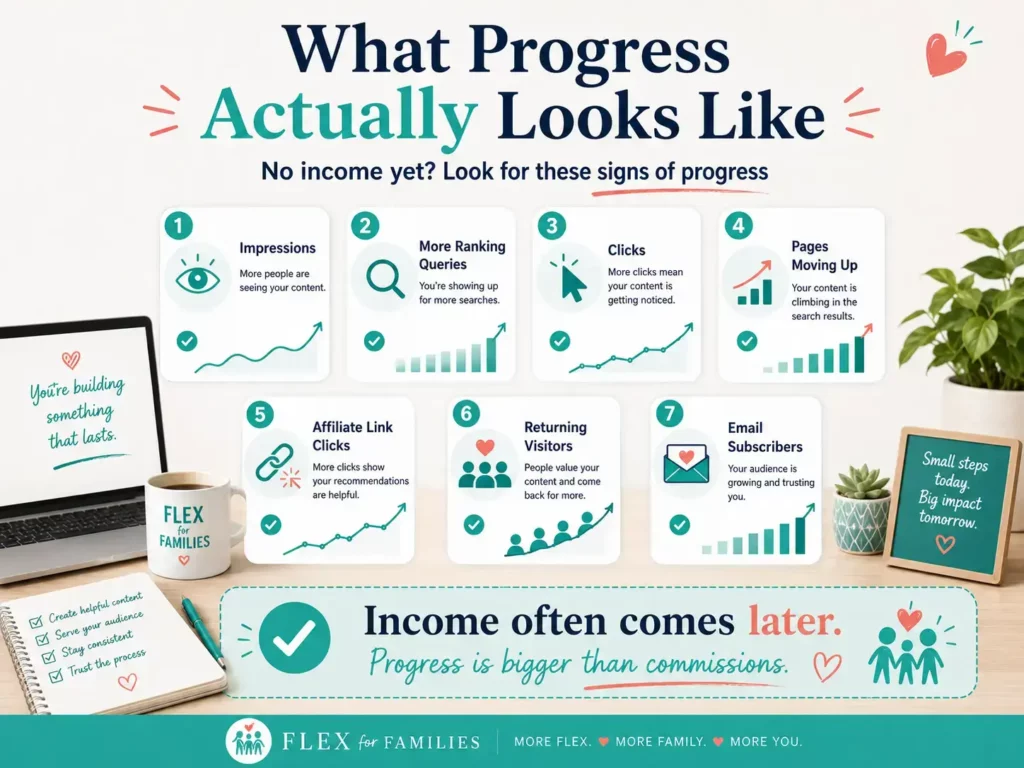
Who Is Most Likely to Succeed With Wealthy Affiliate?
There is no personality type or background that guarantees success with Wealthy Affiliate.
But some habits make a big difference.
The people most likely to get value from the platform are usually the ones who combine patience, consistency, good judgement, and a willingness to learn from real data.
Someone With a Clear Audience
The clearer you are about who you are helping, the easier most other decisions become.
- You can choose better topics.
- You can understand search intent more easily.
- You can recommend more relevant products.
- You can create content that feels focused instead of generic.
That is why I would always start with the audience before worrying too much about monetisation.
Someone Who Is Willing to Learn
Wealthy Affiliate gives you access to training and tools.
You still need to learn how to use them.
That means being prepared to understand:
- Keyword research
- Content creation
- WordPress
- Affiliate programmes
- Search intent
- SEO basics
- Analytics
You do not need to master everything at once.
You just need to keep improving.
Someone Who Actually Applies the Training
This is probably more important than completing lots of lessons.
Learn something.
Apply it.
Review what happened.
Then move on.
That cycle will usually teach you more than endlessly consuming training.
Someone Who Can Stay Consistent
You do not need to work on your site every day.
But you do need a rhythm you can maintain.
For a busy parent, that might mean:
- One useful post a week
- A few focused work sessions
- Updating older content regularly
- Reviewing data once a month
The exact schedule matters less than whether you can keep it going.
Someone Who Can Handle Slow Progress
This is a big one.
If you need immediate proof that the business is working, blogging can be frustrating.
Early progress may look like:
- More impressions
- Better rankings
- More queries
- A few clicks
- Small commissions
That may not feel exciting.
But it can show that the foundation is growing.
Someone Who Uses Data Instead of Emotion
There will be weeks when traffic looks disappointing.
There will be articles that do nothing.
There will be moments when you want to change everything.
The people most likely to make better decisions are the ones who stop and look at the evidence.
- What is Search Console showing?
- Which pages are improving?
- Which topics are gaining impressions?
- What actually needs changing?
That is much more useful than rebuilding the whole strategy because one month was poor.
Someone Who Is Willing to Update Their Work
Successful content is rarely completely finished.
You may need to:
- Add missing sections
- Improve the title
- Update old information
- Strengthen internal links
- Improve the CTA
- Add real examples
- Fix weak search intent
Being willing to improve older content can save you from constantly starting again.
Someone Who Focuses on Helping First
This is the biggest lesson I would carry into any affiliate site.
Help the reader.
Build trust.
Recommend something when it fits.
The commission comes after that.
Someone Who Uses AI With Judgement
AI can be a huge advantage.
- It can save time.
- It can help you plan and repurpose.
But the person most likely to benefit is the one who still checks the work and adds real experience.
Use AI to support the process.
Do not let it decide the business.
Someone Who Can Ignore the Noise
There will always be another strategy.
Another tool.
Another course.
Another person saying blogging is dead.
The ability to stick with a sensible plan and only change when the evidence supports it is valuable.
Someone Who Understands WA Is a Platform, Not a Promise
This is probably the clearest fit.
Wealthy Affiliate can provide:
- Structure
- Training
- Tools
- Hosting
- Research
- Support
It cannot guarantee the outcome.
If you understand that before joining, you are much more likely to approach the platform in a healthy way.
The Best Fit Is Someone Prepared to Build
If I had to reduce it to one sentence, I would say this:
The people most likely to get value from Wealthy Affiliate are the ones who treat it as a place to learn and build, not a shortcut to income.
That mindset does not guarantee success.
But it gives you a much stronger starting point.
And after everything I have learned since joining in 2016, that is probably the biggest difference I would make if I were starting again today.
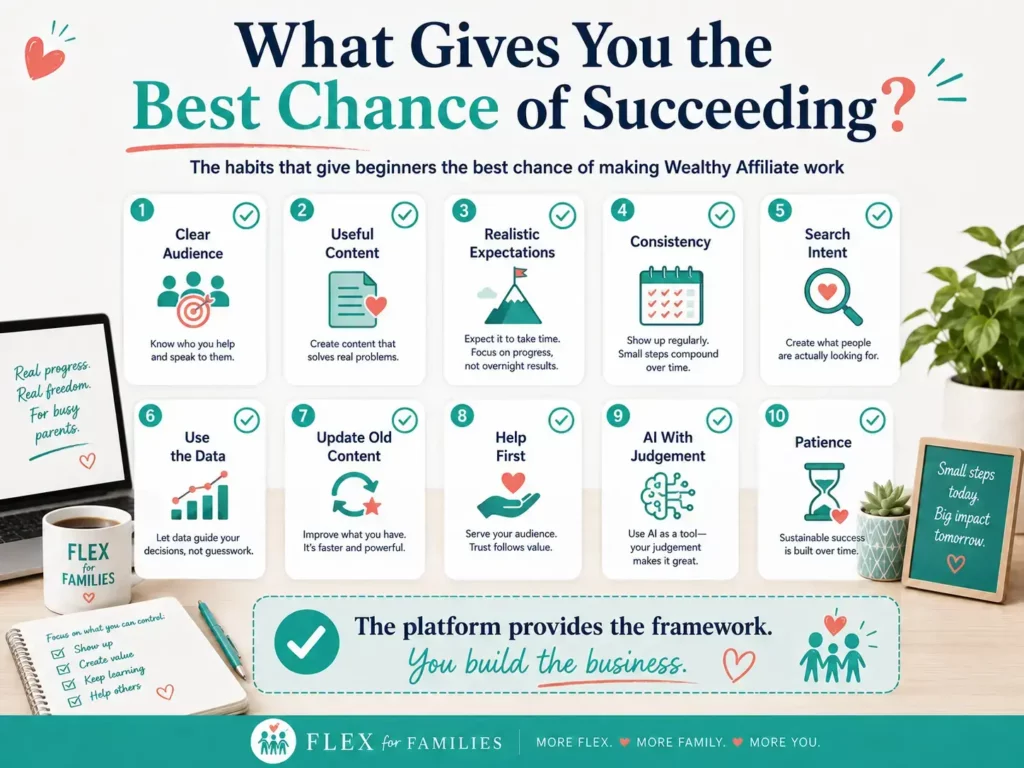
My Final Take: Why Do Some People Fail With Wealthy Affiliate?
People fail with Wealthy Affiliate for all sorts of reasons.
- Sometimes they choose the wrong niche.
- Sometimes they expect results too quickly.
- Sometimes they focus on commissions before building an audience.
- Sometimes they publish a lot of content without really understanding search intent.
- Sometimes they keep changing strategy.
- Sometimes they spend more time learning than applying.
And sometimes affiliate marketing simply turns out to be the wrong business model for them.
I have made several of those mistakes myself.
I joined Wealthy Affiliate in 2016 wanting to make money online.
Looking back, I was too focused on the money and not focused enough on the person I was trying to help.
That took me a long time to properly understand.
I Don’t Think Failure Automatically Means Wealthy Affiliate Failed You
My own unsuccessful websites did not prove that Wealthy Affiliate was a scam or that affiliate marketing did not work.
They showed me that having access to training does not remove the need to make good business decisions.
- The platform could teach me how to research keywords.
- It could teach me how affiliate marketing worked.
- It could give me websites, hosting, tools, and support.
- But it could not completely decide:
- Who should I help?
- What should I build?
- Which niche genuinely suits me?
- What does my audience need?
Those decisions still mattered.
But I Don’t Think Every Struggling Member Should Be Blamed Either
This matters just as much.
I do not like the idea that anyone who struggles with Wealthy Affiliate simply:
“Didn’t work hard enough.”
Online business is more complicated than that.
Someone can work hard and still choose a poor niche.
They can follow advice that does not suit their audience.
They can create good content in an extremely competitive market.
They can become overwhelmed by conflicting strategies.
Or they can simply discover that this type of business does not fit them.
Wealthy Affiliate also has a responsibility to give beginners clear, relevant training and help them understand what realistic progress looks like.
The Biggest Change I Would Make Is Still the Same
If I could start again, I would stop asking:
“How quickly can I make money?”
and spend far more time asking:
“Who am I trying to help?”
That question affects everything.
- Your niche.
- Your keywords.
- Your content.
- Your products.
- Your CTAs.
- Your monetisation.
And ultimately, whether people have a reason to trust you.
That is the approach I now try to take with Flex For Families.
Wealthy Affiliate Can Give You a Framework
That is ultimately why I still recommend Wealthy Affiliate to the right beginner.
- It gives you somewhere to start.
- It gives you structure.
- It gives you tools.
- It gives you training.
- It gives you somewhere to ask questions when you get stuck.
But it does not guarantee the business will succeed.
You still need to build it.
If Your WA Site Isn’t Working, Don’t Immediately Start Again
Before abandoning everything, I would investigate what is actually going wrong.
Ask:
- Is the audience clear?
- Is the niche still a good fit?
- Does the content match search intent?
- Is Google starting to show the site for relevant queries?
- Are any pages showing potential?
- Am I publishing useful content or simply more content?
- Have I changed strategy too often?
- Am I applying what I learn?
- Does affiliate marketing actually suit me?
Then deal with the real problem.
- You may need a different niche.
- You may need better content.
- You may need more patience.
- You may need to simplify your strategy.
Or you may genuinely decide another business model fits you better.
All of those are more useful conclusions than simply saying:
“Wealthy Affiliate doesn’t work.”
Would I Still Use Wealthy Affiliate?
Yes.
Knowing what I know now, I would still consider Wealthy Affiliate a strong option for someone starting from scratch who wants training, website tools, keyword research, and support in one place.
I would simply go into it with much better expectations.
If you are considering WA and want to understand the platform itself, my full Wealthy Affiliate Review covers the features, pricing, training, pros, cons, and who I think it suits.
If you already understand the work involved and want to explore Wealthy Affiliate for yourself, you can take a closer look at the platform here.
Transparency note: This is an affiliate link. If you join Wealthy Affiliate through it, I may earn a commission at no extra cost to you. I only recommend WA where I think it is a genuine fit for the reader.
But if reading this article has made you realise that your audience, niche, or content plan needs more thought first, I would start there.
You do not need another paid tool until you know what you are trying to build.
Not Sure Your Niche or Plan Is Right Yet?
You do not need to start again or buy another tool just because your blog feels stuck.
Sometimes the better move is to go back to the basics and make sure you are building around the right audience, niche, and content plan.
The free Parent Blogging Starter Kit gives you practical resources to help you work through:
- Your niche and target audience
- Your first content ideas
- A realistic weekly blogging routine
- Your income goals
- Your blogging roadmap
- How to make progress around limited family time
Get the foundation right first. Then decide what tools, training, and monetisation make sense.
Frequently Asked Questions: Why Do Some People Fail With Wealthy Affiliate?
Why do people fail with Wealthy Affiliate?
There is no single reason. Common problems include choosing the wrong niche, expecting income too quickly, creating weak or unfocused content, misunderstanding search intent, constantly changing strategy, and failing to apply the training consistently.
Some people also discover that affiliate marketing simply is not the right business model for them.
Do most Wealthy Affiliate members make money?
Wealthy Affiliate does not guarantee that members will make money, and results vary significantly.
Building an affiliate business depends on factors such as your niche, content, traffic, consistency, monetisation, competition, and how effectively you apply what you learn.
Is Wealthy Affiliate hard for beginners?
There is a lot to learn when you first start, but Wealthy Affiliate is designed to give beginners a structured path.
The bigger challenge is often staying focused on the basics instead of trying to learn every strategy and tool at once.
Can beginners succeed with Wealthy Affiliate?
Yes, beginners can use Wealthy Affiliate to learn how to build an affiliate marketing business.
Success is not guaranteed, though. You still need to choose a suitable niche, create useful content, attract traffic, and continue improving the business over time.
How long does Wealthy Affiliate take to work?
There is no fixed timeline.
Some people may earn an early commission relatively quickly, while meaningful and consistent income can take much longer.
It is more realistic to think in months and years rather than expecting results within a few weeks.
Does Wealthy Affiliate guarantee income?
No.
Wealthy Affiliate provides training, tools, website services, research, and support. It does not guarantee traffic, rankings, commissions, or business success.
Do you need to promote Wealthy Affiliate to make money?
No.
You can use Wealthy Affiliate to build a website in another niche and promote relevant products through programmes such as Amazon Associates, Awin, CJ Affiliate, or individual brand programmes.
Promoting Wealthy Affiliate itself is optional.
What should I do if my Wealthy Affiliate website gets no traffic?
Start by checking the fundamentals.
Look at your niche, target audience, keyword selection, search intent, content quality, and Google Search Console data.
Check whether pages are receiving impressions before deciding the whole strategy has failed.
Avoid immediately starting another website without understanding why the current one is struggling.
Should I start a new niche if Wealthy Affiliate isn’t working?
Not automatically.
A niche change may sometimes be necessary, but first check whether the problem is actually the niche.
You may instead need better content, stronger search intent, more time, improved internal linking, or a clearer audience.
Is Wealthy Affiliate still worth it if I failed before?
It can be, depending on why the previous attempt failed.
If you now understand what went wrong and still want structured training, tools, hosting, and support, Wealthy Affiliate may still have value.
If you discovered that affiliate marketing itself does not suit you, another business model may make more sense.
Let’s Chat
Have you tried Wealthy Affiliate and struggled to get the results you hoped for?
- Where did you get stuck?
- Was it choosing a niche?
- Getting traffic?
- Creating enough content?
- Finding the right keywords?
- Staying consistent?
Or did you eventually decide affiliate marketing simply was not for you?
Leave a comment below and share your experience.
I think these conversations are useful because struggling with Wealthy Affiliate does not automatically mean somebody was lazy, and it does not automatically mean the platform was the problem either.
Sometimes understanding what went wrong is the most useful thing you can take from the experience.