
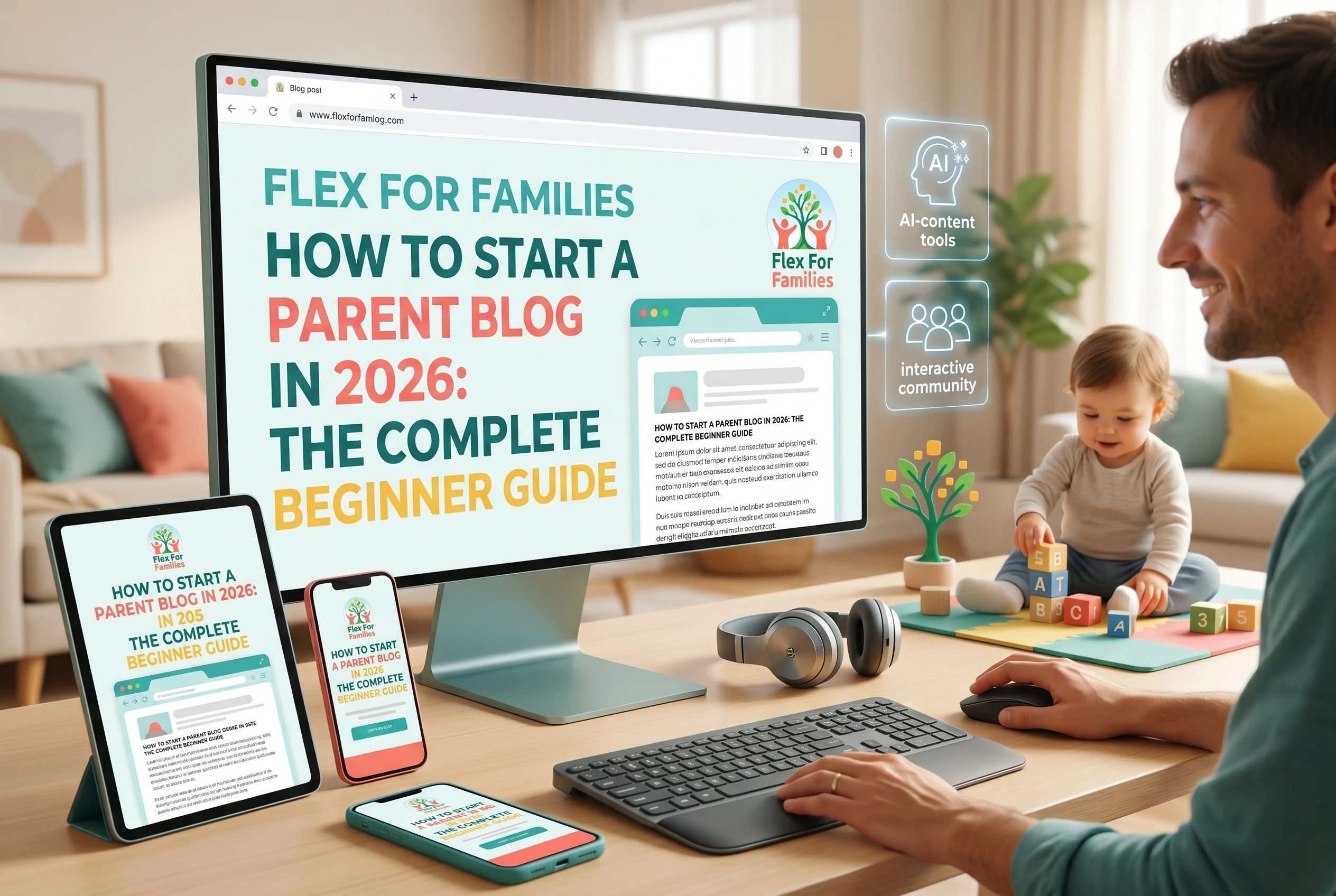
Starting a blog as a parent can feel overwhelming at first.
You might already be juggling school runs, work, housework, appointments, and everything else family life throws at you. The idea of building a blog on top of that can sound unrealistic, especially when so much advice online makes blogging look complicated or full-time.
The good news is, blogging does not have to look like that.
You do not need:
- perfect writing skills
- expensive tools
- hours of free time every day
- thousands of followers
- tech experience
What you do need is a simple plan, realistic expectations, and a blogging approach that actually fits around family life.
That is exactly what this guide will help you with.
In this step-by-step guide, I’ll walk you through:
- how to choose a niche
- how to set up your blog
- what content to create
- how to get traffic
- how parents really make money blogging
- what to expect in your first few months
Most importantly, I’ll show you how to build your blog in a way that feels manageable, flexible, and sustainable long term.
Because for most parents, blogging is not about becoming an influencer overnight.
It is about creating something that gives you:
- more flexibility
- more control over your time
- a creative outlet
- and potentially a steady long-term income from home
Quick Answer: How Do You Start a Parent Blog in 2026?
Starting a parent blog in 2026 is simpler than most people think.
The basic process looks like this:
- Choose a niche that fits your experience and interests.
- Set up your blog with a beginner-friendly platform.
- Create helpful content that solves real problems for parents.
- Learn simple SEO and traffic strategies.
- Build trust with your audience consistently over time.
- Monetize naturally through affiliate marketing, ads, products, or email marketing.
The key is to keep things simple in the beginning.
You do not need dozens of tools or a perfect strategy before you start. Many successful parent bloggers begin with just a few blog posts, a basic website, and a realistic routine they can stick to around family life.
If tech feels overwhelming, this guide will also show you beginner-friendly tools and platforms that make the process much easier for busy parents.
Why Parent Blogging Works So Well
Blogging is one of the few online income paths that can genuinely fit around family life.
That is a big reason why so many parents are exploring it in 2026.
Unlike many side hustles that rely on fixed schedules, customer calls, or constant selling, blogging gives you flexibility. You can work on your blog early in the morning, during nap time, in the evening, or whenever your family schedule allows.
You are building something that works around your life, not the other way around.
That matters a lot when you are balancing parenting responsibilities alongside everything else.
Blogging Has Low Startup Costs
One of the biggest advantages of blogging is that you do not need a huge budget to get started.
Compared to many businesses, the startup costs are relatively small.
In most cases, you only need:
- a domain name
- hosting
- a simple blog theme
- and some basic beginner-friendly tools
You do not need inventory, office space, expensive equipment, or a large audience before you begin.
Many parents start blogging while keeping costs very lean in the beginning, then gradually reinvest as their blog grows.
If you are looking for more realistic ideas for earning online around family life, you may also enjoy:
Family-Friendly Ways To Make Money From Home (That Actually Fit Your Life).
Blogging Fits Around Real Family Life
This is where blogging stands out from many online business models.
- You do not need to be available all day.
- You do not need to constantly chase clients.
- You do not need to spend hours creating social media content every day.
A blog is flexible by design.
You can:
- write one post a week
- work in short focused sessions
- build slowly over time
- pause when family life gets busy
- pick things back up again later
That flexibility is incredibly valuable for parents.
Especially if you are:
- working around school hours
- caring for younger children
- balancing a job alongside parenting
- managing burnout or mental load
- trying to create more freedom long term
That is one reason I believe blogging works so well for parents who want flexibility and freedom without needing a “hustle 24/7” lifestyle.
That is exactly why I see blogging as one of the best flexible income options for parents who want to build something around family life, not squeeze family life around another commitment. I explain this in more detail in my guide on Why Blogging Is Perfect for Parents Who Want Flexibility and Freedom.
Your Blog Can Become a Long-Term Asset
This is one of the biggest differences between blogging and many other side hustles.
When you work on your blog, you are building an asset that can continue bringing in traffic and income long after you publish a post.
For example:
- one helpful blog post can rank in Google for years
- affiliate content can continue earning passively
- Pinterest pins can drive traffic months later
- your email list keeps growing over time
Results are usually slow in the beginning. But momentum builds.
That long-term potential is what makes blogging attractive for many busy parents looking for something sustainable instead of quick short-term cash.
A blog is not just another task on your to-do list.
Done consistently, it can become:
- a flexible income stream
- a creative outlet
- a helpful resource for other parents
- and something you fully own and control over time.
Step 1: Choose a Simple Niche That Fits Your Life

One of the biggest mistakes new parent bloggers make is overthinking their niche before they even start.
- You do not need the “perfect” niche.
- You do not need a completely unique idea.
- And you definitely do not need to become an expert overnight.
Your niche simply helps readers understand:
- who your blog is for
- what topics you cover
- and why they should come back
The best parent blogging niches usually sit somewhere between:
- your experience
- your interests
- and problems people actively search for online
That could include:
- parenting
- budgeting
- homeschooling
- meal planning
- family routines
- special needs parenting
- blogging
- flexible income
- mental wellbeing
- organisation
- side hustles
- family travel
The key is choosing something you can realistically write about consistently.
Especially as a busy parent.
A simple niche you can stick with is far more valuable than a “perfect” niche you never publish content for.
If you are struggling with this step, these guides will help:
- Find Your Parent Niche: Simple Steps To Build A Blog That Fits Your Family Life
- What Is A Blogging Niche? A Parent-Friendly Explanation
- How to Choose a Niche for Your Parent Blog (Without Overthinking It)
Keep Your Niche Flexible in the Beginning
A lot of new bloggers worry about choosing the wrong niche.
But the truth is, most blogs evolve over time.
You do not need everything figured out on day one.
Many successful blogs start broad, then become more focused as the blogger learns:
- what they enjoy writing about
- what readers respond to
- and what content gets traffic
That is completely normal.
The goal right now is simply to start.
Step 2: Pick a Beginner-Friendly Blogging Platform and Hosting
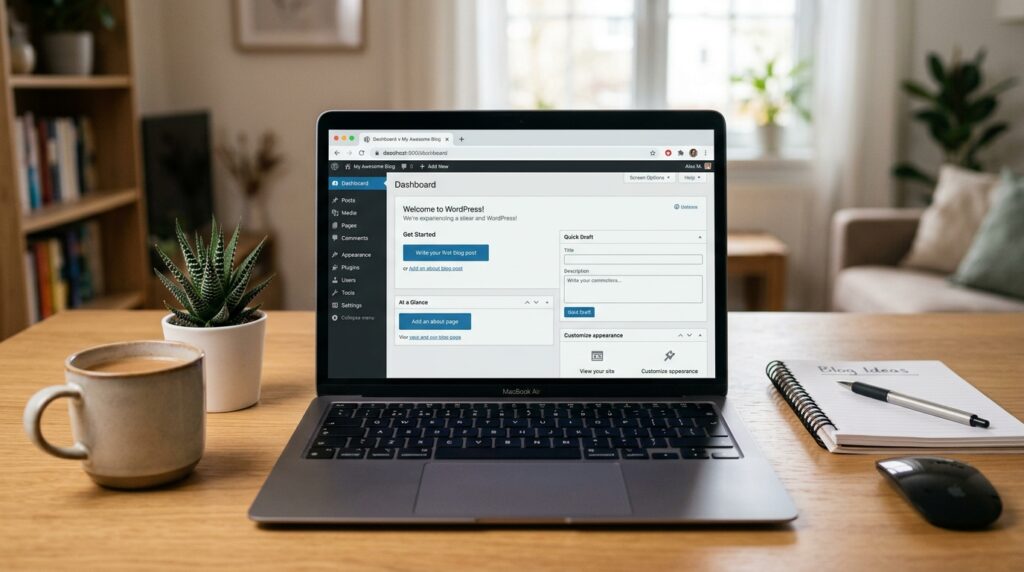
This is the part that scares many parents the most.
The tech side.
But honestly, setting up a blog today is much easier than it used to be.
- You do not need coding skills.
- You do not need to build a website from scratch.
- And you do not need expensive developers.
For most parent bloggers, I recommend using WordPress.
Why?
Because it gives you:
- full control over your blog
- flexibility as your site grows
- better long-term monetization options
- thousands of themes and plugins
- and strong SEO potential
WordPress powers a huge percentage of websites online for a reason.
What You Actually Need To Start
At minimum, you need:
- a domain name
- web hosting
- WordPress installed
- and a simple theme
That is it.
In the beginning, simplicity is your friend.
You do not need:
- fancy branding
- complicated plugins
- expensive software
- or a perfect-looking website
You just need a clean, usable blog that lets you publish content consistently.
Beginner-Friendly Hosting Options
If you want a straightforward hosting option, Bluehost is popular with beginners because it is relatively affordable and simple to set up.
You can read my full Bluehost Review: Is It The Best Hosting For Parent Bloggers? if you want a deeper breakdown.
That said, many parents also feel overwhelmed by having to piece everything together separately.
- Hosting.
- Training.
- SEO.
- Writing help.
- Tech support.
- Website setup.
That is one reason platforms like Wealthy Affiliate appeal to many beginners. It combines hosting, blogging training, AI tools, keyword research, and community support in one place, which can remove a lot of the confusion for new parent bloggers.
If the technical side of blogging feels intimidating, I recommend reading: How Wealthy Affiliate Helps Parents Start a Blog Without Tech Stress
Choose Simplicity Over Perfection
One of the biggest traps new bloggers fall into is spending weeks:
- changing themes
- redesigning logos
- testing plugins
- obsessing over colours
- tweaking layouts
Meanwhile, they never actually publish content.
Your blog does not need to look perfect to help people.
Focus on:
- readability
- clean navigation
- mobile friendliness
- and helpful content
Everything else can improve later.
Step 3: Set Up Your Blog Without Overcomplicating It

Once you have your hosting and WordPress ready, your next goal is simple:
Get your blog functional enough to start publishing.
- Not perfect.
- Not polished.
- Functional.
This stage should be about momentum, not perfectionism.
Start With the Essentials Only
Most beginner blogs only need:
- a homepage
- an about page
- a contact page
- a blog page
- and a few core blog posts
That is enough to begin.
As your confidence grows, you can slowly improve:
- branding
- design
- categories
- menus
- email marketing
- and monetization
But trying to build everything at once usually leads to overwhelm.
Pick a Simple Theme
Your blog theme controls how your website looks.
There are thousands of WordPress themes available, but most beginners only need something:
- lightweight
- easy to customise
- mobile friendly
- and clean to read
Simple almost always performs better than cluttered designs.
If you need help choosing one, check out: How To Choose The Perfect Blog Theme For Your Family Brand
Use Tools That Save Time
As a busy parent, your blogging setup should make life easier, not harder.
That means using tools that:
- simplify content creation
- improve organisation
- save time
- and reduce stress
Some beginner-friendly tools worth exploring include:
- Canva for graphics
- Tailwind for Pinterest scheduling
- Kit for email marketing
- AI writing tools for outlining and brainstorming
You can also explore my:
- Parent Blogging Toolkit: Simple Tools, Resources, And Communities To Help You Grow
- The Best Blogging Tools for Parents Who Want Simplicity and Sanity
Your Goal Is To Publish, Not Perfect
A lot of parents get stuck preparing endlessly instead of actually blogging.
The truth is: Your first blog posts will probably not be amazing.
That is normal.
Every successful blogger improves through publishing consistently, learning gradually, and adjusting over time.
Progress matters far more than perfection in the early stages.
Step 4: Create a Simple Content Plan You Can Actually Stick To
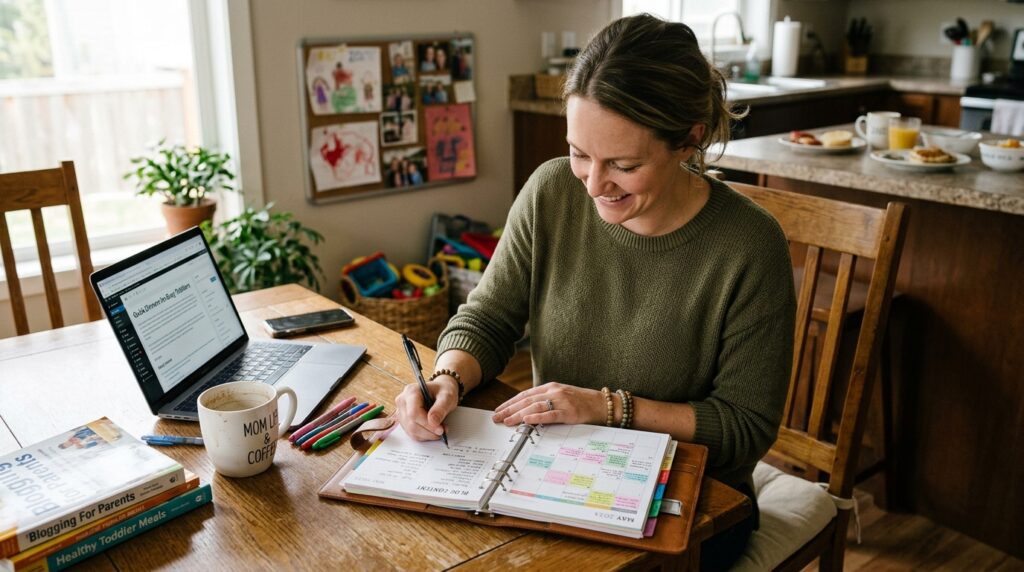
This is where many new bloggers start to feel overwhelmed.
They think they need:
- endless ideas
- daily blog posts
- perfect SEO
- a huge content calendar
You do not.
What you really need is a simple plan you can realistically maintain around family life.
Consistency matters far more than intensity.
Start With Problems Parents Are Already Searching For
The best beginner blog posts usually answer simple questions people already type into Google.
Think about:
- problems you have solved
- routines that help your family
- things you have learned
- mistakes you have made
- questions other parents often ask you
For example:
- meal planning
- parenting routines
- homeschooling
- blogging tips
- budgeting
- family organisation
- flexible income ideas
- time management
Helpful content builds trust.
And trust is what eventually helps blogs grow.
If you need ideas, these posts will help:
- 10 Blog Post Ideas For Parent Bloggers In 2026
- How to Write Blog Posts That Connect and Keep Parents Coming Back
- How To Write a Blog Post Outline in 15 Minutes
Keep Your Posting Schedule Realistic
You do not need to publish every day.
For most busy parents, even:
- one quality blog post per week
- or one every two weeks
is enough to build momentum over time.
The key is sustainability.
A realistic blogging routine you can maintain for a year is far more powerful than an intense routine you quit after three weeks.
Use a Simple Content Calendar
Planning ahead removes a huge amount of stress.
Even a very basic content calendar helps you:
- stay consistent
- avoid idea overwhelm
- plan around family schedules
- batch similar tasks together
Your system does not need to be complicated.
A simple spreadsheet or notebook works perfectly fine in the beginning.
If you want help with this, read:
- How To Create a Content Calendar That Works for Family Life
- How To Plan Your Next 30 Days of Blog Growth
Step 5: Learn Basic SEO and Traffic Strategies

This is the stage where blogging starts feeling more “real.”
Because writing blog posts alone is not enough.
You also need people to actually find your content.
The good news is, beginner SEO does not need to be complicated.
You do not need to become an SEO expert overnight.
Focus on Searchable Content First
One of the smartest things new bloggers can do is create content people are already searching for.
That means writing blog posts around:
- questions
- problems
- comparisons
- beginner guides
- and simple tutorials
For example:
- “How to Start a Parent Blog”
- “Simple Meal Planning for Busy Families”
- “Best Affiliate Programs for Parent Bloggers”
- “How To Stay Consistent With Blogging”
This type of content gives your blog a better chance of appearing in Google over time.
Learn Simple SEO Basics
At a beginner level, SEO mostly means:
- choosing clear blog titles
- writing helpful content
- using keywords naturally
- organising your content properly
- and making your site easy to navigate
That is enough to get started.
You do not need advanced SEO strategies in month one.
If you want beginner-friendly SEO help, start with:
- SEO Made Simple for Parent Bloggers: How To Get Your Blog Found
- Parent-Friendly SEO: How To Grow Blog Traffic Without The Jargon
- Simple SEO Tips for Parent Bloggers (Get More Traffic Without Overwhelm)
Pinterest Can Be a Great Traffic Source for Parents
Pinterest still works surprisingly well for many bloggers, especially in parenting-related niches.
One good pin can continue driving traffic for months.
That makes it appealing for busy parents because your content can keep working long after you create it.
Pinterest also works differently from social media platforms that demand constant posting.
You can learn more here:
- Why Pinterest Is Still My Favourite Traffic Source (Even In 2026)
- How To Create Pinterest Pins That Actually Drive Traffic
- Pinterest Traffic Tips I’m Testing On My New Blog (So You Don’t Have To)
Traffic Takes Time
This part is important.
Most new blogs do not explode with traffic overnight.
In fact, many blogs stay quiet for the first few months.
That is normal.
Google needs time to:
- understand your content
- trust your website
- and figure out where your posts belong
Consistent publishing matters more than chasing quick wins.
Step 6: Build Trust Before You Focus Too Much on Monetization
A lot of beginner bloggers rush straight into trying to make money.
But the blogs that usually succeed long term focus on trust first.
Why?
Because people buy from bloggers they trust.
Especially in parenting spaces.
Focus on Helping Before Selling
Your early goal should be:
- helping readers
- solving problems
- sharing useful experiences
- building credibility
- and creating genuinely helpful content
That trust becomes the foundation for:
- affiliate income
- email subscribers
- product sales
- brand partnerships
- and long-term traffic
Trying to monetize too aggressively too early often pushes readers away.
Affiliate Marketing Works Best When It Feels Natural
One reason affiliate marketing works well for parent bloggers is because it fits naturally into helpful content.
For example:
- tools you actually use
- products that help your family
- blogging platforms you recommend
- resources that save time
That feels far more authentic than pushing random products purely for commissions.
You can learn more here:
- Affiliate Marketing For Parents: Flexible Income, Family-First Approach
- How To Start Affiliate Marketing As A Busy Parent (Beginner’s Guide)
- How to Add Affiliate Links Without Sounding Salesy (Simple and Natural Ways)
Email Lists Matter More Than Many Beginners Realize
Your email list becomes one of the few things you fully control online.
- Social media platforms change constantly.
- Traffic fluctuates.
- Algorithms shift.
But your email list stays yours.
Even a small email list can become incredibly valuable over time.
Especially when readers genuinely trust your content.
Helpful starting points:
- How to Build an Email List as a Parent Blogger (Simple Steps That Work)
- Lead Magnet Ideas for Parent Bloggers (Simple Ideas That Get Subscribers)
- How To Grow Your Email List With Authentic Freebies
Trust Builds Slowly, But It Compounds
This is something many blogging courses fail to explain properly.
Blogging success is usually built through:
- consistency
- trust
- patience
- and helpful content over time
Not overnight hacks.
Not viral shortcuts.
And honestly, that slower, more sustainable approach usually fits family life much better anyway.
Step 7: Monetize Your Blog Slowly and Naturally

One of the biggest misconceptions about blogging is that you need massive traffic before you can earn anything.
You do not.
Many parent bloggers start monetizing gradually while their blog is still relatively small.
The key is focusing on income methods that fit naturally with your content and audience.
Common Ways Parent Bloggers Make Money
Some of the most common monetization methods include:
- Affiliate marketing
- Display ads
- Sponsored content
- Digital products
- Memberships
- Freelance services
- Email marketing
But for most beginners, affiliate marketing is usually the easiest place to start.
Why?
Because you can recommend:
- tools you genuinely use
- products that help your audience
- resources that save time
- platforms that simplify blogging
Without needing to create your own products straight away.
Start With Helpful Recommendations
The best affiliate content usually comes from genuine experience.
For example:
- blogging tools you actually use
- parenting resources that helped your family
- email platforms you recommend
- courses that made blogging easier
- AI tools that save time
That is much more effective than trying to “sell” constantly.
Readers can usually tell the difference between:
- authentic recommendations
and - forced promotions
Helpful content builds long-term trust.
And long-term trust usually leads to better long-term income.
You can learn more here:
- The Best Affiliate Programs for Parent Bloggers (That Actually Fit Your Audience)
- Amazon Associates For Parents: How To Earn By Sharing Everyday Finds
- Awin Review for Parents. Is This the Right Affiliate Network After ShareASale?
Blogging Income Usually Starts Small
This part is important to understand early.
Most blogs do not make hundreds or thousands overnight.
In fact, many parent bloggers:
- earn nothing initially
- then make their first small commission
- then slowly build momentum over time
That gradual growth is completely normal.
A lot of online marketing content skips this reality and creates unrealistic expectations.
But blogging is often more like building a long-term asset than chasing fast cash.
Focus on Building Systems, Not Chasing Hacks
The blogs that usually last are built on:
- trust
- consistency
- helpful content
- SEO
- email lists
- and patience
Not quick-win tricks.
That slower approach often works much better for busy parents anyway because it creates something sustainable around real family life.
Step 8: Create a Blogging Routine That Fits Around Family Life
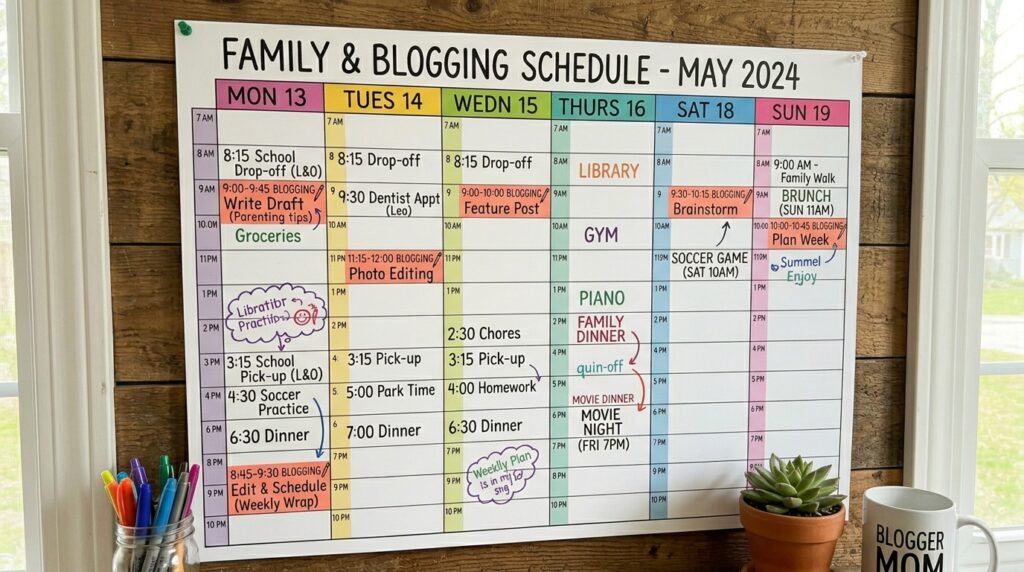
One of the biggest reasons parents quit blogging is not lack of ability.
It is trying to follow routines built for people with completely different lifestyles.
Many blogging “gurus” assume you have:
- uninterrupted workdays
- endless energy
- and unlimited time
Most parents do not.
That is why your blogging routine needs to fit your life, not somebody else’s.
Keep Your Blogging Routine Simple
You do not need an elaborate productivity system.
In most cases, a simple weekly structure works best.
For example:
- one day for writing
- one day for Pinterest or SEO
- one day for editing
- one day for planning
Even short sessions can add up quickly over time.
Especially when you stay consistent.
Work in Small Blocks of Time
A lot of parents assume blogging only works if you can dedicate hours every day.
But many blogs are built:
- during nap time
- before school runs
- after bedtime
- during lunch breaks
- or in short evening sessions
Thirty focused minutes can often achieve far more than distracted three-hour sessions.
That is why sustainable routines matter so much.
Helpful reads:
- How to Build a Simple Blogging Routine That Fits Family Life
- Time-blocking Routines For Stay-at-home Parent Bloggers To Boost Productivity
- Staying Consistent As A Parent Blogger (Even When Life Gets Messy)
Burnout Helps Nobody
This matters more than many blogging experts admit.
Trying to push too hard too quickly often leads to:
- burnout
- frustration
- inconsistency
- and eventually quitting
Your blog should support your family life, not consume it.
It is okay to:
- slow down
- publish less during busy seasons
- simplify your strategy
- and take breaks when needed
Long-term consistency matters far more than short-term intensity.
Community Makes a Huge Difference
Blogging can feel isolating sometimes.
Especially when traffic is low early on.
That is why supportive blogging communities can help so much. They give you:
- encouragement
- accountability
- feedback
- and reassurance that slower growth is normal
That is one reason many beginner bloggers enjoy communities like Wealthy Affiliate, because they combine training with support from people going through similar challenges.
You may also enjoy:
Step 9: Use AI Carefully to Save Time, Not Replace Your Voice
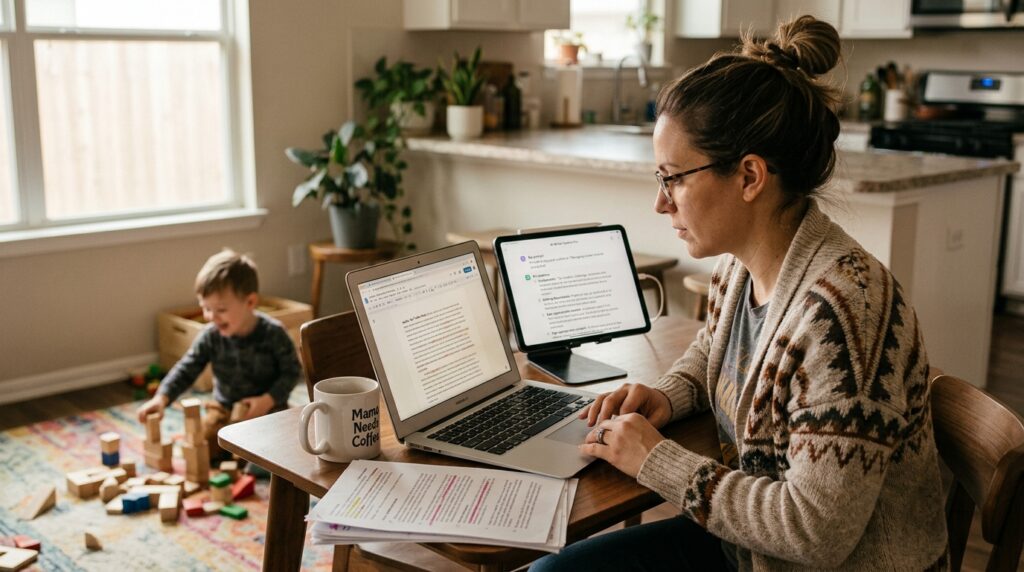
AI tools are changing blogging quickly.
And honestly, they can be incredibly helpful for busy parents when used properly.
The key is using AI to support your workflow, not replace your experience or personality.
AI Can Save a Lot of Time
Many parent bloggers now use AI for:
- brainstorming ideas
- creating outlines
- simplifying research
- improving headlines
- summarising notes
- organising content
- and speeding up first drafts
That can make blogging feel far more manageable around family life.
Especially during busy seasons.
Your Experience Still Matters Most
This is important.
AI can help structure content.
But it cannot replace:
- your parenting experiences
- your perspective
- your voice
- your stories
- or your understanding of your audience
That human side is what helps readers connect with your blog.
Especially in parenting niches where trust matters so much.
Avoid Publishing Pure AI Content Without Editing
One mistake many beginners make is publishing AI-generated content without reviewing or improving it properly.
That often leads to:
- generic advice
- repetitive writing
- inaccurate information
- weak SEO
- and content that sounds robotic
The best approach is usually:
AI first draft → human editing → personal experience → final polish.
AI Should Reduce Overwhelm
Used properly, AI can:
- save time
- reduce mental load
- help with writer’s block
- and simplify content planning
That makes it especially useful for parents balancing blogging alongside real life responsibilities.
Helpful next reads:
- AI for Blogging: What Actually Saves You Time (And What Doesn’t)
- AI Content Workflow for Busy Parents (30 Minute System)
- How to Start a Blog Using AI (Step by Step for Parents)
- Best AI Tools for Parent Bloggers (Tested)
Use AI as a Tool, Not a Shortcut
The blogs that usually succeed long term still focus on:
- trust
- useful content
- authentic experience
- and helping real people
AI can absolutely support that process.
But it works best when it helps you create better content more consistently, not when it tries to replace the human side of your blog entirely.
Common Mistakes New Parent Bloggers Make

Most new parent bloggers do not fail because they lack ability.
They usually struggle because they:
- overcomplicate things
- expect results too quickly
- or try to follow advice that does not fit family life
The good news is that many of these mistakes are completely avoidable once you know what to look for.
Trying To Do Everything at Once
This is probably the most common mistake.
New bloggers often try to:
- master SEO immediately
- grow Pinterest
- build an email list
- learn affiliate marketing
- create products
- post on every social platform
- and publish constantly
All at the same time.
That quickly becomes overwhelming.
Especially for busy parents.
The better approach is to focus on:
- publishing helpful content
- learning basic SEO
- building consistency
- then gradually expanding later
Simple scales better than complicated.
Comparing Yourself to Established Bloggers
It is easy to look at large blogs and assume you are falling behind.
But many successful bloggers:
- have been blogging for years
- publish full time
- have teams
- outsource content
- or started long before AI and increased competition
Your journey does not need to look like theirs.
Especially when your priorities include:
- family life
- flexibility
- mental wellbeing
- and sustainable routines
Progress matters more than speed.
Spending Too Long “Preparing”
Many new bloggers spend months:
- researching
- redesigning
- changing themes
- watching tutorials
- tweaking logos
- and overthinking strategy
Without ever publishing consistently.
The truth is: You learn blogging by blogging.
Not by endlessly preparing.
Your first blog posts do not need to be perfect.
They just need to exist.
Chasing Fast Money Instead of Building Trust
A lot of online content makes blogging look like a quick income shortcut.
That often leads beginners to:
- overload posts with affiliate links
- chase high-ticket programs
- focus on monetization too early
- or create content purely for commissions
But long-term blogging usually works better when you focus on:
- helping people
- building trust
- and creating genuinely useful content
Trust compounds over time.
That is especially true in parenting niches.
Ignoring SEO Completely
Some bloggers obsess over SEO.
Others ignore it entirely.
Neither extreme works particularly well.
You do not need advanced SEO knowledge to start. But learning simple basics early makes a huge difference over time.
Especially:
- writing searchable blog titles
- solving real problems
- structuring content clearly
- and creating content consistently
SEO is not about “gaming Google.”
It is mostly about helping search engines understand your content properly.
Expecting Traffic Too Quickly
This catches many beginners off guard.
You might publish:
- helpful blog posts
- Pinterest pins
- affiliate content
- and SEO-focused articles
and still see very little traffic initially.
That is normal.
Blogging is usually slower than social media at first. But it can become much more stable long-term.
Most successful blogs grow gradually, not overnight.
Forgetting That Real Life Comes First
This might be the most important one.
Your blog should support your life.
Not control it.
- Some seasons of parenting are harder than others.
- Some weeks are chaotic.
- Sometimes consistency looks different.
That is okay.
A slower blogging journey that fits around family life is still progress.
What To Expect in Your First 6 Months of Blogging
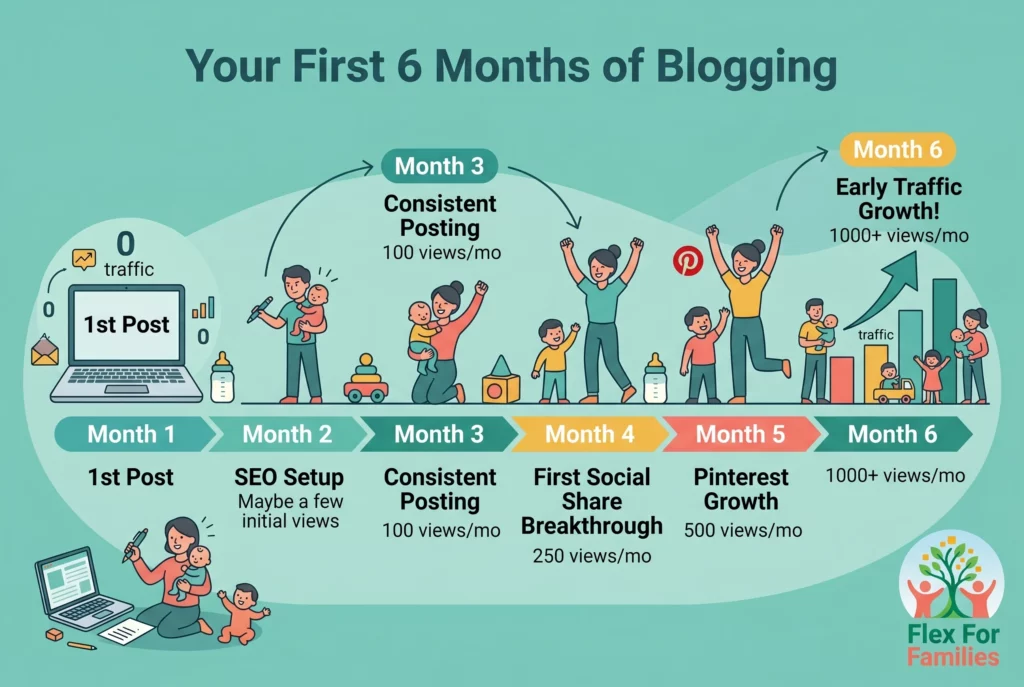
This is the part many blogging guides skip.
The reality.
Because the first 6 months of blogging often feel very different from what people expect.
Month 1: Everything Feels New
In the beginning, most of your time will go toward:
- setting up your site
- learning basic blogging terms
- writing your first posts
- figuring out WordPress
- and trying not to feel overwhelmed
This stage can feel messy.
That is normal.
Most bloggers feel unsure at first.
Month 2: You Start Finding Your Rhythm
At this point, blogging usually starts feeling slightly less intimidating.
You begin:
- writing faster
- understanding your niche better
- noticing what topics interest you
- and developing simple routines
Traffic is often still very low here.
Sometimes almost nonexistent.
That does not mean your blog is failing.
Month 3: Self-Doubt Usually Appears
This is where many bloggers quit.
Why?
Because they have:
- published multiple posts
- worked hard
- spent time learning
- and still are not seeing huge results yet
This stage can feel discouraging.
Especially if you compare yourself to established bloggers online.
But honestly, this is completely normal.
Google often takes months to properly understand and trust newer websites.
Month 4: Small Wins Start Appearing
This is usually where things start becoming more encouraging.
You may notice:
- your first Google impressions
- a few clicks from search
- Pinterest traffic
- affiliate link clicks
- comments
- or email subscribers
These early wins often seem small.
But they matter.
Because they prove your blog is starting to gain traction.
Month 5: Your Content Starts Connecting Better
By now, most bloggers:
- write more confidently
- understand their audience better
- improve their content structure
- and create more focused blog posts
This is where consistency starts compounding.
You are no longer completely starting from scratch.
Month 6: Momentum Starts Building
At this stage, many bloggers begin realizing:
- blogging actually is possible
- traffic can grow slowly over time
- and consistency matters more than perfection
You still may not have huge traffic or income yet.
But you now have:
- published content
- growing experience
- improved skills
- and a real foundation
That is far more valuable than most people realize.
Most Successful Blogs Grow Slowly
This is important to remember.
Many successful blogs:
- took months to gain traction
- earned very little initially
- and grew through steady consistency over time
The blogs that usually succeed are not always the ones that move fastest.
They are often the ones that:
- stay realistic
- keep publishing
- improve gradually
- and keep going long enough for momentum to build
That slower, more sustainable approach is often far better suited to real family life anyway.
Final Thoughts

Starting a parent blog in 2026 does not require perfect timing, advanced tech skills, or endless free time.
What matters most is starting with a realistic plan that actually fits around your life.
You do not need to:
- publish every day
- master SEO overnight
- become an expert immediately
- or build everything perfectly from the beginning
Most successful blogs grow slowly through:
- consistency
- patience
- helpful content
- and small improvements over time
That approach usually works much better for busy parents anyway.
Blogging is not a quick fix.
But it can become:
- a flexible creative outlet
- a long-term income stream
- a valuable resource for other parents
- and something you genuinely own and control
The key is keeping things simple enough that you can continue even during busy family seasons.
If you are looking for a beginner-friendly platform that combines:
- blogging training
- hosting
- AI tools
- keyword research
- and community support
In one place, I recommend reading: How Wealthy Affiliate Helps Parents Start a Blog Without Tech Stress
You can also read my full Wealthy Affiliate Review – Can Busy Parents Really Build Income Online? for a deeper breakdown of how the platform works and whether it is the right fit for you.
The most important thing to remember is this:
- You do not need to build your blog perfectly.
- You just need to start building it consistently.
Frequently Asked Questions
Can I start a parent blog with no experience?
Yes. Most parent bloggers start with no technical or blogging experience at all. Modern blogging platforms make setup much easier than it used to be, and many beginner-friendly resources are available online.
How much does it cost to start a parent blog?
You can usually start a blog for relatively low monthly costs. Most beginners mainly pay for:
- a domain name
- hosting
- and optional blogging tools
Many parents keep costs very simple in the beginning and upgrade gradually over time.
How long does it take to make money blogging?
Most blogs take several months before seeing meaningful traffic or income. Some bloggers earn small affiliate commissions early, but long-term blogging income usually grows gradually through consistency and trust.
How often should I publish blog posts?
Consistency matters more than volume. Many busy parents grow successful blogs publishing:
- once a week
- once every two weeks
- or even a few times per month
The best schedule is the one you can realistically maintain long term.
Is blogging still worth starting in 2026?
Yes, especially for people willing to focus on helpful content, SEO, trust, and long-term growth. Blogging has changed, but there is still strong opportunity for blogs with authentic experience and useful content.
Can I use AI to help with blogging?
Yes, many bloggers now use AI tools for:
- brainstorming
- outlining
- drafting
- and simplifying workflows
The most effective blogs still combine AI support with real human experience, editing, and personal insights.
What is the best way for parent bloggers to make money?
Affiliate marketing is often one of the most beginner-friendly options because it allows you to recommend products and tools naturally within your content. Many bloggers later expand into ads, email marketing, digital products, or memberships.
Let’s Chat
Have you been thinking about starting a parent blog?
Or maybe you already started one but feel overwhelmed trying to figure everything out.
I’d genuinely love to hear where you are in your blogging journey.
What part feels hardest right now?
- choosing a niche?
- getting traffic?
- finding time?
- monetization?
- staying consistent?
Drop a comment below and let’s talk about it.