
If you are building a parent blog and looking for your first affiliate programme, Amazon Associates is probably going to appear on your radar sooner or later.
It makes sense.
Amazon sells almost everything, your readers already know the brand, and there are plenty of natural ways to recommend useful products within parenting, home, family, travel, books, toys, tech and everyday life.
But Amazon Associates is not as simple as signing up, dropping a few links into your blog and watching the commissions arrive.
You need useful content. You need to follow Amazon’s rules. You need to understand when to apply, how the approval process works, and what the relatively low commission rates mean for your earning potential.
For parent bloggers, that does not make Amazon Associates a bad option. It simply means you should use it as part of a wider affiliate strategy rather than relying on Amazon alone.
In this guide, I will explain how Amazon Associates works, when your blog may be ready to apply, how much you can realistically earn, and whether it makes sense for your own parent blogging journey.
Quick Answer: Is Amazon Associates Worth It for Parent Bloggers?
Yes, Amazon Associates can be worth using if your blog naturally recommends products that solve problems for your readers.
It works particularly well for content such as product reviews, gift guides, comparisons, resource lists and helpful tutorials where a product recommendation genuinely adds value.
Amazon is free to join, offers access to a huge range of products and benefits from strong customer familiarity. The trade-off is that commission rates can be relatively low, the standard referral window is short, and Amazon has strict programme rules.
My recommendation is to treat Amazon Associates as one income stream within your blog.
Build helpful content first. Apply when your site is ready. Recommend products where they genuinely fit. Then combine Amazon with other affiliate programmes as your blog grows.
Amazon Associates at a Glance
Programme: Amazon Associates
Cost: Free to join
Best For: Bloggers creating useful content where product recommendations naturally fit
Commission Rates: Vary by product category
Standard Referral Window: Usually 24 hours
Application Requirement: Amazon reviews your application after you generate three qualifying sales within your first 180 days
Biggest Advantage: Huge product range and a retailer most readers already know
Biggest Limitation: Lower commissions than many direct affiliate programmes
Best Use for Parent Bloggers: Product reviews, gift guides, comparisons, resource lists and helpful posts where a product solves a genuine reader problem
My Take: Amazon Associates can be a useful part of a parent blog monetisation strategy, but I would not build your entire income plan around it.
What Is Amazon Associates?
Amazon Associates is Amazon’s affiliate marketing programme.
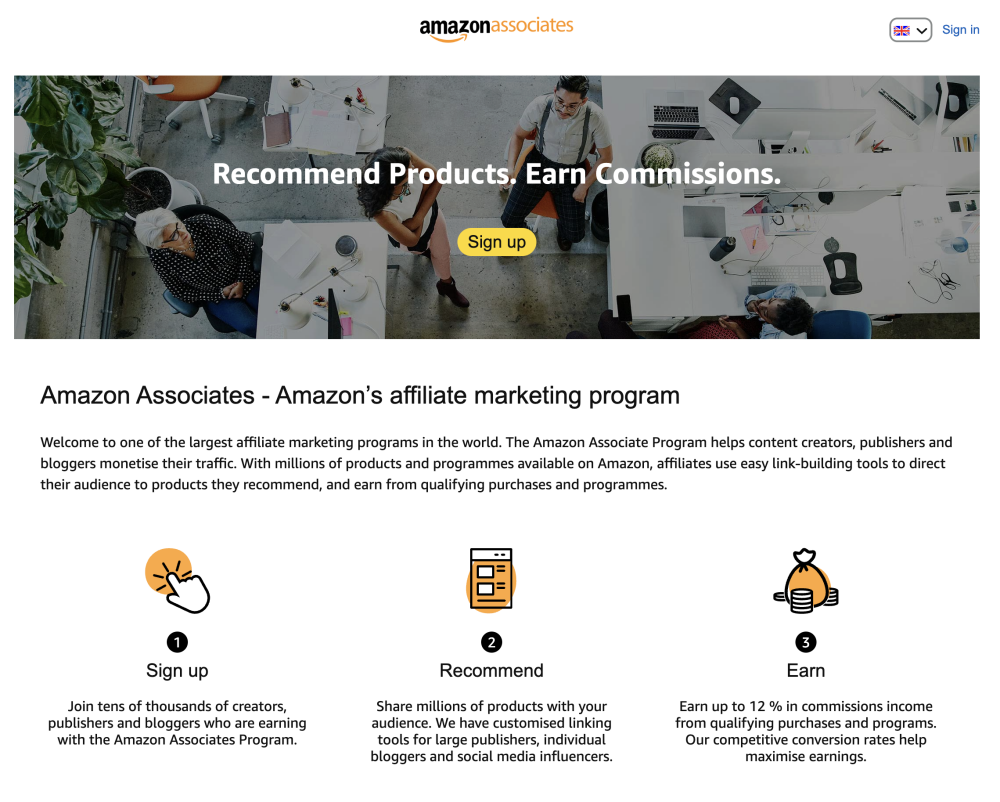
It allows bloggers, publishers and eligible content creators to earn commissions by directing people to products sold through Amazon.
The basic process is simple:
- You join the Amazon Associates programme.
- You create special tracked links to Amazon products.
- You add those links to relevant content.
- A reader clicks your link and visits Amazon.
- If they make a qualifying purchase, you may earn a commission.
You are not selling the product yourself.
Amazon handles the checkout, payment, delivery, returns and customer service. Your role is to create useful content that helps someone decide what they need and, where appropriate, point them towards a suitable product.
That distinction matters.
Amazon Associates works much better when the product recommendation supports the content you are already creating.
For example, imagine you run a family travel blog and publish:
“10 Things We Always Pack for a Long Car Journey With Kids”
- You could explain what genuinely helps your family and include Amazon links to relevant products.
- The post still needs to be useful without the links.
- The links simply give readers an easy way to find the products you are talking about.
That is the approach I recommend for parent bloggers.
Help first. Monetise where it makes sense.
How Does Amazon Associates Work?
Amazon uses special affiliate links, known as Special Links, to track visitors you send to its website.

When someone clicks one of those links, Amazon can identify that the visitor came from your content.
If that person goes on to make an eligible purchase during the qualifying session, you can earn a percentage of the sale.
The exact amount depends on what they purchase.
You Can Earn From More Than the Product You Linked To
One useful feature of Amazon Associates is that your commission is not always limited to the exact product you recommended.
Imagine you write about a £20 family board game.
A reader clicks your affiliate link but decides not to buy the game.
While they are on Amazon, they buy:
- A £50 kitchen appliance.
- £30 worth of books.
- A new £25 school bag.
Depending on Amazon’s current rules and the categories involved, those purchases may also generate commissions for you.
That is one reason Amazon can work well for bloggers.
You are often introducing someone to Amazon while they are already in a buying mindset.
Amazon Uses a Short Standard Referral Window
The downside is that Amazon’s standard qualifying session is relatively short.
In most cases, you are working with a 24-hour window after someone clicks your Special Link.
That means Amazon is usually better suited to readers who are already reasonably close to making a purchase.
Someone searching:
“Best lunchbox for a child who keeps spilling everything”
may be more commercially valuable than someone searching:
“What is a lunchbox?”
This is why search intent matters so much when you start creating affiliate content.
You do not need every article on your blog to target buyers.
You do need some content that naturally helps readers make decisions.
Your Commission Depends on the Product Category
Amazon does not pay one universal commission rate.
Different categories have different rates.
That means two bloggers could generate exactly the same amount in Amazon sales and earn different commissions depending on what their audiences buy.
A parenting blogger who regularly recommends books, home products and family essentials may have a very different earning profile from somebody covering gaming equipment or electronics.
We will look at Amazon’s commission structure later in this guide because it is important to understand before setting income expectations.
Is Amazon Associates Good for Parent Bloggers?
It can be.
Parent blogging and Amazon Associates actually fit together quite naturally because so much parenting content involves products.
Think about the questions parents search for every day:
- Which travel cot is easiest to use?
- What should I pack for a family holiday?
- Which school bag will actually last?
- What can I buy for a child who loves dinosaurs?
- What equipment do I need to start crafting with my kids?
- Which storage products help organise a small family home?
- What do I need for a long car journey with children?
Those questions have commercial potential, but they can still be genuinely helpful.
You are solving a problem first.
The product recommendation comes second.
You Do Not Need to Become a Product Review Blog
This is important.
Adding Amazon Associates to your monetisation strategy does not mean turning your blog into page after page of product reviews.
Suppose you write an article called:
“How to Keep Children Entertained on a Rainy Weekend”
The main purpose of that post might be giving parents ten activity ideas.
Within one section, you mention creating a simple craft box.
It would be perfectly natural to recommend some of the supplies needed for that activity.
Your content remains informational.
The affiliate links simply support it.
This creates far more flexibility than trying to build every article around something you can sell.
Parent Bloggers Have Plenty of Natural Product Categories
Depending on your niche, Amazon products can fit content around:
- Babies and toddlers.
- Toys and games.
- Books.
- School supplies.
- Family travel.
- Home organisation.
- Kitchen equipment.
- Crafts.
- Technology.
- Garden activities.
- Sports and hobbies.
- Gifts.
- Seasonal events.
You do not need to cover all of them.
In fact, you probably should not.
The strongest affiliate content usually matches the reason people already visit your blog.
A family travel blogger recommending luggage makes sense.
A budgeting blogger suddenly publishing “10 Best Gaming Chairs” probably does not.
Amazon Can Be Useful Even With a Small Audience
You do not necessarily need huge traffic to generate your first affiliate commissions.
What matters is having the right visitors reaching the right content.
For example:
1,000 people reading a broad informational article may generate very few product clicks.
But 100 people reading a detailed comparison because they are actively deciding what to buy could produce far more.
That is why I would focus less on asking:
“How much traffic do I need for Amazon Associates?”
and more on:
“Am I attracting readers who genuinely need help choosing something?”
That is a much better foundation for building affiliate income.
But Amazon Should Not Be Your Entire Monetisation Plan
This is where I would keep expectations realistic.
Amazon has some major advantages.
People recognise the brand. The product range is enormous. Creating links is straightforward once your account is set up.
But commissions can be relatively low.
If your blog eventually generates strong traffic and buying intent, you may find direct affiliate programmes that pay considerably more for certain products or services.
That does not mean you should abandon Amazon.
It means Amazon can sit alongside other income streams.
For a parent blogger, that could eventually look something like:
Useful blog content
→ Amazon Associates
→ Direct affiliate programmes
→ Display advertising
→ Email marketing
→ Your own products or services
You do not need all of those from day one.
Amazon Associates can simply be one piece of the puzzle as your blog develops.
Do You Need a Blog to Join Amazon Associates?
No. Amazon Associates is not limited to traditional websites.
Amazon can accept applications from eligible websites and certain established social media accounts.
But for the audience we are talking about here, I would still favour building around your own blog.
There is a simple reason for that.
Your blog gives you an asset you control.
A social platform can change its reach, rules or algorithm. Your website gives you somewhere permanent to publish useful content, build search traffic and add affiliate recommendations in context.
That makes it much easier to create the sort of content Amazon Associates works well with.
You might publish:
- Product comparisons.
- Gift guides.
- Tutorials.
- Resource lists.
- Reviews.
- Family activity ideas.
- Travel packing guides.
- Home organisation posts.
Then you can add Amazon links where they genuinely help the reader.
Social media can support that strategy, but I would not build your whole Amazon Associates plan around social platforms alone.
When Should You Apply for Amazon Associates?
This is one area where I would advise new bloggers to slow down.
You do not need to apply for Amazon Associates the moment your blog goes live.
In fact, applying too early can make the process harder than it needs to be.
Amazon reviews your website and content as part of the application process. It wants to see useful, original content and a site that is already functioning properly.
That means your first priority should be building something worth reviewing.
My Amazon Associates Readiness Check
Before applying, I would want most of these in place:
- Your website is live and working properly.
- You have chosen a clear niche or audience.
- You have published a reasonable amount of original content.
- Your latest content is recent.
- Your navigation makes sense.
- Your About page explains who the site is for.
- Your affiliate disclosure and relevant legal pages are ready.
- You already have articles where Amazon products would fit naturally.
- You have at least some realistic way of attracting visitors.
- You understand that Amazon will expect qualifying sales within the initial application period.
You do not need a perfect website.
You do need more than a domain with three thin posts and an Amazon link on every page.
For a parent blogger, I would rather spend the first few weeks creating genuinely useful content than rush into monetisation.
The links can come later.
The content is what gives people a reason to click them.
How to Join Amazon Associates
The application itself is fairly straightforward.
Joining is fairly straightforward, but there are a few things worth getting right before you apply, especially the timing of your application and the three qualifying sales requirements.
I have created a full walkthrough covering both Amazon.com and Amazon.co.uk, including what you need before applying, the application steps, the 180-day rule and what Amazon checks during its review. Read: How to Join Amazon Associates in 2026: Step-by-Step Guide for Bloggers
1. Visit Amazon Associates
Go to the Amazon Associates programme for the Amazon marketplace you want to promote.
For UK-focused bloggers, that will normally mean Amazon.co.uk Associates.
2. Sign In or Create an Amazon Account
You can use an existing Amazon account or create one specifically for your affiliate activity.
3. Add Your Account Information
Amazon will ask for details about you and the person or business that should receive payments.
4. Add Your Website or Eligible Social Accounts
You will need to tell Amazon where you intend to use your affiliate links.
Be accurate here.
Do not add one website during the application and then assume you can use your links anywhere you like afterwards.
5. Explain Your Content
Amazon asks questions about your website, audience and how you generate traffic.
This is another reason having an established blog helps.
It is much easier to explain:
“I help busy parents start and grow blogs, and I recommend relevant tools and products within tutorials and guides”
than:
“I have just launched a website and I am hoping to make money from Amazon.”
6. Create Your Associates ID
You will choose or receive an Associates Store ID connected to your account.
You can later create additional tracking IDs to measure different parts of your website or campaigns.
7. Start Creating Eligible Affiliate Links
Once your account is set up, you can begin creating Special Links and adding them to suitable content.
However, this does not mean your account has completed Amazon’s full review.
That happens later.
How Does the Amazon Associates Approval Process Work?
This is where Amazon Associates can confuse new bloggers.
You can start creating affiliate links after opening your account, but Amazon still needs to review your application.
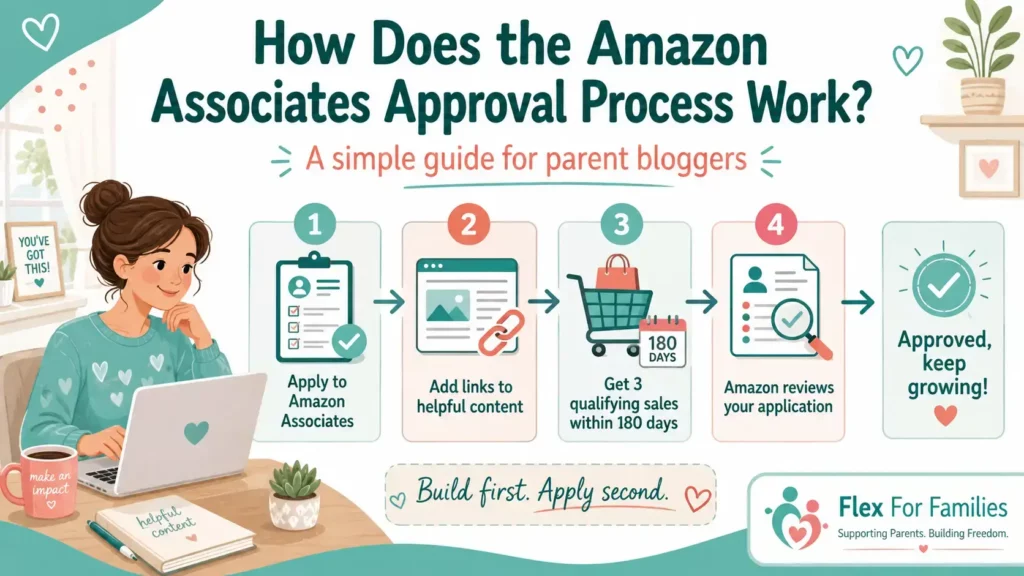
Amazon currently requires you to generate three qualifying sales within your first 180 days before it performs that fuller application review.
Those purchases need to meet Amazon’s rules.
Buying something through your own link does not count.
You also should not ask family members or friends to make purchases purely to help you reach the target.
The aim is to show Amazon that your content can generate genuine referred sales.
What Happens After Three Qualifying Sales?
Once you reach the required number of qualifying sales, Amazon reviews the websites or social accounts listed on your application.
It looks at whether your content and promotional methods meet its programme requirements.
If everything is satisfactory, your account can continue.
If Amazon rejects the application, you may lose access to that Associates account and need to address the issues before applying again.
That is why I think preparation matters more than speed.
What If You Do Not Make Three Sales Within 180 Days?
If you fail to generate the required qualifying sales during the initial period, Amazon may close the account.
That sounds scary, but it is another reason not to apply too soon.
If you have:
- No search traffic.
- No social audience.
- Very little content.
- No buying-intent articles.
then you are starting the 180-day clock before you have given yourself much chance of succeeding.
I would rather see you build the foundation first.
Then apply when you already have relevant content ready for Amazon links.
If Amazon rejects or withdraws your application, follow this step-by-step recovery guide before applying again.
What Could Cause an Amazon Associates Application to Be Rejected?
There are several possible reasons.
These can include problems such as:
- Too little original content.
- A website that feels unfinished.
- Content that does not meet Amazon’s programme standards.
- Using affiliate links in ways Amazon does not allow.
- Incorrect or incomplete website information.
- Failing to generate the required qualifying sales.
- Poor disclosure of your affiliate relationship.
- Applying with unsuitable or insufficiently established social accounts.
If your application has already been rejected, do not simply create another account and repeat exactly the same approach.
Work out what Amazon objected to first.
We will be creating a separate guide on Amazon Associates application rejections because there is enough to this topic to deserve its own walkthrough.
For now, the big lesson is simple:
Build first. Apply second.
You are much more likely to have a smooth experience if Amazon reviews a useful, established website rather than one you launched yesterday.
How Much Can You Earn With Amazon Associates?
This is the question most new affiliates eventually ask.
The answer is that Amazon Associates income can range from almost nothing to a meaningful monthly revenue stream.
It depends on several things:
- How much traffic you get.
- What type of content attracts that traffic.
- How many readers click your Amazon links.
- What products they buy.
- Which commission categories those products fall into.
- How well your content matches buying intent.
The important thing is not to assume that thousands of visitors automatically mean large Amazon commissions.
A smaller number of highly relevant readers can sometimes be worth far more.
A Simple Amazon Earnings Example
Imagine your blog refers £1,000 worth of eligible Amazon purchases during a month.
If the average commission rate across those purchases worked out at 3%, your commission would be around:
£1,000 × 3% = £30
If you referred £5,000 worth of qualifying sales at an average rate of 4%, that would be:
£5,000 × 4% = £200
And £10,000 worth of sales at an average 4% rate would produce:
£10,000 × 4% = £400
These figures are only examples.
Amazon pays different commission rates across different product categories, and rates can change.
But they show why Amazon is usually a volume game.
A £20 product paying 3% generates just £0.60.
You need either:
- More buyers.
- Higher-value baskets.
- Better-paying categories.
- Or a combination of all three.
That is why I would never tell a new parent blogger:
“Just add Amazon links and you can make £500 a month.”
You potentially can reach that level.
But it takes traffic, buying intent and enough referred sales to make the numbers work.
What Are the Amazon Associates Commission Rates?
Amazon does not pay one fixed percentage across every product.
Commission rates depend on the product category.
Some categories pay more than others, and Amazon can update its rate structure over time.
For example, Amazon UK currently lists different standard commission rates across areas such as:
- Fashion.
- Books.
- Home and kitchen.
- Beauty.
- Sports.
- Electronics.
- Grocery.
- Video games.
- Other general product categories.
That means the products your audience buys matter.
A parenting blogger who generates a lot of sales in home, books and family-related categories could earn a different effective commission rate from a technology blogger whose readers primarily purchase electronics.
Amazon does not pay a fixed percentage. See the current Amazon Associates UK commission rates and realistic earning examples.
Do Not Choose Your Niche Based on Amazon Commission Rates
This is worth saying.
I would not choose a blogging niche simply because one Amazon category currently pays a higher percentage.
Commission rates can change.
Your audience, experience and ability to create genuinely useful content matter much more.
If you already run a parenting, family travel, home organisation or craft blog, focus on the products that make sense for those readers.
Do not suddenly start recommending unrelated products because another category pays an extra percentage point.
That is a quick way to make your content feel forced.
Why Can Amazon Associates Commissions Fluctuate?
Even if your traffic stays fairly consistent, your Amazon income may move around from month to month.
There are several reasons.
Your readers may buy different products.
The average value of their orders may change.
Seasonality can make a huge difference.
A gift guide could perform strongly in November and December, then generate very little in February.
Some products may also be returned or cancelled, which can affect your final commission.
Then there are changes outside your control, such as:
- Amazon changing commission rates.
- Products going out of stock.
- Product prices changing.
- Seasonal buying habits.
- Changes in reader behaviour.
This is another reason I would not rely on Amazon Associates as your only income source.
The Advantages of Amazon Associates
Amazon Associates has some genuine strengths.
Amazon Is Already Familiar to Most Shoppers
You do not have to introduce an unknown retailer.
Many readers already have an Amazon account and understand how the checkout process works.
That can reduce friction between clicking your link and completing a purchase.
The Product Range Is Huge
Whatever your parent-blogging niche, there is a good chance Amazon stocks relevant products.
That can make it easier to monetise existing content without searching for a separate affiliate programme for every individual item.
It Is Free to Join
There is no membership fee for becoming an Amazon Associate.
That makes it accessible to newer bloggers who do not want additional monthly costs while their site is still growing.
You Do Not Handle the Sale
You are not managing:
- Stock.
- Delivery.
- Payments.
- Returns.
- Customer support.
Your job is to create useful content and send interested readers to Amazon.
You May Earn From Other Qualifying Purchases
A reader might click your link for one item and end up purchasing something else during the qualifying session.
That can sometimes produce commissions from products you did not specifically recommend.
It Fits Naturally Into Helpful Content
This is the biggest advantage for me.
Amazon works best when the recommendation is a useful extension of the article.
If someone is reading your guide because they need a particular solution, showing them where to find that solution can genuinely improve the content.
The Disadvantages of Amazon Associates
There are also some significant limitations.
Commission Rates Can Be Low
This is the obvious one.
You may need a considerable amount of referred spending to generate substantial income.
That makes Amazon very different from an affiliate programme that might pay £50, £100 or more for a single conversion.
The Standard Referral Window Is Short
Amazon’s normal 24-hour qualifying session means you generally want readers who are already reasonably close to making a purchase.
If someone clicks today and decides to come back several days later, you may not receive the commission.
Amazon Controls the Programme
You do not control:
- Commission rates.
- Programme policies.
- Product availability.
- Account reviews.
- The Amazon website.
- Whether particular products remain available.
Amazon can change any of those things.
That is a major reason to diversify as your blog grows.
There Are Strict Rules to Follow
Amazon Associates is not a programme where you can simply put links anywhere you want.
There are rules around disclosures, where links can appear, how Amazon branding and product information can be used, and how you promote your affiliate relationship.
We will cover the most important rules later in this guide.
Products Change Constantly
A product you recommend today might:
- Go out of stock.
- Change seller.
- Increase in price.
- Receive poor recent reviews.
- Be replaced by a newer model.
- Disappear completely.
Product-focused posts need maintenance.
That is worth considering when deciding how much Amazon content you want to create.
Should Amazon Associates Be Your Main Affiliate Programme?
For most parent bloggers, I would say no.
It can be an excellent programme to include.
I just would not want your entire affiliate income depending on it.
As your site develops, you may find direct affiliate programmes that offer:
- Higher commission rates.
- Longer referral windows.
- Recurring commissions.
- Fixed payments per customer.
- Better promotional materials.
- Stronger relationships with the brands you recommend.
You do not have to choose between Amazon and those programmes.
You can use both.
For example, imagine you write about starting a family camping setup.
Amazon might be useful for:
- Torches.
- Sleeping bags.
- Cooking equipment.
- Storage boxes.
- Camping accessories.
A specialist camping retailer might offer a stronger direct affiliate programme for tents or larger equipment.
That gives your readers options and stops your monetisation strategy depending entirely on one company.
For me, that is the sensible way to think about Amazon Associates.
Use it where it helps.
Do not make it responsible for everything.
What Kind of Content Works Best With Amazon Associates?
Amazon Associates works best when the reader already has a reason to care about the product.
That sounds obvious, but it is where a lot of affiliate content goes wrong.
You do not need to find an Amazon product and then create an excuse to promote it.
Start with the problem your reader is trying to solve.
Then decide whether a product recommendation genuinely helps.
Product Reviews
Reviews can work well when someone is already researching a specific product.
A useful review should answer questions such as:
- What does the product actually do?
- Who is it best for?
- What are the main drawbacks?
- Is it good value?
- Are there better alternatives?
- Would you recommend it?
The stronger the buying intent, the more naturally an Amazon link can fit.
Product Comparisons
Comparison posts can be especially useful because the reader is already weighing up options.
Examples could include:
- Two family travel products.
- Two child-friendly tablets.
- Two storage systems.
- Two craft kits.
- Two popular parenting books.
The key is to help the reader choose.
Do not simply list features and then add affiliate buttons.
Gift Guides
Gift guides are an obvious fit for Amazon because people are actively looking for ideas.
Parent bloggers could create guides around:
- Birthday gifts.
- Christmas gifts.
- Gifts for new parents.
- Gifts for grandparents.
- Gifts for children with specific interests.
- Budget-friendly gifts.
- Last-minute gift ideas.
Seasonality matters here.
A Christmas gift guide published on 20 December is unlikely to reach its full potential.
Good seasonal affiliate content should be planned early enough to rank, get shared and build momentum before people start buying.
Resource Lists
Resource lists can also work well.
For example:
“Everything You Need to Start Family Camping”
or:
“My Essential Supplies for Kids’ Crafting”
These posts can help readers solve several related problems in one place.
Just make sure the article is more than a collection of affiliate links.
Explain why each recommendation deserves to be there.
Helpful Tutorials
You do not always need obvious buying-intent content.
A tutorial can naturally include relevant products too.
Imagine you publish:
“How to Create a Homework Station in a Small Home”
The article could explain:
- Where to position it.
- How much space you need.
- How to organise supplies.
- How to reduce distractions.
- How to keep everything tidy.
Within that guide, it would be completely natural to mention storage trays, desk organisers or stationery that helps with the setup.
The tutorial solves the problem.
The products support the solution.
Help First, Monetise Second
This is the approach I would encourage throughout your blog.
Before adding an Amazon link, ask yourself:
“Would this recommendation still be useful if I earned nothing from it?”
If the answer is yes, you are probably on the right track.
If the only reason the product appears is because you can earn a commission, think again.
Readers can tell when every paragraph is trying to push them towards a purchase.
Affiliate marketing works better when people trust that you are recommending something for a reason.
For parent bloggers especially, that trust matters.
You are often writing about decisions involving someone’s children, family budget or home.
That deserves more care than simply choosing whichever product pays the most.
How to Use Amazon Affiliate Links Without Annoying Your Readers
You do not need an affiliate link every few sentences.
In most cases, fewer well-placed links will create a better reader experience than turning the article into a catalogue.
Explain Why You Are Recommending Something
Do not just write:
“Buy this lunchbox here.”
Give the reader some context.
Why did you choose it?
What problem does it solve?
Who would benefit from it?
Is there anything they should know before buying?
That information is what makes your recommendation useful.
Put Links Where They Make Sense
An affiliate link should appear close to the section where you discuss the product.
There is little value in adding unrelated Amazon links purely because somebody might click them.
Give Readers Choices
You do not always need to recommend one product as the universal winner.
Sometimes the useful answer is:
- Best budget option.
- Best for younger children.
- Best for travel.
- Best if space is limited.
That gives readers a recommendation based on their own circumstances.
Do Not Pretend You Have Used Something When You Have Not
This is particularly important.
If you personally own and use a product, say so.
If you have researched something but have not personally used it, make that clear too.
You can still create useful comparison and research-based content.
You just need to be transparent about the basis of your recommendation.
Keep Old Posts Updated
Affiliate content ages.
Links break.
Products disappear.
Newer versions launch.
Prices and availability change.
Reviews change.
Set aside time periodically to check your strongest Amazon posts and make sure the recommendations still make sense.
You do not need to update every post every week.
Focus on the pages that attract traffic and generate clicks first.
Amazon Associates Rules Bloggers Need to Know
This is the part that should not be skipped. I have also created a separate guide, Amazon Associates Rules Bloggers Need to Know, which you might find useful.
Amazon Associates has detailed programme policies, and those rules can change.
You should always check the current Amazon Associates Operating Agreement and policies rather than relying entirely on an old tutorial.
There are, however, several core areas every blogger should understand.
You Must Disclose Your Affiliate Relationship
Readers should know when you may earn money from a recommendation.
Amazon also requires Associates to identify themselves appropriately.
The required statement is:
“As an Amazon Associate I earn from qualifying purchases.”
Your affiliate disclosure should be clear and easy to find.
For individual pieces of content containing affiliate links, I would also use a short disclosure near the beginning so readers do not have to hunt for it.
For example:
“This post contains affiliate links. If you buy through one of my links, I may earn a commission at no extra cost to you.”
Then make sure your site also includes Amazon’s required Associates identification wording.
Only Use Amazon Links Where They Are Allowed
Do not assume that because Amazon has given you an affiliate link, you can paste it anywhere.
Amazon has rules about where Special Links can be used.
That is why your website and eligible public social channels should be properly listed and kept up to date within your Associates account.
I would avoid using Amazon affiliate links in private messaging, SMS or other channels unless Amazon’s current rules specifically allow that method.
When in doubt, check the policy before publishing.
Do Not Buy Through Your Own Affiliate Links
You cannot use your Amazon affiliate links to earn commission on your own purchases.
You also should not arrange for friends or relatives to use your links simply to generate qualifying purchases or commissions.
Amazon is looking for genuine customer referrals.
Be Careful With Amazon Prices and Product Information
One common mistake is manually copying Amazon prices into an article and leaving them there indefinitely.
Prices change.
Availability changes.
Amazon also has rules about how product data, images, trademarks and pricing information can be displayed.
Unless you are using an approved method that keeps that information compliant and current, I would avoid building your content around manually copied Amazon pricing.
You can usually write:
“Check the latest price on Amazon”
rather than hard-coding a price that may be wrong tomorrow.
Do Not Make Misleading Claims
Affiliate disclosures should not be hidden.
Product recommendations should not pretend to be independent if you are being paid.
And you should not make false or exaggerated claims simply to encourage a click.
That is good affiliate practice anyway, regardless of Amazon’s rules.
Keep Your Associates Account Updated
If you add a new website or eligible social property where you plan to use Amazon links, update your account accordingly.
Do not assume an approval for one website automatically covers everything you create in the future.
Can You Use Amazon Associates on Social Media?
Yes, Amazon Associates can be used with certain eligible social media properties, subject to Amazon’s current programme requirements.
However, there are important differences between:
- A public social profile.
- A page.
- A channel.
- A private group.
- A direct message.
- An email.
- A website.
You should not treat all of those as interchangeable.
Amazon currently recognises certain established social networks for Associates applications, but your account and promotional methods still need to meet its eligibility and disclosure requirements.
We cover this properly in our separate guide because there is enough detail to warrant its own article. Read Amazon Associates on Social Media and YouTube: What You Need to Know to understand how to use Social Media with Amazon Associates.
For now, if your main goal is building a long-term parent blogging business, I would treat your website as the centre of the strategy and use social media to support it.
When Should You Promote Amazon Products?
The best time to recommend an Amazon product is when it matches the reader’s problem and intent.
That might be within evergreen content.
It might also be seasonal.
Evergreen Opportunities
These can work throughout the year:
- Parenting essentials.
- Family organisation.
- Books.
- Home equipment.
- Travel accessories.
- Craft supplies.
- Educational products.
- Tech used by families.
Seasonal Opportunities
Some categories have much stronger buying periods.
Examples include:
- Back-to-school.
- Christmas.
- Birthdays.
- Summer holidays.
- Easter activities.
- Father’s Day.
- Mother’s Day.
- Family camping season.
The important part is to create seasonal content early.
If you rely on search traffic, Google needs time to discover, understand and potentially rank the page.
If you use Pinterest or social media, you also want enough lead time for people to save and share the content.
Buying Intent Matters More Than Filling Your Blog With Links
I would much rather have ten articles where Amazon products genuinely fit than fifty posts containing random affiliate links.
Focus on the moments where the reader is already asking:
“Which one should I buy?”
“What do I need?”
“Is this worth it?”
“What is the best option for my situation?”
Those are the places where affiliate recommendations can add the most value.
Is Amazon Associates Worth It for Parent Bloggers?
For many parent bloggers, yes.
But it depends on how you plan to use it.
Amazon Associates makes the most sense when you already create content where readers naturally need product recommendations.
If you write about:
- Family travel.
- Parenting.
- Home organisation.
- Crafts.
- Books.
- Children’s activities.
- Family technology.
- Gifts.
- Hobbies.
- Everyday family life.
then Amazon can give you a simple way to monetise some of that content.
The mistake would be assuming that joining Amazon Associates automatically turns those articles into income.
It does not.
You still need people to find your content.
You need them to trust your recommendations.
And ideally, some of those visitors need to arrive when they are already considering a purchase.
Amazon Associates Is Worth Considering If…
Amazon could be a good fit if:
- Your blog already contains useful product-related content.
- Your niche naturally involves products people buy online.
- You want access to a huge range of products without joining dozens of separate affiliate programmes.
- You are comfortable earning smaller commissions across a larger number of purchases.
- You are willing to follow Amazon’s programme rules carefully.
- You see Amazon as one part of your monetisation strategy.
Amazon Associates May Not Be Your Best Priority If…
I would probably hold off if:
- Your website has only just launched.
- You have very little original content.
- You have no realistic source of visitors yet.
- Your niche rarely involves physical products.
- You are expecting Amazon alone to produce significant income quickly.
- You do not want to maintain product-led content.
- You would rather promote products or services offering much larger commissions.
There is nothing wrong with deciding Amazon is not your priority yet.
Monetisation works better when it matches the stage your blog has reached.
Amazon Associates vs Other Affiliate Programs
One of the biggest mistakes new bloggers make is thinking they need to choose one affiliate network or programme.
You do not.
Amazon Associates can work alongside direct affiliate partnerships and other affiliate networks.
Each has different strengths.
Amazon Associates
Amazon gives you:
- A huge catalogue of products.
- Strong brand recognition.
- A familiar checkout process.
- Lots of opportunities across different topics.
- The possibility of earning from other qualifying purchases made during the referral session.
The trade-off is generally lower commissions and a short standard referral window.
Direct Affiliate Programs
Some brands run their own affiliate programmes.
These can sometimes offer:
- Higher percentage commissions.
- Fixed payments for each customer.
- Longer referral windows.
- Exclusive discounts.
- Better relationships with the company.
- Promotional assets created specifically for affiliates.
If you regularly recommend one particular brand, checking whether it operates a direct programme can be worthwhile.
Affiliate Networks
You will also find brands through larger affiliate networks.
Depending on your niche, these can give you access to multiple companies through one account.
That can make managing partnerships easier as your blog grows.
Which Should You Choose?
Often, the answer is a mixture.
Imagine you run a family travel blog.
You could use Amazon for:
- Travel adapters.
- Children’s headphones.
- Packing cubes.
- Travel games.
- Backpacks.
You might then use direct or network-based affiliate programmes for:
- Hotels.
- Travel insurance.
- Attractions.
- Holiday bookings.
- Larger travel products.
Amazon handles the smaller everyday products.
Higher-paying partnerships handle bigger purchasing decisions.
That is a much healthier affiliate model than expecting one programme to do everything.
Should You Focus on Niche Products With Amazon Associates?
Generally, yes.
Your Amazon recommendations should match the audience you have chosen to help.
That does not mean every product must fall into one tiny category.
It means your recommendations should make sense within the wider topic of your website.
For example, a blog helping families travel with children could naturally recommend:
- Children’s luggage.
- Travel games.
- Portable chargers.
- Car organisers.
- Headphones.
- Travel pillows.
- Packing accessories.
Those products are different, but they all serve the same audience.
That creates a clear relationship between your content and your affiliate recommendations.
Build Product Clusters Around Reader Problems
Rather than randomly choosing individual products, think about groups of problems your readers have.
For example:
Family road trips could lead to content around:
- Best travel games for children.
- Car organisation products.
- Children’s headphones.
- Travel snack containers.
- Long-journey essentials.
Family camping could lead to:
- Camping equipment for beginners.
- Children’s sleeping bags.
- Family camping lights.
- Outdoor games.
- Cooking accessories.
You are building useful topical coverage.
Amazon simply gives you one way to monetise that coverage.
How I Would Use Amazon Associates as a New Parent Blogger
If I were starting a parent blog today, I would not make Amazon Associates my first objective.
My priorities would look more like this:
Step 1: Choose Who You Want to Help
Get clear on your audience and the problems you want your blog to solve.
That makes everything else easier.
Step 2: Build Useful Content
Create a foundation of genuinely helpful articles.
Some can be purely informational.
Others can naturally involve products.
You need both.
Step 3: Start Attracting Visitors
Learn the basics of search, social media or whichever traffic channels make sense for your blog.
You do not need thousands of visitors before thinking about monetisation.
But you do need a plan for getting your content seen.
Step 4: Identify Your Commercial Content
Look through the articles you have already published.
Which ones naturally involve buying decisions?
Those are your early Amazon opportunities.
Step 5: Apply When Your Blog Is Ready
Once you have a functioning site, original content and a realistic opportunity to generate your first qualifying sales, then I would apply.
Not because somebody told you every blogger needs Amazon.
Because your site is actually ready to use it.
Step 6: Add Amazon Links Naturally
Do not suddenly go back through every article and insert Amazon links everywhere.
Start with the strongest opportunities.
A useful comparison.
A relevant product recommendation.
A resource guide.
A buying guide.
Step 7: Track What Happens
Once clicks and sales start coming through, pay attention to what works.
Which articles generate clicks?
Which products sell?
Which types of content attract people who are ready to buy?
That information can help shape future content.
Step 8: Diversify as You Grow
As your blog attracts more traffic, look beyond Amazon too.
You may discover direct affiliate programmes that pay significantly more for products and services your audience already wants.
Amazon does not need replacing.
It simply becomes one part of a wider strategy.
My Recommendation for Parent Bloggers
I think Amazon Associates is worth considering for most parent bloggers whose content naturally involves physical products.
It gives you access to an enormous catalogue, readers already know the retailer, and you can begin monetising buying-intent content without negotiating individual partnerships with every brand you mention.
But I would approach it in the right order.
Build useful content first.
Apply when your site is ready.
Use Amazon only where a recommendation genuinely helps.
Track what readers respond to.
Then gradually add other affiliate programmes as your traffic, experience and authority grow.
That approach may take longer than filling every article with product links.
It is also much more likely to produce a blog that readers trust and want to return to.
And that trust is what gives affiliate marketing a chance to work in the first place.
Final Thoughts: Is Amazon Associates a Good Place to Start?

Amazon Associates can be a useful way to start monetising a parent blog.
It is free to join. Amazon stocks products across almost every family-related niche. Your readers already know the retailer, and affiliate links can fit naturally into helpful content.
But I would not rush into it.
Your first job is building a useful blog.
Create content that answers real questions. Start attracting the right readers. Work out where product recommendations genuinely improve an article.
Then monetise those opportunities.
Amazon Associates becomes much more useful when you stop thinking:
“What can I promote?”
and start asking:
“What does my reader need help with?”
Sometimes the answer will involve an Amazon product.
Sometimes another affiliate programme will offer a better solution.
Sometimes the reader does not need to buy anything at all.
That is fine.
A strong affiliate blog does not need every visitor to generate a commission.
It needs readers to trust the recommendations you make when buying something does make sense.
For parent bloggers, I think Amazon Associates can earn its place within that strategy.
Just do not expect it to build the strategy for you.
Get The Free Parent Blogging Starter Kit
If you are still building the blog that will eventually generate your affiliate income, I have created something to help.
The Parent Blogging Starter Kit includes seven practical resources designed to help busy parents choose a niche, plan their content and start building a blog around family life.
Inside you will get:
✓ Family Flexibility Planner
✓ Family Flexibility Roadmap
✓ Parent Blog Niche Finder Workbook
✓ 50 Blog Post Ideas For Busy Parents
✓ Weekly Blogging Planner
✓ Family-Friendly Income Tracker
✓ Nap Time Blogging System
Value: £49+
Free for Flex For Families readers.
Get The Free Parent Blogging Starter Kit
Enter your details below and I’ll send you instant access to all seven resources designed to help busy parents build a blog around family life.
Amazon Associates FAQs
Is Amazon Associates free to join?
Yes. There is no fee to apply for or participate in the Amazon Associates programme.
You will still need somewhere eligible to publish your affiliate links, such as an appropriate website or qualifying social media property.
Do I need a website for Amazon Associates?
Not necessarily.
Amazon accepts certain eligible social media properties as well as websites.
However, if you are building a long-term blogging business, I would still make your website the centre of your strategy. It gives you somewhere you control to publish useful content, build search traffic and create product recommendations in context.
When should I apply for Amazon Associates?
I would apply once your website is established enough to give you a realistic chance of generating qualifying sales and passing Amazon’s review.
You should have useful original content, a functioning website and some idea of how you will attract visitors.
Applying on the day you launch your blog simply starts the clock before you have built much of a foundation.
How many sales do you need for Amazon Associates approval?
Amazon currently requires three qualifying sales within your first 180 days before it carries out the fuller review of your application.
Your own purchases do not count, and you should not arrange purchases purely to meet the requirement.
How much does Amazon Associates pay?
There is no single commission rate.
Amazon pays different percentages depending on the product category, and those rates can change.
This is why two affiliates generating the same amount of referred sales can earn different commissions.
How long does an Amazon affiliate cookie last?
Amazon’s standard qualifying session is generally 24 hours after someone clicks your affiliate link, although Amazon’s full rules include additional conditions around when a session begins and ends.
That short window is one reason buying-intent content can work particularly well with Amazon Associates.
Can I use Amazon affiliate links on social media?
Amazon allows Associates to use links with certain eligible social media properties, subject to its current programme rules.
You should make sure the property is eligible, properly listed within your Associates account and that your affiliate relationship is clearly disclosed.
Do not assume that public social media, private groups, messages, email and SMS all follow the same rules.
Can I buy through my own Amazon affiliate link?
No.
Amazon does not allow Associates to earn commission from purchases made through their own affiliate links.
You should also avoid arranging for friends or relatives to make purchases through your links simply to generate commissions or meet Amazon’s qualifying-sales requirement.
Is Amazon Associates worth it for a small blog?
It can be.
A small blog with highly targeted buying-intent traffic may generate more Amazon sales than a much larger blog attracting readers who have no intention of buying anything.
Traffic matters, but relevance and intent matter too.
Can you make £500 a month with Amazon Associates?
It is possible, but you should look at the maths before setting that as an expectation.
If your effective commission rate averaged 4%, earning £500 would require around £12,500 in qualifying referred sales.
At an average rate of 3%, it would require roughly £16,667.
That does not mean you cannot achieve it. It shows why Amazon Associates usually works better as one part of a wider monetisation strategy rather than your entire income plan.
Let’s Chat
Are you already using Amazon Associates, or are you still deciding when to apply?
Maybe your blog is brand new and you are wondering whether you have enough content yet.
Perhaps you have already joined but are struggling to generate those first qualifying sales.
Or maybe you are getting clicks and trying to work out how Amazon fits into your wider affiliate strategy.
Let me know where you are in the comments.
If there is an Amazon Associates question you are struggling with, leave that too. It may well become one of the next guides I create.