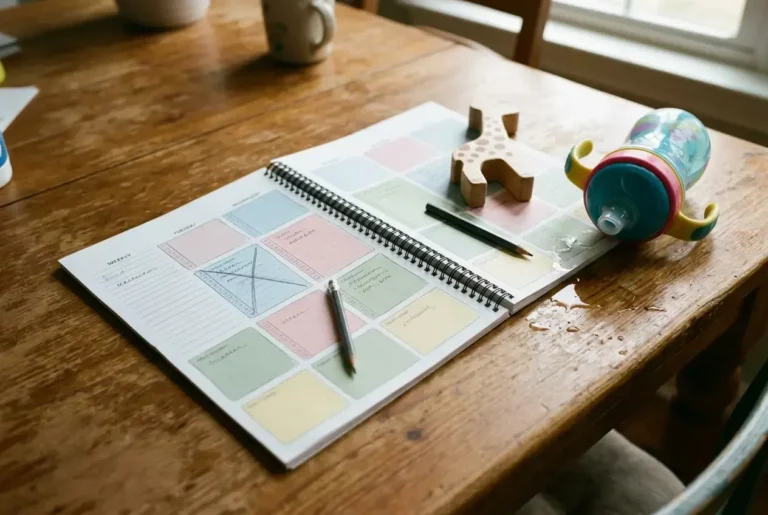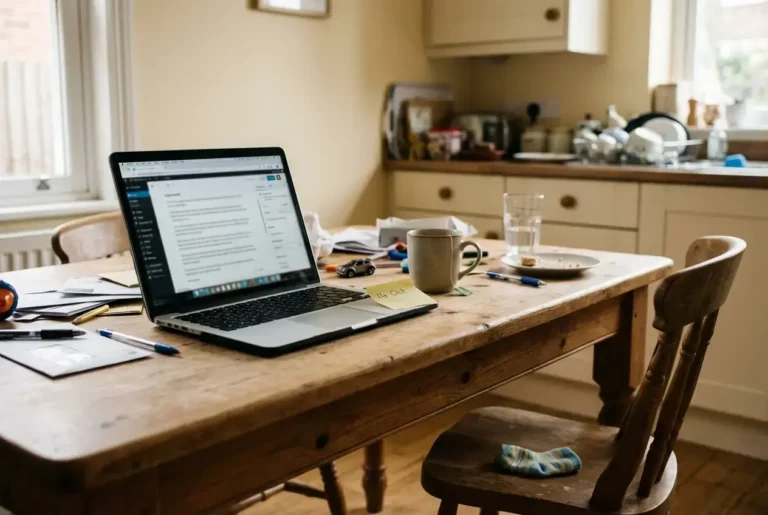

If you have no spare room, the home office ideas for small spaces that work best are the ones that can be set up and put away again. A parent who blogs from a shared home usually works at a table or a corner that belongs to the whole family. That is fine, because the aim is a spot you can sit down at and start working within a couple of minutes.
You can do this with furniture you already own. This guide covers how to choose the spot, what the spot needs, and how to clear it when someone needs the table back.
Pick Your Spot By When You Work, Not By What Looks Nice
The best corner of the house on paper is often the wrong one at 2 p.m. or 9 p.m. Start with the hours you can realistically write, then look for the place that suits those hours.
Think about the usual windows for parents:
- Nap time or quiet time in the afternoon
- After the kids’ bedtime in the evening
- Early morning before the house wakes up
- School hours, if your children are in school part of the day
Then ask a few plain questions about each possible spot during that window:
- Who else is in the room at that time?
- Is there enough light, from a window or a lamp?
- Is there a power outlet within reach of your laptop charger?
- Can you hear a sleeping or playing child from there?
- Can you leave the space without it being in the way of meals or play?
A kitchen table works well for a nap-time session because you can hear the baby monitor and reach the kettle. The end of the sofa suits evenings, once the living room is quiet. A corner of the bedroom may suit early mornings, because nobody else is using it yet.
Choose one spot and use it for two weeks before you judge it. Moving around from day to day makes it harder to settle into work, and a spot only starts to feel like yours after a few repeats.
The Small-Space Basics: A Surface, A Seat You Can Sit in For an Hour
Everything else is optional. You need a surface at a workable height and a seat that does not hurt after an hour.
The surface
Any of these can serve as a work surface:
- The dining or kitchen table
- A kitchen counter, paired with a stool
- A sturdy chest of drawers or bookshelf top, if you prefer to stand
- A large tray or board on your lap, as a last resort for sofa sessions
A table is the easiest, since it is flat and deep enough for a laptop and a notebook. If you will be sharing it with meals, plan for clearing it, which the pack-away section below covers.
The Seat
Sit in the chair for a full hour before you decide it will do. Dining chairs are made for meals of about twenty minutes, so many of them become uncomfortable fast. A cushion from the sofa, or a folded towel on the seat, often fixes it.
A few adjustments you can make without buying anything:
- Put your feet flat on the floor. If they dangle, rest them on a box or a stack of books.
- Lift your laptop on a few books so the top of the screen sits near eye level. This only works if you have a separate keyboard to use with it. If you do not, keep the laptop flat and take short breaks to stretch your neck.
- Keep your elbows roughly level with the table so your shoulders can relax.
None of this is a medical prescription, but a seat that suits you is the difference between an hour of writing and twenty minutes of shifting around.
Make It Feel Like A Workplace Without Buying A Desk
A table that is also where breakfast happens can still feel like a workplace if you treat it the same way each time. What makes a space feel like work is a few repeated objects, not the desk.
Choose a small set of things that only appear when you are working:
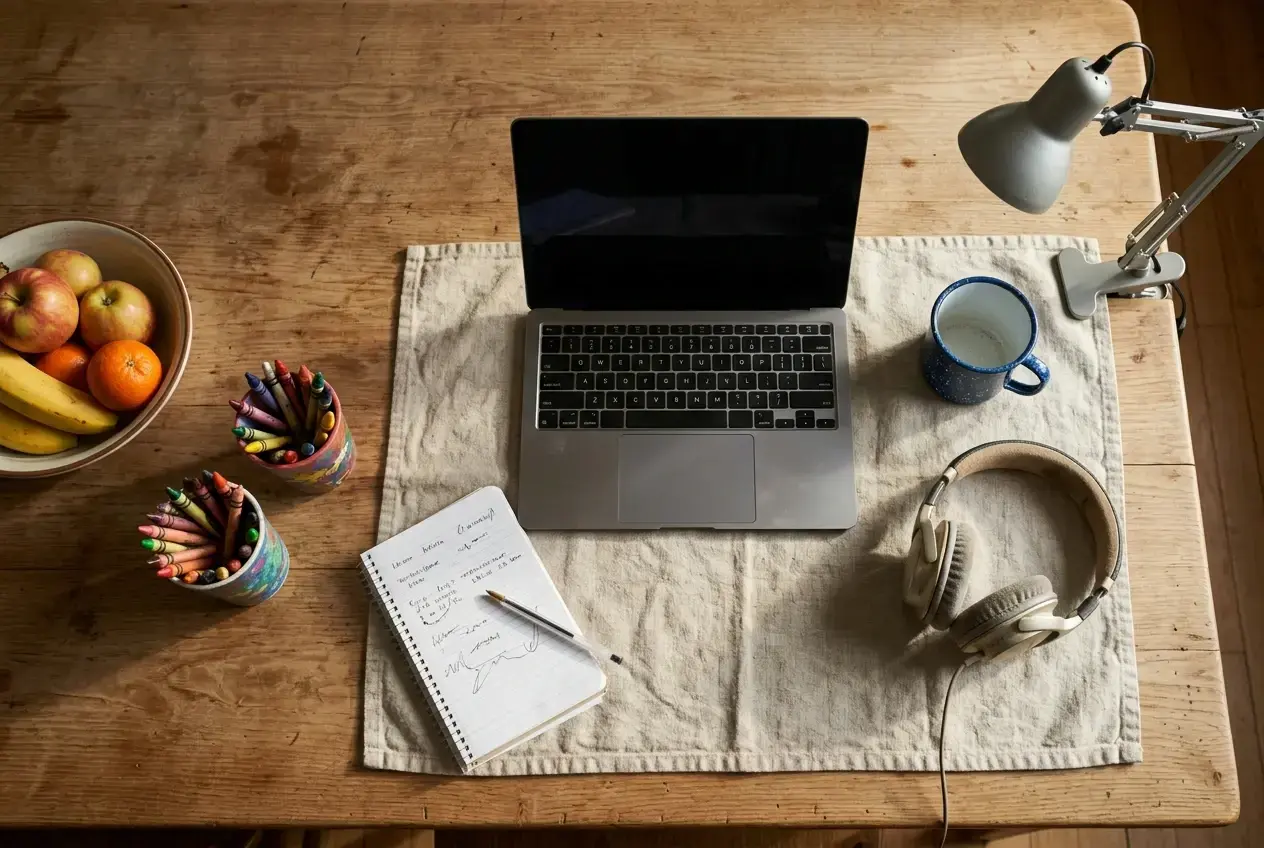
- A particular mug or water bottle
- A notebook and pen kept just for blog planning
- A lamp or clip-on light, if the room is dim
- A placemat, cloth or tray that marks out your part of the table
- A pair of headphones, even if you only use them for music without lyrics
Setting these in the same arrangement each time gives your mind a cue. The placemat in particular does a lot of work for no money. Everything inside its edges is yours, and everything outside belongs to the family.
A plant, a photo or a small object you like is a fine addition if you have one. Keep it to what you already own, though. A new desk will not make your writing better, and the budget is better spent on things that matter later, such as hosting or training.
If you are still working out which tools are worth having, you may find it easier to start with what is already on your phone and laptop and add only when something is missing.
A Pack-Away Setup For When Little Ones Need The Table Back
A shared table has to be cleared several times a day. If clearing takes fifteen minutes, you will dread it, and if setting up takes fifteen minutes, you will skip the session. The target is under five minutes each way.
The simplest method is a work kit: one box, bag or basket that holds everything you need, kept in one place such as a shelf, a cupboard or under a bed.
A typical kit holds:

- Laptop and charger
- Notebook and pen
- Headphones
- Your placemat or tray
- A sticky note with your next task written on it
The Pack-Away Routine
- Save your work and close extra tabs, so it is ready to reopen.
- Write one line on the sticky note: what you will do first next time.
- Put the laptop, charger and notebook in the kit.
- Wipe the table, or fold the placemat, and return the kit to its shelf.
The sticky note is worth the ten seconds. It means that the next session begins with a decision already made, and you do not spend your first ten minutes working out where you stopped.
Plug the charger in at the start of every session, and keep the laptop charged between sessions. Battery trouble in the middle of a nap-time window costs more time than any other small problem.
Keeping Kids, Cords and Clutter Out of Your Work Zone
Small children are drawn to anything that looks important to a parent. A laptop, a cable and a cup of tea are all interesting to a toddler, so a little planning around those things helps.
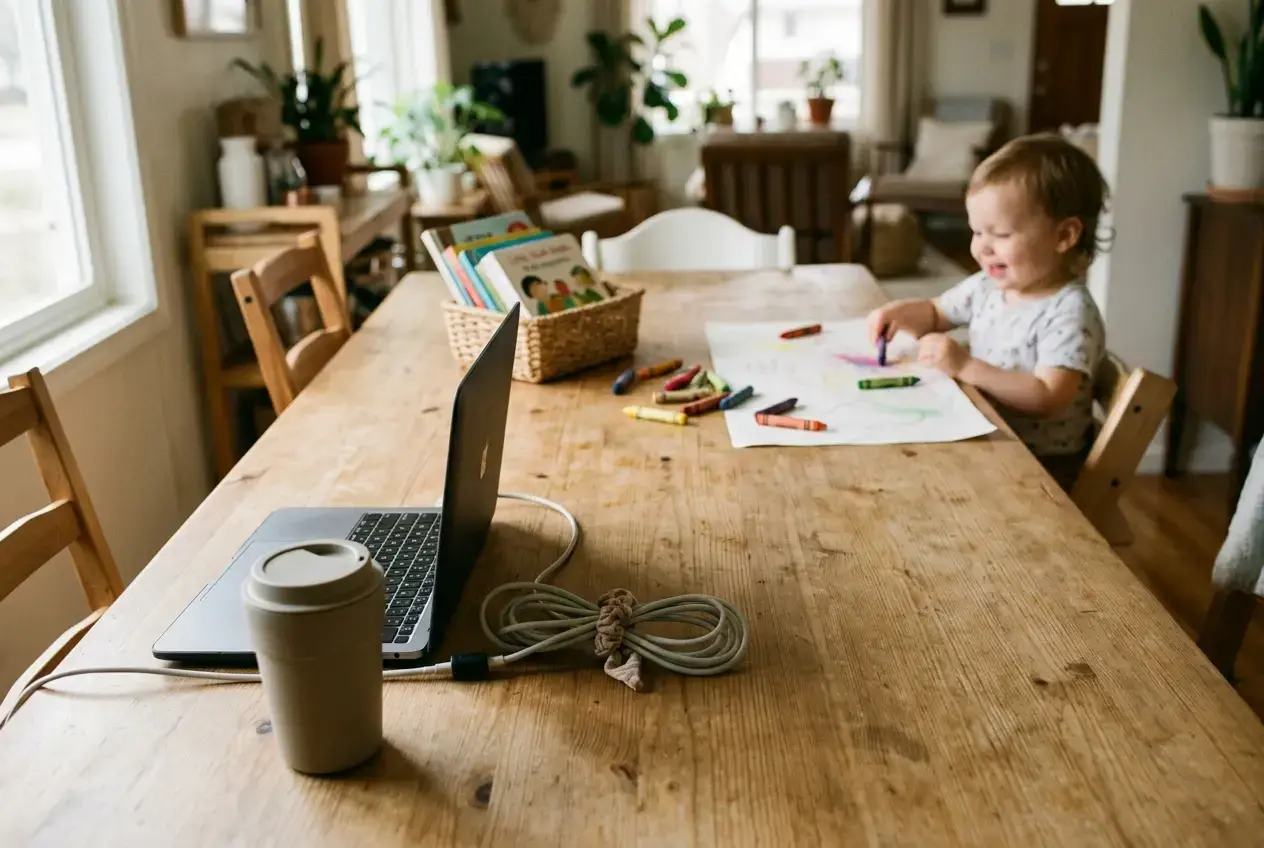
Cords
Run cords along the wall or the back of the table, away from where people walk. A clip, a piece of tape or a hair tie can keep a cable bundled. Keep power strips and chargers out of a small child’s reach, and unplug them when you pack away. If a cord cannot be kept out of reach, work from a different spot for that session.
Drinks and Small Items
Use a drink with a lid. Keep pens, paperclips and anything small inside the kit when you are not using them, especially with children who put things in their mouths.
Giving Children Something of Their Own
A child who has something to do beside you is less likely to want your laptop. A few ideas:
- A basket of toys or books that only comes out during your work time
- Paper and crayons at the other end of the table
- A cushion or mat near you for a baby, if you work from the floor or sofa
Keeping the basket special matters. If those toys are available all day, they stop being interesting by the time you sit down.
Clutter
Keep a rule that your zone holds only what is in your kit. Mail, toys and snack plates can be moved to the other end of the table or to a counter. A tidy few square feet is easier to keep tidy than a whole room.
Small Signals That Tell Your Brain (and Your Family) it’s WorkTime
Signals are quick actions that mark the start and end of work. They help you settle in, and they tell the people around you what you are doing.
For you:
- Switch on the lamp, or put on your headphones
- Open the notebook to the sticky note with your first task
- Set a timer for the length of the session
For your family:
- Use a visible timer that older children can see, so they know when you will be available again
- Agree with a partner or another adult on a plain phrase, such as “I’m working until the timer goes off”
- Give young children a simple picture or card that sits on the table while you work
Short sessions suit this approach. A thirty-minute block with a clear end is easier for a child to understand than “later”, and it is easier for you to protect. Small steps matter, and a few focused blocks add up over a week.
If a session gets interrupted, that is normal with children. Write where you stopped on the sticky note and carry on when you can.
Final Thoughts: Setting Up A Home Office Space Around Kids
A home office in a small space comes down to a handful of choices: a spot that suits your working hours, a chair you can sit in, a few objects that mark it as yours, and a kit that packs away in minutes. You can have all of that today with what is already in your home. Let’s keep it simple, and adjust as you learn what your household needs.
If you want ideas for fitting work into a family schedule beyond the physical setup, how parents can earn from home without sacrificing family time covers that side in more detail.
If you’re still deciding where your blog will live once your corner is ready, take a look at what beginners actually learn inside Wealthy Affiliate in Wealthy Affiliate Training Explained and see whether it fits the way you want to build around your life. No rush, take your time.
Let’s Chat
I’d love to hear from you. What are your ideas for blogging at home with the kids running around? Any thoughts on the content, please let me know. If you also have any questions, write them in the comments section and I’ll get back to you as soon as I can.