
You can start affiliate marketing without a website. You still need somewhere to publish useful content, attract an audience and place links that your affiliate programmes allow.
YouTube, social media, Pinterest, email, podcasting, online communities and paid advertising can all play a part. However, they do not offer the same control, flexibility or long-term potential.
For a busy parent, the easiest option is not always the best one. A platform may be free to join but require daily content. Another may let older content keep attracting people but take longer to build.
This guide compares seven realistic ways to do affiliate marketing without a website. It also explains the rules you need to check, which options suit beginners and when creating your own website becomes worthwhile.
The Quick Answer
Yes, you can do affiliate marketing without a website. You could publish videos on YouTube, create social media content, use Pinterest, build an email newsletter, start a podcast, contribute to online communities or use paid advertising.
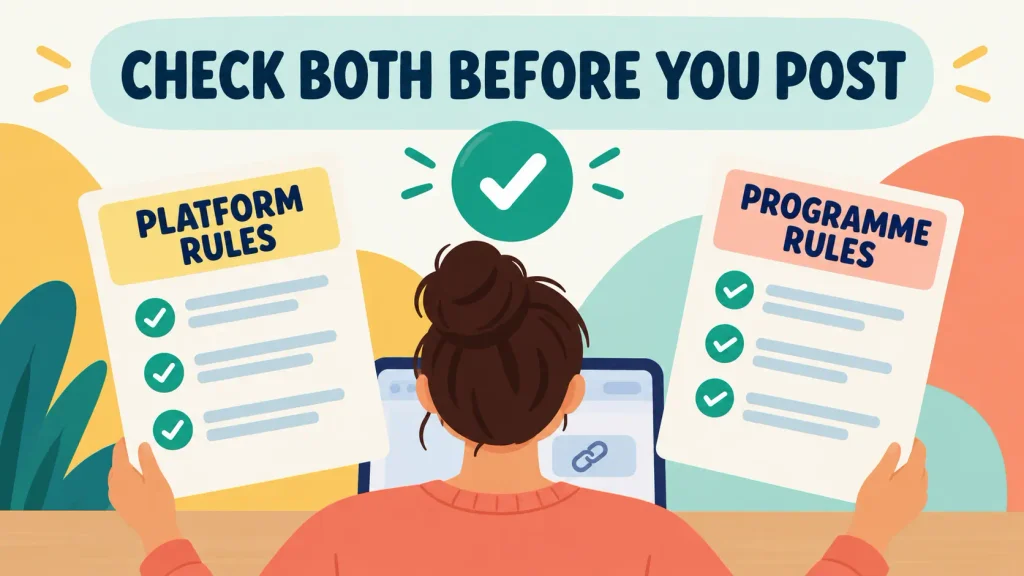
You must check two sets of rules before adding a link:
- Does the platform allow affiliate content?
- Does the affiliate programme allow promotion through that platform?
A website is not compulsory, but it gives you more control over your content, links and audience journey. My preferred long-term approach is to use a blog as the central resource, then use social media, email, Pinterest and YouTube to help people find it.
Affiliate Marketing Without a Website at a Glance
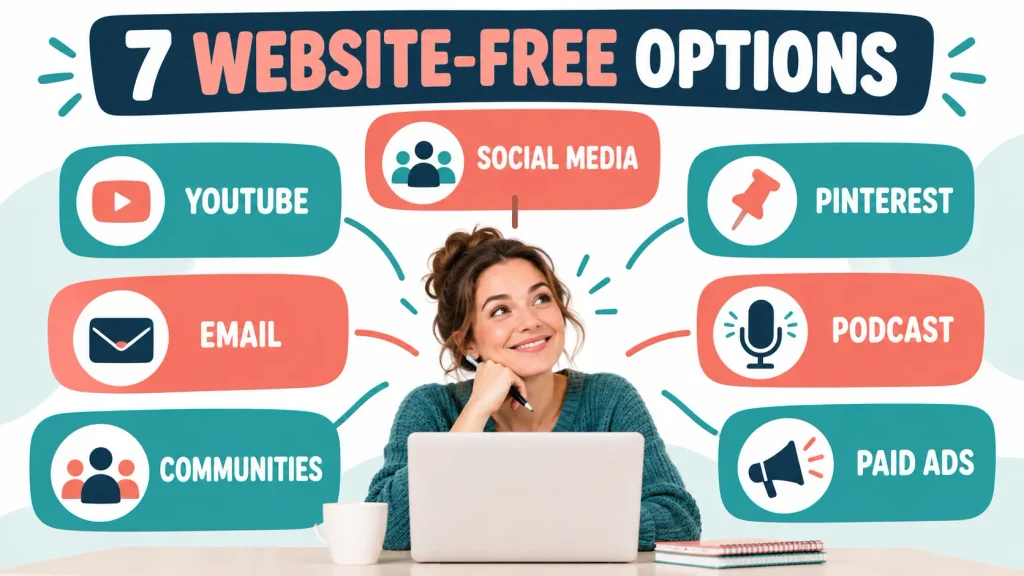
| Method | Starting Cost | Ongoing Work | Link Control | Long-Term Potential | Beginner Fit |
|---|---|---|---|---|---|
| YouTube | Low | High | Medium | High | Good |
| Social media | Low | Medium to high | Low | Medium | Good |
| Low | Medium | Medium | Medium to high | Good | |
| Email newsletter | Low to medium | Medium | Medium | High | Moderate |
| Podcasting | Low to medium | High | Medium | Medium | Moderate |
| Online communities | Free | Medium | Very low | Low | Limited |
| Paid advertising | High | Medium | Low | Variable | Poor for beginners |
YouTube is the strongest standalone option for many beginners because a useful video can demonstrate a product and continue attracting viewers. Email offers the best direct relationship with an audience, but you still need another way to find subscribers.
Paid advertising offers faster data, but it carries the greatest financial risk.
How Affiliate Marketing Works Without a Website
The basic process remains the same:
- You choose an audience and understand what they need.
- You join an affiliate programme that fits that audience.
- You create useful content about a problem, product or decision.
- You add a clearly disclosed affiliate link where the rules allow it.
- The reader or viewer follows the link and completes a qualifying action.
- The affiliate programme attributes the action to you and pays the agreed commission.
The affiliate link is only one small part of the process. You still need relevant content and enough trust for somebody to act on your recommendation.
Dropping links into random posts, groups or comments is not a workable strategy. It is usually treated as spam and may breach both platform and programme rules.
Check Whether the Affiliate Programme Accepts Your Channel
Permission from a social platform does not guarantee permission from the affiliate programme.
When you apply, the programme may ask for the websites, apps or social profiles where you plan to promote its products. Some accept established social accounts. Others expect an active website with original content.
Amazon Associates UK, for example, says its Associates Programme is available to creators, publishers and bloggers with a qualifying website or mobile app. It separately directs established social creators towards the Influencer Programme. This means you should not assume a new social profile will automatically qualify.
Before applying, check:
- Which promotional channels are accepted
- Whether your profile must be public
- Whether there is a minimum audience requirement
- Whether email promotion is allowed
- Whether direct social links are allowed
- Whether paid advertising is allowed
- Whether bidding on the company’s brand name is prohibited
- Whether every channel must be listed in your account
Keep a simple spreadsheet containing the programme, approved channels, disclosure requirements and any restricted promotion methods.
1. Affiliate Marketing With YouTube
YouTube is one of the strongest ways to do affiliate marketing without a website. You can explain a product, demonstrate how it works and answer likely buyer questions within one video.
YouTube’s external links policy states that affiliate content does not breach its terms by itself. Your content and destination links must still comply with its wider policies.
How It Works
You could create:
- Product reviews
- Tutorials and demonstrations
- Product comparisons
- Best tools for a specific task
- Mistakes to avoid before buying
- Results and progress updates
- Answers to common buyer questions
Place the relevant link in the video description with a clear affiliate disclosure. You can also direct viewers to the description during the video without turning the whole video into a sales pitch.
Why YouTube Can Work
Video helps people see the product and understand your judgement. A useful tutorial can attract viewers through YouTube and Google long after publication.
You do not need to show your face in every video. Screen recordings, demonstrations, narrated slides and overhead product footage may all work if they genuinely help the viewer.
The Limitations
Creating a good video takes time. You need to plan, record, edit, upload and prepare a thumbnail. Viewers may watch without opening the description, and a new channel can take months to gain consistent reach.
Shorts can increase visibility, but they offer less space for detailed buying guidance. Longer videos usually provide a better setting for useful reviews and comparisons.
Best Fit
YouTube suits people who can explain or demonstrate a product clearly. It also works well for software, equipment, crafts, home products and anything where the buyer benefits from seeing the product in use.
2. Affiliate Marketing Through Social Media
Facebook, Instagram and TikTok give beginners a low-cost way to test content ideas and build an audience.
You might create short tutorials, demonstrations, stories, live videos or recommendation posts. Depending on the platform and format, the affiliate link could appear in a profile, story, caption or approved link page.
Why Social Media Appeals to Beginners
You can begin with equipment you already own. Feedback arrives quickly, and questions from followers can reveal what content to create next.
Social platforms can also suit short pockets of time. A helpful tip or demonstration may take less time than a full article or video.
The Main Problem
You do not control distribution. A platform can reduce your reach, change which links work or restrict your account. Some formats make links difficult to click.
Social media often rewards frequent activity. That can create an ongoing workload which only appears flexible at first.
Do Not Turn Your Account Into a Link Feed
People normally follow an account for useful or entertaining content. If every post pushes a product, trust and engagement can fall.
Use affiliate recommendations where they answer a real question. Explain who the product suits, what it costs, where it falls short and what alternatives exist.
Best Fit
Social media suits somebody who enjoys regular audience interaction and short-form content. It is useful for testing demand, but I would avoid making one account your entire affiliate business.
3. Affiliate Marketing With Pinterest
Pinterest is a visual discovery platform. People use it to plan projects, compare ideas and find answers, which can create useful buying intent.
Pinterest’s commercial content guidelines currently allow affiliate links, but they require transparency and moderate use. Repetitive or mass-produced affiliate Pins can fall under its spam rules.
How It Works
Create a Pin that answers or introduces a genuine question. The destination can be an approved affiliate page if both Pinterest and the programme allow direct linking.
Examples include:
- A comparison of two tools
- A visual checklist
- A product used within a project
- A gift guide for a defined audience
- A tutorial that naturally uses the product
Why Pinterest Can Work
Pins can remain discoverable longer than many social posts. You can create and schedule Pins in batches, which may fit a parent’s working week better than daily interaction.
Pinterest is particularly relevant to crafts, home organisation, food, parenting, fashion, travel and blogging topics.
The Limitations
Direct affiliate Pins give you little space to explain the recommendation. Links may also be blocked, programmes can change their rules and Pinterest can alter distribution.
The stronger long-term approach is often to send the Pin to a useful article containing the full comparison and clearly disclosed links.
Best Fit
Pinterest suits visual topics and creators willing to test several designs around genuinely useful content. It is less suitable for products that need detailed technical explanations before somebody buys.
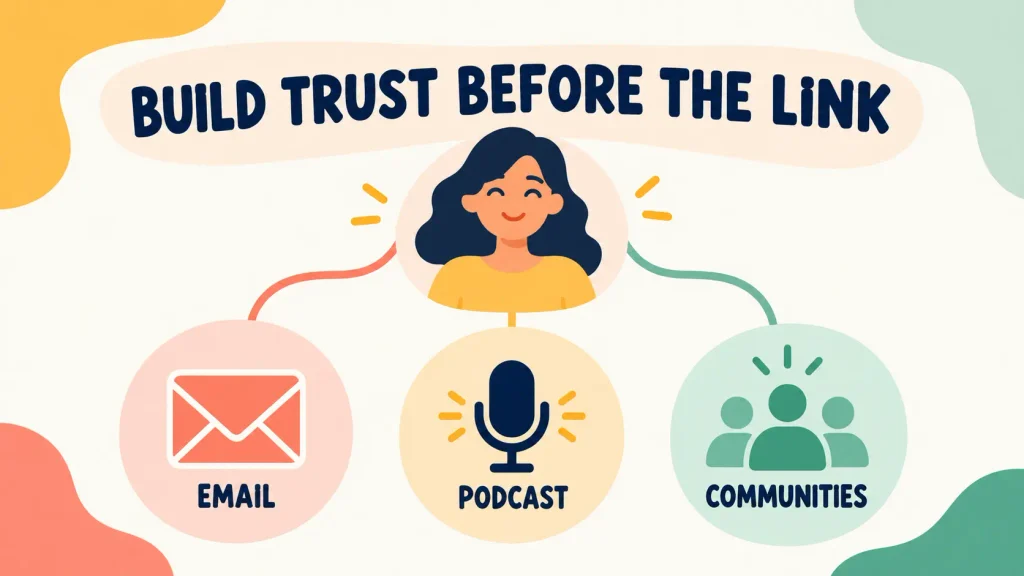
4. Affiliate Marketing Through Email
Email gives you a direct route to people who have chosen to hear from you. You can start an email list without owning a website by using a hosted signup page from an email service.
However, you need another traffic source to attract subscribers. You also need permission to email them and a clear reason for them to join.
How It Works
You could offer a helpful checklist, short email course or regular newsletter. Within useful emails, you can recommend relevant products where both your email provider and affiliate programme allow it.
Email is strongest when the recommendation follows naturally from the topic. A detailed explanation of why you use a tool is more useful than sending an unexplained link.
Check Both Sets of Rules
Some affiliate programmes prohibit their links in email. Some email providers distinguish between occasional affiliate recommendations and businesses built mainly around sending affiliate promotions.
For example, Mailchimp’s affiliate-link guidance says affiliate links are generally acceptable, while affiliate marketing as an industry is prohibited under its terms. Other providers apply different policies.
Why Email Is Valuable
An email list is more portable than a social following. You can communicate with subscribers without waiting for an algorithm to show the message.
Email also supports repeated contact. Most people will not buy because they saw one post.
The Limitations
You still depend on an email provider and need a separate way to grow the list. Sending too many promotions damages trust and can increase unsubscribes or spam complaints.
Best Fit
Email works best as a supporting channel for YouTube, social media, Pinterest or a blog. It is rarely the easiest first traffic source by itself.
5. Affiliate Marketing With a Podcast
A podcast can build strong trust with listeners who return regularly. You can mention products within useful conversations and include approved affiliate links in episode descriptions or show notes.
How It Works
Affiliate content could include:
- A tool discussed during a tutorial episode
- Equipment used to produce the show
- A relevant book or course
- A product comparison episode
- A dedicated review based on genuine use
Use a memorable link where the programme offers one, but do not hide the commercial relationship. State clearly when you may earn a commission.
Why Podcasting Can Work
The longer format gives you time to explain context, experience and limitations. Regular listeners may place more weight on your recommendations because they understand how you make decisions.
The Limitations
Listeners cannot always click while they are listening. Attribution can therefore be difficult. Discoverability is also challenging without YouTube, social media or a website supporting the show.
You still need to plan, record and edit episodes. Podcasting is flexible, but it is not automatically quick.
Best Fit
Podcasting suits somebody who enjoys explaining ideas in depth and can publish consistently. It works better for trust-building than immediate conversions.
6. Affiliate Marketing in Online Communities
Facebook groups, Reddit communities and specialist forums contain real questions from people trying to solve problems. That makes them useful for research and relationship-building.
It does not make them free advertising spaces.
How to Use Communities Properly
Read the rules before contributing. Answer questions because you can help. If links are allowed, link only when the destination genuinely adds value and disclose the affiliate relationship clearly.
In many communities, the best approach is to avoid affiliate links entirely. Use the questions to understand the audience and improve content on a permitted channel.
The Risks
Many groups and forums ban affiliate links. Even where links are technically allowed, frequent self-promotion can damage your reputation or lead to removal.
You also do not own your answers, audience or access to the group. A moderator can change the rules at any time.
Best Fit
Communities are useful for research, conversation and credibility. They are one of the weakest options for building an affiliate business without another content platform.
7. Affiliate Marketing With Paid Advertising
Paid advertising can send traffic directly to an affiliate offer where both the advertiser and affiliate programme allow it.
This route looks appealing because you do not need to wait for organic traffic. It is also the easiest way to lose money quickly.
How It Works
You pay for clicks or impressions through a search or social advertising platform. If the commission generated exceeds the advertising cost and other expenses, the campaign may be profitable.
That simple calculation hides several variables:
- Click cost
- Conversion rate
- Commission value
- Refunds or cancellations
- Tracking accuracy
- Creative performance
- Landing-page quality
- Programme restrictions
Programme Restrictions Matter
Many programmes restrict direct linking, brand-name bidding or specific advertising methods. An advertising platform may also reject a thin affiliate destination.
Read the terms before spending anything. Do not assume that another affiliate’s advertisement proves the method is allowed.
Why I Would Not Recommend It to Most Beginners
A beginner normally lacks reliable conversion data. You may spend hundreds of pounds learning that the offer, message or audience was wrong.
Paid traffic makes more sense once you understand the product, the audience and the complete customer journey. It should not be treated as an easy substitute for building useful content.
Best Fit
Paid advertising suits experienced marketers with a testing budget they can afford to lose. It is a poor starting option for most busy parents.
Which Website-Free Option Is Best for Beginners?
YouTube is the strongest all-round option if you can create helpful videos. It allows detailed explanations and gives older content a chance to continue attracting viewers.
Pinterest can work well for visual niches. Social media offers the quickest way to test ideas. Email becomes valuable once you have a way to attract subscribers.
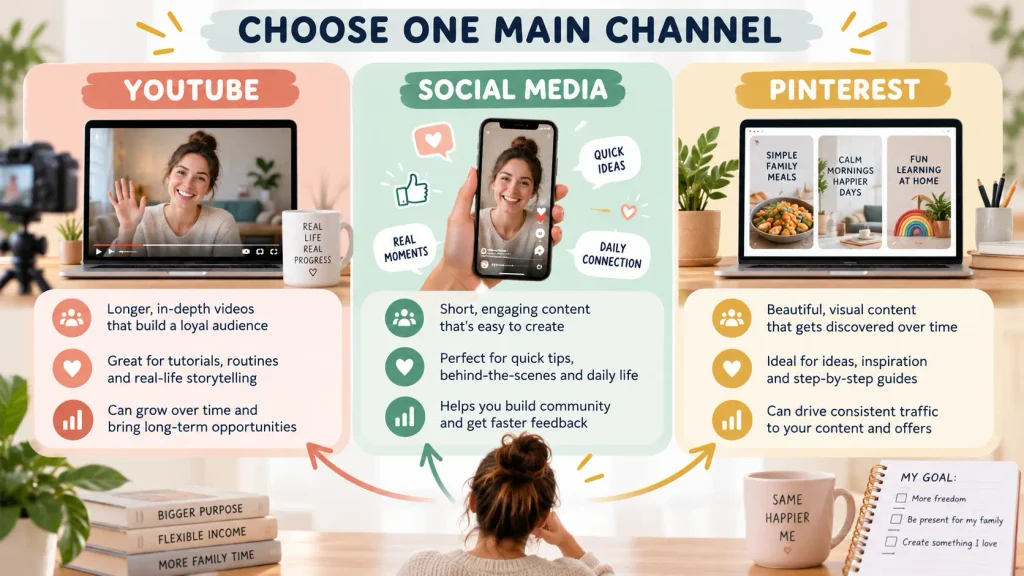
Choose one main content channel based on the work you can sustain:
| If You Prefer | Consider Starting With |
|---|---|
| Explaining and demonstrating | YouTube |
| Short-form content and interaction | Social media |
| Visual search and batch creation | |
| Writing to an existing audience | |
| Long conversations and audio | Podcasting |
Do not launch on five platforms at once. One useful channel with regular content is better than five abandoned profiles.
Which Option Is Best for Busy Parents?
Use a family flexibility check before choosing.
Ask:
- Can I create this content in 30-minute to two-hour blocks?
- Does the platform require daily interaction?
- Can I batch the work?
- Can older content keep attracting people?
- Can I pause for a difficult family week?
- Do I enjoy the format enough to continue?
YouTube offers long-term potential but needs larger production blocks. Pinterest is easier to batch. Short social content can fit small pockets of time but may demand frequent activity.
Email is flexible once you have subscribers. Podcasting can be batched but still requires recording and editing.
The best choice is the method you can continue without taking time you cannot afford to lose from family, sleep or paid work.
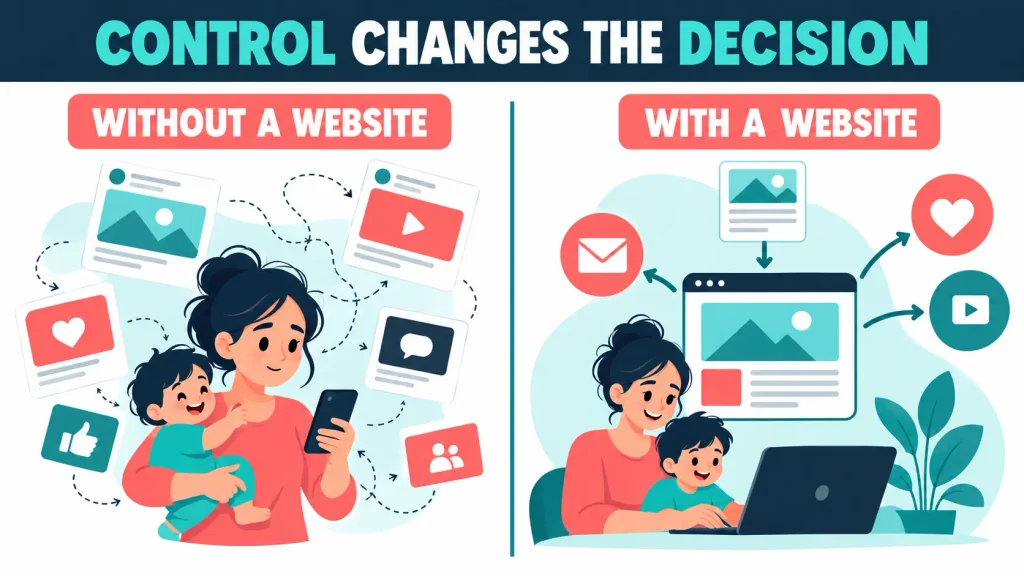
The Risk of Building on Someone Else’s Platform
Every website-free method relies on a platform you do not control.
The platform can:
- Reduce your reach
- Remove a link type
- Suspend your account
- Change its commercial-content rules
- Close an affiliate feature
- Limit access to your audience
This does not mean you should avoid social platforms. It means you should understand the dependency.
A website gives you a central home for detailed content. An email list provides a more direct audience relationship. Together, they reduce the effect of one platform changing its rules.
Website vs No Website: Which Is Better?
| Factor | Without a Website | With a Website |
|---|---|---|
| Initial setup | Faster | More work |
| Initial cost | Often lower | Hosting and domain required |
| Content control | Limited by platform | High |
| Link flexibility | Varies | Higher, subject to programme rules |
| Search potential | Platform-dependent | Google, Bing and AI search opportunities |
| Audience journey | Limited | Can connect articles, email and offers |
| Platform risk | High | Lower, although traffic sources still change |
| Long-term asset | Limited | Stronger |
Starting without a website can help you test whether you enjoy making affiliate content. Building a website becomes valuable when you want more control, detailed evergreen content and one central place connecting everything.
When Should You Create Your Own Website?
Consider building a website when:
- People repeatedly ask questions that need detailed answers
- You want your content to appear in search results
- Affiliate programmes require an owned site
- You need a central place for reviews and comparisons
- You want to build an email funnel
- Your social posts disappear too quickly
- You are ready to build a longer-term asset
You do not need hundreds of followers first. A small website can grow alongside your main platform.
If you want structured help, my Wealthy Affiliate review explains how its training, WordPress hosting, research tools and support work together.
Affiliate disclosure: I am a Wealthy Affiliate member and affiliate. If you join through my link, I may earn a commission at no extra cost to you. I only recommend it where I believe it fits the reader’s needs.
You can also read How Affiliate Marketing Works on a Blog and When Should You Start Affiliate Marketing on a New Blog?. (Links Needed)
A Simple 30-Day Starting Plan
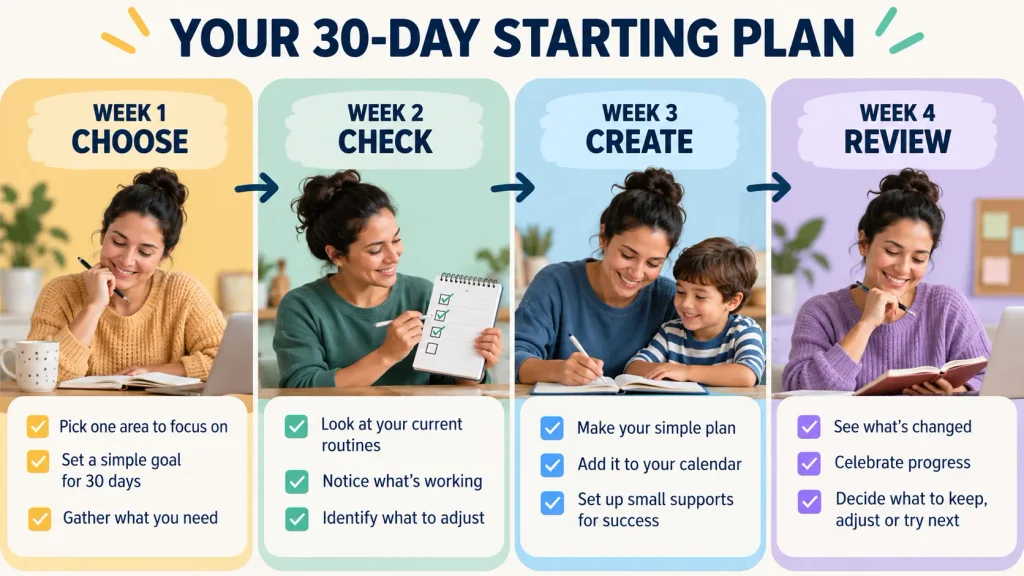
Week 1: Choose One Audience and Platform
Define the person you want to help and one group of problems they face. Choose one content platform that fits your available time.
Week 2: Check Programmes and Rules
Find relevant programmes. Record their accepted channels, disclosure rules, payment terms and restrictions before applying.
Week 3: Create Three Useful Pieces of Content
Answer real questions. Do not force a product into every piece. Add an affiliate link only where it improves the answer.
Week 4: Review the Evidence
Look at views, watch time, saves, replies and link clicks. Identify which problem attracted the strongest interest. Improve that content before adding another platform.
The aim of the first month is not to produce a guaranteed income. It is to prove that you can create useful content consistently and learn what the audience responds to.
Affiliate Disclosures Still Apply Without a Website
Affiliate marketing is advertising. The reader should understand the commercial relationship before or when they engage with the recommendation.
The UK ASA guidance on affiliate marketing applies across websites, social media, emails and other online content. The ASA advises that labels such as “affiliate” or “aff” may not be clear enough by themselves in short-form social content.
Use an upfront label that ordinary users will understand, such as “Ad” where appropriate, alongside a plain explanation that you may earn a commission.
Do not:
- Hide the disclosure at the end of a long caption
- Rely only on a profile-wide statement
- Suggest you bought or used a product when you did not
- Make unsupported income or performance claims
- Assume a platform’s partnership label covers every legal requirement
Transparency does not weaken a helpful recommendation. It lets the reader judge it properly.
My Verdict
You can do affiliate marketing without a website, but you cannot do it without content, an audience and clear rules.
YouTube offers the strongest standalone route for many beginners. Pinterest and social media can work well in suitable niches. Email becomes powerful once you have subscribers. Podcasting can build trust but is harder to discover. Communities should support research rather than link-dropping. Paid advertising carries too much risk for most beginners.
Starting without a website can reduce the initial barrier. It lets you test your subject and content format before paying for hosting.
For a long-term affiliate business, I would still build a website. It gives you a central asset where you can publish detailed reviews, connect related questions, collect email subscribers and direct readers towards the most useful next step.
Use external platforms to reach people. Build owned content and an email list to reduce your dependence on them.
If you need help choosing your topic and organising your first steps, download the free Parent Blogging Starter Kit.
Frequently Asked Questions
Can I Start Affiliate Marketing Without a Website?
Yes. You can promote approved affiliate links through YouTube, social media, Pinterest, email, podcasting and other permitted channels. You still need helpful content and an audience. Check both the platform’s policies and the affiliate programme’s terms before adding links.
Where Can I Post Affiliate Links Without a Website?
Possible locations include YouTube descriptions, approved social media posts, Pinterest Pins, email newsletters, podcast show notes and permitted creator pages. Not every programme accepts every location. Online communities frequently prohibit affiliate links, so read their rules before posting.
Can I Use Social Media for Affiliate Marketing?
Yes, if the social platform and affiliate programme both permit it. Use relevant content rather than repeatedly posting links. Disclose the commercial relationship clearly and register the social profile with the programme where required.
Can I Use Amazon Associates Without a Website?
Amazon UK says Associates can participate with a qualifying website or mobile app, while established social creators may use the Influencer Programme. Requirements can change. Check the current UK application criteria and make sure every promotional channel is approved before sharing links.
Is YouTube Better Than a Blog for Affiliate Marketing?
YouTube is strong for demonstrations and building trust through video. A blog offers greater control and can answer detailed search questions. Neither is automatically better. Many creators use YouTube to reach viewers and a website to provide complete comparisons and supporting resources.
Can I Put Affiliate Links in Emails?
Sometimes. The email provider and affiliate programme must both allow it. Some programmes prohibit email promotion, and some email services restrict businesses focused mainly on affiliate marketing. Check the terms, use clear disclosures and send recommendations that genuinely fit the subscriber’s needs.
Do I Eventually Need a Website for Affiliate Marketing?
No rule says every affiliate must eventually own a website. However, a website gives you more control, supports detailed evergreen content and reduces reliance on one platform. It becomes especially useful when you want search traffic, an email funnel and a central home for your recommendations.