

Affiliate marketing ethics for bloggers come down to four habits: tell readers about your affiliate links before they click, check a tool before you recommend it, say plainly who it is not for, and describe results without hype. A parent can build all four into one spare half hour.
Why Does Affiliate Transparency Matter for Parent Bloggers?
Transparency matters because parents read blogs to make decisions about money, time and their kids, and they trust a recommendation only as far as they trust the person making it. A parent reading your post is often at the kitchen table after bedtime, deciding whether a tool is worth their limited energy. They are relying on you to be straight with them.

An affiliate link means you earn a commission if the reader buys or signs up. That is a normal way for a blog to earn money, and there is nothing shameful in it. The problem starts when the reader finds out about the commission on their own. Once they spot an unmarked link, they start wondering what else was left unsaid, and they go back over everything else you have written.
Telling people up front lets them weigh your advice with full information. A reader who knows you earn from a link can still choose to use it, and plenty of them will, because they would rather thank someone who helped than hand the same commission to a stranger.
There is also a practical rule to respect. In the United States, the Federal Trade Commission expects bloggers to disclose a material connection, such as an affiliate relationship, in a clear and noticeable way. Other countries have their own rules, and they differ. This article is not legal advice, so check what applies where you live. The habits below are a good starting point in most places because they are built around one idea: the reader should never be surprised.
Let’s keep it simple. You do not need to memorize regulations to start. You need a few repeatable habits that you can apply to every post.
Where Should the Disclosure Go on My Posts?
Put the disclosure near the top of the post, before the first affiliate link, and repeat it close to any link or button where the reader is being asked to act. A disclosure the reader sees after they have already clicked has not done its job.
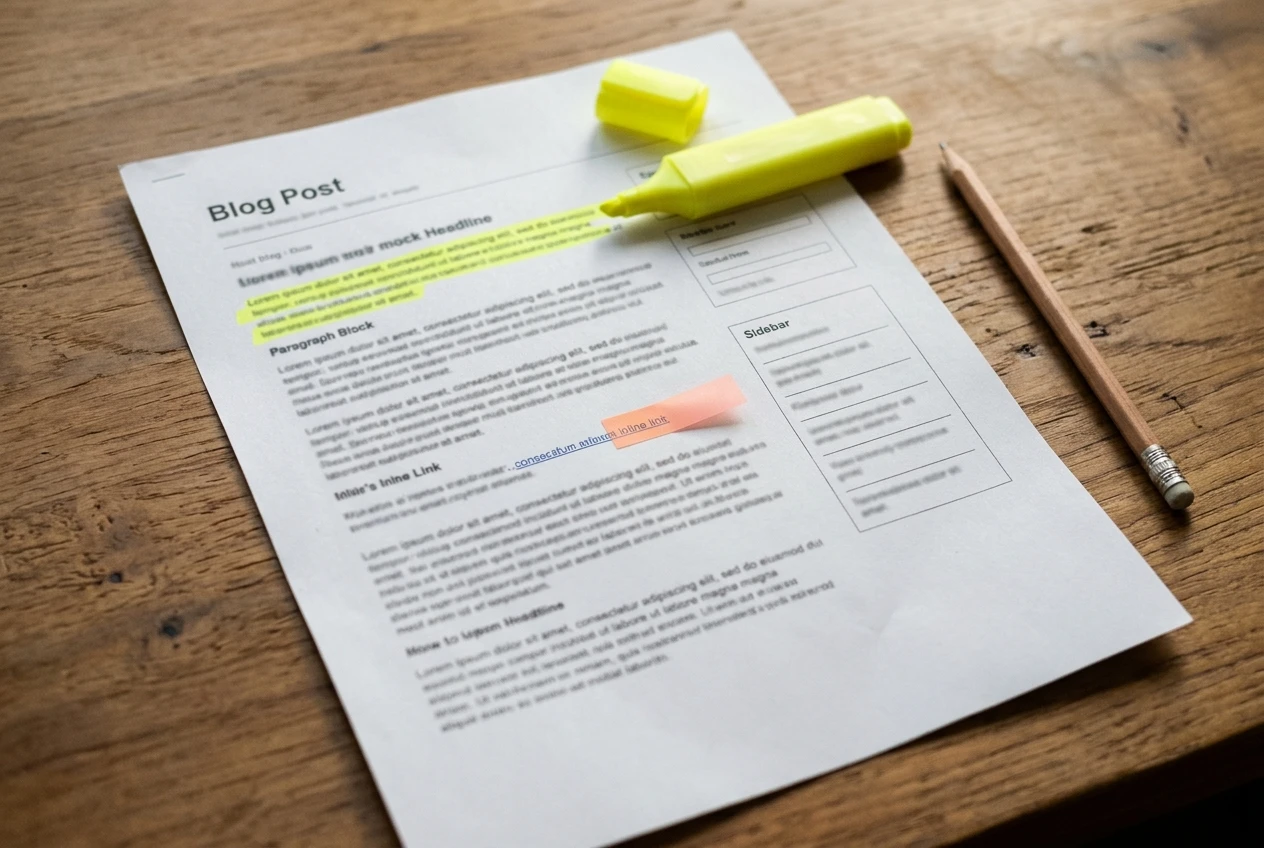
Here is a simple placement system you can apply in a single sitting:
- Top of the post: One or two plain sentences before the first link. Do not tuck it under a “Read more” fold.
- Near the recommendation: If your link sits in a section that recommends a tool, add a short reminder in that section, such as “(affiliate link)” next to the link or a sentence before it.
- A disclosure page: A short page on your site that explains how you earn money, linked from your menu or footer. This supports the in-post notices but should not replace them.
- Email and social posts: If you share an affiliate link there, say so in the same message, since readers there may never see your site.
For wording, plain language works best. Something like this does the job:
This post contains affiliate links. If you sign up or buy through them, I may earn a commission, and the price for you stays the same.
Before you copy that last clause, confirm it is true for each program you promote. Programs differ, and your disclosure should describe the program you are actually using, not a generic one.
A few things to avoid:
- Pale grey, tiny text at the bottom of the page.
- Vague wording like “this post may contain partner content” that a reader has to decode.
- Disclosure that appears only on your “About” page.
A good first task: open your five most-visited posts and check each one for a disclosure above the first link. That is usually a thirty-minute job, and it fixes the most important gap on your site.
What Do I Check Before Recommending Any Tool?
Before you recommend a tool, check that you know what it does, what it costs right now, who has been unhappy with it, and whether it fits the reader you write for. A commission rate is not a reason to recommend something. It is only a reason to be extra careful that you are not recommending it for the wrong reason.
Work through this list each time:

- Your own contact with it. Have you used it, or only read about it? Either can be fine, but say which. “I haven’t used this myself, but here is what the company says it does” is an honest sentence. Implying hands-on experience you do not have is not.
- The current price and terms. Go to the official page and read it the day you write. Prices, plans and features change, so avoid quoting a number from memory. If you do mention one, add the date you checked it, and link to the official page so the reader can confirm.
- The unhappy reviews. Search for complaints and read them. You are looking for patterns, like confusing billing or difficult cancellation, not a single angry comment. If a pattern exists, your reader should hear about it from you.
- The cancellation and refund policy. Parents’ budgets and schedules shift quickly. If a reader can leave easily, say so. If leaving is harder, say that too.
- The affiliate program’s own rules. Some programs restrict how you may describe their product or use their name. Read them so you do not break a promise you made when you joined.
- The no-commission test. Ask yourself whether you would still mention this tool if it paid you nothing. If the answer is no, drop it from the post.
- Reader fit. Think of a specific reader, such as a parent with two evenings a week, and ask whether this tool suits their time, budget and comfort with technology.
The point of the list is to make each recommendation a decision you can explain. If a reader emails you and asks “why did you recommend this?”, you should be able to answer in two sentences.
For an example of a single tool judged on whether it suits a busy blogger’s time, see the Link Whisper review on this site.
How Do I Talk About Wealthy Affiliate Honestly?
Say what you have actually used, say that you earn a commission when someone joins, and send readers to the official page for current pricing and features. Those three habits cover most of what honesty requires when you recommend Wealthy Affiliate or any similar platform.
Wealthy Affiliate is a platform that combines training, website building and a member community for people who want to build a site and earn online. It is an affiliate program that this site promotes, so the commission disclosure applies every time you link to it.
Here are some ways to keep the writing straight:
- Separate the platform from your results. What the platform offers (training, hosting, community) is one topic. What happened to you, or to anyone, is another. Keep them in separate paragraphs so the reader can tell a feature from an outcome.
- Describe only what you can verify. If you have used a feature, describe it. If you have not, leave it out or say you have not tried it.
- Say what it asks of the reader. Any platform that teaches you to build a site expects time, regular writing and patience. Saying so helps a reader decide whether they have those things this season.
- Do not borrow other people’s success stories as if they were typical. A story about one member’s result does not tell a new reader what to expect. If you share one, label it as one person’s experience.
- Point to the official page for prices and plans. These can change, and the company’s own page is the source that stays current.
- Hold your other affiliate programs to the same standard. If you promote a few other programs alongside Wealthy Affiliate, run each one through the checklist in the previous section. Readers notice when one recommendation is carefully qualified and another is gushing.
A fair paragraph about the platform covers what it is, who it seems built for, what it asks of you, where to read the current terms, and a clear note that you earn a commission. It does not need adjectives like “amazing” or “incredible.” Specific details persuade a careful reader more than enthusiasm does.
What Do I Say When a Tool Is Not the Right Fit?
Say so directly, describe the kind of reader the tool does not suit, and, where you can, point them toward something that fits better. Telling a reader “this is probably not for you” is one of the most useful things you can write, and it costs you almost nothing in credibility.

Most tools suit some people and not others. Parent bloggers are a mixed group. One has ten minutes at a time between tasks, another has a few quiet hours on weekends. One enjoys writing and another dreads it. One wants a hobby site, another wants an income. A recommendation that ignores those differences is a guess aimed at everyone.
Sentences you can adapt for your own posts:
- “This is probably not a fit if you want results in a few weeks. Building a site that earns takes longer than that for most people.”
- “If you do not enjoy writing, a platform built around publishing regular articles will feel like a chore.”
- “If you only want a place to share family photos with relatives, you do not need this.”
- “If your budget is tight right now, it is fine to wait. The tool will still be there next month.”
Each of these names a reader, a reason and a way out. None of them is vague.
When a tool is not right and you know a better option, say that as well. If you promote more than one program, the better fit for a particular reader may be the other program, and that is exactly the kind of guidance a reader came for. If you do not know a better option, say that too, and let the reader decide to keep looking.
You will probably lose a few clicks this way. You will also gain readers who remember that you told them when to skip something, and who believe you when you say a tool is worth trying.
How Do I Talk About Income Without Overpromising?
Describe income only in terms you can verify, and if you have no results to report, say that instead of implying them. A reader cannot tell the difference between a hopeful statement and a fact unless you make the difference clear.
Start with the words to leave out. Phrases like “quit your job,” “six figures,” “passive income overnight” and “secret strategy” make claims no honest blogger can back up for a stranger. They also set a reader up to feel like a failure when a normal, slower timeline plays out.

Here are habits that replace them:
- Talk about the process. “Here is how the training is structured” or “here is how much writing it asks of you each week” are statements you can check. “You will earn X” is not.
- Do not put a number on a stranger’s future. You do not know their niche, hours, budget or luck. If you mention any earnings figure, give its source and what it covers, and do not suggest it is typical.
- Say that some people earn little or nothing. Earning nothing is a possible outcome of building any site, and a reader deserves to hear it from you before they commit time and money.
- Mention time. If income takes months or longer to appear, say that plainly. Most parents are planning around naps, school runs and work, and a realistic timeline helps them plan.
- Be careful with screenshots. An earnings screenshot shows one period, for one person, without showing costs or the time it took. If you use one, add context, or leave it out.
- Count the costs. Hosting, tools and your own hours are all costs. A reader weighing a side project should hear about them. This site has a family-friendly reality check on whether a side hustle is worth it that is useful if you want a way to think about that.
Here is a short paragraph that follows all of these:
Some people who build a site earn a little, some earn more, and some earn nothing. It depends on how much time you can give it, what you write about, and how long you keep going. If you are curious, start slowly and track what it costs you in money and hours.
It makes no promise, and the reader gets an accurate picture.
Final Thoughts
Ethical affiliate blogging comes down to a handful of small habits you can repeat on every post: a clear disclosure near the top, a quick check of any tool before you recommend it, honest words about who it is not for, and income talk that sticks to what you can verify. Small steps matter here. You can fix one post this week and another the next, and your site will get more trustworthy with each pass.
If you want to see these rules in action, read the honest Wealthy Affiliate review at /wealthy-affiliate-review/. And take your time with any tool you consider. Only choose the ones that fit your family’s life, because a recommendation you would be comfortable making to a friend is the only kind worth publishing.
Let’s Chat
Which of these habits feels hardest to put into practice on your own blog: placing disclosures, saying who a tool is not for, or talking about income? Tell me in the comments, and let’s work through it together.