

Profitable blog niche lists make choosing a subject look easy. Pick a topic with expensive products, create some articles and wait for the commissions.
That approach misses the most important part of a blog: the reader.
A profitable niche needs people with recurring problems, content you can create consistently and suitable products or services that genuinely help. You should check whether a niche can make money, but income potential should validate your choice rather than control it.
I started affiliate marketing in 2016 and initially placed too much emphasis on what I thought could make money. I built websites that did not develop as I hoped. My direction became clearer when I stopped beginning with commissions and focused on a specific audience I genuinely wanted to help.
This guide will help you find that balance.
Quick Answer: How Do You Choose a Profitable Blog Niche?
Choose a defined audience with recurring problems, confirm that people already spend money on relevant solutions and make sure you can create useful content consistently. Do not choose a niche solely because it has expensive products or high affiliate commissions.
A sustainable niche combines audience need, personal connection, content depth, realistic monetisation and a workload that fits your life.
What Does a Profitable Blog Niche Actually Mean?
A profitable niche is not simply a topic with high-paying affiliate programmes.
It has commercial potential when:
- People actively seek information.
- The audience has recurring problems.
- Those problems connect naturally with products or services.
- You can create content throughout the reader’s journey.
- Several income options are available.
- You can reach readers through search, social media, email or video.
- You can sustain the work long enough to build trust.
A niche can look profitable on paper and still be wrong for you. If you dislike the subject, cannot add meaningful experience or need resources you do not have, you may stop before the blog receives consistent traffic.
The Helpful Niche Test
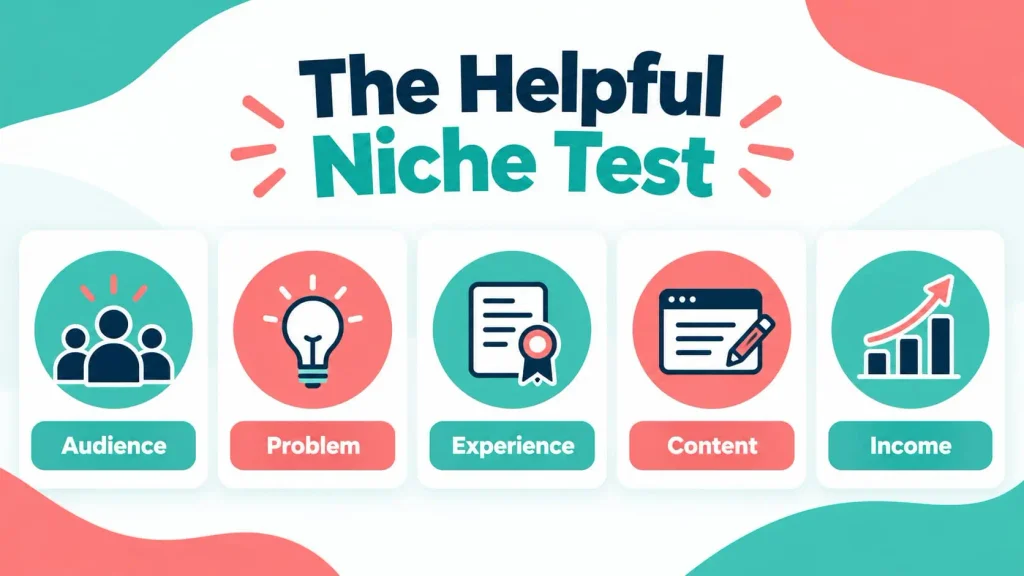
I use five questions to assess a potential niche.
| Area | Question |
|---|---|
| Audience | Can you clearly describe who you want to help? |
| Problem | Does that audience face recurring questions or challenges? |
| Experience | Do you have experience, knowledge or a genuine willingness to learn? |
| Content | Can you create at least 30 useful article ideas? |
| Income | Are there relevant products, services or solutions people already buy? |
The niche does not need equal strength in every area. It should not depend entirely on one.
For example, enthusiasm without audience demand may produce a personal journal rather than a business. Strong commission rates without interest or experience may produce shallow promotional content.
Why Chasing Money Often Leads to the Wrong Niche
Starting with the most expensive product can create several problems.
You Write for Products Instead of People
Your content plan becomes a list of things to sell rather than questions to answer.
Your Content Sounds Generic
If you have no connection with the topic, it becomes harder to add examples, judgement and useful limitations.
You Lose Interest Before Traffic Arrives
New blogs usually need months of consistent work. A commission rate cannot make an uninteresting subject enjoyable.
You Keep Switching Direction
Another niche, product or platform will always appear more profitable. Chasing every opportunity prevents you from building enough depth in one area.
Your Recommendations Damage Trust
Readers notice when every article pushes the product paying the largest commission.
Checking profitability is responsible. Allowing it to make every decision is not.
Why Passion Alone Is Not Enough
The opposite advice can also be misleading.
You might love a subject that has:
- Few recurring questions
- A very small audience
- Limited search demand
- No natural products or services
- Little room for fresh content
- A workload you cannot sustain
You do not need to choose your greatest passion. You need enough interest and connection to keep learning, alongside evidence that the topic helps a defined audience.
The strongest niche balances personal fit with reader demand.
Step One: Start With the Person You Want to Help
Do not begin by asking, “What should I write about?”
Ask:
- Who do I understand?
- Whose problems do I care about?
- Who has experiences similar to mine?
- What type of person regularly asks me for help?
- Who would I enjoy hearing from?
“Parents” is too broad to guide an entire content strategy.
“Busy parents who want to build flexible income around employment and family life” is clearer. It suggests time limits, income goals, fears, tools and practical questions.
A defined audience helps you choose what belongs on the website and what does not.
Step Two: Find Their Recurring Problems
A sustainable niche contains connected problems rather than one interesting question.
For the Flex For Families audience, recurring problems include:
- Finding time to start
- Choosing a realistic side hustle
- Starting a blog
- Creating useful content
- Building traffic
- Understanding affiliate marketing
- Avoiding expensive tools
- Recognising unrealistic income claims
- Balancing the work with parenting
Each problem creates several possible articles. Together, they form a useful journey for the reader.
Look in:
- Questions people ask you
- Search suggestions
- Relevant forums and communities
- Product reviews
- Social media discussions
- Comments on existing blogs and videos
- Your own earlier frustrations
Do not copy the loudest questions without context. Look for patterns.
Step Three: Check Your Connection to the Topic
You do not need to be the leading expert.
You need at least one useful connection:
- Direct experience
- Professional knowledge
- A personal journey
- A skill you have developed
- Access to reliable research
- A willingness to document what you learn honestly
Someone a few steps behind you may need exactly the explanation you can provide.
Be clear about the difference between experience and research. Do not present something you have read as something you have personally achieved.
Step Four: Complete the 30-Idea Test
Write 30 article ideas before committing to the niche.

Divide them into:
- Beginner questions
- Step-by-step guides
- Mistakes
- Troubleshooting
- Comparisons
- Reviews
- Personal experience
- Longer-term strategy
If you struggle to reach 30 without repeating the same idea, the niche may be too narrow.
If the ideas serve completely different people, the niche may be too broad.
The test also reveals whether you would enjoy researching and writing the content.
Step Five: Look for Evidence That People Spend Money
A blog does not need a wealthy audience. It needs problems that connect with appropriate solutions.
Look for:
- Products already being purchased
- Subscription services
- Affiliate programmes
- Professional services
- Courses or training
- Books and resources
- Digital downloads
- Advertisers competing for attention
Do not simply count products. Consider whether they solve a real problem for your reader.
A low-cost product that fits the audience can outperform an expensive offer nobody needs.
My guide to the best affiliate programs for parent bloggers can help you investigate realistic options.
Step Six: Identify Three Possible Income Routes
Avoid building the entire niche around one affiliate programme.
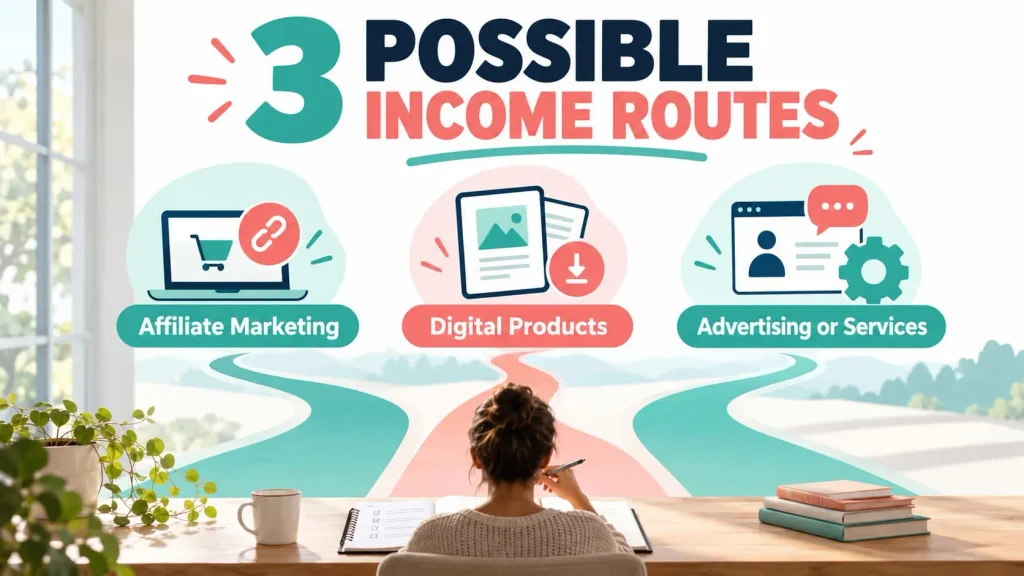
Potential income routes include:
- Affiliate marketing
- Display advertising
- Digital products
- Services
- Sponsorships
- Courses
- Memberships
- Email recommendations
You do not need to launch all three immediately. The exercise checks whether the niche has room to develop.
For example, a family meal-planning blog might eventually use affiliate kitchen products, advertising and printable meal planners.
Step Seven: Check Whether the Niche Fits Your Life
This question matters for busy parents.

Ask:
- Can I research this responsibly?
- Can I create the content in the time available?
- Does it require constant travel, purchases or product testing?
- Could it expose more of my family than I am comfortable sharing?
- Can I continue when work or family life becomes busy?
- Do I want this topic connected with my name?
- Could I still discuss it two years from now?
A travel niche may sound exciting, but frequent trips might not fit your budget or family responsibilities. A parenting niche may provide endless ideas, but it could create privacy concerns.
Profitability means little if the workload makes the blog impossible to maintain.
Step Eight: Make the Niche Specific, but Not Tiny
| Too Broad | Clear Starting Niche | Possibly Too Narrow |
|---|---|---|
| Parenting | Flexible income for busy parents | Blogging during Tuesday school runs |
| Travel | Affordable UK family travel | Free museums for six-year-olds in one town |
| Food | Quick meals for working families | Ten-minute pasta meals using one brand |
| Crafts | Simple crafts for children | Cardboard crafts for seven-year-old boys |
| Fitness | Home fitness for busy parents | Five-minute workouts for night-shift dads |
A clear starting niche gives readers a reason to return. It does not trap you permanently.
You can expand once you understand which problems, formats and categories attract the strongest response.
Step Nine: Validate Before Building Everything
Use a small validation process:
- Define one reader.
- List ten recurring problems.
- Create 30 article ideas.
- Identify five relevant products or services.
- Confirm three possible income routes.
- Publish five to ten useful articles.
- Review impressions, clicks, engagement and reader questions.
- Refine the positioning from evidence.
Validation does not mean spending six months researching without publishing.
The early articles provide real data. They show which wording attracts impressions, what people click and which questions lead to related content.
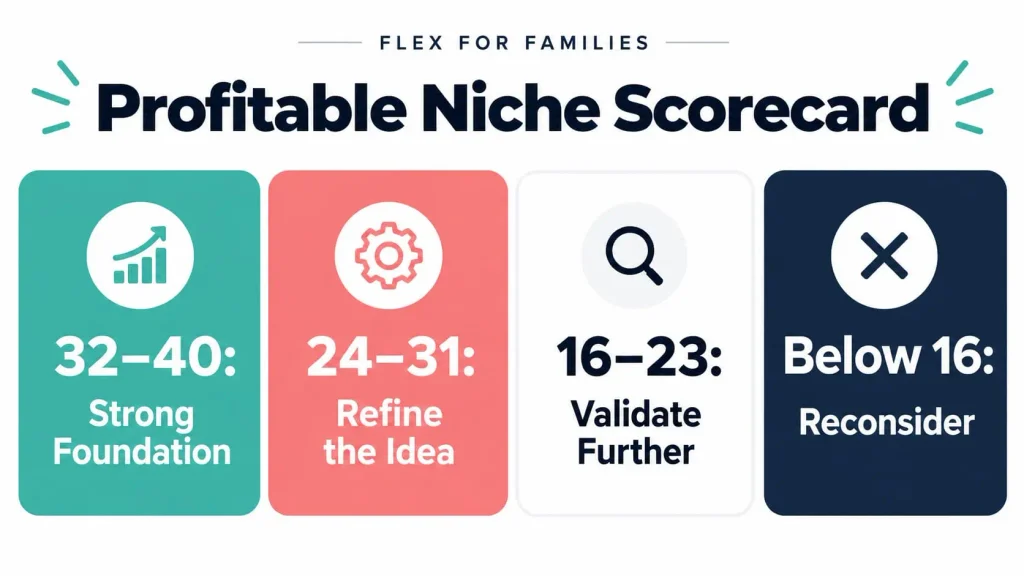
The Profitable Niche Scorecard
Score each statement from 1 to 5.
| Statement | Score |
|---|---|
| I can clearly describe the audience | |
| I understand their recurring problems | |
| I have experience or genuine interest | |
| I can create at least 30 useful articles | |
| Suitable products or services exist | |
| I can identify three income routes | |
| The workload fits my family life | |
| I could stay with this for two years |
Reading Your Score
- 32 to 40: Strong niche candidate
- 24 to 31: Promising, but refine weaker areas
- 16 to 23: More validation needed
- Below 16: Reconsider the audience or direction
The score does not prove that a niche will make money. It helps you identify where an idea needs more thought.
What Made Flex For Families a Better Niche for Me?
I started affiliate marketing in 2016. My earlier projects focused too heavily on what I thought might make money.
I learned useful skills and built several websites, but some directions never developed as I hoped. I was trying to understand SEO, content, websites, traffic and monetisation at the same time. The audience was not always clear enough.
My experience outside blogging also changed my view of success.
My wife and I ran a wedding entertainment business alongside our full-time jobs. The business became successful, but more bookings reduced our family time. That experience taught me that more income does not automatically create more flexibility.
Flex For Families has a clearer purpose. It helps busy parents explore blogging, affiliate marketing and realistic side hustles around work and family life.
I understand that audience because I am part of it.
The site now uses connected content clusters instead of treating each article as an isolated keyword. A reader can move from choosing a niche to creating content, building traffic and exploring suitable income options.
Flex For Families began working as a clearer niche when I stopped asking what could make the most money and started asking who I genuinely wanted to help.
Can a Niche Be Profitable Without High-Paying Products?
Yes. A niche can earn through:
- More frequent lower-value purchases
- Repeat purchases
- Advertising
- Digital downloads
- Services
- Several complementary income streams
A £10 commission from a suitable product is more useful than a theoretical £200 commission from an offer your readers do not trust or need.
Conversion potential, audience trust and product relevance matter alongside the rate.
Should You Choose a Competitive Niche?
Competition often indicates genuine demand.
Avoiding every competitive topic can lead you towards a niche with few readers and little commercial activity.
You can narrow the angle through:
- A specific audience
- Their circumstances
- Their stage of progress
- A particular problem
- Your experience and perspective
Flex For Families does not try to cover every aspect of blogging. It focuses on realistic blogging and flexible income for busy parents.
You do not need to be the largest website. You need a clear reason for the right reader to choose your content.
What if You Choose the Wrong Niche?
Your first choice does not need to be permanent.
You can refine:
- The audience
- Content categories
- Positioning
- Monetisation
- Article formats
- Traffic channels
You may discover that one category consistently receives impressions while another never gains traction. You might find that readers respond to beginner guides more than advanced reviews.
Use that evidence to adjust.
A complete restart is not always necessary. Sometimes the website needs a clearer reader, stronger categories or a more focused promise.
Final Verdict
Choose a niche where you understand the audience, can solve recurring problems, have enough content depth and can identify suitable ways to monetise.
Check the income potential. Do not let commission rates make the decision.
A niche you can serve consistently has more long-term potential than a supposedly lucrative topic you abandon after three months.
You do not need complete expertise or a perfect plan. Choose a useful direction, publish enough content to collect evidence and refine the niche as you learn.
The free Parent Blogging Starter Kit includes a Niche Finder to help you work through your audience, ideas and income options.
Frequently Asked Questions
What Is the Most Profitable Blog Niche?
There is no single most profitable niche for every blogger. Finance, software and business topics can offer valuable products, but competition and trust requirements are high. A better niche combines a defined audience, recurring problems, useful content and products you can recommend credibly.
How Do I Know Whether My Blog Niche Can Make Money?
Look for evidence that people seek information and purchase relevant solutions. Identify at least five suitable products or services, three possible income routes and 30 useful article ideas. This does not guarantee income, but it demonstrates commercial and content potential.
Should I Choose a Niche Based on Passion or Profit?
Choose a balance. Passion without demand may not support a business, while profit without interest can be difficult to sustain. Look for an audience you care about, problems you can help solve and realistic ways to monetise that help.
How Specific Should a Blog Niche Be?
Your niche should be specific enough to identify the reader and their main problems, but broad enough to support at least 30 useful article ideas. You can begin with a focused audience and expand into related topics once you understand what readers need.
Can I Change My Blog Niche Later?
Yes. You can refine the audience, categories, content and monetisation as you gather data. A complete restart is not always needed. Sometimes a website only requires clearer positioning and greater focus on the topics attracting the right readers.
How Many Blog Post Ideas Should I Have Before Starting?
Try to list at least 30 ideas across beginner questions, guides, mistakes, comparisons, reviews and troubleshooting. This checks whether the niche has enough depth. You do not need to write all 30 before launching.
Do I Need to Be an Expert in My Blog Niche?
No. You need useful experience, knowledge or a genuine willingness to learn and research responsibly. You can help someone a few steps behind you, but you should clearly separate personal experience from researched information.
Let’s Chat
What niche are you considering? Share the audience and problem below, and tell me which part of the decision feels unclear.