

Most advice about low traffic tells you to keep going and trust the process. That is hard to act on when you have forty minutes of quiet in a day and a number on your screen that looks small. A routine is easier to follow than encouragement, so this post lays out a short weekly check that turns the number into one next move. It fits into a single naptime, and it is a practical answer to how to stay motivated when blog traffic is low.
Why A Low Number in the First Months Says Almost Nothing About You
A new site has no history with search engines and no regular readers. Search engines need time to find your pages, decide what they are about, and test where they belong. Until that happens, traffic is mostly the handful of people you sent there yourself.
So a small number early on mostly tells you how old the site is. It does not measure how good your writing is, how smart your topic choice was, or whether you are cut out for this. Those things can be judged once there is enough data, and in the first months there usually isn’t.
A low number is still useful, though. It shows you which of your pages are being seen, which are being clicked, and which are being left quickly. That is information you can act on, and it is the reason a weekly check works better than a daily glance.
What Many New Bloggers Do When They Check Their Stats
The common pattern is to open the stats several times a day, especially after publishing a post. The number is small, and it feels like a verdict. Then the mood for the rest of the day follows it.
Checking this way has two problems. A single day of traffic on a new site is too small a sample to mean anything, so you are reacting to noise. And a number with no question attached gives you nothing to do except feel bad, which makes the next writing session harder to start.
Parents have an extra cost on top of that. Your writing time is already short and unpredictable, and every minute spent refreshing a dashboard comes out of the minutes you could have spent writing. A fixed, limited check puts the looking in one place so it stops leaking into the rest of the week.
The 20-Minute Weekly Check I Do During Naptime
Here’s what worked for me: one set time, one notebook, and a fixed order. I do it during naptime, because that is when the house is quiet enough to think. Pick any slot that repeats, even if it is not the same day every week.

Minutes 1 to 5: write the numbers down. Open your stats and copy three things into a notebook or a simple document: total visits for the week, your most visited page, and, if you have Google Search Console connected, how many times your pages appeared in search. Write them next to last week’s numbers. Do not interpret anything yet. The goal is a record, because a single week looks like nothing and ten weeks in a row looks like a direction.
Minutes 5 to 12: ask the three questions. The next section covers these. Write a one-line answer to each.
Minutes 12 to 17: choose one thing to change or try. Only one. The section after the questions explains how to choose.
Minutes 17 to 20: put it on your schedule. Write down when you will do it, for example “rewrite the title of the nap time post on Thursday.” Then close the stats and leave them alone until next week.
That last step matters most. If you have a set time to look, you have permission not to look at any other time.
Three Questions That Turn A Quiet Week Into A Next Move
These questions move from the front door inward. Each one points to a different kind of fix, so the answer tells you where to spend your next writing session.

1. Did my pages show up in search at all?
If you have Search Console, look at impressions. If your pages are barely appearing, the likely causes are time and topic. The site may be too new, a post may not have been picked up yet, or the topic may be very crowded. A fix here could be writing a post on a narrower question that fewer sites answer, such as a specific problem one kind of parent has, rather than a broad subject.
If you do not have Search Console, setting it up is a reasonable first small task. It is free and shows you which searches your pages appear for.
2. When my pages showed up, did anyone click?
If pages appear in search but get few clicks, the title or the short description under it is the usual suspect. People decide in a second whether a result answers their question. This is one of the cheapest fixes there is: rewrite the title so it names the reader’s exact problem in plain words, and check again in a few weeks.
3. When people arrived, did they go anywhere?
If visitors land and leave straight away, look at the first few paragraphs of the post. Does the opening say what the reader will get? Is there a clear next place to go, like a related post of yours? You can fix this by tightening the opening and adding one link to another page on your site that continues the topic.
If you have only a few visitors, this question has little data behind it. In that case, note that and skip to the next step, which is a valid answer too.
How To Pick One Small Thing To Change And Leave The Rest Alone
After the questions you will probably have two or three possible fixes. Choose one, and choose it by this test: which one can you finish in a single naptime, and which one sits earliest in the path a reader takes? A search title comes before an opening paragraph, and an opening paragraph comes before a call to action.
There is a practical reason to change only one thing. If you rewrite a title, add a link, change your topic and redesign your homepage in the same week, you will not know which change made any difference. One change per week gives you an answer you can read next week.
It also keeps the work small enough to do with a toddler waking up in the middle of it. A task of “rewrite one title” survives an interruption. A task of “fix my SEO” does not.
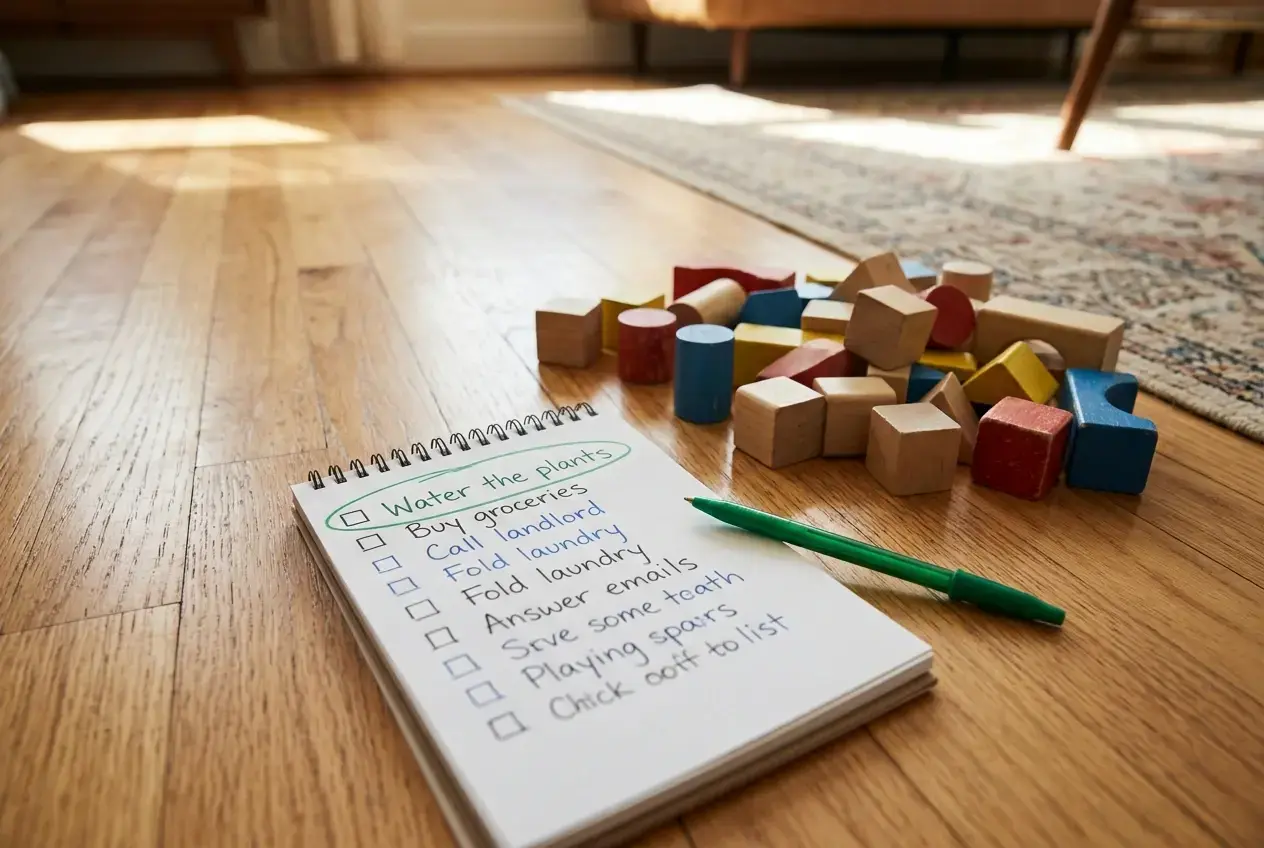
Keep a short running list of the things you decided not to do this week. They are not lost, they are queued. Looking at that list in a later week is often more motivating than any pep talk, because you can see that there is a plan and it is moving.
If you are weighing which kind of work earns its time at all, our post on side hustle ideas for busy parents compares realistic options for people with limited hours.
What To Do On The Weeks When You Only Have Ten Minutes
Some weeks the nap is short, or there is none. Run a smaller version of the same check:
- Write down the week’s total visits next to last week’s.
- Answer only the question that matches your biggest concern right now: did people find the page, click it, or stay on it.
- Pick the one fix and write down when you will do it, without doing it today.
That takes about ten minutes and keeps the record unbroken, which matters more than the depth of any single check. If even that is too much, write the visit number in the notebook and nothing else. A week with one number in it still counts as a week you tracked.
Final Thoughts: How to Stay Motivated When Blog Traffic is Low
Motivation tends to follow having something clear to do next. A weekly 20-minute check gives you the next thing, limits how often you look at the numbers, and builds a record that shows change over time. Small steps matter here because each one is something you can finish.
Take your time with it. Run the check for several weeks before you decide what the numbers say, and build the routine around your life rather than the other way around.
Let’s Chat
What is the first number you look at when you open your stats, and how does it make you feel? Tell me in the comments, and share the one small thing you plan to change this week. Seeing what other parents pick makes it easier to choose your own.
If you want a place to talk through your numbers with people who have been there, take a look at how Wealthy Affiliate’s training and community support new bloggers through the slow early months, and see if it fits around your life.