
Choosing a niche is one of the first big decisions you’ll make as a parent blogger.
And if you’re anything like most beginners, you’ve probably already asked yourself questions like:
- What should I blog about?
- What if I choose the wrong niche?
- What if nobody reads it?
- What if I change my mind later?
The good news is that choosing a parenting blog niche does not have to be complicated.
In fact, the best niche is rarely the one with the highest search volume or the biggest income potential. It is usually the one that sits at the intersection of your experience, your interests, and the problems you genuinely enjoy helping other parents solve.
Quick Answer
The best parenting blog niche is one you can realistically write about for the next 12 months while helping a specific group of parents solve specific problems. Start with your own experiences, identify who you want to help, check that people are searching for the topic, and make sure it is something you’ll still enjoy discussing long after the excitement of starting a blog wears off.
One of the biggest mistakes new bloggers make is trying to help every parent with every problem.
The most successful parenting blogs tend to focus on a particular audience, challenge, lifestyle, or stage of parenthood.
For example:
- newborn routines
- toddler activities
- special needs parenting
- family budgeting
- homeschooling
- working from home with kids
- parenting teenagers
- blogging for parents
The more clearly you understand who you’re helping, the easier it becomes to:
- create content ideas
- build trust with readers
- grow your traffic
- recommend relevant products
- eventually earn income from your blog
In this guide, I’ll show you how to find a parenting blog niche that fits your life, helps your readers, and gives you the best chance of staying motivated long enough to see real results.
If you’re just getting started, check out my step-by-step guide on how to start a parent blog before you jump into your niche.
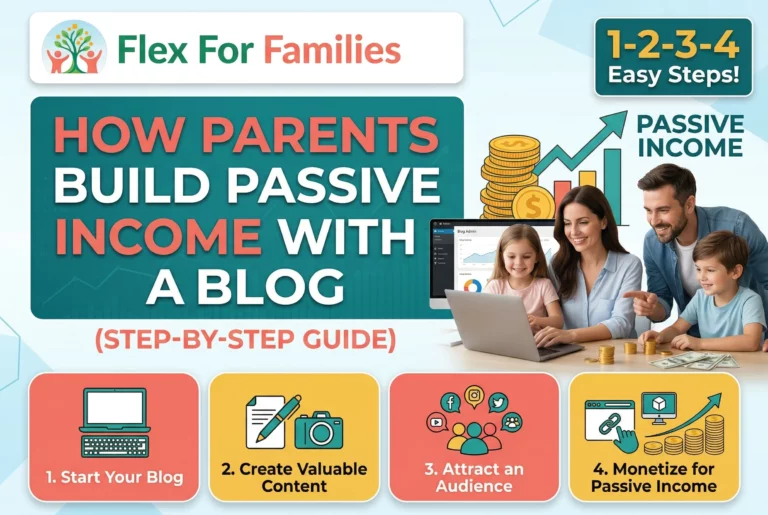
Every parent blog starts somewhere. Here’s your roadmap through the Parent Blogging Success series — from your first post to building income that fits your family.
What a Parenting Blog Niche Actually Is

A parenting blog niche is simply the main topic or audience your blog focuses on.
Many new bloggers hear the word “niche” and worry it means limiting themselves. In reality, a niche does the opposite. It gives your blog direction.
Think about it this way.
If someone lands on your blog for the first time, they should quickly understand:
- who the blog is for
- what problems it helps solve
- what kind of content they can expect
That does not mean you can only write about one thing forever.
It simply means your content has a common thread running through it.
For example:
A blog about “parenting” is very broad.
A blog about “helping busy parents start blogs and build flexible income from home” is much clearer.
A blog about “special needs parenting and school support” immediately tells readers who the content is for.
A niche helps:
- readers know they are in the right place
- Google understand your content
- you generate content ideas more easily
- your blog grow more consistently over time
The good news is that your niche does not need to be perfect from day one.
Many successful blogs evolve as their creators learn more about their audience. The important thing is starting with a clear focus that feels natural to you and useful to the people you want to help.
Parent Tip
If you’re struggling to choose a niche, stop asking, “What should I write about?”
Instead ask:
“What problems can I help other parents solve?”
The answer is often hiding in your everyday experiences.
Why Choosing the Right Niche Matters
Choosing the right niche is one of the most important decisions you’ll make as a blogger.
Not because it locks you into one topic forever, but because it shapes everything that comes next.
A clear niche makes it easier to:
- attract the right readers
- build trust faster
- create content consistently
- show up in Google searches
- recommend relevant products and resources
- eventually earn income from your blog
Let’s look at a simple example.
Broad Blog
Topics include:
- parenting
- recipes
- fitness
- travel
- home organisation
- budgeting
- product reviews
While there is nothing wrong with these topics individually, readers may struggle to understand what the blog is really about.
Focused Blog
Topics include:
- helping parents of autistic children navigate school life
Or:
- helping busy parents start blogs and build flexible income from home
Or:
- simple family budgeting strategies for parents
These blogs have a much clearer purpose.
Readers know exactly why they should stay.
Google also finds it easier to understand the site’s expertise and connect it with relevant searches.
Another benefit is that content creation becomes much easier.
Instead of wondering what to write next, you’ll have a clear audience and a growing list of problems you can help solve.
That is why the best niche is rarely the one with the biggest audience.
It is usually the one where:
- you have experience
- people need help
- you can stay interested long term
Because the niche you can stick with is almost always better than the niche that looks perfect on paper.
Step 1: Start With Your Own Experience

One of the biggest mistakes new bloggers make is looking for the “perfect” niche before they start writing.
The truth is, your best niche is often much closer than you think.
Instead of asking:
“What niche makes the most money?”
Start by asking:
“What do I already know that could help another parent?”
Your own experiences are often the strongest foundation for a blog because nobody else has lived your exact version of parenthood.
Think about:
- the stage of parenting you’re currently in
- challenges you’ve overcome
- routines you’ve developed
- lessons you’ve learned
- questions you constantly get asked
- topics you regularly research yourself
For example, you might have experience with:
- newborn sleep routines
- parenting a teenager
- homeschooling
- family budgeting
- special needs parenting
- balancing work and family life
- starting a blog as a parent
You do not need to be an expert.
In fact, many readers prefer learning from someone who is just a few steps ahead of them rather than someone who seems completely unrelatable.
Your niche often starts where your real-life experience meets another parent’s need for help.
Quick Exercise
Write down:
- 5 parenting challenges you’ve faced
- 5 topics you enjoy talking about
- 5 things people ask you for advice on
Look for overlaps.
That’s often where your niche begins.
Parent Tip
If you could happily talk about a topic over coffee with another parent for an hour, there’s a good chance you can build content around it too.
Step 2: Explore Popular Parenting Blog Niches
If you’re still unsure, it helps to look at niches that are already attracting readers.
The goal is not to copy someone else’s blog.
The goal is to see what types of problems parents actively want help solving.
Here are some of the most popular parenting blog niches:
| Niche | Typical Audience | Monetisation Potential | Competition |
|---|---|---|---|
| Family Budgeting | Parents looking to save money | High | Medium |
| Special Needs Parenting | Parents seeking support and resources | Medium-High | Low-Medium |
| Newborn & Baby Care | New and expecting parents | High | High |
| Toddler Activities | Parents of young children | Medium | Medium-High |
| Homeschooling | Home educating families | High | Medium |
| Parent Wellness | Parents focusing on mental health and self-care | Medium | Medium-High |
| Family Travel | Families looking for travel ideas | Medium | High |
| Work From Home Parenting | Parents balancing income and family life | High | Medium |
| Parenting Teenagers | Parents navigating the teen years | Medium | Low-Medium |
| Blogging for Parents | Parents wanting flexible income from home | High | Medium |
As you review these ideas, ask yourself:
- Which topics genuinely interest me?
- Which topics do I already understand?
- Which topics could I still enjoy writing about in a year?
- Which topics help a specific group of parents?
Remember, you do not need the most popular niche.
You need a niche that fits your experience, your interests, and the audience you want to help.
Parent Tip
The best niche is usually not the one with the biggest audience.
It’s the one you can consistently create helpful content for, even when motivation dips or life gets busy.
Step 3: Define Your Ideal Reader

One of the biggest mistakes new parent bloggers make is trying to write for everyone.
The problem is that when you try to help every parent, your content often ends up feeling too general to connect with anyone in particular.
The strongest blogs feel personal because they speak directly to a specific type of reader.
Think about the blogs you enjoy reading yourself.
They probably make you feel understood.
They talk about challenges you recognise, ask questions you’ve asked yourself, and offer solutions that fit your situation.
That doesn’t happen by accident.
It happens because the blogger knows exactly who they’re writing for.
Imagine One Real Person
Instead of thinking about thousands of future readers, picture one person.
Ask yourself:
- What stage of parenting are they in?
- What are they struggling with right now?
- What questions are they searching for online?
- What would make their life easier?
- What are they hoping to achieve?
For example:
You might be writing for:
Sarah, a stay-at-home mum with two toddlers
She is:
- short on time
- looking for simple routines
- searching for affordable family activities
- trying to reduce daily stress
- wanting practical solutions she can use today
Or perhaps:
James, a working dad with a child who has additional needs
He is:
- navigating school support systems
- searching for advice and resources
- trying to balance work and family responsibilities
- looking for guidance from parents who understand
The clearer the picture becomes, the easier content planning gets.
Create a Simple Reader Profile
You do not need a complicated marketing document.
A few notes are enough.
Try filling in this template:
My Ideal Reader
- They are:
- They struggle with:
- They want help with:
- They often search for:
- I can help them by:
Keep this somewhere visible when you plan content.
It becomes much easier to create useful blog posts when you know exactly who you’re helping.
Look for Problems, Not Just Topics
Many bloggers focus on topics.
Successful bloggers focus on problems.
For example:
Instead of:
- Parenting toddlers
Think:
- How to survive toddler bedtime battles
Instead of:
- Family budgeting
Think:
- How to reduce grocery costs without sacrificing family meals
Instead of:
- Blogging for parents
Think:
- How busy parents can build a blog in small pockets of time
People search for solutions far more often than they search for broad topics.
Parent Tip
If you are unsure who your ideal reader is, start with a younger version of yourself.
Think about the questions you were asking six months, one year, or even three years ago.
If those questions helped you learn something valuable, there is a good chance other parents are searching for the same answers today.
Once you know who you want to help, the next step is making sure those parents are actually looking for information on your chosen topic. That’s where a little niche research can save a lot of time later.
Step 4: Check Whether Parents Are Actually Looking for Help

At this point, you should have a few niche ideas that match your experience and interests.
Now it’s time to answer an important question:
Are other parents actively looking for information on this topic?
The good news is that you do not need complicated SEO tools to find out.
Start by doing some simple research.
Search Google
Type your niche idea into Google and see what appears.
Look for:
- autocomplete suggestions
- “People Also Ask” questions
- related searches at the bottom of the page
- popular blog posts already ranking
For example, if your niche is family budgeting, you might see searches like:
- family budgeting tips
- how to save money with kids
- family budget planner
- budget meals for families
These are clues that people are actively searching for help.
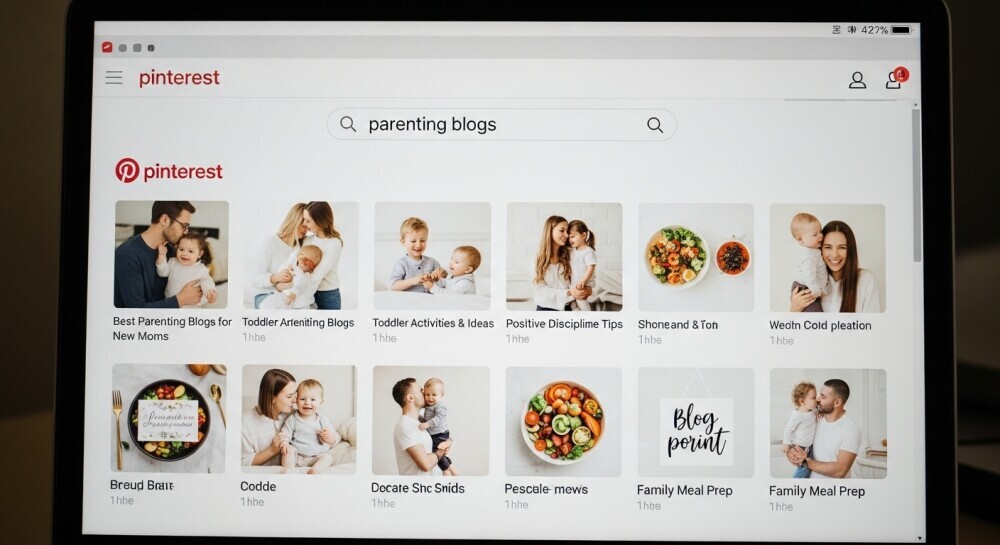
Explore Pinterest
Pinterest is one of the easiest places to spot content ideas.
Search your topic and pay attention to:
- popular pin titles
- recurring themes
- common questions
- highly shared content
If you keep seeing similar topics appear, that’s usually a sign there is demand.
Look at Parenting Communities
Facebook groups, Reddit communities, forums, and parenting websites can be goldmines for niche research.
Pay attention to:
- questions that appear repeatedly
- common frustrations
- requests for recommendations
- recurring problems
When parents ask the same questions over and over, they are effectively telling you what content they need.
Use Keyword Research Tools
If you want additional confirmation, tools like:
- Jaaxy
- Ubersuggest
- Google Keyword Planner
can help you understand what people are searching for.
You do not need huge search volumes.
In fact, smaller, more specific topics are often easier for new bloggers to rank for.
Parent Tip
Do not get obsessed with keyword numbers.
If real parents are repeatedly asking questions about a topic, there is usually content potential there.
Your goal is to help people, not chase traffic statistics.
Step 5: Check Whether Your Niche Can Be Monetised
Many parent bloggers start because they want to share their experiences.
Others hope to eventually create a flexible income from home.
Both reasons are perfectly valid.
But before committing to a niche, it is worth checking whether there are realistic ways to earn from it in the future.
You do not need to monetise immediately.
You simply want to know that opportunities exist if you decide to pursue them later.
Look for Affiliate Opportunities
Ask yourself:
- Are there products people buy in this niche?
- Are there services people use?
- Are there tools you could recommend?
Here are a few examples of how different parenting niches can create monetisation opportunities over time:
| Niche | Affiliate Opportunities |
|---|---|
| Family Budgeting | Budgeting apps, financial tools, planners |
| Newborn & Baby Care | Baby products, nursery items, parenting courses |
| Special Needs Parenting | Educational resources, support tools, books |
| Homeschooling | Curriculum providers, educational apps, learning supplies |
| Blogging for Parents | Web hosting, blogging tools, keyword research tools, training platforms |
If helpful products already exist, affiliate marketing becomes much easier later.
Consider Digital Products
Many parent bloggers eventually create:
- printables
- planners
- checklists
- templates
- mini courses
A niche with clear problems often creates opportunities for simple digital products.
Look for Sponsorship Potential
Brands often partner with bloggers who serve a specific audience.
For example:
- toy companies
- family travel brands
- educational services
- parenting apps
- household products
The more focused your audience, the easier it can be to attract relevant sponsorship opportunities.
Remember: Passion Still Matters
Monetisation is important, but it should not be the only factor.
One of the biggest mistakes new bloggers make is choosing a niche purely because it looks profitable.
A niche that makes money but bores you is often harder to sustain than a niche you genuinely enjoy.
The sweet spot is finding a niche that combines:
- your experience
- your interest
- audience demand
- monetisation opportunities
That combination gives you the best chance of creating a blog you can stick with for years rather than weeks.
Parent Tip
Before choosing a niche, ask yourself:
“Could I happily write 50 blog posts about this topic?”
If the answer is yes, you’re probably heading in the right direction.
If the answer is no, keep exploring. Your ideal niche is usually the one you can see yourself talking about long after the excitement of starting a blog has faded.
Step 6: Choose a Niche You Can Actually Stick With
After all the research, comparisons, and brainstorming, there comes a point where you simply need to make a decision.
Many new bloggers spend weeks searching for the perfect niche.
The problem is that perfect niches do not exist.
Every niche has:
- competition
- challenges
- opportunities
- topics that perform well
- topics that flop
The bloggers who make progress are usually the ones who choose a direction and start creating content.
When deciding between a few niche ideas, ask yourself:
Can I See Myself Writing About This for a Year?
This is often the most important question.
A niche might have:
- good search volume
- strong monetisation opportunities
- low competition
But if you lose interest after three blog posts, none of those advantages matter.
Choose a topic that keeps your curiosity alive.
Can I Help People With This Topic?
You do not need to be an expert.
You simply need enough experience to help someone who is a few steps behind you.
The most relatable bloggers are often learning and sharing as they go.
Does This Fit My Life Right Now?
Some niches require:
- constant product testing
- frequent travel
- lots of content creation
Others fit naturally into everyday family life.
Be realistic about the time and energy you have available.
The best niche is the one that works with your life, not against it.
Remember: Your Niche Can Evolve
Many successful blogs look very different after a year or two.
You might:
- narrow your focus
- expand into related topics
- discover a new audience
- uncover opportunities you never expected
That is normal.
The goal is not choosing the perfect niche.
The goal is choosing a good niche and getting started.
Parent Tip
If you are stuck between several ideas, choose the niche that excites you most today and commit to writing ten blog posts before reconsidering.
You’ll learn far more from publishing ten posts than spending ten weeks trying to make the perfect decision.
Common Parenting Blog Niche Mistakes
Choosing a niche can feel like a big decision, especially when you’re worried about making the wrong choice.
The good news?
Most niche mistakes are easy to avoid once you know what to look for.
Here are some of the most common mistakes new parent bloggers make, and how to avoid them.
Mistake 1: Trying to Help Every Parent
This is probably the biggest mistake of all.
When you first start blogging, it can feel tempting to write about:
- newborn sleep
- family budgeting
- homeschooling
- parenting teenagers
- meal planning
- travel
- fitness
- relationships
all on the same blog.
The problem is that readers struggle to understand who your blog is really for.
A more focused blog is usually easier to grow because readers quickly recognise that your content is relevant to their situation.
You do not need to exclude every other topic forever.
You simply need a clear starting point.
Mistake 2: Choosing a Niche Only Because It Makes Money
Monetisation matters.
But choosing a niche purely because someone claims it is profitable can backfire quickly.
If you have no genuine interest in the topic, creating content becomes a chore.
Before long, motivation disappears and the blog gets abandoned.
A better approach is to look for a niche that combines:
- personal interest
- useful experience
- audience demand
- income potential
That balance is usually much easier to sustain.
Mistake 3: Waiting for the Perfect Niche
Many bloggers spend months researching niche ideas and never actually start.
They worry about:
- choosing the wrong topic
- missing a better opportunity
- limiting future growth
The reality is that no niche is perfect.
Most successful bloggers refine their direction over time as they learn more about their audience.
Your first niche decision does not have to be your final niche decision.
Progress beats perfection every time.
Mistake 4: Constantly Changing Direction
The opposite problem is changing niches every few weeks.
One month it is budgeting.
The next month it is parenting teenagers.
Then it becomes family travel.
Then homeschooling.
Constant changes make it difficult to:
- build authority
- attract loyal readers
- create a content strategy
- gain traction in Google
Give your niche time to develop before deciding it is not working.
Mistake 5: Ignoring What Parents Are Actually Searching For
Your experiences matter.
Your stories matter.
But if your goal is to attract readers from Google, you also need to understand what parents are actively searching for.
The strongest blogs sit at the intersection of:
- what you want to talk about
- what parents need help with
That is where helpful content tends to thrive.
Mistake 6: Copying Another Blogger’s Niche
It is fine to learn from successful blogs.
It is not helpful to become a copy of one.
What makes your blog valuable is your experience, perspective, and personality.
Two parents can write about exactly the same topic and create completely different blogs.
Your goal is not to be the next version of someone else.
Your goal is to become the first version of you.
Parent Tip
If you are still unsure about your niche, stop looking for the “best” niche and start looking for the niche you can consistently create helpful content around.
A good niche you stick with is far more valuable than a perfect niche you never start.
Parenting Blog Niche Ideas by Parenting Stage
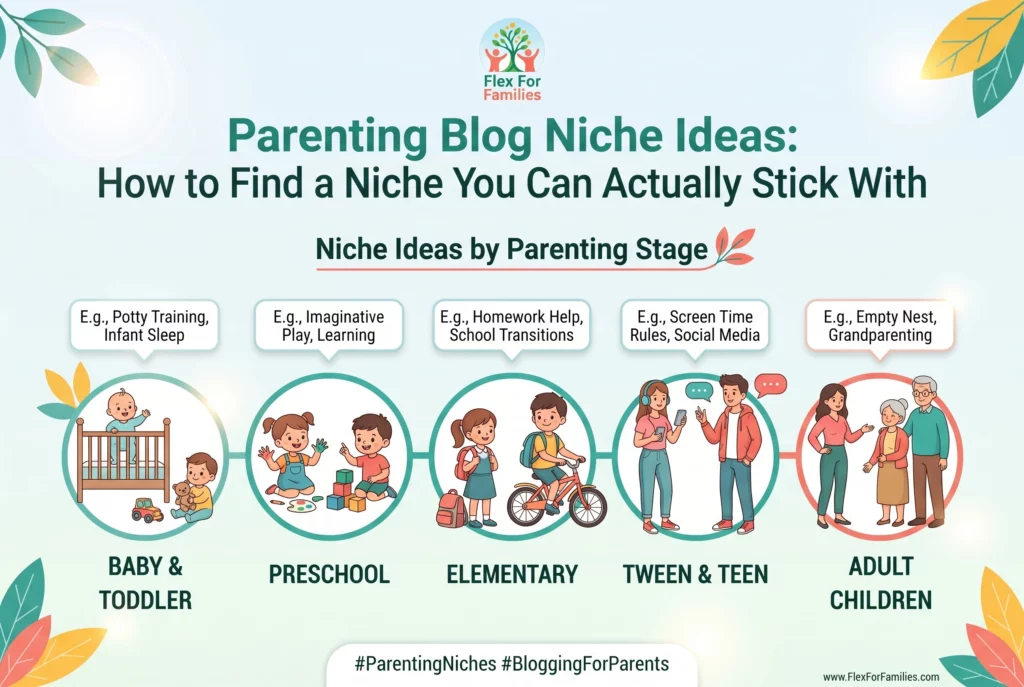
One of the easiest ways to choose a niche is to start with the stage of parenting you’re currently experiencing.
Why?
Because you’re already living it.
You understand the challenges, the questions, and the small wins that come with that season of family life. That makes it much easier to create content that feels genuine and helpful.
Here are some niche ideas based on different stages of parenthood.
Expecting Parents
Pregnancy is filled with questions, excitement, and uncertainty.
Potential niche topics include:
- preparing for a new baby
- pregnancy organisation
- budgeting for a growing family
- baby gear reviews
- nursery planning
- pregnancy wellness
- first-time parent tips
This niche works particularly well because parents actively search for information during pregnancy.
Newborn and Baby Stage
The early years create endless content opportunities.
Potential niche topics include:
- baby sleep routines
- feeding tips
- postpartum recovery
- newborn essentials
- developmental milestones
- baby product reviews
- life with a newborn
Parents in this stage often search for practical help and reassurance, making it a popular blogging niche.
Toddler Years
Toddlers bring a unique combination of chaos, laughter, and daily challenges.
Potential niche topics include:
- toddler activities
- behaviour and discipline
- potty training
- speech development
- simple family routines
- picky eating solutions
- toddler travel tips
This niche offers countless opportunities to share real-life experiences and practical advice.
School-Age Children
As children enter school, new challenges and opportunities emerge.
Potential niche topics include:
- school routines
- homework support
- organisation tips
- after-school activities
- friendships
- family schedules
- educational resources
Many parents look for ways to simplify family life during these busy years.
Parenting Teenagers
Teen parenting blogs are less common than many other parenting niches, which can create opportunities for bloggers willing to share their experiences.
Potential niche topics include:
- communication with teenagers
- online safety
- independence and responsibility
- exam preparation
- mental wellbeing
- social media challenges
- preparing for adulthood
Parents often appreciate honest perspectives from people navigating similar situations.
Special Needs Parenting
This is one of the most impactful parenting niches because lived experience matters so much.
Potential niche topics include:
- autism support
- ADHD parenting
- school advocacy
- therapy experiences
- family routines
- sensory challenges
- emotional support for parents
Parents searching for these topics often value authentic experiences over generic advice.
Working Parents
Balancing family life and work creates many opportunities for content.
Potential niche topics include:
- work-life balance
- flexible working
- time management
- remote work with children
- family organisation
- productivity for parents
- career development
This niche can naturally connect with income, side hustle, and blogging content as well.
Stay-at-Home Parents
Many parents look for support, encouragement, and practical ideas during this stage of life.
Potential niche topics include:
- daily routines
- activities for children
- family budgeting
- meal planning
- self-care
- home organisation
- flexible income ideas
This audience often values realistic advice from someone who understands the challenges firsthand.
Parent Bloggers and Online Income
If you enjoy writing, technology, and helping others build something of their own, this can be an excellent niche.
Potential niche topics include:
- starting a parent blog
- affiliate marketing
- SEO
- content creation
- Pinterest traffic
- blogging tools
- flexible income strategies
This is the niche Flex For Families focuses on because it combines family life with the opportunity to build something flexible around it.
Parent Tip
You do not have to choose a niche simply because you are currently in that stage of parenting.
However, starting with the experiences you are living right now is often the easiest way to create content that feels authentic, helpful, and sustainable.
The best niche is rarely the one that sounds most impressive.
It is usually the one where your experience, interests, and audience needs naturally overlap.
FAQ: Parenting Blog Niche Ideas
How specific should my parenting blog niche be?
A niche should be specific enough that readers immediately understand who your blog helps, but not so narrow that you quickly run out of content ideas.
For example, “parenting” is very broad, while “helping parents of autistic children navigate school life” is much more focused.
Can I blog about more than one parenting topic?
Yes, as long as the topics serve the same audience.
For example, family budgeting, meal planning, and money-saving tips work well together because they help similar readers.
The key is keeping your content relevant to the same type of parent.
What if I choose the wrong niche?
Most bloggers refine their niche over time.
Your first niche does not need to be perfect. The important thing is getting started, creating content, and learning what resonates with your audience.
What is the best parenting blog niche for beginners?
The best niche is usually one that combines:
- your experience
- your interests
- audience demand
- long-term sustainability
There is no single “best” niche for everyone.
Should I choose a niche based on money-making potential?
Monetisation matters, but it should not be the only factor.
A niche you genuinely enjoy writing about is often easier to sustain than one chosen purely because it appears profitable.
Can I change my niche later?
Absolutely.
Many successful blogs evolve over time.
Some bloggers narrow their focus, while others expand into related topics as their audience grows.
How do I know if people are interested in my niche?
Look for signs of demand by:
- searching Google
- exploring Pinterest
- reading parenting forums
- joining Facebook groups
- using keyword research tools
If parents repeatedly ask questions about a topic, there is usually an audience for it.
How many blog posts should I write before changing direction?
Try publishing at least 10 to 20 posts before deciding whether a niche is working.
This gives you enough time to explore the topic properly and gather feedback from readers and search engines.
Final Word: Choose a Niche You Can Grow With

Choosing a parenting blog niche can feel like a huge decision when you’re starting out.
- You want to pick something people care about.
- You want enough content ideas to keep going.
- You want the possibility of growing traffic and maybe even earning an income one day.
But after everything we’ve covered in this guide, I hope one thing is clear:
- The best niche is not necessarily the most profitable.
- The best niche is not necessarily the least competitive.
- And the best niche is definitely not the one someone else tells you to choose.
The best niche is the one you can consistently create helpful content around for months and years to come.
A good niche sits at the intersection of:
- your experience
- your interests
- your audience’s needs
- real demand
When those four things come together, blogging becomes much easier.
- You’ll never run out of ideas.
- You’ll connect with readers more naturally.
- And you’ll build a blog that feels authentic because it reflects your real experiences as a parent.
Remember, you do not need to get this perfect.
Many successful bloggers adjust and refine their niche as they learn more about their audience.
What matters most is choosing a direction and getting started.
Because the parent who publishes ten helpful blog posts will learn far more than the parent who spends six months trying to choose the perfect niche.
Parent Tip
If you’re still unsure, choose the niche that excites you most right now and commit to writing your first ten posts.
You’ll gain clarity through action far faster than through endless research.
Ready to Build Your Parent Blog?
Finding your niche is only the beginning.
Once you know who you want to help, the next step is learning how to create content, attract readers, and build a blog that fits around family life.
The Parent Blogging Hub brings together the complete Parent Blogging Success series, along with practical guides, tools, and support designed specifically for busy parents.
Whether you’re starting your first blog or refining an existing one, you’ll find step-by-step resources to help you move forward with confidence.
Explore the Parent Blogging Hub and start building your blog one post at a time.
Let’s Chat
Have you already chosen your parenting blog niche, or are you still exploring ideas?
I’d love to know:
- What niche are you considering?
- What part of choosing a niche feels most difficult?
- Are you worried about competition, monetisation, or simply finding enough content ideas?
Drop a comment below and let me know.
Sometimes a quick conversation can help you see your niche much more clearly.
And if you’re still deciding, share a few of your ideas. I’d be happy to help you narrow them down.