
If you spend five minutes researching affiliate marketing, it can quickly look expensive.
One person tells you that you need premium hosting.
Another recommends a £100-a-month SEO tool.
Then you find a course costing £1,000, a premium WordPress theme, an AI writing tool, funnel software, an email platform, paid ads, and half a dozen plugins.
Before you have earned your first £1, you can easily convince yourself that affiliate marketing requires a serious budget.
It does not.
I first started learning about affiliate marketing back in 2016. Since then, I have used free tools, paid tools, courses, hosting platforms, keyword research software, AI tools, and plenty of products promising to make the whole process easier.
If I were starting again today, I would spend far less at the beginning.
The biggest lesson I have learned is simple.
You do not need to buy everything that might help you eventually.
You need enough to get started, learn what works, and discover where spending money would genuinely make your life easier.
If you are completely new to the business model, I would start with my Affiliate Marketing for Parents guide first. This article focuses specifically on what starting affiliate marketing is likely to cost.
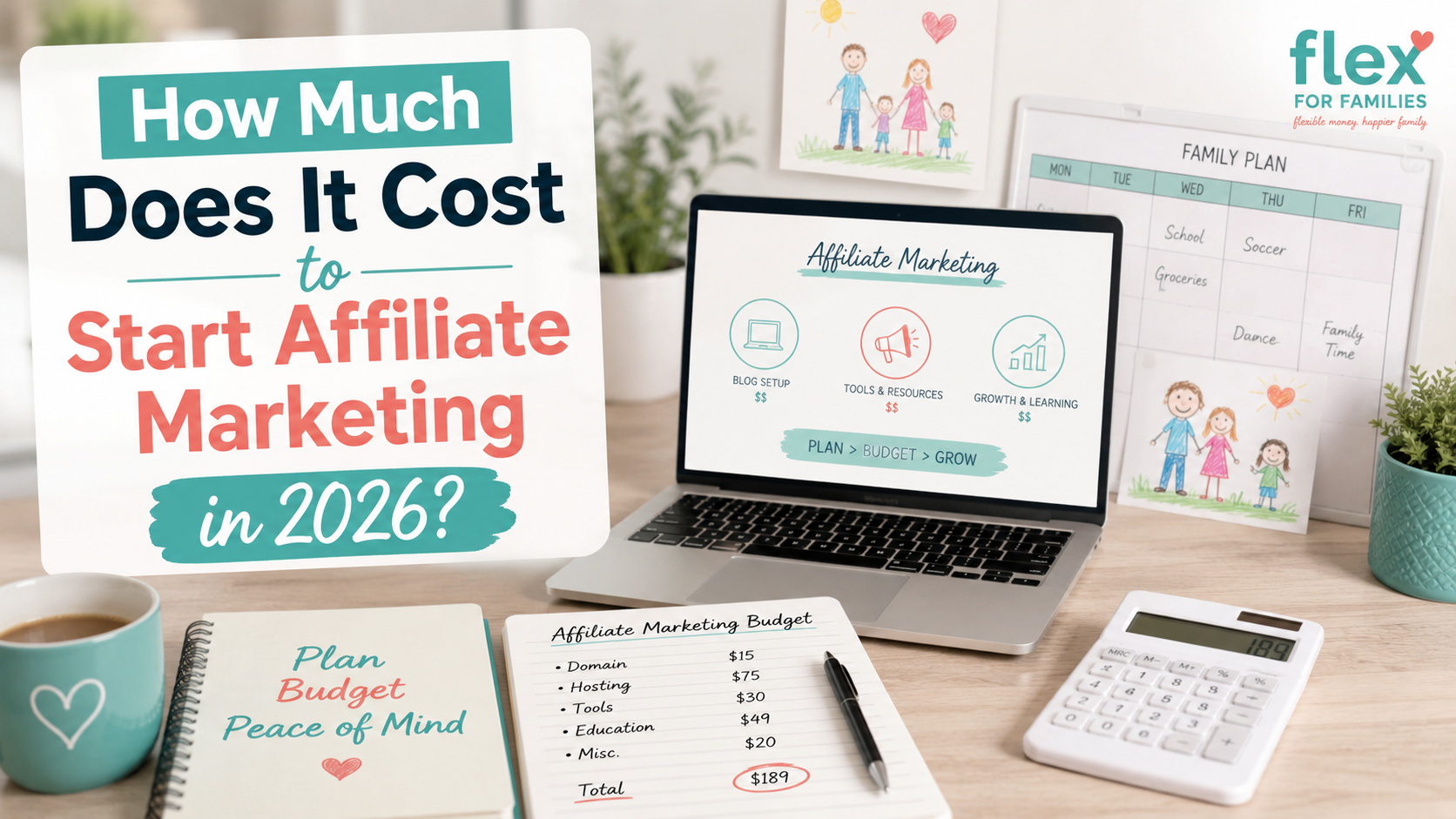
How Much Does It Cost to Start Affiliate Marketing?
You can technically start affiliate marketing for £0.
However, if you want to build a long-term affiliate website that you control, I think a small starting budget makes more sense.
Here is how I would think about it.
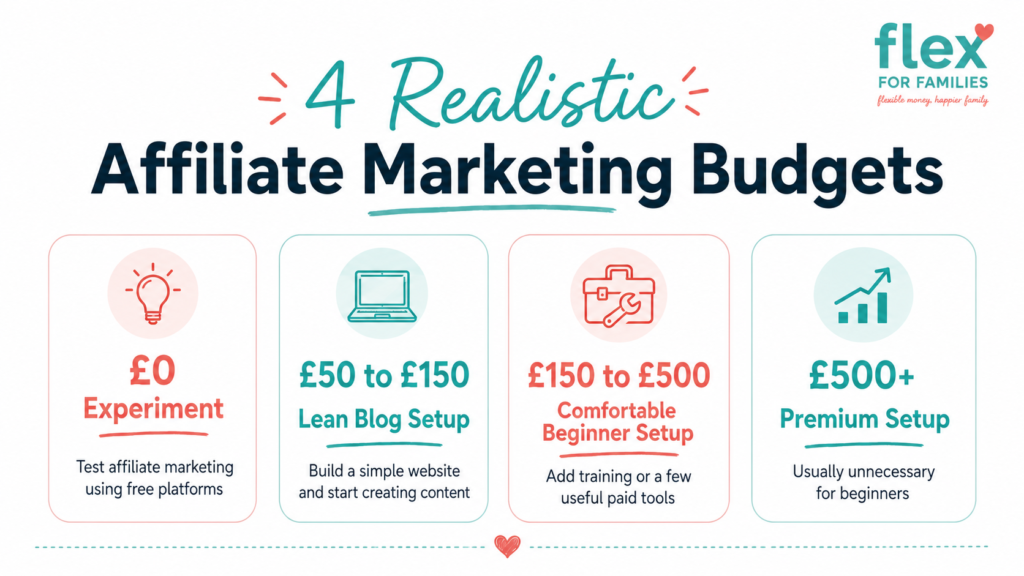
| Starting Approach | Illustrative Starting Budget | Best For |
| Free Experiment | £0 | Testing whether you enjoy creating content and promoting affiliate products |
| Lean Blog Setup | £50 to £150 | Beginners who want their own website and a serious starting point |
| Comfortable Beginner Setup | £150 to £500 | People who value convenience, training, or a few paid tools |
| Premium Setup | £500+ | Usually unnecessary for someone starting from scratch |
These figures are examples, not fixed costs.
Hosting, domains, software, and training prices change frequently.
The important part is the principle.
You can start small.
For most beginners, I would focus the initial budget on three things:
- A domain name.
- Reliable hosting, or an all-in-one platform that includes hosting.
- Learning how to create useful content people actually want to read.
Most of the other expenses can wait.
Can You Start Affiliate Marketing for Free?
Yes.
You do not necessarily need a website to become an affiliate marketer.
You could create content through platforms such as:
- YouTube
- TikTok
Other platforms that allow affiliate promotion
You can also join many affiliate programs without paying a fee.
That means a genuine £0 starting route exists.
There is one important catch.
Free does not mean effortless.
When you avoid spending money, you will often pay with more time, fewer tools, less control, or increased dependence on somebody else’s platform.
If you build your entire business on a social network, you are also building on a platform whose algorithms and rules you do not control.
That does not mean social media is a bad way to start.
It simply means I would view the free route as a good way to experiment, rather than assuming it is automatically the best long-term setup.
Do You Need a Website for Affiliate Marketing?
No.
But I still think owning a website makes sense for many people who want to build affiliate marketing into a long-term income stream.
Your website gives you somewhere to build:
- Helpful articles
- Product reviews
- Tutorials
- Email sign-up pages
- Comparison content
- Evergreen resources
- Affiliate links
- Search traffic
- Your own brand
You can then use platforms such as Pinterest, YouTube, Facebook, Instagram, and Google to bring people back to content you control.
That is the approach I use with Flex For Families.
If you are a busy parent trying to build something gradually around work and family, I think having a central home for your content becomes even more valuable over time.
What Does an Affiliate Marketing Blog Actually Cost?
This is where beginners often get overwhelmed.
There are hundreds of tools available.
Very few are essential on day one.
Domain Name
I would buy your own domain if you are serious about building an affiliate blog.
Your domain is the address people use to find your website.
For example:
flexforfamilies.com
You normally pay for a domain annually.
You do not need an expensive premium domain.
I would rather see a beginner spend £10 to £20 on a straightforward domain and start creating useful content than spend months searching for the perfect brand name.
Website Hosting
Your website needs somewhere to live.
WordPress software itself can be free, but a self-hosted WordPress site still requires hosting.
Hosting prices vary significantly.
You will find cheap introductory deals, larger hosting packages, managed hosting, and platforms that bundle hosting with other tools.
My advice is simple.
Do not buy hosting designed for a huge website when your new blog has no visitors.
You need something reliable enough to get started.
You can upgrade later if your traffic eventually justifies it.
WordPress Theme
You do not need a premium WordPress theme to start affiliate marketing.
A good free theme is enough for most beginners.
Premium themes can offer extra layouts, features, and customisation.
Those things can be useful later.
They do not make your first articles rank.
They do not create an audience.
They do not earn your first commission for you.
Start with something simple.
Plugins
This is another easy place to overspend.
You build a WordPress site.
Then every tutorial seems to recommend another plugin.
- SEO plugin.
- Image plugin.
- Security plugin.
- Backup plugin.
- Analytics plugin.
- Design plugin.
- Social sharing plugin.
- Pop-up plugin.
Some are useful.
Installing 30 plugins because somebody included them in a YouTube tutorial is not a strategy.
Start with what your website actually needs.
Add more only when you understand why you need them.
Keyword Research Tools
Keyword research matters.
Expensive keyword research software does not need to be your first purchase.
You can learn a lot using:
- Google search results
- Google Search Console once you start collecting data
- Free keyword tools
- Limited versions of paid platforms
- Questions your audience is already asking
I use keyword research tools myself, but that is very different from saying every new blogger needs to buy one.
The more content you publish, the more useful advanced research tools can become.
At the beginning, learning what makes a good keyword is more valuable than owning the most expensive software.
AI Tools
AI has become another area where beginners can quickly accumulate subscriptions.
- One AI tool becomes two.
- Then an AI keyword platform appears.
- Then an AI content writer.
- Then an automation tool.
Then something promising to build the entire blog for you.
Suddenly your supposedly low-cost affiliate business has £100 or more of monthly subscriptions.
I use AI extensively in my own blogging workflow.
It helps me research, organise ideas, plan articles, create drafts, analyse content, and produce supporting material much faster.
But I do not think you need five AI subscriptions to start affiliate marketing.
AI is most useful when it helps you do something you already understand more efficiently.
If you are interested in this side of blogging, I have also broken down how much time AI really saves bloggers and where the time-saving claims start becoming exaggerated.
Canva and Graphics
You can start with Canva’s free plan or other free design tools.
You do not need professional branding before you have published your first article.
This is another lesson I would apply differently if starting again.
Get the basics looking clean.
Then focus on content.
You can improve your graphics and branding as the website develops.
Email Marketing
I think building an email list is important.
That does not mean you need an expensive email marketing platform before publishing anything.
Many email services offer a free entry point or low-cost plans for smaller lists.
Start building an email list once you have something genuinely useful to offer visitors.
Then upgrade your email setup as the list grows and starts contributing to the business.
Affiliate Programs
Most legitimate affiliate programs are free to join.
You normally earn a commission when somebody completes an eligible purchase or action through your link.
You should be cautious if somebody tells you that you must pay hundreds of pounds simply to become their affiliate.
You may be buying training, software, or another product as part of the package, but that is different from paying to join a normal affiliate program.
Amazon Associates is one obvious example of a program beginners often consider because it gives you access to a huge range of products.
I have a separate Amazon Associates for Parents guide if you want to explore that route.
The Affiliate Marketing Costs I Would Prioritise
If I were starting affiliate marketing today, I would prioritise spending in this order.
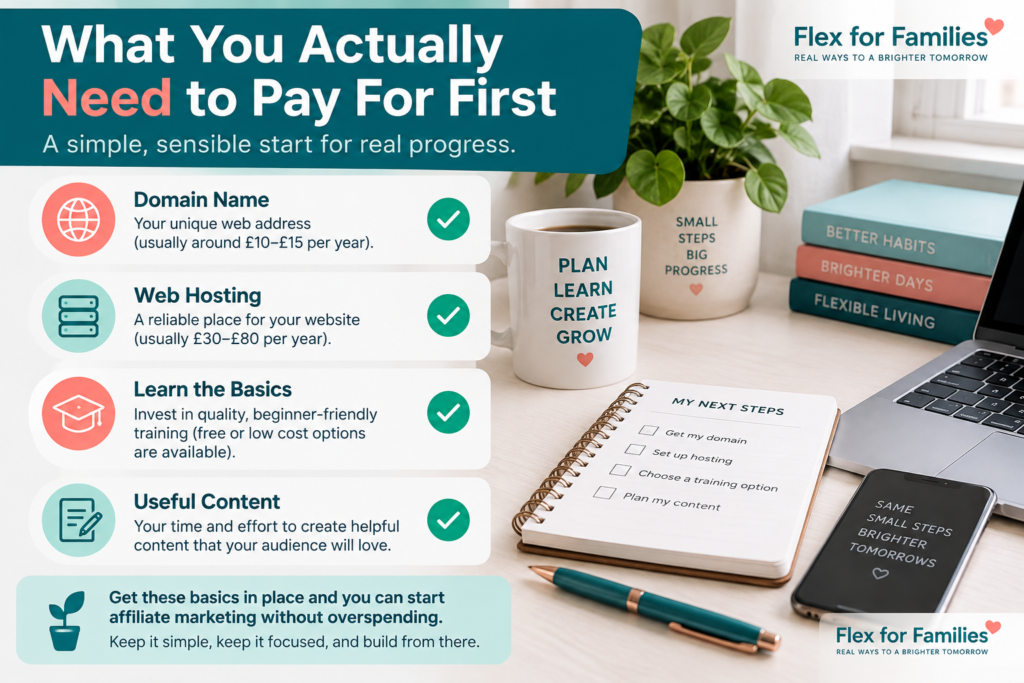
#1 A Domain
Own your brand.
Keep it simple.
Do not spend a fortune looking for the perfect name.
#2 Reliable Hosting or an All-In-One Platform
Your website needs somewhere dependable to live.
You do not need the most expensive option.
#3 Learning the Fundamentals
Learn:
- How affiliate marketing works.
- How to understand search intent.
- How to choose useful topics.
- How to create genuinely helpful content.
- How affiliate disclosures work.
- How to choose products worth recommending.
#4 Tools That Solve an Actual Problem
This is where I would introduce one rule.
Do not buy a tool because you might need it eventually.
Buy it when you can explain the problem it solves today.
#5 Everything Else
- Premium themes.
- Advanced SEO suites.
- Paid advertising.
- Funnel builders.
- Automation platforms.
- Multiple AI subscriptions.
You can add these if your business reaches a point where they make financial or practical sense.
What I Would Not Spend Money on as a Beginner
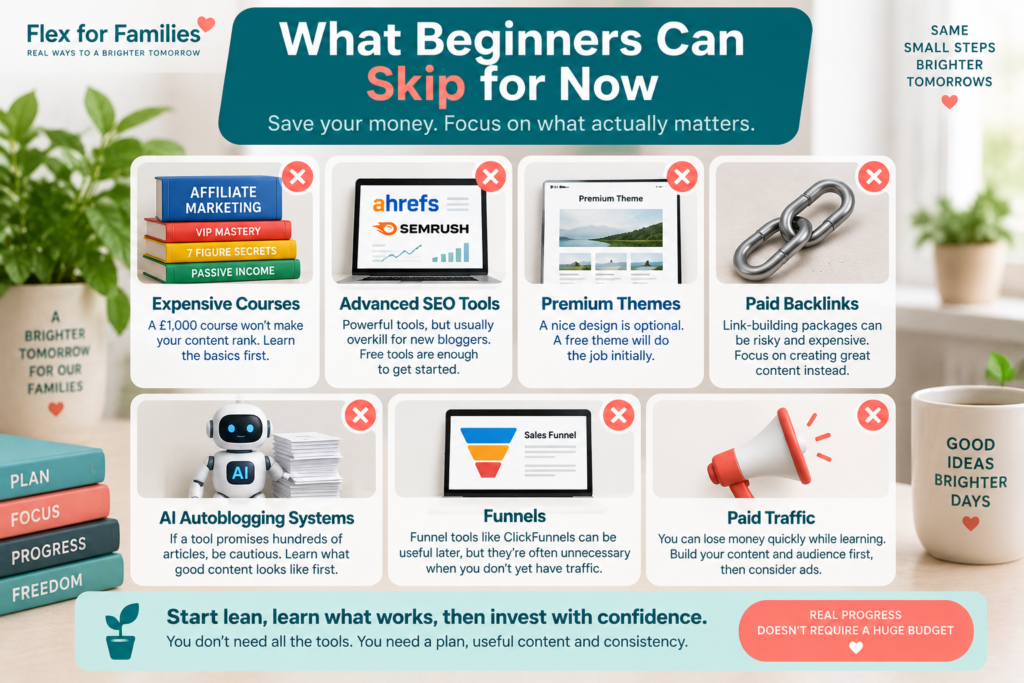
Some expenses can make sense later.
That does not make them sensible starting expenses.
Expensive Affiliate Marketing Courses
There are good affiliate marketing courses.
I have reviewed plenty of them.
There are also courses costing hundreds or thousands of pounds that promise to shorten the learning curve.
Training can help.
It cannot remove the need to create content, attract an audience, test ideas, and learn from what happens.
I would be very cautious about making a four-figure course your first affiliate marketing investment.
Advanced SEO Software
Tools such as Ahrefs and Semrush can be incredibly useful.
They can also be far more than a brand-new blogger needs.
If your website contains six articles, you probably do not need enterprise-level competitor analysis.
Learn basic keyword research first.
Upgrade your tools when the additional data starts helping you make better decisions.
Premium WordPress Themes
A £100 theme does not automatically make your website more trustworthy.
Your content does most of that work.
A premium theme can eventually improve design or make certain tasks easier.
Treat it as an upgrade, not a requirement.
Paid Backlinks
I would be extremely cautious here.
Link building is one of those areas where beginners can spend serious money without really understanding what they are buying.
If somebody offers hundreds of high-authority backlinks for a suspiciously low price, that should make you ask more questions, not fewer.
AI Autoblogging Systems
This has become a huge market.
You will find tools promising:
- Hundreds of articles.
- Automated keyword research.
- Automatic publishing.
- Automatic internal links.
- Automatic images.
- Automatic SEO.
It sounds perfect for someone with limited time.
The problem is that automation becomes risky when you do not yet know what good content looks like.
If a tool produces 100 poor articles, you have not saved yourself time.
You may have created 100 things that need reviewing, editing, deleting, or fixing.
Funnels
Funnels can be useful.
They can also become another expensive distraction.
I recently looked closely at ClickFunnels from this perspective.
It offers powerful funnel-building tools.
My issue for beginners is timing.
If you do not yet have traffic, an audience, or an offer you know converts, spending heavily on funnel software may solve a problem you do not have yet.
Paid Traffic
Affiliate marketing can work with paid traffic.
I would not recommend starting there unless you understand the risks.
You can lose money very quickly while learning:
- Ad platforms.
- Targeting.
- Conversion rates.
- Landing pages.
- Affiliate program rules.
- Tracking.
I would rather see most beginners learn to create useful content and generate organic traffic before putting money into ads.
Three Affiliate Marketing Budgets I Would Consider
You do not need the same setup as everybody else.
Here are three routes I think make sense.
Budget 1: The £0 Experiment
This is for someone who is curious about affiliate marketing but does not yet know whether they will enjoy creating content.
You could use:
- A free social media platform.
- YouTube.
- Pinterest.
- Free Canva.
- Free AI tools.
- Free affiliate programs.
Your objective is simple.
Learn what creating useful affiliate content actually feels like.
Do not worry about building the perfect business yet.
Find out whether you enjoy the process.
Budget 2: The Lean Affiliate Blogger
This is probably the route I would recommend to most Flex For Families readers.
Spend money on:
- Your domain.
- Your hosting or platform.
- Use free versions of most other tools.
Focus on:
- One website.
- One niche.
- Helpful content.
- Basic SEO.
- One additional traffic source.
- One or two relevant affiliate programs.
Keep your monthly expenses low.
You can always add tools when the need appears.
Budget 3: The Comfortable Beginner
Maybe you have some disposable income and would rather pay for convenience.
Your setup might include:
- Domain.
- Hosting.
- Training.
- A premium AI subscription.
- Canva Pro.
- One research tool.
Possibly an email platform once needed.
There is nothing wrong with this route.
Just remember something important.
A bigger budget does not create faster traffic automatically.
You can spend £500 setting everything up beautifully and still have to sit down and create content.
My Own Affiliate Marketing Setup in 2026
My current setup looks very different from what I would recommend to somebody on day one.
That is because Flex For Families is an established project with hundreds of pieces of content and a much larger workflow.
Here are some of the tools I currently use.
| Tool | What I Use It For | Essential for a Beginner? |
|---|---|---|
| WordPress | Running Flex For Families | Yes, or another suitable publishing platform |
| Wealthy Affiliate | Hosting, training, research, website tools | No |
| Jaaxy | Keyword research | No |
| ChatGPT | Research, planning, workflow and content support | No |
| Canva Pro | Website and social graphics | No |
| Grammarly | Editing support | No |
| Google Search Console | Understanding Google search performance | Yes, and free |
| Google Analytics | Website analytics | Useful, and free |
| Microsoft Clarity | Understanding visitor behaviour | Useful, and free |
The important takeaway is not:
You need John’s setup.
It is the opposite.
This is what my setup looks like after years of working online.
You do not need my current setup on day one.
Is Wealthy Affiliate a Cheap Way to Start Affiliate Marketing?
Wealthy Affiliate forms part of my own setup.
I first joined in 2016 and upgraded within my first week.
I still use the platform today.
One reason it can appeal to beginners is that several things you might otherwise source separately sit within one ecosystem.
Depending on your membership level, that can include:
- Website hosting.
- Affiliate marketing training.
- Keyword research.
- Website tools.
- Community support.
- AI-assisted tools.
I think that bundling can make sense for someone who wants a structured route rather than assembling everything separately.
However, I want to make something clear.
You do not need Wealthy Affiliate to become an affiliate marketer.
There are many ways to build an affiliate business.
I use Wealthy Affiliate because it has fitted my own approach for a long time.
That does not mean it is automatically the right choice for everybody.
If you want the full breakdown, including where I think it works well and where it has limitations, read my Wealthy Affiliate Review 2026 before making a decision.
When Should You Start Paying for Better Tools?
I would upgrade when one of five things happens.
- A free tool is genuinely restricting what you can do.
- A paid tool will save you meaningful time.
- You use the tool frequently enough to justify the cost.
- Your website is earning enough to help fund the expense.
You can clearly explain why you are buying it.
That last point matters.
Do not upgrade because somebody says professional bloggers use a particular tool.
Ask:
What will this actually do for me?
Here are a few examples.
- You probably do not need Canva Pro because you have written your first blog post.
- You might justify it once you are producing Pinterest pins, Facebook graphics, YouTube thumbnails, and website images every week.
- You probably do not need an expensive SEO platform when your website has ten articles.
- You might want one once you have hundreds of articles and need deeper competitor or content analysis.
- You probably do not need funnel software when hardly anyone is visiting your website.
That changes once you have a proven offer and want to improve how visitors move towards it.
Make the expense solve a real problem.
Do not create a new monthly bill and then start looking for a reason to keep it.
The Biggest Cost of Affiliate Marketing Is Often Your Time
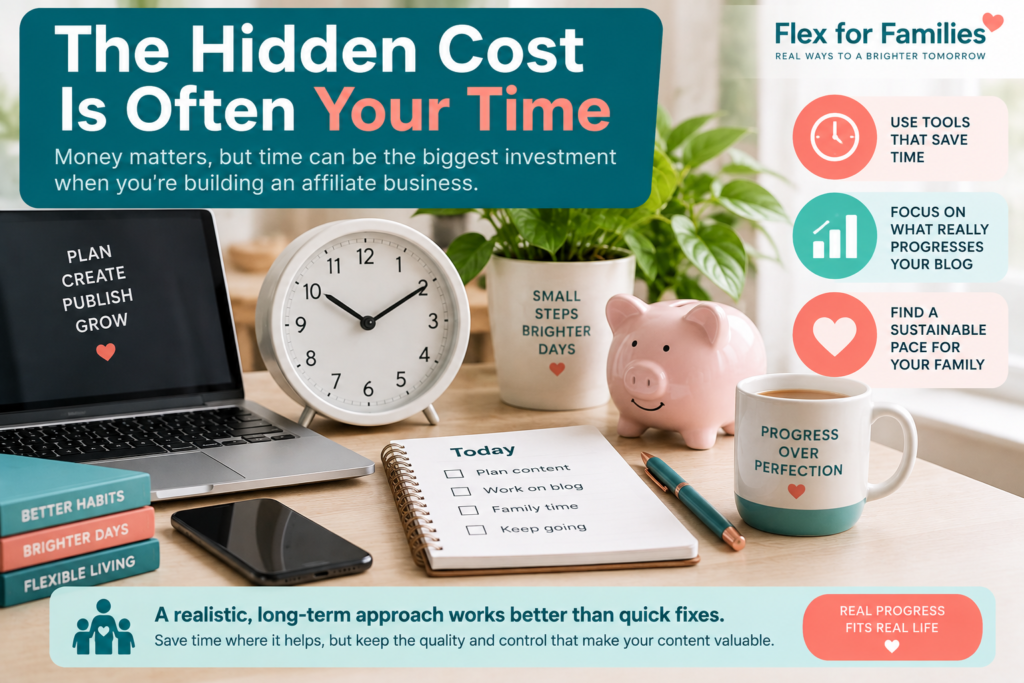
Money is only part of the equation.
For busy parents, time can be the more limited resource.
That changes how I judge blogging tools.
- A £20-per-month tool that genuinely saves you several hours might eventually represent excellent value.
- A £20-per-month AI tool that creates content you spend three hours rewriting is not saving you much.
This is why I have become increasingly cautious about tools marketed around speed.
Faster is useful.
Only if the result is still good enough.
I want tools to help me:
- Research faster.
- Organise information faster.
- Find opportunities faster.
- Create supporting assets faster.
- Remove repetitive work.
I do not want them replacing the judgement, experience, and quality control that make the content useful.
That is also why I think beginners should learn the basic process before trying to automate it.
How I Would Start Affiliate Marketing Today on a Tight Budget
If I were starting from scratch today, this is the route I would take.
#1 Choose One Niche
Do not try to cover everything.
Pick an audience and subject you can genuinely help with.
#2 Buy One Domain
Keep it simple.
Do not spend hundreds on a premium domain.
#3 Choose Reliable Hosting or an All-In-One Platform
Get the website online.
Do not overbuy.
# 4 Build a Simple WordPress Website
You do not need a complicated design.
#5 Use a Free Theme
Make the website clean and easy to navigate.
#6 Learn Basic Keyword Research
Understand what people are searching for before paying for advanced tools.
#7 Publish Helpful Content
This is where most of your effort should go.
#8 Join Relevant Affiliate Programs
Choose programs that naturally fit the problems your audience is trying to solve.
#9 Choose One Additional Traffic Source
- Pinterest.
- YouTube.
- Facebook.
- Instagram.
Whichever best fits your content and audience.
#10 Buy Nothing Else Until You Find a Genuine Need
This may be the most important step.
Give your existing setup the chance to work.
Can Affiliate Marketing Really Be a Low-Cost Side Hustle?
Yes.
Affiliate marketing has a relatively low financial barrier compared with many businesses.
You do not normally need:
- Stock.
- A shop.
- Employees.
- Warehousing.
- Packaging.
- A fulfilment operation.
- A customer service team.
Most affiliate programs do not charge you to join.
That makes affiliate marketing accessible.
It does not make it easy.
The real challenge is building enough trust and traffic for people to discover your recommendations and act on them.
That takes time.
Affiliate marketing is cheap to start because you can begin with a website, basic tools, and your own effort.
The trade-off is that you need to do the work before you know whether it will produce meaningful income.
How Long Does It Take for Affiliate Marketing to Pay for Itself?
There is no reliable answer.
I earned my first Wealthy Affiliate commission at around the six-month mark.
That does not mean you should expect exactly the same timeline.
Your results will depend on factors such as:
- Your niche.
- How much content you publish.
- The quality of that content.
- Your traffic sources.
- Your affiliate programs.
- Search competition.
- Your conversion rates.
- How consistently you work on the site.
Some people earn sooner.
Others take much longer.
Some never reach meaningful income.
That is another reason I like keeping the starting costs low.
You give yourself time to learn without feeling that the website must immediately pay off hundreds of pounds of monthly expenses.
My Verdict: Start Lean and Earn the Right to Spend More
You do not need a huge budget to start affiliate marketing.
You need enough to build a simple foundation and start learning.
For most beginners, I would prioritise:
- A domain.
- Reliable hosting or a suitable platform.
- Useful content.
- Basic keyword research.
- Relevant affiliate programs.
- One additional traffic source.
Then stop spending for a while.
Your first objective is not to create the perfect affiliate marketing business.
It is to prove that you can:
- Create useful content.
- Attract visitors.
- Generate clicks.
- Earn a first commission.
- Understand what your audience responds to.
Once those things start happening, spending money becomes much easier to justify.
- You might discover that a keyword research tool saves hours.
- You might need better hosting because traffic has increased.
- You might pay for Canva because you are producing dozens of graphics every month.
- You might upgrade an AI tool because it genuinely improves your workflow.
At that point, you are investing to solve a known problem.
That is very different from spending hundreds before you have published your first article because somebody told you that successful affiliate marketers need a huge tech stack.
Start lean.
Learn what you need.
Then let the business earn the right to become more expensive.
Trying to Start Without Wasting Money?
If you are building your first blog around work, family life, and limited spare time, my free Parent Blogging Starter Kit can help you organise the basics without adding another expensive course or subscription to your list.
It includes practical planning tools to help you choose a direction, plan content, organise your available time, and start building towards flexible income.
Frequently Asked Questions
How Much Money Do I Need to Start Affiliate Marketing?
You can start affiliate marketing for £0 using free platforms and free affiliate programs.
If you want to build your own affiliate website, I would normally budget for a domain and hosting first.
You can add other tools later.
Can I Start Affiliate Marketing With No Money?
Yes.
You could use social media, YouTube, Pinterest, or another free content platform and join affiliate programs that do not charge an application fee.
The main trade-off is that you have less control than you would with your own website.
Do I Need a Website for Affiliate Marketing?
No.
Many affiliate marketers use social media, email, YouTube, or other platforms.
However, I prefer having a website because it gives you a central platform you control and can build over time.
Do I Need to Pay to Join Affiliate Programs?
Most mainstream affiliate programs are free to join.
Always check what you are actually paying for if a company charges money before allowing you to become an affiliate.
How Much Does an Affiliate Marketing Website Cost?
The cost depends on your domain, hosting provider, and any additional tools you choose.
A basic website can be inexpensive.
You do not need premium themes, expensive plugins, or advanced marketing software when starting.
Do I Need Paid SEO Tools for Affiliate Marketing?
No.
Paid SEO tools can help, especially as your website grows, but beginners can learn keyword research and SEO fundamentals using free resources and tools.
Should Beginners Pay for Affiliate Marketing Courses?
You can, but you do not need an expensive course to get started.
If you are considering paid training, look carefully at what it teaches, who it is designed for, how current the material is, and whether you actually need that level of training yet.
Can I Use Free AI Tools for Affiliate Marketing?
Yes.
Free AI tools can help with brainstorming, research, outlines, editing, and planning.
You should still review the information, add your own experience, and make sure the finished content genuinely helps the reader.
Is Affiliate Marketing Cheaper Than Starting an Ecommerce Business?
Affiliate marketing can have lower starting costs because you do not normally need to buy stock, manage fulfilment, or handle customer orders.
However, the two business models work differently and have different risks.
Low starting costs do not guarantee affiliate marketing income.
How Long Does It Take Before Affiliate Marketing Pays for Itself?
There is no fixed timeline.
It depends on your traffic, niche, content, affiliate programs, and consistency.
I earned my own first Wealthy Affiliate commission at around six months, but I would not use that as a promise or typical result.
Let’s Chat
What is the biggest cost stopping you from starting affiliate marketing?
Is it the website?
The tools?
Training?
Or are you mainly worried about spending money before knowing whether any of this will work?
Drop a comment below and let me know.
I am always interested in hearing what the financial side of starting a blog looks like for real families.



This is such a refreshing and realistic take on starting affiliate marketing, especially for parents who are juggling tight schedules and tighter budgets. I love how clearly you break down the myth that beginners need expensive tools or high-ticket courses to make progress. Your focus on simple steps, free resources, and building slowly is exactly what overwhelmed beginners need to hear. It’s encouraging to see someone highlight what truly matters—clarity, consistency, and picking a niche that feels natural to your life. The week-by-week action plan is especially helpful because it shows how much can be done in small pockets of time. Your guide makes affiliate marketing feel accessible, doable, and affordable, and that’s incredibly empowering for busy families starting out.
Hi Andrejs,
Thank you so much for this! I really appreciate your thoughtful feedback. When you’re juggling family life, work, and everything else, the last thing you need is pressure to buy expensive tools or jump into high-ticket programs. Most parents don’t realise how far they can go with clear steps, free options, and a bit of consistency.
I’m glad the week-by-week plan stood out to you. That approach has helped me the most, too. Once you break things into tiny tasks you can do during nap times or quiet moments, the whole process feels much more doable. Small actions really do compound.
You’re absolutely right… Clarity, consistency, and choosing a niche that fits your actual life make the biggest difference, especially in the early days.
Are you currently doing affiliate marketing now, or thinking about starting something soon?
John
Hey John,
Smart, practical guide. Starting on a budget worked for me when I kept the stack simple: free theme, one SEO plugin, free email tier, and free design tools. I published two helpful posts a week, picked just one or two affiliate programs that solved real problems, and tagged every link with UTMs so I knew what actually earned. I also built a tiny lead magnet from a post checklist and let it grow a starter list.
Which single expense would you prioritize first when a little budget opens up, and what is your favorite quick win lead magnet for beginners on free plans?
Marios
Hey Marios,
Love this approach. That simple stack you described is exactly how most parents should start. Fewer tools, clearer focus, and actually knowing what’s working instead of guessing. Publishing helpful content and tracking links properly is such an underrated move early on, so fair play for doing that from day one.
If a small budget opens up, the first thing I’d prioritise is education and structure, not another tool. Something that tightens decision-making and removes guesswork pays off faster than any plugin. That’s why I still rate a platform like Wealthy Affiliate early on. It replaces several paid tools at once and gives clarity around what to do next, which saves both time and money.
After that, the next spend would usually be email marketing, but only once there’s a bit of traffic. Until then, free tiers are more than enough.
For quick-win lead magnets on free plans, my favourites are:
A simple checklist tied directly to a popular post
A one-page quick-start guide
Or a 7-day mini plan that solves one specific problem
They’re fast to create, easy to consume, and don’t add pressure for the reader or the creator. Perfect for beginners.
Out of curiosity, which lead magnet has converted best for you so far?
John
Affiliate Marketing sounds like a very reasonable way to earn extra income for parents. I never realized affiliate marketing was a low investment to start an online business. With the high prices of everything now, many couples need to find a way to supplement their income. Affiliate marketing just might be the answer to many parents struggling with the high cost of living today.
Whisk by Google is brand new to me, but if using AI is not your ideal image creator this would be a great alternative. Since its from Google a name you know and trust, I would give this a try myself.
Education is the key to success in anything that we do, and affiliate marketing is no different. Wealthy Affiliate sounds like it provides you with everything you need in one place, if you like Walmart, Wealthy Affiiiate is your Walmart Business Platform.
Jeff
Thanks, Jeff, I really appreciate you sharing your thoughts. You’re absolutely right. With the cost of living where it is now, a lot of families are simply looking for realistic ways to bring in extra income without taking on more risk or pressure. That’s one of the biggest reasons affiliate marketing appeals to parents. You can start small, learn as you go, and build it around family life rather than replacing it.
I’m glad you picked up on the low investment side, too. That’s something many people don’t realise at first. You don’t need to spend a fortune upfront, and in the early days, it’s often more about learning the basics and staying consistent than buying tools.
Whisk by Google is a great example of that. It’s not for everyone, but if AI image tools aren’t your thing, having a trusted alternative from a familiar name can feel much more comfortable.
And I love your comparison of Wealthy Affiliate. Having training, tools, and support in one place really does remove a lot of friction, especially for beginners. Education makes the difference between guessing and building with intention.
Thanks again for taking the time to comment. Are you currently exploring affiliate marketing yourself, or just researching options at this stage?
John