
If you’ve recently started a parent blog, you’ve probably spent time thinking about pageviews, Pinterest, Google rankings, or social media followers. That’s completely understandable. After all, that’s what most blogging advice talks about.
But here’s something I wish I’d understood much earlier.
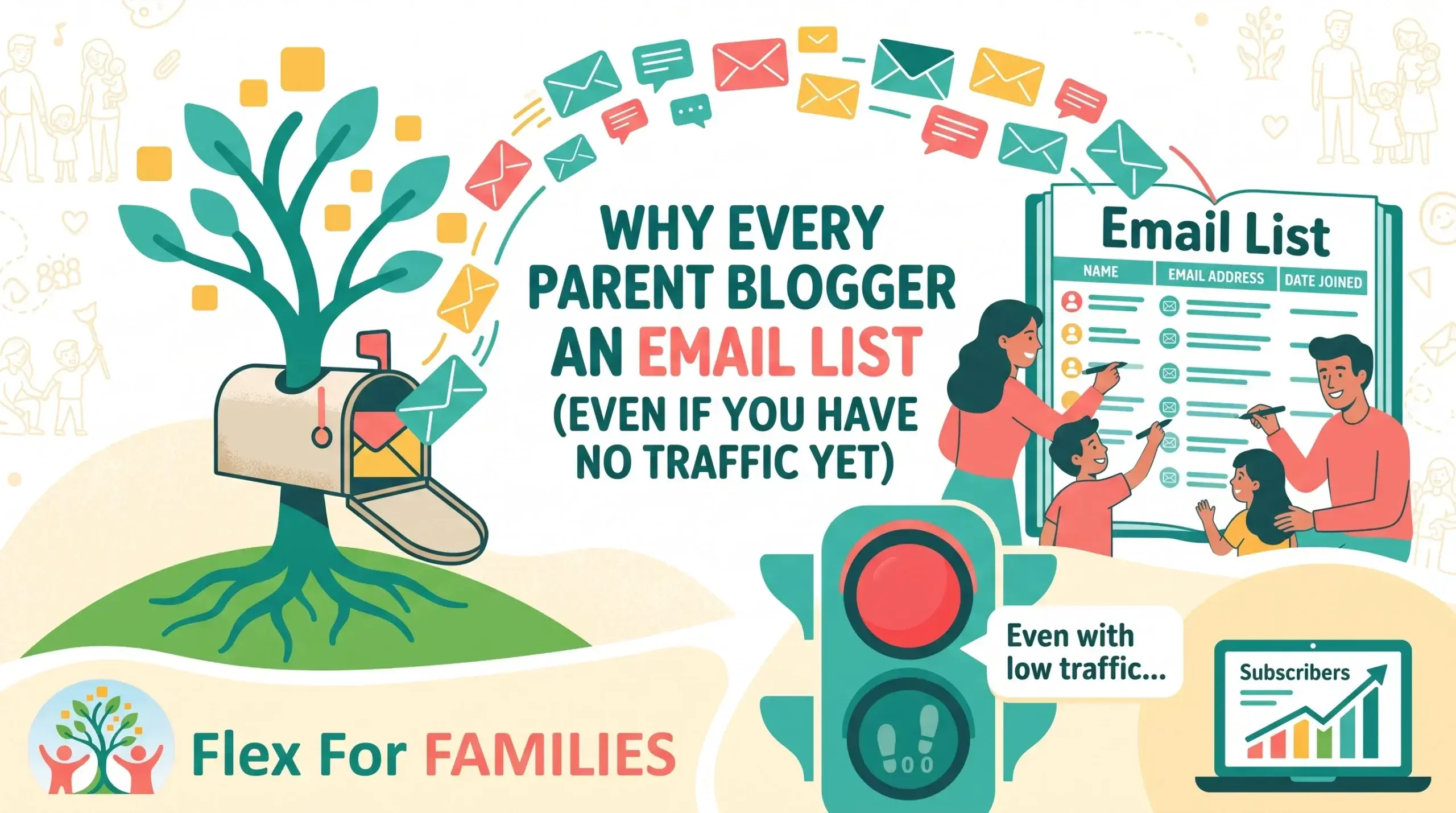
Your most valuable asset isn’t your traffic. It’s your email list.
Search rankings can change overnight. Social media algorithms come and go. Even loyal readers can forget to visit your blog when life gets busy. An email list gives you a way to stay connected with the people who genuinely want to hear from you.
As a parent blogger, that’s incredibly valuable. You’re writing for busy people who are juggling work, school runs, family life, and everything in between. A helpful email landing in their inbox is far more likely to be seen than hoping they remember to check your latest post.
If you’re still building your blog, don’t worry about having thousands of visitors first. In fact, starting your email list early is one of the smartest things you can do.
In this guide, I’ll explain why every parent blogger should build an email list from day one, how it helps you grow your blog, and why even a handful of subscribers can become one of your biggest blogging assets.
Quick Answer
Every parent blogger needs an email list because it’s the only audience you truly own. Unlike search engines or social media, your subscribers choose to hear from you directly. Even if your blog has very little traffic, building an email list early helps you create lasting relationships, encourage repeat visitors, and eventually recommend products or resources in a genuine, helpful way.
Why Most Parent Bloggers Focus on the Wrong Thing

When you first start blogging, it’s easy to believe success comes down to one number.
Pageviews.
You check your analytics, refresh your Google Search Console, celebrate every new visitor, and wonder why your traffic isn’t growing faster.
I’ve been there too.
The problem is that traffic alone doesn’t build a long-term blog.
Someone might find your article through Google, read it for two minutes, then never come back again. They got the answer they needed, closed the tab, and carried on with their day.
That doesn’t mean your content wasn’t useful. It simply means life gets busy.
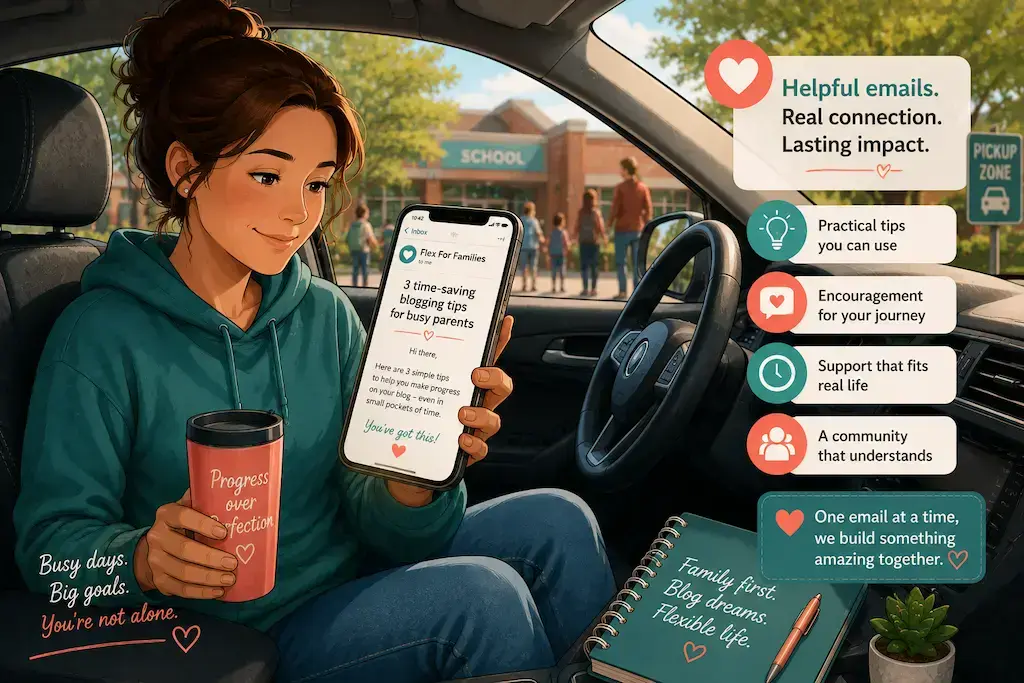
Parents are especially likely to be interrupted. One minute they’re reading your blog while waiting in the school pickup queue, the next they’re helping with homework, making dinner, or chasing a toddler around the living room.
That’s why focusing only on pageviews can be misleading.
Instead of asking:
“How do I get more visitors?”
Try asking:
“How do I stay connected with the visitors I already have?”
That’s where an email list changes everything.
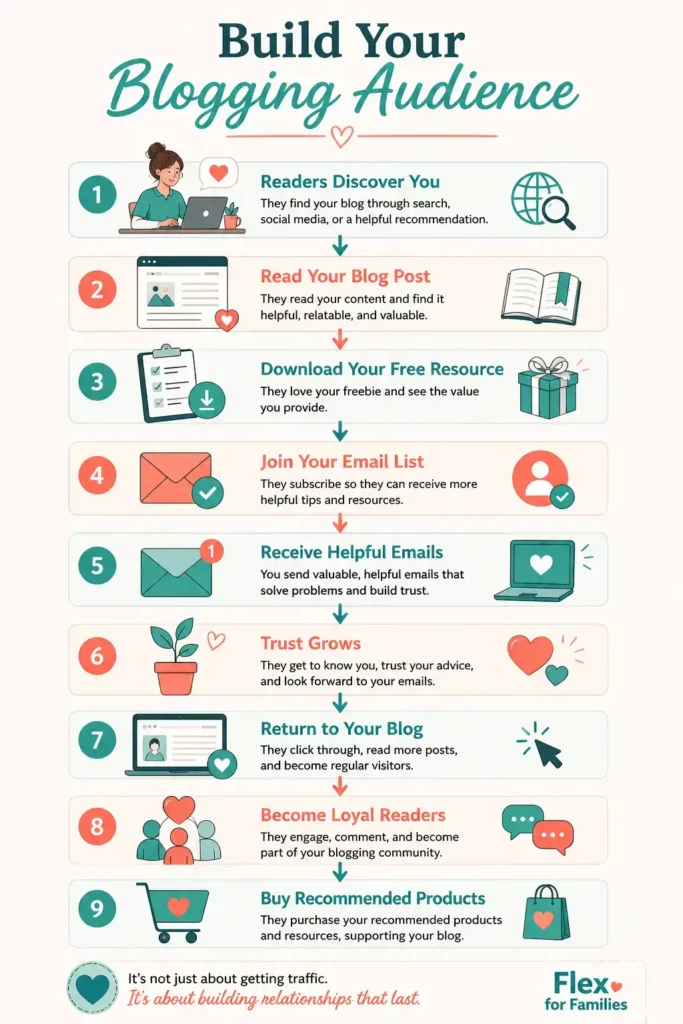
Even if only a small percentage of your readers subscribe, you’ve created an opportunity to build a genuine relationship over time. Each helpful email reminds them who you are, introduces them to your latest content, and gives them a reason to come back.
For a busy parent blogger, I’d much rather have 100 engaged subscribers who open my emails than 10,000 visitors who never return.
That’s because relationships grow blogs. Traffic simply introduces people to them.
📌 Your Next Step
Ready to start building your email list? Before you create a sign-up form, you’ll need something valuable to offer your readers.
Why does every parent blogger need an email list?
Every parent blogger needs an email list because it’s the only audience they truly own. Unlike social media or search engines, email lets you communicate directly with readers who have chosen to hear from you. Starting early helps build trust, encourage repeat visitors, and create long-term blogging income opportunities.
Why Your Email List Is Different From Social Media

Most new bloggers spend hours trying to grow their social media following.origin
There’s nothing wrong with that. Social media can be a great way to reach new readers and share your latest content.
The challenge is that you’re building on someone else’s platform.
Algorithms change. Posts disappear from feeds. Accounts can lose reach overnight. Even followers who genuinely enjoy your content might never see your latest update.
Your email list works differently.
When someone joins your list, they’re giving you permission to contact them directly. You don’t have to hope an algorithm shows your latest post. Your email lands straight in their inbox.
Here’s a simple comparison:
| Social Media | Your Email List |
|---|---|
| Algorithms decide who sees your posts. | You can email every subscriber directly. |
| Posts quickly disappear. | Emails stay in inboxes until they’re opened or deleted. |
| Followers may never see your latest content. | Subscribers have actively asked to hear from you. |
| You don’t control the platform. | Your subscriber list is an asset you own. |
That doesn’t mean you should stop using social media.
Instead, think of social media as the place where people discover you, and your email list as the place where your relationship grows.
One helps people find your blog.
The other helps them come back.
📌 Your Next Step
Once someone joins your email list, what should you send them first?
I’ve put together a simple Email Sequence for Parent Bloggers that helps new subscribers get to know you without feeling overwhelmed.
Why Email Works So Well for Busy Parents
Parenting is busy.
Whether you’re fitting blogging around nap times, school runs, evening routines, or a full-time job, your readers are probably doing exactly the same.
That’s why email works so well.
People don’t usually sit down every day and wonder if their favourite blog has published something new. Life gets in the way.
But when a helpful email arrives with a useful tip, a new article, or a quick reminder, it’s much easier to stay connected.
Your emails don’t have to be long either.
A simple message that shares:
- one helpful blogging tip,
- a recent lesson you’ve learned,
- your latest article,
- or a useful resource,
is often enough to remind readers why they subscribed in the first place.
Over time, those small touchpoints build familiarity and trust.
When you eventually recommend a product, a course, or one of your own resources, it feels like advice from someone they already know, rather than a sales pitch from a stranger.
For busy parent bloggers, that’s one of the biggest advantages an email list offers.
The Parent Advantage
One of the biggest myths about email marketing is that you need to be an expert writer with endless ideas.
You don’t.
In fact, being a parent often gives you an advantage.
Every week you’re already experiencing the kind of moments your readers relate to.
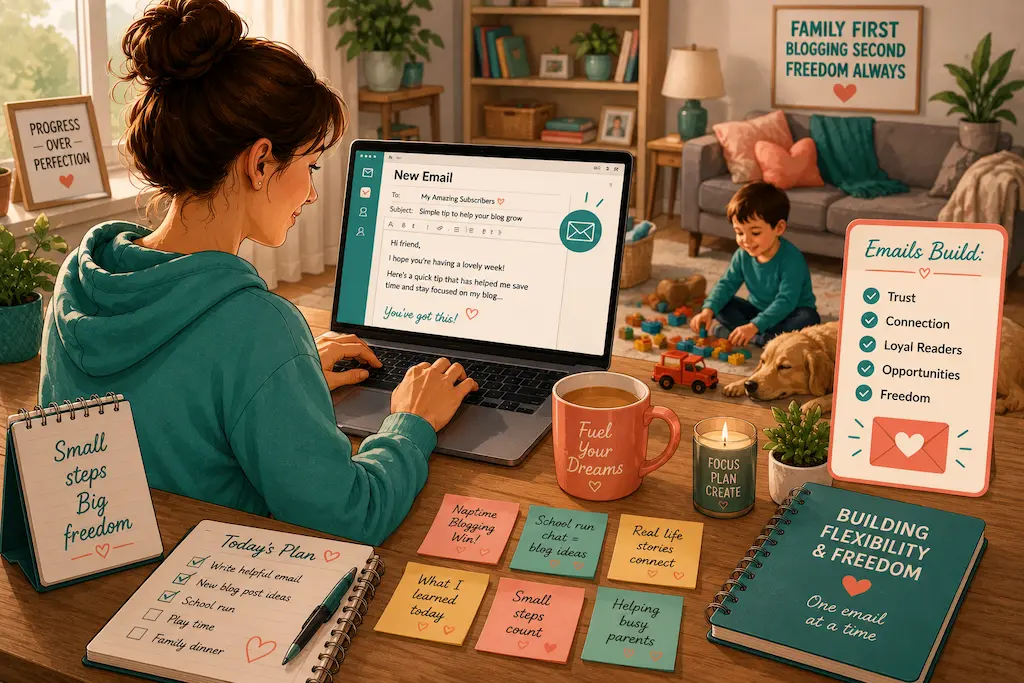
Maybe you’ve discovered a new productivity trick that helped you write during a busy week.
Perhaps you’ve published your first blog post, learned a lesson from Google Search Console, or finally found a routine that fits around family life.
Those experiences become valuable emails.
You don’t need to create polished newsletters packed with marketing jargon.
You simply need to share what’s working, what’s challenging you, and what you’ve learned along the way.
That’s exactly why parent bloggers build such loyal communities.
People don’t subscribe because they expect perfection.
They subscribe because they see someone facing the same challenges they are and making steady progress.
That fits perfectly with the philosophy behind Flex For Families.
Progress beats perfection.
A short, honest email every couple of weeks will usually do far more for your blog than waiting months to write the “perfect” newsletter.
Focus on being helpful, consistent, and authentic.
That’s what keeps readers opening your emails, coming back to your blog, and following your journey over the long term.
“But I Don’t Have Any Traffic Yet…”
This is probably the biggest reason new bloggers put off building an email list.
“I’ll wait until I have more traffic.”
It sounds sensible, but it usually has the opposite effect.
Every visitor who leaves your blog without subscribing is someone you may never see again.
Even if you’re only getting a handful of visitors each week, those readers have already found your content for a reason. Some will simply read your article and move on. Others will enjoy what you’ve written and want more.
Without an email list, there’s no easy way for them to stay connected.
The truth is, you don’t need hundreds of subscribers before your email list becomes valuable.
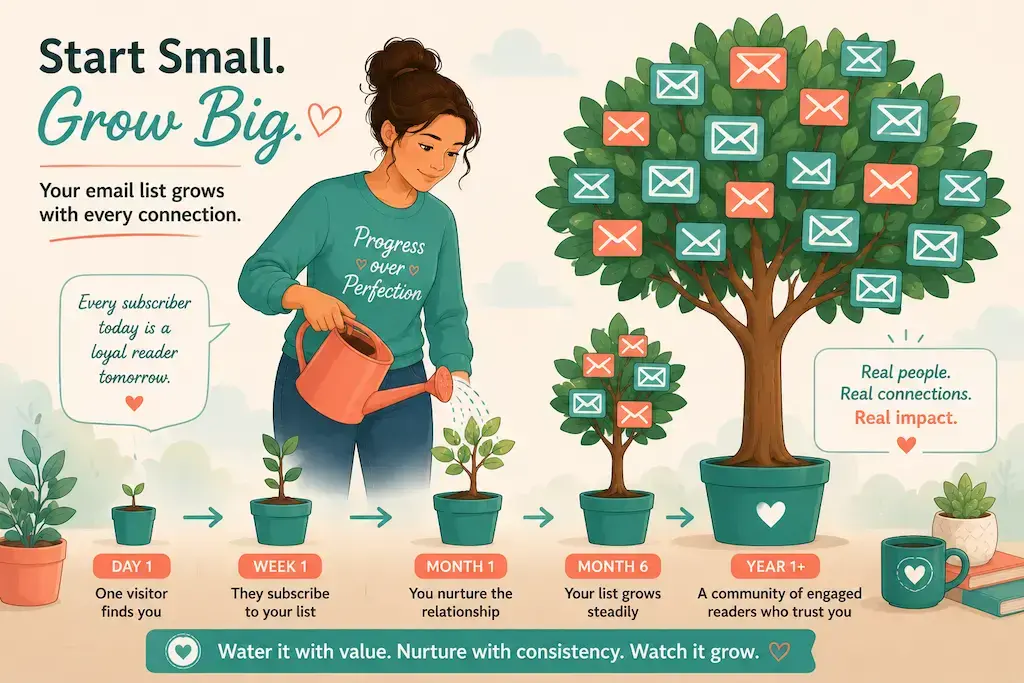
Imagine just one person joins your list each week.
- After one month, you’ll have around 4 subscribers.
- After six months, you’ll have more than 25.
- After a year, you’ll have over 50 people who have chosen to hear from you.
Those numbers might seem small compared to social media followers, but they’re far more meaningful.
These are people who have trusted you enough to invite you into their inbox.
As your blog grows, so will your list.
Starting today means you’ll already have that foundation in place when more visitors begin finding your content.
The best time to start building an email list is before you think you need one.
📌 Your Next Step
Once you’ve decided to build an email list, the next step is giving readers a reason to subscribe.
Read my guide to Lead Magnet Ideas for Parent Bloggers for simple freebies you can create without spending weeks designing them.
What Should You Offer?

One of the easiest ways to encourage readers to join your email list is by offering something genuinely useful.
This is often called a lead magnet.
It doesn’t need to be a huge course or a 100-page ebook.
In fact, the best lead magnets usually solve one small problem quickly.
For parent bloggers, that could be:
- A blogging checklist.
- A printable planner.
- A niche workbook.
- A list of blog post ideas.
- A simple roadmap.
- A template that saves time.
Think about what your readers are struggling with right now.
What would make their next step a little easier?
That’s exactly why I created the Parent Blogging Starter Kit.
Instead of offering one download, I put together a collection of practical resources that help busy parents move from “I’d like to start a blog” to actually publishing content and building momentum.
Your lead magnet doesn’t need to be perfect.
It just needs to be genuinely helpful.
If it saves your reader time, answers a question, or helps them make progress, you’re already providing value before they’ve even received your first email.
Ready to Start Your Blog Around Family Life?
If this article has helped you feel a little more confident about starting a blog, my free Parent Blogging Starter Kit is a simple next step.
It includes practical checklists, planners and resources to help you choose your direction, plan your content and start building a blog that fits around work, school runs, bedtime routines and real family life.
You do not need to have everything figured out. You just need a clear first step.
Get the Free Starter KitWhat Emails Should You Actually Send?
Many new bloggers worry they’ll run out of things to say.
The good news is you don’t need to become a full-time email marketer.
You simply need to stay in touch.
One helpful email every week or two is enough to keep your blog fresh in your readers’ minds.
Your emails could include things like:
- A new article you’ve published.
- A blogging lesson you learned this week.
- A helpful tool or resource you’ve discovered.
- A common mistake you’ve made and how you fixed it.
- A quick tip your subscribers can use today.
- A personal story that teaches a useful lesson.
If you’re not sure where to begin, keep it simple.
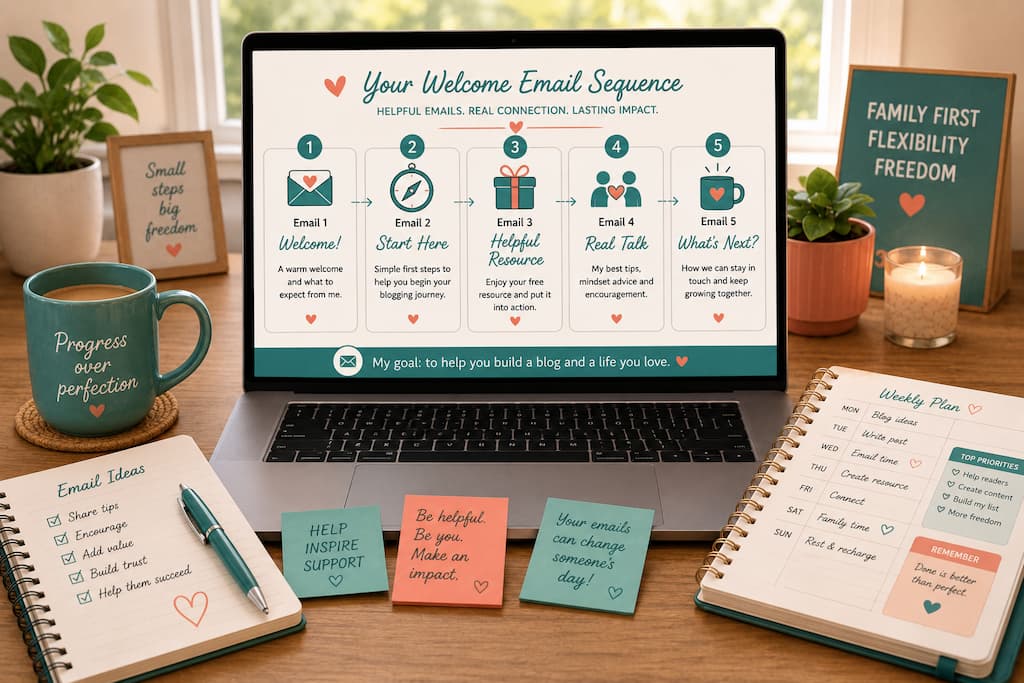
A basic welcome sequence might look like this:
| What I Send in the Flex For Families Starter Kit | |
|---|---|
| Welcome | Deliver the Starter Kit and explain what to expect. |
| Day 2 | Choosing a blogging direction. |
| Day 3 | Finding the right niche. |
| Day 5 | Building your blog around family life. |
| Day 7 | Growing traffic and creating income opportunities. |
Notice that most of those emails are about helping, not selling.
That’s what builds trust.
When readers consistently receive useful advice, they’re much more likely to open future emails, visit your latest blog posts, and eventually act on your recommendations.
📧 Need Help Planning Your Emails?
If you’re wondering exactly what to write after someone subscribes, I’ve mapped out a complete Simple Email Sequence for Parent Bloggers, including the first welcome email and the messages that help build trust over time.
Common Email List Mistakes

Building an email list doesn’t have to be complicated, but there are a few common mistakes that can slow your progress.
The good news is that they’re all easy to avoid once you know what to look out for.
Waiting Until You Have More Traffic
This is probably the biggest mistake new bloggers make.
It’s tempting to think you’ll start collecting email subscribers once your blog is “big enough.”
The reality is that every visitor who leaves without subscribing is a missed opportunity to build a long-term relationship.
Start collecting subscribers from day one, even if only a few people visit your blog each week.
Offering Nothing in Return
Most people won’t hand over their email address without a good reason.
A simple checklist, planner, workbook, or resource guide gives readers an extra incentive to subscribe and shows that you’re committed to helping them.
Focus on solving one small problem well.
Only Emailing When You’re Selling Something
Nobody enjoys opening an inbox full of sales pitches.
If every email asks readers to buy something, they’ll quickly lose interest.
Instead, aim to make most of your emails genuinely helpful.
Share tips, lessons, useful resources, and personal experiences. When you do recommend a product, it feels like a natural extension of the value you’ve already provided.
Waiting Too Long Between Emails
You don’t need to email every day.
But if months pass without your subscribers hearing from you, they may forget who you are.
Even one helpful email every couple of weeks keeps your blog fresh in their minds and strengthens the relationship over time.
Trying to Be Perfect
Many bloggers delay sending emails because they think every message has to be polished and packed with value.
It doesn’t.
Your readers subscribed because they wanted to hear from you.
A short email with one useful tip, one lesson, or one new article is often all they need.
Progress beats perfection here too.
💡 Remember
Your email list doesn’t need to be huge to make a difference. A small group of engaged subscribers who trust your advice will usually be far more valuable than thousands of people who never return to your blog.
My Experience
If I could go back and give my younger self one piece of blogging advice, it would be this.
Start building your email list earlier.
Like many new bloggers, I spent years focusing almost entirely on traffic.
I watched Google rankings, checked analytics, and celebrated every new visitor. While those things are still important, I eventually realised they only tell part of the story.
Traffic comes and goes.
Relationships last.
That’s one of the reasons I’ve made email such an important part of Flex For Families.
When someone downloads my Parent Blogging Starter Kit, they’re not joining a sales funnel filled with constant promotions.
They’re joining a community of busy parents who want to build a blog around real life.
My emails are designed to share practical tips, encourage steady progress, and help people avoid some of the mistakes I made when I first started.
If a helpful recommendation naturally fits along the way, I’ll share it.
If it doesn’t, I won’t.
That approach feels far more sustainable, and I believe it’s a much better experience for my readers.
Looking back, I don’t wish I’d chased more pageviews.
I wish I’d started building more relationships.
Because that’s what an email list really is.
It’s not a collection of email addresses.
It’s a community of people who trust you enough to invite you into their inbox.

About the Reviewer
Hi, I’m John Crossley, founder of Flex For Families.
I’m a parent, blogger, and online business owner who helps families find realistic ways to create more flexibility through blogging, affiliate marketing, and online business.
Like many people, I’ve spent years researching online opportunities, testing platforms, and learning how to separate genuine business models from expensive hype. I’ve also experienced the frustration of chasing opportunities that promised freedom but demanded more time away from family.
Today, I use that experience to review courses, side hustles, AI opportunities, and online business programmes through a simple lens:
Will this genuinely help parents create more flexibility, or will it create more pressure?
Every review on Flex For Families focuses on costs, time commitments, risks, and realistic expectations, so you can make informed decisions before investing your time or money.
Final Thoughts
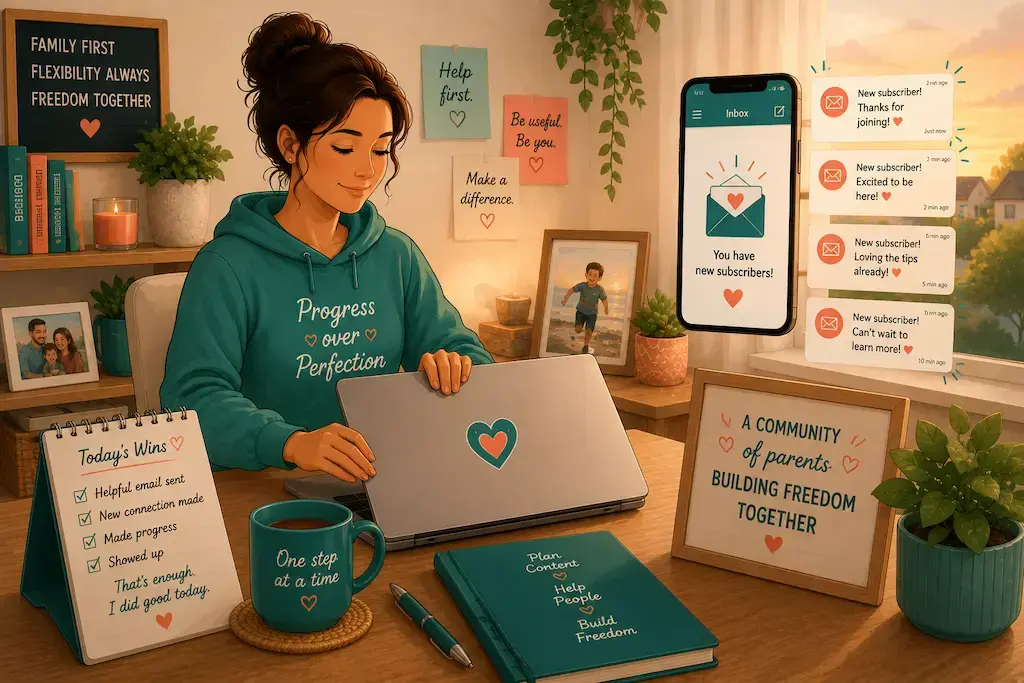
Building an email list might not feel as exciting as seeing your traffic grow or watching your social media followers increase.
But if you’re serious about creating a blog that lasts, it’s one of the smartest investments you can make.
Every subscriber is someone who has chosen to hear from you.
They’re interested in your journey, your advice, and the solutions you share. Over time, those relationships become far more valuable than chasing vanity metrics like pageviews or follower counts.
If you’ve recently started your parent blog, don’t wait until you have thousands of visitors before thinking about email marketing.
Start now.
Even if only a handful of people subscribe this month, you’re building something that grows alongside your blog.
One day, you’ll be glad you did.
Ready to Start Your Blog Around Family Life?
If this article has helped you feel a little more confident about starting a blog, my free Parent Blogging Starter Kit is a simple next step.
It includes practical checklists, planners and resources to help you choose your direction, plan your content and start building a blog that fits around work, school runs, bedtime routines and real family life.
You do not need to have everything figured out. You just need a clear first step.
Get the Free Starter KitFrequently Asked Questions
Do I need an email list if my blog is brand new?
Yes. Starting your email list from day one means every visitor has the opportunity to stay connected with you. Even a small number of subscribers can become loyal readers over time.
How many subscribers do I need before email marketing is worth it?
There’s no magic number. A list of 50 engaged subscribers who regularly open your emails is often more valuable than thousands of casual social media followers.
What should I offer people when they subscribe?
A simple lead magnet works best. This could be a checklist, planner, workbook, template, or another resource that helps solve a specific problem for your readers.
How often should I email my subscribers?
Consistency matters more than frequency. For most parent bloggers, sending one helpful email every week or two is enough to stay connected without overwhelming readers.
Do I have to sell something in every email?
No. In fact, most of your emails should focus on helping your readers. Share useful advice, personal experiences, and your latest blog posts. Recommendations naturally become more effective when you’ve already built trust.
Which email marketing platform should I use?
There are plenty of good options, but I personally use Kit because it’s simple to set up and works well for bloggers. The most important thing is choosing a platform and getting started, rather than spending weeks comparing every feature.
Continue Building Your Email List
📥 Lead Magnet Ideas for Parent Bloggers
Discover simple freebies that encourage readers to subscribe without taking weeks to create.
✉️ What Email Sequence Should I Send After Someone Signs Up?
Learn the simple welcome sequence that builds trust from the very first email.
💰 How to Turn Email Subscribers Into Income
See how to recommend products and resources naturally while putting your readers first.
⚙️ Kit Review for Parent Bloggers
Find out why I use Kit to manage my email list and automate my Starter Kit delivery.
Let’s Chat
I’d love to hear about your blogging journey.
Have you started building an email list yet, or is it something you’ve been putting off?
If you’ve already got subscribers, what’s been your biggest challenge? Growing your list, deciding what to send, or simply finding the time to stay consistent?
Leave a comment below and let me know. I read every comment personally, and if you’re stuck, I’ll do my best to help you take your next step.

It definitely makes sense to build your email list as soon as you can and earlier rather than later, as in this way you can gently remind people when you post new content and also have a list that are like minded and because they subscribed to your blog they are interested in what you have to say. I always worry that I am sending too much mail though. What is your take on how much mail to send out without irritating your readers?
Hey Michel,
Thanks for your comment. I think that’s a question almost every blogger asks at some point!
For me, I’d much rather hear, “I send too many helpful emails,” than, “I never stayed in touch with my readers.”
The key, I think, is making sure each email gives people a reason to open it. If every email is just “Here’s my latest post” or “Buy this product,” then people will naturally lose interest. But if you’re sharing a useful tip, a personal insight, a helpful resource, or something that genuinely makes their day a little easier, it feels much more like a conversation than a promotion.
Personally, I think one email a week is a great rhythm for most parent bloggers. It’s frequent enough that people remember who you are, but not so often that it becomes overwhelming. If you have something genuinely valuable to share in between, then an extra email is absolutely fine.
I also remind myself that every subscriber chose to be there. They signed up because they wanted to hear from you. If you’re consistently trying to help rather than just sell, you’re far less likely to annoy people.
And finally, don’t be afraid of unsubscribes. They happen to everyone, and they’re not necessarily a bad thing. I’d rather have a smaller list of engaged readers who enjoy my emails than a large list that never opens them.
Thanks again for raising such a good question. It’s something I still think about too, and I always come back to one simple test: Would I be happy to receive this email myself? If the answer is yes, it’s usually worth sending. ????
All the best,
John
I really resonated with your point about how traffic comes and goes but relationships are what actually last, because I spent my first year obsessing over pageviews and analytics only to realize I had no way to reconnect with the people who actually read my posts. I finally started a simple newsletter last year, and even though it’s just a short update every couple of weeks, the replies I get from those few subscribers feel way more meaningful than any traffic spike ever did. How did you decide on the right balance for your own emails so they feel helpful without turning into just another task on your already full plate?
Hey Ropata,
Thank you for sharing that. I think you’ve experienced exactly the shift I was hoping to highlight in the post.
It’s funny how easy it is to get caught up in pageviews and analytics, only to realise that if someone leaves your site and never comes back, you haven’t really built a relationship. Those email replies you mentioned are incredibly valuable because they show there’s a real person on the other end, not just another number in a dashboard.
To answer your question, I try to keep my emails as simple as possible. I don’t want them to become another big project every week.
My general approach is:
Share one helpful idea or lesson.
Point readers to one useful resource or blog post.
Write as if I’m emailing one person, not a huge list.
That keeps it manageable for me and, hopefully, enjoyable for the reader too.
I’ve also learned that consistency is more important than frequency. I’d rather send one genuinely helpful email every week than try to send lots of emails and end up dreading it. If writing the newsletter starts to feel like a burden, it’s usually a sign I’m trying to do too much.
I really appreciate you sharing your experience. Those replies from subscribers are a great reminder that blogging isn’t just about attracting visitors; it’s about building connections with real people over time. That’s where the real value lies. ????
All the best,
John