

So someone joins your email list.
Now what?
This is where a lot of parent bloggers get stuck.
You’ve done the hard part:
- You created a freebie
- You set up your signup form
- Someone actually subscribed
But then comes the next question.
- What do you send after that?
- Do you need a full email funnel?
- Do you write daily emails?
- Do you just send your blog posts?
It can quickly start to feel confusing.
So many people either overcomplicate this… or avoid it completely.
The truth is, you do not need a complicated sequence.
You just need a simple plan that helps you:
- Welcome your subscriber
- Build trust
- Guide them to your content
In this guide, you will learn exactly what email sequence to send after someone signs up, using a simple structure that is easy to follow and fits around your time.
Quick Answer
After someone joins your email list, you should send a simple welcome sequence of 3 to 5 emails. Start with a welcome email that delivers your freebie, then follow up with helpful tips, your story, and links to your content. You do not need a complex funnel. Keep each email focused on one idea and build trust over time.
What an Email Sequence Actually Is
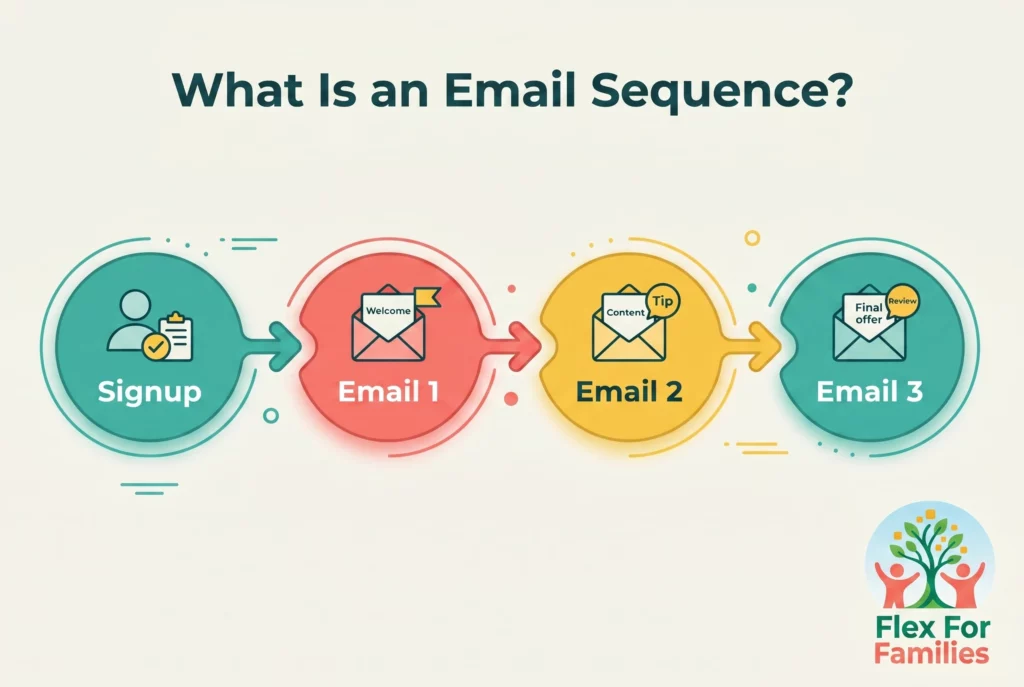
An email sequence is simply a set of emails your subscriber receives after they join your list.
That’s it.
It is not a complex funnel or a long series of automated messages.
It is just a simple flow that helps someone get to know you and your blog.
What It Usually Includes
A basic sequence might look like this:
- A welcome email
- A follow-up with helpful tips
- A message sharing your story
- A few emails linking to your content
Each email has one purpose.
You are guiding your reader step by step.
How It Works
When someone signs up:
- They receive your first email straight away
- Then the next email a day or two later
- Then another after that
You can set this up once, and it runs automatically.
This means every new subscriber gets the same experience.
Why It Matters
Without a sequence, most subscribers will:
- Download your freebie
- Leave
- Forget about your blog
A simple sequence keeps the connection going.
It gives you a chance to:
- Introduce yourself
- Share your content
- Build trust
The Key Point
An email sequence is not about selling.
It is about helping your reader feel:
- Welcome
- Understood
- Supported
Why a Simple Sequence Works Best

This is where many bloggers go wrong.
They think they need:
- Long sequences
- Complex funnels
- Advanced automation
You do not.
It Is Easier to Create
A simple sequence means you can:
- Write your emails quickly
- Avoid overthinking
- Actually finish what you start
That alone puts you ahead of most bloggers.
It Fits Around Your Time
As a parent, your time is limited.
A simple sequence:
- Takes less time to create
- Is easier to manage
- Feels less overwhelming
This makes it much more likely you will stick with it.
It Builds Trust More Naturally
When emails are simple and focused, they feel more personal.
You are not:
- Overloading your reader
- Trying to do too much at once
You are just:
- Sharing
- Helping
- Connecting
That is what builds trust.
It Is Easier to Improve Later
You do not need to get it perfect.
Start with a basic sequence.
Then over time, you can:
- Adjust your emails
- Improve your content
- Add more detail if needed
The Key Takeaway
You do not need a complicated email sequence.
You need a simple one that you will actually use.
Start small.
Keep it clear.
Build from there.
A Simple 5-Email Sequence You Can Use
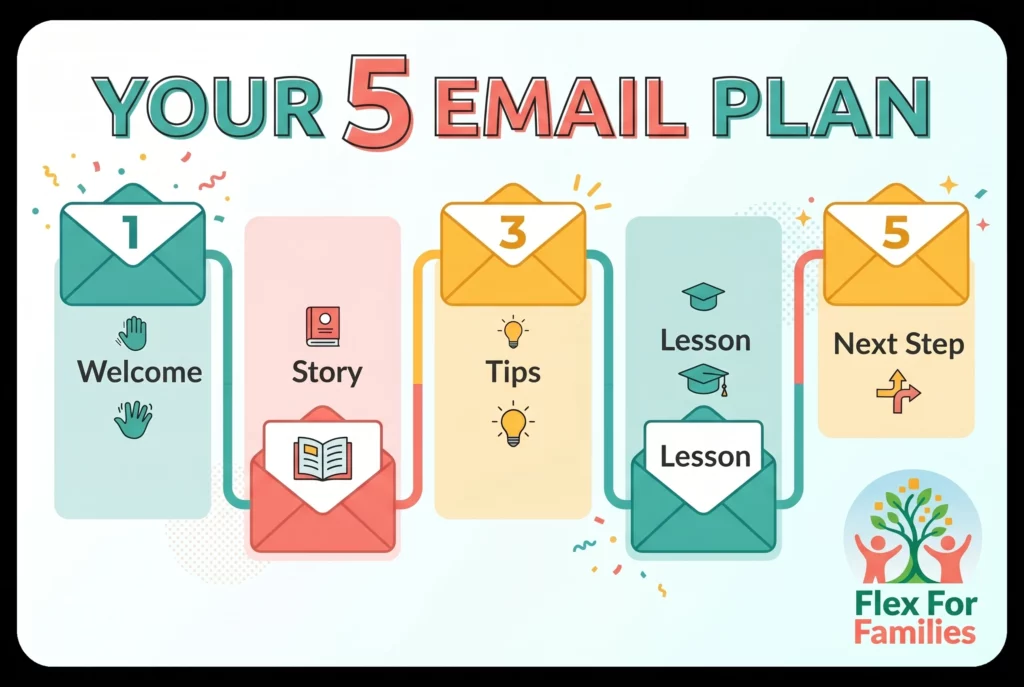
You do not need a long or complicated sequence.
This simple 5-email plan is enough to:
- Welcome your subscriber
- Build trust
- Guide them to your content
- Set up future emails
You can write this once and let it run automatically.
Email 1: Welcome + Freebie
When to send: Immediately after signup
This is your most important email.
Keep it simple.
Include:
- A short welcome
- Deliver the freebie
- A quick introduction
Example focus:
“Here’s your checklist. Here’s who I am. Here’s what you can expect.”
Email 2: Your Story
When to send: 1 to 2 days later
This is where you build connection.
Share:
- Why you started your blog
- Your situation as a parent
- What you are trying to achieve
Keep it honest and relatable.
People connect with real journeys.
Email 3: Helpful Tips
When to send: 1 to 2 days later
Now you provide value.
Share:
- A simple tip
- Something that worked for you
- A quick win they can try
You can also link to one of your blog posts.
If you want to strengthen how you include links, this will help:
👉 How to Add Affiliate Links Without Sounding Salesy
Email 4: Key Lesson or Insight
When to send: 1 to 2 days later
This is where you go a bit deeper.
Share:
- A lesson you have learned
- A mistake to avoid
- Something that made a difference for you
This builds trust and shows experience.
Email 5: Recommendation or Next Step
When to send: 1 to 2 days later
Now you guide them forward.
This could be:
- A helpful resource
- A tool you use
- A next step for their journey
Keep it natural and helpful.
If they trust you, they are more likely to click.
The Flow of This Sequence
Each email has a purpose:
- Welcome
- Connect
- Help
- Build trust
- Guide
That is all you need.
What Each Email Should Include
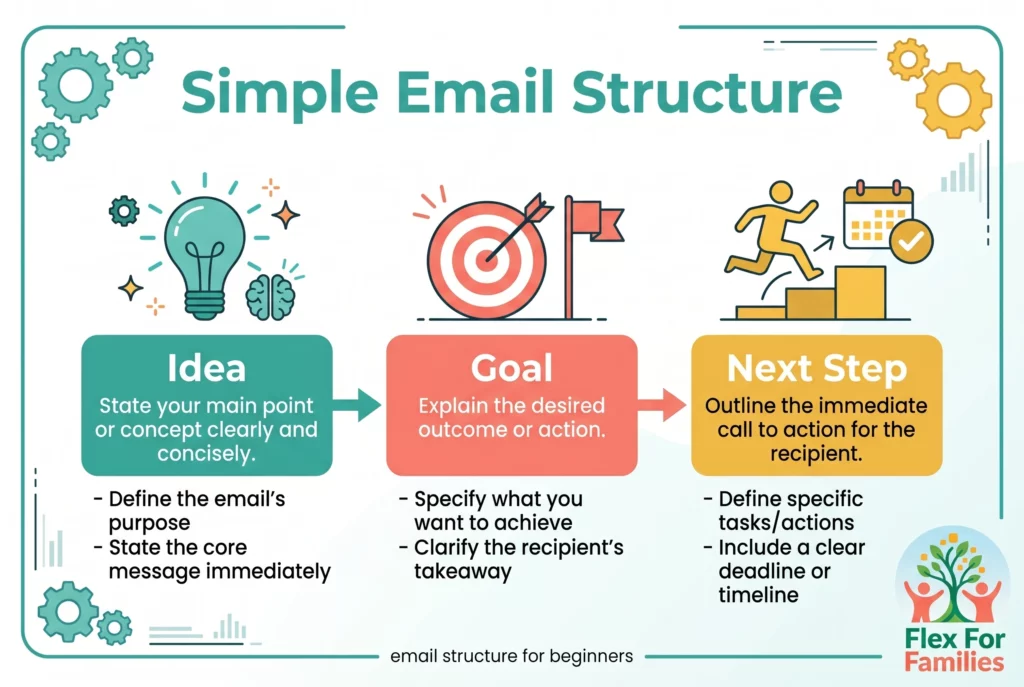
Every email should follow a simple structure.
You do not need to write long or complex messages.
One Clear Idea
Do not try to cover everything.
Each email should focus on one thing.
For example:
- One tip
- One story
- One lesson
This keeps your emails easy to read.
One Simple Goal
Ask yourself:
What is the purpose of this email?
It might be:
- Introduce yourself
- Share a tip
- Get them to read a post
Keep it focused.
One Clear Next Step
Give your reader something to do.
For example:
- Read a blog post
- Try a tip
- Check out a resource
This keeps them engaged.
Keep It Short and Natural
Write like you are talking to one person.
You do not need:
- Long emails
- Perfect wording
- Complicated ideas
Simple and clear works best.
Stay Consistent
The real power comes from showing up.
Even simple emails build trust when you send them consistently.
The Key Takeaway
You do not need a perfect sequence.
You need a simple one you will actually use.
Focus on:
- Clear emails
- Helpful content
- Consistent sending
That is what makes it work.
How Far Apart to Send Emails
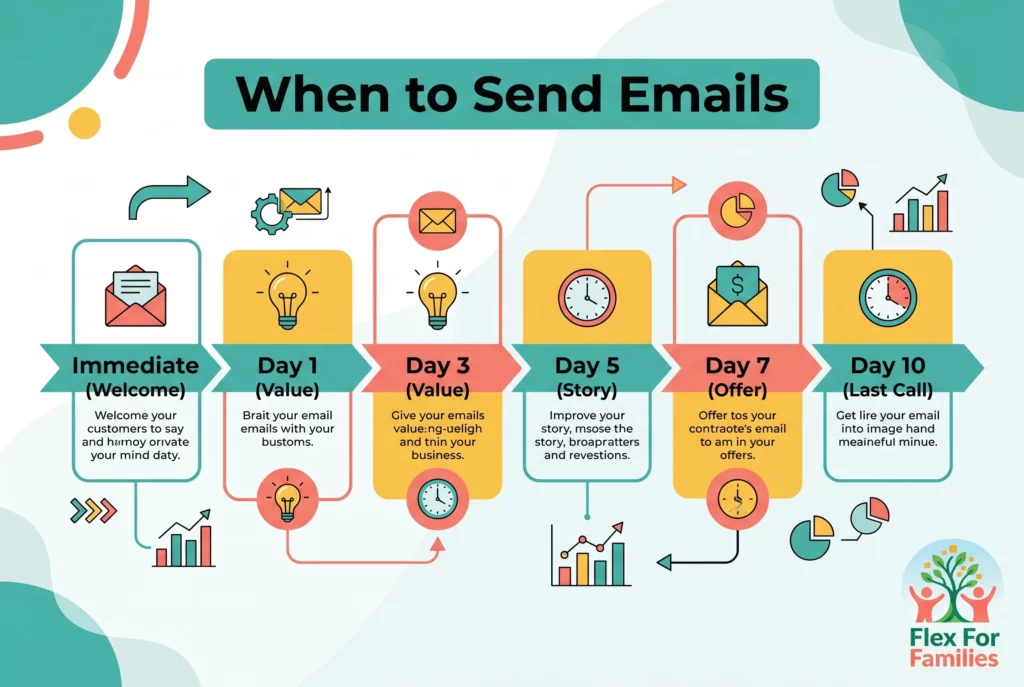
This is where a lot of people get stuck.
You do not want to send too many emails.
But you also do not want to disappear.
Keep it simple.
During Your Welcome Sequence
For your first 5 emails, send them:
- Daily
or - Every 2 days
This keeps the momentum going.
Your subscriber has just joined.
They are interested.
This is the best time to:
- Build connection
- Share your content
- Stay top of mind
After Your Sequence
Once your sequence is complete, move to a simple routine.
For most parent bloggers:
- 1 email per week
This is enough to:
- Stay consistent
- Build trust
- Avoid overwhelm
The Key Rule
Consistency matters more than frequency.
It is better to send:
- One email every week
Than:
- Five emails in one week, then nothing for a month
Common Email Sequence Mistakes
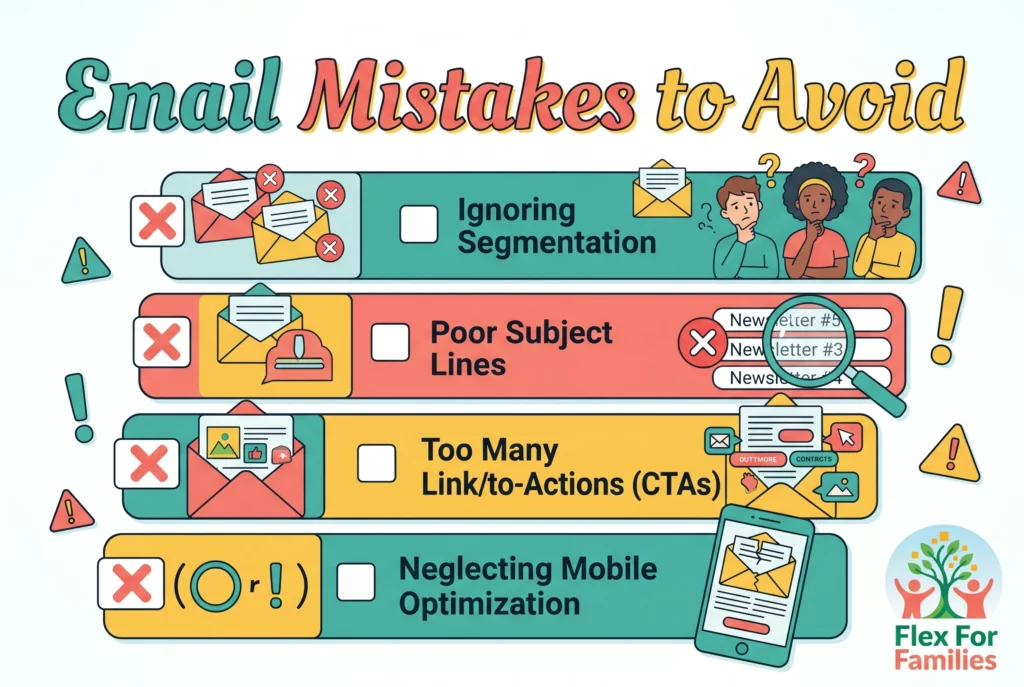
This is where most bloggers lose momentum.
Overcomplicating the Sequence
Trying to create a perfect funnel leads to delays.
You do not need:
- 10 emails
- Advanced automation
- Complex strategies
Simple works.
Waiting Too Long to Send Emails
If someone joins your list and hears nothing, they forget you.
Send your first email straight away.
Writing Without a Clear Purpose
Each email should have a reason.
If you are unsure what the email is trying to do, it becomes unclear.
Stick to:
- One idea
- One goal
- One next step
Being Too Sales-Focused Too Early
If your first emails are all about selling, trust drops quickly.
Focus on:
- Helping
- Sharing
- Building connection
If you want to see how this leads to income naturally, this guide will help:
👉 How Do I Monetize My Parent Blog Effectively?
Not Sending Emails at All
This is the biggest mistake.
You set everything up… then stop.
You do not need perfect emails.
You just need to send them.
How to Start and Grow Your Email List as a Parent Blogger
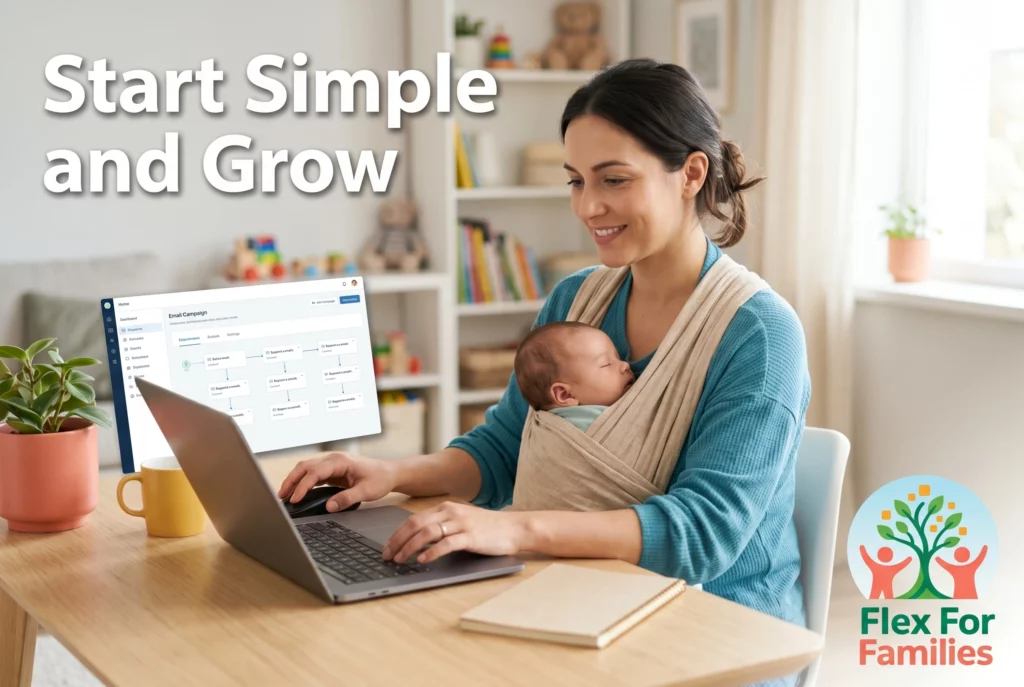
You do not need a complex system to make this work.
You need a simple sequence you can stick to.
Start with:
- 5 emails
- A clear purpose for each
- A consistent schedule
That is enough to build trust and move your reader forward.
Over time, you can improve and expand.
But this simple structure will take you further than most.
Want a Simple Way to Build Your Blog and Email System Together?
Email sequences work best when they are part of a bigger plan.
When your content, traffic, and emails all connect, everything becomes easier.
That is why having the right guidance makes a big difference.
With Wealthy Affiliate, you can:
- Learn blogging step by step
- Build your content and traffic together
- Set up simple systems like your email list
- Get support when you need it
You do not need to figure this out on your own.
Build Your Blog and Email System the Simple Way
If you want a clear, step-by-step way to grow your blog and create an email system that works, this is a great place to start.
What Email Sequence Should I Use: FAQ Section
How many emails should be in a welcome sequence?
A simple sequence of 3 to 5 emails is enough to welcome your subscriber, build trust, and guide them to your content.
How soon should I send the first email?
Immediately after someone signs up. This is when they are most engaged.
Do I need to send emails every day?
No. During your sequence, daily or every 2 days works well. After that, once a week is enough.
What should I include in each email?
Each email should focus on one idea, have one goal, and include one clear next step.
Can I promote products in my email sequence?
Yes, but focus on helping first. Build trust before making recommendations.
Let’s Chat
Have you written your first email sequence yet?
Or is this something you have been putting off?
Let me know where you are at. I can help you map out your first few emails so you can get started without overthinking it.
You do not need to get it perfect. You just need to begin.