
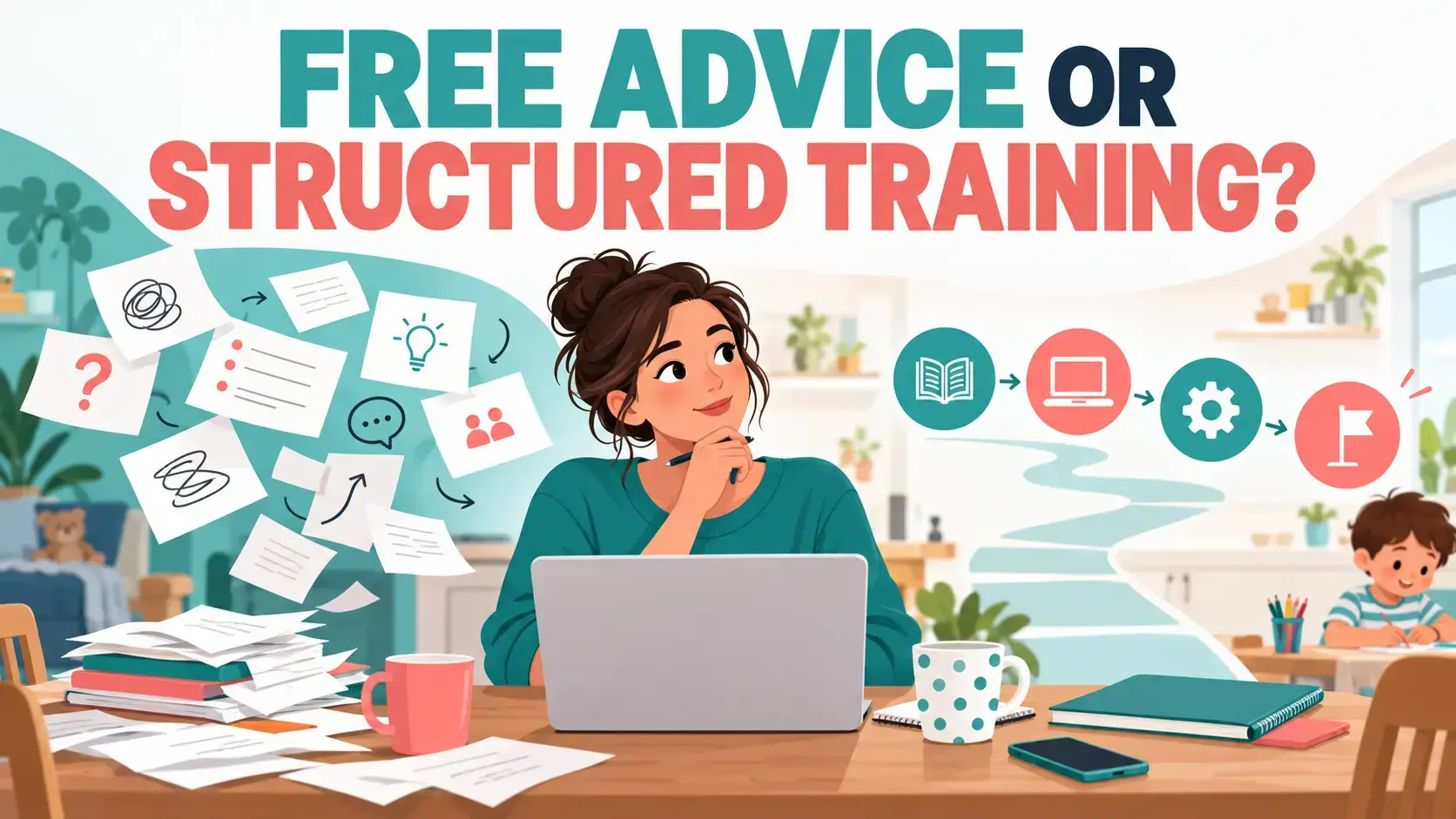
There is more free blogging advice available than any beginner could reasonably consume. You can learn how to choose a niche, build a WordPress website, research keywords, write articles and join affiliate programmes without paying for a course.
So why would anyone pay for structured training?
Because access to information is rarely the real problem. The difficult part is knowing what to do first, which advice still applies, how the pieces fit together and whether you are actually making progress.
For a busy parent, that difference matters. An evening spent comparing five contradictory tutorials is an evening you cannot spend building your blog.
This guide compares free blogging advice with structured training honestly. I will also explain why I use Wealthy Affiliate as my structured platform, how its 2026 overhaul has changed the experience, and when paying for it would still be the wrong decision.
The Quick Answer
Free blogging advice is enough if you are confident creating your own plan, checking the quality and date of every source, and solving problems independently. Structured training is usually better if you need a clear order, practical tools, support and accountability in one place.
For most beginners, I recommend a hybrid approach: use one structured path to build the foundations, then use carefully selected free resources to deepen specific skills.
My preferred structured option is Wealthy Affiliate because it combines training, website hosting, research, content tools and support. Its redesigned platform now puts your business tasks ahead of the community feed, which makes it more useful for staying focused. It does not provide guaranteed traffic or income, and you still have to do the work.
Affiliate disclosure: I am a Wealthy Affiliate member and affiliate. If you join through one of my links, I may earn a commission at no extra cost to you. I have been a member since September 2016 and my opinions are based on my own experience.
Free Advice vs Structured Training at a Glance
| Question | Free Blogging Advice | Structured Training |
|---|---|---|
| Upfront cost | Usually free | Free trial, subscription or one-off fee |
| Learning order | You create it | A path is provided |
| Quality | Excellent to poor | Depends on the provider |
| Updates | Vary by source | Should be maintained centrally |
| Support | Comments, forums or none | Community, coaching or technical support |
| Tools | Usually separate | May be included |
| Main strength | Breadth and choice | Direction and continuity |
| Main risk | Confusion and strategy-hopping | Paying without implementing |
| Best for | Independent learners with time to research | Beginners who value a guided system |
The choice is not really between “free” and “paid”. It is between building your own learning system and paying for somebody to organise one for you.
What Counts as Free Blogging Advice?
Free advice includes blog posts, YouTube tutorials, podcasts, newsletters, social media threads, free communities, search results and AI answers. Some of it is excellent. I still use free resources when I need an answer to a focused question.
Official documentation can be particularly valuable. Learn WordPress teaches WordPress skills, while Google Search Central explains the principles behind helpful, people-first content.
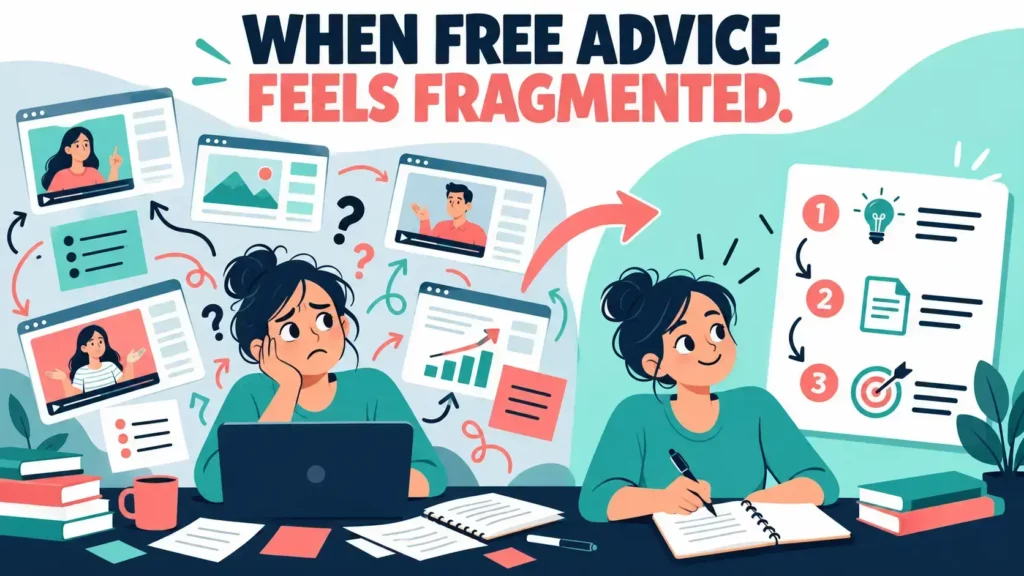
The problem is that these resources were not created as one joined-up blogging course. One article may assume you already understand search intent. A video about affiliate marketing may skip website setup entirely. Another tutorial may recommend a plugin that conflicts with your theme or an SEO tactic that worked years ago.
Free advice gives you pieces. You are responsible for deciding whether they belong in the same puzzle.
What Is Structured Blogging Training?
Structured training puts lessons, tasks and support into an intended order. A good programme should help you move from choosing an audience to building a website, publishing useful content, attracting visitors and testing realistic income methods.
It should also explain why each step matters. A checklist without understanding can still produce a generic blog.
Structured training can take several forms:
- A self-paced course with modules and templates
- A membership with ongoing lessons and community support
- Group coaching with deadlines and feedback
- One-to-one mentoring
- An all-in-one platform containing training, tools and hosting
Wealthy Affiliate sits mainly in the last category. That matters when comparing its price with a course that contains lessons but expects you to pay separately for hosting, research tools and technical help.
Why Free Advice Can Become Expensive
Free advice has no purchase price, but it can still cost time, attention and missed opportunities.
Imagine you have five hours a week for your blog. If two hours disappear into searching for tutorials, comparing opinions and recovering from an unsuitable tool, almost half of your available working time has gone.
There are four common hidden costs.
1. You Have to Build the Curriculum
Beginners do not always know what they do not know. It is easy to spend weeks choosing colours and logos while ignoring audience research, content planning or email capture.
A structured path should put the foundations before the decoration.
2. Advice Often Conflicts
One expert says publish daily. Another says publish only long articles. Someone else says blogging is finished unless you make video.
The useful answer is normally more nuanced: choose a sustainable schedule, create the format that serves the reader and build more than one route to your audience over time.
Without a core strategy, every confident opinion can feel like an instruction to change direction.
3. Older Tutorials Stay Visible
A tutorial can rank or circulate long after a platform has changed. Screenshots, pricing, menus and recommended practices may no longer match what you see.
That does not make all old content useless, but it means the beginner must check dates and verify important claims.
4. Free Content Often Solves One Problem
A useful YouTube video may show you how to install a plugin, but it will not necessarily explain whether that plugin belongs in your wider strategy. The creator is answering a search query, not managing your whole business.
This is why free resources are often strongest after you already have a plan.
The Risks of Structured Training
Paying for structure does not automatically make the training good. Some programmes package basic information attractively, rely on unrealistic income claims or use a low initial price to lead into expensive upsells.
Before joining any platform, ask:
- Is the business model explained realistically?
- Can I see the current price before joining?
- Are important extra costs clear?
- Is the training updated when platforms change?
- Does it teach traffic and audience building, not only website setup?
- Is support available when something goes wrong?
- Can I cancel without contacting a salesperson?
- Are success stories balanced with the work and time involved?
Even a legitimate platform becomes poor value if you keep paying but do not use it. Training is a tool, not a substitute for action.
What Changed With Wealthy Affiliate in 2026?
Wealthy Affiliate has recently overhauled the member experience. From my own Premium Plus+ account, the biggest change is that the platform now directs you towards building your business rather than dropping you into a general activity feed.
The previous platform had useful tools, but they could feel separated. The new version brings the workflow together more clearly.
Business Hubs and Task-First Onboarding
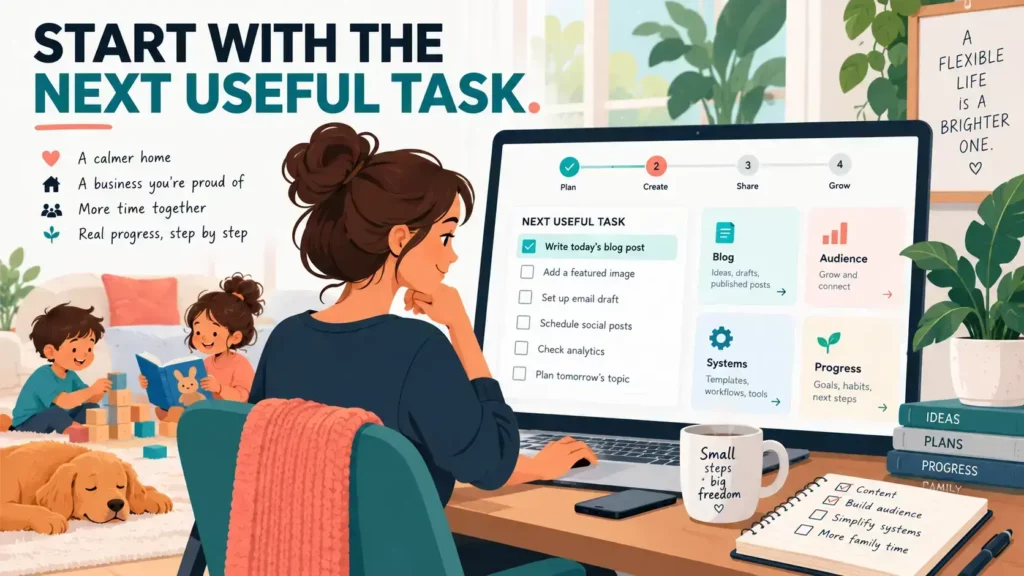
When I log in, I now see work connected to my Business Hub and a practical task list. The navigation has been simplified, so the next useful action is more visible.
It took me a little time to adjust because I knew the old system. For a completely new member, I think the onboarding should feel more direct. You are less likely to begin by scrolling community posts and more likely to work on your business.
ACE
ACE is the built-in assistant. It can help members research, plan tasks and work out what to do next. That is particularly useful when the amount of training initially feels overwhelming.
ACE can improve direction, but members still need judgement. An AI-generated draft must be checked, edited and made useful for the intended reader before publication.
Studio
Studio brings creation into one area. The older Image Studio, SiteContent and Jaaxy workflow has been replaced by a more connected process.
Members can now work on blog content, social posts, YouTube scripts and related assets around the same business concept. Keyword and content research is part of that wider process rather than a separate Jaaxy task.
That cluster-based approach is much closer to how I now build Flex For Families. I plan groups of content that answer connected reader questions instead of treating every blog post as an isolated keyword.
Learning and Search
The Learning area replaces the more traditional training layout. It focuses on what the member wants to learn, while ACE can help somebody who does not yet know which lesson they need.
The improved search is also important. You can begin typing the problem or topic and be directed towards relevant help. Good search reduces the time spent browsing a large training library.
A More Relevant Community Feed
The community has not disappeared. It now sits under its own tab and the feed is intended to be more relevant to the member.
That is a better balance. Community support is one of Wealthy Affiliate’s strengths, but live chat and feeds can also become a form of productive-looking procrastination. They should support the work, not replace it.
The overhaul did introduce some bugs. Kyle and Carson were responding visibly to reports and, at the point I noted their update, had already resolved 41 items. That responsiveness is encouraging, but anybody joining soon after a major release should still expect occasional changes while the platform settles.
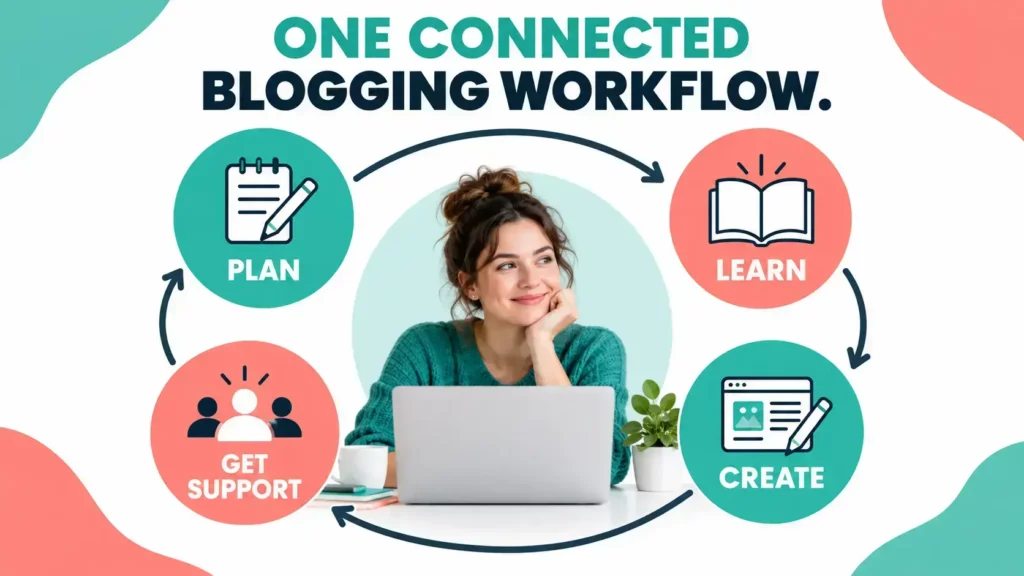
How Wealthy Affiliate Compares With Finding Everything Yourself
| Blogging Need | Finding Free Advice Yourself | Wealthy Affiliate’s Current Approach |
|---|---|---|
| What to do next | Create and maintain your own plan | Business Hub tasks and Learning provide direction |
| Research | Combine search engines, AI and separate tools | Research is integrated into the content workflow |
| Content creation | Use separate writing, image and planning tools | Studio brings several creation channels together |
| Questions | Search forums, videos and articles | ACE, platform search and community support |
| Website setup | Choose hosting and learn the technical stack | WordPress hosting and website tools are included with eligible memberships |
| Technical problems | Contact each provider separately | SiteSupport handles hosted-site technical issues |
| Community | Join separate groups | Member community is built in |
| Flexibility | Maximum freedom | A clearer path, but within one ecosystem |
I have seen the support side work in practice. When a plugin I was testing took one of my sites down, SiteSupport investigated and resolved it in roughly ten minutes. I had gone to make a cup of tea and the issue was fixed before I returned.
That does not mean every problem will be resolved that quickly. It does show the practical value of having training, hosting and technical support connected.
You can read my detailed Wealthy Affiliate review, my explanation of how Wealthy Affiliate works, and my guide to what beginners actually learn before deciding.
How Much Does Wealthy Affiliate Cost in 2026?
At the time of preparing this refresh, the member pricing available to me was:
| Membership | Monthly | Annual |
|---|---|---|
| Starter | Free | Free |
| Builder | $29 | $290 |
| Premium | $49 | $490 |
| Premium Plus+ | $99 | $990 |
Prices and inclusions can change, so check the current checkout page before paying.
The free Starter level is useful for seeing whether the platform makes sense to you. Builder creates a lower-cost step after Starter and may be the most approachable paid starting point for a beginner who is not ready for Premium.
Premium and Premium Plus+ make more sense when you know you will use the additional capacity and features. I use Premium Plus+ and have used the wider toolset, but the most expensive option is not automatically the right first choice for every parent.
Use the membership comparison to check the current inclusions rather than choosing on price alone.
Is Structured Training Worth the Cost for a Busy Parent?
It can be, if the structure returns more useful time than the subscription consumes from your budget.
The relevant calculation is not simply:
Can I find this information for free?
It is:
Will this platform help me make better progress in the limited time I actually have?
Suppose a structured system saves two hours of confused research each month. That may be valuable to a parent with only a few short work sessions. However, the membership is not good value if paying for it creates financial pressure or if you rarely log in.
I understand why the fee can feel high to somebody who urgently needs income, particularly after currency conversion. A blog is not an emergency-income solution. My first affiliate commission took about six months, and consistent income can take much longer.
If the subscription would come from money needed for bills, use free resources and the Starter level first. A responsible training platform cannot remove the normal time required to build skills, content and traffic.

Who Should Use Free Blogging Advice?
Free resources may be the better choice if you:
- Cannot comfortably afford a recurring membership
- Already understand the main stages of building a blog
- Enjoy research and can assess conflicting claims
- Only need help with one specific task
- Have technical confidence or existing support
- Can create your own priorities and remain consistent
There is no shame in starting free. The important thing is to build a simple plan before collecting dozens of bookmarks.
Choose one reliable resource for each immediate need. Finish the current step before looking for another method.
Who Is Structured Training Better For?
A structured platform may be better if you:
- Are completely new to WordPress, SEO or affiliate marketing
- Keep changing strategy after watching new videos
- Need a clear next task when you sit down to work
- Value technical support
- Want training, hosting and creation tools together
- Learn better through an organised sequence
- Need a community for questions and encouragement
It is especially useful when your available time arrives in small pockets. You do not want to spend the first half of every session remembering where you left off.
Who Should Avoid Wealthy Affiliate?
Wealthy Affiliate will not suit everybody. Avoid paying for it, at least for now, if you:
- Need income within days or weeks
- Cannot afford the fee without financial stress
- Want somebody else to build and run the business for you
- Dislike membership platforms
- Already have a working stack, advanced training and dependable support
- Mainly want a specialist course in paid advertising, ecommerce or another model outside its core strengths
- Know that community notifications will distract you more than they help
Hosting is connected to an active eligible membership. That convenience is a major benefit while you remain a member, but it is also a dependency to understand. My own experience moving a local business website elsewhere was seamless, so leaving the hosting is possible, but it is still something to plan.
For a fuller assessment, see Is Wealthy Affiliate Worth It in 2026?, Wealthy Affiliate Complaints and my Wealthy Affiliate hosting review.
The Best Approach Is Often Hybrid
Structured training and free advice do not have to compete.
Use structured training for:
- The order of your foundational tasks
- Your core blogging and traffic strategy
- Website setup and technical support
- A consistent process for planning and publishing
- Help when you are genuinely stuck
Use free resources for:
- Official documentation
- A focused tutorial for a specific feature
- Different expert perspectives
- Industry news and platform changes
- Deeper learning after you understand the basics
This prevents the structured programme from becoming a closed bubble, while stopping free content from pulling you in ten directions.
Try the Five-Hour Test Before Paying
If you are unsure, complete this simple test over a week.
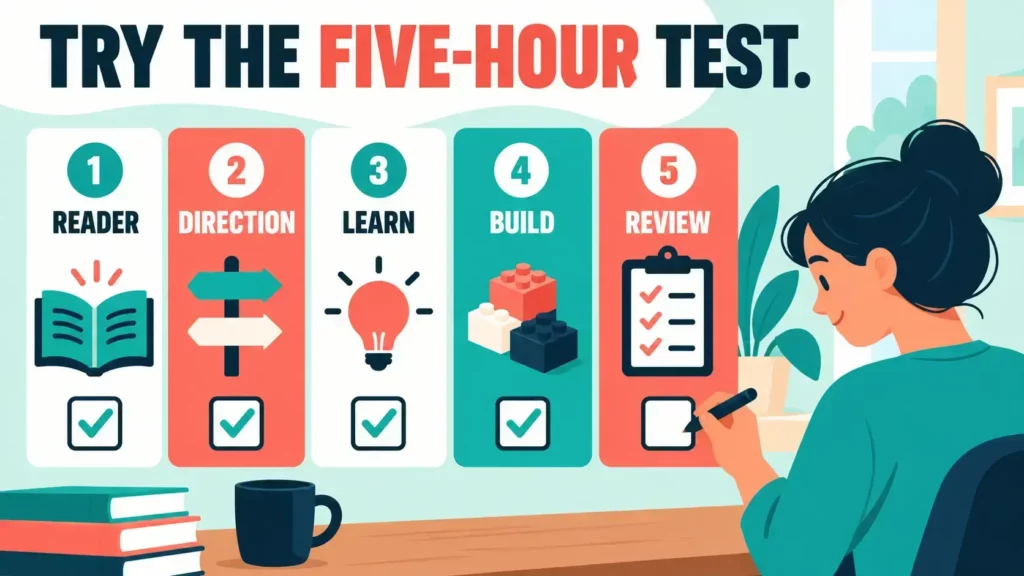
Hour 1: Define the Reader
Write down who you want to help, the problem they face and why your experience or research can help them.
Hour 2: Choose One Content Direction
List ten connected questions that reader might ask. Do not choose ten unrelated post ideas.
Hour 3: Learn One Essential Task
Use a free official tutorial to complete one action, such as setting up WordPress or outlining the first article.
Hour 4: Start Building
Work on the actual site or content. Notice how much of the hour goes into action and how much goes into searching.
Hour 5: Review the Friction
Ask:
- Did I know what to do next?
- Did conflicting advice stop me?
- Was the technical setup the main problem?
- Did I complete something useful?
- Would support and a structured path remove the blockage?
If you made steady progress, continue with free resources. If most of the time disappeared into uncertainty, try the free Wealthy Affiliate Starter experience before committing to a paid level.
A Simple Decision Checklist
Give yourself one point for every “yes”.
- I regularly lose time deciding what to do next.
- I am new to websites, search traffic or affiliate marketing.
- I want access to technical support.
- I would use included hosting or content tools.
- I learn better from an ordered path.
- I can comfortably afford the membership for several months.
- I understand that training does not guarantee earnings.
- I am prepared to publish, review results and improve.
If you scored six to eight, structured training is likely worth testing. If you scored three to five, use a free trial or Starter option before deciding. If you scored zero to two, free resources and a simple self-made plan may be enough for now.
The budget question overrides the score. Do not take on financial pressure for a blogging membership.
My Verdict
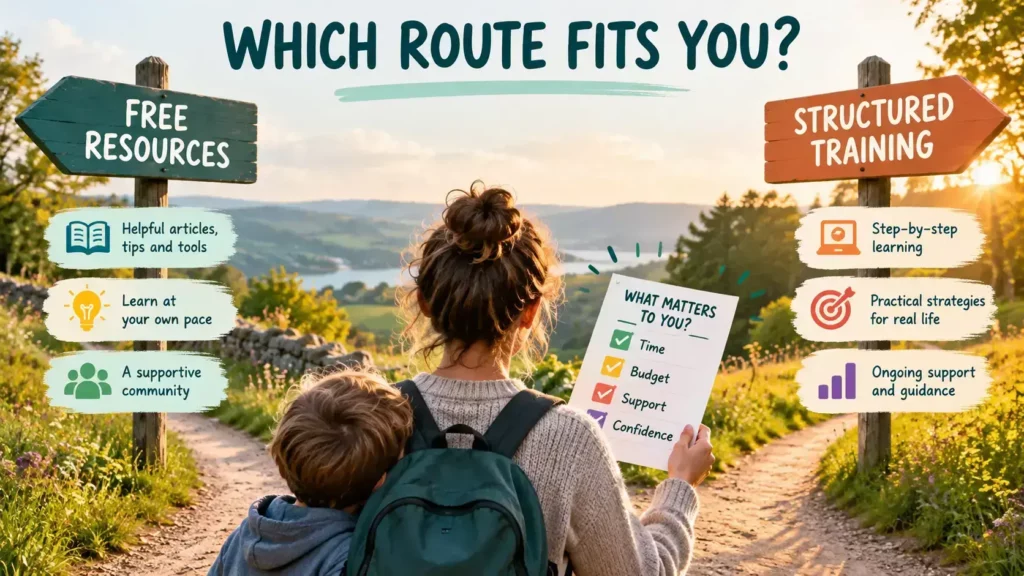
Free blogging advice can teach you almost anything, but it does not automatically give you a sensible order or protect your limited time. Structured training earns its cost when it reduces confusion, connects the essential tools and helps you keep moving.
For a beginner parent who wants one joined-up place to learn and build, Wealthy Affiliate is my preferred structured option. The 2026 overhaul makes that recommendation stronger because Business Hubs, ACE, Studio, Learning and improved search now create a more direct workflow than the older collection of separate tools.
It is still not a shortcut. Members can become distracted by the community, publish generic AI-assisted content or pay without implementing the lessons. Traffic and income are not guaranteed.
Start with the free level, assess the workflow for yourself and only upgrade if the structure will genuinely help you use your available time. If you prefer to stay independent, create a narrow learning plan and use reliable free sources deliberately.
Whichever route you choose, progress comes from helping a defined reader consistently, not from consuming more advice.
Start With a Practical Plan
If you are not ready for a training membership, the free Parent Blogging Starter Kit will help you choose a direction and organise your first steps without adding another pile of random advice.
If you want the training, tools, hosting and support brought together, read my full Wealthy Affiliate review before you join.
Frequently Asked Questions
Can You Learn Blogging for Free?
Yes. Free blogs, videos, official documentation and communities can teach the practical skills needed to start a blog. You will need to create your own learning order, check whether advice is current and solve gaps between different resources. Free learning works best for people who are comfortable researching independently.
Is Paid Blogging Training Worth It?
Paid training can be worth it when it saves time, provides a clear sequence and includes support you will actually use. It is not worth creating financial pressure, and it cannot guarantee traffic or income. Judge value by the progress it helps you make, not by the number of lessons included.
What Is the Main Difference Between Free Advice and Structured Training?
Free advice provides individual answers, while structured training should connect those answers into a sensible path. With free resources, you are responsible for deciding what to learn next. With good structured training, the provider organises the sequence and usually adds support, tools or accountability.
Is Wealthy Affiliate Good for Beginner Bloggers?
I believe Wealthy Affiliate is a strong option for beginners who want training, WordPress hosting, research, creation tools and support together. Its redesigned Business Hubs, ACE assistant, Studio and Learning area provide a clearer route through the platform. It still requires consistent work and does not guarantee earnings.
How Much Does Wealthy Affiliate Cost?
At the time of this refresh, Starter was free, Builder was $29 monthly or $290 annually, Premium was $49 monthly or $490 annually, and Premium Plus+ was $99 monthly or $990 annually. Pricing and features can change, so confirm the current offer before joining.
Should I Choose Wealthy Affiliate Builder, Premium or Premium Plus+?
Builder may be the most approachable paid step for a beginner after testing Starter. Premium and Premium Plus+ are better considered when you know you need their additional capacity and features. Compare the current inclusions and choose for your real workload rather than assuming the highest tier is automatically best.
Can Structured Training Help You Make Money Faster?
It may reduce wasted time and beginner mistakes, but it cannot control how quickly traffic or commissions arrive. Your niche, content quality, consistency, promotion and audience all matter. My first affiliate commission took around six months, so structured training should be treated as business education rather than a quick-income promise.