

If you’ve started taking SEO more seriously, you’ve probably come across tools like Ahrefs and SEMrush.
They’re packed with features, but they’re also expensive.
For many busy parent bloggers, paying well over £100 a month for an SEO platform simply isn’t realistic.
That’s where KeySearch comes in.
It promises many of the SEO features bloggers actually need, including keyword research, competitor analysis, rank tracking, backlink checking, and site audits, without the enterprise-level price tag.
But is it genuinely a smart alternative, or do the lower costs come with too many compromises?
In this KeySearch Review 2026, I’ll explore what the platform offers, who it’s best suited for, how it compares with other SEO tools, and whether busy parent bloggers can really get premium SEO features for less.
Heads Up: This review is based on extensive research into KeySearch, including its features, pricing, reputation, and user feedback. I haven’t personally used the platform, so I won’t pretend this is a hands-on review. My aim is to help busy parent bloggers decide whether KeySearch is the right next step before investing in another SEO tool.
Quick Verdict
KeySearch looks like one of the best-value SEO platforms for bloggers who have outgrown free keyword tools but aren’t ready to pay Ahrefs or SEMrush prices.
It combines keyword research, competitor analysis, backlink checking, rank tracking, and basic site audits into one affordable platform, making it a strong option for bloggers who want more than a simple keyword tool.
While it doesn’t offer the depth or huge databases of enterprise SEO suites, it appears to provide the features most bloggers actually use at a much more accessible price.
My Rating: ⭐⭐⭐⭐☆ (4.5/5)
Best for: Bloggers, affiliate marketers, and niche website owners looking for an affordable all-in-one SEO toolkit.
KeySearch At a Glance
| Type | Affordable all-in-one SEO platform |
| Best For | Bloggers and small website owners who want more than basic keyword research |
| Founder | Dan Pfeffer |
| Free Trial | Yes, limited free trial available |
| Main Features | Keyword research, competitor analysis, backlink checker, rank tracking, site audits, YouTube research |
| Beginner Friendly? | Yes, much easier to learn than larger SEO platforms |
| Pricing | Affordable monthly subscription |
| My Verdict | One of the strongest value-for-money SEO platforms for bloggers who need more than keyword research without paying enterprise prices. |
New to Blogging?
If you’re still learning how blogging, SEO, keyword research, and affiliate marketing work, you may not need a dedicated keyword research tool just yet.
Before investing in SEO software, it’s worth building a solid foundation so you understand how to choose a niche, create helpful content, and optimise your blog for Google.
That’s why I often recommend Wealthy Affiliate to beginners. It teaches blogging, SEO, website building, and affiliate marketing in one place, helping you develop the skills you’ll need before investing in more advanced tools like LowFruits.
What Is KeySearch?
KeySearch is an affordable all-in-one SEO platform designed to help bloggers, affiliate marketers, and small website owners grow their search traffic without paying enterprise-level prices.
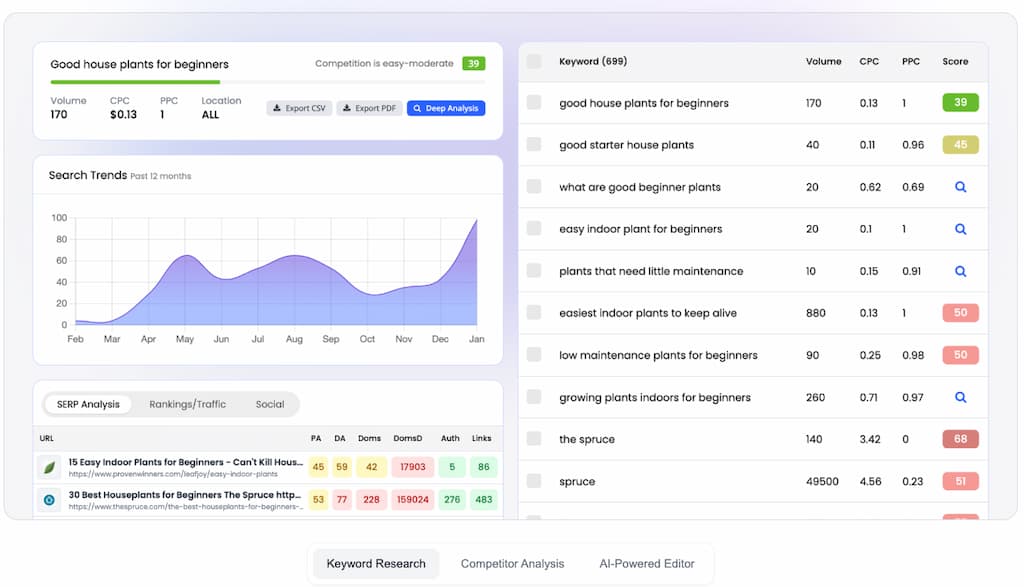
At its core, KeySearch combines several essential SEO tools into one easy-to-use platform.
These include:
- Keyword research.
- Keyword difficulty analysis.
- Competitor research.
- Rank tracking.
- Backlink checking.
- Site audits.
- YouTube keyword research.
Unlike platforms such as Ahrefs or SEMrush, KeySearch isn’t trying to become the most powerful SEO suite on the market.
Instead, it focuses on delivering the features that most bloggers actually use every week, while keeping the price accessible.
For busy parent bloggers, that’s an attractive proposition.
If you’ve moved beyond free keyword tools but don’t yet need the depth or cost of an enterprise SEO platform, KeySearch aims to bridge that gap.
It’s not about giving you hundreds of reports you’ll never open.
It’s about helping you make smarter SEO decisions without feeling overwhelmed.
Is KeySearch worth it for bloggers?
KeySearch is worth considering for bloggers who want an affordable all-in-one SEO platform. It combines keyword research, competitor analysis, rank tracking, backlink checking, and site audits, making it a practical step up from free SEO tools without the cost of enterprise platforms.
Who Created KeySearch?
KeySearch was created by Dan Pfeffer, founder of KeySearch LLC.
The platform was built around a simple idea.
Many bloggers and small business owners wanted access to professional SEO tools, but couldn’t justify paying the high monthly costs charged by larger platforms.
Dan’s goal was to create an affordable alternative that focused on the features most website owners actually needed.
Over the years, KeySearch has developed a loyal following among bloggers, affiliate marketers, and niche website builders who appreciate its balance of functionality, simplicity, and value.
Rather than trying to compete feature-for-feature with enterprise SEO suites, KeySearch has stayed true to its original mission:
Provide practical SEO tools that are both effective and affordable.
That philosophy is one of the reasons it continues to be recommended by many bloggers looking for their first paid
Quick Note: I’m John Crossley, founder of Flex For Families. I review online business opportunities through the lens of family life, focusing on costs, time commitments, risks, and whether they genuinely help parents create more flexibility.
What Does KeySearch Offer?
KeySearch brings together several SEO tools under one subscription, making it much more than a simple keyword research platform.
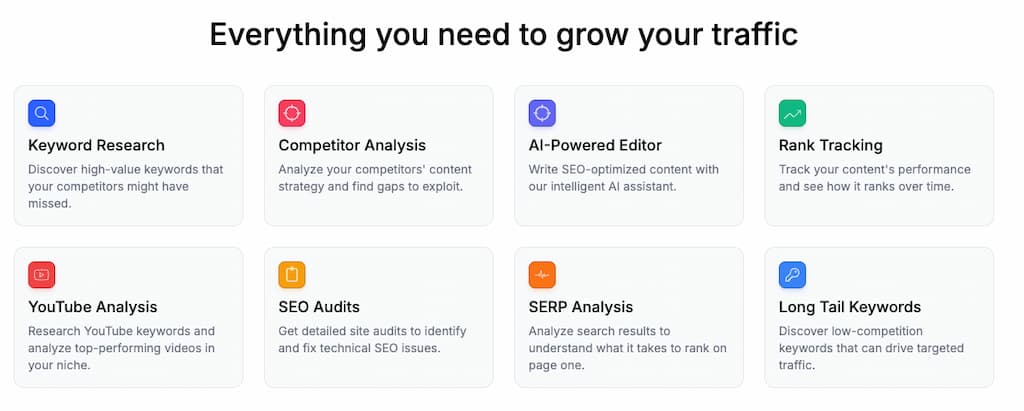
Its goal is to help bloggers understand what people are searching for, how competitive those searches are, and what they can do to improve their chances of ranking in Google.
Some of the main tools include:
Keyword Research
Discover keyword ideas, search volumes, and related phrases to help plan content that attracts organic traffic.
Keyword Difficulty Analysis
One of KeySearch’s standout features.
Rather than leaving you to guess how competitive a keyword might be, it provides an easy-to-understand difficulty score that helps you identify realistic opportunities.
Competitor Analysis
Analyse competing websites to discover:
- Their highest-ranking pages.
- Keywords they’re targeting.
- Potential content gaps.
- Opportunities for your own blog.
It’s a useful way to learn from websites already performing well in your niche.
Rank Tracking
Monitor how your target keywords perform over time.
Tracking your rankings helps you measure progress and identify articles that may benefit from an update.
Backlink Checker
See which websites are linking to you or your competitors.
While it isn’t as comprehensive as dedicated backlink platforms like Ahrefs, it provides enough insight for many bloggers.
Site Audits
Identify technical SEO issues that could be affecting your rankings, helping you improve your website’s overall health.
YouTube Keyword Research
A feature that sets KeySearch apart from some competitors.
If you’re growing both a blog and a YouTube channel, it can help you research video topics alongside your written content.
As more bloggers diversify beyond Google Search, this becomes an increasingly useful addition.
What I like about KeySearch is that it doesn’t try to do absolutely everything.
Instead, it focuses on providing a well-rounded SEO toolkit that covers the tasks most bloggers perform regularly.
For busy parent bloggers, that balance between features, simplicity, and affordability could make it a very sensible next step once you’ve outgrown basic keyword research tools.
See KeySearch in Action
Reading about KeySearch gives you a good overview, but watching it in action is the best way to understand how all of its tools work together.
A walkthrough will show you how to:
- Research keyword opportunities.
- Check keyword difficulty.
- Analyse competitors.
- Monitor your rankings.
- Perform basic site audits.
- Research YouTube keywords.
If you’re considering KeySearch as your first paid SEO platform, I’d definitely recommend watching a walkthrough before making your decision. Seeing the interface in action makes it much easier to judge whether it fits your blogging workflow.
KeySearch Features
KeySearch combines several SEO tools into one affordable platform.
Rather than specialising in one area, it aims to give bloggers everything they need to improve their search rankings without paying for an enterprise SEO suite.
Here are the features that stand out most.
Keyword Research
Keyword research is where most bloggers will spend their time.
Enter a topic or phrase, and KeySearch generates keyword ideas along with useful data such as:
- Monthly search volume.
- Keyword difficulty.
- Related keywords.
- Long-tail keyword suggestions.
This makes it easier to discover topics your audience is already searching for while avoiding keywords that may be too competitive.
For bloggers planning several articles each month, this alone can save a lot of time.
Keyword Difficulty Analysis
One of KeySearch’s strongest features is its simple keyword difficulty score.
Instead of overwhelming you with complicated SEO metrics, it provides an easy way to judge whether a keyword is likely to be achievable for your website.
That makes it particularly beginner friendly.
Rather than wondering if a keyword is too competitive, you can quickly prioritise opportunities that better match your website’s authority.
Competitor Analysis
One of the fastest ways to improve your own content is to learn from websites already performing well.
KeySearch allows you to explore competitors and discover:
- Their highest-ranking pages.
- The keywords they’re targeting.
- Opportunities you may have missed.
This can be especially helpful when planning content clusters or looking for gaps in your niche.
Rank Tracking
Publishing content is only the beginning.
KeySearch also lets you monitor how your target keywords perform over time.
Tracking rankings helps you:
- Measure progress.
- Identify articles that need updating.
- Celebrate improvements as your blog grows.
For busy parent bloggers, it’s a simple way to see whether your SEO efforts are paying off.
Backlink Checker
Backlinks remain an important part of SEO.
KeySearch includes a backlink checker that helps you understand:
- Who is linking to your website.
- Which pages attract the most links.
- Where competitors are earning backlinks.
While it doesn’t match the depth of Ahrefs, it’s more than enough for many bloggers who simply want a better understanding of their backlink profile.
Site Audit Tool
Technical SEO can feel intimidating.
KeySearch helps simplify the process by scanning your website for common SEO issues.
This can include things like:
- Broken links.
- Missing metadata.
- Page optimisation opportunities.
- General site health.
For many bloggers, this provides enough guidance without needing a dedicated technical SEO platform.
YouTube Keyword Research
This is a feature I really like.
If you’re creating content on both your blog and YouTube, KeySearch can help you research video topics alongside your written content.
As more bloggers diversify their traffic sources, having YouTube keyword research included under the same subscription adds extra value.
It’s another reason why KeySearch feels more like a complete SEO toolkit than simply a keyword research tool.
Why These Features Matter
What stands out to me isn’t any single feature.
It’s the overall balance.
KeySearch doesn’t try to compete with Ahrefs or SEMrush on sheer scale.
Instead, it focuses on providing the SEO tools that most bloggers actually use on a regular basis.
For busy parent bloggers, that’s an appealing combination.
You get keyword research, competitor analysis, rank tracking, backlink checking, and site audits in one place, without paying enterprise-level prices or spending weeks learning a complicated platform.
That’s what makes KeySearch such an interesting step between basic keyword tools and the larger SEO suites.
How Much Does KeySearch Cost?
One of KeySearch’s biggest selling points is its pricing.
Compared with platforms like Ahrefs and SEMrush, KeySearch is significantly more affordable, making it an attractive option for bloggers and small website owners who want more than free keyword tools without committing to enterprise-level subscription costs.
KeySearch offers straightforward monthly and annual subscription plans, with the annual option providing additional savings if you know you’ll be using the platform long term.
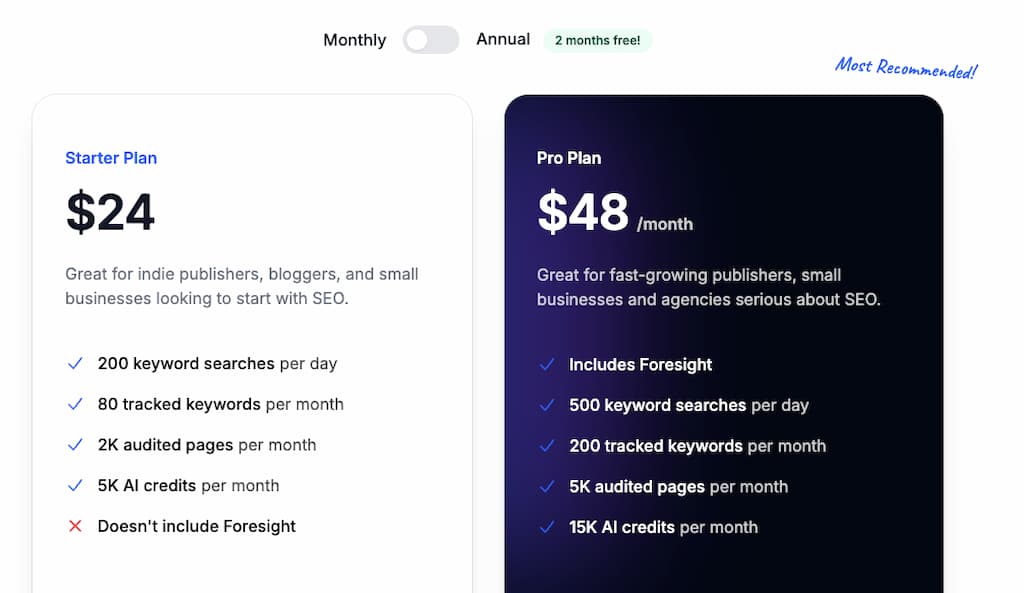
Unlike some SEO platforms, there aren’t lots of complicated pricing tiers with features locked behind expensive upgrades.
Instead, you get access to a well-rounded collection of SEO tools designed to support your blogging journey.
For many bloggers, that’s more than enough.
Rather than paying for hundreds of advanced reports you’ll rarely use, you’re investing in the SEO features most bloggers rely on every week.
If you’re publishing content consistently and taking SEO seriously, KeySearch looks like excellent value for money.
What I Like About KeySearch
After researching KeySearch, several things really stand out.
Excellent Value for Money
This is probably its biggest strength.
KeySearch gives bloggers access to keyword research, competitor analysis, rank tracking, backlink checking, and site audits at a price that’s far easier to justify than many premium SEO platforms.
For bloggers on a budget, that’s a compelling combination.
More Than Just a Keyword Tool
Unlike platforms that focus on one specific area of SEO, KeySearch brings together several useful tools under one subscription.
That means you don’t need multiple services just to manage your blog’s SEO.
For busy parents, having everything in one place can simplify your workflow.
Beginner Friendly
SEO can feel overwhelming.
KeySearch keeps things relatively simple, with a clean interface and easy-to-understand reports that make it approachable for bloggers who are still developing their SEO knowledge.
You don’t need to be an SEO expert to start benefiting from the platform.
Affordable Step Up From Free Tools
Many bloggers eventually outgrow free keyword research tools.
KeySearch feels like a natural next step.
It provides significantly more insight without requiring the sort of investment that platforms like Ahrefs or SEMrush demand.
That makes it an excellent bridge between beginner and advanced SEO.
Includes YouTube Research
As bloggers increasingly expand into video content, it’s useful to have YouTube keyword research included alongside traditional SEO tools.
If you’re planning to grow both your blog and YouTube channel, this adds even more value.
What Could KeySearch Do Better?
No SEO platform is perfect, and KeySearch is no exception.
Smaller Database Than Enterprise Platforms
Although KeySearch provides plenty of useful data for bloggers, it doesn’t have the enormous keyword and backlink databases you’ll find in Ahrefs or SEMrush.
If you’re managing large websites or multiple client projects, you may eventually need more comprehensive data.
Backlink Analysis Isn’t as Detailed
KeySearch includes backlink checking, but it isn’t designed to compete with specialist backlink tools.
For most bloggers, that’s unlikely to be a deal-breaker.
However, advanced SEO professionals may find it limiting.
Limited Advanced Features
KeySearch focuses on providing practical SEO tools rather than every feature imaginable.
That’s part of its appeal, but it also means you won’t find the same depth of technical SEO reporting, advanced automation, or marketing features available in larger platforms.
You’ll Still Need to Learn SEO
Like every SEO tool, KeySearch can provide data.
It can’t replace good SEO knowledge.
Understanding search intent, creating genuinely helpful content, and building topical authority are still far more important than any software you use.
That’s why I always recommend learning the fundamentals before investing in premium tools.
My Take
For me, KeySearch succeeds because it knows exactly who it’s designed for.
- It isn’t trying to become the most powerful SEO platform in the world.
- It’s trying to become one of the best-value SEO platforms for bloggers.
That’s a very different goal.
If you’ve outgrown free keyword tools but aren’t ready for the cost or complexity of Ahrefs or SEMrush, KeySearch appears to strike a really sensible balance between features, simplicity, and affordability.
I think that’s exactly why it continues to have such a loyal following among bloggers and affiliate marketers.
Not sure if KeySearch is the right fit? Compare it with LowFruits, RankIQ, Ahrefs, and SEMrush to see which SEO tool best matches your stage of blogging.
Do You Actually Need KeySearch Yet?
KeySearch looks like an excellent value SEO platform, but that doesn’t necessarily mean it’s the right investment today.
The first question I’d ask is:
Where are you in your blogging journey?
If you’re still choosing a niche, publishing your first few blog posts, or learning the basics of SEO, you probably don’t need a paid SEO platform yet.
At that stage, your time is better spent:
- Learning how SEO works.
- Publishing helpful content.
- Building consistency.
- Understanding your audience.
Those skills will have a far bigger impact than any SEO software.
However, once you’ve started publishing regularly and you’re finding yourself asking questions like:
- Which keywords should I target?
- Why isn’t this post ranking?
- What are my competitors doing?
- Which pages should I update?
That’s when a tool like KeySearch starts to make a real difference.
Rather than guessing, you’ll have data to help guide your decisions.
For me, KeySearch isn’t about starting a blog.
It’s about helping you grow one.
When Does KeySearch Make Sense?
I think KeySearch becomes a smart investment when you’ve reached the point where SEO is influencing your blogging decisions.
For example, you might already have:
- Twenty to fifty blog posts published.
- A growing number of impressions in Google Search Console.
- A regular content publishing routine.
- Some understanding of keyword research.
- A desire to increase your organic traffic.
At that stage, having access to keyword research, competitor analysis, rank tracking, and site audits under one subscription can save you both time and guesswork.
What I particularly like is that KeySearch feels like a natural progression.
You’re no longer relying entirely on free tools, but you also don’t need the scale or cost of an enterprise SEO platform.
For many bloggers, that’s exactly the sweet spot.
Who Is KeySearch Best For?
KeySearch won’t be the right choice for everyone, but it fills an important gap in the SEO tool market.
KeySearch is a great fit if you:
✅ Have moved beyond free keyword research tools.
✅ Publish blog content consistently.
✅ Want an affordable all-in-one SEO toolkit.
✅ Need keyword research, competitor analysis, and rank tracking in one place.
✅ Prefer a simpler platform over enterprise-level software.
✅ Want better SEO insights without spending a fortune.
For bloggers in that position, KeySearch appears to offer excellent value.
KeySearch may not be the best choice if you:
❌ Haven’t started blogging yet.
❌ Are still learning the basics of SEO.
❌ Need enterprise-level backlink analysis.
❌ Manage multiple client websites or large SEO campaigns.
❌ Want advanced marketing tools alongside SEO.
In those situations, another tool may be a better fit.
Complete beginners may benefit more from learning the fundamentals first, while larger businesses may eventually outgrow KeySearch and move towards Ahrefs or SEMrush.
My Recommendation
If I were advising a busy parent blogger, this is how I’d think about it.
Just starting?
Learn blogging and SEO before buying any premium software.
Finding keyword opportunities?
Tools like LowFruits and RankIQ are excellent choices.
Ready for a complete SEO toolkit without paying enterprise prices?
That’s where KeySearch really shines.
Managing a large, established website or business?
That’s when platforms like Ahrefs or SEMrush begin to make more sense.
For me, that’s what makes KeySearch so appealing.
It fills the gap between specialist keyword research tools and premium SEO suites.
It gives bloggers access to the SEO features they’re most likely to use every week, without asking them to pay for hundreds of advanced features they may never touch.
For busy parent bloggers who are ready to take SEO more seriously, that feels like a very sensible next step.
Best Alternatives to KeySearch
KeySearch offers an impressive balance of features and affordability, but it isn’t the only SEO tool worth considering.
The best choice depends on what you’re trying to achieve and where you are in your blogging journey.
Here are the alternatives I’d recommend looking at.
LowFruits, Best for Finding Easier Keywords
If your biggest challenge is identifying keywords that your blog can realistically rank for, LowFruits is one of the strongest alternatives.
Rather than trying to be an all-in-one SEO platform, LowFruits focuses on analysing Google’s search results and highlighting opportunities where smaller websites are already competing.
It’s a more specialised tool than KeySearch, but that focus is exactly what many bloggers love.
Best for: Bloggers who want to spend less time chasing impossible keywords.
RankIQ, Best for Content Optimisation
RankIQ takes a different approach.
Instead of helping you analyse competitors or monitor rankings, it focuses on helping bloggers choose better topics and optimise their articles before publishing.
Its curated keyword libraries and AI-powered optimisation reports make it particularly appealing if your priority is creating content that has a better chance of ranking.
Best for: Bloggers who want guidance on what to write and how to optimise it.
LinkArtemis, Best Budget Keyword Research
If you’re looking for affordable keyword research without paying for a full SEO platform, LinkArtemis is another strong option.
It focuses on uncovering keyword opportunities and content ideas while keeping costs relatively low.
While it doesn’t include the wider range of SEO tools found in KeySearch, it remains a practical choice for bloggers working with a tighter budget.
Best for: Bloggers who mainly need keyword research.
Ahrefs, Best for Advanced SEO
Once your blog grows and SEO becomes a bigger part of your business, Ahrefs is one of the strongest upgrades available.
It offers:
- Industry-leading backlink analysis.
- Advanced competitor research.
- Technical SEO audits.
- Rank tracking.
- Comprehensive keyword research.
It’s considerably more expensive than KeySearch, but it also provides far greater depth.
Best for: Established bloggers and businesses that need enterprise-level SEO data.
SEMrush, Best All-in-One Marketing Platform
If your website has grown beyond blogging and into a broader online business, SEMrush may be a better fit.
Alongside SEO, it includes:
- Content marketing.
- Advertising research.
- Social media management.
- Local SEO.
- Market analysis.
It’s designed for businesses managing multiple marketing channels rather than purely focusing on SEO.
Best for: Businesses that want an all-in-one marketing platform.
Wealthy Affiliate, Best for Learning SEO First
If you’re completely new to blogging, I’d still recommend learning the fundamentals before investing in any premium SEO software.
Wealthy Affiliate teaches:
- Blogging.
- SEO.
- Keyword research.
- Website building.
- Affiliate marketing.
Once you’ve built those foundations, you’ll be in a much stronger position to decide whether KeySearch or another SEO platform is the right next investment.
Best for: Complete beginners building their first blog.
Which Alternative Would I Choose?
If I were helping a busy parent blogger choose the right SEO tool, this would be my roadmap.
- Completely new to blogging? Start with Wealthy Affiliate and learn the fundamentals.
- Need help finding realistic keywords? LowFruits is an excellent choice.
- Want more guidance when creating content? RankIQ is ideal.
- Need affordable keyword research? LinkArtemis is well worth considering.
- Ready for your first complete SEO toolkit? KeySearch strikes an excellent balance between features and affordability.
- Need enterprise-level SEO? Upgrade to Ahrefs or SEMrush as your blog and business continue to grow.
For me, that’s where KeySearch really stands out.
It bridges the gap between specialist keyword tools and premium SEO platforms.
Instead of paying for features you’ll rarely use, it gives you a practical collection of SEO tools that can support your blog as it moves from the early growth stage to becoming a more established online business.

About the Reviewer
Hi, I’m John Crossley, founder of Flex For Families.
I’m a parent, blogger, and online business owner who helps families find realistic ways to create more flexibility through blogging, affiliate marketing, and online business.
Like many people, I’ve spent years researching online opportunities, testing platforms, and learning how to separate genuine business models from expensive hype. I’ve also experienced the frustration of chasing opportunities that promised freedom but demanded more time away from family.
Today, I use that experience to review courses, side hustles, AI opportunities, and online business programmes through a simple lens:
Will this genuinely help parents create more flexibility, or will it create more pressure?
Every review on Flex For Families focuses on costs, time commitments, risks, and realistic expectations, so you can make informed decisions before investing your time or money.
KeySearch Review 2026: Final Verdict
After researching KeySearch in depth, I can understand why it continues to be recommended by so many bloggers and affiliate marketers.
It doesn’t try to compete with Ahrefs or SEMrush on the size of its database or the number of advanced features.
Instead, it focuses on providing the SEO tools that most bloggers actually need, at a price that’s far easier to justify.
For busy parent bloggers, that’s a compelling combination.
Keyword research, competitor analysis, rank tracking, backlink checking, site audits, and YouTube research are all available within one platform, without the enterprise-level price tag.
I also like where KeySearch sits in the blogging journey.
It’s not the first tool I’d recommend.
If you’re still learning blogging and SEO, I’d focus on building those skills before investing in premium software.
But once you’ve started publishing consistently and want more than basic keyword research, KeySearch looks like a very sensible next step.
Eventually, some bloggers will outgrow it and move to Ahrefs or SEMrush.
Many others may never need to.
My Verdict
- ⭐⭐⭐⭐☆ Rating: 4.5/5
- ✅ Excellent value for money.
- ✅ A well-rounded SEO toolkit for bloggers.
- ✅ Beginner friendly and easy to learn.
- ✅ A natural bridge between free tools and enterprise SEO platforms.
If you’ve reached the point where you’re ready to take SEO more seriously without paying premium prices, KeySearch is well worth adding to your shortlist.
Build Your Blog Before Buying Every SEO Tool
The best SEO software can’t replace strong blogging foundations.
Download my FREE Parent Blogging Starter Kit and learn how to build a blog that fits around real family life before investing in premium tools.
- ✅ Parent Blog Niche Finder Workbook
- ✅ 50 Parent Blog Post Ideas
- ✅ Weekly Blogging Planner
- ✅ Parent Blogging Success Roadmap
- ✅ Family-Friendly Income Tracker
- ✅ Family Flexibility Planner
- ✅ Nap Time Blogging Checklist
Download Your FREE Starter Kit
Build your skills first. Add the right SEO tools as your blog grows.
Frequently Asked Questions
Is KeySearch worth it for bloggers?
Yes. KeySearch offers an affordable SEO toolkit that combines keyword research, competitor analysis, rank tracking, backlink checking, and site audits, making it a great option for bloggers who have outgrown free SEO tools.
Is KeySearch better than Ahrefs?
Not necessarily.
Ahrefs provides much deeper SEO data and advanced backlink analysis, but KeySearch is considerably more affordable and includes the features many bloggers need on a day-to-day basis.
Is KeySearch good for beginners?
Yes.
Its clean interface and straightforward reports make it easier to learn than many enterprise SEO platforms. That said, complete beginners should still learn the basics of blogging and SEO before investing in paid software.
Does KeySearch include rank tracking?
Yes.
KeySearch allows you to monitor keyword rankings over time, helping you measure progress and identify opportunities to improve your content.
Can KeySearch replace SEMrush?
For many bloggers, it can.
However, businesses that need advanced marketing tools, advertising research, and comprehensive competitor analysis may still prefer SEMrush.
Who should use KeySearch?
KeySearch is ideal for bloggers, affiliate marketers, and niche website owners who want an affordable all-in-one SEO toolkit without paying enterprise-level subscription prices.
Let’s Chat
Have you tried KeySearch, or are you still relying on free SEO tools?
I’d love to know where you are in your blogging journey.
Are you looking for your first paid SEO platform, comparing KeySearch with tools like LowFruits or RankIQ, or wondering whether it’s time to upgrade to Ahrefs or SEMrush?
Leave a comment below and let me know. I read every comment personally, and I’ll happily help you choose the SEO tool that best fits your stage of blogging.