


The promise behind AI Review Engine sounds ideal if you are trying to build an affiliate website around work and family life.
Install a WordPress plugin, enter a product URL and your affiliate link, then let artificial intelligence write, optimise and publish a complete product review for you. The original marketing claimed it could complete the process in 90 seconds or less.
That could remove hours of research, writing and formatting from your workload. It could also create a website filled with generic or inaccurate reviews that nobody trusts.
Those are two very different outcomes.
AI Review Engine was a genuine software launch in 2023. However, the available evidence does not show that it can build a profitable review site for you. It can automate parts of content production. It cannot automatically create experience, authority, traffic, reader trust or sales.
There are also serious questions about its current availability in 2026. The surviving JVZoo record says the product is active, but the linked product page redirects to an unrelated offer. I would not buy through an old AI Review Engine link unless the vendor first confirms exactly what you will receive.
Research note: I have not purchased or personally tested AI Review Engine. This review is based on the surviving official launch material, public JVZoo product data, historical funnel information and current Google guidance. I have separated the product’s marketing claims from what can be independently verified in 2026.
Quick Verdict
AI Review Engine appears to have been a real WordPress plugin that generated, formatted and published affiliate product reviews from a product URL. Its core automation could save time when creating a first draft.
I would not recommend buying it in 2026.
The product launched in September 2023, its current purchase route cannot be safely verified, and I could not find a reliable public update history showing how the plugin has developed since launch. Several offers in its JVZoo funnel also show notable refund rates, including 25.36% for the Full Bundle and 18.99% for the ten-site version.
The larger problem is the promise itself. A plugin can publish a review. It cannot prove that you used the product, check every claim, choose a viable keyword, earn reader trust or guarantee a Google ranking.
Rating: 1.5 out of 5
Best for: Experienced affiliate marketers who understand research, SEO and editorial review, but only if they can confirm current access and support directly with the vendor.
Poor fit for: Beginners, busy parents seeking a hands-off income system, or anyone expecting automated reviews to create traffic and commissions by themselves.
Main strength: It automates several repetitive WordPress publishing tasks.
Main drawback: It automates content production without solving the harder work that makes a review accurate, trustworthy and profitable.
AI Review Engine at a Glance
| Detail | What You Need to Know |
|---|---|
| Product | AI Review Engine |
| Product type | AI product-review generator and WordPress publishing plugin |
| Original launch | 7 September 2023 |
| Official seller | Joshua Zamora |
| Additional creator credit | Brett Rutecky was credited by several launch-era reviewers |
| Platform | WordPress plugin sold through JVZoo |
| Original front-end price | Around $35 during the 2023 launch |
| Current price | Not reliably verified in 2026 |
| Public JVZoo listing | Shows $62.55 for the ten-site version, but its product link redirects elsewhere |
| Main promise | Generate, optimise and publish a product review from a URL in 90 seconds or less |
| Historical refund promise | 30 days, but current terms could not be verified |
| Beginner-friendly? | Easy to operate, but risky for beginners who cannot assess the output |
| Busy parent fit | Time-saving in theory, but still requires research, editing and traffic work |
| Current recommendation | Not recommended without direct confirmation of access, updates and support |
What Is AI Review Engine?
AI Review Engine is an AI-powered WordPress plugin created to generate affiliate product reviews automatically.
The user supplies a product or service URL, selects a category and enters an affiliate link. The plugin then creates a review, formats it, adds the affiliate link and publishes the finished post to WordPress.
The original AI Review Engine affiliate page promoted it as an autoblogging plugin that could write and publish a “profit-producing” product review in 90 seconds or less.
That description needs separating into two parts.
The plugin may be able to produce and publish a review quickly. Calling the finished article profit-producing is a marketing claim. Profit depends on whether the page attracts the right readers, answers their questions, earns their trust and persuades some of them to buy.
No software can guarantee those outcomes simply by generating a page.
Who Created AI Review Engine?
The official launch listing and JVZoo seller record name Joshua Zamora as the vendor behind AI Review Engine. The product launched on 7 September 2023 with a front-end price of approximately $35. MunchEye recorded the original launch details.
Several launch-era reviews also credited Brett Rutecky as a co-creator or developer. However, the clearest independently accessible marketplace record names Joshua Zamora as the verified seller.
Both names have been associated with other digital marketing software and automation products. That helps confirm that AI Review Engine was a genuine commercial launch. It does not confirm that the plugin remains updated, supported or suitable for WordPress websites in 2026.
Quick Note: I’m John Crossley, founder of Flex For Families. I review online business opportunities through the lens of family life, focusing on costs, time commitments, risks, and whether they genuinely help parents create more flexibility.
How Does AI Review Engine Work?
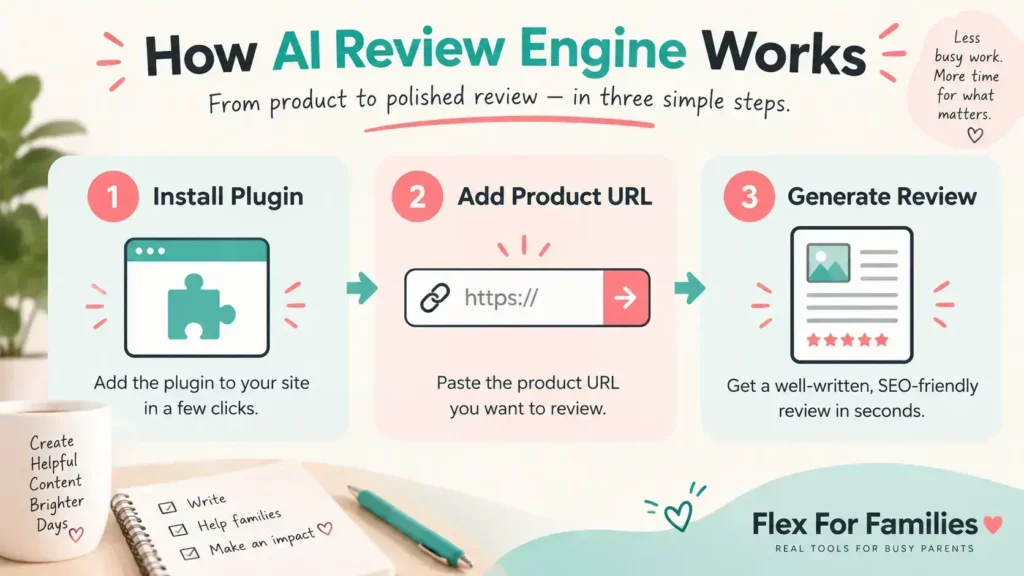
The original workflow had three steps.
Step 1: Install the WordPress Plugin
You download AI Review Engine and install it on an existing WordPress website.
This point matters. The core product does not appear to create your complete website, hosting account, domain or wider content strategy. You need an operational WordPress site first.
Step 2: Add the Product Information
You enter:
- The URL of the product or service
- A product category
- Your affiliate link
The plugin uses the supplied page as the source for the review.
Step 3: Generate and Publish the Review
The software writes the article, formats it, inserts your affiliate link and posts it to WordPress.
The original marketing described the result as unique, readable, optimised and human-like. Those qualities should not be assumed. Each output would still need checking against the source, the current product terms and independent evidence.
Does AI Review Engine Build Complete Review Sites?
AI Review Engine generates and publishes review posts on an existing WordPress website. That is different from building a complete, profitable review site.
A functioning affiliate review website also needs:
- A clear audience and niche
- Reliable hosting and site maintenance
- Keyword and competitor research
- Supporting informational content
- Internal links and site structure
- Accurate affiliate disclosures
- Original evidence and useful comparisons
- Traffic from search, social media, email or another channel
- Regular content updates
- Conversion tracking and improvement
AI Review Engine may automate one production stage. It does not remove the rest of the business.
What Does AI Review Engine Actually Automate?
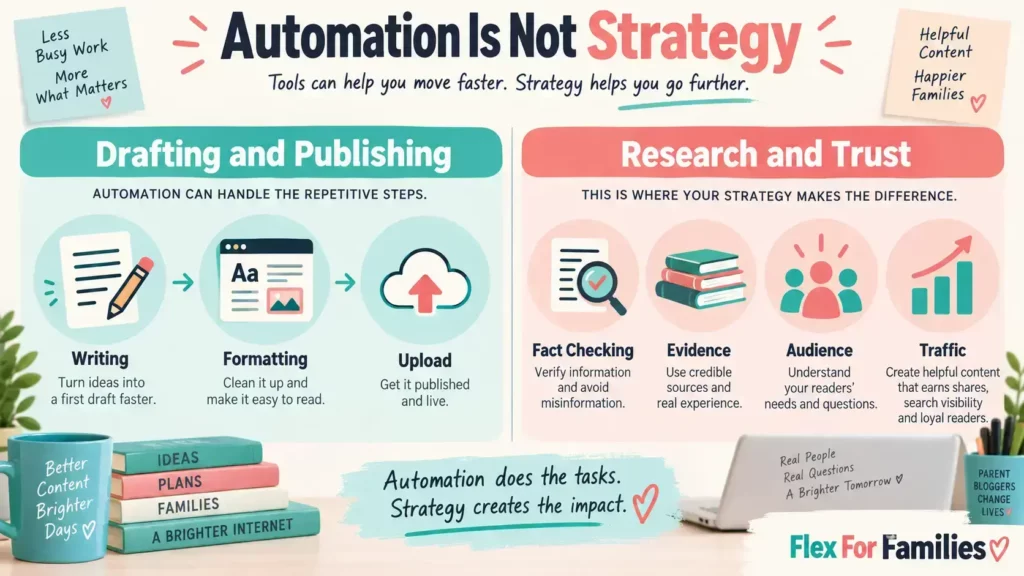
The plugin’s useful features sit mainly in drafting and publishing.
| AI Review Engine May Automate | You Still Need to Handle |
|---|---|
| Creating an initial review draft | Deciding whether the product deserves a review |
| Formatting the article | Checking facts, prices and refund terms |
| Adding an affiliate link | Disclosing the commercial relationship |
| Publishing to WordPress | Adding genuine experience and evidence |
| Producing posts quickly | Choosing realistic keywords and building authority |
| Repeating the process | Attracting traffic and measuring conversions |
This is the central issue with the offer. It presents review production as though it were the same as affiliate marketing.
It is not.
How Much Does AI Review Engine Cost?
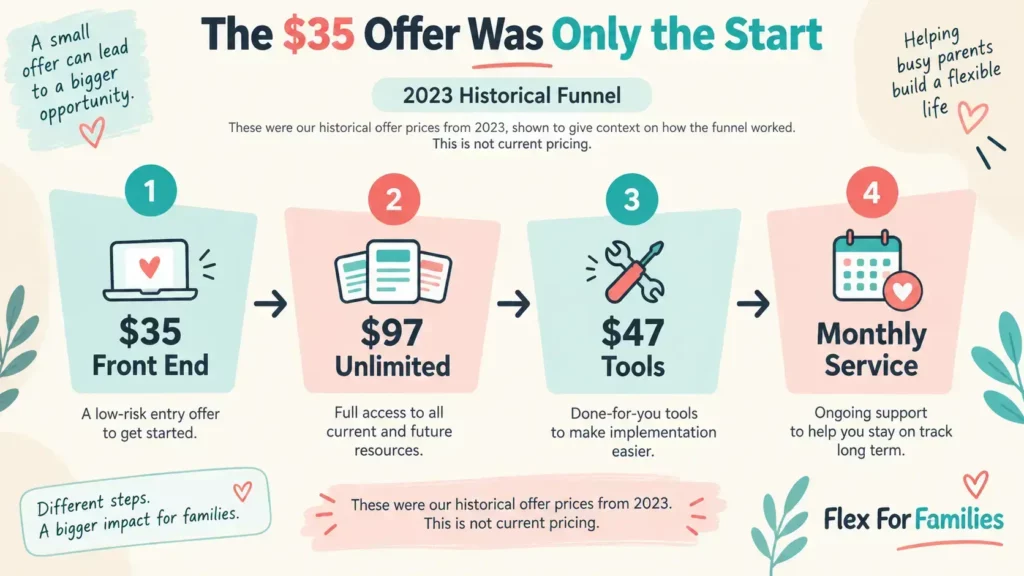
The original front-end price was approximately $35 during its September 2023 launch. Historical reviews listed personal and agency variations at slightly different prices.
That is not a verified current price.
The public JVZoo affiliate information page currently displays a sale price of $62.55 for AI Review Engine 10 Sites. However, following the public product link leads to an unrelated offer rather than a current AI Review Engine checkout or sales page.
For that reason, I would not describe $62.55 as a safe current purchase price. It is a figure attached to the surviving marketplace record.
AI Review Engine OTOs and Additional Costs
AI Review Engine used a multi-step sales funnel. The low front-end price did not represent every product presented after purchase.
The original official affiliate material listed these upgrades:
| Offer | Historical Price | Purpose |
|---|---|---|
| AI Review Engine front end | Around $35 | Limited review and site allowance |
| AI Review Engine Unlimited | $97 one time | Unlimited sites and reviews |
| DFY Suite 5.0 | $1 trial, then reportedly $47 per month | Content syndication credits and services |
| Adtivate Unlimited | $47 one time | Automated promotional offers and banners |
| DFY Authority | $47 one time | Finding available expired domains |
Launch-era bundle listings also advertised packages at approximately $297, $307 and $407. These were historical launch offers. They should not be treated as confirmed 2026 prices.
The funnel matters because someone attracted by a $35 plugin could face several additional offers before reaching the version promoted as unlimited or complete.
Is AI Review Engine Still Available in 2026?
AI Review Engine has a surviving marketplace record, but I could not verify a safe and current public offer in 2026.
The evidence is mixed:
- The public JVZoo affiliate record labels the product as active.
- The original 2023 affiliate page remains online.
- The marketplace product link currently redirects to an unrelated offer called Ultimate Cockfighting.
- The original launch page still refers to September 2023 dates and promotions.
- I could not find a reliable public changelog, current documentation centre or recent compatibility statement.
This could be an old or repurposed funnel link rather than evidence that the original software has disappeared. Either way, it creates too much uncertainty for a buyer.
Before paying, you would need written confirmation of:
- The exact product version
- Current WordPress compatibility
- The AI service used by the plugin
- Any usage limits or external API costs
- The support channel and expected response time
- The current refund terms
- Whether the advertised bonuses and upgrades still work
Without those answers, I would not purchase it.
Does AI Review Engine Have a Refund Policy?
Launch-era promotional pages advertised a 30-day money-back guarantee. I could not verify current refund wording through a working 2026 AI Review Engine checkout.
That distinction is important. An old review repeating a 30-day guarantee does not prove that the same terms apply to a current purchase.
If the vendor provides a new checkout, read the conditions before paying and save a copy. Check whether the guarantee covers the front end, each upgrade and any recurring service separately.
What Do the JVZoo Refund Rates Tell Us?
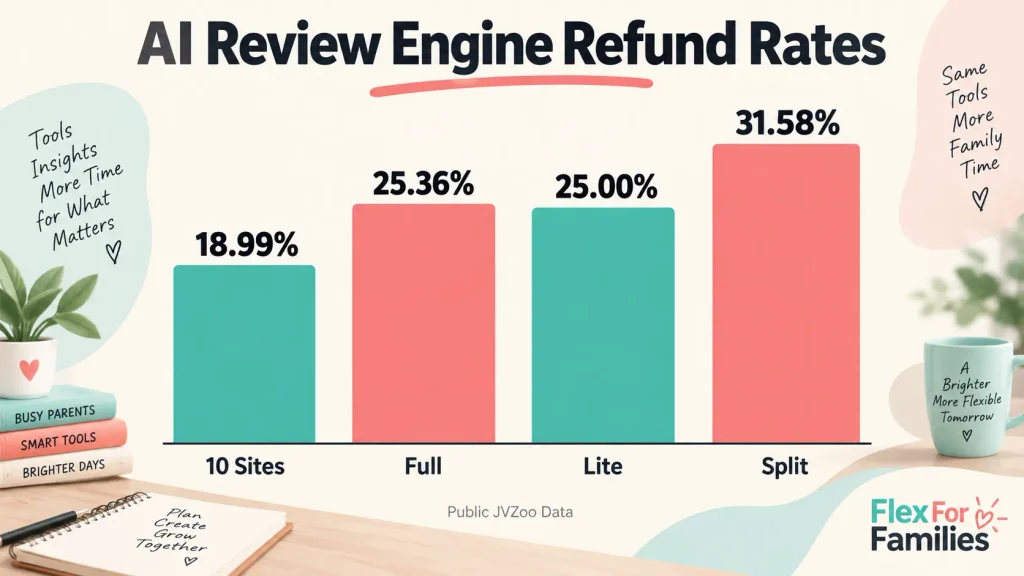
The public JVZoo affiliate record reports the following historical funnel performance:
| AI Review Engine Offer | Reported Sales Band | Reported Refund Rate |
|---|---|---|
| 10 Sites | 250+ | 18.99% |
| Bundle Full | 100+ | 25.36% |
| Bundle Lite | 25+ | 25.00% |
| Bundle Split | 10+ | 31.58% |
| 2 Sites | Fewer than 10 | 16.67% |
The Full Bundle figure works out at approximately one refund for every four purchases. The Split Bundle is close to one in three, although its lower sales band makes the percentage more sensitive to a small number of refunds.
These figures do not tell us why buyers requested refunds. A refund could relate to expectations, compatibility, support, output quality or another issue. They are still relevant when several parts of the same funnel show rates between approximately 19% and 32%.
They suggest that a meaningful proportion of customers did not consider the offer worth keeping.
Can AI Review Engine Create Profitable Reviews?
AI Review Engine can create review content. It cannot guarantee that the content will become profitable.
An affiliate review makes money only when several conditions come together:
- People search for or discover the review.
- The page appears in front of the right audience.
- The content answers the reader’s buying questions.
- The reader trusts the recommendation.
- The affiliate link works and follows programme rules.
- The merchant converts the visitor into a customer.
- The sale remains valid long enough for the commission to be approved.
Publishing a review completes none of those steps automatically.
There is also no reliable typical-user earnings data showing how many AI Review Engine buyers created profitable websites. Sales-page language such as “profit-producing” should therefore be treated as a claim, not an expected result.
Can AI Review Engine Reviews Rank on Google?
An AI Review Engine post could rank, but the plugin cannot guarantee it.
Google does not ban content simply because AI helped create it. Google focuses on whether the finished page is useful, reliable and created to help people rather than manipulate search rankings.
However, Google’s guidance for high-quality reviews recommends that publishers:
- Evaluate products from the user’s perspective
- Demonstrate knowledge and expertise
- Provide evidence of experience
- Include useful measurements
- Explain meaningful differences between alternatives
- Discuss benefits and drawbacks using original research
- Help readers make a purchase decision
A plugin working from the seller’s product URL cannot independently supply most of that evidence.
Google also warns that using generative AI to create many pages without adding value may breach its scaled content abuse policy. Its generative AI guidance recommends using AI to support useful work rather than mass-producing low-value pages.
The risk is not the presence of AI. The risk is publishing a large number of unverified, unoriginal reviews because the software makes it easy.

The Problem With Automatically Generated Product Reviews
Review content carries responsibilities that a general information post may not.
The reader could be preparing to spend money. They need facts they can rely on.
An automatically generated review could:
- Repeat claims from the sales page as though they were independently verified
- Invent a confident personal opinion without genuine use
- Miss hidden upsells or recurring charges
- Quote an expired launch price
- Repeat an old refund policy
- Overlook significant customer complaints
- Recommend a product that is no longer properly supported
- Produce generic pros and cons that apply to almost any tool
- Add an affiliate link without a clear disclosure
- Publish outdated information when the source page changes
The output may look complete while still failing to answer the questions that matter most.
That can damage reader trust. It can also create hours of correction work later.
What About the “Undetectable” AI Feature?
The original funnel promoted an “Undetectable Engine” intended to help generated reviews pass major AI-content detectors and appear human-written.
That feature does not solve the real quality problem.
AI detectors can produce inconsistent results, and passing one does not prove that an article is accurate, original or useful. Google says appropriate use of AI is not automatically against its guidelines. Its concern is content created primarily to manipulate rankings or pages that provide little value.
The sensible goal is therefore not to hide AI involvement. It is to make sure the published review genuinely helps the reader. That requires checking the facts, adding evidence, explaining limitations and taking responsibility for the recommendation.
Could AI Review Engine Create Scaled Content Problems?
Yes, if it is used to publish large numbers of reviews with little original input or quality control.
Google defines scaled content abuse as producing many pages primarily to manipulate search rankings rather than help users. The policy applies regardless of whether the pages are created by AI, people or a combination of both.
Using automation is not automatically a violation. A carefully researched review can use AI during planning or drafting. The problem arises when speed and volume replace usefulness and originality.
The original AI Review Engine marketing encouraged users to build and scale review-site empires quickly. That makes editorial control especially important.
Publishing ten thin reviews in one day does not create more authority than publishing one properly researched review. It may simply create ten pages that require updating, monitoring and defending.
How Much Editing Would the Reviews Need?
Every AI Review Engine article would need a complete editorial review before publication.
At minimum, you would need to check:
- The product name and ownership
- Current features
- Pricing and currency
- Usage limits
- Upsells and recurring costs
- Refund terms
- Affiliate disclosures
- Claims about rankings or income
- Pros and cons
- Competitor comparisons
- Links and calls to action
- Grammar, tone and readability
My normal AI-assisted blogging workflow still includes around 30 minutes in WordPress to tidy, humanise, check images and proofread an article. A detailed product review can require longer because the facts affect someone’s buying decision.
Automation can reduce blank-page time. It does not remove accountability for the published page.
Is AI Review Engine Suitable for Beginners?
AI Review Engine may be simple to operate, but that does not make it a good choice for affiliate marketing beginners.
A beginner could generate and publish a review without understanding:
- Whether the keyword is realistic
- Whether the article matches search intent
- Which claims require evidence
- How to disclose an affiliate relationship
- Why the page is not being indexed
- How to build supporting content
- How to assess traffic and conversions
- When an AI-generated statement is wrong
That creates the appearance of progress without the knowledge needed to judge the result.
A beginner would be better served by learning how affiliate marketing, research, SEO and helpful content work. AI can then accelerate a process they understand.
Is AI Review Engine a Good Fit for Busy Parents?
The time-saving promise is attractive, but AI Review Engine is not a reliable hands-off option for busy parents.
It could shorten the drafting and formatting stage. You would still need time for research, fact-checking, editing, images, internal links, updates and promotion.
There is also a practical risk in building around old software. If a plugin stops working after a WordPress or PHP update, resolving the problem could take longer than the automation originally saved.
A useful tool should reduce your workload without reducing the quality of your decisions. Based on the public evidence available in 2026, I cannot be confident that AI Review Engine meets that standard.
AI Review Engine Pros and Cons
Pros
- It offered a simple three-step workflow.
- It could reduce the time required to create a first draft.
- It handled formatting, affiliate-link insertion and WordPress publishing.
- The original entry price was relatively low.
- The concept addressed a genuine bottleneck for affiliate marketers.
Cons
- The product launched in 2023 and has no clear public update history.
- The current purchase route cannot be safely verified.
- The surviving product link redirects to an unrelated offer.
- The historical funnel contained several additional purchases.
- Multiple offers recorded refund rates of approximately 19% to 32%.
- The software cannot create genuine product experience or original evidence.
- It may repeat sales-page claims without independent verification.
- Fast automated publishing could encourage low-value scaled content.
- There is no reliable evidence of typical customer earnings.
- It cannot guarantee indexing, rankings, traffic or commissions.
Is AI Review Engine Legitimate or a Scam?
AI Review Engine appears to have been a legitimate software product launched through JVZoo in 2023. I found marketplace records, official launch material, a documented funnel and sales activity.
I would not label the original product a scam based on the available evidence.
That does not make it a safe recommendation in 2026. Its current availability is unclear, old product links do not lead to a verified AI Review Engine offer, and recent support or development cannot be confirmed publicly.
The fairest conclusion is that this was a real product with heavily automated marketing claims, but its current status is too uncertain to recommend.
AI Review Engine vs AiutoBlogger
AI Review Engine and AiutoBlogger both try to reduce the work involved in publishing WordPress content.
AI Review Engine focuses specifically on product reviews. AiutoBlogger aims to create a broader range of blog content.
Both face the same limitation. They can automate production, but they cannot automate your experience, editorial judgement, audience understanding or authority.
You can read my full AiutoBlogger Review 2026 for a closer look at the wider autoblogging approach. I will also publish a dedicated comparison between the two products.
Better Alternatives to AI Review Engine
Use AI as a Drafting Assistant
A safer workflow is to research the product yourself, build an evidence-led outline and use an AI assistant to help organise the first draft.
You remain responsible for every factual claim, recommendation and link. This takes longer than clicking one button, but it gives you control over what readers see under your name.
My guides to fact-checking AI-generated content and turning an AI draft into helpful content explain the process in more detail.
Learn the Complete Affiliate Process
If you are still learning, an education and hosting platform is more useful than an automated review plugin.
Wealthy Affiliate combines WordPress hosting, training, keyword research and community support. It does not remove the work, but it helps you understand the work before trying to automate it.
You can read my Wealthy Affiliate review to see what it includes and who it suits.
Affiliate transparency: My Wealthy Affiliate review contains affiliate links. If you join through one of them, I may earn a commission at no extra cost to you. I recommend it only where I believe it is a genuine fit for the reader.
Who Might Consider AI Review Engine?
The potential audience is narrow in 2026.
It might interest an experienced affiliate marketer who:
- Already runs WordPress websites
- Understands SEO and search intent
- Can verify every generated claim
- Has an established editing process
- Can test the plugin in a safe staging environment
- Receives written confirmation of current support and refund terms
Even then, I would want a working demonstration and clear update history before buying.
Who Should Avoid AI Review Engine?
Avoid it if you:
- Are new to blogging or affiliate marketing
- Want a complete website built for you
- Expect passive income from automatic publishing
- Cannot verify the products being reviewed
- Plan to publish AI output without editing it
- Need dependable current support
- Are following an old link without a clear checkout and refund policy
- Have limited time to fix plugin conflicts or update old content
About My Approach to AI and Affiliate Reviews
I have worked with blogging and affiliate marketing since 2016. AI has made my current Flex For Families workflow much more efficient. It helps me turn keyword research into connected content clusters, organise evidence and move from an idea to a workable draft within the same day.
It has not removed the need for judgement.
I still review each article in WordPress, humanise the writing, check the facts, add the right images, inspect the links and complete a final proofread. Product reviews need even more care because the reader may act on the recommendation and spend money.
That is why I do not consider a tool successful simply because it produces more articles. It needs to help create content that is accurate, useful and worthy of the reader’s trust.


About the Reviewer
Hi, I’m John Crossley, founder of Flex For Families.
I’m a parent, blogger, and online business owner who helps families find realistic ways to create more flexibility through blogging, affiliate marketing, and online business.
Like many people, I’ve spent years researching online opportunities, testing platforms, and learning how to separate genuine business models from expensive hype. I’ve also experienced the frustration of chasing opportunities that promised freedom but demanded more time away from family.
Today, I use that experience to review courses, side hustles, AI opportunities, and online business programmes through a simple lens:
Will this genuinely help parents create more flexibility, or will it create more pressure?
Every review on Flex For Families focuses on costs, time commitments, risks, and realistic expectations, so you can make informed decisions before investing your time or money.
Is AI Review Engine Worth It in 2026?
No. AI Review Engine is not worth recommending in 2026 based on the evidence currently available.
The original plugin addressed a real problem and may have saved users time when drafting and posting reviews. However, the product is now several years old, its public purchase route is unclear, recent development cannot be confirmed and several parts of its funnel show substantial refund rates.
Even if the software still works, it solves the easiest part of the process. Producing words is faster than earning trust, building authority or attracting qualified traffic.
If the vendor relaunches AI Review Engine with a current demonstration, transparent pricing, clear support, an update history and a safe checkout, it could deserve another assessment. Until then, I would keep your money and use AI within a controlled, human-reviewed workflow.

Start With a Plan You Control
If you want to build a blog around work and family life, start by choosing a realistic topic, understanding your reader and creating a manageable content plan.
The free Parent Blogging Starter Kit includes seven practical resources to help you choose your niche, plan your content and make progress in 15, 30 or 60-minute blocks.
Get the Free Parent Blogging Starter Kit
Frequently Asked Questions
What Is AI Review Engine?
AI Review Engine is a WordPress plugin launched in 2023 that uses AI to generate, format and publish affiliate product reviews from a product URL. Users add the product details and an affiliate link, then the plugin creates the post. It automates content production, but it does not automatically create traffic, trust or affiliate sales.
How Does AI Review Engine Work?
You install the plugin on an existing WordPress website, enter a product or service URL, choose a category and add your affiliate link. The software then generates, formats and publishes a review. Every output still needs checking for factual accuracy, current pricing, evidence, disclosures and misleading claims.
How Much Does AI Review Engine Cost?
AI Review Engine originally launched at around $35. Its historical funnel included a $97 Unlimited upgrade, a reported $47 monthly DFY Suite service and additional $47 offers. A current public JVZoo record shows $62.55 for a ten-site version, but the associated product link redirects elsewhere, so a reliable 2026 price cannot be confirmed.
Is AI Review Engine Still Available in 2026?
The JVZoo affiliate record labels AI Review Engine as active, but its public product link currently redirects to an unrelated offer. The original 2023 affiliate page remains online, yet I could not verify a current sales page, recent plugin update history or current support terms. I would not purchase it through an old link without written confirmation from the vendor.
Is AI Review Engine Legitimate or a Scam?
AI Review Engine appears to have been a legitimate software product launched through JVZoo in 2023. Marketplace records show sales and a documented funnel. However, its current availability and support are unclear. That makes it too uncertain to recommend in 2026, even though the evidence does not justify calling the original product a scam.
Can AI Review Engine Reviews Rank on Google?
An AI-generated review can rank if the finished page is accurate, original and useful, but the plugin cannot guarantee rankings. Google recommends evidence of experience, original research, meaningful comparisons and clear benefits and drawbacks. Automatically publishing many reviews without adding value could also create scaled content abuse concerns.
Is AI Review Engine Worth Buying in 2026?
I do not think AI Review Engine is worth buying in 2026. The product is dated, the current purchase route is unclear, recent development cannot be verified and several historical offers recorded substantial refund rates. A controlled AI-assisted workflow gives you more oversight over accuracy, quality and reader trust.
Let’s Chat
Have you used AI Review Engine, or do you still have access to the plugin?
I would be interested to know whether it continues to receive updates, how accurate the generated reviews are and whether support still responds. Share your experience below, especially if you can help other readers understand its current position in 2026.