


AI writing tools promise to help bloggers research topics, build outlines, optimise content, and produce complete articles in a fraction of the usual time.
Surfer AI takes that promise further than most.
It does not sit inside a simple standalone writing tool.
Surfer AI is part of the wider Surfer platform, combining AI article generation with search-result analysis, real-time optimisation guidelines, Content Scores, topical research, internal linking, content auditing, and tools for monitoring visibility across traditional and AI-powered search.
Surfer describes itself as an AI search visibility platform designed to help businesses improve how they appear across Google and AI services such as ChatGPT, Gemini, and Perplexity. (surferseo.com)
That makes Surfer AI look considerably more powerful than a basic keyword-to-article generator.
It also makes it considerably more expensive.
For a business publishing search-focused content at scale, Surfer’s broader platform may offer genuine value.
But for a new blogger publishing one or two articles each month, it may provide far more capability than they realistically need.
That is the central question behind this review:
Does Surfer AI offer enough SEO, content, and AI-visibility value to justify its high cost, or would most busy bloggers be better starting with a simpler tool?
Heads Up: How I Reviewed Surfer AI
This is a research-based review.
Surfer currently offers new users a seven-day trial of its Pro plan.
However, starting the trial requires choosing a subscription and entering billing details. If the trial is not cancelled before the seven-day period ends, the selected paid subscription begins automatically, and the payment card is charged.
I chose not to activate the trial because I did not want to enter payment details for a platform I was researching at this stage.
I have therefore not personally:
- Generated an article with Surfer AI
- Used its Content Editor
- Tested its Content Score
- Connected it to Google Search Console
- Used its internal-linking automation
- Published an article through its integrations
- Measured whether its recommendations improved rankings
This review is based on:
- Surfer’s official website
- Current Surfer documentation
- Official feature descriptions
- Current plan and trial information
- Surfer’s product updates
- Available demonstrations of the workflow
- My experience evaluating other AI and SEO tools
- My editorial assessment of its suitability for busy bloggers
Where Surfer makes a claim about its own platform, I will identify that as Surfer’s position rather than presenting it as something I have independently verified.
For example, Surfer says its AI can create a long-form, SEO-friendly draft in around 20 minutes using search data, natural-language processing, and its optimisation technology.
I cannot confirm that generation time or the publish-readiness of the resulting article from personal use.
Instead, this review asks whether the available workflow, features, pricing, and limitations make Surfer AI a sensible investment for the type of blogger I help through Flex For Families.
Surfer AI Quick Verdict
Surfer AI appears to be one of the most comprehensive SEO-led AI content systems available, but it is unlikely to offer good value for most beginner or low-volume bloggers.
Unlike a basic AI writer, Surfer combines article generation with:
- Search-result analysis
- Real-time SEO guidelines
- Traditional and AI Search Content Scores
- Content optimisation
- Brand Knowledge
- Topical research
- Content auditing
- Internal-linking tools
- AI visibility monitoring
That wider ecosystem may be valuable for established publishers, agencies, SEO professionals, and businesses producing search-focused content regularly.
However, the platform appears expensive and unnecessarily advanced for someone who is still choosing a niche, learning basic SEO, or publishing only a small number of articles.
My Research-Based Surfer AI Rating
SEO workflow: 4.8/5
Features: 4.7/5
Article-production potential: 4.5/5
Ease of use: 4.0/5
Beginner suitability: 3.2/5
Value for established publishers: 4.3/5
Value for new bloggers: 2.8/5
Overall research-based rating: 4.2/5
This rating reflects the apparent quality and depth of the platform, not a personal test of the articles it generates.
Surfer AI scores strongly because it is connected to a much broader SEO workflow than most standalone AI writers.
Its rating is held back by:
- High pricing
- The commitment required to test it
- The risk of beginners overvaluing optimisation scores
- The likelihood that low-volume bloggers will underuse the platform
- The continued need for human experience, judgement, and fact-checking
The Short Answer
Surfer AI appears to be a serious content-production tool for people already investing heavily in SEO.
It is not simply another chatbot that writes an article from a prompt.
Surfer AI works within the Content Editor and uses Surfer’s search data, optimisation guidelines, and user-selected parameters to create a long-form draft based on the target topic and intended search audience. Surfer says the draft can then be reviewed, edited, and adjusted to fit the user’s brand voice.
The Content Editor now measures optimisation for both traditional search and AI-powered search. Surfer describes its Content Score as a combined measurement incorporating an SEO Score and an AI Search Score.
The AI Search element considers whether the article:
- Covers relevant facts comprehensively
- Answers the reader’s main question early
- Aligns clearly with the intended search purpose
Surfer calls that early answer Upfront Intent Alignment.
That makes Surfer AI particularly interesting in 2026.
Bloggers are no longer thinking only about conventional blue-link rankings.
They are also asking whether their content can be understood, cited, or recommended by AI-powered search systems.
Surfer is building its platform around both.
However, a strong optimisation score does not automatically mean an article is:
- Original
- Accurate
- Trustworthy
- Enjoyable to read
- Based on genuine experience
- Better than the existing search results
- Appropriate for a particular audience
Surfer can help identify what a page may need to cover.
It cannot provide your lived experience or make the final editorial decision for you.
Who Should Consider Surfer AI?
Surfer AI appears most suitable for someone who already has:
- A clear niche
- An established website
- A working content strategy
- A regular publishing schedule
- A basic understanding of SEO
- Existing content worth optimising
- Enough traffic or revenue to measure a return on the investment
It may be particularly useful for:
- Established bloggers
- Affiliate publishers
- SEO consultants
- Content agencies
- In-house marketing teams
- Businesses managing several writers
- Website owners refreshing large content libraries
- Publishers targeting both Google and AI search visibility
Who Probably Does Not Need It Yet?
Surfer AI is unlikely to be the best starting point for someone who:
- Has not launched their blog
- Is still choosing a niche
- Publishes only occasionally
- Does not understand basic search intent
- Has very little existing content
- Is not earning from the website
- Mainly needs help overcoming the blank page
- Wants a simple and inexpensive AI assistant
- Is already overwhelmed by blogging tools
A new blogger does not normally need the most sophisticated optimisation platform they can find.
They need to learn how to:
- Understand a reader
- Choose useful topics
- Create clear content
- Add real experience
- Publish consistently
- Improve older work
- Build authority over time
Surfer may help refine that process later.
It cannot build the foundations on the blogger’s behalf.
My Initial Take
Based on the available information, Surfer AI looks impressive.
Its combination of:
- AI writing
- Search-result analysis
- Live optimisation
- Brand context
- Content auditing
- Internal linking
- AI visibility tracking
creates a much more complete system than most basic AI writers.
Surfer’s current Content Editor is designed to support SEO and generative-engine optimisation with real-time guidance and scoring.
The platform also offers an AI assistant called Surfy, which can reword, summarise, expand, and format selected parts of both AI-generated and manually written drafts.
Those tools could save an established publisher meaningful time.
But the same feature depth may be unnecessary for a busy parent trying to publish one thoughtful article each week.
The main risk is not that Surfer AI lacks capability.
It is that new bloggers may pay for an advanced platform before they have enough content, traffic, or income to benefit from it.
My early conclusion is therefore:
Surfer AI looks like a powerful tool for improving an established SEO content system, not a shortcut for building one from scratch.
What Is Surfer AI?
Surfer AI is the automated article-generation tool inside the wider Surfer platform.

It is designed to create long-form, search-focused content using:
- Search-result data
- Natural-language processing
- Competitor analysis
- Surfer’s optimisation guidelines
- Generative AI models
- User-supplied context and instructions
Surfer says the tool can generate a long-form draft in around 20 minutes. The finished article then opens inside Surfer’s Content Editor, where it can be reviewed, edited, optimised, and prepared for publishing. (surferseo.com)
That makes Surfer AI different from a simple chatbot.
Instead of asking the user to write one detailed prompt, Surfer builds the article around:
- A primary keyword
- A target country and language
- Search competitors
- A chosen content template
- Brand information
- Tone of voice
- Custom instructions
- An editable outline
- Real-time optimisation guidelines
The platform is trying to combine two jobs:
- Producing the initial article
- Optimising that article for search visibility
Surfer’s current positioning also extends beyond traditional Google rankings.
The wider platform is designed to help brands improve visibility across Google and AI-generated answers in services such as ChatGPT, Gemini, and Perplexity. (surferseo.com)
Is Surfer AI the Same as Surfer SEO?
Not quite.
Surfer AI is one feature within the broader platform commonly known as Surfer or Surfer SEO.
The wider platform includes tools for:
- Finding content opportunities
- Planning topical coverage
- Creating new articles
- Optimising existing pages
- Auditing website content
- Monitoring keyword rankings
- Adding internal links
- Tracking brand visibility in AI search
- Publishing or exporting content
Surfer AI handles the automatic writing stage.
The Content Editor, Topical Map, Content Audit, Sites, Rank Tracker, AI Tracker, and other tools support the wider research, optimisation, and monitoring process.
This distinction matters when considering the price.
You are not only paying for an AI article writer.
You are paying for access to a broader SEO and AI-visibility ecosystem.
What Can Surfer AI Create?
Surfer AI can be used to generate long-form content from inside either:
- A Surfer Site project and its Topical Map
- The Content Editor
The available setup allows users to select a template, provide context, add instructions, define a brand voice, review competitors, and edit the proposed outline before the article is written.
Surfer’s current templates and workflow are intended to support content such as:
- Standard blog articles
- Search-led educational content
- Comparison articles
- Landing pages
- Local or service-focused pages
- Custom document types
Custom Templates can also be created for repeatable content formats and used with both manually written and Surfer AI-generated content.
That could be useful for a publisher producing several articles with a similar structure.
For example, an established review site might create templates for:
- Product reviews
- Software comparisons
- Alternatives posts
- Buying guides
- Informational articles
What Surfer AI Does Not Replace
Surfer AI can research, structure, and generate an article.
It cannot provide genuine first-hand experience that the user has not supplied.
It also cannot take responsibility for:
- Product claims
- Factual accuracy
- Legal or financial wording
- Affiliate recommendations
- Reader suitability
- The final publishing decision
Surfer’s own documentation recommends reviewing the finished draft, checking its tone, adding images, enriching it with internal links, and refining it before publication.
That is an important acknowledgement.
The platform may automate much of the production process, but it does not remove the need for human editorial review.
Who Created Surfer?
Surfer began as an internal tool built to support the work of an SEO agency.
The company says it has been operating since 2017 and has since developed into an all-in-one platform for SEO and AI search visibility.
Two of Surfer’s publicly identified co-founders are:
- Tomasz Niezgoda
- Michał Suski
Tomasz Niezgoda is currently described by Surfer as its co-founder and Chief Marketing Officer. His role includes product marketing, positioning, strategic planning, and SEO.
Michał Suski is described as a Surfer co-founder and Head of Innovation. His background includes on-page SEO, content optimisation, technical optimisation, and training marketers and writers in data-led SEO methods.
The company is registered as Surfer Sp. z o.o. in Wrocław, Poland.
From Internal SEO Tool to AI Visibility Platform
Surfer originally became known primarily as a content-optimisation tool.
Its Content Editor analysed top-ranking pages and recommended:
- Relevant terms
- Article length
- Heading structure
- Questions
- Topics
- Competitors
Over time, the platform expanded into:
- AI article generation
- Content auditing
- Topical planning
- Rank tracking
- Internal linking
- Brand context
- AI search monitoring
Surfer now describes itself as an all-in-one AI Search Optimisation and visibility platform rather than only a traditional content editor.
That shift is important when assessing Surfer AI in 2026.
The company is no longer positioning the product only around ranking a page in Google.
It is positioning the platform around helping brands appear across:
- Traditional search results
- AI Overviews
- ChatGPT
- Gemini
- Perplexity
- Other AI-generated answers
Whether Surfer can consistently deliver that visibility will depend on far more than a single optimisation score.
But the direction of the product is clear.
Quick Note: I’m John Crossley, founder of Flex For Families. I review online business opportunities through the lens of family life, focusing on costs, time commitments, risks, and whether they genuinely help parents create more flexibility.
How Surfer AI Fits Within Surfer SEO
Surfer AI works most effectively when viewed as one stage in the wider Surfer workflow.
The complete system broadly follows this process:
- Find a content opportunity
- Research the topic and competitors
- Create or generate the article
- Optimise the content
- Add internal links
- Publish the page
- Monitor its performance
- Refresh it when necessary
Surfer AI mainly handles step three.
The wider platform supports the stages around it.
Topical Map
Surfer’s Topical Map helps users identify subjects and content gaps within a broader niche.
A user can locate an article idea inside a Site project and choose to generate it using Surfer AI.
This connects content planning directly to article production.
Instead of entering random keywords into an AI writer, the user can theoretically build content from a broader topical strategy. (surferseo.com)
That may be particularly useful for:
- Content teams
- Agencies
- Larger publishers
- Websites building authority within defined topic clusters
For a beginner, however, it could encourage producing more content before the underlying audience and business strategy are fully developed.
Content Editor
The Content Editor is the central workspace in which users can write manually or generate an article with Surfer AI.
It analyses ranking competitors and provides real-time recommendations covering:
- Relevant keywords and entities
- Content structure
- Article length
- Topics and questions
- SEO optimisation
- AI search optimisation
Users can either write the article themselves using those guidelines or ask Surfer AI to generate the content.
This gives Surfer a meaningful advantage over a standalone AI writer.
The generated draft remains inside the same environment used for optimisation.
Content Score, SEO Score, and AI Search Score
Surfer’s Content Editor now displays three related measurements:
- Content Score
- SEO Score
- AI Search Score
The SEO Score focuses on traditional search optimisation.
The AI Search Score considers factors including factual coverage and whether the page answers the reader’s central question early enough. (surferseo.com)
The overall Content Score combines those optimisation signals.
This can give writers useful guidance while editing.
However, the score should remain a guide rather than becoming the article’s objective.
A high score does not prove that the article is:
- Accurate
- Original
- Persuasive
- Enjoyable
- Based on experience
- Better than competing pages
Surfy
Surfy is the AI writing assistant inside Surfer’s Content Editor.
It can help users:
- Rewrite passages
- Expand explanations
- Summarise sections
- Format content
- Refine the outline
- Assist during editing
This allows the user to work on individual parts of an article rather than regenerating the entire document.
Surfy is separate from Surfer AI.
Surfer AI produces the full article.
Surfy assists with writing and editing inside the Content Editor.
Content Audit and Sites
Surfer’s Sites and Content Audit features are designed to monitor existing website content.
The system can scan a domain, combine page information with Google Search Console data, identify underperforming content, and suggest pages that may need refreshing.
This makes Surfer more useful to an established publisher than a brand-new blogger.
A large site may benefit from help identifying:
- Falling rankings
- Outdated pages
- Weak topical coverage
- Missing internal links
- Articles that need re-optimising
A new blog with only a handful of pages will have much less data and content for these tools to analyse.
Internal Linking
Surfer’s automated internal-linking feature can use Google Search Console data to identify suitable links for an article.
Users can review the recommendations, approve or remove links, and allow Surfer to identify relevant anchor text and insert the chosen links.
This could save substantial time on a site with hundreds of articles.
For a smaller blog, manual internal linking may still be perfectly manageable.
AI Tracker
Surfer’s AI visibility tools are designed to monitor when a brand or competitor appears in AI-generated answers.
The wider platform currently positions this as part of helping brands understand their presence across both search engines and AI services.
This is one of the main reasons Surfer feels aimed increasingly at:
- Marketing teams
- Agencies
- Established brands
- Businesses with measurable visibility goals
A beginner blogger may find the data interesting without yet having enough brand recognition to act on it meaningfully.
How the Surfer AI Article Workflow Works
The Surfer AI workflow can begin from either a Site project or directly inside the Content Editor.
The precise options may vary by plan, but the official workflow currently follows these main stages.
1. Choose the Topic
From a Site project, the user can open the Topical Map, select an article idea, and choose Generate with Surfer AI.
Alternatively, the user can open the Content Editor and create a new document using a target keyword.
Starting from a Topical Map connects the article to a wider content plan.
Starting directly from the Content Editor suits users who already know which keyword they want to target.
2. Enter the Target Keyword
The user enters the main keyword or a group of closely related keywords.
Surfer currently allows up to 20 keywords within a Content Editor, although it says one main keyword is usually sufficient.
The user then selects:
- Target location
- Language
- Desktop or mobile crawler
- Optional folder
The selected country and device matter because search results can vary between locations and devices.
3. Surfer Analyses the Search Results
Surfer performs a deeper analysis of the target query and competing pages.
The system uses those pages to create recommendations covering:
- Relevant terms
- Likely article structure
- Questions
- Topics
- Suggested length
- Optimisation opportunities
Surfer recommends using at least five relevant competitor URLs when creating its guidelines.
This stage is one of the main reasons Surfer AI is more than a basic prompt wrapper.
The article is generated using Surfer’s analysis of the search landscape rather than only the keyword entered by the user.
4. Select a Template
The user chooses a template for the type of document being created.
This may include a standard Surfer template or a Custom Template designed around the publisher’s normal content structure.
A template can help create consistency across:
- Reviews
- Comparisons
- Informational posts
- Landing pages
- Service pages
However, using the same template too rigidly could also make content repetitive.
The structure should still serve the reader and the specific search intent.
5. Add Context and Instructions
Before generation, users can add more information about the article.
The current Content Editor setup can include:
- Brand Knowledge
- Brand Voice
- Custom instructions
- Source URLs
- Competitor choices
- Expected word count
- Supporting context
Surfer allows up to five source URLs to be included as part of the article context.
This stage is crucial.
The search results can tell Surfer what competing pages cover.
They cannot automatically tell Surfer:
- What you personally experienced
- Which conclusion you reached
- What your audience can realistically afford
- Which advice fits your brand
- What competing articles have misunderstood
That information needs to come from the user.
6. Choose the Writing Mode
The user chooses between:
- Writing the article manually
- Generating the content with Surfer AI
When manual writing is selected, the Content Editor opens with the optimisation guidelines ready.
When Surfer AI is selected, the platform generates both the outline and the written content.
This flexibility means someone can use Surfer without relying on fully generated articles.
A blogger could use the platform only for research and optimisation while writing the content themselves.
7. Review the Outline
Surfer can generate the outline directly inside the Content Editor.
Before the article is written, users can:
- Add headings
- Remove headings
- Reorder sections
- Edit context points
- Review competitor research
- Ask Surfy to refine the structure
Surfer currently supports up to 30 AI-generated headings, although more can be added manually.
This may be the most important stage in the workflow.
A poor outline can create an entire article that:
- Repeats competitors
- Misses the real question
- Includes unnecessary sections
- Targets the wrong audience
- Becomes far longer than needed
The outline should not be approved simply because Surfer generated it.
8. Generate the Article
Once the outline is approved, Surfer AI writes the article directly inside the Content Editor.
Surfer says generation normally takes around 20 minutes, although its documentation advises allowing up to 30 minutes for completion.
The platform states that generated articles will generally be at least 2,000 words, although the length depends on the available competitor information and the chosen outline. Users cannot currently enter an exact required length for the AI draft.
That raises an important question for the review.
A minimum of around 2,000 words may be suitable for some topics.
It may be excessive for others.
More words do not automatically make an article more useful.
9. Optimise the Draft
The Content Editor provides live feedback as the article is created and edited.
The user can review:
- Content Score
- SEO Score
- AI Search Score
- Relevant terms
- Missing facts
- Search-intent alignment
- Structure
- Internal links
Surfer’s Auto-Optimize feature can suggest or insert missing NLP-related terms while preserving the article’s wider message. Users can approve, reject, or reverse those suggestions.
This should be used carefully.
A recommendation may help improve topical coverage.
It may also make a sentence less natural or add information the reader does not need.
10. Complete the Pre-Publish Review
Surfer’s Content Editor workflow includes a pre-publish review covering areas such as:
- Readability
- Plagiarism
- AI readability
- Content quality
Users should also manually review:
- Facts
- Sources
- Claims
- Examples
- Affiliate wording
- Brand voice
- Images
- Links
- Personal experience
A high Content Score should not replace that final editorial review.
11. Add Internal Links
When Google Search Console is connected, Surfer can suggest and insert relevant internal links.
The user can review the proposed pages and anchor text before accepting them.
This may provide meaningful time savings for larger publishers.
It is less likely to justify the platform’s cost on its own for a small blog.
12. Publish or Export
The finished article can be:
- Copied as text
- Copied as HTML or Markdown
- Downloaded as HTML or Markdown
- Sent to WordPress
- Used to create related social content
Surfer’s Content Editor includes a final Publish or Export stage within its workflow.
Even with a direct WordPress integration, I would recommend sending the article as a draft.
The user should complete the final review inside the website before publishing.
Is the Workflow Beginner-Friendly?
The steps are structured clearly.
Surfer does much of the technical analysis automatically and presents the recommendations inside one workspace.
That may make an advanced SEO process easier to follow.
However, the difficult part is not clicking through the workflow.
It is deciding:
- Which competitors are genuinely relevant
- Which recommendations should be followed
- Which headings should be removed
- Whether the word count is excessive
- Whether the content offers anything original
- When to ignore the Content Score
- Whether the article is actually ready
Surfer may make SEO optimisation easier to operate.
It does not remove the need to understand content quality.
My Take on the Workflow
The Surfer AI workflow appears polished and comprehensive.
Its strongest feature is not simply article generation.
It is the way generation connects with:
- Research
- Competitor analysis
- Content optimisation
- Internal linking
- Publishing
- Ongoing monitoring
That could be extremely useful for an established publisher.
But it may be far more workflow than a new blogger needs.
A beginner does not necessarily need:
- AI visibility monitoring
- Large-scale content auditing
- Advanced competitor modelling
- Automated optimisation
- Multiple brand workspaces
They need to publish genuinely useful content and learn from the response.
Surfer AI appears best viewed as a tool for making an existing content operation more efficient.
It is not a replacement for building that content operation properly.
Surfer SEO Tutorial: See How the Platform Works
Before investing in an SEO platform like Surfer, it helps to understand how the workflow actually looks.
Surfer is not designed as a simple “enter a topic and generate an article” tool.
The platform combines:
- Keyword research
- Content planning
- Competitor analysis
- Content optimisation
- Article creation
- SEO recommendations
- Performance tracking
This official Surfer tutorial provides a useful walkthrough of how the platform works, including the main features, content workflow, and optimisation process.
Watching the walkthrough gives a better idea of the platform’s depth.
You can see how Surfer moves from:
- Choosing a target keyword
- Analysing competing content
- Creating optimisation guidelines
- Building and improving an article
- Preparing content for publishing
Is the Surfer Tutorial Useful for Beginners?
Yes, but it also highlights an important point.
Surfer is a powerful platform, which means there are more moving parts than many beginner bloggers may expect.
The tutorial shows the value of having multiple SEO features connected together.
However, it also shows why Surfer may feel overwhelming if you are still learning the basics of blogging.
A new blogger may see features such as:
- Content Scores
- Optimisation recommendations
- Audits
- Content planning
- Tracking tools
and wonder which ones actually matter at their current stage.
That is why I would recommend understanding your blogging foundations first.
Once you know:
- Who you are helping
- What content you want to create
- How SEO works
- Why readers choose one article over another
tools like Surfer become much easier to use effectively.
My Take on the Surfer Tutorial
The tutorial does a good job showing the strength of Surfer’s ecosystem.
The platform clearly offers much more than AI-generated articles.
The bigger question is whether you need all of those features right now.
For established websites, this type of workflow could save significant time.
For beginners, the tutorial may actually reinforce why Surfer is a tool to grow into rather than necessarily the first SEO investment you make.
AI Is Only Part of the Puzzle
The right tools can save time, but they won’t build a successful blog on their own.
If you’re looking for a realistic blogging path that works around family life, start here and I’ll show you the approach I recommend.
Start Here »Surfer AI Features Explained
Surfer AI’s main attraction is not one individual feature.

It is the way article generation connects with research, optimisation, brand context, internal linking, content maintenance, and visibility tracking.
That could make Surfer extremely useful for an established publishing operation.
It also means that a beginner may be paying for a much larger system than they currently need.
Content Editor
The Content Editor is the main writing and optimisation workspace inside Surfer.
Users can:
- Write an article manually
- Generate an outline
- Create a complete article with Surfer AI
- Import existing content
- Optimise a published page
- Edit individual passages with Surfy
- Add internal links
- Prepare the article for publishing
Surfer analyses pages ranking for the selected keyword and creates real-time guidelines for the draft.
Those guidelines can include:
- Recommended terms and entities
- Expected word count
- Number of headings
- Number of paragraphs
- Suggested images
- Relevant questions
- Topics covered by competing pages
- Internal-link opportunities
Users can also customise the competitors Surfer uses to build those guidelines.
Surfer recommends selecting pages that serve the same search intent rather than accepting every highly ranked result automatically. Changes to the selected competitors can alter the suggested structure, terminology, and maximum score available for the article.
This is an important level of control.
A search result may rank highly while serving a different reader or purpose.
For example, a keyword could return:
- Product pages
- Informational guides
- Forum discussions
- Comparison articles
- Videos
- Large publisher pages
Including all of them in the same optimisation analysis could create confused recommendations.
An experienced SEO user may recognise which pages should be included.
A beginner may simply trust the default selection.
Content Score
Surfer’s Content Score is a number from 0 to 100 intended to show how well the document is optimised.
Inside the Content Editor, it combines:
- SEO Score
- AI Search Score
The score updates as the user writes or edits the article.
Surfer currently describes the general score ranges as:
- 0 to 33: poorly optimised
- 34 to 66: partially optimised
- 67 to 100: strongly optimised
These ranges are Surfer’s own measurements rather than a Google or industry-standard grading system.
That distinction matters.
A Content Score can help identify:
- Missing subject areas
- Weak topical coverage
- Structural gaps
- Underused relevant terminology
- A draft that does not answer the intended query clearly
It cannot tell you with certainty whether the article will rank.
SEO Score
The SEO Score focuses on traditional search optimisation.
Surfer says it evaluates factors including:
- Keyword usage
- Topical relevance
- Content structure
- Coverage of important terms
- Alignment with strong-ranking pages
The score is based partly on comparisons with content currently performing for the target query.
This can be useful for spotting obvious gaps.
For example, if most strong pages explain an essential concept that your article completely ignores, Surfer may highlight that absence.
However, matching ranking pages too closely can create another problem.
An article may become comprehensive without becoming distinctive.
AI Search Score
The AI Search Score is designed to assess how well content may fit AI-powered search experiences.
Surfer currently bases it on two main areas:
- Facts Coverage
- Upfront Intent Alignment
Facts Coverage measures how comprehensively the article addresses facts, entities, and concepts commonly included in AI-generated responses.
Upfront Intent Alignment looks at whether the page clearly answers the primary question early in the article and establishes what the content is about.
This is an interesting development for bloggers.
A long introduction that delays the answer may frustrate readers and make the page less useful to search systems attempting to extract a direct response.
Surfer’s emphasis on early intent alignment therefore makes practical sense.
But an AI Search Score should still be treated as a platform estimate.
It does not guarantee:
- Inclusion in an AI answer
- A citation from ChatGPT
- A mention in Google AI Overviews
- Visibility in Perplexity
- Improved organic rankings
Those outcomes depend on many factors outside Surfer’s control.
Should You Aim for a Perfect Content Score?
Probably not.
A high score may indicate that the article covers the expected topic thoroughly.
Chasing 100 can encourage users to:
- Add terms unnaturally
- Repeat concepts
- Increase word count unnecessarily
- Include sections that do not help the reader
- Follow competing pages too closely
- Make natural writing sound mechanical
Surfer’s own documentation says that users should not worry about maximising the Content Score when the default setup does not fit their article.
That is good advice.
The objective should be to create the most useful article for the reader.
The score is there to support that judgement, not replace it.
Brand Knowledge
Brand Knowledge allows a Surfer workspace to store context about a business.
Surfer can automatically generate an initial profile using the website and then allow the user to edit details such as:
- Business description
- Industry
- Products or services
- Target audience
- Important topics
- Competitors
- Brand instructions
Surfer says Brand Knowledge is intended to help its AI tools stay aligned with the brand’s purpose, audience, products, and preferred sources.
Brand Knowledge is currently used by features including:
- Surfy
- Auto-Optimize
- Insert Outline
Surfer says more AI features may use it in the future.
How Brand Knowledge Could Help
For Flex For Families, a Brand Knowledge profile could explain that:
- The site helps busy parents build flexible income
- Advice should be realistic and beginner-friendly
- Family time is treated as more valuable than chasing growth at any cost
- Recommendations should avoid hype
- Lived experience matters
- The audience includes bloggers across many niches
- AI should support judgement rather than replace it
This may reduce the chance of Surfer producing content that is technically relevant but poorly aligned with the actual site.
Limits of Brand Knowledge
Surfer currently allows one Brand Knowledge profile per workspace.
The number of workspaces available depends on the subscription plan.
A brand profile may help the software understand the business.
It still cannot automatically know:
- Which personal story belongs in an article
- Which product experience changed your opinion
- Why you disagree with common advice
- Which recommendation feels wrong for your readers
- Whether a particular claim is fair
Brand Knowledge can provide context.
It cannot replace active editorial involvement.
Brand Voice and Custom Voice
Surfer allows users to select a Brand Voice while creating a Content Editor document.
Custom Voice is intended to help generated content maintain a consistent personality and writing style. Surfer recommends using a strong piece of human-written content as the reference material when creating a voice.
A Custom Voice may help maintain consistency in:
- Tone
- Sentence structure
- Vocabulary
- Formality
- General writing rhythm
Surfer notes that Custom Voice does not directly improve SEO, although more consistent and engaging writing may support the wider content experience.
Does Custom Voice Make the Article Sound Human?
It may help.
But copying the visible characteristics of human writing is not the same as creating genuinely human-led content.
An article can imitate:
- Short sentences
- Conversational language
- Humour
- First-person wording
- Particular phrases
It may still lack:
- Real memories
- Personal consequences
- Original conclusions
- Uncertainty
- Emotional context
- Experience-based recommendations
Custom Voice is useful for stylistic consistency.
It should not be mistaken for authentic experience.
Custom Knowledge and Source URLs
During the Content Editor setup, users can add context and instructions for the article.
Surfer currently allows up to five source URLs to be provided as context for Surfer AI. These could include:
- Official product pages
- Documentation
- Brand guidelines
- Research sources
- Relevant company information
- Existing website content
Users can also save and reuse custom instructions across future drafts.
This is particularly useful for product reviews and comparisons.
Rather than relying entirely on general search results, the writer can direct Surfer towards relevant primary sources.
However, providing source URLs does not remove the need to verify how the information is interpreted.
AI can still:
- Overstate a claim
- Lose an important qualification
- Combine unrelated facts
- Present an old detail as current
- Misunderstand product terminology
Custom Templates
Custom Templates allow users to create repeatable structures for different types of content.
A template might specify:
- Heading order
- Required sections
- Calls to action
- Internal-link placeholders
- Product benefits
- Comparison criteria
- Tone
- Formatting instructions
Surfer says Custom Templates can be used in both the Content Editor and Surfer AI for formats including blog posts, landing pages, product content, and social updates.
For Flex For Families, a review template could include:
- Introduction
- Heads Up
- Quick Verdict
- At a Glance
- What Is the Product?
- Who Created It?
- Features
- Pricing
- Pros and Cons
- Parent Blogger Fit
- Alternatives
- Final Verdict
- FAQs
That could reduce repetitive setup work.
When Templates Become Too Rigid
A reusable structure can improve efficiency and consistency.
It can also encourage every article to look the same.
Not every product needs:
- The same number of sections
- The same comparisons
- The same conclusion format
- The same article length
- The same balance between features and experience
A template should provide a starting point.
It should not force the topic into sections that do not belong.
Surfy AI Assistant
Surfy is Surfer’s AI assistant inside the Content Editor.
Surfer says it can help users write, edit, expand, summarise, and format content while they work.
This makes Surfy closer to an editing and collaboration assistant than Surfer AI itself.
Surfer AI generates the complete article.
Surfy helps work on individual areas of the document.
Possible uses include:
- Rewriting an awkward paragraph
- Expanding a short explanation
- Summarising a long section
- Changing formatting
- Improving an outline
- Adding missing context
- Helping incorporate Brand Knowledge
Surfy Versus ChatGPT
Surfy’s main advantage is that it works directly inside Surfer’s optimised Content Editor.
The user does not need to move the article into another AI platform.
ChatGPT is likely to offer broader reasoning, research, editing, and business support.
Surfy is more tightly connected to:
- The Surfer document
- Content guidelines
- Brand Knowledge
- Optimisation recommendations
For someone already using Surfer heavily, that convenience may matter.
For a blogger already paying for ChatGPT, Surfy may duplicate some familiar editing capabilities.
Auto-Optimize
Auto-Optimize is designed to help add missing relevant terms and improve a draft’s optimisation.
Surfer positions it as one of the automations available inside the Content Editor alongside outline generation, factual coverage, and internal linking.
The feature may save time when a draft has obvious coverage gaps.
It should be reviewed carefully after use.
Automatically added wording may:
- Sound unnatural
- Repeat information
- Interrupt the article’s flow
- Introduce a subject that does not belong
- Increase the score without improving usefulness
A higher score is not worth damaging readability.
Coverage Booster
Surfer describes Coverage Booster as a tool for adding missing facts and strengthening content coverage for AI search visibility.
This may be useful when an article fails to explain an important fact that appears consistently in authoritative coverage of the topic.
It also raises an editorial question:
Is the tool adding a genuinely useful fact, or merely another fact because competing and AI-generated answers mention it?
Every addition should still earn its place in the article.
Automated Internal Linking
Surfer’s Automated Internal Linking tool suggests contextual links from elsewhere on the connected website.
It can be used in:
- Surfer AI articles
- Content Audit drafts
- Standalone Content Editor documents
The site’s Knowledge Base must be populated before the feature can work.
Surfer can suggest:
- Relevant destination pages
- Link placement
- Contextual anchor text
The user can review the recommendations before accepting them.
Why Internal Linking Could Be Valuable
On a large website, internal linking can become surprisingly time-consuming.
A publisher may need to remember:
- Which related pages already exist
- Which article is the most useful destination
- Which pages need more authority
- Whether the anchor text feels natural
- Whether a link supports the reader’s next step
Automation could save substantial time across hundreds of articles.
For Flex For Families, with more than 300 published posts, an effective internal-linking system could have practical value.
Why Links Still Need Checking
Automated recommendations may not understand the strategic purpose of every page.
The technically closest page is not always the best destination.
A link may need to support:
- A conversion path
- A topic cluster
- A beginner journey
- A priority review
- A lead magnet
- A page needing additional authority
The tool can suggest links.
The blogger should still decide which links serve the reader and the wider site strategy.
Topical Map
Surfer’s Topical Map is designed to identify:
- New article ideas
- Missing topical coverage
- Keyword clusters
- Potential content gaps
- Areas where several URLs may overlap
Users can also select multiple ideas and create Content Editor documents or Surfer AI articles in bulk.
This may help an established website build more organised topic clusters.
Instead of choosing isolated keywords, the publisher can see how related subjects fit together.
The Risk of Producing Every Suggested Topic
A content map can make every gap look like an obligation.
Not every suggested article deserves publishing.
Before creating a new page, the blogger should ask:
- Does my audience genuinely need this?
- Is the topic close enough to the site’s purpose?
- Do I have anything useful to add?
- Could the subject fit inside an existing article?
- Will it compete with another page?
- Is the search opportunity worth the effort?
Topical authority does not mean covering every imaginable variation of a keyword.
Sites
Sites is Surfer’s domain-level project area.
It combines:
- Performance data
- Content Audit
- Recommendations
- Topical Map
- Activity history
- Google Search Console information
Each Site project is built around one domain. A workspace can contain one Site, while the number of workspaces depends on the chosen plan.
This is where Surfer moves beyond article writing into ongoing content management.
An established publisher could use Sites to:
- Find growth opportunities
- Monitor existing pages
- Identify declining content
- Plan updates
- Track optimisation work
- Connect new articles with the wider domain
Content Audit
Content Audit combines Google Search Console data with search-result analysis to identify existing pages that may need attention.
Surfer can then import a selected page into the Content Editor so that it can be updated using current guidelines, Auto-Optimize, and internal-linking tools.
Surfer says it monitors audited pages daily for changes in areas such as:
- Position
- Traffic
- Impressions
- SEO performance
The system can alert users when content may need attention.
Why Content Audit May Be More Valuable Than AI Writing
For many established bloggers, improving existing content may produce better results than constantly publishing new articles.
A strong audit system could help identify:
- Previously successful pages losing rankings
- Articles missing important subjects
- Pages with weak internal links
- Content that no longer matches search intent
- Older posts that deserve updating
For Flex For Families, this may be more valuable than automatically generating more drafts.
The site already has a significant content library.
The challenge increasingly becomes deciding:
- Which articles to refresh
- Which opportunities deserve priority
- Which pages are close to stronger rankings
- Where internal links can reinforce authority
Limits of Content Audit
Surfer’s Content Audit requires a connected Google Search Console property.
Only indexed pages with some ranking or traffic data are available for auditing, and plan limits determine how many pages can be actively included.
Its recommendations are also based on current search results.
That means the guidance may change as competitors and rankings change.
The audit can identify patterns.
It cannot know every reason why a page has gained or lost traffic.
Content Editor Score Versus Audit Score
The score displayed inside the Content Editor may differ from the score shown in an Audit.
The Content Editor evaluates the document currently inside the editor and includes both SEO and AI Search measurements.
Audit analyses the live page more broadly, including elements within the page body such as navigation, menus, comments, internal links, and other page content. It displays an SEO Score rather than the combined Content Score.
This difference could confuse new users.
A blogger may optimise an article to one score inside the editor and then see a different result after publishing.
That does not necessarily mean something has gone wrong.
The tools are analysing different versions and elements of the page.
AI Tracker
Surfer’s AI Tracker is designed to monitor how often a brand or its content appears in responses generated by large language models.
Surfer specifically mentions platforms including:
- ChatGPT
- Gemini
- Perplexity
- Other AI answer systems
The tool is intended to help users track brand mentions and visibility within AI-generated responses.
This is one of Surfer’s most forward-looking features.
As more searches result in AI-generated summaries rather than traditional link lists, businesses increasingly want to know:
- Whether their brand is being mentioned
- Which competitors appear
- Which topics generate citations
- How visibility changes over time
Who Needs AI Visibility Tracking?
AI Tracker appears more relevant for:
- Established brands
- Marketing teams
- Agencies
- Businesses with known competitors
- Sites receiving meaningful brand searches
- Publishers actively investing in AI-search visibility
A new blogger may have very few mentions to monitor.
The absence of AI visibility would not necessarily provide an actionable insight when the site is still building authority.
Can Surfer Make AI Systems Cite Your Website?
Surfer can help users:
- Structure content clearly
- Answer the main question early
- Cover relevant facts
- Monitor mentions
- Identify visibility gaps
It cannot guarantee that an AI service will cite or recommend a particular page.
AI answers depend on:
- The model
- The query
- Available sources
- Retrieval systems
- Authority signals
- Freshness
- Brand recognition
- Other factors outside Surfer’s control
The platform may help improve readiness for AI search.
It cannot control the final response generated by another company’s model.
Rank Tracking and Performance Monitoring
Surfer’s broader Sites environment uses Google Search Console data to help users monitor page performance and understand whether optimisation work is producing results.
This can connect the content workflow:
Plan → create → optimise → publish → measure → update
That is more valuable than generating an article and never reviewing what happened next.
However, bloggers should avoid assuming that every ranking change was caused by a Surfer recommendation.
Search performance can change because of:
- Algorithm updates
- New competitors
- Seasonality
- Changes in demand
- Website issues
- Link changes
- Search-result features
- AI summaries
- Wider market events
Surfer can help organise the evidence.
It cannot provide a perfect explanation for every movement.
WordPress and Publishing Integrations
Surfer allows content to be exported or transferred into publishing workflows.
Its wider system supports collaboration and content creation through environments such as:
- WordPress
- Google Docs
- Shareable Content Editor links
- Downloadable document formats
Multiple people can also collaborate within a shared Content Editor document.
This may appeal to agencies and teams that want writers, editors, SEO specialists, and clients working from the same optimisation brief.
For a solo blogger, the collaboration features may be useful but not essential.
What Are Surfer AI’s Strongest Features?
Based on the available documentation, the strongest features appear to be:
- Content Editor: One workspace for writing and live optimisation.
- Competitor customisation: Greater control over which ranking pages shape the recommendations.
- Content Score: A simple way to identify likely optimisation gaps.
- Brand Knowledge: Business context applied across AI-powered features.
- Custom Templates: Repeatable structures for teams and high-volume publishers.
- Automated Internal Linking: Potentially valuable on large content libraries.
- Content Audit: Helps prioritise updates rather than only creating new posts.
- Topical Map: Connects individual articles to a wider content strategy.
- AI Tracker: Monitors brand visibility in AI-generated answers.
- Integrated workflow: Planning, production, optimisation, publishing, and monitoring inside one platform.
What Are the Biggest Feature Concerns?
The main concerns are:
- The number of tools may overwhelm beginners
- Users may chase scores rather than readers
- Search-led recommendations may encourage similar content
- Automation still requires careful editorial review
- Some features are far more useful on large sites
- Brand and voice tools cannot create genuine experience
- AI visibility metrics may not yet provide value for small brands
- The platform may duplicate tools a blogger already pays for
- The cost may be difficult to justify without meaningful traffic or revenue
My Take on the Feature Set
Surfer AI appears to offer far more than a typical AI writing tool.
The strongest reason to choose it is not:
It can write a 2,000-word article.
Many less expensive tools can do that.
The stronger reason is:
It connects article production to competitor research, live optimisation, internal linking, existing-content updates, topical planning, and performance monitoring.
That is a compelling system for an established publisher.
For a beginner, the same system may create an expensive distraction.
A new blogger may spend time:
- Improving scores
- Studying competitors
- Tracking AI visibility
- Building templates
- Adjusting entities
- Auditing a very small site
when the more important task is still:
Publish genuinely helpful content for a clearly understood audience.
Surfer’s features appear strongest when they are applied to an existing content strategy.
They are much less valuable when the blogger is still trying to create that strategy.
Can Surfer AI Create Publish-Ready Content?
Surfer AI’s biggest selling point is that it can help create a complete, search-focused article much faster than writing from scratch.
But there is an important distinction between:
A complete article draft
and
A publish-ready article.
Those are not the same thing.
Surfer AI is designed to create a structured first draft based on:
- Search-result analysis
- Competitor content
- User instructions
- Brand information
- SEO recommendations
- AI writing models
Surfer says its AI-generated articles are designed to be optimised for search engines and ready for editing inside the Content Editor. (docs.surferseo.com)
However, even a well-structured AI article still requires editorial judgement before publication.
A search engine does not reward an article simply because it:
- Hits a Content Score target
- Includes recommended terms
- Matches competitor structure
- Reaches a certain word count
- Uses the correct headings
The reader still needs a reason to trust it.
What Surfer AI May Do Well
Based on Surfer’s workflow, the platform appears well suited to creating the foundation of an article.
It can help with:
- Creating an initial structure
- Covering common questions
- Identifying important topics
- Organising sections logically
- Reducing the time needed for research
- Providing a starting point for editing
For someone managing a large content operation, this could be valuable.
A writer who normally spends several hours researching and creating an outline may be able to move through the early stages much faster.
Where Surfer AI Still Needs Human Input
The areas where human involvement remains important are the areas that separate average content from valuable content.
A blogger still needs to review:
Personal experience
AI can explain what a product does.
It cannot honestly say:
- How you used it
- What surprised you
- What frustrated you
- Whether you would recommend it
- Who should avoid it
This matters especially for reviews.
A reader looking for:
“Is Surfer AI worth it?”
does not only want a feature list.
They want judgement.
Original opinions
AI can summarise existing information.
It is much harder for it to create a genuinely original viewpoint.
Strong content often comes from:
- Testing something yourself
- Comparing alternatives
- Sharing mistakes
- Explaining trade-offs
- Challenging common assumptions
Those are difficult to automate.
Audience understanding
Surfer can analyse search results.
It cannot automatically understand the emotional reason someone is searching.
For example:
A beginner blogger searching for “best AI writing tool” may not simply want the most powerful platform.
They may want:
- Something affordable
- Something easy to learn
- Something that does not create more work
- Something that fits around family life
That context changes the recommendation.
Does Surfer AI Produce Better Content Than a Human Writer?
That depends on the definition of better.
If better means:
- More complete coverage
- Better structure
- More SEO-focused
- Faster production
then Surfer AI may provide an advantage.
If better means:
- More trustworthy
- More personal
- More memorable
- More experience-led
- More aligned with a specific audience
then human input remains essential.
The strongest approach is likely:
Human strategy + AI assistance + human editing.
Not:
AI generation + immediate publishing.
Accuracy and Originality: Can You Trust Surfer AI Content?
Accuracy is one of the biggest concerns with every AI content tool.
Surfer AI is designed to work from search data, competitor analysis, and user-provided information.
That can improve relevance.
It does not eliminate the possibility of errors.
Potential Accuracy Risks
Even an SEO-focused AI system can:
- Misinterpret a source
- Present outdated information
- Combine facts incorrectly
- Overstate a claim
- Miss important exceptions
- Use confident language for uncertain information
This is especially important for topics involving:
- Finance
- Health
- Legal advice
- Regulations
- Products with changing features
- Reviews involving pricing or guarantees
A blogger should always verify important claims before publishing.
Does Surfer AI Create Original Content?
Surfer AI is not designed to simply copy ranking pages.
It analyses search results and creates a new article based on those patterns.
However, there is a wider originality question.
If many websites use similar AI tools, based on similar ranking pages, with similar optimisation targets, there is a risk of producing content that feels interchangeable.
The article may be:
- Accurate
- Well structured
- Optimised
but still fail to answer:
“Why should I read this instead of another article?”
How Bloggers Can Make AI Content More Original
The best way to improve originality is to add things AI cannot create from search data.
Examples include:
- Personal experiences
- Screenshots
- Original testing
- Case studies
- Unique examples
- Strong opinions
- Lessons learned
- Different comparisons
- Real audience questions
For Flex For Families, this is where the brand angle becomes important.
A generic AI article might explain:
“Surfer AI has these features.”
A stronger article explains:
“Here is whether Surfer AI makes sense for a parent blogger publishing around a full-time job, family commitments, and limited budget.”
The second article has a clear audience.
That is where human judgement creates the difference.
Can Surfer AI’s Content Score Improve Rankings?
This is probably the biggest question behind Surfer’s appeal.
If improving the Content Score leads to better rankings, the platform could provide significant value.
The reality is more complicated.
What Content Score Can Help With
Surfer’s Content Score can highlight areas where an article may need improvement.
It may help identify:
- Missing topics
- Weak coverage
- Poor structure
- Limited information
- Lack of important terms
- Gaps compared with competing pages
This can be useful.
A blogger may discover that an article completely misses a question that readers commonly ask.
Adding that information could genuinely improve the page.
What Content Score Cannot Guarantee
A high Content Score does not guarantee:
- A first-page ranking
- More traffic
- Better conversions
- More affiliate clicks
- AI citations
- Reader satisfaction
Google does not use Surfer’s Content Score as a ranking factor.
It is a third-party measurement created by Surfer.
The score is useful because it creates a framework for improvement.
It is not a direct ranking signal.
The Danger of Optimising for the Score
This is where beginners need to be careful.
A blogger could spend hours increasing a score from:
72 to 95
while making the article worse for readers.
Examples:
Adding unnecessary sections because competitors have them.
Repeating keywords because the tool suggests more coverage.
Increasing word count even when the answer is already complete.
Adding technical explanations that confuse beginners.
A score is useful when it supports good editorial decisions.
It becomes a problem when it becomes the goal.
Can Surfer Help Existing Content Rank Better?
Possibly.
This is where Surfer may provide more value than pure AI writing.
For an established article that already has:
- Some rankings
- Existing backlinks
- Search impressions
- Reader history
Surfer’s audit and optimisation features may identify realistic improvement opportunities.
For example:
A page ranking position 12 may benefit from:
- Better search-intent alignment
- Missing sections
- Improved internal links
- Updated information
- Clearer answers
That is a different situation from creating a brand-new article with no authority.
My View
Content optimisation tools are most powerful when they help improve good content.
They are less useful when they are used to create large amounts of average content faster.
The biggest opportunity with Surfer is probably not:
“Create 100 AI articles.”
It is:
“Help make important content more complete, useful, and competitive.”
How Much Human Editing Does Surfer AI Need?
The honest answer is:
Probably more than many beginners expect.
Surfer AI may reduce the time needed to create a first draft.
It does not remove the need for:
- Editing
- Fact checking
- Brand alignment
- Personalisation
- Strategic decisions
- Final review
A Realistic Editing Process
A responsible workflow would look something like this:
Step 1: Review the structure
Ask:
- Does this outline actually match the reader’s question?
- Are unnecessary sections included?
- Is anything important missing?
Step 2: Check accuracy
Verify:
- Product information
- Pricing
- Statistics
- Claims
- Dates
- Features
Step 3: Add experience
Include:
- Your own examples
- Your testing
- Your opinion
- Your recommendation
- Your lessons learned
Step 4: Improve the voice
Adjust:
- Tone
- Language
- Examples
- Explanations
- Personality
Step 5: Optimise without overdoing it
Use Surfer’s recommendations where they improve the article.
Ignore them where they harm readability.
For Busy Parent Bloggers
This is the key question.
Does Surfer AI save time?
Probably yes.
Does it remove work?
Probably no.
A busy parent blogger may save hours on:
- Research
- Outlining
- Finding content gaps
- Initial drafting
But they still need time for:
- Reviewing
- Editing
- Adding their perspective
- Making the article genuinely useful
The time saving comes from reducing the blank page.
It does not come from pressing a button and publishing.
My Take
Surfer AI appears strongest as a content assistant.
It can help bloggers create a more organised, SEO-aware first draft.
It can help established websites identify opportunities and improve existing content.
But the final quality still depends on the person using it.
The bloggers who benefit most will probably be those who already understand:
- Their audience
- Their niche
- Their content strategy
- Their own voice
AI can speed up a good process.
It cannot create the foundation of that process.
Surfer AI Pricing and Value: Is It Worth the Investment?
Pricing is probably the biggest deciding factor for many bloggers considering Surfer AI.
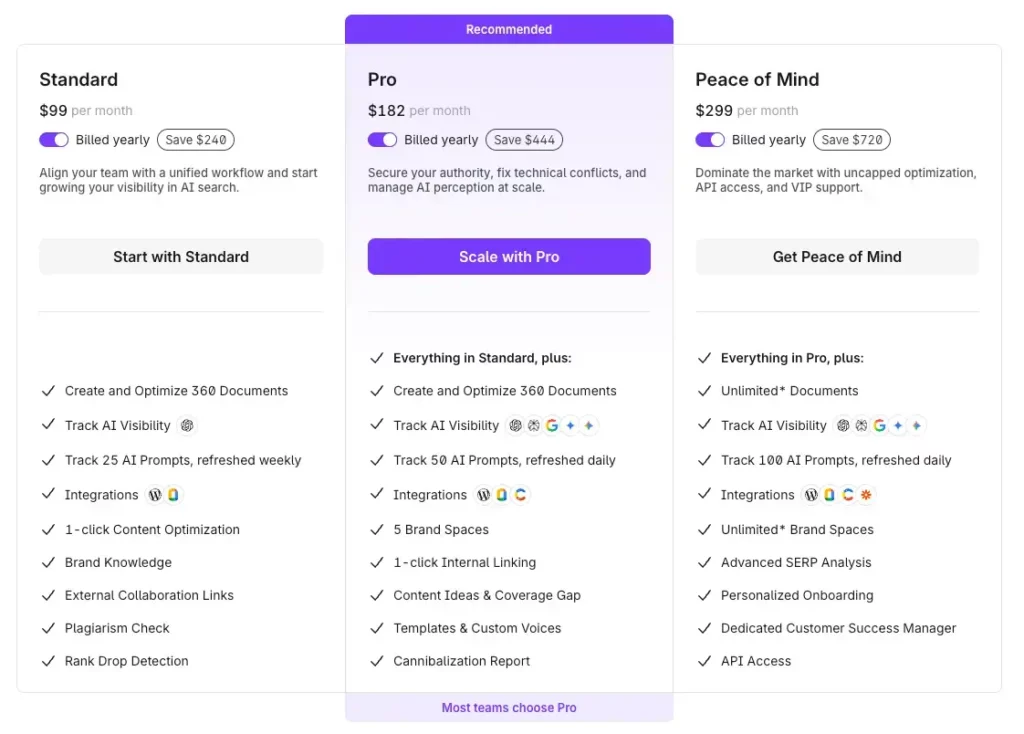
The platform is not positioned as a cheap AI writing assistant.
It is positioned as a complete SEO and AI visibility platform.
That difference matters.
You are not only paying for:
- AI article generation
- Blog outlines
- Content drafts
You are also paying for:
- SEO optimisation
- Competitor analysis
- Content auditing
- Internal linking
- Topical planning
- AI visibility tracking
- Brand tools
- Collaboration features
For the right user, that wider system could provide significant value.
For the wrong user, it could become an expensive subscription that is rarely used.
Current Surfer Pricing
Surfer’s current plans are structured around different levels of content production and SEO needs.
At the time of writing, the main plans are:
| Plan | Monthly Price When Billed Annually | Best Suited For |
|---|---|---|
| Essential | Around $99/month | Individual content creators |
| Scale | Around $219/month | Growing websites and small teams |
| Enterprise | Custom pricing | Larger organisations and agencies |
Monthly billing is generally higher.
Surfer also offers a seven-day trial, although starting the trial requires payment details.
Pricing and available features can change, so always check Surfer’s latest pricing page before subscribing.
What Are You Actually Paying For?
The important question is not:
“Can Surfer AI write an article?”
Many tools can do that.
The better question is:
“Will the wider platform save enough time or improve enough content quality to justify the cost?”
For an established publisher, the answer may be yes.
A website with hundreds of articles may benefit from:
- Finding content gaps
- Updating older pages
- Improving internal linking
- Tracking search visibility
- Creating consistent briefs
- Helping writers follow a process
For a new blogger, the calculation looks very different.
A beginner may still be trying to:
- Choose a niche
- Understand SEO
- Publish consistently
- Learn what readers want
- Build their first traffic sources
In that situation, spending close to $100 per month on an advanced SEO platform may not provide the best return.
The Real Cost of Surfer AI
The subscription price is only one part of the cost.
You also need to consider:
Learning time
Surfer has many features.
A user needs time to understand:
- Content Scores
- SEO recommendations
- AI Search Scores
- Audits
- Topical Maps
- Templates
- Internal linking
- Brand settings
That learning curve may be worthwhile for a content team.
It may feel overwhelming for someone publishing their first blog posts.
Underuse
A powerful tool only creates value when it is used regularly.
For example:
A blogger paying $99 per month who publishes one article every three months may struggle to justify the subscription.
A publisher creating and updating dozens of articles each month may see much more value.
Surfer AI Cost Per Article
This is where the maths becomes more useful.
Imagine a blogger pays around $99 per month.
If they create:
- 20 articles per month, the platform costs roughly $5 per article before considering their time.
- 5 articles per month, the platform costs roughly $20 per article.
- 1 article per month, the platform costs roughly $99 per article.
The value changes dramatically depending on how much content you produce.
For most parent bloggers building a site around family commitments, the issue is unlikely to be producing enough AI drafts.
The issue is usually creating the right content, improving it, and building trust.
Is Surfer AI Good Value?
For established publishers:
Potentially yes.
For beginners:
Probably not.
Surfer’s value increases when you already have:
- A content library
- Existing rankings
- Traffic data
- A clear publishing process
- Revenue to protect or grow
The platform becomes less about writing faster.
It becomes about improving a content operation.
That is a very different use case.
Is Surfer AI Worth It for Beginners?
For most new bloggers, I would say no.
That does not mean Surfer AI is a bad product.
It means the timing is probably wrong.
A beginner usually gets more benefit from learning:
- Keyword research
- Search intent
- Content structure
- Internal linking basics
- Email list building
- Audience understanding
- Consistent publishing
before investing in advanced optimisation software.
What Beginners Actually Need
A new blogger needs tools that help answer:
- Who am I helping?
- What problems do they have?
- What should I write about?
- How do I create useful content?
- How do I get my first readers?
- How do I improve over time?
Surfer AI can help with some of these.
It does not replace learning them.
Where Beginners Can Go Wrong
The biggest danger with advanced AI SEO tools is creating the illusion of progress.
A beginner may spend hours:
- Improving scores
- Analysing competitors
- Adjusting keywords
- Building templates
without actually publishing useful content.
SEO tools should support publishing.
They should not become a replacement for publishing.
When Should a Beginner Consider Surfer AI?
I would consider Surfer AI later when a blogger has:
- At least dozens of published articles
- A clear niche
- Some search impressions
- Content that needs improving
- A reason to scale production
- Income that can support the investment
At that stage, Surfer becomes less of a learning tool and more of a productivity tool.
Surfer AI vs ChatGPT vs KoalaWriter
These three tools overlap, but they are designed for different purposes.
Surfer AI
Best described as:
An SEO content system with AI writing built in.
Strengths:
✓ Search-focused workflow
✓ Competitor analysis
✓ Content optimisation
✓ Internal linking
✓ Content audits
✓ AI visibility features
✓ Structured publishing process
Weaknesses:
✗ Expensive
✗ More complex
✗ Requires SEO understanding
✗ May be unnecessary for small blogs
Best for:
Established bloggers, publishers, agencies, and businesses.
ChatGPT
Best described as:
A flexible AI assistant for the entire blogging workflow.
Strengths:
✓ Research support
✓ Content planning
✓ Brainstorming
✓ Editing
✓ Email writing
✓ Social media ideas
✓ Images and creative support
✓ Strategy discussions
✓ Personalised workflows
Weaknesses:
✗ Requires better prompting
✗ No built-in SEO scoring system
✗ Needs more manual organisation
Best for:
Almost every blogger, especially beginners.
KoalaWriter
Best described as:
A fast AI article generator designed around blog production.
Strengths:
✓ Quick article creation
✓ Simple workflow
✓ Less setup than Surfer
✓ Good for generating drafts
Weaknesses:
✗ Still requires editing
✗ Less strategic than ChatGPT
✗ Less SEO depth than Surfer
Best for:
Bloggers who want faster first drafts.
Quick Comparison
| Feature | Surfer AI | ChatGPT | KoalaWriter |
| Article generation | Excellent | Good | Excellent |
| SEO optimisation | Excellent | Requires extra tools | Good |
| Research help | Good | Excellent | Limited |
| Strategy support | Limited | Excellent | Limited |
| Editing support | Good | Excellent | Basic |
| Internal linking | Excellent | Manual | Limited |
| Ease for beginners | Medium | Excellent | Good |
| Cost efficiency | Low for beginners | High | Medium |
| Best use case | SEO teams and established sites | Complete blogging assistant | Faster content production |
Which One Would I Choose?
For a brand-new blogger:
ChatGPT.
It offers the widest support while learning the basics.
For a blogger producing lots of articles:
KoalaWriter may save time.
For an established website with traffic and revenue:
Surfer AI becomes much more interesting.
The tools are not really direct replacements.
They solve different problems.
Who Should Buy Surfer AI?
Surfer AI makes the most sense for:
Established Bloggers
You already have:
- A content library
- Existing rankings
- A clear niche
- Regular publishing goals
You want to improve efficiency and find optimisation opportunities.
Affiliate Publishers
You manage many articles and need help with:
- Content updates
- Comparison posts
- Internal linking
- Search visibility
Agencies
You need:
- Repeatable workflows
- Client reporting
- Team collaboration
- Consistent optimisation processes
Businesses
You rely on organic traffic and want a structured content system.
SEO Professionals
You want deeper analysis and workflow automation.
Who Should Not Buy Surfer AI?
Surfer AI is probably not the right choice if you are:
Starting Your First Blog
Your biggest challenge is probably not optimisation.
It is creating useful content consistently.
Publishing Occasionally
If you write one article every few months, you are unlikely to get enough value.
Still Learning Basic SEO
Surfer can make SEO easier.
It cannot replace understanding why content works.
Looking for a Cheap AI Writer
There are simpler and cheaper tools available.
Hoping AI Will Build the Business For You
No AI tool can replace:
- Choosing the right audience
- Building trust
- Sharing experience
- Creating helpful recommendations
- Understanding your readers
My Take
Surfer AI is an impressive platform.
The question is not whether it has powerful features.
It clearly does.
The question is whether those features match your current stage.
For a business publishing dozens of articles, improving existing content, and tracking search visibility, Surfer AI could be a valuable investment.
For a busy parent starting their first blog, I would put that money elsewhere first.
- Build the foundations.
- Learn your audience.
- Create helpful content.
Then use advanced tools when you have something worth optimising.
Surfer AI looks like a tool for scaling a content system.
It does not look like the tool that builds that system from the beginning.
What I Like About Surfer AI
After researching Surfer AI, it is clear that this is not another simple AI article generator.
The platform has been built around a much bigger goal:
Helping businesses create, optimise, manage, and improve search-focused content.
That broader approach creates several advantages.
1. It Combines AI Writing With SEO Strategy
Many AI writing tools focus mainly on producing words.
Surfer AI connects writing with:
- Keyword research
- Competitor analysis
- Content structure
- Search intent
- Optimisation recommendations
- Internal linking
- Content audits
This means the tool is not simply asking:
“Can we create an article?”
It is asking:
“What type of content already performs for this search, and how can we create something competitive?”
That is a more advanced approach.
2. The Content Workflow Is Well Thought Out
The biggest strength of Surfer AI may not be the AI writing itself.
It is the workflow around it.
A user can move through:
- Topic selection
- Research
- Outline creation
- Draft generation
- Optimisation
- Internal linking
- Publishing
- Monitoring
Having these steps connected in one platform could save significant time for teams and established publishers.
3. It Focuses on Existing Content As Well As New Content
Many AI tools focus heavily on creating more articles.
Surfer also focuses on improving what already exists.
The Content Audit features could be particularly valuable for websites with a large archive.
A mature blog often has more opportunity in improving existing pages than endlessly publishing new ones.
For websites with hundreds of articles, identifying:
- Pages losing rankings
- Content gaps
- Internal linking opportunities
- Outdated information
could provide genuine value.
4. Brand Knowledge Is a Smart Addition
One criticism of AI-generated content is that it often sounds generic.
Surfer’s Brand Knowledge feature attempts to address this by giving the platform more context about:
- The company
- The audience
- The industry
- Important topics
- Brand instructions
This moves AI content away from being completely generic.
However, it still depends on the user providing useful information.
A tool can understand a brand description.
It cannot automatically understand everything that makes a brand trusted.
5. The AI Search Focus Is Forward Thinking
Search is changing.
Readers increasingly discover information through:
- Google AI Overviews
- ChatGPT
- Gemini
- Perplexity
- Other AI-powered tools
Surfer’s focus on AI Search visibility shows it is adapting to this shift.
Whether every prediction about AI search becomes reality remains to be seen.
However, preparing content to be clear, factual, and easy to understand is a sensible direction.
What Could Be Better About Surfer AI?
Despite the impressive feature list, Surfer AI has limitations.
These are especially important for beginners and smaller bloggers.
1. The Price Is Difficult To Justify Early On
The biggest issue for many bloggers will be cost.
Surfer AI is not competing with simple AI tools that cost around £20 per month.
It is competing as a professional SEO platform.
That means the question is not:
“Can I afford it?”
The better question is:
“Will I get enough value from it?”
A new blogger may struggle to justify paying for:
- AI writing
- Content audits
- AI visibility tracking
- Advanced optimisation
- Team features
when they are still building their first audience.
2. It May Encourage Over-Optimisation
SEO tools are useful.
But they can also create the wrong mindset.
A beginner may start thinking:
“My article needs a higher score.”
instead of:
“My article needs to genuinely help the reader.”
A great article is not created by adding every suggested keyword.
It is created by understanding the reader and answering their question better than existing content.
3. It Cannot Create Real Experience
This is the biggest limitation of all AI writing tools.
Surfer AI can help explain:
- What a product does
- What features exist
- What topics are important
It cannot honestly provide:
- Your personal experience
- Your mistakes
- Your lessons learned
- Your unique opinion
- Your connection with your audience
For review websites and personal brands, this matters.
4. The Platform May Feel Overwhelming
Surfer offers a lot.
That is both a strength and a weakness.
A beginner may need to learn:
- Content Scores
- SEO Scores
- AI Search Scores
- Brand Knowledge
- Templates
- Audits
- Topical Maps
- Internal linking
- AI tracking
There is a learning curve.
The platform is designed for serious content operations.
It is not necessarily designed for someone writing their first blog post.
5. The Trial Process Could Be More Beginner Friendly
Surfer offers a seven-day trial.
However, requiring payment details before testing creates friction.
Some users may prefer to explore the platform before committing billing information.
For a product with a higher monthly cost, easier exploration would help potential customers understand whether the platform fits their needs.
Surfer AI Pros
- Combines AI writing with SEO optimisation
- Strong competitor and search analysis
- Useful content workflow for established publishers
- Content audits can help improve existing articles
- Internal linking tools could save time on larger websites
- Brand Knowledge helps provide more context
- Designed with AI search visibility in mind
- Suitable for teams and agencies
Surfer AI Cons
- Expensive compared with simple AI tools
- Probably unnecessary for most beginners
- Requires SEO knowledge to use effectively
- Content scores can become a distraction
- AI drafts still need human editing
- Cannot replace personal experience
- Feature depth may overwhelm new bloggers
- Trial requires payment details
Is Surfer AI Worth It in 2026?
The answer depends completely on where you are in your blogging journey.
For an established publisher, Surfer AI could be a valuable investment.
It can help:
- Create structured content
- Identify optimisation opportunities
- Improve existing articles
- Manage larger content libraries
- Create repeatable publishing processes
For a beginner, the answer is different.
Surfer AI is unlikely to be the missing piece that helps you build a successful blog.
The foundations still matter more:
- Choosing the right audience
- Understanding search intent
- Creating useful content
- Building trust
- Publishing consistently
- Learning from results
An advanced SEO platform cannot replace those fundamentals.
Is Surfer AI Worth It For Busy Parent Bloggers?
For most busy parent bloggers starting out, I would say:
Probably not yet.
That may sound surprising because saving time is exactly what many parents need.
However, the biggest challenge for most new bloggers is not producing enough words.
It is producing the right words.
A parent blogger usually needs:
- Better topic decisions
- Better audience understanding
- Better consistency
- Better content quality
before needing advanced optimisation.
A simpler workflow using:
- ChatGPT for planning and support
- A keyword tool for research
- Basic SEO knowledge
- Human editing
will likely provide better value at the beginning.
Surfer AI becomes more interesting when the blog already has:
- A substantial content library
- Traffic opportunities
- Revenue potential
- Existing articles to improve

About the Reviewer
Hi, I’m John Crossley, founder of Flex For Families.
I’m a parent, blogger, and online business owner who helps families find realistic ways to create more flexibility through blogging, affiliate marketing, and online business.
Like many people, I’ve spent years researching online opportunities, testing platforms, and learning how to separate genuine business models from expensive hype. I’ve also experienced the frustration of chasing opportunities that promised freedom but demanded more time away from family.
Today, I use that experience to review courses, side hustles, AI opportunities, and online business programmes through a simple lens:
Will this genuinely help parents create more flexibility, or will it create more pressure?
Every review on Flex For Families focuses on costs, time commitments, risks, and realistic expectations, so you can make informed decisions before investing your time or money.
Surfer AI Final Verdict
Surfer AI is one of the most advanced AI SEO platforms available, but it is designed for scaling content systems rather than creating them from scratch.
The combination of AI writing, competitor analysis, optimisation, content auditing, internal linking, and AI visibility tracking makes it a powerful platform.
However, the price and complexity mean it is unlikely to be the best first investment for most new bloggers.
For established publishers and businesses, Surfer AI could provide meaningful efficiency improvements.
For busy parents starting a blog, I would focus first on building the foundations:
- Create helpful content
- Understand your audience
- Learn basic SEO
- Build consistency
- Develop your unique perspective
Then consider advanced tools when your website has enough content and traffic to benefit from optimisation at scale.
My rating for beginner bloggers: 3/5.
Want To Start Building Your Own Blog?
AI tools can help you save time, but the biggest difference comes from having the right foundations.
My free Parent Blogging Starter Kit walks you through the first steps:
- Choosing your blog direction
- Planning your content
- Finding your audience
- Building a realistic blogging routine
- Understanding how bloggers create income
Download the free Parent Blogging Starter Kit and start building your blog one step at a time.
Frequently Asked Questions
Is Surfer AI better than ChatGPT?
Surfer AI and ChatGPT solve different problems. Surfer AI focuses heavily on SEO content creation and optimisation, while ChatGPT supports a wider range of blogging tasks including planning, research, editing, and strategy. For beginners, ChatGPT is usually the more flexible option.
Can Surfer AI write a complete blog post?
Yes, Surfer AI is designed to create long-form articles from a target keyword and SEO workflow. However, the finished draft still needs human review, editing, fact checking, and personalisation before publishing.
Does Surfer AI guarantee Google rankings?
No. Surfer AI can help optimise content, but no tool can guarantee rankings. Search performance depends on many factors including content quality, authority, competition, links, and search algorithm changes.
Is Surfer AI worth it for new bloggers?
For most new bloggers, probably not. The platform is powerful, but the cost and complexity are difficult to justify before a website has established content, traffic, and revenue.
Can AI-generated content rank on Google?
Yes, AI-assisted content can rank when it provides useful, accurate, original information. The important factor is the quality and value of the finished article, not whether AI was involved in creating it.
Is Surfer AI better than KoalaWriter?
Surfer AI offers deeper SEO features and optimisation tools, while KoalaWriter focuses more on fast article generation. The better choice depends on whether your priority is SEO workflow or quicker drafting.
Should bloggers use AI writing tools?
AI writing tools can help bloggers save time with research, outlines, editing, and idea generation. They work best when combined with human judgement, experience, and editing.
Let’s Chat: Would You Use Surfer AI?
AI tools are changing the way bloggers approach content creation.
Tools like Surfer AI can help with:
- Research
- Content planning
- SEO optimisation
- Article structure
- Updating older content
- Finding opportunities to improve
But the biggest question is not:
“Can AI create content?”
The answer to that is becoming clearer every day.
The bigger question is:
“Is AI helping you create better content for your readers?”
For an established website with hundreds of articles, Surfer AI’s advanced SEO features could save significant time and help identify opportunities that are difficult to spot manually.
For a brand-new blogger, the answer may be different.
Your biggest advantage is not having the most advanced tools.
It is understanding your audience, sharing useful information, and creating content that genuinely helps people.
AI can support that process.
It cannot replace the experience, judgement, and personal connection that makes a blog worth following.
I would love to hear your thoughts.
Have you tried Surfer AI or another AI writing tool?
Do you think tools like this help bloggers create better content, or do they simply make it faster to produce more?
Let me know in the comments. I would love to hear your experience.