

Stay at home mom blog homeschool topics fall into three groups by effort: quick posts like a weekly book list or a daily schedule, medium posts like curriculum reviews and sample weeks, and longer pieces like year plans or printable guides. Start with a quick one today, and let your regular school days supply the rest.
Which Homeschool Topics Can a Stay at Home Mom Blog About?
A homeschool blog can cover anything that happens in your teaching days: what you use, how you plan, what goes wrong, and what you would tell a parent who is just starting. The list below is sorted by how much effort each topic takes, because a day with a toddler, a math lesson and a load of laundry leaves very little room for a research project.
Most homeschool topics sort into these groups:
- Quick posts (15 to 30 minutes): a daily schedule, a book list, a supply list, a single answer to a common question, a short “what worked this week” note.
- Medium posts (45 to 90 minutes): a curriculum review, a sample week, a how-to for one subject, a beginner’s guide to your way of homeschooling, a printable checklist.
- Longer posts (2 hours or more): a full-year plan, a curriculum comparison, a multi-part series on one subject, a resource roundup you update over time.
Your site stays on homeschooling when every post answers a question a homeschooling parent, or a parent considering it, would type into a search box. General parenting, vlogging and dad blogging are covered elsewhere on this site. If you are weighing written posts against video, the post on blog versus vlog and which one fits your day will help you decide.
What Are the Easiest Homeschool Topics to Write While You Are Still Teaching?
The easiest topics are the ones you can write from your own day without looking anything up. If you can describe it while it is in front of you, you can write it in one short sitting.

Quick topics you can write today
Here are ten posts that need almost no research:
- Our daily schedule: the actual order of your day, including what moves around.
- Books we read this week: a short list with one sentence on each book.
- What is on our shelf: the supplies and materials you reach for most.
- How we handle one subject: reading, math or science, in a few paragraphs.
- A morning routine that gets school started: what happens between waking up and the first lesson.
- What to do when a lesson falls apart: your own approach, written plainly.
- Our homeschool space: where school happens, and what you would change.
- A question I get asked about homeschooling: answer one question, one post.
- Free resources we use: libraries, websites, nature walks, anything that costs nothing.
- A weekly wrap-up: what you covered and what you will do differently next week.
Write about what you actually do. If a topic needs a fact you do not have, such as local homeschool rules or exact curriculum prices, either look it up from an official source or skip it. Requirements for homeschooling differ by state, province and country, so tell readers to check their local rules rather than guessing at them.
Medium topics for a calmer day
These take longer because they need a bit of structure, but they still draw on what you already know:
- A curriculum review. Only review something you have used. Cover who it suits, how long a lesson takes, what you liked and what you did not.
- A sample week. Lay out five days with the subjects and rough times. New homeschoolers search for this constantly.
- A “how to start” guide. Write the first steps you would give a friend who asked you tomorrow.
- A printable checklist. A one-page list of supplies, weekly planning questions or a field trip packing list is simple to make and easy to share.
- Homeschooling with a baby or toddler in the house. If you are doing this, you have material no curriculum website can offer.
Longer topics to save for later
A year plan, a side-by-side curriculum comparison or a series on a single subject builds authority, but each one needs sustained time. Put them on a list and write them when a slower week comes along, not while you are trying to publish your first post.
How Can You Turn One Homeschool Day Into a Week of Posts?
You can turn one homeschool day into five short posts by treating each part of the day as its own topic. A single day already contains a schedule, a resource, a lesson, a mistake and a question, and each of those can stand alone.
Take an ordinary Tuesday. Here is how it could split:
- Post one, the schedule: write down the order of the day as it actually ran.
- Post two, the resource: pick the book, website or material you used most and explain why it earned its place.
- Post three, the lesson: describe one activity step by step, so another parent could repeat it tomorrow.
- Post four, the stumble: what did not work, what you changed, and what happened next.
- Post five, the question: something your day made you wonder, answered as a short FAQ.
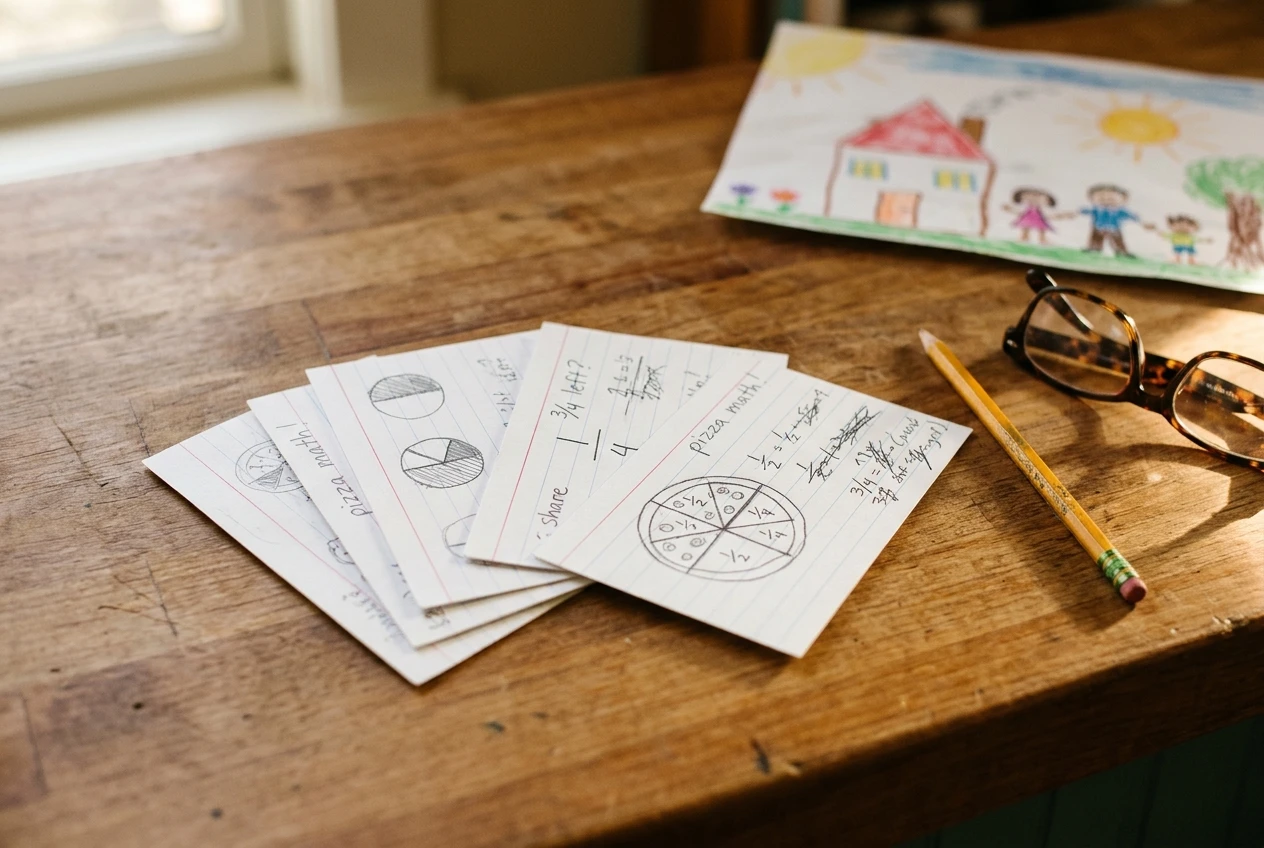
Jot notes on a phone or index card during the day. Three or four words per item is enough (“fraction pizza, worked,” “spelling list too long”). When you sit down to write, the notes tell you what happened, and you expand each one into a few paragraphs.
You do not need to publish all five in one week. Writing two posts a week from a single day’s notes is a perfectly good pace. If school schedules shift during the year, the post on managing your blog when school times change covers how to adjust without losing your place.
Can Stay at Home Parents Make Money Blogging About Homeschooling?
Yes, a homeschool blog can earn money, but it usually takes months of steady posting before it earns anything, and no one can tell you how much yours will make. The honest answer is that income depends on how many people find your posts, how well your posts answer their questions, and how long you keep publishing.

The most common ways homeschool blogs earn are:
- Affiliate links. You recommend a product you have used, and you may earn a commission if a reader buys through your link. Curriculum, books, planners and educational supplies often have affiliate programs, though terms differ by company, so read each program’s rules.
- Your own printables or resources. Checklists, planners and lesson templates can be sold once you have readers who want them.
- Display ads. These usually need steady traffic before they pay anything meaningful.
- Teaching what you know about blogging itself. Some parents eventually write about how they built their site, and promote the tools they used.
A few rules keep this honest. Tell readers when a link is an affiliate link, and follow the disclosure rules where you live. Recommend only what you have used. Do not write posts that exist only to sell something, because homeschool parents are careful about what they buy and will notice.
Set a budget before you spend anything. The post on financial boundaries for your blog in the first year walks through how to keep costs small while you find out whether this fits your life.
Can Stay at Home Dads Use These Homeschool Topics Too?
Yes, every topic in this article works for a stay at home dad who homeschools. Schedules, book lists, curriculum reviews and sample weeks do not depend on who is teaching, only on whether the post is useful to the reader.
A dad who homeschools may also reach readers who do not see many blogs from a father’s point of view, and that can be a reason someone remembers your site. Write from your own days, the same way a mom would, and let your approach come through in the details you choose.
If you are a dad starting out, the post on stay at home dad blogging tips that fit around naps and school runs covers the practical side of fitting writing into a full day.
How Do You Start a Homeschool Blog as a Beginner?
Start a homeschool blog by choosing one narrow focus, setting up a simple site, and publishing one short post from your own day. You do not need a perfect name or a full content calendar before the first post goes live.
Here is a simple order to follow:

- Pick your focus. “Homeschooling” is broad. “Homeschooling with a toddler in the house” or “relaxed homeschool for the early grades” gives readers a reason to remember you. Choose the one that matches your real days.
- Write down ten topics. Take them from the quick list above. You do not have to follow the order.
- Set up your site. Choose a platform with little upkeep, so your limited time goes to writing rather than maintenance.
- Publish your first post. Choose the easiest one: your daily schedule or this week’s book list. Keep it short and clear.
- Set a pace you can keep. One post a week that you actually publish beats three a week that you drop after a month.
- Keep a running notes file. Add ideas as they arise during lessons, so you never face a blank page.
Each post should answer one question, put the answer near the top, and use headings so a parent skimming between lessons can find what they need. That structure also helps search engines understand your pages.
If a week goes badly and nothing gets written, pick up where you left off the next week. A homeschool blog grows from many small posts, and a missed week costs you little.
Final Thoughts
You do not have to work out your whole blog before you begin. Choose one quick topic from the list, write it during nap time or after lessons, and publish it. The next post gets easier because your notes file and your daily routine keep feeding you ideas.
If you want a place to build the site, take your time and build it around your own days. Wealthy Affiliate is the place that worked for me, and it gives you the training, the site setup and a community of other bloggers in one spot. You can start with a free starter account to look around before you commit to anything, so you can see whether it fits your life without any pressure.
Let’s Chat
Which homeschool topic from this list would you write about first, and what is stopping you from starting this week? Tell me in the comments, and if you already have a post idea of your own, share that too.