


How to manage a blog during school transitions comes down to three moves: write down your new school-day hours as fixed blocks, give each block a task that fits its length, and treat the first two weeks as a trial. Adjust after that, once the real drop-off and pick-up times are known.
How Do You Rebuild Your Blogging Time Blocks Around a New School Schedule?
Start from the school’s hours and work backward to yours. Write down the drop-off time, the pick-up time, and the travel time at each end. Whatever remains between them is your real block, not the full school day.
For example, if the doors open at 8:45 and pick-up is at 3:00, but the round trip takes 20 minutes each way, you do not have six hours. You have a little over five, and some of that goes to errands and household jobs that used to happen at other times. Be honest about that number. A plan built on the hours on the school’s website will fall apart in the first week.
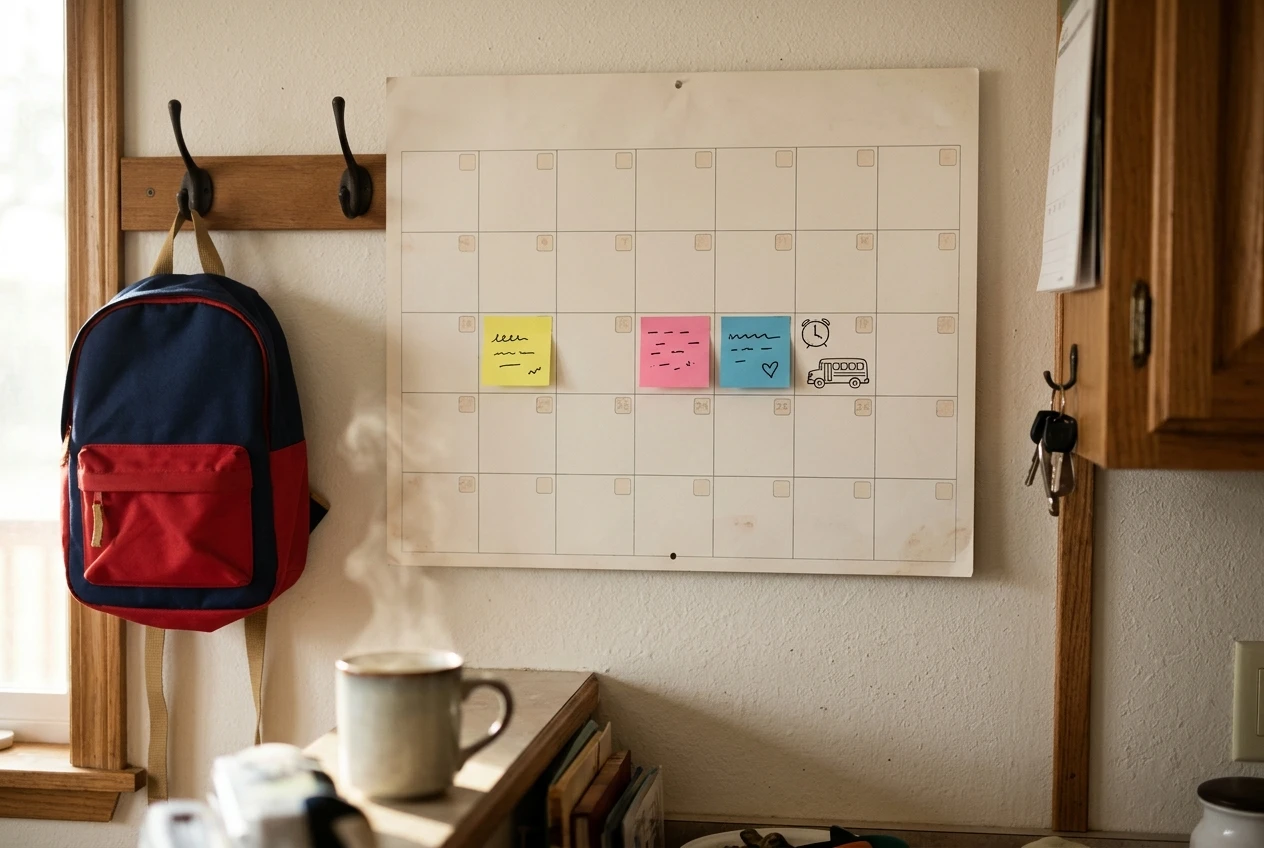
Once you have the number, sort your week into block types:
- The school-day block: your longest stretch of uninterrupted time, usually on weekdays.
- The edge blocks: 20 to 30 minutes before drop-off or after the kids are in bed.
- The gap blocks: waiting in the pick-up line, a younger child’s quiet time, a lunch break.
Put these on a calendar as appointments. A block you have named and scheduled is much harder to give away to laundry than a vague intention to “work on the blog when I can.”
Which Blogging Tasks Fit a Short Block and Which Need a Longer One?
Short blocks suit tasks you can finish or cleanly pause in under 30 minutes, and long blocks suit tasks that need you to hold a lot in your head at once. Matching the two is the biggest single thing you can do to get work done in a changed schedule.
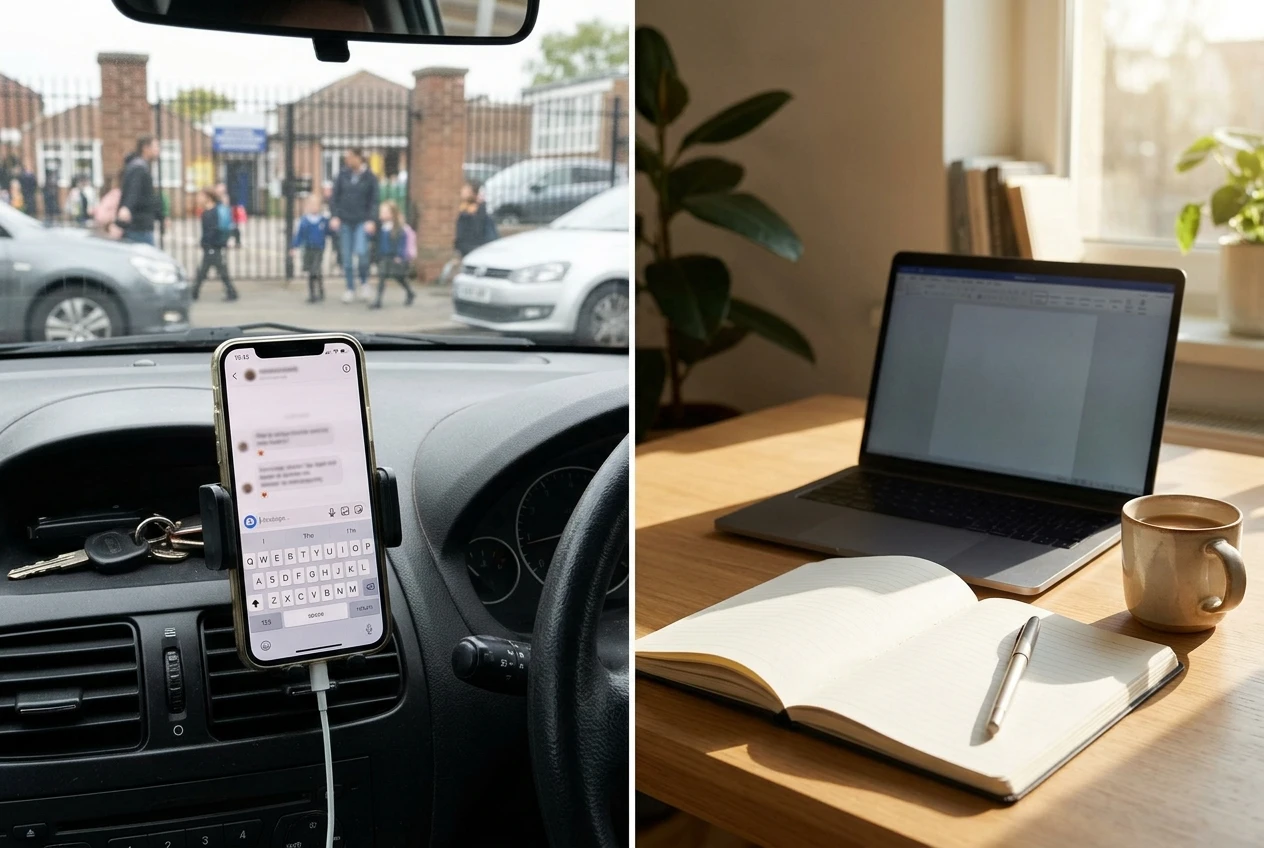
Good for short blocks (15 to 30 minutes):
- Replying to comments
- Writing an outline for a post
- Collecting keyword ideas into a list
- Editing a draft you wrote earlier
- Adding internal links to a published post
- Updating the intro of an older article
- Scheduling a post that is already finished
Good for long blocks (90 minutes or more):
- Drafting a full article from an outline
- Researching a review or comparison post
- Setting up or restructuring your site
- Writing an email newsletter from scratch
Drafting is the task that suffers most from interruption, so protect your longest block for it. If you only have one long block a week, spend it on a first draft and let the short blocks handle everything around it: the outline before, the editing and links after. If you want more ideas for working around the school run, these blogging tips that fit around naps and school runs cover the same problem from another angle.
What Should You Do the Week Before the School Change Starts?
Spend the week before on preparation that makes the first day of the new schedule easy to start. Nothing on this list takes long, and each item removes a decision you would otherwise make while tired and rushed.
- Time the real route. Do the drop-off at the actual hour if you can, and note how long it takes with parking and walking in. Use that number, not your guess.
- Write the blocks down. List each weekday with its block start and end times. Keep it somewhere you will see it.
- Assign one task per block. Decide now what you will do in Monday’s block so you do not spend the first 20 minutes choosing.
- Build a small backlog. Outline two or three posts before the change so your first short blocks have something ready to work on.
- Clear the small stuff. Answer old comments and tidy your draft folder, so you are not starting with a pile.
- Define a minimum week. Pick the smallest amount of blogging that still counts as a good week, such as one finished draft and one edit.
- Tell the people at home. If you have a partner or family member who can cover a block, say which one and when.
Do not try to also redesign your site or learn new tools in this week. The goal is a clear plan for the first day, and nothing more.
How Do You Handle the First Two Weeks When Nothing Feels Settled?
Treat the first two weeks as a test period where you collect information and do not judge yourself. The schedule on paper and the schedule in real life will differ, and you only find out how by living it.
Children are often tired after the first days of a new school or term, and mornings can run late while everyone learns the new routine. Some of your blocks may shrink or move. That is useful to know, not a failure.
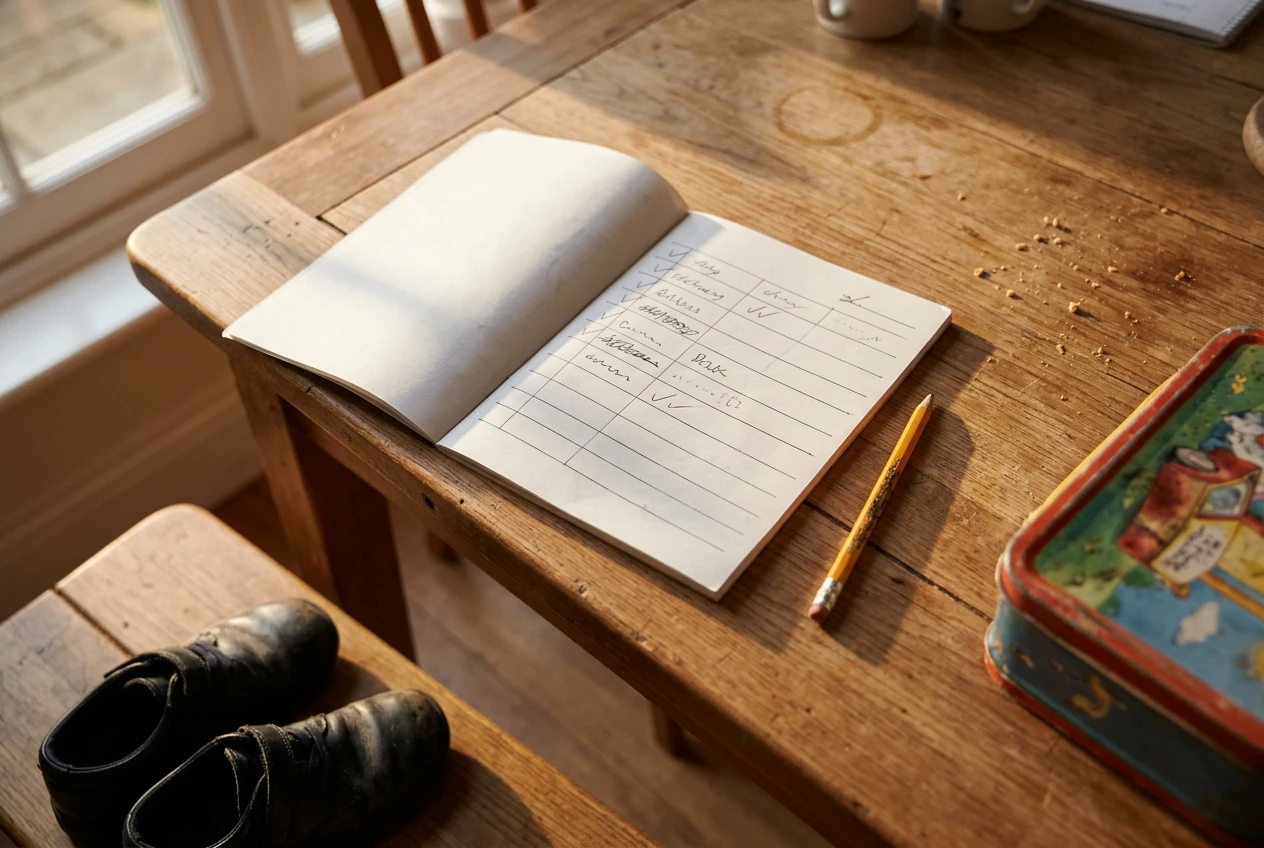
Keep a simple log for ten school days. Each day, write down:
- When your block actually started and ended
- What you finished
- What got in the way
You do not need more detail than that. At the end of the second week, read it through. You will probably see a pattern: one block that always gets cut short, or one that turns out to be your best. Move your hardest task into the strong block, and shift or drop the weak one.
During these two weeks, aim for one small task per day and nothing more ambitious. Small steps matter, and a short outline written on a messy Tuesday still counts. Keep your publishing schedule light and pick it back up once the routine is clear.
What Do You Do When Your Blogging Hours Shrink Instead of Grow?
Cut the amount you publish before you cut the quality of what you publish. Not every school change gives you more time. A new school may have earlier pick-up, half days may run longer than expected, or a new term may add after-school activities.
When hours shrink, work through these options in order:
- Lower the frequency. One good post every two weeks beats four rushed ones in a month. Your readers and search engines both benefit more from useful posts than from a steady stream of thin ones.
- Split the work across the week. Outline on one day, draft on another, edit on a third. Each piece fits a short block.
- Use an evening block. If you work better after the kids are asleep, give it two nights a week and keep the rest free.
- Pick fewer topics. Narrow what you write about for a few months so research takes less time.
- Pause the extras. Social posts and new tools can wait. Keep the work that produces published articles.
It also helps to decide your spending and income expectations ahead of time, so a smaller schedule does not turn into pressure. The post on financial boundaries for your blog in the first year can help you set those limits. A blog built around your life will grow more slowly in a busy season, and that is a reasonable trade.
How Do You Know When Your New Routine Is Working?
Your routine is working when you sit down at the start of a block already knowing what you will do, and you finish most weeks with something published or nearly finished. Look for these signs after about four weeks:
- You start your blocks on time without having to talk yourself into it.
- Each week ends with at least one finished piece of work.
- You know the next task before the current block ends, because you leave yourself a note.
- The family schedule and the blog schedule are not in constant conflict.
- You feel the effort is steady, not draining.
If most of these are true, leave the schedule alone. If two or three are missing, change one thing at a time: move one block, swap one task, or lower the weekly goal. Changing everything at once makes it impossible to tell what helped.
Review the routine again at the start of each new term, or any time pick-up or drop-off times change. A five-minute check against your block list is enough to see what needs adjusting.
Final Thoughts
A school change is one of the few disruptions you can see coming, and that gives you time to plan for it. Build your blocks from the real hours, match each task to the length of its block, and give yourself two weeks before you judge how it is going. Build around your life, and let the blog take the shape of the time you have.
Here is one small step for this week: write down your new school-day time blocks, then pick a single blogging task for the first one. It can be as small as an outline for your next post. That is enough to start.
If you would like support building a blog around your family’s schedule, have a look at how Wealthy Affiliate works for parents. It is a friendly place to learn at your own pace, and it is set up for people fitting this work into real days.
Let’s Chat
What is the hardest part of your day to protect for blogging: the morning before drop-off, the school-day hours, or the evening? Share it in the comments, along with the one task you plan to put in your first block.