
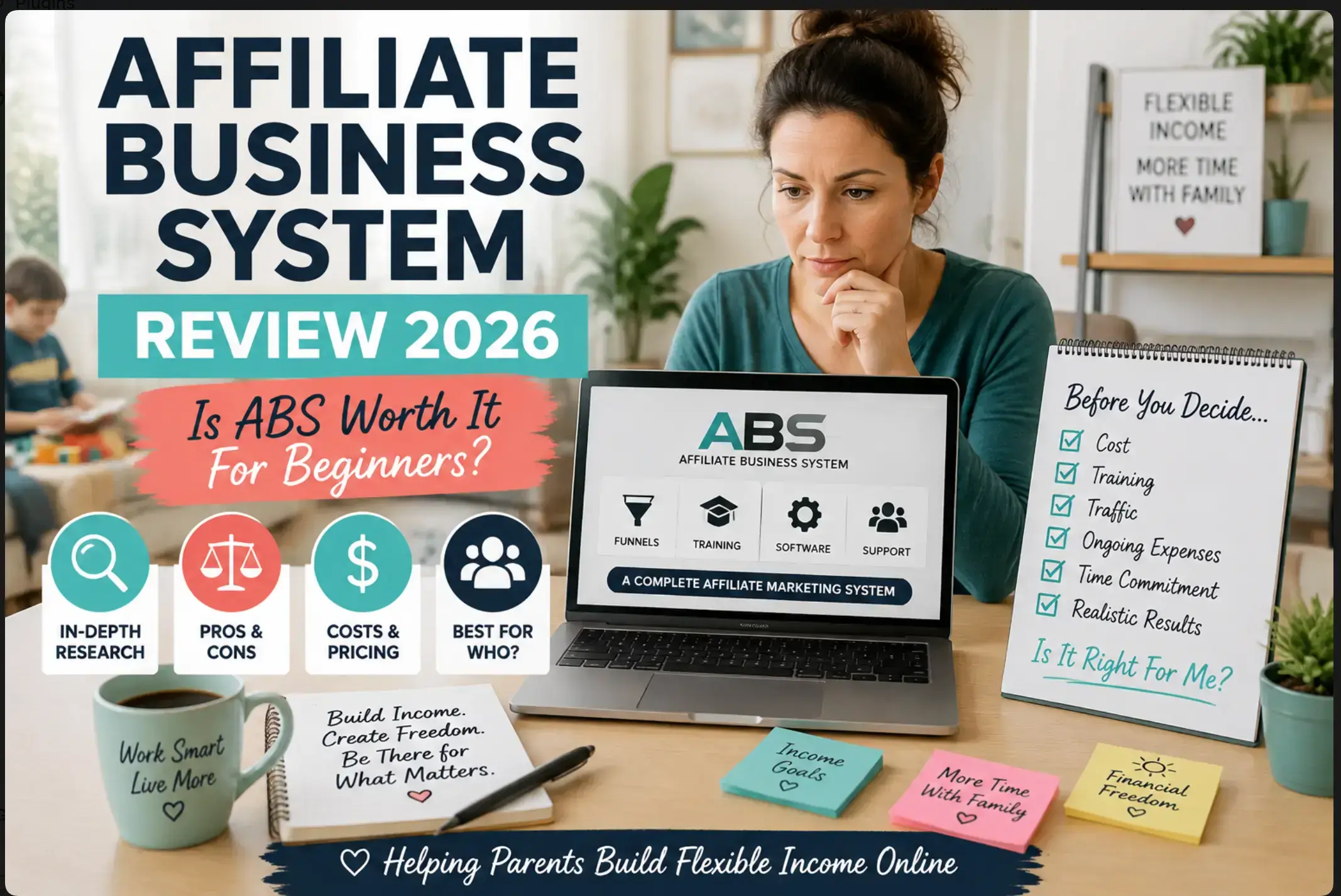
Affiliate Business System, usually shortened to ABS, is a done-for-you affiliate-marketing programme created by Vick Strizheus and sold through the Four Percent ecosystem.
Its main promise is appealing:
Follow a structured system, receive a ready-made Affiliate Money Hub, use prebuilt funnels and training, and launch an affiliate business within seven days.
For a complete beginner, that may sound far easier than:
- Choosing a niche
- Building a website
- Learning email marketing
- Creating sales funnels
- Finding affiliate programmes
- Producing content
- Generating traffic
ABS is designed to remove much of that initial setup work.
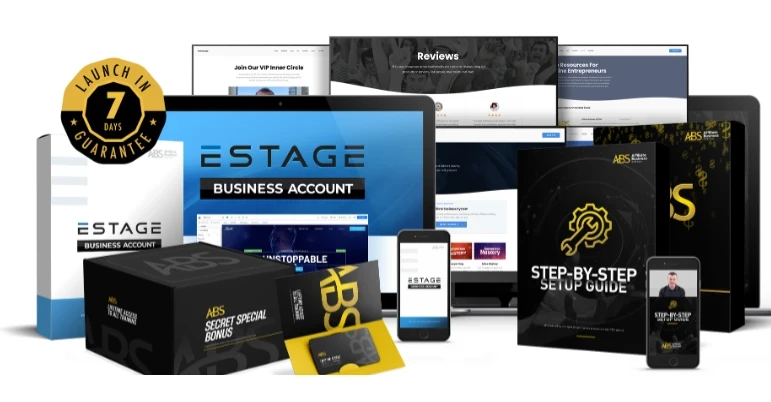
The current sales material promotes a package containing:
- Step-by-step Affiliate Business System training
- An eStage business account for the first 30 days
- A custom done-for-you Affiliate Money Hub
- Built-in monetisation opportunities
- Twelve prebuilt sales funnels
- A traffic guide
- Lifetime access to the core training
- Support
- A seven-day launch guarantee
- A 30-day money-back guarantee
The current Four Percent checkout lists Affiliate Business System at $497 as a one-time payment. That corrects the older version of this review, which referred to a $49 monthly entry price and conflicting higher figures.
However, the $497 purchase price may not represent the full long-term cost of using the system.
The offer currently includes eStage access for only the first 30 days. The visible checkout page does not clearly explain the ongoing eStage cost, possible advertising budget, optional upgrades, domain costs, email tools or other expenses a member may encounter after joining.
That lack of a simple, upfront total-cost breakdown is one of my main concerns.
There are also wider questions about the business model.
ABS appears to provide a genuine platform, training and digital assets. It does not appear to be a fake product where buyers receive nothing.
But much of the public promotion focuses on:
- Launching very quickly
- Using a premade business system
- Automated income
- Multiple streams of commission
- Promoting offers connected to the wider ecosystem
- Generating large affiliate earnings
The sales page currently uses claims such as launching a “real-deal affiliate business” within seven days and receiving a ready-made hub designed to generate commissions. It also refers to the system used by Vick Strizheus to produce substantial monthly affiliate income. Those are marketing claims, not evidence of the typical results a new member should expect.
That creates the real question behind this review:
Does Affiliate Business System help beginners build an independent and sustainable affiliate business, or does it make them dependent on a premade system, related products and ongoing traffic costs?
This updated Affiliate Business System review examines:
- What ABS actually is
- Who created it
- How the Affiliate Money Hub works
- What members receive
- How members are expected to earn commissions
- Whether ABS relies on promoting the same ecosystem
- The current $497 purchase price
- Possible ongoing costs and upsells
- Whether paid advertising is required
- The connection with Four Percent and eStage
- Who ABS may suit
- Who should avoid it
- Better alternatives for beginners
Affiliate Business System Quick Answer
Affiliate Business System is a done-for-you affiliate marketing platform that provides funnels, training and business tools. It may suit experienced marketers who understand traffic and paid advertising, but beginners should carefully consider the $497 cost, ongoing expenses and whether a funnel-first approach matches their goals.
Heads Up: How I Reviewed Affiliate Business System
I have not purchased Affiliate Business System.
This is a research-based review created using:
- The current Four Percent ABS checkout
- Active Affiliate Business System sales material
- Public descriptions of the Affiliate Money Hub
- Available product demonstrations
- Vick Strizheus’s public materials
- Four Percent information
- Public member and affiliate commentary
- Current feedback connected to the wider business ecosystem
That distinction matters.
A large amount of the content published about ABS comes from:
- Affiliates promoting the system
- Reviewers recommending competing programmes
- Members sharing individual income results
- Sales pages controlled by ABS promoters
- Reviews of Four Percent rather than ABS specifically
That makes it difficult to find neutral, independently verified information about:
- Typical student results
- Average advertising costs
- Profit after expenses
- Refund outcomes
- Long-term retention
- How many members build successful businesses outside the Four Percent ecosystem
Where the sales material makes a claim, I will identify it as a promotional claim rather than treating it as independently proven.
I will also separate:
What appears to be included
from:
What a typical beginner can realistically expect
This review is not intended to label ABS a scam simply because it uses affiliate marketing, funnels or done-for-you assets.
The aim is to determine whether the system offers enough transparency, transferable skills and long-term value to justify the cost and risk for a beginner.
Affiliate Business System Quick Verdict
Affiliate Business System is a real affiliate-marketing programme created by Vick Strizheus and connected to Four Percent and eStage.
The current offer includes training, a done-for-you Affiliate Money Hub, prebuilt funnels, an introductory eStage account and a structured launch process. The visible checkout currently lists a one-time price of $497.
This means the old description of ABS as a programme with unclear ownership and a $49 monthly entry price needs correcting.
However, I still have significant concerns.
- The visible sales page does not clearly show the full ongoing cost after the included 30 days of eStage.
- The marketing uses unusually strong income and automation claims.
- Much of the public ABS coverage is created by affiliates promoting it.
- Independently verified typical member results are difficult to find.
- The model may encourage beginners to promote offers within the same ecosystem.
- Paid traffic and additional software could make the real cost much higher than $497.
- A done-for-you hub may not teach the same transferable skills as building an independent brand.
ABS may appeal to someone who wants a structured, funnel-led system and is comfortable investing in software and traffic.
It is a much weaker fit for a beginner who:
- Has a limited budget
- Wants to build through free or organic traffic
- Prefers transparent, predictable costs
- Wants to own an independent content brand
- Needs extensive personal guidance
- Does not want to promote the same system they purchased
My Provisional ABS Rating
Structure and implementation: 4.0/5
Tools and done-for-you assets: 3.8/5
Beginner accessibility: 3.4/5
Pricing transparency: 2.1/5
Independent evidence: 2.0/5
Transferable business skills: 2.7/5
Suitability for limited budgets: 2.0/5
Long-term business independence: 2.5/5
Provisional overall rating: 2.9/5
This rating is provisional until we complete the deeper examination of:
- The Money Hub
- Current eStage costs
- Paid-traffic expectations
- Training content
- Support
- Upsells
- Refund arrangements
- Member business models
ABS receives credit for providing:
- A recognisable creator
- A structured programme
- Real software
- Premade assets
- A defined launch process
- A visible purchase price
- A stated refund period
The rating is held back by:
- Aggressive income-focused marketing
- Unclear ongoing costs
- Limited neutral public coverage
- Difficulty verifying typical outcomes
- Potential dependence on the wider ecosystem
- Uncertainty around long-term owned assets
- A poor apparent fit for beginners with limited money
The Short Answer
Affiliate Business System does not appear to be a straightforward scam.
The current Four Percent checkout lists a real programme at $497 and promises access to training, eStage, a custom Affiliate Money Hub, funnels and support. It also advertises a 30-day refund period.
The bigger issue is whether the offer is a good investment.
ABS may help someone launch a functioning affiliate-marketing setup faster than starting completely from scratch.
That speed comes with trade-offs.
You may be building:
- On someone else’s software
- Using someone else’s funnel structure
- With products connected to someone else’s ecosystem
- Through traffic methods that may require additional spending
- Without developing the same depth of independent content, SEO and brand-building skills
The current marketing also uses claims about:
- Launching within seven days
- Automated income
- Multiple commission streams
- Large monthly affiliate earnings
- A ready-made system that can produce results quickly
Those claims describe the possibility being sold.
They do not establish what the average new member earns after paying for the programme, software, advertising and other operating expenses.
My initial conclusion is:
Affiliate Business System may provide a faster technical launch, but it does not remove the need to generate traffic, build trust, understand your audience and manage financial risk.
For an experienced marketer with a testing budget, ABS may be worth investigating.
For a busy parent or complete beginner who needs:
- Predictable costs
- Transferable skills
- Organic traffic options
- Independent business ownership
- Clear support
- Low financial risk
I would approach it cautiously.
The programme may launch a system in seven days.
That is not the same as building a profitable, sustainable business in seven days.
What Is Affiliate Business System?
Affiliate Business System, commonly known as ABS, is a done-for-you affiliate-marketing programme created by Vick Strizheus and sold through the wider Four Percent ecosystem.
The central part of the programme is an Affiliate Money Hub.
This is presented as a prebuilt online platform where a member can:
- Build a branded affiliate presence
- Publish content
- Recommend products
- Capture leads
- Connect visitors with sales funnels
- Promote affiliate offers
- Earn commissions from multiple placements
Rather than starting with a blank WordPress website, finding individual affiliate programmes and building every page independently, ABS attempts to provide the structure in advance.
The current offer combines:
- Affiliate-marketing training
- A done-for-you Affiliate Money Hub
- eStage website and marketing software
- Prebuilt sales funnels
- Traffic guidance
- Monetisation placements
- Launch support
- Access to offers that can be promoted for commissions
The visible Four Percent checkout currently lists ABS at $497 as a one-time purchase and advertises a 30-day money-back guarantee. It also states that the package includes the first 30 days of an eStage business account.
What Is an Affiliate Money Hub?
The Affiliate Money Hub appears to be the main website and marketing asset supplied through ABS.
Vick Strizheus often describes his wider business approach as hub-centric marketing.
The basic idea is that you create one central online destination containing:
- Your brand
- Your content
- Your recommendations
- Your lead-generation forms
- Your affiliate links
- Your sales funnels
- Your audience-building tools
Instead of sending every visitor directly to someone else’s sales page, the hub is intended to give people a reason to engage with your business first.
A visitor might:
- Discover one of your posts, videos or adverts.
- Arrive at your Money Hub.
- Read content or view a recommendation.
- Join your email list.
- Follow a link into a sales funnel.
- Purchase an affiliate product.
- Generate a commission for you.
That is a more complete model than simply placing an affiliate link on social media.
However, the long-term value of the hub depends on several questions:
- How much control do you have over the website?
- Can you export your content and contacts?
- What happens if you stop paying for eStage?
- Can you promote products outside Four Percent?
- How customisable is the hub?
- How do visitors discover it?
- Do you retain access if ABS or eStage changes?
These questions matter because a website only becomes a genuine business asset when you control the content, audience and future direction.
Is ABS a Course or a Software Platform?
It is both.
ABS combines:
Training
The training is intended to show members how to:
- Set up their affiliate business
- Customise the Money Hub
- Choose offers
- Build funnels
- Generate traffic
- Capture leads
- Promote products
- Earn commissions
Done-for-you assets
The programme also advertises ready-made resources intended to reduce setup time, including:
- The Affiliate Money Hub
- Funnel templates
- Monetisation placements
- Traffic materials
- Suggested promotional pathways
eStage software
The hub and associated pages appear to be built using eStage, a website, funnel and marketing platform founded by Vick Strizheus.
Vick’s public profiles currently identify him as the founder of both Four Percent and eStage and describe his approach as helping entrepreneurs build hub-centric businesses.
This means ABS is not only a collection of video lessons.
It is an implementation system tied closely to specific software and a wider product ecosystem.
Is ABS Really Done for You?
ABS is better described as done-for-you infrastructure rather than a completely done-for-you business.
The programme may provide:
- A website structure
- Funnel templates
- Affiliate placements
- Training
- Suggested products
- Technical tools
You still need to:
- Choose how to position the hub
- Add your branding
- Create or adapt content
- Generate traffic
- Build an audience
- Write emails
- Select suitable offers
- Follow up with leads
- Test conversions
- Pay for relevant software or promotion
- Remain compliant with advertising and affiliate-disclosure rules
The phrase “done for you” can create the impression that most of the work has already been completed.
In reality, ABS appears to reduce the setup work.
It does not remove the marketing work.
What Is the Main Promise of ABS?
ABS is promoted as a way to launch an affiliate business quickly.
Public material connected to the programme uses messages about:
- Launching within seven days
- Using a proven system
- Building several income streams
- Creating an automated business
- Following the model used by Vick Strizheus
- Earning substantial affiliate commissions
Vick’s public YouTube content has promoted the same affiliate-business model as one he says generates more than $300,000 per month in affiliate commissions.
That does not mean a typical ABS buyer should expect similar results.
The creator’s income may reflect:
- Years of experience
- An existing audience
- A large email list
- Paid advertising
- Established products
- Affiliate partnerships
- A team
- Brand recognition
- Ownership of the wider ecosystem
A beginner buying a $497 programme does not begin with those same advantages.
The sensible way to judge ABS is therefore not:
Can Vick Strizheus make money with this model?
The more useful question is:
Can a typical beginner use the system profitably after accounting for software, advertising, time and ongoing costs?
Watch an Affiliate Business System Overview
This short video provides a basic explanation of Affiliate Business System and its connection to Four Percent.
The video is approximately two minutes long and explains how ABS is positioned as a ready-made affiliate-business system. citeturn464857search0turn464857search2
Because the video comes from a channel promoting affiliate marketing and ABS-related content, it should be viewed as a product overview, not an independent review.
It is still useful because it helps readers see:
- How ABS is described by its promoters
- The role of the Affiliate Money Hub
- The relationship with Four Percent
- The speed and simplicity emphasised in the marketing
What Should You Notice in the Video?
Pay attention to what the video explains clearly and what it leaves unanswered.
It may help demonstrate:
- The basic ABS concept
- The premade-system approach
- How the hub is intended to generate commissions
- The Four Percent connection
It may not fully explain:
- The total ongoing cost
- The eStage price after the included period
- Typical advertising costs
- Average member earnings
- How many buyers become profitable
- What happens if you cancel the software
- How easily the business can be moved elsewhere
These are the areas the rest of this review will examine more closely.
My Take on the Overview
The video makes the basic ABS proposition easy to understand.
You are not purchasing only a course.
You are purchasing access to a prestructured way of launching an affiliate business around a central Money Hub.
That can appeal to someone who feels overwhelmed by:
- Website setup
- Funnel software
- Affiliate research
- Page building
- Technical integrations
However, the simpler the marketing makes the process appear, the more important it becomes to examine the work and costs that remain after the hub has been delivered.
A ready-made website may shorten the setup process. It does not automatically create traffic, trust or profitable sales.
Who Created Affiliate Business System?
Affiliate Business System was created by Vick Strizheus.
He is an online marketer, affiliate trainer and software entrepreneur who is publicly associated with:
- Four Percent
- eStage
- Affiliate Business System
- Traffic and conversion training
- Hub-centric business education
- Affiliate-marketing programmes
Vick’s current YouTube profile identifies him as the founder of FourPercent.com and eStage. His public messaging centres on helping entrepreneurs build online businesses around a central marketing hub.
This directly corrects the original version of this review, which said the programme’s leadership was unclear.
The creator is identifiable.
The more relevant transparency questions are:
- Which company processes the ABS payment?
- Which company provides support?
- Which company controls the Money Hub?
- What happens to the hub if eStage access ends?
- Which refund terms apply?
- What additional products may be offered?
- Which commissions require further purchases or partner access?
What Is Four Percent?
Four Percent is the wider training and affiliate-marketing ecosystem associated with Vick Strizheus.
Public descriptions of Four Percent show that it has offered training covering subjects such as:
- Affiliate marketing
- Traffic
- Copywriting
- Email-list building
- Conversions
- SEO
- Social-media promotion
- Ecommerce
- Mindset
- Business development
A detailed independent review of Four Percent describes it as a broad online-business training suite, while also noting that members often appear to focus heavily on promoting Four Percent itself.
ABS appears to sit within this wider ecosystem rather than operating as a completely independent business.
That connection is not automatically negative.
It does mean buyers should understand whether the recommended path involves:
- Promoting Four Percent products
- Joining other Four Percent programmes
- Paying for additional partnership levels
- Using eStage long term
- Buying traffic or marketing services
- Remaining inside the same ecosystem to earn higher commissions
What Is eStage?
eStage is the website and funnel-building software connected to ABS.
It appears to provide the technical infrastructure for:
- Affiliate Money Hubs
- Websites
- Landing pages
- Funnels
- Lead capture
- Online marketing pages
- Business branding
Vick Strizheus publicly identifies himself as eStage’s founder and promotes it as a platform for building hub-centric businesses.
The current ABS offer includes an eStage business account for an introductory period.
That makes the long-term eStage price important.
If the Money Hub relies on eStage, then maintaining the business may require an ongoing software subscription after the included access ends.
We will examine that more closely in the pricing and additional-cost sections.
Does Vick Strizheus Have Affiliate-Marketing Experience?
Yes.
Vick has published affiliate-marketing and traffic training for many years and has operated several related businesses and programmes.
His public content demonstrates substantial knowledge of:
- Traffic generation
- Funnels
- Affiliate offers
- Conversion strategy
- Audience building
- Online sales
- Hub-based marketing
That experience is a genuine strength behind ABS.
However, expertise and business success do not automatically prove that a programme is suitable for every beginner.
A fair review must also examine:
- The way the opportunity is marketed
- The clarity of the total costs
- Typical member outcomes
- Refund experiences
- Dependence on the ecosystem
- Whether the skills remain useful outside ABS
Why the Creator Matters
A programme built around one person’s methods can be valuable when that person has real experience.
It can also create additional dependence.
ABS appears closely connected to:
- Vick’s personal marketing philosophy
- His software
- His training company
- His affiliate ecosystem
- His recommended offers
That means your confidence in ABS may depend partly on your confidence in:
- Vick Strizheus
- Four Percent
- eStage
- Their support and billing practices
- The long-term stability of the wider ecosystem
Public feedback relating to Vick and Four Percent is mixed.
Some reviewers praise his traffic and marketing training. Others allege problems involving costs, refund delays and unexpected additional purchases. Those are individual user reports rather than proven outcomes for every ABS customer, but they reinforce the need to read every payment, renewal and refund condition carefully.
My Take on the Creator
Vick Strizheus clearly has extensive online-marketing experience.
The concern is not that ABS was created by an unknown individual with no track record.
The concern is that the creator, software, training, affiliate offers and wider business ecosystem are closely connected.
That can create a smooth, integrated experience.
It can also make it harder for a beginner to determine:
- Which purchases are genuinely necessary
- Which recommendations are independent
- Whether they are building their own brand
- How easily they could leave the ecosystem later
The creator’s experience gives ABS more credibility than the original review acknowledged.
It does not remove the need to examine the business model carefully.
Quick Note: I’m John Crossley, founder of Flex For Families. I review online business opportunities through the lens of family life, focusing on costs, time commitments, risks, and whether they genuinely help parents create more flexibility.
Is Affiliate Business System Legit or a Scam?
Whenever a programme promises a faster route to online income, one of the first questions people ask is:
“Is Affiliate Business System legitimate, or is it a scam?”
Based on the information available, Affiliate Business System appears to be a real programme that provides access to training, software, funnels and a done-for-you affiliate platform.
It is not a case where someone pays money and receives nothing.
The current offer includes:
- Affiliate marketing training
- A done-for-you Affiliate Money Hub
- Access to eStage during the introductory period
- Funnel templates
- Marketing resources
- Support
- Affiliate opportunities
The programme has an identifiable creator, Vick Strizheus, and is connected to established brands within his wider online-business ecosystem, including Four Percent and eStage.
So, is ABS a scam?
My answer is:
No, I would not describe Affiliate Business System as a straightforward scam. However, I do believe beginners should approach it carefully because the bigger questions are around cost, expectations, business model and long-term value.
Those are different concerns.
A legitimate product can still be a poor investment for the wrong person.
Why Some People Question Affiliate Business System
Several factors explain why ABS receives scepticism online.
1. Strong Income-Focused Marketing
ABS marketing places significant emphasis on:
- Building an affiliate business quickly
- Multiple income streams
- Automation
- High commission opportunities
- Following a proven system
Those messages are attractive, especially to beginners looking for flexibility.
However, the important question is not whether the model is possible.
The question is:
What percentage of new members achieve meaningful results after accounting for the full costs, time commitment and learning curve?
That information is much harder to verify.
A programme creator may have impressive results because they have:
- Years of experience
- Existing audiences
- Established partnerships
- Large email lists
- Marketing expertise
- Advertising budgets
A new member starts from a completely different position.
2. The Done-for-You Promise Can Create Unrealistic Expectations
The biggest appeal of ABS is also one of the biggest risks.
A ready-made system sounds simple.
You receive:
- A hub
- Funnels
- Training
- Tools
- Guidance
However, the business still needs:
- Traffic
- Trust
- Content
- Promotion
- Testing
- Follow-up
- Customer understanding
The technology can be provided.
The audience cannot.
A ready-made affiliate system can reduce technical barriers.
It cannot remove the work required to build a profitable business.
3. The Wider Four Percent Ecosystem
ABS is closely connected with Four Percent and eStage.
That connection is important because the user journey may extend beyond the initial purchase.
A beginner may encounter:
- Additional software
- Related training
- Other products
- Higher-level opportunities
- Further recommendations
This is not unusual in online business.
Many platforms operate ecosystems where customers can purchase additional tools or services.
The important thing is understanding:
- What is optional?
- What is required?
- What increases your chances of success?
- What increases your costs?
Before joining any programme, you should understand the full financial commitment rather than only the initial payment.
4. Limited Independent Evidence of Typical Results
One of the biggest challenges when reviewing ABS is finding independent evidence of average member outcomes.
There are:
- Promotional videos
- Affiliate reviews
- Success stories
- Creator content
But it is much harder to verify:
- Average earnings
- Average time to profitability
- Average advertising spend
- Number of successful versus unsuccessful members
- Long-term retention
This does not prove failure.
It means buyers should avoid assuming the best-case examples represent normal results.
What Would Make ABS a Risky Purchase?
ABS becomes riskier if someone:
- Has borrowed money to buy it
- Cannot afford ongoing software costs
- Expects passive income quickly
- Has no traffic strategy
- Has no marketing experience
- Does not understand affiliate marketing
- Is uncomfortable promoting products
- Does not want to use paid advertising
- Wants to build a completely independent brand
For many busy parents, these points matter.
A side business needs to fit around family life.
A system that requires constant ad testing, funnel optimisation and additional spending may not match someone looking for steady progress alongside existing responsibilities.
What Would Make ABS a Reasonable Option?
ABS may make more sense for someone who:
- Understands affiliate marketing basics
- Has a marketing budget
- Wants a structured system
- Enjoys funnels and conversion optimisation
- Is comfortable promoting affiliate products
- Wants software and training combined
- Understands that results require work
For that type of user, the done-for-you elements may save time.
The key is entering with realistic expectations.
My Verdict on Whether ABS Is Legit
Affiliate Business System appears to be a genuine affiliate-marketing product.
It provides:
- A real platform
- Training materials
- A defined system
- A recognisable creator
- Actual business tools
The concern is not whether ABS exists.
The concern is whether the average beginner gets enough value from the investment compared with other ways of learning affiliate marketing.
For someone with experience, budget and a clear marketing plan, ABS may be useful.
For a beginner looking for a low-risk introduction to online income, I believe there are safer options that teach transferable skills, content creation, SEO, audience building and long-term brand ownership.
ABS appears legitimate. The bigger question is whether it is the right business model for your situation.
What Is the ABS Money Hub?
The Affiliate Money Hub is the centrepiece of Affiliate Business System.
It is designed to give members a ready-made online destination for their affiliate business rather than requiring them to build every element from scratch.
The basic idea is:
Create one central hub where visitors can discover content, recommendations, offers and resources connected to your affiliate business.
Instead of simply sending traffic directly to another company’s sales page, the hub is intended to help you build your own branded environment first.
A typical journey may look like this:
Example ABS Visitor Journey
Step 1: A visitor discovers your content, promotion or advertisement.
↓
Step 2: They arrive at your Affiliate Money Hub.
↓
Step 3: They explore your recommendations, resources or content.
↓
Step 4: They join your email list or click an affiliate recommendation.
↓
Step 5: They purchase a product or service.
↓
Step 6: You receive an affiliate commission.
This approach is closer to building a small affiliate brand than simply sharing random affiliate links.
What Does the Money Hub Include?
Based on ABS promotional information, the Money Hub is designed to include features such as:
- A branded website presence
- Content areas
- Affiliate recommendations
- Lead capture
- Marketing pages
- Funnel connections
- Monetisation opportunities
- Business-building resources
The idea is to give beginners a starting structure.
Someone who has never built a website may find that appealing because they avoid starting with a blank screen.
The Potential Advantages of the Money Hub
Faster Setup
The biggest benefit is speed.
A beginner does not need to spend weeks learning:
- Website design
- Funnel builders
- Page layouts
- Basic integrations
The system provides a starting point.
Less Technical Overwhelm
Many new affiliate marketers quit before publishing anything because the technical side feels overwhelming.
A prebuilt hub can remove some early barriers.
A Clearer Customer Journey
A good affiliate business usually requires more than placing links everywhere.
Visitors need:
- Information
- Trust
- Recommendations
- Reasons to take action
A central hub gives you somewhere to build that journey.
The Potential Limitations of the Money Hub
The biggest question is ownership.
Before relying heavily on any done-for-you platform, you should understand:
- Who owns the website?
- Can you export your content?
- Can you move the website elsewhere?
- What happens if you stop paying for the software?
- How much control do you have over design?
- Can you build your own brand outside the ecosystem?
These questions matter because your website, content and audience are your long-term assets.
Does the Money Hub Replace Building a Real Brand?
No.
A hub can support a business.
It does not replace:
- Understanding your audience
- Creating useful content
- Building credibility
- Developing expertise
- Growing traffic
- Creating your own voice
This is especially important for bloggers.
A parent blogger building long-term income may prefer owning a WordPress website where they control:
- Content
- SEO
- Categories
- Design
- Email integrations
- Monetisation options
The Money Hub may be useful for someone focused on funnels and affiliate promotions.
It may be less attractive for someone wanting to build a content-led authority brand.
My Take on the ABS Money Hub
The Money Hub is probably the strongest argument for ABS.
It solves a genuine beginner problem:
“I want to start an online business, but I do not know how to put everything together.”
The downside is that convenience often comes with trade-offs.
You need to understand exactly what you own, what you rent and what depends on the ABS ecosystem.
A ready-made hub can help you start.
Your long-term success still depends on what you build around it.
What Do You Get With Affiliate Business System?
Affiliate Business System is positioned as a complete launch package rather than simply a video course.
The current offer combines training, software access and done-for-you business assets.
Here is what appears to be included.
1. Affiliate Business System Training
The core training teaches the process of launching an affiliate business.
Topics promoted around ABS include:
- Affiliate marketing fundamentals
- Setting up the system
- Choosing offers
- Creating a marketing hub
- Generating traffic
- Building funnels
- Capturing leads
- Promoting products
The aim is to give beginners a structured path instead of forcing them to figure everything out independently.
2. Done-for-You Affiliate Money Hub
This is the main implementation asset.
Instead of creating:
- Pages
- Layouts
- Funnel connections
- Marketing elements
from scratch, members receive a prebuilt foundation.
This can save time during the setup phase.
3. eStage Access
ABS includes access to eStage for an initial period.
eStage appears to provide the technology behind the hub, including:
- Website creation
- Landing pages
- Marketing pages
- Funnel tools
- Online-business functionality
The important question is the ongoing cost after the included period.
This is something buyers should confirm before purchasing.
4. Funnel Templates
ABS promotes prebuilt funnels designed to help members guide visitors towards affiliate offers.
Funnels can include:
- Landing pages
- Lead capture
- Follow-up sequences
- Sales pages
- Conversion steps
However, a funnel only works when the right audience reaches it.
Traffic remains the biggest challenge for most beginners.
5. Traffic Training
ABS includes traffic-related guidance.
This is important because affiliate marketing depends on visitors.
Traffic methods may include:
- Paid advertising
- Content
- Promotion
- Audience building
The cost and difficulty of generating traffic should not be underestimated.
A funnel without visitors cannot produce meaningful results.
6. Affiliate Opportunities
ABS promotes access to monetisation opportunities.
This may include recommending products and services through affiliate links.
The important questions are:
- Are these offers optional?
- Are there products outside the ecosystem?
- Are commissions competitive?
- Can you build a business around your own chosen niche?
A strong affiliate business should ideally be built around helping a specific audience rather than only promoting the platform that taught you.
7. Support and Guidance
The programme advertises support to help members implement the system.
The value of that support depends on:
- Response times
- Depth of answers
- Availability of coaching
- Community activity
- Whether advanced help requires extra payments
Support quality is often the difference between a useful programme and an expensive collection of videos.
8. A Seven-Day Launch Process
One of ABS’s strongest marketing points is speed.
The idea is that beginners can move from:
“I have no system”
to:
“I have an affiliate business structure”
quickly.
That may be realistic.
However:
Launching the system and making consistent income are two completely different milestones.
A website can be built in days.
Trust, traffic and sales usually take much longer.
Overall: What You Receive
The ABS package appears to provide:
✓ A structured affiliate-marketing process
✓ A done-for-you Money Hub
✓ Funnel templates
✓ Training materials
✓ eStage access
✓ Affiliate monetisation pathways
✓ Traffic guidance
✓ Support resources
The biggest question is not whether there is enough included.
There appears to be a significant amount.
The bigger question is:
Does the system teach you enough to build a business you control, or does it mainly help you operate inside the ABS ecosystem?
That question should guide your decision.
How Does Affiliate Business System Work?
Affiliate Business System follows a simple idea:
Give beginners a ready-made affiliate marketing framework, then help them drive visitors through that system to generate commissions.
Instead of starting with a blank website, creating every page yourself, choosing individual tools, and building your own funnels from scratch, ABS attempts to provide the foundation already built.
The typical ABS journey looks something like this:
The ABS Business Journey
Step 1: Purchase Affiliate Business System
You gain access to the ABS training, Affiliate Money Hub setup and the connected tools included within the offer.
↓
Step 2: Set Up Your Affiliate Money Hub
You customise your hub with your branding, information and chosen direction.
↓
Step 3: Learn the System
You work through the training covering affiliate marketing, funnels, traffic and monetisation.
↓
Step 4: Add Affiliate Offers
You promote products and services using affiliate links and recommended pathways.
↓
Step 5: Generate Traffic
You bring visitors to your hub through content, promotion, advertising or other marketing methods.
↓
Step 6: Capture Leads and Build Relationships
Visitors can join your audience, receive follow-up messages and move through your marketing funnel.
↓
Step 7: Earn Affiliate Commissions
When visitors purchase through your links, you may earn commissions.
On paper, this follows the same basic structure used by many successful affiliate businesses:
Traffic → Audience → Trust → Recommendation → Commission
The difference is that ABS attempts to package many of those pieces together.
Step 1: Build Your Affiliate Money Hub
The first stage is creating your online presence.
The idea is that your hub becomes the centre of your business.
Rather than sending every visitor directly to an affiliate offer, you create somewhere they can:
- Learn about topics
- Discover recommendations
- Join your audience
- Explore resources
- Take the next step
This is a stronger approach than simply sharing random affiliate links.
A good affiliate business needs a relationship with its audience.
The challenge is that the hub itself is only the foundation.
You still need people to find it.
Step 2: Follow the Training
ABS provides training designed to guide members through implementation.
The training aims to help with areas such as:
- Affiliate marketing basics
- Setting up your hub
- Understanding offers
- Creating funnels
- Generating traffic
- Building an audience
- Monetisation
For someone completely new, having a sequence to follow can reduce overwhelm.
Many beginners struggle because they spend weeks researching tools without ever building anything.
A structured path can help solve that problem.
However, the quality of any training programme depends on whether it teaches skills that remain valuable outside the platform.
The strongest affiliate marketers understand:
- Audience research
- Content creation
- Copywriting
- SEO
- Email marketing
- Conversion optimisation
- Customer psychology
Those skills transfer between businesses.
A system that only teaches how to operate one platform may have less long-term value.
Step 3: Select Affiliate Offers
Affiliate marketing works by recommending products or services created by another company.
When someone purchases through your unique tracking link, you receive a commission.
ABS appears designed to help members promote affiliate offers through their hub and marketing system.
These may include:
- Digital products
- Online tools
- Training programmes
- Business services
- Four Percent-related offers
The important question is:
Are you building an audience around a topic you genuinely understand, or are you mainly promoting the system you purchased?
The strongest affiliate businesses usually start with:
- A specific audience
- A clear problem
- Helpful content
- Relevant recommendations
The weakest ones often start with:
- “How can I sell this opportunity?”
That distinction matters.
Step 4: Drive Traffic
This is the stage where many beginner expectations change.
A website, funnel or Money Hub does not create visitors automatically.
Traffic is the fuel behind affiliate marketing.
ABS promotes traffic training, but members still need to attract potential customers.
Possible traffic methods include:
Organic Content
Examples:
- Blog posts
- Search engine optimisation
- YouTube videos
- Helpful guides
- Social media content
Advantages:
- Lower financial risk
- Builds long-term assets
- Creates trust
Disadvantages:
- Takes time
- Requires consistency
- Requires learning content marketing
Paid Advertising
Examples:
- Facebook ads
- Google ads
- Native advertising
Advantages:
- Faster testing
- Immediate visitor data
- Scalable when profitable
Disadvantages:
- Requires budget
- Easy to lose money
- Requires tracking skills
For a beginner with limited funds, paid advertising is where caution is needed.
A funnel that converts at 5% may sound impressive.
A funnel that costs £1,000 in advertising before producing its first sale may still be a problem.
Step 5: Build an Email Audience
A valuable affiliate business does not rely only on one visitor.
Email allows you to continue helping people after they leave your website.
A typical journey may involve:
- Visitor downloads a resource
- Visitor joins an email list
- They receive helpful information
- They learn about relevant solutions
- They choose whether to purchase
This is one of the strongest parts of the affiliate model because you are building a relationship rather than relying on a single click.
The question with ABS is whether the system helps members build their own audience or mainly moves people through predefined ecosystem funnels.
Step 6: Optimise and Scale
The final stage is improving what works.
Successful affiliate marketers analyse:
- Visitor numbers
- Click-through rates
- Email engagement
- Conversion rates
- Cost per acquisition
- Profit after expenses
They improve:
- Content
- Headlines
- Offers
- Funnels
- Audience targeting
This is the part often missed in “automated income” messaging.
A system can automate tasks.
It does not automate decision-making.
The Reality of the ABS Workflow
The simplified marketing message is:
Get the system, launch quickly, and build an affiliate business.
The realistic workflow is:
Get the system, learn marketing, create an audience, generate traffic, test offers, analyse results and improve continuously.
The second version is less exciting.
It is also closer to how online businesses actually work.
How Do ABS Members Make Money?
The main way ABS members make money is through affiliate commissions.
Affiliate marketing works like this:
- A company creates a product or service.
- An affiliate promotes that product.
- A customer purchases through the affiliate link.
- The company pays the affiliate a commission.
ABS provides the infrastructure designed to help members participate in that process.
The Main Income Routes Promoted Through ABS
1. Promoting Affiliate Offers
The traditional affiliate route is recommending products through your hub, content or marketing campaigns.
Examples could include:
- Software
- Training
- Online services
- Digital products
- Business tools
The opportunity depends on:
- Product quality
- Commission structure
- Audience interest
- Conversion rates
A good affiliate offer solves a genuine problem.
2. Promoting Products Within the Wider Ecosystem
Because ABS sits within the Four Percent ecosystem, members may also promote related products and opportunities.
This is common in many affiliate businesses.
However, it creates an important consideration:
Are you building a broad affiliate business, or are you mainly becoming a promoter of the ecosystem that introduced you?
Both approaches exist.
They create very different businesses.
3. Building an Email List
Email can increase the value of affiliate marketing because you are not relying on one visitor.
A subscriber may:
- Download a resource
- Receive educational emails
- Learn about solutions
- Purchase later
The strongest affiliate businesses usually build audiences rather than chasing individual transactions.
4. Using Paid Traffic
ABS promotes traffic generation.
Some members may use paid advertising to send visitors into funnels.
This can work.
It can also become expensive quickly.
A beginner should understand:
- Ad costs
- Conversion rates
- Tracking
- Customer value
- Profit margins
before spending significant money.
5. Creating Content
A long-term affiliate business can also be built through:
- Blog posts
- Reviews
- Tutorials
- Comparison articles
- Videos
- Social content
This is the approach most aligned with Flex For Families because it creates assets that can continue attracting visitors over time.
Can ABS Create Passive Income?
This is where expectations need managing.
A system may automate:
- Emails
- Pages
- Follow-ups
- Tracking
But income still requires:
- Visitors
- Trust
- Testing
- Improvements
- Market demand
A better description would be:
ABS can automate parts of an affiliate business. It does not remove the need to build the business.
The Biggest Question: Who Are You Building For?
The best affiliate marketers start with the audience.
For example:
A parent blogger might build content around:
- Saving family money
- Parenting resources
- Home education
- Family technology
- Flexible work
Then recommend products that genuinely help that audience.
A weaker approach is:
“I bought ABS, now I need to find people to sell ABS to.”
That puts the product before the audience.
My Take on the ABS Income Model
The ABS income model is based on a legitimate concept.
- Affiliate marketing works.
- Funnels work.
- Email marketing works.
The question is whether ABS helps beginners build the skills required to make those methods work independently.
For someone willing to learn marketing, create content, test traffic and invest time, ABS may provide useful structure.
For someone hoping the system itself creates income, the reality will probably be disappointing.
ABS can provide the vehicle. The member still has to learn how to drive, choose the destination and pay for the fuel.
Does Affiliate Business System Rely on Recruitment?
Affiliate Business System does not appear to be a traditional multi-level marketing programme where members are paid primarily for recruiting people into a downline.
There is no clear evidence that ABS requires members to:
- Build teams
- Recruit multiple membership levels
- Earn from a downline
- Meet recruitment quotas
- Purchase monthly inventory
That means it would be inaccurate to describe ABS automatically as an MLM.
However, that does not completely remove the recruitment concern.
The more relevant question is:
Does the recommended business model encourage members to promote ABS, Four Percent, eStage and other products from the same ecosystem to new beginners?
Based on the visible sales material, the answer appears to be yes, at least to some extent.
The ABS offer says members receive:
- Built-in multiple streams of income
- Twelve done-for-you sales funnels
- Affiliate monetisation opportunities
- A Money Hub designed to promote different offers
- Funnels created to sell products through the hub
Four Percent describes the supplied funnels as marketing systems created to sell products on the member’s behalf once traffic is sent to them. It also says the Money Hub contains multiple built-in income sources.
That does not prove members can only promote ABS or Four Percent products.
It does suggest that promoting products connected to the wider ecosystem may be one of the fastest and most heavily supported routes available.
Affiliate Marketing Versus Recruitment
There is an important distinction between affiliate marketing and recruitment.
Affiliate marketing
You recommend a product or service to an audience.
If someone buys through your tracking link, you receive a commission.
The customer does not usually need to become an affiliate or recruit anyone else.
Recruitment-led marketing
The opportunity focuses heavily on convincing new people to join the same income system.
Those new members may then be encouraged to promote the opportunity again.
ABS appears to sit somewhere between a broad affiliate platform and an ecosystem-led opportunity.
Members may be able to promote products in several categories.
However, much of the visible marketing around ABS focuses on:
- The ABS opportunity itself
- Four Percent products
- eStage
- Business and marketing training
- Helping new people start affiliate businesses
That can create a circular pattern:
- A beginner buys ABS.
- They build an ABS Money Hub.
- They promote affiliate-business products.
- Another beginner buys through their link.
- That buyer may then follow the same process.
That is still affiliate marketing.
But it is much narrower than building an independent affiliate business around a defined audience and a broad range of useful products.
Can ABS Members Promote Products Outside the Ecosystem?
The promotional material refers to multiple income streams and various products, but the public sales page does not provide a clear list showing:
- Every available affiliate programme
- Which products are internal
- Which products come from third parties
- Whether members can freely add their own offers
- Whether some commissions require additional purchases
That information may become clearer inside the member area.
Based on the public information alone, I would not assume that ABS prevents outside offers.
I would also not assume that every advertised income stream is available without further cost or approval.
Is ABS an MLM?
I would not classify Affiliate Business System as a conventional MLM based on the available evidence.
It appears to be:
- A training programme
- A software-supported affiliate system
- A collection of funnels and digital assets
- An affiliate opportunity connected to a wider product ecosystem
The concern is not a formal downline structure.
The concern is whether the easiest route inside ABS is mainly selling the same ecosystem to the next group of beginners.
My Take on the Recruitment Question
ABS appears to provide more than a simple recruitment opportunity.
Members receive training, software and business assets.
However, beginners should be cautious if most of the recommended monetisation revolves around:
- Promoting ABS
- Promoting Four Percent
- Promoting eStage
- Selling online-income products to other beginners
That type of business can become vulnerable because it depends on a constant supply of people looking for an income opportunity.
A stronger long-term affiliate business usually begins with a real audience.
For example:
- Parents looking for family budgeting tools
- Bloggers looking for SEO software
- Remote workers looking for productivity services
- Families looking for educational resources
The products then follow the audience.
With an ecosystem-led model, the product often comes first and the audience is defined as:
People who also want to make money online.
That is a much more competitive and sceptical market.
ABS does not appear to require traditional recruitment, but its most visible business model may still encourage members to sell the same ecosystem to other aspiring affiliates.
Affiliate Business System Pricing
The current Affiliate Business System checkout lists the programme at:
$497 as a one-time payment
The order summary identifies Affiliate Business System at $497 and advertises a 30-day money-back guarantee.
A separate ABS special-offer page also lists:
- Affiliate Business System: $497
- A done-for-you Money Hub
- Training
- Twelve sales funnels
- Traffic guidance
- Lifetime access to the core training
- The first 30 days of an eStage business account
This corrects the older version of this review, which referred to a $49 monthly entry price.
However, the visible checkout also shows an optional or connected $97 monthly membership programme alongside the $497 payment option. The page does not clearly explain within the order summary exactly what that monthly membership includes or how it relates to long-term ABS use.
That is one reason buyers should check every selected option before submitting payment details.
What Does the $497 Payment Include?
The current special-offer page advertises:
- The ABS step-by-step setup guide
- Thirty days of eStage Business access
- A custom done-for-you Affiliate Money Hub
- Built-in monetisation placements
- Lifetime access to ABS training
- Ongoing updates
- Support
- Twelve done-for-you sales funnels
- A traffic guide
- An additional “Black Box” bonus
The page assigns very high stated values to these components, including a claimed total package value of more than $133,000.
Those figures are marketing valuations created by the seller.
They should not be treated as independent market values.
The meaningful question is not:
How much does Four Percent say every bonus is worth?
It is:
What will you actually need to spend to operate the system after the first month?
The Possible Additional Costs
The $497 payment may be only the first cost.
A realistic ABS budget may also need to consider:
- Ongoing eStage access
- Four Percent membership
- Domains
- Email services
- Advertising
- Traffic packages
- Affiliate programme fees
- Additional training
- Tracking software
- Creative tools
- Payment-processing costs
Not every member will need every item.
The problem is that the public ABS offer does not present a simple, itemised “total likely monthly cost” calculation.
1. eStage After the First 30 Days
The ABS offer includes eStage free for 30 days and describes it as the engine powering the Money Hub.
That makes the ongoing eStage cost highly relevant.
A currently promoted eStage founding-member offer advertises an all-inclusive rate of $197 per month, although eStage pricing appears to vary according to the offer, bundle and timing.
I would not assume that every ABS member will automatically pay $197 per month.
I would also not assume continued eStage use is free after the introductory period.
Before joining, ask:
- What will my eStage plan cost after 30 days?
- Is the Money Hub still accessible if I cancel?
- Can the hub be exported?
- Is a cheaper plan available?
- Are any ABS functions lost after cancellation?
2. Four Percent Membership
The current checkout page labels the offer as being for Gold members and displays a separate monthly membership option at $97.
This creates questions about whether:
- Gold membership is required
- The $97 option is optional
- Higher commissions require membership
- Continued access to certain offers depends on membership
- Other Four Percent levels may be introduced later
The public page does not explain all of this clearly enough for me to calculate one definitive ongoing figure.
That lack of clarity should be resolved before payment.
3. Paid Advertising
Advertising may become one of the largest costs.
Even a modest test budget can involve:
- £5 to £20 per day
- Multiple ad variations
- Landing-page testing
- Tracking
- Retargeting
- Failed campaigns
A beginner could spend hundreds of pounds before identifying a campaign that converts.
That is not unique to ABS.
It is a normal risk of paid traffic.
The concern is that the sales messaging presents ready-made funnels and “instant traffic” as though the remaining process may be straightforward. The ABS offer itself says members need to send traffic to the funnels so the system can perform the selling work.
4. Related Courses and Upgrades
Public reviews connected to Four Percent include reports from some buyers who say they encountered additional offers priced at $1,000, $1,500 or more after making an initial purchase.
Those are individual customer reports, not proof that every ABS buyer receives or must accept the same offers.
They are still a reason to ask for a complete written breakdown before purchasing.
5. Refund Risk
The official checkout advertises a 30-day refund guarantee and says customers can contact support within that period for a full refund.
However, some public reviewers allege delays, difficulties or disputes when requesting refunds from Four Percent.
Other reviewers report eventually receiving refunds.
These are individual accounts and should not be treated as a guaranteed outcome for every customer.
If you purchase:
- Save the checkout page
- Keep the receipt
- Record the purchase date
- Read the terms
- Submit refund requests in writing
- Keep copies of every support response
ABS Cost Scenario
A beginner’s possible first-year cost could include:
Is ABS Expensive?
The $497 starting price is not unusual for an affiliate-marketing course that includes software and done-for-you assets.
It becomes expensive if:
- eStage is required at a high monthly rate
- Four Percent membership is also needed
- Advertising costs are substantial
- Higher-level offers are presented as essential
- The member earns little or nothing
A $497 course that helps someone build a profitable independent business could represent fair value.
A $497 entry point that leads to recurring software, advertising and further training without profit could become very expensive.
The real ABS price is not the checkout amount. It is the checkout amount plus everything required to make the system operate.
Does Affiliate Business System Require Paid Traffic?
The ABS sales material does not state that paid advertising is the only possible traffic method.
It does, however, place considerable emphasis on:
- Sending traffic to done-for-you funnels
- Fast traffic generation
- An “instant traffic” guide
- Automated conversion systems
- Launching quickly
The offer says the funnels are built to perform the selling work once the member sends traffic. It also advertises a strategic marketing and instant-traffic guide intended to help users begin generating visitors quickly.
That language suggests that traffic acquisition is central to the system.
Paid advertising is often the fastest way to generate immediate traffic.
Organic traffic is usually slower.
Can You Use ABS Without Paid Ads?
Potentially, yes.
A member could promote a Money Hub using:
- Blog content
- YouTube
- Facebook groups
- Short-form video
- Networking
- Partnerships
- Search engine optimisation
The challenge is that these approaches require skills and consistent content.
A done-for-you funnel does not make organic traffic automatic.
Why Paid Traffic May Be Attractive
Paid traffic gives you faster feedback.
You can quickly learn:
- Whether people click
- Whether the page converts
- Whether the offer sells
- Whether the numbers work
That is useful for experienced marketers.
It can be dangerous for beginners who do not understand:
- Tracking
- Conversion rates
- Cost per lead
- Cost per sale
- Profit margins
- Audience targeting
The Paid-Traffic Mathematics
Imagine an affiliate commission is $100.
You spend $150 on advertising to generate one sale.
You have technically earned a commission.
You have still lost $50.
That is why screenshots of revenue do not prove profitability.
The important figure is:
Revenue minus advertising, software, subscriptions, refunds and other costs.
Is Paid Traffic Suitable for Busy Parents?
Paid advertising may suit a parent who:
- Has a separate testing budget
- Can afford to lose the test money
- Has time to monitor campaigns
- Understands tracking
- Is comfortable with financial risk
It is less suitable for someone who:
- Needs predictable spending
- Cannot risk losing money
- Has limited time to optimise ads
- Is completely new to funnels
- Is relying on quick income to cover household bills
Paid traffic is not automatically bad.
It is simply less forgiving than content-led growth.
My Verdict on Paid Traffic
ABS may technically work without paid advertising.
Its fast-launch and funnel-led model appears far more naturally suited to active promotion and potentially paid traffic than to slow, search-led blogging.
A buyer should not join assuming:
The Money Hub will attract visitors by itself.
The system needs a traffic source.
The faster you want results, the more likely that source may cost money.
Can ABS Work With Free Traffic or SEO?
Yes, in principle.
Any website or hub can potentially attract organic visitors if it supports:
- Indexable pages
- Useful content
- Search-friendly structure
- Internal linking
- Metadata
- Fast loading
- Mobile usability
- Genuine topical relevance
ABS materials and the wider Four Percent ecosystem have referred to blogging, traffic generation and SEO training over time. Historical Four Percent training has included SEO and other free-traffic methods alongside paid advertising.
However, I could not verify from the current public ABS sales page that the programme provides deep, modern SEO training suitable for building a large organic-content business in 2026.
That is an important limitation.
What Organic Traffic Would Require
To grow through search, an ABS member would still need to:
- Research keywords
- Choose a clear niche
- Create original content
- Demonstrate experience
- Build topical authority
- Improve internal links
- Earn trust
- Update older content
- Wait for pages to mature
That is a very different strategy from sending immediate traffic into a premade sales funnel.
Can the Money Hub Rank on Google?
Possibly.
But the platform alone does not determine rankings.
Google will care about:
- Content quality
- Search intent
- Originality
- Authority
- User experience
- Site structure
- Competition
- Reputation
A prebuilt hub filled with similar promotional content used by many affiliates may struggle to stand out.
A customised hub containing genuine experience and useful niche-specific content has a better chance.
The Duplicate-Content Risk
Done-for-you systems often provide templates, scripts and premade pages.
Templates are not automatically a problem.
The risk appears when many members publish substantially similar:
- Reviews
- Landing pages
- Email copy
- Product descriptions
- Articles
Search engines have little reason to rank dozens of near-identical pages.
Members relying on SEO would need to add:
- Original experience
- Independent research
- Personal examples
- Useful comparisons
- Distinctive opinions
- Better answers than competing pages
Is SEO a Good Fit for ABS?
SEO could support an ABS hub.
It does not appear to be the clearest reason to buy ABS.
Someone primarily interested in:
- Blogging
- Organic Google traffic
- Content authority
- Independent affiliate programmes
- Long-term site ownership
may be better choosing a content-led platform and training programme.
ABS appears more attractive for someone who wants:
- A fast technical launch
- Funnels
- Monetisation placements
- A connected business hub
- Active promotion
My Take on Free Traffic
Free traffic is not truly free.
It costs:
- Time
- Research
- Content creation
- Patience
- Consistency
But it carries less direct financial risk than paid advertising and can build assets that continue working over time.
For busy parents with limited budgets, I generally prefer:
Build useful content, develop an audience and introduce funnels gradually.
ABS reverses that order by giving you the system first.
That may work for some marketers.
For a beginner, it can create a polished funnel before there is a real audience to send through it.
ABS can potentially work with free traffic and SEO, but its strongest visible design is around launching funnels quickly. A content-first beginner should not assume it provides the same depth of SEO training or website ownership as a dedicated blogging platform.
Affiliate Business System Training and Support
Training and support matter more than the number of templates included with an affiliate-marketing programme.
A done-for-you hub may help someone launch faster.
But when traffic does not arrive, a funnel fails to convert, or the software feels confusing, the member needs more than a premade website.
They need to understand:
- Why something is not working
- What to change
- How to attract the right audience
- How to assess an affiliate offer
- How to manage costs
- How to build something sustainable
Affiliate Business System promotes itself as a structured implementation programme supported by ongoing training and assistance.
The question is whether that support goes far enough for a complete beginner.
What Training Does ABS Include?
The current ABS offer describes the training as a step-by-step setup and implementation guide for launching an affiliate business within seven days.
The sales material says Vick Strizheus walks members through the process and that buyers receive lifetime access to:
- The core ABS training
- Ongoing support
- Future updates
- New system enhancements
The offer also includes twelve done-for-you sales funnels and a strategic marketing and traffic guide.
Based on the public description, the training appears focused on helping members:
- Understand the ABS model
- Set up an eStage account
- Launch the Affiliate Money Hub
- Connect the supplied funnels
- Activate monetisation opportunities
- Begin generating traffic
- Follow the recommended system
That gives ABS a clearer implementation path than a course containing only broad theory.
Is the Training Beginner-Friendly?
The programme is clearly marketed towards beginners.
The sales page repeatedly emphasises:
- Step-by-step guidance
- No coding
- Reduced technical overwhelm
- A ready-made hub
- A seven-day launch process
It says the supplied hub can be launched without writing code and presents the system as something members can follow in sequence.
That may help someone who struggles with:
- Choosing software
- Building pages
- Connecting funnels
- Creating a website structure
- Understanding the order of the setup tasks
However, following a technical setup guide is not the same as mastering affiliate marketing.
A complete beginner may still need substantial help with:
- Selecting a niche
- Understanding an audience
- Creating original content
- Writing persuasive but ethical copy
- Choosing trustworthy products
- Building an email relationship
- Learning SEO
- Running paid advertising safely
- Analysing conversions
- Managing profit and loss
The public ABS sales page does not provide a full module-by-module curriculum showing how deeply these subjects are taught.
That makes it difficult to judge the training’s depth before buying.
Does ABS Teach Transferable Skills?
Some of the skills involved in ABS should be transferable.
These may include:
- Funnel structure
- Affiliate marketing
- Lead generation
- Traffic
- Email follow-up
- Offer selection
- Conversion principles
Those skills can remain useful even if the member later changes platforms.
The risk is that much of the practical training may centre on:
- The supplied Money Hub
- eStage
- ABS funnels
- Four Percent offers
- The wider Vick Strizheus ecosystem
The more tightly the training is tied to those assets, the less independent the resulting business may become.
A strong affiliate-marketing education should eventually help a member understand:
Why the system works, not only which buttons to press.
Does the Training Include SEO?
The ABS offer includes a strategic marketing and “instant traffic” guide.
It does not provide a detailed public breakdown confirming deep, current SEO training within the main programme.
The wider Four Percent ecosystem has historically discussed multiple traffic methods, but that does not establish how extensively modern search optimisation is covered inside the current ABS product.
For someone primarily interested in:
- Keyword research
- Topical authority
- Search intent
- Internal linking
- Content optimisation
- Organic Google traffic
I would ask for a current curriculum before purchasing.
The visible offer appears more strongly aligned with launching the system and sending traffic into funnels than with building a substantial SEO-led website.
Does ABS Teach Paid Advertising?
Traffic generation appears to be an important part of the system.
The sales page includes a strategic marketing and instant-traffic guide and describes the supplied funnels as systems that perform the selling work after traffic reaches them.
That suggests members may receive guidance on active traffic generation and potentially paid promotion.
However, the visible sales material does not clearly explain:
- Which advertising platforms are taught
- How much testing budget is recommended
- Whether live campaign feedback is included
- How tracking is configured
- Whether compliance is covered
- What beginners should do when campaigns lose money
Those are critical details.
Paid-traffic training needs to cover risk management, not merely campaign creation.
What Support Does ABS Advertise?
The current ABS offer advertises:
- “24/7 live support”
- Ongoing support
- Lifetime access to training updates
- Future system enhancements
That sounds strong.
However, the public page does not clearly explain whether “24/7 live support” means:
- Live chat
- Email tickets
- A community forum
- Technical support
- Recorded help
- Member-to-member support
- Direct access to coaches
It also does not specify a published response-time commitment.
Without that information, I would treat “24/7 live support” as a sales-page claim rather than a fully verified description of the support experience.
Is Personal Coaching Included?
The public ABS offer does not clearly state that every buyer receives regular one-to-one coaching with Vick Strizheus or another named mentor.
It promotes step-by-step training and support, but it does not give a detailed schedule showing:
- Weekly coaching calls
- Individual account reviews
- Personal advertising feedback
- One-to-one strategy sessions
- Direct access to Vick
That distinction matters.
A course may provide support without providing personal coaching.
Before joining, ask:
- Who answers member questions?
- Is support technical or strategic?
- Are live calls included?
- How often are they held?
- Can someone review my funnel?
- Can someone help when advertising loses money?
- Does personal help require another payment?
Is There an ABS Community?
ABS is connected to the wider Four Percent and eStage ecosystem, but the current public checkout does not clearly describe a dedicated ABS community, its size or how active it is.
eStage itself is currently operating as an invitation-only private beta and promotes community, courses, websites, funnels, email, CRM and other connected functions within its hub infrastructure.
That suggests community functionality exists within the wider technology.
It does not prove the quality or activity of a dedicated ABS member group.
A useful community should provide:
- Current member discussions
- Beginner questions
- Technical troubleshooting
- Strategy feedback
- Honest reporting of challenges
- Active moderation
- Recent success examples
Community size matters less than whether knowledgeable people consistently answer useful questions.
Are the Training and Platform Updated?
The ABS sales page promises lifetime access to training, ongoing support, future updates and new system enhancements.
That is positive if delivered consistently.
There is also evidence that eStage remains under active development. Its current official site describes five years of private-beta development and presents a broad 2026 feature set including websites, funnels, communities, courses, CRM, email, affiliate tools, video hosting and mobile-app functionality.
However, active software development does not automatically confirm:
- How often ABS lessons are updated
- When each training module was recorded
- Whether old traffic tactics have been replaced
- Whether search and ad-platform changes are reflected promptly
A visible “last updated” date for every module would make this easier to judge.
What Happens When You Need a Refund?
The current ABS checkout and special-offer page advertise a 30-day money-back guarantee.
The sales copy says buyers can request a refund within 30 days for any reason.
However, public feedback about the wider Four Percent business includes complaints from some customers alleging delayed or unresolved refund requests.
Those reports concern individual experiences across the wider ecosystem and do not prove that every ABS refund request will encounter the same problem.
Still, buyers should:
- Save the sales page
- Read the terms
- Record the purchase date
- Keep all receipts
- Submit requests in writing
- Retain every reply
My Take on ABS Training and Support
ABS appears stronger on implementation than the old review acknowledged.
Members are not simply handed a few generic lessons.
The programme promises:
- A structured setup
- A done-for-you hub
- Connected software
- Funnels
- Traffic guidance
- Lifetime training updates
- Ongoing support
The problem is that the public information lacks detail about:
- The full curriculum
- Support channels
- Response times
- Coaching access
- Community activity
- The depth of organic-traffic training
- Paid-ad support
- How much help requires an upgrade
For a confident, self-directed marketer, the structure may be enough.
A complete beginner expecting close personal mentoring should confirm exactly what support is included before spending $497.
What I Like About Affiliate Business System
Affiliate Business System has genuine strengths.
A balanced review should recognise those rather than dismissing the programme simply because its marketing is aggressive.
1. The Creator Is Clearly Identified
Vick Strizheus is publicly connected with:
- ABS
- Four Percent
- eStage
- Affiliate marketing
- Funnel strategy
- Hub-centric business building
That corrects the old concern that nobody knew who stood behind the programme.
2. There Is a Defined Starting Price
The current checkout lists ABS at $497 as a one-time purchase.
That is clearer than a sales process where the initial product price remains hidden until a call.
The concern is the ongoing cost, not the absence of any visible entry price.
3. It Provides a Structured Launch Process
ABS gives members a sequence to follow.
For someone paralysed by too many online-business options, a defined process may help them start.
4. The Done-for-You Hub Reduces Technical Setup
Building a website, funnels, forms and offer pages can overwhelm beginners.
The Affiliate Money Hub and supplied funnels reduce some of that initial work.
The sales offer includes a custom hub, twelve sales funnels and thirty days of eStage access.
5. It Combines Training and Implementation
ABS is not only theoretical training.
Members are expected to apply the lessons using:
- The hub
- The software
- Funnels
- Affiliate offers
- Traffic methods
That can make training easier to follow.
6. The Hub-Centric Concept Has Merit
Building a central destination for:
- Content
- Audience
- Offers
- Community
- Products
is a sensible business concept.
The current eStage platform is explicitly designed around bringing those functions into one branded hub rather than scattering them across multiple platforms.
7. Lifetime Core Training Is Advertised
The sales page promises lifetime access to ABS training, ongoing updates and future enhancements.
That could improve the long-term value if the updates remain meaningful and current.
8. It Includes a Refund Period
The current offer advertises a 30-day money-back guarantee.
That gives buyers a defined period to inspect the member area and decide whether the programme matches the sales claims.
9. It May Help Action-Focused Beginners Launch
Some people learn better by building than by studying theory for months.
ABS may help that type of person produce a functioning setup quickly.
10. It Acknowledges That Affiliate Marketing Needs a System
Successful affiliate marketing normally requires more than isolated links.
ABS brings together:
- A central platform
- Traffic
- Lead capture
- Funnels
- Follow-up
- Offers
That is more complete than telling beginners to post links on social media and hope for commissions.
What Could Be Better?
The main weaknesses relate to transparency, expectations and independence.
1. The Full Ongoing Cost Should Be Clearer
The sales page clearly displays $497.
It does not provide an equally clear itemised explanation of:
- eStage costs after 30 days
- Four Percent membership requirements
- Advertising budgets
- Optional upgrades
- Other software expenses
A buyer should not need to join before understanding the likely monthly commitment.
2. The Income Language Is Too Aggressive
The sales page uses phrases such as:
- “Wildly profitable”
- “Multiple streams of income”
- “Complete autopilot”
- “Ready to make you money”
- “Million-dollar turnkey business”
That language risks creating unrealistic expectations.
Funnels and automation can streamline a business.
They do not guarantee profit.
3. The Seller-Assigned Bonus Values Lack Credibility
The ABS package is presented as having a total value of $133,488, including a “Black Box” bonus valued at $95,000.
Those figures are seller-created promotional valuations.
They do not demonstrate what an independent buyer would pay for the same assets elsewhere.
Clear feature explanations would be more persuasive than enormous stated values.
4. Support Details Are Too Vague
“24/7 live support” sounds impressive.
The sales page should specify:
- The channel
- Expected response times
- Who provides support
- Whether strategic help is included
- Whether one-to-one coaching costs extra
5. The Curriculum Should Be Publicly Itemised
A $497 buyer should be able to see:
- Module names
- Lesson topics
- Training length
- Update dates
- Traffic methods
- SEO depth
- Paid-ad coverage
- Email-marketing coverage
That would make the purchase easier to assess.
6. More Independent Outcome Evidence Is Needed
Promotional success stories may show what is possible.
They do not reveal:
- Typical earnings
- Median results
- Advertising spend
- Profit after expenses
- Failure rates
- Time to meaningful income
ABS would be more convincing with independently verifiable, representative student data.
7. Platform Ownership Needs Clearer Explanation
eStage says users own their audience, content, data, domain and branded hub while paying for the infrastructure.
That is encouraging.
ABS buyers still need a clear explanation of:
- Export options
- Cancellation consequences
- Migration
- Domain ownership
- Content ownership
- Funnel portability
8. The Seven-Day Message Needs Context
The sales page guarantees that members can launch within seven days.
Launching a hub may be achievable.
Launching should not be confused with:
- Ranking in Google
- Building an audience
- Becoming profitable
- Recovering the purchase cost
- Creating passive income
9. The Model May Be Too Ecosystem-Dependent
The connection between ABS, Four Percent and eStage can make setup smoother.
It can also make it difficult to tell where one product ends and another paid requirement begins.
10. It May Not Suit Budget-Conscious Beginners
A $497 purchase, ongoing software and possible paid traffic create meaningful financial risk.
That is difficult to reconcile with marketing aimed at beginners starting from scratch or on a small budget.
Affiliate Business System has more substance than the original version of this review acknowledged.
It is not simply an empty funnel or an unidentified scheme.
However, the strongest concerns remain significant:
- What will it cost after the first month?
- How much traffic spending is expected?
- How independent is the resulting business?
- What support does a standard buyer actually receive?
- How many beginners become profitable?
Until those questions are answered clearly, I cannot treat the $497 checkout price as the complete cost or the seven-day launch promise as evidence of a successful business.
Affiliate Business System Red Flags and Risk Factors
Affiliate Business System has some appealing features.
A ready-made hub, funnels, training and connected software can remove genuine beginner frustrations.
However, anyone considering ABS should understand the risks before spending $497 or committing to ongoing costs.
The biggest concerns are not that ABS appears to be a fake product.
The concerns are:
- Expectations
- Costs
- Business ownership
- Traffic requirements
- Ecosystem dependence
- Typical beginner outcomes
1. The Income Claims Need Context
One of the biggest warning signs with any online-business opportunity is the way income is presented.
ABS marketing highlights:
- Large commission opportunities
- Automated systems
- Multiple income streams
- Fast launches
- The creator’s personal success
Those claims may describe what is possible.
They do not show what is typical.
There is a significant difference between:
“Someone has achieved impressive results with this model.”
and:
“A new beginner buying this system is likely to achieve similar results.”
Those are very different statements.
A realistic buyer should ask:
- How many members become profitable?
- How long does it usually take?
- What is the average advertising spend?
- What percentage recover their initial investment?
- What skills did successful members already have?
Without that information, income examples should be viewed as motivation rather than expectation.
2. The Total Cost Is Not Immediately Obvious
The $497 purchase price is clear.
The full operating cost is less clear.
A functioning affiliate business may also require:
- eStage access
- Domains
- Email tools
- Advertising
- Creative software
- Tracking tools
- Additional training
- Other business expenses
A beginner may focus on the initial payment while underestimating the ongoing investment required.
This is one of the most important lessons for anyone starting an online business:
The cheapest way into a business is not always the cheapest way to run it.
A system can be affordable to buy but expensive to operate.
3. Paid Traffic Can Increase Financial Risk
ABS appears strongly aligned with funnel-based marketing.
Funnels often work best when they have visitors.
The fastest way to get visitors is often paid advertising.
That creates a challenge.
A beginner can spend money before understanding:
- Audience targeting
- Ad testing
- Conversion rates
- Tracking
- Profit margins
A campaign can generate clicks and sales while still losing money.
For example:
- Advertising spend: $1,000
- Affiliate commissions earned: $800
The campaign generated revenue.
It was still unprofitable.
Beginners need to understand the difference between:
- Sales
- Revenue
- Profit
before scaling campaigns.
4. The System May Create Platform Dependence
One advantage of ABS is that everything connects.
One dashboard.
One ecosystem.
One workflow.
That is convenient.
The risk is dependence.
Before investing heavily, you should understand:
- Where your content is stored
- Who owns your hub
- Whether you can export data
- Whether you can move platforms
- What happens if you cancel software access
- Whether your business can operate independently
A strong online business should ideally build assets you control.
Those assets include:
- Your audience
- Your email list
- Your brand
- Your content
- Your reputation
5. Done-for-You Systems Can Reduce Learning
This is a subtle risk.
Done-for-you systems solve a genuine problem.
They reduce overwhelm.
However, the more a platform builds for you, the more important it becomes that you understand what is happening behind the scenes.
For example:
A beginner may have a funnel.
But do they understand:
- Why the funnel works?
- Who the customer is?
- Why the headline converts?
- Why the email sequence works?
- How to improve performance?
Those skills are what allow you to adapt when circumstances change.
A business owner should understand the machine, not only press the buttons.
6. The Ecosystem Connection Requires Careful Evaluation
ABS is closely connected with:
- Four Percent
- eStage
- Vick Strizheus’s wider training ecosystem
That creates advantages.
The tools are designed to work together.
The downside is that your business decisions may naturally remain inside one ecosystem.
Before joining, ask:
- Am I free to promote any affiliate offers?
- Are other products strongly encouraged?
- Do I need additional memberships?
- Are there higher-level opportunities?
- Can I build a business outside this ecosystem?
The answers matter because independence is important.
7. Independent Reviews Are Difficult to Evaluate
Finding neutral ABS reviews is challenging.
Many reviews online come from:
- Affiliates promoting ABS
- Competitors promoting alternatives
- Existing members sharing personal experiences
Both positive and negative reviews can have bias.
A positive review may earn commission.
A negative review may promote another programme.
The strongest evidence comes from:
- Transparent pricing
- Clear terms
- Real product demonstrations
- Independent user experiences
- Verifiable outcomes
ABS would benefit from more publicly available data showing average member results.
8. The Seven-Day Launch Promise Needs Realistic Interpretation
A seven-day launch sounds attractive.
And technically, a system may allow someone to create:
- A hub
- Pages
- Funnels
- Affiliate links
within that timeframe.
But launching and succeeding are different milestones.
A seven-day launch does not mean:
- Seven-day income
- Seven-day traffic
- Seven-day profitability
- Seven-day business stability
A realistic timeline includes:
- Learning
- Testing
- Improving
- Building trust
- Finding the right audience
9. Beginners May Choose the Wrong Business Model
This is perhaps the biggest issue.
ABS may not be wrong.
It may simply suit a different type of entrepreneur.
Some people enjoy:
- Funnels
- Paid ads
- Conversion testing
- Digital products
- Direct-response marketing
Others prefer:
- Writing
- SEO
- Building communities
- Helping a specific audience
- Growing steadily over time
Neither approach is automatically better.
The question is:
Which model matches your skills, budget and lifestyle?
For many busy parents, a lower-risk content-led approach may be more realistic.
10. A Funnel Does Not Replace Trust
Modern affiliate marketing works best when people trust the person making the recommendation.
A funnel can organise the buying process.
It cannot create genuine authority on its own.
Trust usually comes from:
- Experience
- Helpful content
- Honest reviews
- Personal examples
- Consistent support
That is why audience-first businesses often have stronger long-term foundations.
My Overall View of the Risk
Affiliate Business System has real components.
It is not simply an empty promise.
The risks come from expecting the system itself to create the business.
The system can provide:
✓ Tools
✓ Structure
✓ Templates
✓ Training
✓ A starting point
The member still needs:
✓ Skills
✓ Traffic
✓ Strategy
✓ Patience
✓ Budget management
✓ Audience understanding
The biggest mistake would be buying ABS believing:
“The system will do the work.”
A better expectation is:
“The system may help me organise the work, but I still need to build the business.”
Who Is Affiliate Business System Best For?
Affiliate Business System is not a universal solution.
It suits a specific type of person.
The best fit is someone who understands that affiliate marketing is a business-building process rather than a shortcut.
ABS May Suit You If:
You Want a Faster Technical Start
ABS can appeal if the technical side of online business feels overwhelming.
You may appreciate having:
- A starting website structure
- Funnel templates
- Connected tools
- A clear implementation path
Instead of researching ten different platforms, you receive a more complete setup.
You Enjoy Funnel-Based Marketing
ABS appears most aligned with people interested in:
- Landing pages
- Lead generation
- Email sequences
- Conversion optimisation
- Customer journeys
If you enjoy testing and improving marketing systems, the approach may suit you.
You Have Some Marketing Experience
ABS is likely a better fit for someone who already understands basics such as:
- Affiliate commissions
- Traffic
- Conversion rates
- Email lists
- Customer psychology
Experience helps because you can judge the system rather than simply follow it.
You Have a Testing Budget
Someone comfortable investing money into:
- Software
- Advertising
- Tools
- Experiments
may get more value from ABS.
Paid traffic requires the ability to test without putting household finances under pressure.
You Want a Structured Framework
Some entrepreneurs prefer:
“Tell me the process and I will execute.”
ABS is designed around that mindset.
A structured framework can be valuable if you struggle with deciding what to do next.
You Like Learning by Building
Some people learn best by creating something immediately.
ABS may suit you if you prefer:
- Building first
- Testing quickly
- Improving through experience
rather than studying for months before taking action.
Who Should Avoid Affiliate Business System?
ABS may not be the right choice for many beginners.
Avoid ABS If You Need Guaranteed Income
No affiliate programme can guarantee earnings.
If you need:
- Immediate income
- Reliable monthly money
- A replacement for employment quickly
a $497 business system is unlikely to be the right solution.
Avoid ABS If You Have a Very Limited Budget
The initial payment may not be the complete cost.
You may need money for:
- Software
- Advertising
- Tools
- Testing
If losing the initial investment would create financial stress, it is better to choose a lower-risk starting point.
Avoid ABS If You Want a Blogging-First Business
If your goal is:
- Build a blog
- Rank on Google
- Create helpful content
- Become an authority in a niche
ABS may not be the most natural fit.
A content-first approach usually requires different tools and training.
Avoid ABS If You Do Not Want to Promote Products
Affiliate marketing means recommending products.
You need to be comfortable with:
- Reviews
- Recommendations
- Comparisons
- Email marketing
- Sales conversations
If selling feels completely uncomfortable, another business model may suit you better.
Avoid ABS If You Want Everything Done For You
The system provides assets.
It does not provide:
- Your audience
- Your reputation
- Your traffic
- Your consistency
- Your decision-making
Anyone promising that a done-for-you system creates effortless income should be treated carefully.
Avoid ABS If You Want Complete Independence Immediately
A beginner may prefer building with:
- Their own website
- Their own email platform
- Their own chosen tools
- Their own affiliate partnerships
ABS provides convenience.
Convenience often comes with platform dependence.
Avoid ABS If You Are Looking for Passive Income
Automation does not equal passive income.
Even automated businesses require:
- Monitoring
- Improvement
- Testing
- Customer understanding
The early stages still require work.
Do You Actually Need a Done-for-You Affiliate System?
This is probably the most important question.
Not:
“Is ABS good?”
But:
“Do you need this type of system at your current stage?”
The answer depends on where you are.
If You Are Completely New to Online Business
You probably do not need a done-for-you system immediately.
Your first priorities should be:
- Understanding your audience
- Learning basic marketing
- Choosing a direction
- Creating useful content
- Understanding affiliate programmes
- Building consistency
A fancy system will not fix a lack of direction.
If You Have an Idea but No Technical Skills
A done-for-you platform becomes more attractive.
It may help you move from:
“I have no idea how to build this.”
to:
“I have something I can start improving.”
That can be valuable.
If You Already Have Traffic
ABS may become more interesting.
If you already have:
- An audience
- Email subscribers
- Website visitors
- Social followers
then having better funnels and systems can improve monetisation.
If You Are Building a Long-Term Family-Friendly Business
This is where the decision becomes more personal.
For many parents, the priority is:
- Low financial risk
- Flexible schedules
- Skills that compound
- Ownership of assets
- Work that fits around family
A content-based affiliate business often aligns well with those goals because:
- Content can continue attracting visitors
- Skills transfer between niches
- Costs can remain low
- Growth can happen gradually
A funnel-first system may suit someone who prefers a faster, more active marketing style.
My Take
A done-for-you system can be useful.
The mistake is buying one before understanding what problem it solves.
If your biggest problem is:
“I do not know how to technically build pages and funnels.”
ABS may help.
If your biggest problem is:
“I do not know who I want to help, what content to create, or how to attract people.”
A funnel system will not solve that.
The foundation comes first.
The tools come second.
You do not need a done-for-you affiliate system to build an online business. You need one when the system genuinely removes a barrier that is stopping you from making progress.
What Are the Best Alternatives to Affiliate Business System?
Affiliate Business System is built around a specific approach:
- A ready-made affiliate hub
- Funnels
- Traffic generation
- Automation
- Affiliate offers
- Connected software
That approach can work well for the right person.
However, it is not the only way to build an affiliate business.
For many beginners, especially parents starting with limited time or budget, a different approach may make more sense.
The best alternative depends on what you actually need.
Are you looking for:
- A complete learning environment?
- A content-first blogging strategy?
- A lower-risk starting point?
- More ownership and independence?
- A faster funnel launch?
Here are the strongest alternatives to consider.
1. Wealthy Affiliate
Best for: Beginners who want step-by-step training, hosting, SEO tools and community support.
Wealthy Affiliate takes a very different approach from ABS.
Instead of starting with a done-for-you affiliate system, Wealthy Affiliate focuses on teaching you how to build the foundations of an online business.
This includes:
- Choosing a niche
- Building a website
- Creating content
- Learning SEO
- Finding keywords
- Understanding affiliate marketing
- Growing traffic
- Monetising your audience
The biggest difference is ownership.
With a content-first approach, you are building:
- Your website
- Your brand
- Your content library
- Your audience
- Your expertise
Those assets can continue working even if you change affiliate programmes later.
For beginners, that can be a major advantage.
The downside is speed.
You do more of the work yourself.
You are not handed a ready-made funnel system.
You learn how to create the business rather than starting with a prebuilt version.
Wealthy Affiliate Strengths
✓ Beginner-friendly training
✓ Website hosting included
✓ SEO and keyword tools
✓ Large community
✓ Long-term content strategy
✓ Suitable for low-budget beginners
✓ Skills transfer to other online businesses
Wealthy Affiliate Limitations
✗ Slower than paid traffic methods
✗ Requires consistent content creation
✗ Less focused on advanced funnels
✗ Results usually take time
For busy parents, the slower approach can actually be a benefit because it allows progress around family schedules without requiring a large advertising budget.
2. Launch Your Blog Biz
Best for: Beginners who want a simple blogging roadmap without a complicated system.
Launch Your Blog Biz focuses on helping beginners start a blog and understand the early stages of monetisation.
The approach is much closer to traditional affiliate blogging.
You learn:
- How to start a blog
- How to choose a direction
- How to create content
- How to think about monetisation
- How to build a foundation
Compared with ABS, it removes much of the funnel complexity.
That can make it easier for someone who simply wants to start creating helpful content.
The downside is that it does not provide the same level of integrated software or done-for-you infrastructure.
You are learning the process rather than receiving the system.
Launch Your Blog Biz Strengths
✓ Simple beginner roadmap
✓ Blogging-focused
✓ Lower complexity
✓ Good for learning fundamentals
✓ Content-first approach
Launch Your Blog Biz Limitations
✗ Less technical infrastructure
✗ No complete funnel ecosystem
✗ Less suitable for advanced marketers
✗ Requires more independent implementation
For someone who wants to become a blogger first and affiliate marketer second, this may be a better fit than ABS.
3. Build Your Own WordPress + Tools Stack
Best for: People who want maximum control.
Another alternative is creating your own setup:
- WordPress website
- Email platform
- SEO tools
- Page builder
- Analytics
- Affiliate plugins
This gives you complete ownership.
You decide:
- Your hosting
- Your design
- Your content structure
- Your tools
- Your monetisation methods
The downside is complexity.
Beginners can quickly become overwhelmed choosing between:
- Themes
- Plugins
- Email providers
- SEO tools
- Hosting companies
A complete stack can be powerful.
It can also become a distraction.
4. Blog Growth Engine
Best for: Existing bloggers who want advanced SEO growth.
Blog Growth Engine focuses more heavily on building authority websites through SEO.
This is aimed more at people who already understand blogging basics.
It can suit someone wanting:
- Keyword strategies
- Content systems
- Scaling processes
- Larger authority sites
It is less suitable for someone completely new.
5. Kajabi and Premium Creator Platforms
Best for: People creating and selling their own products.
Kajabi takes a different approach.
Rather than primarily promoting affiliate products, it helps creators build:
- Courses
- Memberships
- Communities
- Email campaigns
- Digital products
It is powerful.
It is also much more expensive and usually makes more sense after you already have an audience.
Which One Would I Choose?
For someone who already understands marketing and wants a faster funnel-based system, ABS may appeal.
For someone starting from scratch, especially a parent with limited time and budget, I would lean towards Wealthy Affiliate.
The reason is simple:
You are learning how to build an online business rather than learning how to operate one specific system.
Read my Wealthy Affiliate Review
Which One Would I Choose?
If your dream is:
“I want to build a blog that helps people and grows over time.”
Launch Your Blog Biz is likely the better match.
If your dream is:
“I want a complete funnel system and I enjoy direct-response marketing.”
ABS may make more sense.
Neither approach is wrong.
They simply build different types of businesses.
Read My Launch Your Blog Biz Review
Who Wins By Use Case?
There is no single winner.
The best choice depends on your goals.
Final Comparison Thought
Affiliate Business System is strongest when you already know what type of business you want to build and need infrastructure.
Wealthy Affiliate is strongest when you need the education, tools and community to learn how online businesses are created.
Launch Your Blog Biz is strongest when your goal is specifically building a blog.
The right choice is not about which programme has the biggest promises.
It is about choosing the model that fits:
- Your budget
- Your available time
- Your skills
- Your personality
- Your long-term goals
The best system is the one that helps you build skills and assets you still own five years from now.
My Personal Verdict on Affiliate Business System
After researching Affiliate Business System in depth, I think the answer is more nuanced than a simple “good” or “bad” verdict.
ABS is not an empty course.
It provides:
- A structured affiliate marketing framework
- A done-for-you Affiliate Money Hub
- Funnel templates
- Connected software
- Training materials
- A clear implementation process
Those are genuine advantages.
For someone who already understands marketing, enjoys funnels and has a budget for testing traffic, ABS could provide useful infrastructure and save time.
However, I do not think it is the best fit for most beginners, especially busy parents starting from scratch.
The reason comes down to one question:
Are you building a business, or are you building a system around someone else’s business model?
ABS gives you speed.
It gives you structure.
It gives you tools.
But the hardest parts of affiliate marketing still remain:
- Understanding your audience
- Creating trust
- Generating traffic
- Choosing the right offers
- Learning marketing skills
- Managing costs
- Staying consistent
Those are the parts that create long-term success.
Where ABS Does Well
The strongest part of ABS is the reduction of technical overwhelm.
Many beginners get stuck because they do not know how to connect:
- Websites
- Funnels
- Affiliate links
- Landing pages
- Follow-up sequences
ABS attempts to solve that problem by giving members a connected system.
For someone who has been delaying because of technology, that can be valuable.
Where ABS Falls Short
The biggest concerns are:
The Cost
The initial $497 purchase is only one part of the decision.
You need to understand:
- Future software costs
- Advertising costs
- Optional upgrades
- Ongoing commitments
before deciding whether it represents good value.
The Traffic Challenge
A funnel without visitors does not create income.
The system can provide the destination.
You still need the people.
That means learning:
- Content
- Advertising
- SEO
- Social media
- Email marketing
The Beginner Learning Curve
ABS may look simple because the technology is prepared.
The business itself is not simple.
A beginner still needs to understand why each part works.
Otherwise, they risk becoming dependent on the system rather than learning how to build online businesses.
The Ecosystem Dependence
ABS works best when you are comfortable operating within the Four Percent and eStage ecosystem.
That may be perfectly acceptable for some people.
Others may prefer building a business where they control:
- Their website
- Their content
- Their audience
- Their tools
- Their monetisation options
Would I Recommend ABS?
For the right person, yes.
If you are:
- Experienced with online marketing
- Comfortable with funnels
- Able to invest in testing
- Interested in direct-response marketing
- Looking for an integrated system
ABS could be worth exploring.
For a beginner parent asking:
“How do I start building flexible online income around my family?”
I would personally start somewhere else.
I would focus first on:
- Choosing the right niche
- Understanding your audience
- Building useful content
- Learning affiliate marketing fundamentals
- Growing an audience
- Creating assets you own
The tools come after the foundations.
My Final Thoughts
Affiliate Business System is not the scam that some critics suggest.
It appears to be a real programme with real software, training and a defined business model.
However, “real” does not automatically mean “right for everyone.”
The biggest risk is not buying something fake.
The biggest risk is buying a sophisticated system before you have built the skills needed to use it successfully.
For most parents starting their online journey, I believe a lower-risk, education-first approach is the better starting point.
Learn the foundations.
Build something you own.
Then add advanced systems when they genuinely solve a problem.
ABS can help you launch faster. The question is whether you have the knowledge, budget and business foundation to make that launch worthwhile.
Affiliate Business System Rating
| Category | Rating | Thoughts |
|---|---|---|
| Training Quality | ★★★☆☆ | Structured approach, but public curriculum detail is limited. |
| Beginner Friendliness | ★★★☆☆ | Easy setup, but affiliate marketing still requires skills. |
| Tools and Features | ★★★★☆ | Strong collection of connected tools and assets. |
| Transparency | ★★★☆☆ | Creator is clear, but full costs and outcomes need more clarity. |
| Value for Beginners | ★★★☆☆ | Potential value, but higher risk than many beginner options. |
| Long-Term Business Building | ★★★☆☆ | Depends heavily on ownership, audience building and strategy. |
Overall Rating: 3.2 / 5
Recommended Next Step for Parents
If you are reading this review because you want to build flexible income around your family, my recommendation is to start with the foundations.
Before investing hundreds of dollars into systems and software, focus on:
Step 1: Choose Your Direction
Understand:
- Who you want to help
- What problems you can solve
- What topics you can create content around
Step 2: Learn How Online Income Actually Works
Understand:
- Affiliate marketing
- Content creation
- SEO
- Email lists
- Audience building
Step 3: Build Your Own Asset
Your biggest long-term advantage is owning something.
That could be:
- A blog
- An email list
- A community
- A personal brand
These assets grow over time.
Step 4: Add Systems Later
Funnels, automation and advanced tools are useful.
They become much more valuable when you already understand:
- Your audience
- Your content
- Your traffic
- Your offers
That is why I recommend learning the foundations first.
Want To Start Building Your Own Blog?
Before investing in expensive systems, build the foundations that create long-term success.
My free Parent Blogging Starter Kit walks you through the first steps:
- Choosing your blog direction
- Planning your content
- Finding your audience
- Building a realistic blogging routine
- Understanding how bloggers create income
Download the free Parent Blogging Starter Kit and start building your blog one step at a time.
Frequently Asked Questions
Is Affiliate Business System a scam?
Affiliate Business System appears to be a genuine programme that provides training, software and affiliate marketing resources. However, beginners should carefully review the full costs, ongoing requirements and business model before purchasing.
How much does Affiliate Business System cost?
The current ABS checkout lists the programme at $497 as a one-time purchase. Buyers should also consider possible ongoing costs including software, advertising and additional tools.
Can beginners make money with ABS?
Beginners can use ABS to learn and implement affiliate marketing, but success still requires traffic, marketing skills, consistency and investment. The system does not guarantee income.
Does ABS require paid advertising?
Paid advertising is not the only possible traffic method. However, the funnel-based model appears designed to work well with active traffic generation, including paid promotion.
Is Affiliate Business System better than Wealthy Affiliate?
It depends on your goals. ABS is better suited to people who want a ready-made funnel system. Wealthy Affiliate is better suited to beginners who want step-by-step training, SEO tools, community support and a content-based approach.
Can you build a blog with Affiliate Business System?
Potentially, but ABS is primarily focused on affiliate systems, funnels and marketing hubs. Bloggers focused on SEO and organic traffic may prefer a content-first platform.
Is Affiliate Business System worth the money?
ABS may be worthwhile for experienced marketers who understand funnels and have a testing budget. For most beginners, lower-risk training focused on building skills and assets may provide better long-term value.
Does ABS create passive income?
No system automatically creates passive income. ABS can automate parts of marketing, but building a profitable affiliate business still requires effort, traffic and ongoing optimisation.
<script type="application/ld+json">
{
"@context":"https://schema.org",
"@type":"FAQPage",
"mainEntity":[
{
"@type":"Question",
"name":"Is Affiliate Business System a scam?",
"acceptedAnswer":{
"@type":"Answer",
"text":"Affiliate Business System appears to be a genuine programme providing training, software and affiliate marketing resources. However, buyers should review the full costs and business model before purchasing."
}
},
{
"@type":"Question",
"name":"How much does Affiliate Business System cost?",
"acceptedAnswer":{
"@type":"Answer",
"text":"The current ABS checkout lists Affiliate Business System at $497 as a one-time purchase. Additional costs may include software, advertising and other business expenses."
}
},
{
"@type":"Question",
"name":"Can beginners make money with Affiliate Business System?",
"acceptedAnswer":{
"@type":"Answer",
"text":"Beginners can use ABS to learn affiliate marketing, but success requires traffic, marketing skills, consistency and realistic expectations."
}
},
{
"@type":"Question",
"name":"Does Affiliate Business System require paid advertising?",
"acceptedAnswer":{
"@type":"Answer",
"text":"Paid advertising is not the only option, but ABS is designed around funnels and traffic generation, which may include paid promotion."
}
},
{
"@type":"Question",
"name":"Is Affiliate Business System better than Wealthy Affiliate?",
"acceptedAnswer":{
"@type":"Answer",
"text":"ABS suits people looking for a ready-made funnel system, while Wealthy Affiliate suits beginners who want step-by-step training, SEO tools and a content-based approach."
}
}
]
}
</script>
Let’s Chat
Have you looked at Affiliate Business System and wondered whether it is the right path for you?
Maybe you are deciding between:
- A done-for-you affiliate system
- Building your own blog
- Learning affiliate marketing from scratch
- Finding a flexible income option around family life
I understand how confusing those decisions can feel.
There are a lot of programmes promising faster results.
The important thing is choosing a model that matches:
- Your budget
- Your available time
- Your experience
- Your long-term goals
If you have questions about ABS, affiliate marketing, blogging or building flexible income around your family, leave a comment below.
I reply to every message and I am happy to help you compare your options.