

Dropshipping can sound simple.
You choose a product, add it to an online store and let a supplier deliver each order to your customer.
The difficult part is finding reliable suppliers, checking product quality and making enough margin after shipping, advertising, fees, returns and tax.
SaleHoo aims to make the supplier and product research easier. It provides a directory of vetted wholesalers, manufacturers and dropshippers alongside research tools, Shopify imports and ecommerce training.
That could save a beginner many hours. It does not remove the commercial risk or operate the business for you.
This SaleHoo review examines the current plans, supplier vetting, costs, complaints and whether the platform offers a realistic ecommerce alternative to affiliate blogging.
Heads Up: I have not joined or used SaleHoo. This is a research-based review using SaleHoo’s current website, pricing and refund information, independent customer feedback and other publicly available evidence. I have separated confirmed features from marketing claims and my own assessment.
SaleHoo Quick Verdict
SaleHoo is a legitimate and established ecommerce platform that can reduce the time and risk involved in finding wholesalers, manufacturers and dropshipping suppliers.
The Starter plan may offer reasonable value if you have already chosen ecommerce, understand the wider costs and intend to contact suppliers actively. It is poor value if you buy access simply to browse potential business ideas.
SaleHoo does not provide a ready-made store, guarantee profitable products or remove your responsibility for customers, returns and marketing..
Overall rating: 3.5 out of 5
SaleHoo at a Glance
| Detail | Finding |
|---|---|
| Product | Ecommerce supplier directory, research and training platform |
| Founders | Simon Slade and Mark Ling |
| Founded | 2005 |
| Location | Christchurch, New Zealand |
| Starter | $9 per month billed annually, or $299 lifetime |
| Pro | $49 per month billed annually, or $1,699 lifetime |
| Enterprise | $499 per month billed annually |
| Free Plan | No permanent free plan |
| Guarantee | 60 days |
| Supplier Directory | More than 8,000 suppliers |
| Best For | Sellers committed to ecommerce who need supplier research |
| Poor Fit | Beginners expecting a ready-made passive-income business |
| Main Strength | Vetted supplier directory |
| Main Drawback | Membership is only one of several business costs |
| First-Hand Experience | None |
| Overall Rating | 3.5/5 |
What Is SaleHoo?
SaleHoo is a paid ecommerce platform that connects online sellers with wholesalers, manufacturers, liquidators and dropshipping suppliers.
Its main features include:
- A directory of more than 8,000 suppliers
- Product and market research
- Supplier contact information
- Shopify product imports
- Ecommerce courses
- Seller community
- Customer support
The SaleHoo supplier directory is designed to help sellers avoid unknown suppliers and reduce the time spent searching independently.
SaleHoo is not itself the company manufacturing or shipping most of the products. It provides the connection and research tools.
How Does SaleHoo Work?
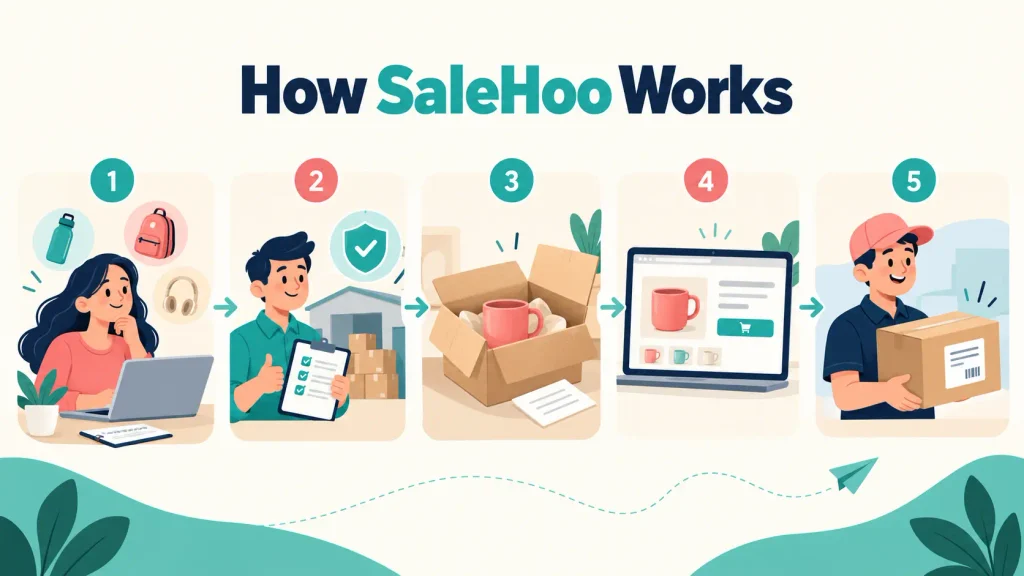
The typical process is:
- Choose a SaleHoo plan.
- Search for suppliers or products.
- Filter results by location, category and shipping destination.
- Review the supplier and its terms.
- Contact the supplier.
- Confirm pricing, delivery, returns and minimum orders.
- Order product samples.
- Add suitable products to a store or marketplace account.
- Market the products.
- Monitor customers, margins and supplier performance.
SaleHoo can simplify the first five steps. It cannot guarantee that the chosen product will sell or that the final margin will justify the work.
Who Created SaleHoo?
SaleHoo was founded in Christchurch, New Zealand, in 2005 by Simon Slade and Mark Ling.
Simon Slade is listed as SaleHoo’s CEO and co-founder. The official company history says he created the platform after struggling to find reliable suppliers while selling through Trade Me.
Mark Ling is listed as co-founder and director. His responsibilities have included product creation, marketing, launches and affiliate partnerships.
Mark Ling also created Affilorama, which teaches affiliate marketing. This creates an interesting contrast. Affilorama focuses on earning commissions by recommending products, while SaleHoo helps people source products for their own ecommerce operation.
Quick Note: I’m John Crossley, founder of Flex For Families. I review online business opportunities through the lens of family life, focusing on costs, time commitments, risks, and whether they genuinely help parents create more flexibility.
What Does SaleHoo Include?
SaleHoo Supplier Directory
SaleHoo advertises more than 8,000 suppliers, including:
- Dropshippers
- Wholesalers
- Manufacturers
- Liquidators
- Private-label suppliers
Members can search by product and supplier. They can also filter by location and shipping destination.
Product Research
SaleHoo provides research intended to help sellers compare:
- Product demand
- Competition
- Average prices
- Sell rates
- Potential margins
- Current product trends
Research data can help you create a shortlist. It cannot predict future sales with certainty.
Dropshipping Automation
SaleHoo supports product imports into Shopify.
The Starter plan connects one Shopify store and allows up to 200 product imports per month. Pro connects up to three stores and allows up to 600 imports.
The wider supplier directory can be used with WooCommerce, Amazon, eBay, BigCommerce and other platforms. However, these may require direct supplier contact or CSV imports rather than the same Shopify automation.
Ecommerce Training
The Starter plan includes a Dropshipping on Shopify course.
Pro adds the Amazon Product Launch course. SaleHoo also advertises training covering:
- Product research
- Store setup
- Product listings
- Copywriting
- Email marketing
- SEO
- Social media
- Advertising
- Scaling and outsourcing
Community and Support
SaleHoo advertises a large seller community and standard customer support for Starter and Pro.
Enterprise customers receive priority onboarding and support. Pro members also receive concierge supplier research.
Is SaleHoo a Supplier?
No. SaleHoo is a supplier directory and ecommerce platform.
It does not normally:
- Manufacture the products
- Hold the stock
- Set every supplier’s prices
- Ship every order
- Issue the supplier’s invoice
- Control every return
Individual suppliers determine their own trading terms.
This distinction is particularly important for Amazon sellers. SaleHoo access does not automatically mean every supplier invoice will meet Amazon’s documentation requirements. Confirm this with the supplier and marketplace before ordering stock.
How Does SaleHoo Vet Suppliers?
SaleHoo says suppliers go through four stages:
- Business identity and registration checks
- Product authenticity checks
- Review of trade terms, shipping and return policies
- Continuing member feedback
The company says suppliers can be removed if they no longer meet its standards.
That process offers more protection than selecting an unknown supplier from a general search result. It does not make every transaction risk-free.
Before committing to a supplier:
- Order a sample
- Inspect the product and packaging
- Test delivery times
- Confirm return procedures
- Check minimum orders
- Verify authenticity
- Confirm marketplace documentation
- Review product safety
- Test communication
- Read the trading agreement
SaleHoo’s vetting should be treated as the first check, rather than the only check.
How Much Does SaleHoo Cost in 2026?
SaleHoo’s current plans are:
| Plan | Annual Billing | Lifetime Option |
|---|---|---|
| Starter | $9 per month, $108 per year | $299 |
| Pro | $49 per month, $588 per year | $1,699 |
| Enterprise | $499 per month, $5,988 per year | Contact SaleHoo |
SaleHoo bills the annual plans yearly rather than collecting the displayed monthly equivalent every month.
Many older SaleHoo reviews quote prices such as $67 annually, $127 for lifetime directory access, or separate $27 and $97 Dropship plans. Those are historical prices and do not reflect the current official plans.
Always check the official SaleHoo pricing page before paying.
What Does the SaleHoo Starter Plan Include?
Starter currently provides:
- Up to 100 supplier contacts each month
- Up to 200 product imports each month
- One Shopify connection
- Product reports
- Dropshipping on Shopify course
- Standard support
This should be enough for most individual beginners.
Contacting 100 suppliers every month would already create a substantial research workload. Higher limits will not compensate for weak product selection.
What Does SaleHoo Pro Include?
Pro currently provides:
- Unlimited supplier contacts
- Up to 600 product imports each month
- Up to three store connections
- Product reports
- Dropshipping on Shopify course
- Amazon Product Launch course
- Concierge supplier research
- Standard support
At $588 per year or $1,699 for lifetime access, Pro is aimed at active sellers.
A beginner should only choose it when the additional stores, imports or supplier assistance solve a genuine business need.
What Does SaleHoo Enterprise Include?
Enterprise currently includes:
- Unlimited supplier contacts
- Unlimited imports
- Multiple store integrations
- All courses
- Custom sourcing
- Custom store build
- Account manager
- Priority onboarding and support
At $499 per month billed annually, it is designed for larger operations. It is not a realistic starting plan for a parent testing a first ecommerce idea.
Is SaleHoo Lifetime Access Worth It?
The lifetime option becomes cheaper than annual access after roughly three years.
| Plan | Annual Price | Lifetime Price | Approximate Break-Even |
|---|---|---|---|
| Starter | $108 | $299 | 2 years and 9 months |
| Pro | $588 | $1,699 | 2 years and 11 months |
Lifetime access may make sense if:
- You already operate an ecommerce business
- You expect to use SaleHoo for at least three years
- The current tools fit your platform
- You can afford the upfront payment
Most beginners should start with annual access. Their niche, platform or business model may change before lifetime access reaches its break-even point.
Are There Additional SaleHoo Costs?
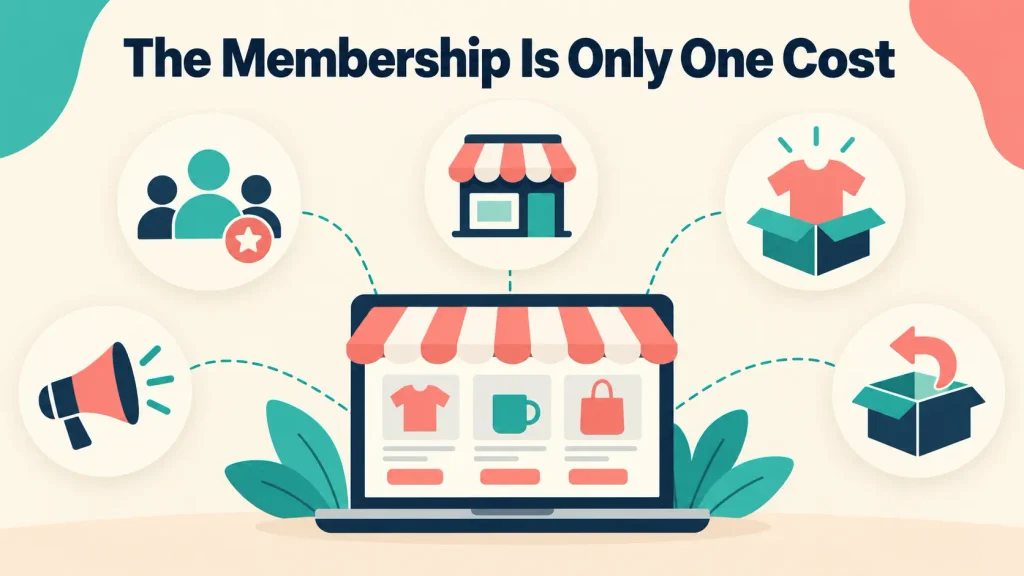
The SaleHoo membership is only one part of the budget.
Other costs may include:
- Shopify or ecommerce hosting
- Domain registration
- Store applications
- Product samples
- Wholesale inventory
- Shipping
- Packaging
- Payment processing
- Advertising
- Email marketing
- Product photography
- Marketplace fees
- Currency conversion
- Import duties
- VAT
- Returns
- Insurance
- Accounting
Dropshipping reduces the need to purchase large quantities of inventory. It does not remove the cost of running a retail business.
Does SaleHoo Offer Refunds?
SaleHoo advertises a 60-day money-back guarantee.
Its pricing page says customers can request a full refund by contacting support within 60 days. It also says subscriptions can be cancelled through email or live chat.
SaleHoo requests at least 48 hours’ notice before a renewal.
Protect yourself by:
- Saving the receipt
- Recording the purchase and renewal dates
- Setting an early reminder
- Keeping cancellation messages
- Requesting any refund within the stated period
- Avoiding the final 48 hours
The guarantee covers the SaleHoo payment. It does not refund Shopify, advertising, product samples or other business costs.
Can You Make Money With SaleHoo?
You can build a profitable store using suppliers found through SaleHoo. Membership does not guarantee that result.
Your true profit is:
Selling Price − Product Cost − Shipping − Platform Fees − Advertising − Refunds − Tax = Actual Profit
Suppose you sell an item for £35.
- Product cost: £15
- Shipping: £5
- Platform and processing fees: £4
- Customer acquisition: £9
That leaves £2 before tax, returns or unexpected costs.
A product can generate sales without producing a worthwhile profit.
What Results Are Realistic?
A realistic early goal is to validate the business rather than replace a salary.
Your first milestones could be:
- Identify a focused niche
- Shortlist suitable products
- Contact several suppliers
- Order samples
- Calculate complete margins
- Test delivery
- Build a small store
- Make the first genuine sales
- Measure profit after every cost
You may test products that do not sell. You may also discover that advertising or shipping removes the expected margin.
SaleHoo can improve your research. It cannot prevent every unsuccessful test.
What Are the Main SaleHoo Complaints?
SaleHoo currently has a Trustpilot score of 4.1 out of 5 from more than 450 reviews. Positive feedback often praises customer support, onboarding and time saved researching suppliers.
Negative reviews raise several recurring concerns.
Limited or Irrelevant Results
Some reviewers say searches returned unrelated categories or fewer useful options than expected.
Supplier coverage will vary by niche and destination. Check whether SaleHoo has suitable suppliers before committing to a long-term plan.
Renewal Confusion
Some reviewers report unexpected trial or renewal charges.
Read the checkout summary, confirm whether the plan is annual and record the renewal date.
Refund Delays
A small number of reviewers describe slow refund communication. SaleHoo has replied publicly to several complaints and has said that some refunds were processed.
These are individual reports. They do not prove every refund is difficult.
Shopify Automation
Some buyers expected the same automation across every ecommerce platform.
SaleHoo’s directory can support several platforms, but its direct product-import features focus on Shopify.
Expectations of Guaranteed Products
Some disappointed buyers expected SaleHoo to reveal products certain to generate profit.
No legitimate research platform can guarantee demand, conversion rates or advertising costs.
Is SaleHoo Legit or a Scam?
SaleHoo is a legitimate ecommerce company.
It has operated since 2005, identifies its founders, publishes its company details and provides clear pricing, support and refund information.
I found no evidence that justifies calling SaleHoo a scam.
That does not mean it provides equal value in every niche. A legitimate supplier directory can still disappoint someone who cannot find suitable products or misunderstands its role.
Does SaleHoo Work With Shopify?
Yes. Shopify receives SaleHoo’s closest automation support.
Starter allows one store connection and Pro allows up to three.
You still need to pay for Shopify, configure the store, create acceptable policies and attract customers. Importing a product does not create sales.
Does SaleHoo Work With WooCommerce, Amazon and eBay?
The SaleHoo directory can be used to find suppliers for WooCommerce, Amazon, eBay and other channels.
However, the workflow may involve:
- Contacting suppliers directly
- Exporting product information
- Importing a CSV
- Checking marketplace restrictions
- Confirming invoice acceptance
- Managing inventory independently
Do not assume Shopify automation applies to every platform.
Is SaleHoo Suitable for Beginners?
SaleHoo is more beginner-friendly than finding suppliers without guidance.
Useful features include:
- Supplier vetting
- Search tools
- Product research
- Training
- Support
- Lower-priced Starter plan
The platform does not remove the need to learn:
- Margin calculation
- Store setup
- Advertising
- Customer service
- Consumer law
- Returns
- Tax
- Supplier management
Beginner Suitability: 3.5 out of 5
Does SaleHoo Work in the UK?
UK sellers can use SaleHoo, but supplier location matters.
SaleHoo says its network includes suppliers across North America, Europe, Asia and Australia. Members can filter by location and shipping destination.
UK sellers need to check:
- Delivery times
- Import VAT
- Customs
- Product safety
- UK consumer rights
- Return addresses
- Currency conversion
- Packaging and labelling
- Marketplace documentation
A low overseas product price can become expensive after shipping, tax and returns.
Prioritising UK or nearby suppliers may produce a better customer experience, even when the unit price is higher.
Is SaleHoo Good for Busy Parents?
SaleHoo can reduce supplier research time, but ecommerce is not passive.
Potential advantages include:
- Centralised supplier research
- Remote store management
- Dropshipping without packing each order
- Automated Shopify imports
However, a parent may still need to handle:
- Customer messages
- Delayed deliveries
- Refunds
- Chargebacks
- Supplier problems
- Product updates
- Advertising
- Marketplace issues
Orders and customer expectations continue during school holidays, illness and family disruption.
Busy Parent Fit: 2.5 out of 5
Who Is SaleHoo Best For?
SaleHoo may suit:
- People committed to ecommerce
- Existing sellers seeking more suppliers
- Shopify store owners
- Wholesale sellers
- People prepared to order samples
- Sellers comfortable supporting customers
- Beginners with a separate testing budget
- Amazon or eBay sellers who verify documentation
Who Should Avoid SaleHoo?
It may be a poor fit if:
- You expect passive income
- You have no clear ecommerce plan
- You would use essential household money
- You dislike customer service
- You will not verify suppliers
- You expect guaranteed products
- You only want to earn through content
- You are likely to forget annual renewals
SaleHoo Pros and Cons
Pros
- Established since 2005
- More than 8,000 vetted suppliers
- Product research tools
- Supplier contact information
- Shopify product imports
- Ecommerce training
- Strong support feedback
- 60-day guarantee
- Annual and lifetime options
- Suppliers across several regions
Cons
- No permanent free plan
- Annual billing requires an upfront commitment
- Pro and Enterprise are expensive
- Automation focuses on Shopify
- Some reviewers report irrelevant results
- Certain niches may have limited suppliers
- Further business costs remain
- Recurring billing complaints exist
- Supplier vetting does not guarantee success
- Ecommerce creates customer-service responsibilities
SaleHoo vs Affiliate Blogging
SaleHoo provides a different route from affiliate blogging.
| Area | SaleHoo Ecommerce | Affiliate Blogging |
|---|---|---|
| Model | Sell physical products | Recommend other companies’ products |
| Customer Payment | You normally take the payment | Merchant handles payment |
| Customer Support | Your responsibility | Usually handled by the merchant |
| Supplier Risk | Directly affects the customer | Less direct |
| Refunds | Your responsibility | Usually handled by the merchant |
| Startup Costs | Store, sourcing and marketing | Website, content and optional tools |
| Testing Speed | Can be quicker with advertising | Usually slower through SEO |
| Control | More control over pricing | Less control over merchant terms |
| Flexibility | Orders continue while you are away | Content can be built in flexible blocks |
| Long-Term Asset | Store, brand and customer list | Website, content and audience |
SaleHoo may suit someone who enjoys products, pricing and retail operations.
Affiliate blogging may suit someone who prefers research, writing and building an audience without managing physical orders.
Neither model is automatically better. The right choice depends on your skills, budget and preferred workload.
SaleHoo vs Worldwide Brands
Worldwide Brands focuses primarily on providing a large lifetime directory of wholesalers and dropshippers.
SaleHoo combines its directory with research, courses, community and Shopify automation.
Worldwide Brands may suit someone who mainly wants long-term supplier access. SaleHoo may suit a beginner who values training and research alongside the directory.
Compare current prices and supplier coverage in your niche before choosing.
SaleHoo vs Spocket
Spocket focuses heavily on importing dropshipping products into ecommerce stores, with particular attention to suppliers in the United States and Europe.
SaleHoo offers broader supplier research, including wholesalers and manufacturers, alongside training and product data.
Spocket may suit someone prioritising direct integration and faster regional shipping. SaleHoo may suit someone researching several ecommerce models.
My Take on SaleHoo
I can see the practical value of SaleHoo.
Finding trustworthy suppliers is one of the biggest barriers when starting an ecommerce business. A vetted directory can save time and reduce exposure to unknown companies.
My concern is what happens before and after the search. A beginner still needs to choose a viable product, calculate every cost, attract customers and manage anything that goes wrong.
As a busy parent, I would only pay for SaleHoo after deciding that I genuinely wanted to operate a store. I would not buy access simply to browse possible side hustles.

About the Reviewer
Hi, I’m John Crossley, founder of Flex For Families.
I’m a parent, blogger, and online business owner who helps families find realistic ways to create more flexibility through blogging, affiliate marketing, and online business.
Like many people, I’ve spent years researching online opportunities, testing platforms, and learning how to separate genuine business models from expensive hype. I’ve also experienced the frustration of chasing opportunities that promised freedom but demanded more time away from family.
Today, I use that experience to review courses, side hustles, AI opportunities, and online business programmes through a simple lens:
Will this genuinely help parents create more flexibility, or will it create more pressure?
Every review on Flex For Families focuses on costs, time commitments, risks, and realistic expectations, so you can make informed decisions before investing your time or money.
Final Verdict: Is SaleHoo Worth It?
SaleHoo is legitimate and may provide useful value for sellers who need supplier and product research.
The Starter plan is the most sensible option for an individual beginner. Pro and Enterprise require a proven need for higher limits and additional assistance.
SaleHoo should not be treated as a ready-made ecommerce business. You still need a viable product, sufficient margins, customer acquisition and reliable fulfilment.
Final Rating: 3.5 out of 5
Prefer to Build Through Content?
If managing suppliers, deliveries and customer returns does not suit you, blogging offers a different route.
You can explore my Best Blogging Resources for the tools and training I recommend when building an owned content website.
If you are still comparing ecommerce, affiliate marketing and blogging, the free Parent Blogging Starter Kit can help you assess your time, skills and preferred model before spending heavily.
Get the Free Parent Blogging Starter Kit
SaleHoo FAQ
What Is SaleHoo?
SaleHoo is a paid ecommerce platform that connects sellers with vetted wholesalers, manufacturers, dropshippers and liquidators. It also provides product research, supplier details, Shopify imports, training and community support. SaleHoo is not normally the supplier that manufactures or ships the product.
Is SaleHoo Legit?
SaleHoo is a legitimate company founded in New Zealand in 2005 by Simon Slade and Mark Ling. It publishes current pricing, company information, support details and a 60-day guarantee. Its legitimacy does not mean every supplier or product will suit your niche, so you should still complete your own checks.
How Much Does SaleHoo Cost?
Starter costs $9 per month billed annually, or $299 for lifetime access. Pro costs $49 per month billed annually, or $1,699 lifetime. Enterprise costs $499 per month billed annually. These prices can change, so check SaleHoo’s official checkout before purchasing.
Is SaleHoo a Supplier?
No. SaleHoo is a directory and ecommerce platform that connects members with third-party suppliers. Individual suppliers set their own prices, minimum orders, delivery terms, invoices and returns. SaleHoo’s vetting can reduce risk, but sellers should order samples and verify every supplier independently.
Can You Make Money With SaleHoo?
SaleHoo can help you locate products and suppliers, but it does not guarantee profit. Your result depends on product demand, selling price, supplier cost, shipping, fees, advertising, refunds and tax. Calculate the complete margin and test products carefully before scaling.
Does SaleHoo Work in the UK?
UK sellers can use SaleHoo and filter suppliers by location or shipping destination. They should check delivery times, import VAT, customs, product safety, consumer rights, returns and currency conversion. UK or nearby suppliers may offer a better customer experience than cheaper suppliers with long international shipping.
Is SaleHoo Good for Beginners?
SaleHoo can make supplier research easier for beginners by providing vetted contacts, product data, training and support. It does not remove the need to understand margins, store setup, advertising, consumer law and customer service. The Starter plan is the most sensible option for most beginners who have already chosen ecommerce.
Let’s Chat
Have you used SaleHoo to find a supplier or product?
I would be interested to hear which plan you chose, whether the supplier information was current and what costs appeared after joining. Genuine experiences can help other readers decide whether SaleHoo fits their business.