


When you only have a short window to work on your blog, an AI writing tool that promises to help you get more done sounds appealing.
But another tool also means another subscription, another interface to learn and another decision about where your limited time should go.
I tried Jasper for this review and found it okay. For me, it did not offer enough reason to change my existing workflow or add another subscription at this time.
That does not mean it will be the wrong choice for every parent blogger. This review looks at what Jasper currently offers, where its features could be useful and how to decide whether they justify the cost for your blog.
Quick Answer: Is Jasper Worth It For Parent Bloggers?
My view: Jasper is worth considering if you regularly produce several related pieces of marketing content and want a dedicated system for managing their voice and context. I would not add it simply because you want to write the occasional blog post faster.
If your existing writing process already works, Jasper needs to improve a specific part of it enough to justify both the subscription and the change involved.
For my own workflow, that case was not strong enough. I would put it in the “try with a clear purpose” category, rather than the “essential blogging tool” category.
How I Approached This Review
I tried Jasper as part of researching this review. My overall impression was that it was okay, but not compelling enough for me to change how I work or take on an additional subscription.
This is primarily a research-based assessment, informed by that experience. It is not a long-term product test, a timed comparison against other tools or a claim that I have tested every feature described below.
The current feature and pricing details come from Jasper’s official documentation, checked on 19 September 2026. My comments about who might benefit are editorial judgements, rather than measured results from other parent bloggers.
What Is Jasper AI?
Jasper is an AI platform aimed at marketing content. Its appeal is the structure around content creation: organising related work, supplying brand context and applying that context across different pieces.

For a parent blogger, the useful question is what happens after you have an idea. Do you need help producing one draft, or are you regularly turning that idea into an article, newsletter, social posts and other material?
That second situation gives Jasper’s approach more room to be useful. You still need to decide what to say, supply reliable information and review what it produces.
The Jasper Features I Would Look At First
You do not need to study every feature before deciding whether Jasper deserves a trial. I would start with the parts most likely to affect an ordinary blogging week.
Canvas: Keep Related Content Together
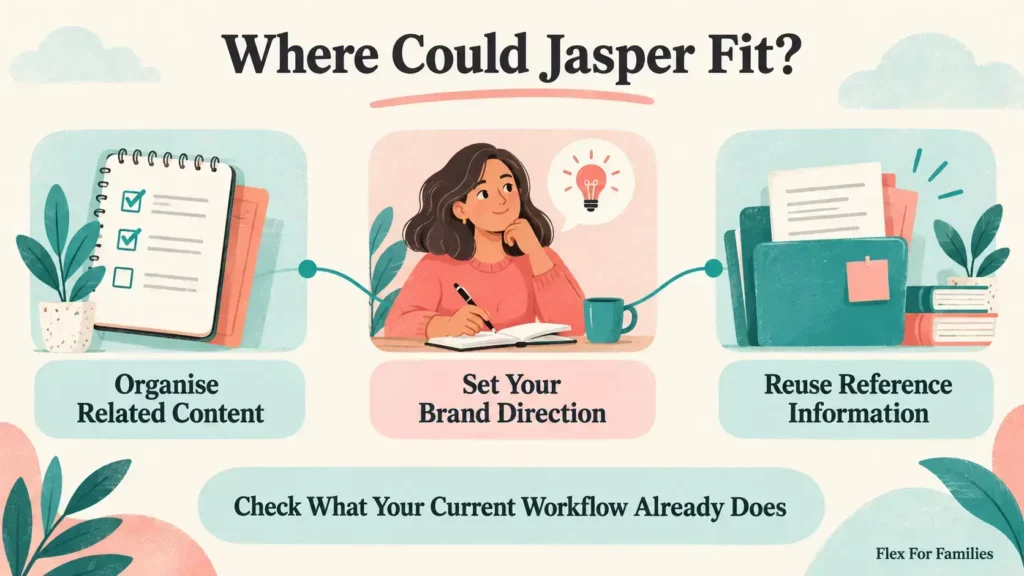
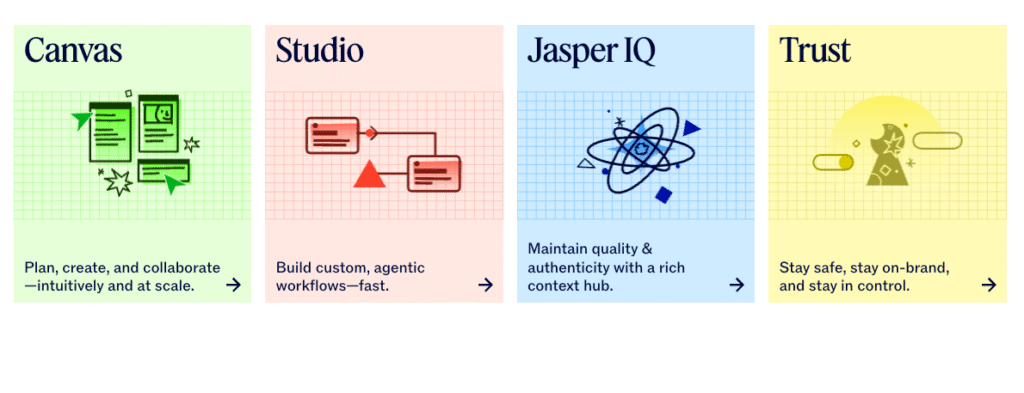
Jasper describes Canvas as a workspace for creating and managing content assets. Project settings can supply context such as the intended audience and brand voice, while individual pieces can have their own settings where necessary.
For example, you could organise material around one article: the brief, draft and accompanying promotional copy. That is a possible use case, not a project I am claiming to have tested.
This could be useful if you regularly lose track of which pieces belong together. If your current folders and documents already handle that comfortably, it may add less value.
Brand Voice: Give The Writing A Consistent Direction
Jasper’s Brand Voice feature is designed to help content reflect a brand’s tone rather than relying on a fresh explanation every time.
For a family-focused blog, that might mean giving the tool examples of your practical, conversational writing. You would then judge whether its output follows that direction consistently.
I would look beyond whether a paragraph sounds pleasant. Does it use language you would actually use? Does it avoid exaggerated claims? Does it leave room for your real experience?
Brand consistency is useful, but sounding like you is not the same as knowing what happened to you. Personal stories and testing observations must still come from you.
Knowledge: Reuse Information You Have Supplied
Jasper’s Knowledge Base documentation explains how you can store information for reuse when generating content.
A possible blogging use would be a factual description of your own resource or product, so you do not have to keep rebuilding the same background information.
You would still need to maintain it. An old price or outdated product description does not become current simply because it has been saved in a knowledge base.
I would treat stored information as a reference to manage, rather than a substitute for checking the finished copy.
How Much Does Jasper Cost?
At the time of checking, Jasper’s pricing page lists:
| Plan | Advertised Price | What To Know |
|---|---|---|
| Pro, Monthly Billing | $69 per month per seat | Includes one seat, two Brand Voices, five Knowledge assets and three Audiences |
| Pro, Annual Billing | $59 per month per seat, billed yearly | The advertised monthly equivalent comes to $708 for a year |
| Business | Custom pricing | Intended for broader requirements; request a quote |
These are US-dollar prices. Check the final checkout total and billing terms for your location before subscribing.
The public pricing page currently presents Pro and Business. I would not base a new purchase decision on older reviews recommending the Creator plan.
For a solo blogger, the annual figure deserves attention. A lower advertised monthly equivalent can look attractive, but you need enough confidence in the tool to justify the yearly commitment.
What Happens After The Free Trial?
Jasper’s trial guidance describes a seven-day trial that requires a credit card. It says the selected subscription is charged after the trial unless you cancel during the trial period.
Check the terms shown when you sign up, note the renewal date and leave yourself time to make a decision. A trial is useful when it answers a question about your work, rather than simply giving you another dashboard to explore.
Can Jasper Actually Save You Time?
It may, but I cannot give you a measured time-saving figure from my own experience.
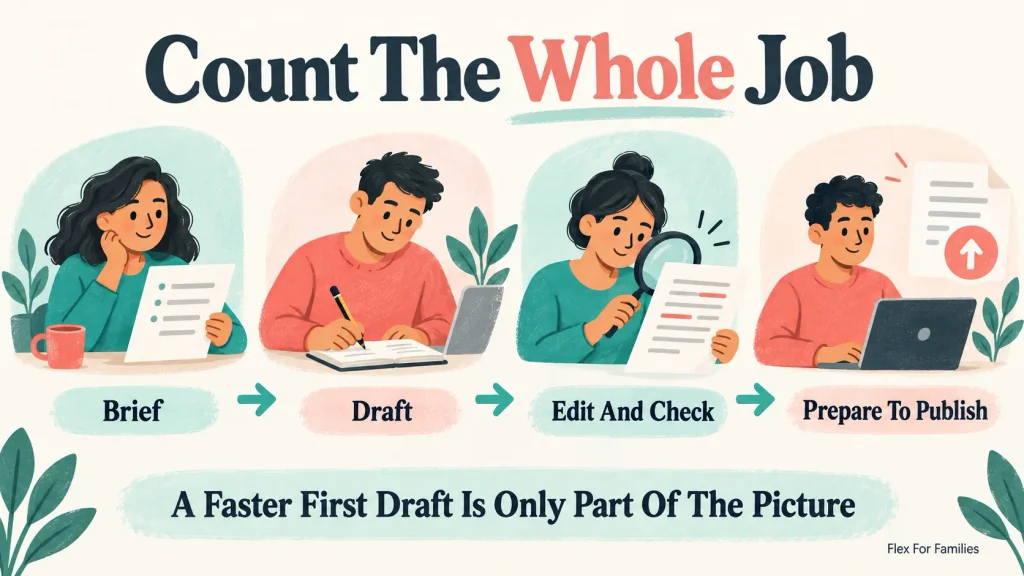
What matters is the time required to produce something you are happy to publish. That includes explaining the task, generating the material, editing it, checking facts and moving it into your publishing process.
A draft that appears quickly can still need substantial work. Equally, a tool that takes some initial setup might become more useful for repeated tasks. You need to assess both parts.
Here is a fictional example:
| Part Of The Job | Existing Process | Process With A New Tool |
|---|---|---|
| Prepare The Brief | 15 minutes | 20 minutes |
| Produce A First Draft | 45 minutes | 15 minutes |
| Edit And Check | 30 minutes | 45 minutes |
| Total | 90 minutes | 80 minutes |
In this example, the first draft is much quicker, but the total saving is ten minutes. These are invented figures to show the calculation, not Jasper test results.
For a parent working in short sessions, I would also consider how easy it is to stop and return. A process that feels straightforward after an interruption may be more valuable than one that looks fast in a continuous demonstration.
What I Like About Jasper’s Approach
Based on the documented features, there are sensible reasons to consider it:
- Related content can share a brief and context. That could help when one article supports several other pieces of content.
- Brand information has a defined place. Reusing it may reduce repetitive briefing if you maintain it properly.
- It provides a dedicated marketing workspace. Some people will prefer that structure to managing everything across separate documents.
These are potential benefits to evaluate. They do not establish that Jasper will save every blogger time or improve every draft.
Where I Would Be Cautious
The Subscription Needs A Specific Purpose
“It might help with blogging” would not be enough for me. I would want to name the recurring job it improves and explain why my current approach falls short.
If you already pay for writing tools, consider whether Jasper would replace something or simply sit alongside it. Keeping several overlapping subscriptions can make a modest tool budget harder to control.
Changing Your Workflow Takes Effort
Learning where things live, supplying reference material and developing a repeatable routine all take time.
That is not necessarily a reason to avoid a new tool. It is a reason to include the transition in your decision instead of judging only the first generated paragraph.
This was part of my own conclusion: Jasper did not give me enough reason to change my workflow at this time.
Your Review Responsibilities Remain
Before publishing, you still need to verify prices, product details, quotations and any other claims that matter to the reader.
For reviews, that also means keeping researched features separate from what you have personally used. A tool must not fill gaps with invented experience, test results or stories about your family.
A polished draft should still go through your normal editorial checks.
Who Should Consider Jasper, And Who Can Probably Skip It?
| Your Situation | My View |
|---|---|
| You regularly create several related marketing pieces and repeatedly explain the same brand context | A focused trial could be worthwhile |
| You want a dedicated place to organise content around projects | Test whether Canvas improves your current system |
| You publish occasionally and already have a comfortable writing process | I would be slow to add another subscription |
| You are still learning your audience, topics and publishing routine | Establish that routine before paying to expand it |
| You expect finished articles without editing or fact-checking | That is not the expectation I would bring to Jasper |
Being busy does not automatically make an extra tool the right purchase. Sometimes improving the process you already use is the more useful next step.
If you are still establishing your publishing routine, the Parent Blogging Hub brings the main steps together.
How I Would Evaluate Jasper Before Paying
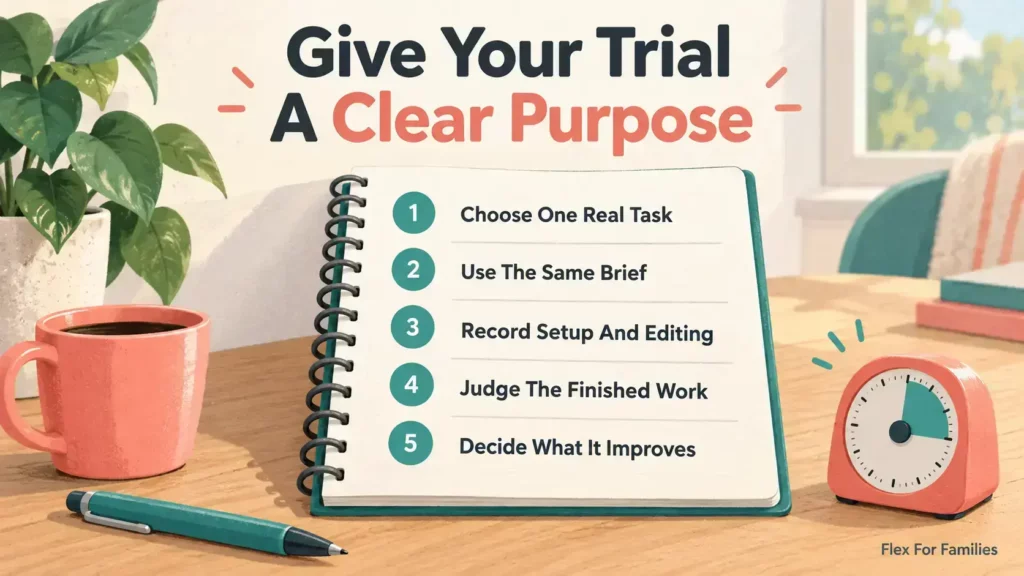
This is a suggested trial method, not a description of a test I completed.
1. Choose One Real, Repeatable Task
Pick a job you already do, such as turning an approved article into a newsletter and three social posts. Give the trial a clear purpose.
2. Supply The Same Brief And Reference Material
Use the same audience, facts, tone examples and requirements that you would provide in your existing process. This makes the comparison more useful.
3. Record Setup And Editing Time
Keep initial setup separate from the time needed for each repeat task. Count corrections, fact-checking and copying work into your publishing system.
4. Judge The Finished Result
Ask whether the content answers the brief, sounds appropriate and contains only supported claims. Do not judge success by word count alone.
5. Decide What It Would Replace Or Improve
Finish with a specific statement: “I would use Jasper for this task this often, because it improves this part of my work.”
If you cannot complete that sentence convincingly, there is no need to subscribe simply because the trial is ending.
Common Questions
Is Jasper Suitable For A Beginner Blogger?
A beginner can consider it, but I would not make it an early essential purchase. First establish what you publish, who it helps and where your current process gets stuck. You will then have a clearer task to evaluate.
Can Jasper Write A Complete Blog Post?
Jasper can help generate and develop content. I would still treat the result as a draft: review its structure, verify its claims and add the knowledge and experience that make it useful to your readers.
Will Jasper Make My Blog Rank Higher?
I would not buy it on that assumption. This review has not established a ranking benefit. Assess whether it helps you produce useful, accurate content more effectively, rather than treating a subscription as an SEO result.
Is The Annual Plan Better Value?
It has a lower advertised monthly equivalent, but value depends on whether you continue using the tool. I would establish a useful repeatable workflow before committing for a year.
Why Did You Decide Against Adding Jasper?
I tried it and thought it was okay. I did not find enough benefit to justify changing my workflow and paying for another subscription at this time. That is a judgement about my needs, not a claim that nobody else will find it useful.
Final Word
Jasper has a clear proposition for people who want more structure around marketing content. Its documented features give you ways to organise related work and reuse brand context.
For parent bloggers, the purchase decision should come back to a practical question: does it improve a job you regularly need to do enough to justify the cost and the change?
For me, the answer was not at this time. I tried Jasper, found it okay and did not see enough reason to add it to my workflow.
If you are curious, use a trial to compare one real task from start to finish. If your existing process still suits you better, staying with it is a perfectly reasonable decision.
You do not need every useful tool. You need a manageable set of tools that helps you keep moving with the time you have.
Let’s Chat
Have you tried Jasper for your blog, or decided to stick with the writing tools you already use?
I would love to know which task you wanted it to improve and whether it made enough of a difference to justify another subscription. Share your experience in the comments below.