

The second year of blogging shifts from setting up and publishing to compounding, updating and staying steady. You write fewer firsts and make more improvements. Older posts start to matter, results arrive slowly, and showing up regularly counts for more than bursts of effort. Growth often feels slower even though your work is better.
What Actually Changes In Your Second Year Of Blogging?
The main change is that your job moves from building a blog to maintaining and improving one. In the first year, nearly every task is new: choosing a name, setting up the site, learning the editor, writing the first post, and working out what a good post even looks like. Those tasks come with a steady stream of small wins, because each one is a first.
In the second year, the firsts run out. You have a site that exists and a library of posts, so the work becomes less visible. You are reading your own older articles with fresh eyes, noticing which ones answer a reader’s question well and which ones wander. You are watching which posts people actually find and which ones sit unread.

Three things tend to change at once:
- Your archive becomes an asset. Every published post can keep working for you or be improved, which was not true in month two.
- Your skills are better than your results. You write faster and with more confidence than you did a year ago, but results lag behind skill.
- Your decisions get harder. There are more options on the table, such as new topics, updates, email, and other affiliate programs, and no one tells you which one to pick.
Knowing this ahead of time takes some of the sting out of it. A quieter year two is a normal stage of blogging, and it is where the earlier work starts to add up.
Why Does Growth Feel Slower Even Though You Are Doing More?
Growth feels slower because the early excitement came from visible activity, while year-two progress is gradual and mostly out of sight. In the first months, every post you publish is a clear milestone. Later, the milestones are things like a post slowly moving up in search results or a reader coming back for a second article, and neither announces itself.
There is also a delay built into how blogs work. Search engines need time to find, evaluate and trust new content, and readers need time to find your site and decide to return. The work you do this month often shows up in results months later. That gap makes effort and reward feel disconnected, and it can make you wonder whether anything is working.
Your own standards rise too. A year ago you were pleased to publish a post at all. Now you compare your site to ones that have been running for years, and the comparison is unfair. A parent with a few hours a week is not going to match a team publishing daily, and trying to will wear you out.
If your site is quiet, it helps to check the basics before drawing conclusions. Our post on what to do when your blog has no traffic after three months covers the early-stage checks, and most of them still apply a year in.
Progress in year two is easier to see when you track slow signals: how many posts are indexed, which pages get any visits at all, and whether readers click from one article to another. Those signals move before income does.
Should You Keep Publishing New Posts Or Update Old Ones?
You should do both, but in the second year the balance usually tilts toward improving what you already have. A new post starts with no history. An older post that already has some visitors, some links or some ranking has momentum, and a better version of it can build on that.
Updating is also kinder to a tight schedule. Reworking an existing article often takes less time than writing a new one from nothing, and you already know the topic. For a parent working in short windows, that matters.

Good candidates for an update include:
- Posts that get some visits but few clicks to other pages. The topic is working, and the post may need a clearer structure or better next steps for the reader.
- Posts with outdated information. Prices, tools and recommendations change, and a stale detail makes the whole page less trustworthy.
- Early posts you wrote before you knew your reader well. These often answer the question too thinly or in a voice that no longer matches your site.
- Posts that cover a question your readers keep asking. Adding a section that answers it directly often helps more than writing a separate article.
New posts still have a place. Each one is another chance to be found for a different question, and a site with thin coverage of its main topic has less to offer. A simple rhythm is to publish a new post, then spend your next session improving an old one. Let’s keep it simple: one new, one better, repeated at a pace your week can hold.
One more thing belongs on the year-two list: an email list gives readers a way to hear from you again instead of relying on search every time. If you want to avoid the usual pitfalls there, these email marketing mistakes new parent bloggers make are worth reading before you start.
How Does Motivation Change After The First Year Excitement Fades?
Motivation changes from excitement about starting to a quieter commitment you have to choose deliberately. The first-year energy comes from novelty and hope. That kind of energy fades for almost everyone, and its fading says nothing about whether blogging suits you.
What replaces it is routine. A routine does not ask you to feel inspired. It asks you to sit down at the planned time and do the next small thing, whether that is outlining a post, fixing a heading, or answering a comment. Small steps matter far more than big ones in this stage, because a small step is still possible on a tired Tuesday.
A few habits make the quieter phase easier:
- Keep a running list of next tasks. When you sit down, you should not have to decide what to work on. A short list of ideas, updates and fixes removes that friction.
- Make the session small enough to finish. Twenty focused minutes that ends with something completed feels better than two hours that ends with nothing.
- Record what you finished, not only what you earned. Posts updated, questions answered and pages improved are real progress even when the numbers stay flat.
- Allow some weeks to be maintenance only. Fixing links and tidying old posts counts as work.
Many parents also find that working alone gets harder over time. There is no one to tell you a post is good or that your pace is normal. Having a few people to compare notes with can steady that, whether it is a community, a friend who also blogs, or a group you check in with regularly.
What Can You Realistically Expect From Year Two?
You can realistically expect gradual improvement in how your site is found, a better sense of what your readers want, and possibly some early income, with no guarantee of any specific amount or date. Blog results vary widely with topic, competition, how often you publish and how long the site has existed, so no honest article can give you a number.
Here is what tends to be reasonable to hope for:
- More of your posts get found. Older posts have had time to be crawled and evaluated, so a larger share of your archive can start to receive visits.
- A clearer picture of what works. After a year, you have enough content to see patterns in which topics, formats and titles draw readers.
- Better writing with less effort. Drafting and editing get faster with practice, which frees time for updates.
- Small, uneven monetization. If you promote affiliate products, you may see occasional results. They tend to come from specific posts that match what a reader is already looking for, and they can be irregular from month to month.
It is also worth saying what is unlikely. A single post going viral, a sudden jump after one change, or a income that replaces a salary within a few months are not what year two usually looks like. If your plan depends on them, the plan is fragile.
Diversifying later helps, but it works best once one thing is working. If you are weighing other income sources, how to diversify blog income without chasing every shiny thing is a useful companion, and the main rule is to add a second source only after the first has a steady footing.
How Do You Plan Your Second Year Around Family Life?
You plan it by building a schedule that fits your real week, including school holidays, sick days and the stretches when the house is chaotic. Build around your life, because a plan that only works in a perfect week will fail in the first imperfect one.
Start with the time you actually have, not the time you wish you had. If that is three short sessions a week, plan for three. Assign each session a type of task so you never waste it deciding: one for writing, one for updating, one for admin such as comments, links and checking your stats.
It helps to think in seasons rather than weeks. A quarter-by-quarter outline might look like this:
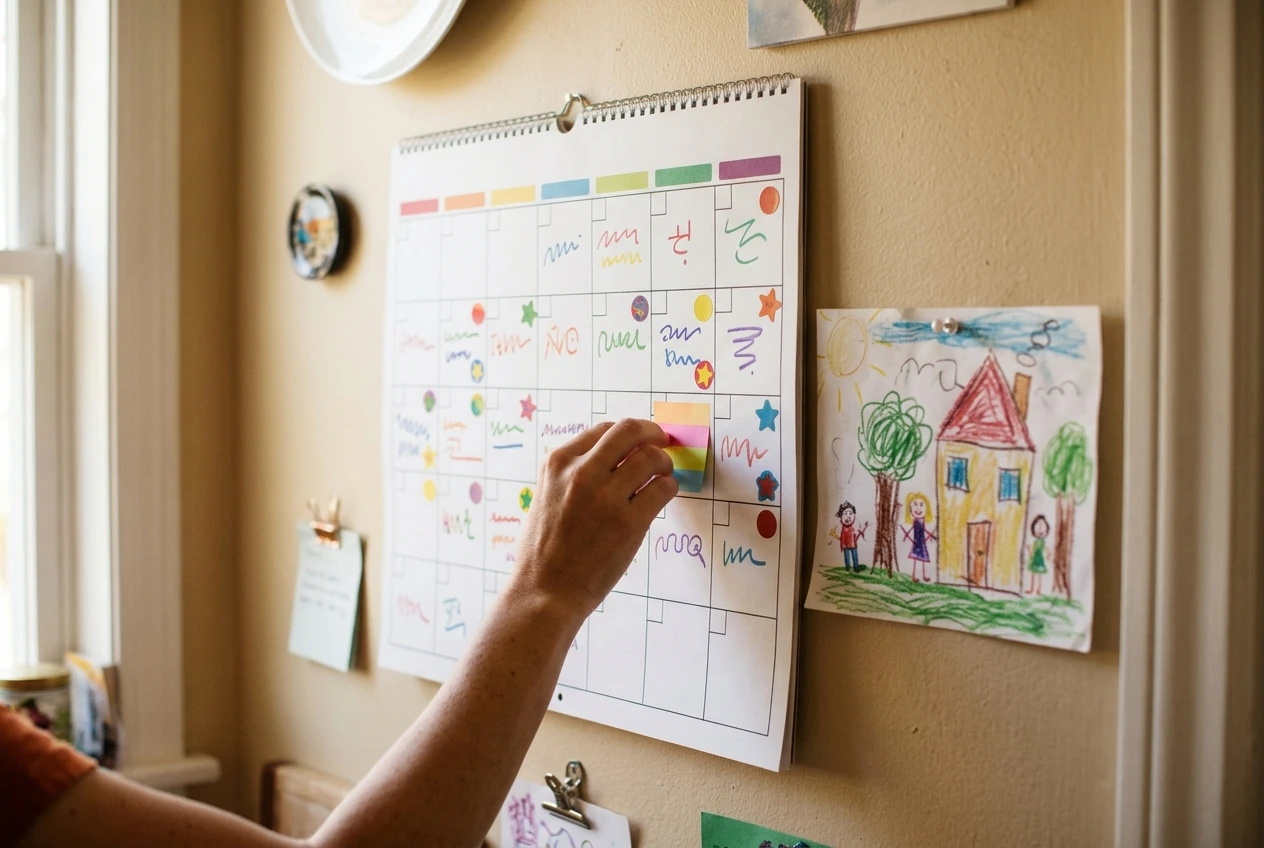
- First quarter: review your whole archive, list the posts worth updating, and fix the most obvious problems.
- Second quarter: update your strongest older posts and add new ones around the topics that are already working.
- Third quarter: build the supporting pieces, such as an email sign-up or a clear page for the products you recommend.
- Fourth quarter: review what happened, drop what did not help, and plan the next year at a lighter or heavier pace as your family needs.
Leave room in every quarter for the unexpected. School breaks, illness and busy periods at home are predictable in general even when the dates are not, so a plan with slack in it survives them. If you want more on this, balancing a side hustle and parenting without burning out goes into pacing in more detail.
Take your time with all of it. A slower pace you can keep up for years usually outperforms a fast one that ends in burnout by spring.
Final Thoughts
The second year of blogging is less exciting than the first, and that is a sign you have moved from starting to building. The work becomes steadier: improve what you have, publish at a pace your family can hold, watch the slow signals, and give results time to appear. Your skills are growing even when the numbers do not show it yet.
What worked for me in year two was having training and a supportive community behind me. When you are deciding what to update next or wondering whether your pace is normal, having people to ask makes a real difference. If you would like that kind of support, you are welcome to take a look at Wealthy Affiliate at your own pace and see whether it suits you. There is no rush and no pressure, and the right time to look is whenever it makes sense for your family.
Let’s Chat
If you are in your second year of blogging, or getting close to it, what has been the hardest part of the shift from setting up to staying steady? Share it in the comments, and if you have found something that makes it easier, tell us that too. Another parent reading along may be facing the same thing.