

A content system for busy parent bloggers is a short weekly routine made of four parts: a list of topics ready to write, one flexible batch session, a plan for reusing each post, and a minimum version of the week for sick days and school holidays. It keeps publishing steady without needing every day to go well.
What Is A Content System, And Why Do Parent Bloggers Need One?
A content system is the set of decisions you make once so you do not have to make them every time you sit down to write. What to write about, when to write it, where it goes afterwards, and what counts as enough for a bad week are all settled ahead of time.
Parents need this more than most bloggers because the time you have is unpredictable. A plan that depends on writing every morning at 9 works until a child wakes up with a fever. A daily to-do list breaks the first time a day goes sideways, and then the whole list feels like a failure.
A weekly loop is more forgiving than a daily list. If Tuesday disappears, you have Thursday and the weekend to catch up. If the whole week disappears, you have a minimum version to fall back on, and that is covered near the end of this article.
If your blog is not set up yet, start with what to do after creating your Wealthy Affiliate website and come back here once the basics are in place.
How Much Can You Realistically Publish On A Parenting Schedule?
For most parents, one solid post a week is realistic, and one post every two weeks is still a real blog. Consistency matters more than volume, because a blog that publishes every other week for a year ends up with far more content than one that publishes daily for a month and then stops.
Pick your number by looking at the time you actually have, not the time you wish you had. Think through a typical week and find the pockets that are reliably free: a nap, school hours, an hour after bedtime, a weekend morning when someone else is on duty. Add them up honestly, then set your target below that total so you have room for interruptions.
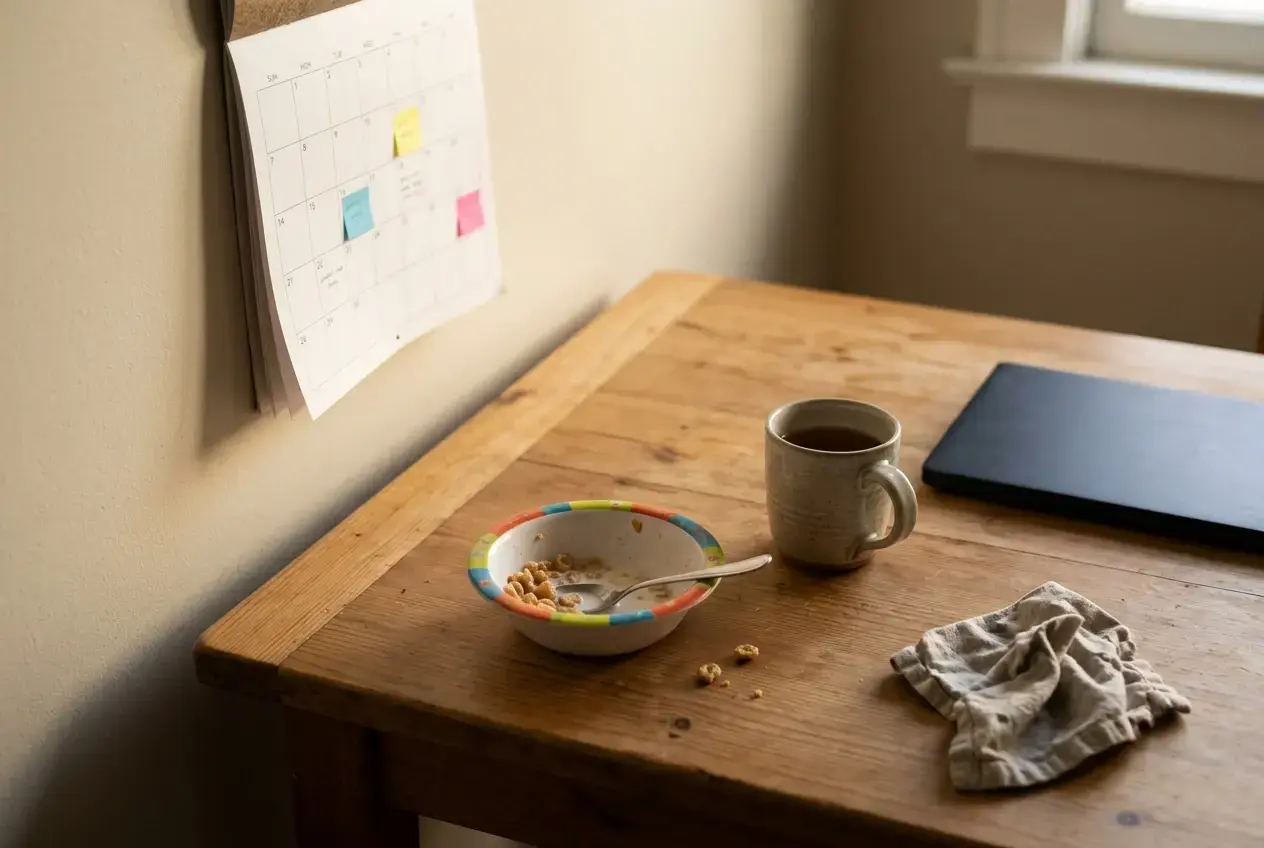
A useful way to size a post is by the work it needs:
- A short, focused answer to one question takes less time than a long guide.
- A post built from a clear outline takes less time than one you start cold.
- A post that needs research, screenshots, or product testing takes longer, so plan it for a week with more room.
You can mix these. A lighter post one week and a bigger guide the next gives you an average pace you can keep. If you are still working out how blogging fits next to everything else, balancing a side hustle and parenting without burning out goes into the wider picture.
How Do You Build A Topic Bank So You Never Start From A Blank Page?
A topic bank is a running list of post ideas, each with just enough detail that you can start writing without thinking. Keep it in a notes app on your phone so you can add to it in a queue at pickup or while a toddler finishes a snack.

Most of the time lost in a writing session goes to deciding what to write. A bank removes that decision, so your limited minutes go to the post itself.
Good ideas for a parenting blog come from places you already have access to:
- Questions other parents ask you, in person or in group chats
- Questions in comment sections on blogs and videos in your niche
- Problems you run into during an ordinary week that a reader might share
- Search suggestions that appear when you type a topic into a search engine
- Comments and replies from your own readers
Write each idea as a question a reader would type, because that doubles as a working title and a direction. “How do I keep a toddler busy during a work call?” tells you more than “toddler activities.”
Add a line or two under each idea: who it is for, and the two or three points you would cover. That is the outline half done. Aim to keep somewhere between ten and twenty ideas banked, and when the list drops low, spend ten minutes refilling it before anything else.
Sort the bank loosely into quick posts and bigger posts. When a week looks tight you can reach for a quick one, and when you have a long uninterrupted stretch you can pick a larger guide.
What Does A Simple Weekly Loop Look Like In Small Pockets Of Time?
A simple weekly loop has four parts that repeat: choose, outline, write, and publish and share. You spread them across whatever pockets of time you have, and you do not need them in any fixed days.
Here is one way to lay it out:

- Choose (about 10 minutes). Pick the next topic from your bank. Decide it at the start of the week so you are never staring at a blank page.
- Outline (one short pocket). Turn the idea into headings and a few bullet points under each. A nap-time pocket is enough for this.
- Write (your one flexible batch session). Use your longest and quietest block of the week to write the full draft. If your week has no long block, split the draft by section across several pockets, and write each section from the outline without rereading the whole post every time.
- Edit and publish (one short pocket). Read it through once, fix what is clearly wrong, add a link or two to your other posts, and publish. Leave perfecting it for later.
The batch session is the part that flexes. For some families it is a Saturday morning, for others it is two school-hour blocks on different days. What matters is that you name it, protect it where you can, and know which backup pocket takes over if it gets cancelled.
Keep a single place where the current post lives, whether that is a draft in your blog editor or one document, so you can pick up in any pocket without hunting for where you left off. When you stop mid-section, write a one-line note to your future self about what comes next. That note saves the first few minutes of the next session.
How Can You Get More Out Of Every Post You Write?
You get more out of a post by reusing its material in other forms once it is published, so one piece of writing feeds several places instead of one. Reuse is cheaper than starting something new, and it fits the small pockets of time you already have.
A finished post usually contains several smaller pieces:
- A short summary for social media. The opening answer paragraph often works almost as written.
- One tip pulled out as a standalone post. Choose the most useful point and give it its own few lines.
- A list for a newsletter. If your post has a checklist or a set of steps, send it to your email subscribers with a link back to the full post.
- A starting point for the next post. A section that could have been longer is a ready-made topic for your bank.
Your older posts are worth using too. When you publish something new, link to a related older post where a reader would genuinely benefit, and go back to that older post to add a link to the new one. This keeps readers moving through your site and keeps older content in use.
Updating is part of reuse as well. Once a quarter, pick one older post and check whether it is still accurate, whether the links work, and whether a new section would help. An update takes less time than a new post and can improve one that has been sitting quietly.
If you do send emails, common email marketing mistakes new parent bloggers make is worth reading before you set up a regular send.
What Should You Do When A Week Falls Apart?
When a week falls apart, switch to your minimum week: the smallest set of actions that keeps the blog moving. Decide what it contains now, while things are calm, so you are not making the call while you are tired or worried.

A minimum week might be as small as this:
- Add one idea to the topic bank
- Write one section of the next post, or an outline if that is all you can manage
- Reply to any comments on your site
That can be done in a single pocket of ten or fifteen minutes. If even that is out of reach, take the week off on purpose. A planned pause is different from drifting away from the blog, because you have already decided when you are coming back.
Then handle the restart simply. Next week, do not try to publish double to make up for the gap. Return to the normal loop with the next topic in the bank, and let the missed week stay missed. A blog does not need a perfect record. It needs a routine you can restart without guilt.
School holidays are worth planning for in the same way, since you can see them coming. Before a break starts, bank a few extra outlines or finish a post early, and set your minimum week as the default for those weeks. Anything beyond it is a bonus.
Final Thoughts
A content system for busy parent bloggers does not have to be elaborate. A topic bank, one flexible batch session, a habit of reusing what you write, and a minimum week are enough to keep a blog moving through ordinary weeks and difficult ones. Start with whichever part is easiest, probably the topic bank, and add the others over the next few weeks. Small steps matter, and you can build all of this around your life instead of the other way around.
If you want a place to build your blog and get support at your own pace, take a look at Wealthy Affiliate. It is what worked for me on my own journey, and you can read my full thoughts in my Wealthy Affiliate review. Take your time with it, and see whether it fits your family’s schedule.
Let’s Chat
Which part of this loop do you think would be hardest to keep in your house: the topic bank, the weekly batch session, or the minimum week? Tell me in the comments, and share what you would change to make it work for your family.