
How to turn a parent blog into a business comes down to four quiet systems: a publishing rhythm you can keep through a rough week, one simple way to earn, an email list, and basic records. Set those up first, and the blog can grow at whatever pace your family allows.
How Do You Know Your Parent Blog Is Ready To Become A Business?
Your blog is ready when you have decided to treat it as a long-term project with a purpose, whatever its size or traffic. The decision matters more than any milestone, because it changes how you spend your small pockets of time.
A few signs that you are at that point:
- You have published enough posts to know what you enjoy writing about, even if that is only a handful.
- You can describe the reader you are writing for in a sentence, such as “a parent of a toddler who wants quiet, realistic ideas for the day.”
- You want the blog to earn something eventually, and you are willing to set aside a regular, modest slice of time for it.
- You would rather build slowly than sprint for a month and stop.
If you only have a domain and an empty homepage, you are not behind. The same setup applies. You are simply starting the systems below at the same moment you start the blog.

It helps to write the decision down in one or two sentences: who the blog helps, and what you would like it to do for your family over the next year. Keep it somewhere you will see it. When a week falls apart, that note reminds you what you are building, and it needs no hustle to back it up.
What Systems Should You Build Before You Try To Grow?
Build four small systems before you chase more traffic: a publishing rhythm, a simple earning path, an email list, and a records folder. Each one takes an afternoon or two to set up, and each keeps working when your attention is somewhere else.
Growth tactics assume you have spare hours. Parenting rarely provides them on a schedule. Systems do the opposite job: they lower the effort needed to keep going, so a sick child or a school holiday slows the blog down without stopping it.
Here is what each system does:
- Publishing rhythm: decides when you write, so you are not deciding every day.
- Earning path: decides how the blog will make money, so your posts have a direction.
- Email list: gives you a way to reach readers that does not depend on a search engine or social platform.
- Records: keep the business side tidy so it never becomes a stressful backlog.
If balancing all this with family life is the part that worries you, the post on balancing a side hustle and parenting without burning out covers that side in more depth. This article stays with what to set up.
How Do You Keep A Publishing Rhythm That Fits Your Family?
Choose a schedule you could still keep during your worst week, and treat anything beyond it as a bonus. If that means one post every two weeks, that is a real schedule, and a kept schedule beats an ambitious one you abandon.
A rhythm has three parts: a minimum, a routine and a backlog.
Set a minimum you can always meet
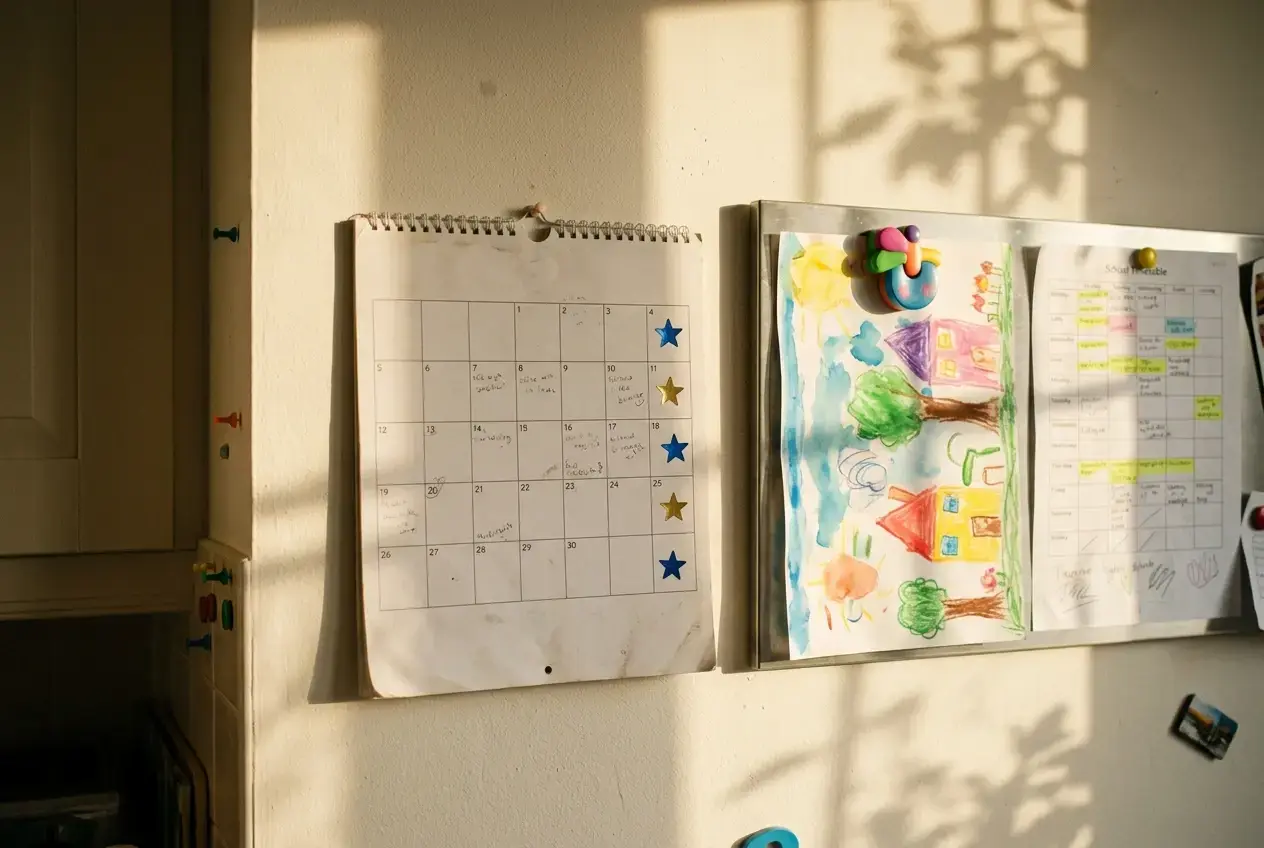
Pick the smallest output that still counts as progress. One post a week works for some families, one every other week for others. Write it on a calendar as a plain commitment, then notice how a month actually goes before you raise it.
Attach writing to a routine you already have
Tie blogging to something that already happens: the first half hour of nap time, the hour after school drop-off, or a set slot once the kids are in bed. A habit with a trigger takes less willpower than “whenever I find time,” because there is nothing to decide.
Keep a backlog so you never start from a blank page
Keep one running list of post ideas, with a line or two of notes under each. When you sit down, you pick from the list instead of staring at a cursor. Add ideas whenever you think of them, including the questions other parents ask you in conversation.

It also helps to split the work into stages. Outlining, drafting and editing do not need to happen in one sitting. Ten minutes outlining on Monday and twenty minutes drafting on Wednesday gives you the same post as one long session, and it fits into interrupted days much better.
Plan for the weeks that fall apart. Decide ahead of time that during illness, holidays and travel the blog pauses, and that you will pick it up again with the next item on your list. A planned pause is part of the system. An unplanned one tends to feel like failure, and that feeling is what makes people quit.
How Can You Start Earning Without Pushing Products On Readers?
You can start earning by choosing one honest earning path and fitting it into posts that already help readers, rather than writing posts built around a sales pitch. Readers can tell the difference, and they come back to the blogs that answer their questions.
For most parent bloggers, the earning path is affiliate recommendations: you point readers to a product or service you believe is useful, and you may earn a commission if they sign up or buy. Other paths exist, such as display ads, digital products and sponsored posts, but one path is enough to begin with. Trying several at once splits your attention and clutters the site.
A few habits keep this comfortable for you and fair to your readers:
- Recommend only what fits. Mention a product when it solves the problem the post is about. If you cannot explain who it is for and who it is not for, leave it out.
- Answer the question first. Write the helpful part of the post in full, then mention the recommendation where it naturally belongs.
- Say plainly that you may earn a commission. Put the disclosure near the link in ordinary language, and check the disclosure rules that apply where you live.
- Pick programs you can keep up with. Each affiliate program has its own terms, so joining a few relevant ones is plenty.
None of this needs a promise about income. Earnings depend on your readers, your topic and the time you can give, and those vary widely. What you can control is that every recommendation on your site is one you would be comfortable explaining to a friend.
Your email list is the other half of the earning path. A list lets you share new posts and useful notes directly with people who asked to hear from you. If you are wondering what to offer in exchange for a signup, the ideas in best lead magnets for parent bloggers are a good place to start. Set up a simple signup form early, even before you have many readers, so every visitor from now on has the option to stay in touch.
What Should You Track And Keep Records Of From The Start?
Keep a simple record of what you publish, what you spend, what you earn, and which programs you have joined. Starting this on day one takes minutes a week, whereas rebuilding it a year later takes hours and usually involves guessing.

A single spreadsheet or folder is enough. Here is what to keep in it:
- Money in: the date, the source and the amount for every payment the blog receives.
- Money out: hosting, domain, tools and anything else you pay for, with the receipts saved. Note the date and what each one was for.
- Affiliate programs: which ones you have joined, the date, and a copy of the terms you agreed to, since terms can change.
- Published posts: title, publish date and any affiliate links included, so you can find and update them later.
- Email list basics: which tool you use and how people sign up, so you always know how readers gave their consent.
- Logins: use a password manager rather than a notebook or your memory.
Consider keeping blog money separate from household money. A separate account or card for blog expenses and income makes the records easier to read, and it saves you from sorting through months of mixed transactions.
Tax and legal rules differ by country and region, and they change. Once the blog is earning anything, a short conversation with a local accountant or tax professional is worth having. Your records make that conversation quick, because you can simply hand over the folder.
Review the records once a month, at the same time you check your calendar. Ten minutes is usually enough, and a habit that small is easy to keep.
What Can Safely Wait Until Later?
Almost everything beyond the four systems can wait: extra social media accounts, a full rebrand, advanced search optimization, paid ads, a course, a podcast and a long list of paid tools. None of these is bad, but each one competes for the same limited hours you need for writing and keeping your rhythm.
Here is a plain way to decide:
- Wait on new platforms. One extra channel means one more thing to feed. Add it only when your blog’s rhythm runs without strain.
- Wait on design polish. A clean, readable theme is enough. A new logo will not make a post more helpful.
- Wait on paid tools. Free options cover writing, scheduling and basic email for a long time. Pay for something only when a specific task is costing you more time than it is worth.
- Wait on big products. Courses and downloads take weeks to build well. Get your posts and list working first, so you know what your readers actually want.
- Wait on business structure questions. When you have a concrete question, take it to a local professional rather than guessing from general advice online.
Wait does not mean never. It means you choose the next addition on purpose, once the current system holds up without extra effort from you. If you are unsure what to add next, the post on email marketing mistakes new parent bloggers make is a useful check before you expand your list.
Final Thoughts
Turning a parent blog into a business is mostly a matter of setting up a few things that keep working when life gets busy: a rhythm you can keep, one clear way to earn, an email list, and tidy records. Small steps matter here, and you can take your time with each one. Build around your life, and let the blog grow into the space you give it.
Here’s what worked for me: having training, website hosting and a supportive community in one place, so I was not piecing it together from a dozen different tabs. If that sounds useful to you, take a look at Wealthy Affiliate and start with the free option at your own pace. There is no pressure and no promise of any particular result. It is simply a place to learn, build and ask questions alongside other people doing the same. Here’s my Wealthy Affiliate review for you to check out the platform that helped me.
Let’s Chat
What is the one thing you would like your parent blog to do for your family over the next year? Share it in the comments, and tell us which of the four systems (rhythm, earning path, email list or records) you plan to set up first.