
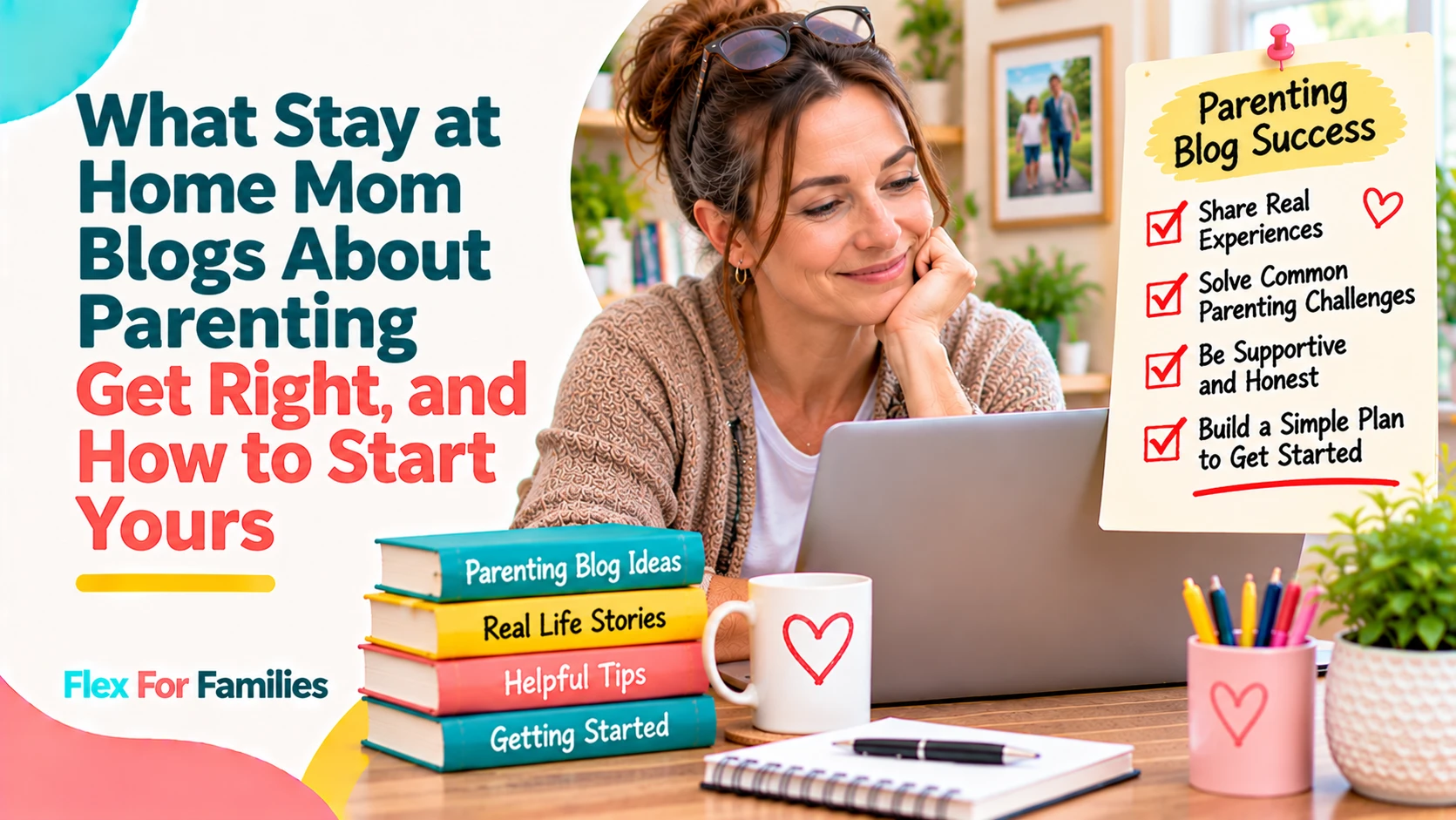
Stay at home mom blogs about parenting mostly write four kinds of posts: personal stories, practical how-tos, product recommendations, and printable resources. If you want to start your own, read a few by post type, borrow the structure that suits you, and write from what your own days with kids actually look like.
What Do Stay at Home Mom Blogs About Parenting Actually Cover?
They cover the daily work of raising children, written by someone doing it. Most posts fit one of four types, and each one teaches a beginner something different.
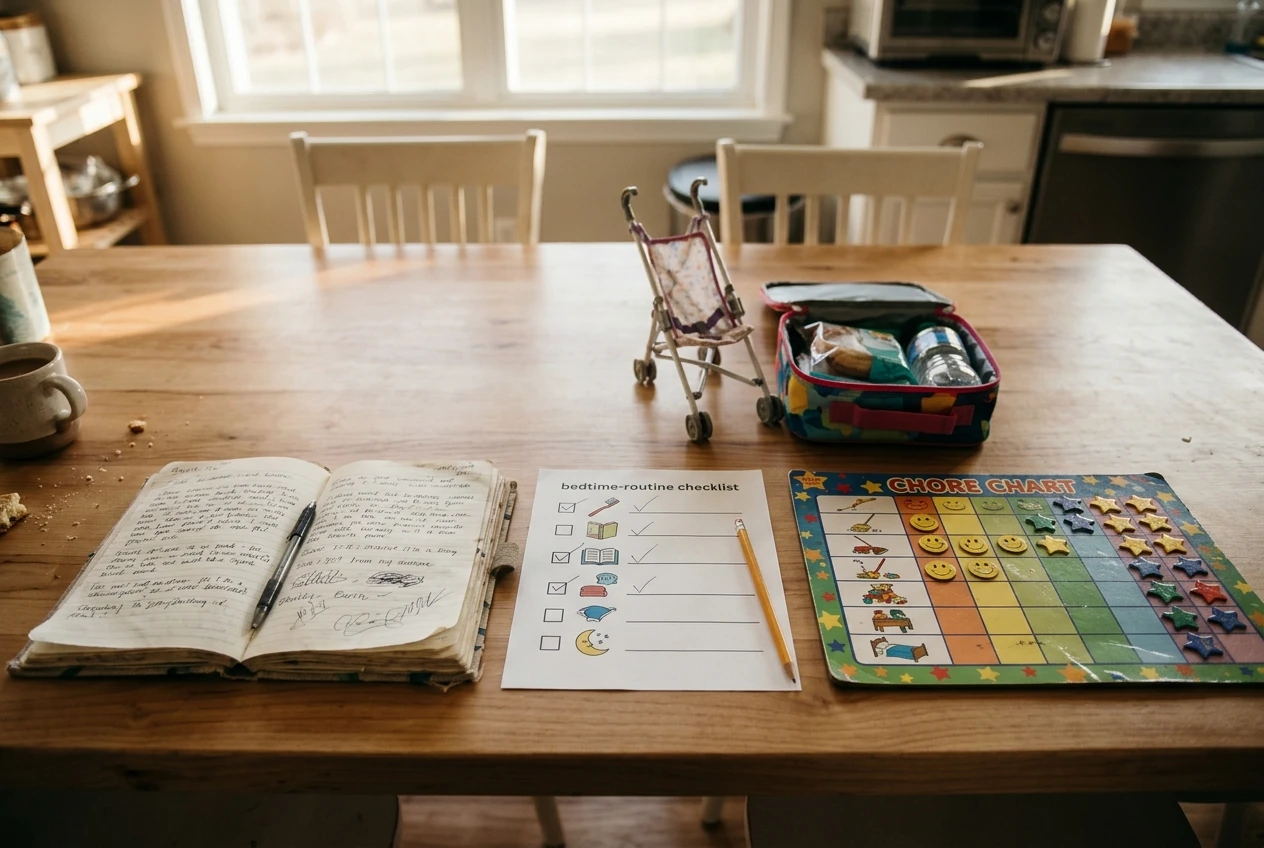
Personal stories and reflections. These are posts about a hard stretch, a small win, or something a parent changed their mind about. What to borrow: the habit of writing in first person about one specific moment instead of parenting in general. Readers stay for the honesty, and one concrete scene does more than a page of advice.
Practical how-tos. Think bedtime routines, picky eating, potty training, a weekly meal plan, or a morning schedule that gets everyone out the door. What to borrow: the structure. A clear problem, a short list of things to try, and a note on what to do if the first thing fails.
Product recommendations and comparisons. These cover strollers, lunch boxes, learning toys, and planners. What to borrow: the habit of explaining who a product suits and who should skip it. Good ones say what the product does badly, which is what makes the recommendation believable.
Printables and resources. Chore charts, activity lists, and checklists fall here. What to borrow: the idea that a post can be something a reader uses, not only reads. Printables also show you what readers want help with.
Many blogs mix all four. A blog with a clear main type, plus the others now and then, is easier to follow and easier to write.
How Do You Find Stay at Home Parent Blogs Worth Following?
Search for the specific problem you have, then judge the blogs that come up by a few plain checks. Searching “stay at home mom blogs about parenting” gives you a long list of roundups, but a search like “toddler won’t nap in the afternoon” shows you who writes with real detail.
Look for these signs in a blog:
- The writer describes specific situations, such as what they said, what the child did, and what happened next.
- Posts have been updated or added to in the recent past, so the advice is not stuck in an older stage of parenting.
- Affiliate links are labeled, and the writer is clear about why they recommend something.
- Readers leave comments and the writer answers them.
- The writing sounds like a person talking, not a list of keywords.
Keep a simple note as you read. Write down the blog, the post type, and one thing it does that you could borrow. Ten blogs and ten notes will teach you more about your own style than a month of general reading.

Pay attention to what you dislike too. If a blog’s tone makes you feel behind or judged, that tells you what you do not want to sound like.
Is a Stay at Home Dad Blog Any Different?
The topics are the same, and the point of view is the main difference. A stay at home dad blog covers routines, meals, sleep, school, and the mental load of running a home, just like a mom blog. What changes is the perspective the writer brings, and that can be a real advantage.
Many parenting searches are written for mothers by default, so a dad who writes clearly about the same problems offers something fresh to readers who are tired of the usual tone. Nothing about the format needs to change.
If you are a dad starting a blog, you do not need to fit a “mom blog” template, and you do not need to write about being a dad as a special topic unless you want to. Write about the problems you are solving at home. Your readers will include mothers, fathers, grandparents, and caregivers, since a bedtime routine that works is useful to any of them.
The same goes for any stay at home parent who does not match the picture most blogs paint. Your own situation, such as one child or four, a small apartment or a farm, is part of what makes your posts different from the hundreds already online.
What Blog Post Ideas Do Work From Home Mom Blogs Keep Coming Back To?
The same handful of topics returns because parents keep searching for them. You do not need to find a new subject. You need to write about a familiar one from your own days.
Ideas that come up again and again:
- Daily routines. A morning routine, an after-school routine, a bedtime routine. These work well because every family has to build one.
- Age and stage guides. What to expect and what to try with newborns, toddlers, or school-age kids.
- Activities at home. Rainy day ideas, quiet-time activities, simple crafts, and games that need no setup.
- Meals and snacks. Lunch box ideas, easy dinners, and what to do about picky eaters.
- Parent well-being. Finding time alone, handling the days that go badly, and keeping a household calm enough to function.
- Getting organized. Chore systems, family calendars, and decluttering a house full of toys.
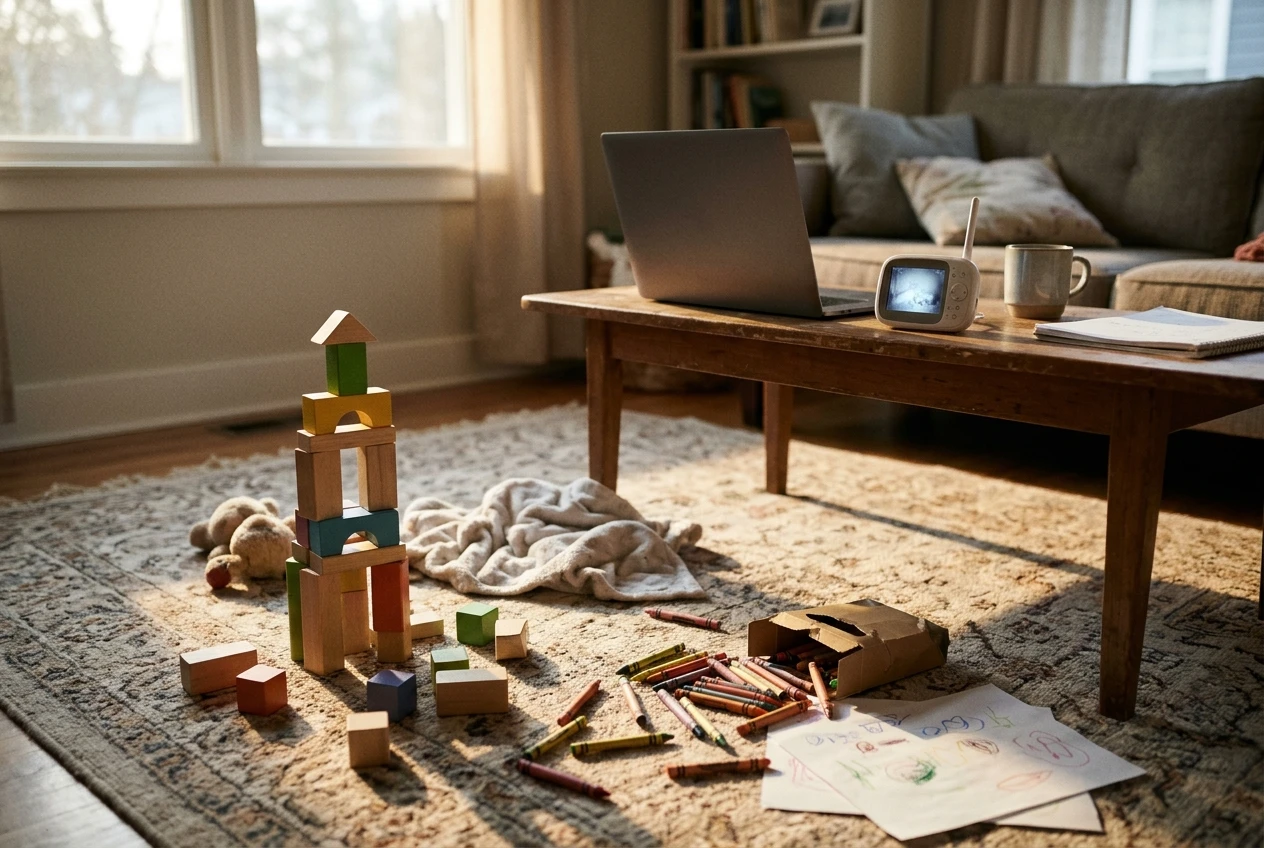
- Working around kids. How work from home mom blogs handle a schedule built around nap time, school hours, and the evenings after bedtime.
That last group matters if you plan to blog while parenting. Posts about fitting work into a family day attract readers in the same position as you, which makes them a natural fit for a blog about starting a blog.
A useful test for any idea: can you describe one specific thing that happened in your house related to it? If yes, you have the start of a post nobody else can write.
Can Stay at Home Parents Make Money Blogging?
Some can, and it takes time, regular work, and realistic expectations. Plenty of parents earn nothing for a long stretch, and no one can honestly promise you a figure or a timeline. What can be said is how blogs usually earn.
The common routes are:
- Affiliate links. You recommend a product or service and earn a commission if a reader buys through your link. Parent blogs often do this with products they have used and can describe honestly.
- Display ads. These pay based on visitors, so they generally suit blogs that already have steady traffic.
- Digital products. Printables, planners, and ebooks that you make once and sell to readers.
- Sponsored posts. Brands pay to be featured, which usually comes after a blog has an established audience.
For most beginners, affiliate links are the simplest place to start, because you need no product of your own. The harder part is choosing programs that fit your readers. Our guide on how to find affiliate programs in your niche walks through that, so you recommend things your readers actually want.
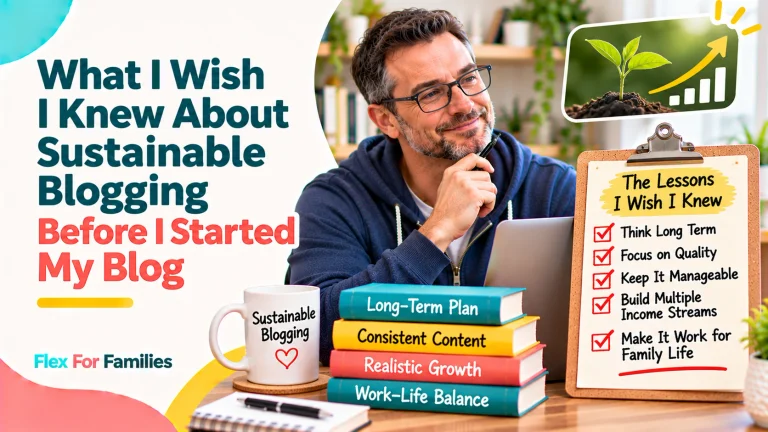
Money also shapes how you work. A blog built around daily page views can wear you out. If you want a pace that fits family life, read what I wish I knew about sustainable blogging before I started my blog. Parents tend to do better when the goal is a few good posts a week, not a punishing schedule.
How Do You Start a Mom Blog as a Beginner?
Start with one clear topic, one platform, and a short list of posts you can finish. Keep it simple, because small steps matter more than a perfect launch.

- Pick your focus. Choose the part of parenting you can write about most often, such as toddler routines, school-age activities, or working around naptime. You can widen it later.
- Choose a name and a platform. Pick a name that will still fit you as your children grow, and a platform that is easy enough to use that you will actually post.
- Write five posts before you worry about anything else. Use the post types above. Try one personal story, two how-tos, and one recommendation, so you can see which feels most natural.
- Set a schedule you can keep. One post a week is plenty. A short, steady rhythm that works around your children lasts longer than a burst of effort.
- Organize your blog as a small business. Even with a few posts, it helps to know where your writing, your links, and your plans live. How to structure your blogging business using Wealthy Affiliate as your home base shows one way to set that up.
- Share it with a few people. Tell friends or other parents, and ask what they would like you to write about next.
You do not need to do all of this in a week. Take your time and build around your life.
Final Thoughts
Parenting blogs are worth reading because they show you what other parents write and how they write it. Sort them by post type, borrow what works, and put your own days into the writing. The posts that help readers most come from specific, honest moments.
If you would like to start without doing it alone, take your time and have a look at Wealthy Affiliate. It is the place where I built my blog, with training and other bloggers around me, and that support is what worked for me. A small next step is enough: look around, see if it suits your family’s schedule, and decide at your own pace.
Let’s Chat
Which kind of post would you most like to write first: a personal story, a how-to, a product recommendation, or a printable? Tell me in the comments, along with the topic you have in mind.