

To find affiliate programs in your niche, start with products your readers already need. Check brand websites, use targeted searches and browse relevant affiliate network directories. Verify each opportunity through the brand or network, check regional and promotional restrictions, then record a small shortlist before applying. You do not need dozens of memberships to begin.
Finding opportunities can feel like progress. The difficulty is knowing when to stop searching and start doing something useful with the results.
If you are building a blog around work and family, you need a process that produces a few relevant options. A folder full of outdated program lists will give you more checking to do later.
This guide takes you from one reader problem to a verified shortlist. It focuses on discovery, rather than ranking networks or picking whichever offer advertises the largest commission.
The examples are research and planning examples. They do not represent programs I have joined, products I have tested or earnings I have achieved.
What Should You Search for Before Looking for Affiliate Programs?
Start with a reader problem and the types of products that might help solve it.
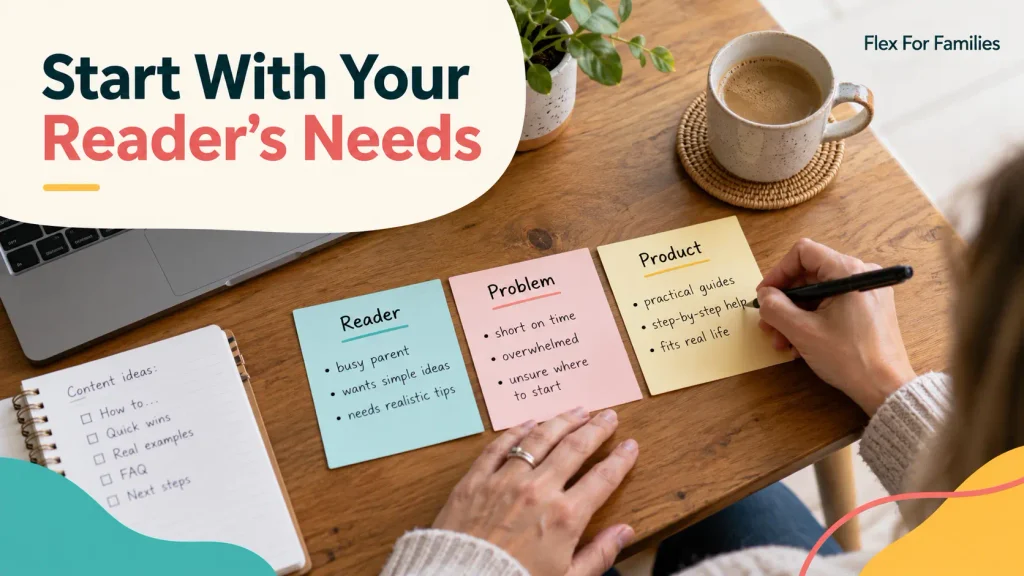
Your niche gives you a subject area. The reader’s problem gives your search a purpose. A family activities blog could cover rainy-day ideas, low-cost days out and games for different ages. Each subject suggests different types of products or services.
Write down three things before you open a directory:
- Who you are helping.
- What they are trying to do.
- Which product categories could reasonably support that task.
For example, a parent planning affordable rainy-day activities might consider reusable craft materials, board games or local indoor attractions. Those are search directions, rather than recommendations to buy anything.
You should also ask whether a purchase is necessary. A useful activity guide might include free library resources and things a family already owns. Affiliate opportunities can sit alongside those suggestions where they make sense.
If your subject still feels broad, my guide to choosing a blog niche can help you clarify the audience first.
Where Can You Find Affiliate Programs?
The most useful starting places are official brand websites, targeted web searches and network directories.
Other publishers and program lists can supply leads. Treat them as places to discover names, then check the details with the company or network responsible for the program.
| Discovery Route | Useful Starting Point | What to Verify |
|---|---|---|
| Brand website | A product already relevant to your readers | Current application page and program terms |
| Targeted search | A product category or specific brand | That the result describes a current program |
| Network directory | Several brands in a category | Region, program requirements and approval route |
| Relevant blogs | Brands appearing in useful content | Whether the opportunity still exists |
| Direct enquiry | A brand with no clear public affiliate page | Whether it accepts content publishers |
You do not need to use every route in one sitting. Start with the brands you already recognise and expand the search if those do not produce suitable candidates.
How Do You Find an Affiliate Program on a Brand’s Website?
Check the website footer, help centre and partnership pages for information about affiliates or publishers.
Common labels include:
- Affiliates or Affiliate Program.
- Partners or Partnerships.
- Publishers.
- Creators or Ambassadors.
- Refer a Friend.
Those labels do not all describe the same arrangement. A customer referral offer might provide store credit rather than commission. An ambassador scheme could require regular social content. A wholesale account is about buying stock, rather than referring customers.
Read what the offer actually involves before adding it to your list. You are looking for a route that accepts your type of content and lets you earn from eligible referrals under clear terms.
What if the Brand Sends You to a Network?
Follow the application route linked from the official brand website, then check the program information on that platform.
A brand may use an external network or partnership platform to manage applications, tracking and payments. Its name does not have to appear in the destination domain for the route to be legitimate.
However, avoid assuming that any page using the brand’s logo is authorised. Start from its official website where possible. If the destination is unclear, ask the brand to confirm it before sharing personal or payment information.
Which Searches Help You Find Programs in Your Niche?
Combine a brand or product category with terms such as “affiliate program”, “affiliate programme” or “publisher partners”.
Broad searches can help you discover categories. Specific searches are usually more useful once you know which products your audience needs.
| Search | What It Helps You Find |
|---|---|
[brand name] affiliate program | A specific brand’s application route |
[brand name] affiliate programme UK | A possible UK-specific offer |
[product category] affiliate programs | Brands within a relevant category |
[niche] publisher partners | Programs using different terminology |
site:brandwebsite.com affiliate | Affiliate information on a particular website |
For our family activities example, you could try “board game affiliate programme UK” or “craft supplies affiliate program”. These are sample searches, not promises that every result will accept you.
Check both “program” and “programme” if your first search produces little. Add your audience’s country where useful, but verify the actual terms rather than relying on the wording of the result.
Can You Use AI to Find Affiliate Programs?
Yes, AI can suggest categories, brands and search terms, but verify every program through an official source.
An assistant can produce an outdated commission rate or describe a program that has closed. A fluent answer does not establish that an application page is current.
A useful request would be: “Suggest product categories that could help UK parents plan affordable rainy-day activities. Give me search terms to investigate, and flag anything you cannot verify.”
Use the output to guide your research. Do not publish its program details without checking them.
How Do You Use Affiliate Network Directories?
Search a relevant directory by category, brand or region, then inspect individual program profiles.
A network brings multiple advertisers into one platform. That can make discovery easier, but you still need to check the suitability and rules of each advertiser.
You are applying as a publisher or affiliate. Avoid confusing an advertiser’s page for recruiting affiliates with the publisher tools for finding brands to promote.
Example: Browsing Awin
Awin’s directory guidance says you can browse advertisers without logging in. Approved accounts can access fuller program details and filters inside the platform.
Use a category or brand search, then check the relevant territory. Look at the advertiser’s own information before assuming it serves your audience or accepts your promotional method.
For a UK family activities blog, a program aimed at another market may be unsuitable even if the products look relevant. Shipping availability and commission eligibility are separate things to check.
Example: Software Programs Through PartnerStack
PartnerStack’s Marketplace focuses on B2B software partnerships. It is a more relevant search direction for a blog about business tools than a general search for children’s activities.
If your audience includes parents building online businesses, some software categories could be worth investigating. The connection should come from what those readers need, rather than the appeal of recurring commissions.
My PartnerStack review explains its suitability and limitations. The guide to using PartnerStack covers the documented application and working process. Both are research-based, rather than reports of my own platform testing.
Does Joining a Network Approve You for Every Brand?
No. Network membership and individual program acceptance can be separate decisions.
For example, Awin’s application guidance says you must apply to an advertiser’s program and receive approval before promoting it.
Record the actual status of each opportunity. “Found”, “applied” and “approved” describe different stages. Only use tracking links and promotional materials under the permissions that apply to your account.
Can Other Blogs Help You Discover Programs?
Yes. Relevant blogs can reveal brands you have not considered, especially through resource pages, tutorials and product comparisons.
Look at the role a product plays in the article. Is it solving a specific problem? Does the publisher explain limitations or alternatives? That can help you think about the questions your own audience might ask.
Do not copy the article’s recommendations or assume its commercial choices fit your readers. You also cannot reliably infer another blogger’s earnings from the number of affiliate links they publish.
When you find a possible brand, return to its official site or network profile. Check the current route, terms and product information yourself.
My affiliate program ideas for parent bloggers can provide another starting list. Use it to investigate relevant options, rather than as a reason to join everything mentioned.
What Should You Do if You Cannot Find a Public Program?
Ask the brand whether it has an affiliate program for content publishers and where to find the current terms.
Some companies use terminology that is difficult to find through search. Others may not offer a suitable arrangement. A brief enquiry can clarify the position without committing you to anything.
Here is a template you can adapt:
Hello, I publish a blog for [specific audience] covering [relevant subjects]. I am researching [product/category] for planned content and wanted to ask whether you have an affiliate program for content publishers. If so, could you share the official application page, supported regions and program terms? Thank you, [name].
Keep your description accurate. Do not invent traffic, promise sales or suggest you have tested a product when you have not.
If the answer is no, record it and continue. You can still mention a useful product independently. Every recommendation does not need an affiliate link.
How Do You Check Whether an Affiliate Program Is Still Active?
Confirm the application route and current terms with the brand or network, rather than relying on a list’s publication date.
A page labelled with the current year may still contain old information. Programs can close, move platforms or change which publishers they accept.
A useful example is ShareASale. Awin’s official announcement set its closure for 6 October 2025 following the transition to Awin. An older guide directing you to join ShareASale as a separate current network needs updating.
That does not mean every brand mentioned in an older article has stopped working with affiliates. Follow the brand’s current official route instead of guessing where it moved.

What Should You Verify Before Applying?
Check enough detail to decide whether the opportunity deserves a fuller assessment.
- Official brand identity and application URL.
- Whether applications are currently accepted.
- Eligible publisher and customer locations.
- Permitted channels, including your intended use of a blog, email or social media.
- The qualifying action that earns commission.
- Current commission terms and attribution conditions.
- Payment requirements and any stated costs or purchase obligations.
- A support contact for unclear information.
You do not need to conduct a lengthy investigation into every search result. If a basic requirement rules it out, mark the reason and move on.
If the public page omits important terms, record “not confirmed”. Ask for clarification before treating the offer as suitable. Avoid filling gaps with another website’s claims.
How Should You Record the Programs You Find?
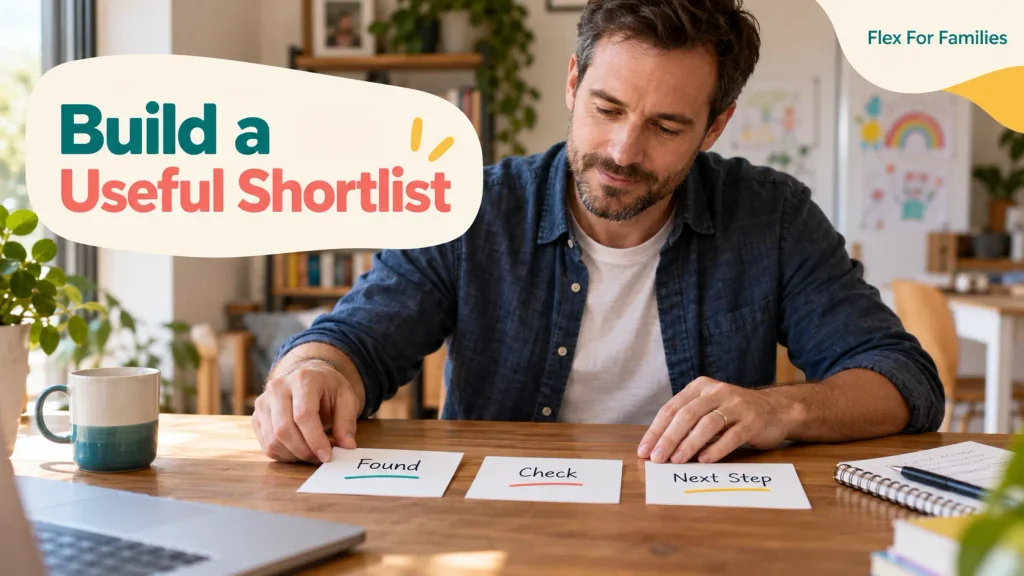
Use one simple shortlist containing the source, the audience connection and the next action.
You can keep this in a spreadsheet, a document or a notebook. A new paid tool is unnecessary for a first research session.
| Field | What to Record |
|---|---|
| Brand and product category | The company and relevant type of product |
| Reader problem | Why someone in your audience might need it |
| Official source | Brand application page or network profile |
| Platform | Direct program or named network |
| Geography | Confirmed regions and any unanswered questions |
| Main terms | Relevant commission, channel and payment conditions |
| Content connection | An existing article or sensible future topic |
| Status | Found, needs clarification, applied, approved or unsuitable |
| Date and next action | When you checked and what needs doing next |
For our example, a draft entry could say: “Craft supplies retailer, reusable rainy-day activity materials, official program page still to verify.” That is a research lead. It is not a verified partnership.
Once you confirm the details, update the entry. Keep uncertain information visibly separate from confirmed facts.
How Many Programs Should You Shortlist?
Three relevant candidates are a manageable starting target for this exercise, rather than a rule about how many programs a blog needs.
You may find only one suitable option. That is more useful than collecting ten poor matches to meet an arbitrary number.
Before applying, consider whether you can explain the product’s relevance and identify a useful content opportunity. A large commission does not compensate for a weak connection with the reader.
What if You Cannot Find a Suitable Affiliate Program?
Consider adjacent products that genuinely help with the same problem, while keeping the original content useful without a purchase.
For a free rainy-day activities article, an optional craft-material recommendation could make sense. An unrelated business-software offer would be difficult to justify simply because it pays more.
You can also revisit the search later. Brands and program availability change, and you may understand your audience better after publishing more content.
Avoid changing your entire niche because one search session produced few offers. Affiliate marketing is one possible income route. Advertising, your own products or services may suit some topics better, with their own requirements and workload.
Can You Find a Useful Shortlist in 30 Minutes?
You can use 30 minutes to make a focused start, although it may take longer to verify terms or receive answers.
The schedule below is an editorial planning exercise. It is not a tested completion time or a promise of approval.
| Time | Task | Useful Output |
|---|---|---|
| First 5 minutes | Choose one reader problem and product category | A clear search brief |
| Next 10 minutes | Check known brands and targeted searches | A few possible leads |
| Next 10 minutes | Inspect official pages for promising candidates | Confirmed details and unanswered questions |
| Final 5 minutes | Record findings and choose the next action | A shortlist you can resume later |
Stop when the session ends. Note where to continue instead of opening more tabs simply to feel thorough.
Your next session might involve comparing two candidates, asking a brand a question or preparing one accurate application. Finding an offer is the beginning of the decision.
What Should You Do After Finding Programs?
Assess the shortlist before applying, then build useful content around the options you can genuinely support.
Check product quality, audience suitability, terms and your ability to explain limitations. Being accepted does not require you to recommend a product in every related article.
If you need a wider explanation of the business model, start with my affiliate marketing guide for parents.
You can also use the free Flexible Income Starter Kit to organise your blogging direction around family life.
For today, choose one reader problem and investigate up to three relevant candidates. Leave the larger search until you have assessed what you already found.
Frequently Asked Questions
These answers cover common questions about finding programs before you apply.
How Do I Find Affiliate Programs for a Small Niche?
Search for the specific products and services your audience uses, then expand into adjacent categories that solve the same problems. Check brand websites and relevant network directories. A small niche does not require a large number of affiliate partnerships.
Can I Research Programs Before My Blog Is Launched?
Yes. You can research public program pages and record opportunities before launching. Applying is a separate step, and some programs require a functioning website or other evidence of your promotional activity. Follow the requirements of each program.
Do All Brands Have Affiliate Programs?
No. Some offer customer referrals, ambassador arrangements or no partnership route at all. Read the terms carefully and ask the brand if its public information is unclear.
Should I Join a Network Before Choosing a Product?
You can investigate products and public directories first. Join a relevant network when it supports the brands and content you intend to work with. Network membership does not necessarily approve you for every advertiser.
Can AI Find Affiliate Programs for Me?
AI can suggest search terms, categories and possible brands. Verify program availability, application routes and terms through official sources because AI suggestions can be outdated or inaccurate.
How Can I Check Whether a Program Accepts UK Affiliates?
Read its publisher eligibility rules and ask the program manager if necessary. Also check the customer regions where referrals qualify. Accepting a UK publisher does not automatically mean every UK customer purchase earns commission.
How Many Affiliate Programs Should I Apply to First?
There is no universal number. Start with the relevant programs you can assess and support through useful content. For this guide’s exercise, a shortlist of up to three candidates keeps the research manageable without making applications a target in themselves.
Let’s Chat
Which part of finding affiliate programs has been hardest for you: locating suitable brands, understanding the terms or knowing when you are ready to apply?
Share your niche and the reader problem you want to solve. That is a more useful starting point than searching for the highest commission.