

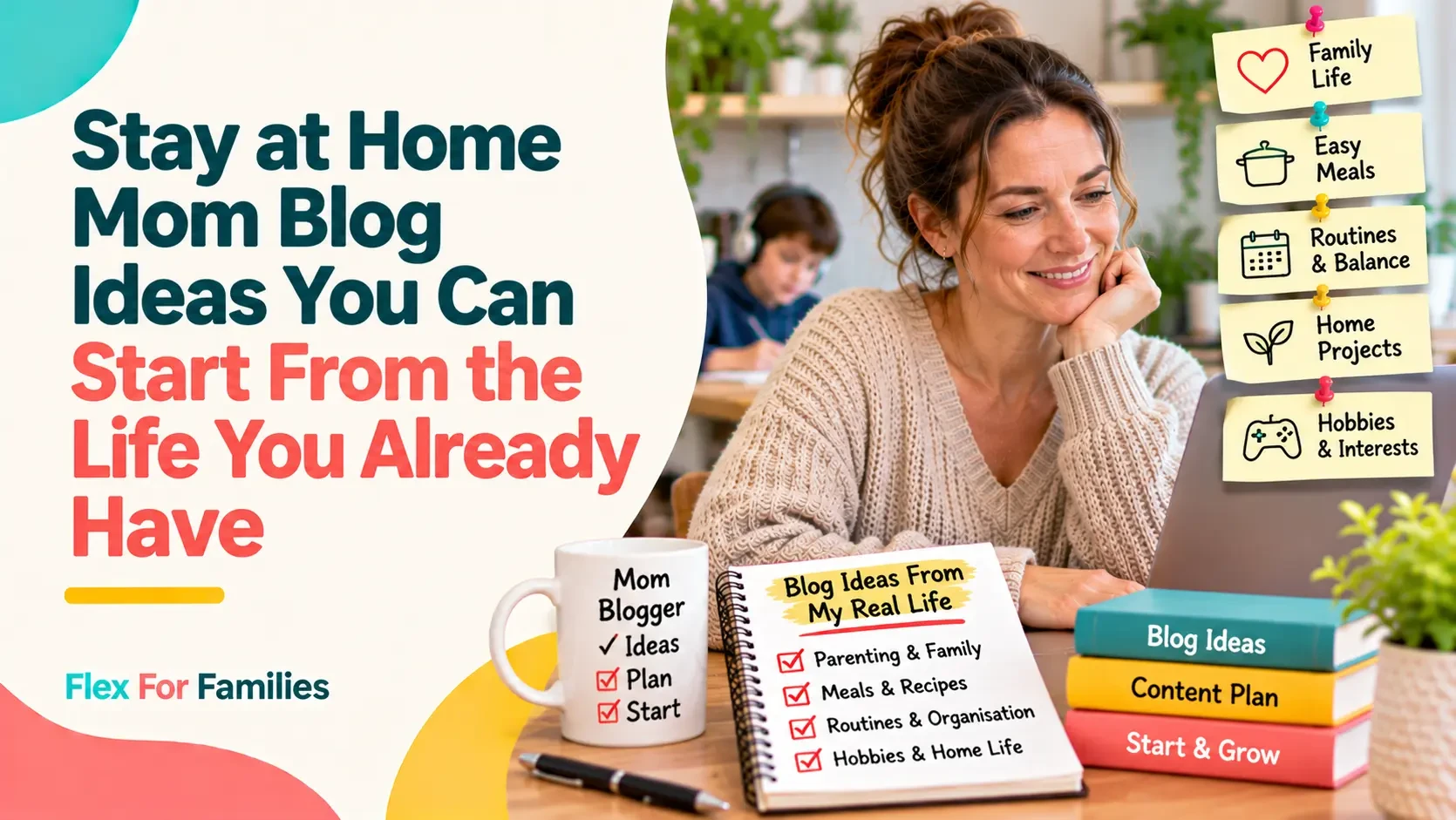
The best stay at home mom blog ideas come from what you already do every day: feeding a family on a budget, running a household routine, handling school runs, or getting work done in the short windows a nap gives you. Pick one of those areas, write about it for a month, and you have a niche and a content plan.
What Are the Best Stay at Home Mom Blog Ideas to Start With?
The best ideas are the ones where you already have something specific to say and other parents are already searching for answers. A long list of topics will not help you choose, so here are the areas that most often work for parents at home.
- Meals and grocery budgets: weeknight dinners, meal planning, feeding picky eaters, cooking once and eating twice.
- Household routines: morning and bedtime routines, chore charts, laundry systems, keeping a small home tidy.
- Money at home: budgeting on one income, saving on kids’ clothes, secondhand shopping, no-spend weeks.
- School and activity logistics: school run schedules, packing lunches, organizing paperwork and calendars.
- Young children at home: toddler activities, rainy-day ideas, early learning games, screen-time rules.
- Working in small windows: how to get anything done during naps, quiet time, or the hour after drop-off.
Each of these can be narrowed further, and the narrower version is usually the better blog. “Parenting” is too wide for anyone to find you. “Cheap dinners for a family with a toddler and two school-age kids” tells a reader right away whether the site is for them.
Notice that none of these require expert credentials. They require attention to how your days run and a willingness to explain it clearly to someone a few steps behind you.
How Do You Pick an Idea From the Life You Already Live?
You pick it by looking at your own week and noticing what you handle repeatedly, what other people ask you about, and what you could explain without preparing. Those three things point to a topic you can keep writing about without running out of material.
Try this on paper. It takes about fifteen minutes.
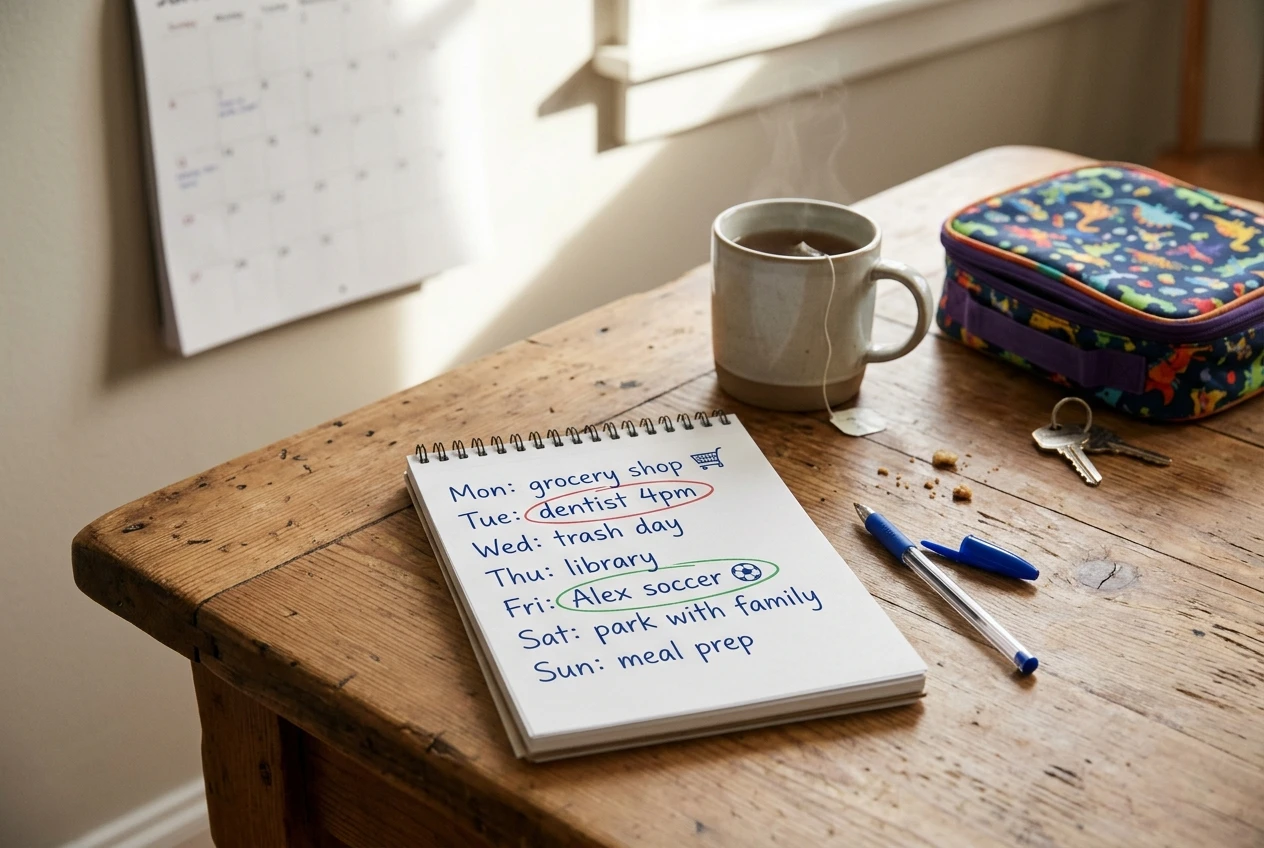
- List what fills your week. Write down every recurring task: meals, laundry, school runs, appointments, errands, bedtime, the budget check on Sunday.
- Mark the ones you have opinions about. If you have a method for packing lunches or a rule for the grocery list, that is a post waiting to be written.
- Mark the ones people ask you about. Friends, relatives, and other parents tend to ask the same kinds of questions repeatedly. Those questions are also what strangers type into search engines.
- Pick one cluster. Choose the area where several of your marks overlap, such as meals plus budgeting.
Then write one sentence describing who the blog helps and with what. For example: “This blog helps parents at home plan simple family dinners without overspending.” That sentence is your niche. It does not need to be perfect, and it can be adjusted after a few posts once you see what you enjoy writing.
One caution: choose a topic you can live with for a while. A blog about a subject you tire of in three weeks will not get far, however many people search for it.
What Blog Post Ideas Can You Write in Your First Month?
In your first month, aim for a handful of posts that each answer one clear question a reader would type into a search bar. One or two posts a week is a realistic pace, and a smaller number published is better than a larger number planned.
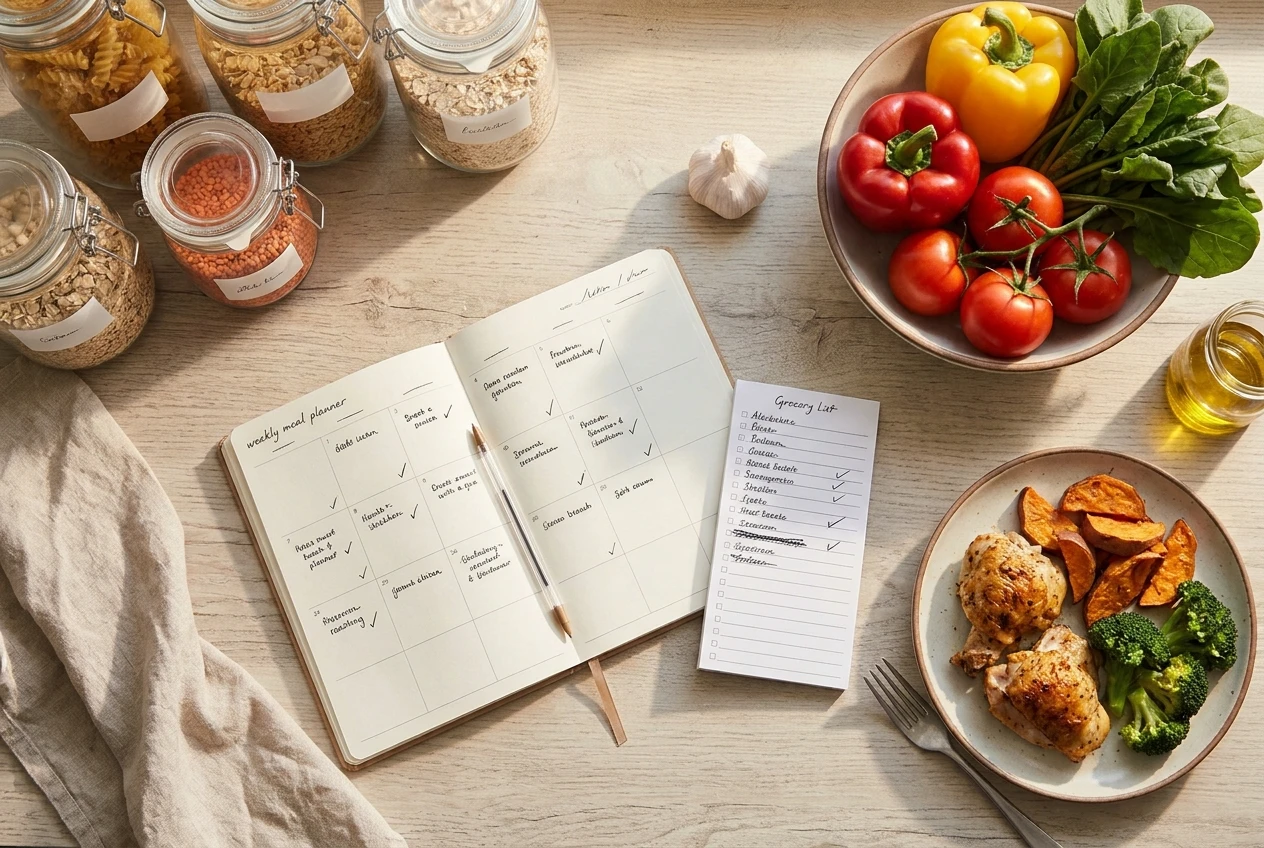
The example below uses a “family meals on a budget” niche. Swap in your own topic and the structure still works.
Week 1: The Basics Readers Ask First
- A simple weekly meal plan for a family, and how to build your own.
- What a grocery list looks like when you plan around what is already in the pantry.
Week 2: Problems You Have Solved
- Dinners that work for picky eaters without cooking two meals.
- How to use leftovers so they do not feel like leftovers.
Week 3: Routines and Systems
- A Sunday reset routine for the week ahead.
- How to handle the dinner rush between school pickup and bedtime.
Week 4: Comparisons and Roundups
- A comparison of two ways to plan meals, such as paper planner versus a phone app.
- A roundup of freezer-friendly recipes your family already eats.
If your niche is routines, budgeting, or school logistics, the same pattern applies: start with the basic questions, move to specific problems, then systems, then comparisons. Beginners tend to skip the first group, but those basic questions are what new readers search for most.
Each post should do one job. Name the problem in the opening, give the answer in plain steps, and stop when the answer is complete. Length matters less than whether a reader finishes the post knowing what to do.
Can Stay at Home Parents Make Money Blogging?
Yes, some parents earn money from blogs, but nobody can honestly promise you an amount or a timeline, and many blogs earn very little at first. Treat income as something that may develop after you have built useful content, not as a result to expect from a first month of posts.
Here is how blogs generally earn, so you know what you are working toward:
- Affiliate links: you recommend a product or service and earn a commission if a reader buys through your link. This works best when the recommendation fits the post.
- Display ads: ad networks pay based on traffic, which means they usually only matter once a site has steady readers.
- Your own products: printable planners, meal plans, or guides you create yourself.
- Services: coaching, freelance writing, or similar work that your blog helps you find.
All of these depend on readers trusting your content, which is why choosing a topic you can write about honestly comes first. If you want a clear-eyed way to weigh whether the time is worth it for your family, this family-friendly reality check on side hustles walks through the questions to ask.
A sensible approach is to write for readers first and add monetization when you have posts worth attaching it to. Be open with readers when a link is an affiliate link. That keeps the relationship simple and fair.
Are There Blog Ideas for Stay at Home Dads Too?
Yes, every idea in this article works for stay at home dads, because the topics come from daily routines and not from who is doing them. Meals, budgets, school runs, and toddler schedules do not belong to one parent.
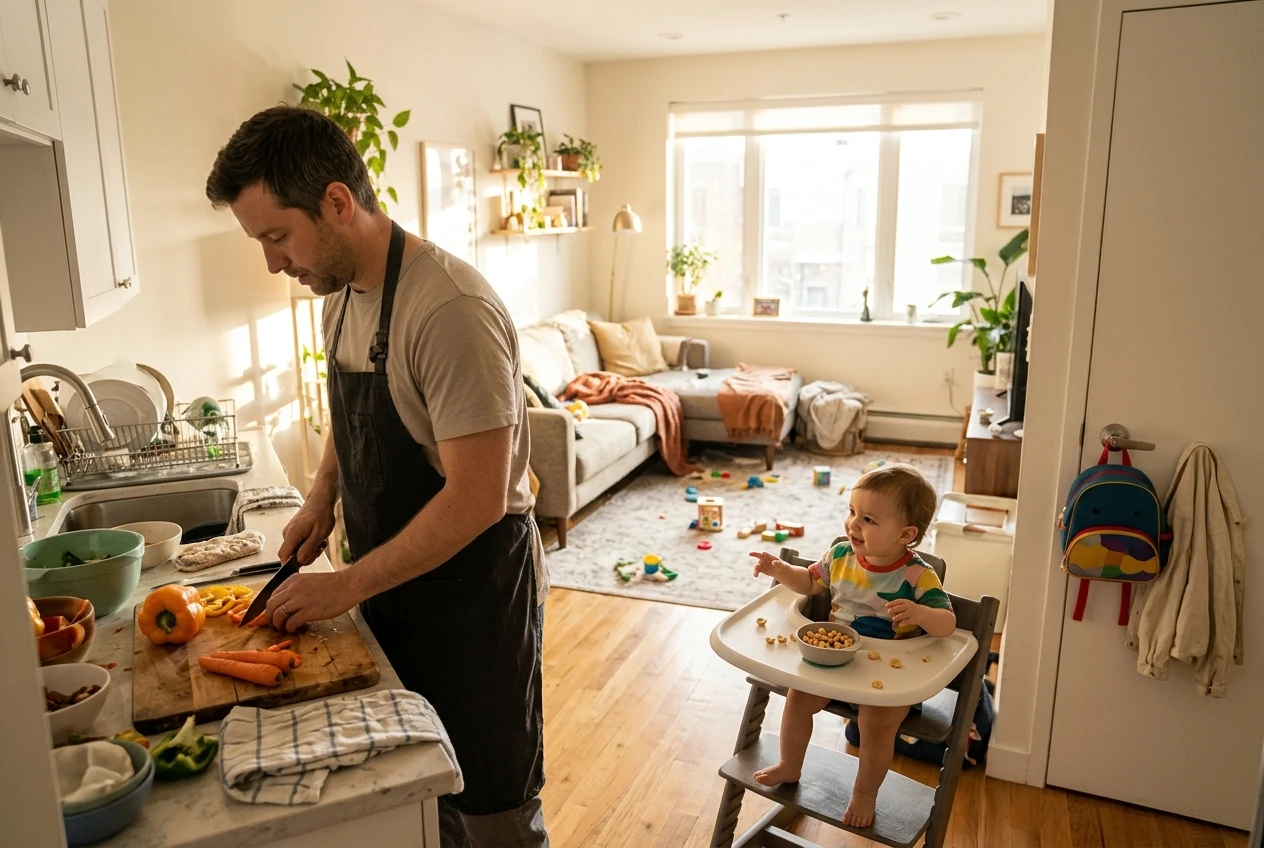
Dads who blog often have a clear way in, because fewer people write from that angle. A few directions that fit:
- Running a household and a young child’s schedule as the primary caregiver.
- Practical home skills: cooking basics, repairs, organizing the garage or the pantry.
- Solo outings with small children, from grocery trips to day trips.
- Finding community as a parent at home, including playgroups and local groups.
The readers who need this are real: other dads at home, new parents of either gender, and partners trying to understand what a day at home involves. If you are a dad reading this, use the same process of listing your week and picking one cluster. The method does not change.
How Do You Keep Blogging Around Nap Time and School Runs?
You keep blogging by working in small, planned pieces instead of waiting for a long uninterrupted block, because most days at home do not provide one. A nap or a school day gives you a window of unknown length, so each task should fit inside a short window.
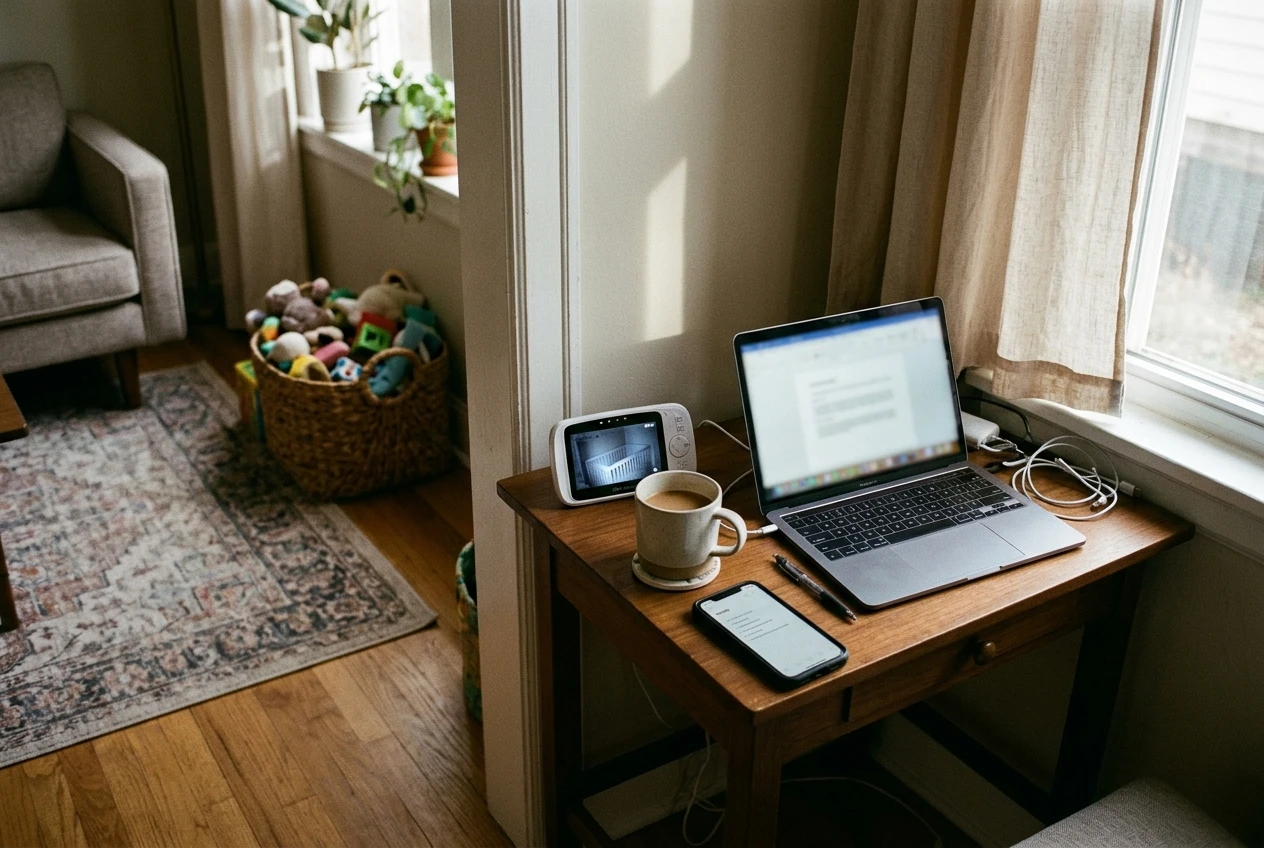
Here are some ways to split the work so that any window is enough:
- Split the post into stages. Outline in one session, draft in another, edit and publish in a third. A twenty-minute window can finish one stage.
- Keep a running ideas list. Use your phone’s notes app to capture questions as they come up during the day, so you never start a session by staring at a blank page.
- Decide the task before the window opens. If you know that today’s nap is for drafting the intro and headings, you can start immediately.
- Protect one regular slot. Even three short sessions a week add up to a post a week over a month.
- Plan for the day that falls apart. A sick child or a missed nap will happen. Skip the session, and pick up at the next one without trying to catch up.
If juggling both is your main worry, this post on balancing a side hustle and parenting covers how to set limits so the blog does not take over the rest of the day.
Small steps matter here. A blog built in short sessions grows at the same direction as one built in long ones, just more gradually.
Final Thoughts
The simplest way to find stay at home mom blog ideas is to stop searching for them and look at your own routines. Choose one area you already handle, describe who it helps in one sentence, and write the first four weeks of posts from the questions you hear most. Take your time with it, and build around your life, not the other way around.
If you would like a step-by-step place to build a blog around family life, take a look at Wealthy Affiliate. It is what worked for me, and it gives you training, a place to build your site, and a community to ask questions in. It does not promise income, and what you get out of it depends on the time you can give it and how consistently you show up.
Let’s Chat
Which part of your day would you write about first: meals, routines, budgeting, school runs, or something else? Share it in the comments, and if you are stuck narrowing it down, tell us what you do most often in a week and we will help you find the angle.