


A blogging routine after kids start school works best when you split the school day into two or three fixed time blocks, give each block a task that suits its length and your energy, and review the plan after a few weeks. Start with the hours you actually have, not the hours you wish you had.
What Changes for Your Blog When Your Kids Start School?
The main change is that your working hours become longer and predictable, but they arrive in pieces. Nap time was short and could end without warning. A school day gives you a stretch you can count on, and drop-off, pickup, appointments and errands cut into it.
That shift affects which tasks you can do. A 20-minute nap window suits a quick edit or a few comments. A three-hour morning suits writing a full article from outline to final draft. If you keep using the old toddler-era habits, you will spend long, quiet hours on small jobs and leave the big ones undone.
It also changes how you feel about the work. For some parents, the first weeks of school are tiring in a different way: the house is quiet, there is a lot of catching up to do, and the blog feels like one more thing on a long list. Take your time with this. The goal is a routine that fits the new day, and a routine can be built in small pieces.
How Do You Map Out Your New School Day Time Blocks?
Start by writing down the fixed points of your day: drop-off, pickup, and anything that repeats weekly, such as a regular appointment or a shop you always visit. Everything between those points is your raw material.
Then divide that material into blocks. For example, suppose drop-off is at 8:30 and pickup is at 3:15. A simple layout might be:
- Block 1, after drop-off: about two hours of focused time
- Block 2, after a break and lunch: about an hour of lighter work
- Block 3, before pickup: 20 to 30 minutes to wrap up
Those times are only an example. Your school’s hours, your commute and your household chores will give you different numbers, so use your own.
Be honest about what you do with the rest of the day. Laundry, meals, phone calls and a rest for yourself all need a place. If you schedule blog work across every available minute, the plan will fall apart by the second week. Two solid blocks you keep are worth more than five you abandon.
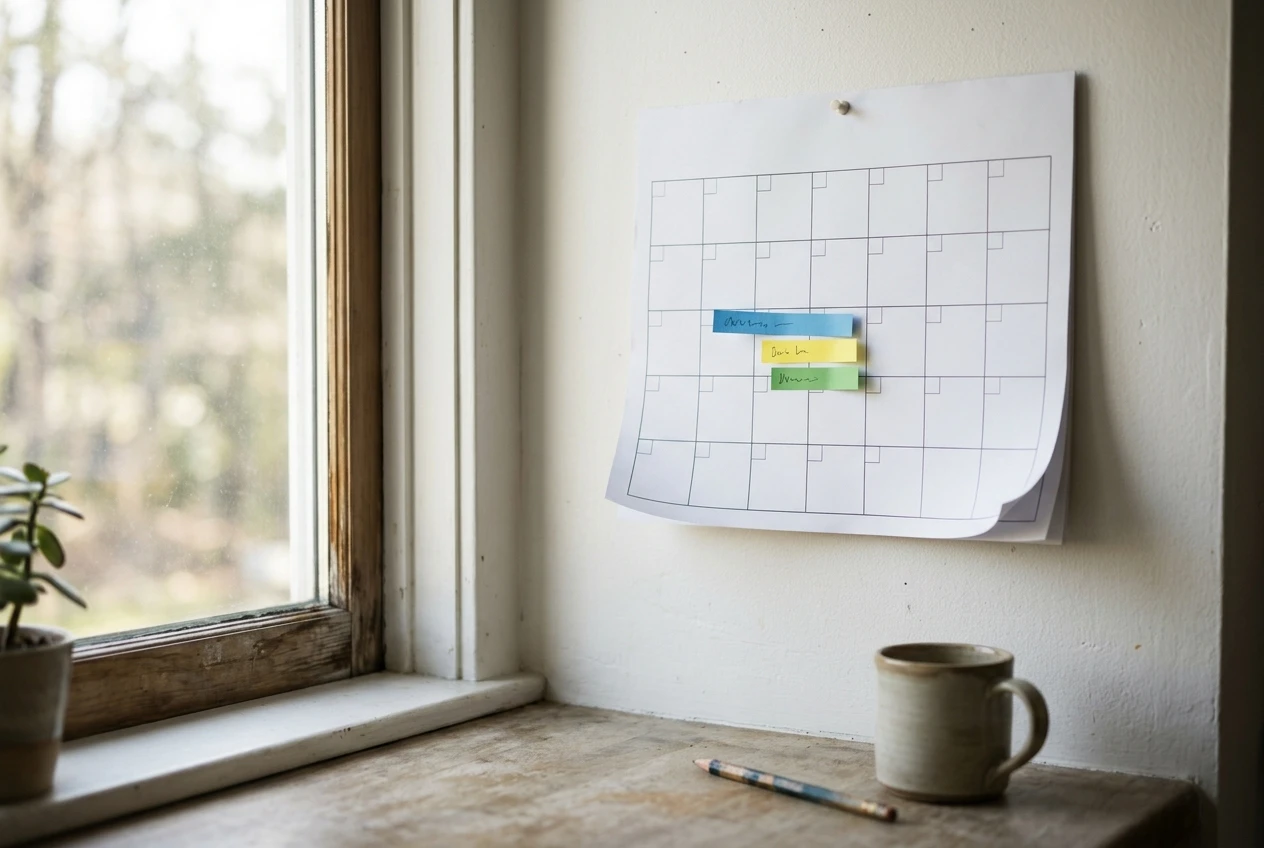
Put the blocks somewhere you will see them, on a paper calendar or a phone reminder. Give each one a name, such as “Writing” or “Admin”, so you know what you are sitting down to before you open the laptop.
Which Blogging Tasks Belong in Your Best Hours?
The tasks that take the most thinking belong in your best hours. For most people that means writing, which asks you to hold a whole argument in your head and keep it clear for several paragraphs.
Work out which part of your day you think best. Some parents are sharpest right after drop-off, when the house is quiet and the morning rush is over. Others hit a low point mid-morning and do better after lunch. Try your first block at different times for a week and notice when words come easily.
Tasks that suit your longest, sharpest block:
- Drafting a new article from an outline
- Researching a topic that needs several sources open at once
- Planning a series of posts or mapping out your site’s structure
- Rewriting a post that is not working
Once you have a draft, the later steps need less concentration. Formatting, checking links, adding images and tidying headings can go into a lower-energy block. Splitting one article across two blocks, drafting in the first and finishing in the second, is a good way to use the day without exhausting yourself.
If you only have one long block a week that feels sharp, protect that one. Guard it from errands and phone calls, and let the shorter blocks handle everything else.
What Can You Do With the Small Gaps Around Drop-Off and Pickup?
You can do short, low-effort jobs that do not need a screen full of tabs. The gaps are real, but they are too short and too interrupted for drafting, so match them to smaller tasks.
Some jobs that fit a 10 to 15 minute gap:

- Jot down post ideas or questions your readers might have
- Write a rough outline for your next article
- Reply to comments on your site
- Read one article in your niche and note what it covers well and what it misses
- List the three tasks for your next big block, so you start it without deciding what to do
If you are waiting at the school gate or sitting in a parked car, your phone is enough for most of these. Keep a single notes list for blog ideas so nothing ends up scattered across scraps of paper.
Do not try to write full articles in these gaps. Switching between a draft and a school run interrupts your thinking, and a half-finished paragraph is harder to pick up later. A note like “start with the example about morning routines” costs almost nothing and saves you time when you sit down properly.
Small gaps also work well for the end of the day’s last block. Spend the final 10 minutes before pickup closing tabs and writing down where you stopped. Tomorrow’s first block then starts with a clear instruction.
How Long Should You Give a New Routine Before Changing It?
Give a new routine about three weeks before you change it. One bad day tells you very little, and a first week is usually still affected by the novelty of the school timetable. Three weeks gives you enough days to see a pattern.
During that time, keep a very simple record. At the end of each block, write one line: what you meant to do, and what you got done. You do not need a spreadsheet. A notebook page is enough.
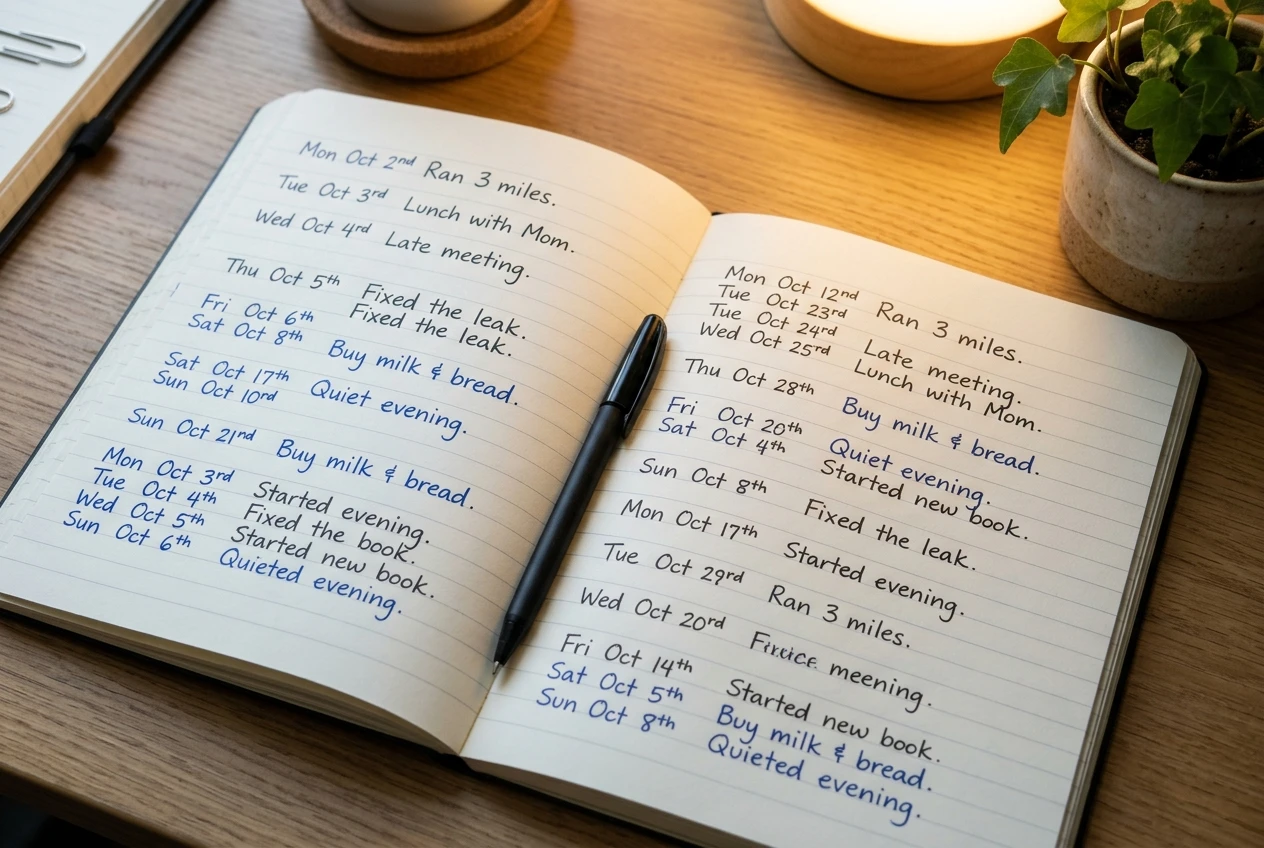
After three weeks, look at the lines and ask a few questions:
- Which block did you keep most often?
- Which block kept getting taken over by other things?
- Did you finish the tasks you set, or were they too large for the time?
- Did you feel more focused at a particular time of day?
If a block keeps failing, change one thing at a time. Move it to a different part of the day, shorten it, or give it a smaller task. Changing the whole plan at once makes it hard to tell what helped.
Some blocks are better dropped. If a Friday afternoon block never happens because everyone is tired, remove it and give that time back to yourself. A shorter routine you keep is better than a long one you resent.
Small steps matter here. A routine that is 80 percent right and in use will teach you more than a perfect plan you keep rewriting.
What Happens to Your Routine on Sick Days and School Holidays?
On sick days and school holidays your routine pauses, and that is normal. Your child’s health and their time off come first, and the blocks you built around the school day no longer exist.
For sick days, decide in advance on a minimum version. This could be 15 minutes of reading comments or jotting ideas while your child rests, or nothing at all. Having a plan means you do not have to decide while you are tired and worried. When the child is back at school, return to your normal blocks without trying to make up lost time.
School holidays need a different kind of plan, because the pause is longer and the days have a different shape. If you want a closer look at that, the post on blogging through the summer holidays walks through how to keep your progress going when the school-day blocks disappear.
Whatever the length of the break, write down where you stopped before it starts. A line such as “next: finish the second half of the budget post” lets you pick up in minutes when school resumes.
Final Thoughts
Rebuilding your blogging routine after your kids start school comes down to a handful of decisions: which hours are yours, what each block is for, and when you will check whether the plan is working. Everything else can stay flexible.
Pick just one school-day time block to protect this week. Choose the one that feels most realistic, give it a name, and use it for one task that moves your blog forward. Next week you can add another.
If you want training and a supportive community to build around that block, take a look at Wealthy Affiliate. It is a place to learn blogging and affiliate marketing step by step, alongside other people building their own sites around their own lives.
Let’s Chat
Which part of your school day feels most like your own time right now: the quiet morning after drop-off, the early afternoon, or the last stretch before pickup? Tell me in the comments, and share what you plan to use that block for.