
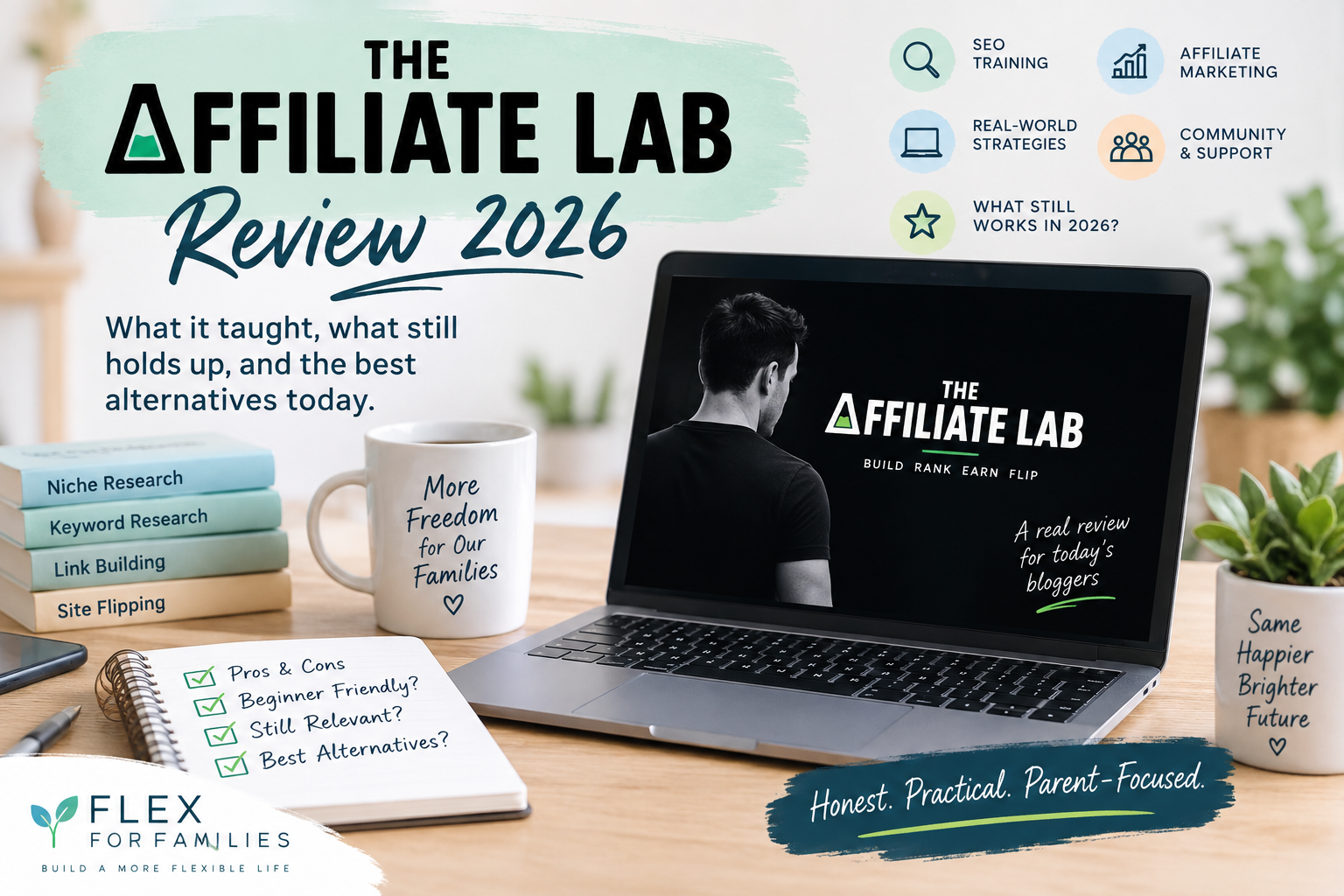
The Affiliate Lab was one of the better-known SEO courses for people who wanted to build, rank and monetise affiliate websites.
Created by Matt Diggity, the programme became popular for its:
- Technical SEO
- Keyword research
- Link building
- Conversion optimisation
- Site flipping
- SOP-driven systems
But there is an important update in 2026.
The Affiliate Lab is no longer available to buy.
That changes the purpose of this review.
I am not trying to answer:
“Should you spend money on The Affiliate Lab today?”
Instead, I want to look at:
- What the course actually taught
- Whether Matt Diggity was a credible teacher
- What made The Affiliate Lab popular
- Which parts of the training still hold up
- What has aged since Google’s Helpful Content era
- Whether the old affiliate-site model still makes sense
- What current alternatives exist
Because although the course is closed, the ideas behind it are still worth examining.
Important 2026 Update
The Affiliate Lab appears to have been closed to new students around 2025.
Matt Diggity is still active in SEO and digital marketing, but the course itself is no longer a current buying option.
That distinction matters.
The programme should now be treated as:
A legacy SEO course from a highly experienced practitioner
Rather than:
A current product recommendation.
Matt continues to publish free content around:
- SEO
- Affiliate marketing
- AI
- Link building
- Content
- Client SEO
So the closure of The Affiliate Lab does not mean his SEO work disappeared.
It means the paid course itself has become historical.
The Affiliate Lab Review 2026: Quick Verdict
The Affiliate Lab was a strong specialist SEO course for people serious about building and scaling affiliate websites.
Its biggest strengths were:
- Detailed SEO systems
- Strong keyword research
- Link-building strategies
- Conversion optimisation
- Site-flipping guidance
- Clear SOPs and templates
- Training from an experienced SEO practitioner
The biggest issue in 2026 is not whether the course was good.
It is whether the old affiliate-site model should still be followed exactly.
Google has changed.
AI has changed content production.
Search results themselves have changed.
My verdict: The Affiliate Lab deserves a strong historical rating, but I would not copy every old SEO tactic unchanged today. The strongest parts are still the strategy, systems and testing mindset rather than any single ranking tactic.
What Was The Affiliate Lab?
The Affiliate Lab was a specialist SEO training programme designed to help people build profitable affiliate websites.

The basic model was:
Choose a niche → build useful content → rank in Google → monetise with affiliate offers → improve conversions → scale or sell the site.
That sounds simple.
The course itself was not.
It went deep into areas such as:
- Niche selection
- Keyword research
- Site architecture
- On-page SEO
- Technical SEO
- Link building
- Affiliate monetisation
- Conversion optimisation
- Authority building
- Site flipping
That depth was one of the main reasons The Affiliate Lab developed a strong reputation.
It was not positioned as:
“Make passive income with a few blog posts.”
It was much closer to:
“Treat affiliate websites like serious digital assets.”
Why Was It Called The Affiliate Lab?
The “Lab” part reflected Matt Diggity’s testing-driven approach.
Matt became known for running SEO experiments rather than simply repeating accepted industry advice.
The idea was:
- Test ranking factors
- Analyse results
- Adjust the strategy
- Repeat
That mindset influenced the course.
Rather than presenting SEO as a fixed checklist, The Affiliate Lab was built around:
What appears to be working now?
That is one of the parts of the course philosophy I still think holds up extremely well.
Specific tactics change.
Testing does not.
Who Is Matt Diggity?
Matt Diggity is an SEO entrepreneur and marketer known for:
- Affiliate websites
- SEO testing
- Link building
- Client SEO
- Website acquisitions
- Online-business investing
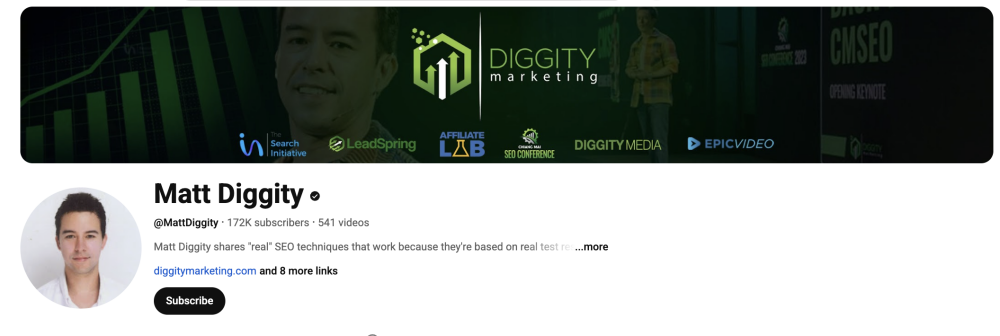
He is associated with businesses including:
- Diggity Marketing
- LeadSpring
- The Search Initiative
- The Affiliate Lab
Matt built his reputation around SEO experimentation and affiliate websites.
That gives The Affiliate Lab stronger creator credibility than a course built by someone whose main business was simply selling courses.
Is Matt Diggity Still Active in 2026?
Yes.
Matt is still publishing current content around:
- SEO
- Affiliate marketing
- Content
- AI
- Link building
- Digital marketing
So while The Affiliate Lab has closed, Matt has not disappeared from the industry.
That matters.
A retired course from an inactive creator is very different from a retired course whose creator is still:
- Testing
- Publishing
- Teaching
- Adapting to search changes
For someone specifically interested in Matt’s current thinking, I would look at his newer free content rather than trying to track down an old copy of The Affiliate Lab.
Quick Note: I’m John Crossley, founder of Flex For Families. I review online business opportunities through the lens of family life, focusing on costs, time commitments, risks, and whether they genuinely help parents create more flexibility.
Is The Affiliate Lab Still Available?
No.
The Affiliate Lab is no longer being sold to new students.

Recent member reviews and current references describe the programme as closed.
That means you should be cautious if you find:
- Old checkout links
- Old pricing pages
- Old discount codes
- Unofficial course copies
- Resold access
Those do not make the programme a current supported product.
Why Did The Affiliate Lab Close?
I have not found a detailed official statement from Matt explaining every reason behind the closure.
So I would not invent one.
What we can say is that the affiliate SEO environment has changed dramatically since the course first became popular.
Since then, we have seen:
- Google Helpful Content changes
- Larger site-level quality signals
- AI-generated content at scale
- AI Overviews
- More SERP competition
- Greater importance of brand and authority
- More volatility for traditional affiliate sites
The model itself did not suddenly become impossible.
But the old idea of:
Find commercial keywords → publish content → build links → rank → earn affiliate commission
has become much more competitive and fragile.
So the closure of the course happened during a period when the entire affiliate-SEO model was being forced to evolve.
Is The Affiliate Lab Legit or a Scam?
The Affiliate Lab was legitimate.
I found no basis for describing it as a scam.
It was:
- A real training programme
- Created by an experienced SEO practitioner
- Used by real students
- Built around a legitimate affiliate-marketing business model
The fact that it is now closed does not change that.
Did The Affiliate Lab Guarantee Results?
No course can guarantee that a website will:
- Rank
- Generate traffic
- Earn commissions
- Sell for a profit
because those results depend on:
- Niche selection
- Competition
- Content quality
- Links
- Execution
- Time
- Search-engine changes
The Affiliate Lab gave students a system.
It could not guarantee the outcome.
Was The Affiliate Lab a “Get Rich Quick” Course?
No.
In fact, one of the reasons I rate it relatively highly is that the model required real work.
You needed to learn:
- SEO
- Content
- Keyword research
- Site structure
- Outreach
- Link building
- Conversion
That is not instant income.
The downside is that this also made the course demanding.
Someone looking for:
“A simple passive-income shortcut”
would probably have struggled with it.
My View So Far
The Affiliate Lab appears to have earned its reputation for a reason.
It was detailed.
It was technical.
And it was built by someone with real experience.
The bigger question in 2026 is not:
Was the course legitimate?
It clearly was.
The more useful question is:
Which parts of that system are still strong today, and which parts need updating?
That is where the refreshed review becomes much more interesting.
How Did The Affiliate Lab Work?
The Affiliate Lab was built around creating an affiliate website as a genuine digital asset.
The basic process was:
- Choose a profitable niche
- Research the market and keywords
- Build the website around topical relevance
- Create and optimise content
- Build authority and backlinks
- Improve conversion rates
- Scale the site
- Potentially sell it for a multiple of its profit
That made it more comprehensive than a course focused purely on:
“How do I get an article onto page one of Google?”
Matt Diggity approached the website as a complete business.
Traffic mattered.
But so did:
- Revenue
- Conversion
- Processes
- Risk
- Asset value
That is one of the reasons The Affiliate Lab appealed to more experienced affiliate marketers as well as ambitious beginners.
What Did The Affiliate Lab Teach?
The programme expanded considerably over its lifetime.
Different versions included additional masterclasses and updated material, so I would not treat any one historical module count as definitive.
But the core curriculum consistently covered several major areas.
Niche Selection
The first challenge was choosing what type of website to build.
The Affiliate Lab taught students to assess potential niches based on factors such as:
- Competition
- Commercial potential
- Affiliate programmes
- Keyword opportunities
- Ability to build authority
Matt also provided a niche grading approach to help students assess opportunities more systematically.
That is a sensible starting point.
One of the easiest mistakes in affiliate marketing is choosing a niche because:
“I like this subject.”
without considering whether there is:
- Search demand
- Monetisation
- Realistic competition
The Affiliate Lab tried to put more commercial thinking behind that decision.
Amazon Was Not the Only Option
Another useful part was looking beyond Amazon Associates.
Students were encouraged to find relevant affiliate programmes with potentially stronger:
- Commission rates
- Products
- Relationships
That principle still makes plenty of sense today.
Keyword Research
Keyword research formed a major part of the onsite SEO training.
The goal was not simply to find keywords with large search volumes.
Students were taught to think about:
- Search intent
- Competition
- Topical relevance
- Commercial value
- Site architecture
and how individual articles fitted into the wider website.
That is much closer to building an authority site than publishing random articles around isolated keywords.
Historical member reviews consistently describe the keyword and onsite SEO training as one of the strongest parts of the programme.
On-Page SEO
This was one of Matt Diggity’s specialist areas.
The Affiliate Lab went into areas such as:
- Page optimisation
- Site architecture
- Internal linking
- Content structure
- Schema
- Topical relevance
- Technical SEO
Some versions of the training also covered techniques such as TF-IDF optimisation, which were much more widely discussed in SEO at the time.
Not every individual technique deserves equal weight in 2026.
But the broader principle still holds:
Make it extremely clear to both the reader and search engine what a page is about and how it fits into the wider site.
That has aged much better than any individual optimisation formula.
Site Architecture and Topical Relevance
The Affiliate Lab did not treat each article as a separate island.
Students were taught to build sites where related content supported each other.
That meant thinking about:
- Categories
- Supporting articles
- Commercial pages
- Internal links
- Topical coverage
This is one area where the underlying principle has arguably become more important, not less.
Today I would describe it less as:
“Build a lot of keyword-targeted pages.”
and more as:
“Build a genuinely useful resource around a clearly defined topic and audience.”
Link Building
Link building was a major part of The Affiliate Lab.
That differentiates it from courses that primarily rely on:
Publish good content and hope links arrive naturally.
Matt taught active offsite SEO.
Historical reviews describe training around:
- Outreach
- Backlink acquisition
- Link quality
- Anchor text
- Link velocity
- Risk management
- Penalty avoidance
And specialist outreach material.
This was clearly one of Matt’s strongest areas.
Does Link Building Still Matter?
Yes.
Links remain one signal of authority and trust on the web.
But this is an area where I would be particularly careful about blindly reproducing an old course.
The safest lesson to take forward is:
Earn and build relevant relationships and genuine authority.
rather than:
“Copy this exact backlink formula from several years ago.”
Google’s systems and spam detection continue to evolve.
The principles matter more than the old recipe.
Conversion Rate Optimisation
This was one of the things I liked about the Affiliate Lab model.
Getting traffic was only half the job.
The course also taught students how to make more money from the visitors they already had.
That included areas such as:
- Calls to action
- Affiliate-link placement
- Click-through rates
- Page layout
- Keeping visitors engaged
- Improving affiliate payouts
Historical course material also discussed negotiating stronger commission arrangements once a site had established performance.
That is still extremely relevant.
A site getting:
20,000 visitors
is not automatically better than one getting:
10,000 highly relevant visitors
if the smaller site helps more readers take the right action.
Traffic Is Not the End Goal
This is a lesson bloggers sometimes forget.
SEO can become an obsession with:
- Rankings
- Impressions
- Traffic
But the business ultimately needs to produce something.
That might be:
- Affiliate commissions
- Email subscribers
- Leads
- Customers
The Affiliate Lab treated conversion as part of SEO business building rather than an afterthought.
I like that.
Site Flipping
The final stage of the model was particularly interesting.
The goal did not have to be:
Own the website forever.
Students were also taught how to build websites that could potentially be sold.
That meant thinking about factors such as:
- Consistent profit
- Clean processes
- Traffic stability
- Documentation
- Reduced owner dependency
A profitable website could then become:
A sellable digital asset.
That was one of the more advanced elements of The Affiliate Lab.
Why SOPs Mattered
The course included:
- Checklists
- Templates
- Spreadsheets
- Standard operating procedures
and other implementation resources.
Several historical members specifically praised this side of the programme because it turned SEO from a collection of ideas into repeatable processes.
That matters if you eventually want to outsource.
You cannot easily hand someone:
“Do my SEO.”
You can hand them:
A clearly documented process.
That is a business lesson that has aged extremely well.
The Build, Rank, Monetise and Flip Model
If I had to simplify the whole Affiliate Lab system, it would be:
Build → Rank → Monetise → Optimise → Scale → Sell
That was an attractive model because the website could potentially create value in two ways.
Ongoing Income
Through affiliate commissions.
Asset Value
Through eventually selling the site.
That distinction made The Affiliate Lab more business-focused than many blogging courses.
Does That Model Still Work in 2026?
Parts of it absolutely do.
You can still:
- Build websites
- Attract organic traffic
- Earn affiliate commissions
- Improve conversions
- Sell profitable online businesses
But I would modernise the model.
I would add:
- Brand building
- Direct traffic
- Original experience
- Multiple acquisition channels
- Stronger audience relationships
rather than building a business almost entirely around Google’s rankings.
The old system was heavily:
SEO → traffic → affiliate revenue
I would rather build:
Useful brand → multiple traffic sources → audience → multiple monetisation methods
SEO can still be a major part of that.
It just should not control the entire business.
My Take on the Training
The Affiliate Lab was clearly not a lightweight affiliate-marketing course.
It covered the entire journey from:
“What niche should I choose?”
through to:
“Could I sell this website?”
That explains why experienced students often rated it highly.
But it also explains why some beginners could find it overwhelming.
There was a lot to learn.
The best elements, looking back from 2026, are not necessarily individual optimisation tricks.
They are the bigger principles:
- Research before building
- Create topical depth
- Understand search intent
- Build authority
- Track results
- Improve conversions
- Document processes
- Treat the site like an asset
Those lessons have aged far better than any one SEO tactic.
How Much Did The Affiliate Lab Cost?
The most consistently reported historical price was:
$997 as a one-time payment
with a split-payment option of:
2 payments of $597
That meant the instalment route cost more overall at $1,194.
Students generally received:
- Lifetime course access
- Future updates
- Bonus masterclasses
- SOPs and templates
- Access to the private community
There were no recurring monthly membership fees attached to the main course.
Were There Discounts?
Yes.
Several historical affiliates promoted a $200 discount, bringing the one-time price down to around:
$797
During certain promotions.
I would treat that as a historical promotional price rather than the normal course price.
Were There Additional Costs?
Potentially, yes.
Buying the course was only the training cost.
Running the business could also involve:
- Domain names
- Hosting
- Keyword research tools
- SEO tools
- Content
- Link building
- Outreach
- Contractors
One historical review specifically pointed out that tools, hosting and domains could add several hundred dollars to the real cost of implementing the system.
That is worth remembering.
A $997 course does not automatically mean:
$997 total business cost.
The Affiliate Lab Refund Policy: Why Old Reviews Disagree
This is probably the messiest part of the programme’s history.
Some reviews say:
No refunds.
Others say:
30-day money-back guarantee.
Both appear to have been true at different points.
Earlier Policy: No Refunds
Multiple older reviews state that The Affiliate Lab originally operated with a no-refund policy.
One historical sales page archive also states:
“We do not offer refunds.”
Other reviews from that period also describe all sales as final.
So for a significant part of the course’s life, students appear to have accepted the full financial risk once they purchased.
Later Policy: 30-Day Guarantee
By 2023, some reviewers reported that The Affiliate Lab had introduced a 30-day money-back guarantee.
One reviewer specifically noted:
“Update 2023: The Affiliate Lab now offers a 30 day money back guarantee.”
Another reviewer said support directly confirmed that the 30-day guarantee applied despite contradictory wording elsewhere.
That suggests the policy changed later in the course’s lifecycle.
Why the Confusion Continued
The problem is that different pages and reviews continued showing conflicting terms.
Some later pages still referenced:
- No refunds
- All sales final
while others promoted:
- 30-day refunds
- No-questions-asked guarantees
Even around overlapping time periods.
So I would not write:
“The Affiliate Lab had a 30-day refund policy.”
as if that were always true.
The safer summary is:
The Affiliate Lab appears to have operated with no refunds for much of its earlier history, with a 30-day guarantee introduced later. Historical pages remained inconsistent, so refund terms depended on when the student purchased.
That is much more accurate.
What Should You Make of That Refund History?
For a $997 course, the earlier no-refund policy was a genuine downside.
Even if the training was excellent, buying a four-figure course without any refund option creates a lot of risk.
The later 30-day guarantee improved that.
But because the course is now closed, this is historical context rather than a current buying issue.
If The Affiliate Lab ever reopened, I would check the live checkout and terms before paying rather than relying on any old review.
What Support Did Affiliate Lab Students Get?
Support was one of the stronger parts of the programme.
The main support channel was the private Facebook group.
Historical sales material and member reviews describe an active community with:
- Matt Diggity
- Members of his team
- Experienced affiliate marketers
- Newer students
All interacting inside the group.
That gave students somewhere to ask about:
- SEO
- Rankings
- Links
- Niche selection
- Technical problems
- Site strategy
Rather than relying entirely on prerecorded lessons.
How Active Was Matt Diggity in the Community?
Historical sales material claimed that Matt personally answered many questions inside the group.
Reviews also mention team members such as Anthony Lam helping students.
That is a meaningful benefit.
One of the biggest problems with large online courses is:
The creator disappears once you buy.
The Affiliate Lab community appears to have been more hands-on than that.
Was There One-to-One Coaching?
Not as the standard core offer.
The main support model appears to have been:
- Course material
- Facebook community
- Group interaction
- Expert answers
- Peer support
Rather than personal one-to-one coaching for every student.
That distinction matters.
A student who wanted:
“Matt, review my site personally every week.”
was not buying that kind of service.
What About the Community Quality?
This seems to have been one of the better parts of The Affiliate Lab.
Several reviews specifically praise the mix of:
- Beginners
- Intermediate affiliates
- Experienced site builders
Inside the group.
Matt’s own historical sales material also promoted:
- Member networking
- High-earning affiliates
- Private meetups
- In-person events around the Chiang Mai SEO Conference
That pushed the community beyond basic customer support.
It became closer to:
A network of people building similar businesses.
For serious affiliate marketers, that could be extremely valuable.
Did Students Get Lifetime Updates?
Historically, yes.
The course was promoted with:
- Lifetime access
- Future updates included
Rather than making students buy a new version every year.
That was particularly important for SEO training because:
SEO changes constantly.
A static SEO course becomes outdated very quickly.
The value of The Affiliate Lab therefore depended partly on Matt continuing to:
- Test
- Update
- Replace old tactics
While the programme was active.
Can Existing Students Still Access the Course?
This is harder to verify cleanly.
The programme is no longer being sold, but some current reviews written by existing members still discuss using the training after closure.
That suggests at least some historical members may still retain access.
However, I would not promise that:
- Every old account remains active
- Every module is still maintained
- The Facebook group is still fully supported
- Future updates are continuing
Unless Matt or The Affiliate Lab confirms that directly.
So I would phrase it as:
Existing students may still retain legacy access, but the course is no longer an actively sold programme and ongoing support should not be assumed without confirmation.
My Take on the Price and Support
At $997, The Affiliate Lab was expensive.
But it was not a thin information product.
Students received:
- Deep SEO training
- SOPs
- Templates
- Bonus courses
- Community access
- Updates
- Specialist material
So I can understand why many historical members felt the price was justified.
The two things I would have been most cautious about were:
The Initial No-Refund Policy
That put a lot of risk on the student.
The Real Implementation Cost
The course taught a business model that could also require:
- Tools
- Links
- Content
- Contractors
So the real cost of building the business could be significantly higher than $997.
For someone with the budget and enough time to execute, the package was strong.
For a beginner stretching financially just to buy the course, it could have been a very different experience.
What Still Holds Up From The Affiliate Lab in 2026?
Quite a lot.
That might sound surprising given how much search has changed, but the strongest parts of The Affiliate Lab were never just individual ranking tricks.
They were the underlying business principles.
Niche Research Still Matters
Choosing a niche without considering:
- Competition
- Commercial intent
- Monetisation
- Audience demand
- Your ability to build authority
is still a bad idea.
The tools may change.
The principle does not.
You need to understand the market before investing months or years building around it.
Search Intent Still Matters
Matt’s emphasis on understanding what somebody actually wants when they search remains extremely relevant.
A page should match the reader’s goal.
That might be:
- Learning something
- Comparing options
- Finding a product
- Making a purchase
- Solving a problem
Keyword volume alone never tells you that.
Site Structure and Internal Linking Still Matter
Building related content around a clear subject remains sensible.
Google’s current guidance still encourages sites to have a clear purpose and produce substantial, useful content for an intended audience rather than publishing across unrelated topics purely to capture search traffic.
So the Affiliate Lab principle of building topical depth still makes sense.
I would simply describe it today as:
Build the best genuinely useful resource you can around a defined audience and topic.
Technical SEO Still Matters
Things like:
- Crawlability
- Indexability
- Site architecture
- Mobile usability
- Page experience
Have not disappeared.
Google still says technical eligibility and overall page experience remain foundational to appearing and performing in Search.
Authority Still Matters
The way I would pursue authority may have changed.
But authority itself still matters.
That can come from:
- Quality links
- Original research
- First-hand experience
- Expert contributions
- Brand mentions
- Useful tools or resources
- Genuine relationships
The lesson I would keep from The Affiliate Lab is:
Do not expect a new website with no reputation to compete indefinitely against established businesses simply because its on-page SEO is perfect.
Conversion Rate Optimisation Still Matters
This may be one of the most timeless parts of the training.
Traffic is expensive.
Whether you pay for it with:
- Money
- Time
- Content
- SEO
You want the visitors you already have to produce meaningful outcomes.
That means understanding:
- Which links get clicked
- Which calls to action work
- Which pages produce revenue
- Where users drop off
A ranking without a useful outcome is just a ranking.
SOPs and Systems Still Matter
This has aged particularly well.
If you want a business that can eventually operate without you doing every task personally, you need repeatable systems.
That applies to:
- Content
- Updating posts
- Link outreach
- Research
- Publishing
- Reporting
- Affiliate management
For a busy parent, this principle may actually be more useful than many of the advanced SEO tactics.
Treating a Website Like an Asset Still Makes Sense
This is another strong idea.
A website can potentially become something that:
- Generates income
- Builds an audience
- Owns useful intellectual property
- Produces leads
- Has resale value
That mindset encourages better decisions than thinking only about:
“How many articles did I publish this month?”
What Has Aged Since the Helpful Content Era?
This is where I would be much more careful with an older Affiliate Lab playbook.
The search environment has changed dramatically.
And technically, Google’s old standalone Helpful Content system is no longer a separate system. Google says it became part of its core ranking systems in March 2024.
But the direction behind those changes remains very relevant.
Google’s current guidance emphasises:
- Original information
- First-hand expertise
- Substantial added value
- Clear site purpose
- Content created primarily for people
And specifically warns against mass-producing content mainly to attract search traffic.
The Pure SEO-First Affiliate Site Is Riskier
Historically, an affiliate site could be built around:
Keywords first → content second → audience third.
I would reverse that today.
Start with:
Audience → useful content → discovery channels → monetisation.
A site built primarily because a keyword tool says:
“Low competition, high commission”
is much less convincing than a genuine resource built for a recognisable audience.
Commodity Affiliate Content Has Become Easier to Produce
AI has dramatically lowered the cost of producing:
- Best-of articles
- Product summaries
- Definitions
- Generic informational posts
That means simply having a competent article is no longer much of an advantage.
Google’s 2026 guidance for generative search specifically emphasises valuable, unique, non-commodity content, while confirming that normal SEO best practices still underpin visibility in AI Overviews and AI Mode.
So I would add much more:
- First-hand experience
- Original screenshots
- Testing
- Personal examples
- Unique data
- Expert insight
- Useful comparisons
To the old Affiliate Lab content model.
Mass Publishing Is Less Attractive
Publishing more content can still grow a site.
But:
More pages is not automatically more authority.
Google explicitly warns against producing large amounts of content across topics primarily in the hope that some of it ranks.
I would rather publish:
100 genuinely useful pages
than:
1,000 articles built mainly because a keyword appeared easy.
Link Building Needs More Care
Backlinks still matter.
But I would be wary of mechanically copying:
- Anchor-text formulas
- Link-velocity formulas
- Old outreach tactics
- Any method designed mainly to manufacture ranking signals
from historical SEO training.
The bigger goal should be:
Build links and mentions that make sense even if Google did not exist.
That usually produces a healthier backlink profile anyway.
Google Should Not Be the Entire Business
This is probably the biggest strategic update I would make.
The classic Affiliate Lab business could become very dependent on:
Google → affiliate page → commission
I would now add:
- Social discovery
- YouTube where relevant
- Direct visitors
- Returning readers
- Brand searches
so that one ranking update cannot switch off the entire business.
AI Search Changes the Click Opportunity
Google now surfaces AI Overviews and AI Mode as part of Search, and Search Console now provides dedicated visibility reporting for generative AI features.
That does not mean SEO is dead.
Google explicitly says SEO fundamentals remain relevant to generative AI search.
But it does mean informational content increasingly has to earn the click.
A reader needs a reason to leave the summary and visit your site.
That makes things like:
- Experience
- Tools
- Templates
- Original data
- Strong opinions backed by evidence
- Detailed comparisons
More valuable.
How I Would Modernise The Affiliate Lab Model
The old model was roughly:
Niche → Keywords → Content → Links → Rankings → Affiliate Revenue → Flip
My 2026 version would be:
Audience → Brand → Useful Content → SEO + Other Traffic → Email → Affiliate Revenue + Other Monetisation → Systems → Asset Value
That is not a rejection of SEO.
It is SEO sitting inside a healthier business.
What I Like About The Affiliate Lab
Even looking back from 2026, there is a lot I like.
1. Matt Actually Understood SEO
The training came from someone with substantial experience rather than a generic course creator.
2. It Was Detailed
This was not a surface-level:
“Write good content and add affiliate links.”
course.
It went deep.
3. The Testing Mindset Was Excellent
Specific tactics expire.
Testing and measuring do not.
4. It Treated Affiliate Sites Like Businesses
Students learned about:
- Conversion
- Processes
- Scaling
- Asset value
rather than only rankings.
5. Strong SEO Fundamentals
The core thinking around:
- Search intent
- Site architecture
- Internal linking
- Authority
still has value.
6. CRO Was Part of the System
The goal was revenue, not vanity traffic.
7. SOPs Made the Training Actionable
Templates and documented processes made implementation and outsourcing easier.
8. The Community Added Value
Having experienced marketers alongside newer students appears to have been one of the stronger parts of the programme.
What Could Be Better?
This is mostly where time has changed the context.
1. Too Much Dependence on Google
The biggest strategic weakness was building so much value around organic rankings.
2. Some SEO Tactics Naturally Aged
Any detailed SEO course risks becoming outdated because:
- Google changes
- Spam detection changes
- Competitors change
- Search behaviour changes
The principles aged better than the formulas.
3. Link Building Could Be Intimidating
A beginner could find the offsite SEO side:
- Technical
- Time-consuming
- Expensive
especially compared with simpler blogging approaches.
4. The Course Was Dense
Beginner-capable does not mean beginner-simple.
There was a lot to absorb.
5. Real Costs Could Go Well Beyond the Course
Tools, content and links could push the actual implementation cost much higher than the headline $997.
6. Historical Refund Terms Were Confusing
The changing and sometimes contradictory refund information was unnecessarily messy for a premium programme.
7. The Original Model Needs More Audience Ownership
I would want email and traffic diversification introduced much earlier if the programme existed today.
The Affiliate Lab Pros & Cons
Pros
- Created by an experienced SEO practitioner
- Detailed keyword and niche research
- Strong on-page SEO training
- Deep link-building education
- Good conversion optimisation training
- Site-flipping strategy
- Useful SOPs and templates
- Strong private community historically
- Testing-led approach
- Treated websites as business assets
Cons
- No longer available to new students
- Google-heavy business model
- Some historical SEO tactics need updating
- Dense for complete beginners
- Link building can require significant time and budget
- Implementation costs went beyond the course price
- Historical refund terms were inconsistent
- Limited emphasis on audience ownership in the original model
- Modern search requires stronger differentiation than traditional affiliate content alone
My View on How Well The Affiliate Lab Has Aged
Better than I expected.
If The Affiliate Lab had been nothing more than:
“Here are 25 tricks for ranking in Google.”
I would consider most of it historical curiosity now.
But it went deeper than that.
The strongest ideas were about:
- Research
- Structure
- Authority
- Testing
- Conversion
- Processes
- Asset building
Those are durable.
The mistake would be assuming the exact implementation should remain frozen in time.
Keep Matt Diggity’s business and testing mindset. Update the tactics for the search environment you are actually competing in.
Was The Affiliate Lab Good for Beginners?
Yes, but with an important qualification.
I would describe The Affiliate Lab as:
Beginner-capable, but not beginner-simple.
A complete beginner could start with the programme and learn the system.
But they had to be comfortable learning quite a lot at once.
Historical members describe the training as comprehensive but sometimes challenging, with some reviewers specifically saying it was better suited to people who already had experience building websites.
The course covered:
- Niche research
- Keyword research
- Site architecture
- Technical SEO
- Content
- Link building
- Conversion optimisation
- Site flipping
That is a lot for somebody who has never:
- Installed WordPress
- Written an article
- Used a keyword tool
- Added an affiliate link
Before.
Where a Beginner Could Struggle
The biggest difficulty was probably not understanding the individual lessons.
It was knowing how everything fitted together.
A beginner could find themselves thinking about:
- Anchor-text ratios
- Link velocity
- CRO
- Topical relevance
- Technical SEO
Before they had even generated their first ten visitors.
That is why I would not call it the easiest entry point into affiliate marketing.
Who Would Have Done Better?
The ideal student probably had:
- A basic understanding of WordPress
- Some blogging experience
- An interest in SEO
- Time to implement
- A reasonable business budget
At that stage, The Affiliate Lab could help someone go much deeper.
Was The Affiliate Lab Suitable for Busy Parents?
This is where my answer becomes more mixed.
The training itself was flexible because it was online and self-paced.
You could work through it:
- In the evening
- At weekends
- Around employment
- Around family commitments
That part works well for parents.
But the business model was demanding.
SEO Takes Time
You were not simply watching the course.
You then had to:
- Research niches
- Build the website
- Research keywords
- Create content
- Optimise pages
- Build links
- Track rankings
- Improve conversions
That can become a substantial workload.
Link Building Adds Another Job
This is particularly important.
If your available blogging time is only a few hours per week, adding:
- Outreach
- Prospecting
- Emailing website owners
- Tracking backlinks
Can make an SEO-heavy strategy feel overwhelming.
The Financial Commitment Mattered Too
At around $997 historically, plus the potential cost of:
- Hosting
- Tools
- Content
- Links
- Contractors
The Affiliate Lab was not a casual experiment.
For a family budget, I would want to be very sure:
This is the business model I want to pursue.
before making that investment.
My Busy Parent Verdict
The Affiliate Lab could work for a parent who:
- Enjoyed SEO
- Had consistent weekly time
- Wanted to build an affiliate asset
- Had money available to invest
But I would not have recommended it to a parent saying:
“I have three hours a week, no website experience and I just want to test whether blogging is for me.”
There were gentler places to start.
Who Was The Affiliate Lab Best For?
Historically, I think it was strongest for four groups.
Existing Bloggers Wanting Better SEO
Someone already publishing content but struggling with rankings could get considerably more from the advanced SEO material.
Affiliate Marketers
This was the obvious audience.
Especially people who wanted to build websites around:
- Commercial content
- Product comparisons
- Reviews
- Affiliate offers
Niche-Site Builders
Anyone interested in building multiple SEO-driven sites was directly aligned with the course model.
Website Investors and Flippers
The training went beyond creating monthly affiliate revenue.
Building a site that could eventually be sold made it particularly interesting to more commercially minded students.
Who Was The Affiliate Lab Probably Not For?
I would have looked elsewhere if you:
- Wanted instant income
- Disliked SEO
- Did not want to build links
- Had almost no implementation time
- Could not comfortably afford the course
- Wanted one-to-one coaching
- Mainly wanted social-media traffic
- Wanted a very gentle introduction to blogging
There is nothing wrong with any of those situations.
It simply means the course and the student were not a good match.
Best Affiliate Lab Alternatives in 2026
Because The Affiliate Lab is closed, the natural question is:
What should you use instead?
There is no perfect direct replacement.
The Affiliate Lab combined fairly advanced affiliate SEO with site building, conversion and flipping.
So the best alternative depends on what you actually wanted from it.
Wealthy Affiliate
If you are a complete beginner, this is the option I would look at first.
Wealthy Affiliate currently offers:
- A free Starter level
- WordPress websites
- Hosting
- Keyword research
- Affiliate-marketing training
- SEO training
- AI tools
- Community support
- Live education
Current annual pricing is:
- Starter: Free
- Premium: $497/year
- Premium Plus+: $588/year
Premium currently includes three websites, 10,000 monthly AI credits, Pro AI models, unlimited support and its Traffic & SEO Blueprint. Premium Plus+ expands that to ten websites, 60,000 credits and additional mentorship/support.
How Does It Compare With The Affiliate Lab?
The Affiliate Lab went deeper into specialist SEO.
Wealthy Affiliate goes broader.
It is better suited to someone asking:
“How do I start an online business?”
rather than:
“How do I take an affiliate SEO site to the next level?”
For that reason, I think Wealthy Affiliate is a more accessible starting point for most new parent bloggers.
Internal link: Read my full Wealthy Affiliate Review 2026.
Six-Figure Blog Builder
Create and Go’s Six-Figure Blog Builder is another active option for somebody specifically wanting structured blogging training.
The current programme includes:
- 6 modules
- 170+ lessons
- SEO
- Monetisation
- Email marketing
- AI prompts
- Creator community
- Pinterest training
- YouTube and podcast bonuses
- Lifetime access
- Future updates
The current price is $997 one-time, with a 14-day money-back guarantee.
How Does It Compare?
Interestingly, the headline price is similar to what The Affiliate Lab historically cost.
But the focus is different.
The Affiliate Lab was:
SEO-heavy affiliate-site training.
Six-Figure Blog Builder is:
Broader modern blogging training.
That may suit someone who wants to build:
- A brand
- An email list
- Multiple traffic channels
- Different monetisation streams
Rather than building primarily around Google affiliate rankings.
Matt Diggity’s Free Content
This is probably the most overlooked alternative.
If you were specifically interested in The Affiliate Lab because you wanted to learn from Matt Diggity, you do not necessarily need another paid course.
Matt continues to publish free material around:
- SEO
- Affiliate marketing
- AI
- Link building
- Content
- Digital marketing
So rather than trying to find an unofficial old copy of The Affiliate Lab, I would start with his current material.
It has one big advantage:
It reflects what Matt is thinking now.
That matters in an industry that changes as quickly as SEO.
Which Alternative Would I Choose?
Complete Beginner
Wealthy Affiliate
because the bigger need is usually getting the website launched and understanding the basics.
Blogger Wanting a Structured Modern Course
Six-Figure Blog Builder
because it includes SEO but also expands into email and other audience-building channels.
Experienced SEO or Affiliate Marketer
Start with Matt Diggity’s current free content.
You may discover that you do not need another large course at all.

About the Reviewer
Hi, I’m John Crossley, founder of Flex For Families.
I’m a parent, blogger, and online business owner who helps families find realistic ways to create more flexibility through blogging, affiliate marketing, and online business.
Like many people, I’ve spent years researching online opportunities, testing platforms, and learning how to separate genuine business models from expensive hype. I’ve also experienced the frustration of chasing opportunities that promised freedom but demanded more time away from family.
Today, I use that experience to review courses, side hustles, AI opportunities, and online business programmes through a simple lens:
Will this genuinely help parents create more flexibility, or will it create more pressure?
Every review on Flex For Families focuses on costs, time commitments, risks, and realistic expectations, so you can make informed decisions before investing your time or money.
The Affiliate Lab Review 2026: Final Verdict
The Affiliate Lab was a very good course.
I do not think its closure changes that.
What has changed is the environment it was built for.
The course became popular during an era where a well-executed model of:
Keyword research → content → backlinks → Google rankings → affiliate commissions
could form the foundation of an entire online business.
That model has become more difficult.
Google has evolved.
AI has changed content production.
Search results have changed.
And relying almost entirely on organic rankings carries more risk than it once did.
But many of the principles inside The Affiliate Lab have aged extremely well:
- Do your research
- Understand search intent
- Build topical authority
- Create systems
- Test rather than assume
- Improve conversions
- Track what works
- Build something with real asset value
Those are not old SEO tricks.
They are good business principles.
The Affiliate Lab Historical Rating
| Category | Rating | My View |
|---|---|---|
| Training Depth | 5 / 5 | Much deeper than the average affiliate-marketing course. |
| SEO Training | 5 / 5 | Historically one of the course’s biggest strengths. |
| Beginner Friendliness | 3.5 / 5 | Possible for beginners, but dense and technically demanding. |
| Community & Support | 4.5 / 5 | The private community was repeatedly highlighted by historical members. |
| Value When Active | 4.5 / 5 | Expensive, but extensive training, SOPs and support were included. |
| Relevance of Core Principles in 2026 | 4 / 5 | Strong foundations, although some SEO tactics and the Google-heavy model need modernising. |
| Busy Parent Fit | 3.5 / 5 | Flexible training, but the implementation workload was substantial. |
Historical FFF Rating: 4.5 / 5
Would I Recommend The Affiliate Lab?
If this were several years ago and you told me:
“I already have a website, I understand the basics and I want to get serious about affiliate SEO.”
then yes.
I could understand paying for it.
But in 2026, there is no purchase decision to make.
The course is closed.
So my recommendation is:
Learn from what The Affiliate Lab got right, but build for the search environment we have now rather than trying to recreate the affiliate-site playbook of the past.
For most new bloggers that means:
- Build a recognisable brand
- Help a defined audience
- Use SEO
- Build an email list
- Diversify traffic
- Add genuine experience
- Develop more than one source of income
That is a much stronger foundation for the next few years.
You Don’t Need Advanced SEO on Day One
If you are a busy parent starting from scratch, learning anchor-text ratios and advanced link-building probably isn’t your first priority.
You need to work out:
- What your blog should be about
- Who you want to help
- What content you can realistically create
- How blogging can fit around family life
- How the business could eventually make money
That is exactly why I created my free Parent Blogging Starter Kit.
Start simple. Build the foundation. Advanced SEO can come later.
Get the Free Parent Blogging Starter KitThe Affiliate Lab FAQs
What Was The Affiliate Lab?
The Affiliate Lab was an affiliate-marketing and SEO course created by Matt Diggity. It taught students how to research niches, build authority websites, rank content in Google, earn affiliate commissions, optimise conversions and potentially sell profitable sites.
Is The Affiliate Lab Still Available in 2026?
No. The Affiliate Lab stopped accepting new students in early 2025 and remains closed to new enrolments in 2026. Existing-member access has been reported by current members, but new students cannot currently purchase the programme.
Why Did Matt Diggity Close The Affiliate Lab?
A current Affiliate Lab member reports that Matt explained publicly that Google’s changes had made the affordable path to ranking content websites less predictable and he did not feel comfortable continuing to sell the programme while reassessing that model. The course has remained closed throughout 2025 and into 2026.
How Much Did The Affiliate Lab Cost?
The commonly reported full price was $997 one-time or two instalments of $597. Promotional discounts were available at various points during the programme’s life.
Did The Affiliate Lab Have a Refund Policy?
The policy changed over time. Earlier versions appear to have operated with no refunds, while later promotional material and reviewers reported a 30-day money-back guarantee. Because historical sources conflict, the applicable policy depended on when the course was purchased.
Is The Affiliate Lab Legit?
Yes. The Affiliate Lab was a legitimate SEO and affiliate-marketing training programme created by experienced SEO practitioner Matt Diggity.
Was The Affiliate Lab Good for Beginners?
A beginner could use it, but it was a detailed and technically demanding programme. It was generally better suited to people who already understood basic blogging, WordPress or affiliate marketing.
Did The Affiliate Lab Include Link Building?
Yes. Off-page SEO and link building were major parts of the training, including outreach, backlink analysis, anchor text and authority building.
Did The Affiliate Lab Teach Site Flipping?
Yes. The course included training around building profitable affiliate websites as digital assets that could potentially be sold.
Can Existing Affiliate Lab Students Still Access the Course?
At least some existing members report retaining access to the training and community after the programme stopped accepting new students. However, ongoing support and future updates should not be assumed without confirmation directly from the programme.
What Is the Best Affiliate Lab Alternative in 2026?
It depends on your experience. Wealthy Affiliate is a more accessible option for complete beginners, while Six-Figure Blog Builder offers broader structured blogging training. Experienced SEO marketers may get more value from Matt Diggity’s current free content rather than looking for an old copy of The Affiliate Lab.
Let’s Chat
Were you ever a member of The Affiliate Lab?
If so, I would genuinely like to hear how the training worked for you.
- Which part of the course helped you most?
- Did you build an affiliate site using Matt’s system?
- How did your site cope with Google’s later updates?
- Do you still have access to the programme?
- Is the community still active?
- Which parts of the training do you still use today?
And if you were considering The Affiliate Lab but never joined, what were you hoping to learn?
For me, the most interesting question is no longer:
Was The Affiliate Lab a good course?
I think the evidence suggests that it was.
The more interesting question is:
How much of the old affiliate SEO model would you still build your business around today?
Let me know your thoughts in the comments.