

If you’ve been thinking about starting a blog, you’ve probably seen the headlines.
“Blogging is dead.”
“AI has replaced bloggers.”
“Google doesn’t send traffic anymore.”
“You’re too late.”
After hearing all that, it’s easy to wonder whether starting a blog in 2026 is a waste of time.
I understand why people ask the question.
Social media seems to dominate everything. AI tools can generate content in seconds. Some bloggers have lost traffic after Google’s recent updates.
So, has the opportunity disappeared?
The short answer is no.
In fact, new blogs are being launched every day, and many are growing into successful websites, businesses, and income streams.
The truth is that blogging has changed.
The strategies that worked ten years ago don’t work as well today. But people still search for answers, businesses still need content, and bloggers are still building audiences online.
For parents looking for a flexible way to earn income from home, blogging remains one of the few opportunities you can build around family life, your schedule, and your interests.
Before you give up on the idea, let’s look at what’s really happening in the blogging world and whether it’s still worth starting a blog today.
For many parents, blogging remains one of the few businesses you can build around family life, your schedule, and your interests. In fact, it’s one of the main reasons I believe blogging is perfect for parents who want more flexibility without sacrificing family time.
Quick Answer: Is It Too Late to Start a Blog in 2026?
No, it’s not too late to start a blog in 2026.
While blogging is more competitive than it was a decade ago, millions of people still use search engines every day to find answers, solve problems, and make buying decisions. New blogs continue to attract readers, generate traffic, and earn money through affiliate marketing, advertising, products, and services.
The biggest difference is that success now requires a focus on helpful content, personal experience, and building trust with your audience. Bloggers who create genuine value and use multiple traffic sources can still build successful websites, even as complete beginners.
Featured Snippet Answer
No, it is not too late to start a blog in 2026. Blogging continues to be a viable way to build an audience and earn income online. While competition has increased, new bloggers can still succeed by creating helpful content, sharing personal experience, focusing on a specific niche, and using a mix of search, social media, email marketing, and AI tools to grow their reach.
Why People Think Blogging Is Dead

If you’ve spent any time researching blogging recently, you’ve probably come across people claiming that blogging is dead.
To be fair, it’s easy to see why.
The online world looks very different from what it did ten years ago.
Search engines have changed. Social media platforms have exploded. Artificial intelligence can generate content in seconds. Some bloggers who relied heavily on Google traffic have seen dramatic declines in visitors.
When you put all of that together, it’s understandable why people question whether blogging is still worth it in 2026.
Let’s look at the main reasons behind those concerns.
If you’re still deciding whether blogging is right for you, my guide on What Nobody Tells You About Starting a Blog as a Parent shares the realities, surprises and mindset shifts that every new blogger should know before they begin.
AI Can Write Content Now
One of the biggest reasons people think blogging is dead is the rise of AI tools like ChatGPT, Claude, and Gemini.
If AI can create articles in a few seconds, why would anyone read content written by a blogger?
The reality is that AI has changed blogging, but it hasn’t replaced it.
People still want advice from real people with genuine experience. AI can help create content, but it can’t replace your personal stories, lessons learned, opinions, or unique perspective.
In many ways, AI has become a tool for bloggers rather than a replacement for them.
Google Has Become More Competitive
Another common concern is Google’s search results.
Many bloggers have reported losing traffic after major Google updates, particularly websites that relied on publishing large amounts of low-quality content.
This has led some people to believe that new blogs have no chance of ranking.
But that’s not entirely true.
Google still wants to show useful content that helps searchers. The difference is that it has become much better at identifying content that demonstrates experience, expertise, and trustworthiness.
That can actually work in favour of smaller bloggers who create genuinely helpful content.
Social Media Gets Most of the Attention
It’s easy to look at TikTok, Instagram, YouTube, and Facebook and assume blogs are becoming irrelevant.
After all, people spend hours every day scrolling social media feeds.
However, social media and blogging serve different purposes.
People use social media to discover ideas.
They use search engines when they actively want answers.
When someone searches for:
“How do I start a blog?”
“How can I make money from home?”
“What is the best affiliate marketing course?”
They’re looking for detailed information, not a 30-second video.
That’s where blogs still have a major advantage.
Some Bloggers Lost Traffic
One reason the “blogging is dead” narrative keeps resurfacing is because some established websites have genuinely lost significant traffic in recent years.
Many of these sites relied almost entirely on Google search traffic.
When Google’s algorithms changed, their visitor numbers dropped.
What often gets overlooked is that plenty of websites continued growing during the same period.
The difference was usually diversification.
Successful bloggers today tend to build traffic from multiple sources, including search engines, email marketing, social media, communities, and referrals.
The Truth About Blogging in 2026
So, is blogging dead?
No.
What’s dead are many of the shortcuts that used to work.
- Publishing hundreds of low-quality articles.
- Chasing search engines instead of helping readers.
- Building a website with no clear audience or purpose.
Those approaches are becoming less effective.
- But creating useful content that solves real problems?
- Building trust with an audience?
- Helping people make better decisions?
Those fundamentals are just as valuable today as they were when blogging first became popular.
The question isn’t whether blogging still works.
The real question is whether you’re willing to adapt to how blogging works today.
What’s Actually Changed Since 2020?
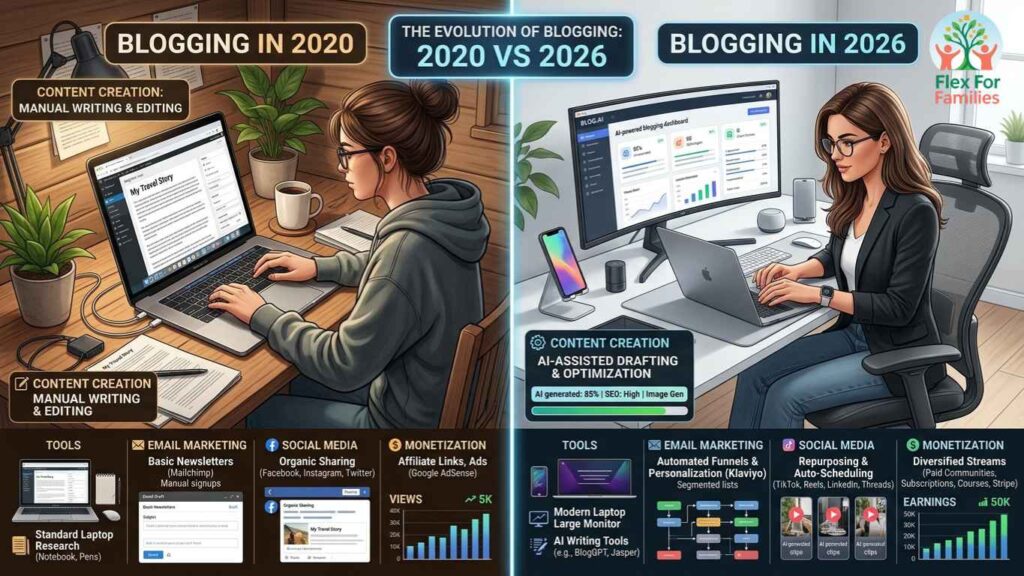
The biggest mistake people make when evaluating blogging in 2026 is comparing it to blogging in 2016.
The online world has changed dramatically over the past few years.
If you’re reading advice from bloggers who built their websites a decade ago, some of their strategies may no longer work as effectively today.
That doesn’t mean blogging is dead.
It simply means the rules have changed.
The good news is that many of these changes actually create opportunities for new bloggers who understand how the game is played today.
Quality Matters More Than Quantity
There was a time when publishing as much content as possible could produce results.
Some websites grew by publishing hundreds or even thousands of articles targeting every keyword they could find.
Today, search engines are far better at identifying genuinely helpful content.
A smaller blog with 30 high-quality articles can often outperform a larger website filled with thin, generic content.
For new bloggers, that’s encouraging.
You don’t need hundreds of posts before you can start seeing results.
You need content that genuinely helps people.
Personal Experience Matters More Than Ever
One of the biggest shifts has been the growing importance of first-hand experience.
People want advice from someone who has actually done the thing they’re writing about.
If you’re a parent balancing blogging around family life, your experiences matter.
If you’ve started a blog, tested affiliate programs, used blogging tools, or made mistakes along the way, those insights help your content stand out.
AI can summarise information.
It can’t replicate your personal journey.
That’s one of the reasons authentic bloggers still have a place in 2026.
Building a Brand Is More Important
Many older websites focused almost entirely on search traffic.
- They didn’t build a brand.
- They didn’t build a community.
- They didn’t collect email subscribers.
When search traffic declined, they had no audience to fall back on.
Today’s successful bloggers think differently.
- They build trust.
- They create recognisable brands.
- They encourage readers to join email lists and follow them on other platforms.
The goal isn’t just traffic.
The goal is building an audience that wants to hear from you again.
Email Lists Have Become More Valuable
Social media platforms change.
Search algorithms change.
Your email list belongs to you.
That’s why many successful bloggers now place much more emphasis on growing their subscriber base.
Even a small email list can become one of your most valuable assets.
It allows you to stay connected with readers, share new content, recommend products, and build stronger relationships over time.
For many bloggers, the email list is now more important than search traffic alone.
Multiple Traffic Sources Win
One of the biggest lessons from recent years is that relying on a single traffic source can be risky.
Modern bloggers often attract visitors from several places:
- Google Search
- YouTube
- Email marketing
- Online communities
- AI search tools
This creates a more stable business.
If one traffic source slows down, others can continue bringing visitors to your website.
For busy parents, this can be especially powerful because it allows you to focus on the platforms that best fit your schedule and strengths.
AI Has Changed the Workflow, Not the Opportunity
Perhaps the biggest change since 2020 is the rise of AI.
Many people assume AI has made blogging harder.
In reality, it has mostly changed how bloggers work.
AI can help with:
- Brainstorming content ideas
- Creating outlines
- Researching topics
- Improving writing
- Generating images
- Saving time on repetitive tasks
But AI still needs direction, editing, experience, and human judgement.
The bloggers seeing the best results are often those using AI as an assistant, not a replacement.
What This Means for New Bloggers
If you’re starting a blog in 2026, you’re not competing against the blogging industry of the past.
- You’re entering a different environment with different rules.
- You don’t need hundreds of articles.
- You don’t need a huge social media following.
- You don’t need years of experience.
What you need is a clear audience, helpful content, consistency, and a willingness to learn.
Those fundamentals still work.
In fact, they’re often easier for new bloggers to adopt than people trying to cling to outdated strategies.
Can New Blogs Still Get Traffic?

One of the biggest fears new bloggers have is simple:
“What if nobody reads my blog?”
It’s a fair question.
After all, there are millions of websites online. Large brands have huge budgets. Established bloggers have years of content and authority behind them.
At first glance, it can feel impossible for a brand-new blog to get noticed.
But here’s the reality.
New blogs get traffic every day.
The challenge isn’t whether traffic is possible.
The challenge is understanding where that traffic comes from and how long it typically takes.
Google Still Sends Traffic to New Websites
Despite all the headlines about AI and search engine updates, Google still processes billions of searches every day.
People continue searching for answers to questions such as:
- How do I start a blog?
- How can I make money from home?
- What is affiliate marketing?
- Which blogging platform should I use?
Every one of those searches represents an opportunity for a blogger to provide a useful answer.
The key is understanding that Google rarely rewards brand-new websites overnight.
Most successful blogs earn traffic gradually as they build content, trust, and authority over time.
Small Niches Often Beat Big Competition
Many new bloggers assume they need to compete against huge websites from day one.
They don’t.
In fact, some of the best opportunities exist in smaller, more focused niches.
For example, instead of trying to rank for a broad term like “blogging,” a parent blogger might target:
- How to start a parent blog
- Blogging with a newborn
- Blogging during nap time
- How busy parents can make money blogging
Specific topics often have less competition and attract readers who are looking for exactly the information you’re providing.
That’s one reason niche websites continue to succeed.
Search Traffic Isn’t the Only Option
A common mistake is assuming every visitor must come from Google.
Today’s bloggers often build traffic from multiple sources.
These can include:
- Facebook groups
- YouTube
- Email newsletters
- Online communities
- AI search tools
- Word-of-mouth recommendations
This means your blog can start attracting readers long before it ranks highly in search engines.
Many successful bloggers use social media and email marketing to accelerate growth while their search traffic develops.
AI Search Creates New Opportunities
Many people focus on AI as a threat to blogging.
Few talk about the opportunities.
AI tools still need trustworthy sources to reference when answering questions.
Well-written blog posts can appear in AI-generated answers, recommendations, and citations.
In some cases, a helpful article can reach readers through traditional search results and AI-powered search experiences at the same time.
The bloggers who focus on answering real questions clearly and thoroughly are often well-positioned for both.
What Traffic Usually Looks Like for New Bloggers
One reason people quit blogging too early is unrealistic expectations.
Many beginners expect thousands of visitors within a few weeks.
That’s rarely how blogging works.
A more realistic timeline looks something like this:
Month 1-3
- Building your website
- Publishing content
- Learning basic SEO
- Very little traffic
Month 3-6
- First impressions in search results
- Occasional visitors
- Content beginning to gain visibility
Month 6-12
- Growing search traffic
- More consistent readers
- Potential affiliate clicks and commissions
Year 1 and Beyond
- Increasing authority
- More traffic sources
- Compounding growth from existing content
Every blog is different, but blogging is often closer to planting a tree than flipping a switch.
The work you do today can continue producing results months and years into the future.
Focus on Progress, Not Traffic
One of the best lessons I’ve learned is that traffic isn’t the only measure of success.
- Your first indexed post is progress.
- Your first search impression is progress.
- Your first visitor is progress.
- Your first comment is progress.
- Your first affiliate commission is progress.
Many bloggers overlook these milestones because they’re focused on the end result.
But every successful blog started with those small wins.
The Real Question
The question isn’t whether new blogs can still get traffic.
They can.
The better question is whether you’re willing to give your blog enough time to grow.
Because in 2026, the bloggers who succeed are rarely the ones with the biggest advantage when they start.
They’re usually the ones who stick with it long enough to see the results.
Can You Still Make Money Blogging?
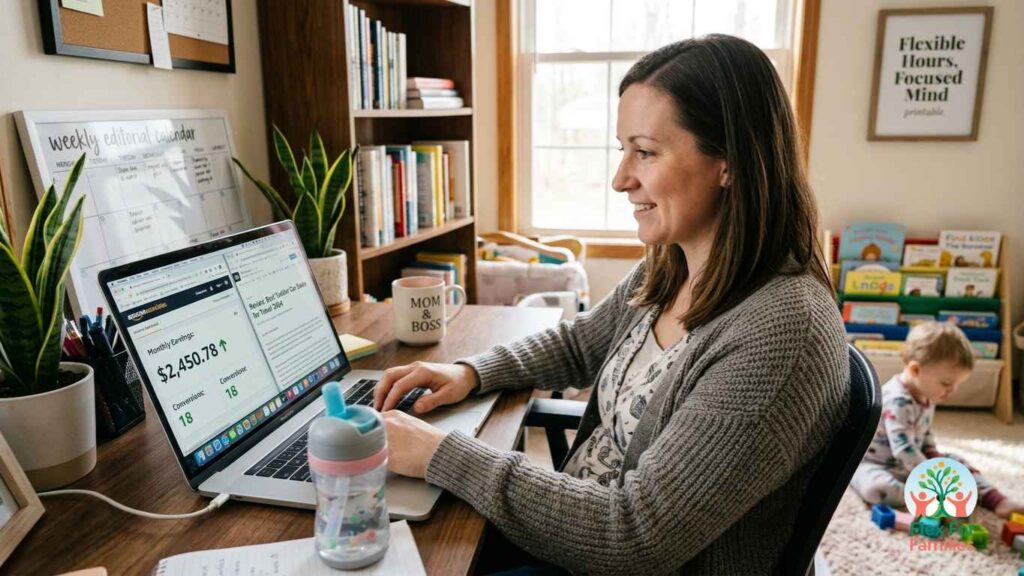
Yes, people still make money blogging in 2026.
The difference is that most successful bloggers don’t rely on a single income source.
Modern blogs often combine multiple revenue streams, creating a more stable and flexible business over time.
The important thing to understand is that blogging itself isn’t the product.
Your blog is the platform.
It’s the place where people discover you, trust you, and decide whether to take your recommendations.
That’s why blogging remains such a powerful business model.
Affiliate Marketing
Affiliate marketing is still one of the most popular ways bloggers earn money.
When you recommend a product or service and someone purchases through your link, you earn a commission.
For example, a parenting blogger might recommend:
- Blogging tools
- Web hosting
- Educational resources
- Family products
- Online courses
The reason affiliate marketing works so well is that you’re helping people solve problems they already have.
When your recommendation genuinely helps someone, everybody wins.
If you’re completely new to affiliate marketing, don’t worry. It’s one of the easiest monetisation methods for beginners to understand. I break down exactly how it works in my guide on How to Start Affiliate Marketing as a Busy Parent, including how to choose products and earn your first commissions.
Display Advertising
Many bloggers earn money by displaying advertisements on their websites.
Advertising networks place ads on your content and pay you based on traffic and engagement.
This model can work well once your blog starts attracting a consistent audience.
However, advertising usually requires higher traffic levels than affiliate marketing before the income becomes significant.
That’s why many newer bloggers focus on affiliate marketing first.
Digital Products
Some bloggers create and sell their own products.
Examples include:
- Ebooks
- Printables
- Checklists
- Templates
- Online courses
- Memberships
One advantage of digital products is that you keep most of the revenue rather than earning a commission.
Once created, a digital product can often be sold repeatedly with little additional work.
Services and Freelancing
Many bloggers use their websites to attract clients.
For example, a blog can help generate opportunities for:
- Freelance writing
- Coaching
- Consulting
- Website design
- Virtual assistant services
Even if your long-term goal is passive income, offering services can help generate income while your blog continues to grow.
Sponsored Content
Brands still work with bloggers to promote products and services.
As your audience grows, companies may pay for:
- Sponsored posts
- Product reviews
- Social media promotions
- Newsletter placements
This income stream usually becomes more relevant once you have an established audience and a trusted reputation.
Why Parents Don’t Need Massive Traffic
One of the biggest misconceptions about blogging is that you need hundreds of thousands of visitors to make money.
You don’t.
A blog serving a specific audience can generate income without huge traffic numbers.
For example:
- A single affiliate commission might earn £20, £50, or more.
- A digital product could generate income from a relatively small audience.
- A freelance client could be worth hundreds of pounds.
The goal isn’t necessarily attracting everyone.
The goal is attracting the right people.
A focused audience often converts far better than a large, untargeted one.
Blogging is just one of several flexible income options available to parents. If you’re still exploring different ways to earn around family life, check out my guide to Family-Friendly Ways to Make Money From Home.
The Reality Most People Don’t Talk About
Can you make money blogging?
Absolutely.
Can you make money quickly?
Usually not.
Most successful bloggers spend months building content, learning skills, and growing an audience before seeing meaningful results.
That’s why blogging isn’t a get-rich-quick scheme.
It’s a long-term asset.
Each article you publish becomes another opportunity to attract readers, build trust, and generate income in the future.
Not sure whether blogging is the right fit? You might also find my guide to The Best Side Hustles for Parents in 2026 helpful. It compares blogging with several other flexible income ideas so you can choose the option that best fits your situation.
Is Blogging Worth It in 2026?
If you’re looking for overnight results, probably not.
But if you’re willing to build something steadily over time, blogging remains one of the most flexible and accessible online business models available.
- You don’t need employees.
- You don’t need expensive equipment.
- You don’t need a huge budget.
You simply need a willingness to learn, create helpful content, and stay consistent.
For many parents, that’s exactly what makes blogging such an attractive option.
If you’re serious about starting a blog but aren’t sure where to learn the skills, the platform I personally used to build my online income is Wealthy Affiliate. You can read my full Wealthy Affiliate Review to see exactly what it offers, who it’s best suited for, and whether it’s worth the investment.
The Biggest Advantage New Bloggers Have in 2026
Most people assume they missed the best time to start a blog.
They look at bloggers who have been publishing for ten or fifteen years and think they’re already too far behind.
But here’s something many beginners don’t realise.
Starting a blog in 2026 comes with advantages that didn’t exist a few years ago.
In some ways, new bloggers are actually in a stronger position than those trying to adapt old strategies to today’s online landscape.
You Can Build for Today’s Internet
Many established websites were built for a very different version of the internet.
They grew during a time when:
- Google was easier to rank in
- AI tools didn’t exist
- Social media played a smaller role
- Email marketing wasn’t always a priority
As a result, some older websites are now trying to retrofit modern strategies onto outdated systems.
New bloggers don’t have that problem.
You can build your blog from day one around how people discover content today.
You Can Use AI as a Competitive Advantage
One of the biggest advantages available to new bloggers is access to AI tools.
Years ago, bloggers had to do everything manually.
- Research took longer.
- Content planning took longer.
- Editing took longer.
- Creating images took longer.
Today, AI can help speed up many of those tasks.
Used correctly, AI allows bloggers to spend more time on the parts that matter most:
- Sharing experiences
- Helping readers
- Building relationships
- Creating useful content
The bloggers who thrive in 2026 aren’t avoiding AI.
They’re learning how to use it effectively.
You Can Focus on Quality From Day One
Some older websites built huge libraries of content based on outdated SEO tactics.
Many are now spending time updating, consolidating, or removing content that no longer performs.
As a new blogger, you can start with a different approach.
Instead of publishing hundreds of articles, you can focus on creating genuinely helpful content from the beginning.
That often leads to a stronger foundation and a better experience for readers.
You Can Build Multiple Traffic Sources Immediately
Many bloggers from previous generations became heavily dependent on Google traffic.
When search algorithms changed, their businesses suffered.
New bloggers have the opportunity to build a more balanced strategy from the start.
You can combine:
- Search engines
- YouTube
- Email marketing
- AI search visibility
This creates a stronger and more resilient platform over time.
You Already Know What Doesn’t Work
This is an underrated advantage.
New bloggers can learn from years of mistakes made by others.
Today, we know that shortcuts rarely last.
We know that low-quality content eventually struggles.
We know that chasing every trend can distract from building a real audience.
That means you can avoid many of the mistakes that older bloggers had to discover the hard way.
Parents Have an Advantage Too
If you’re reading this as a parent, you may feel like you’re at a disadvantage because your time is limited.
But your experience is actually one of your greatest assets.
You understand the challenges your audience faces.
You know what it’s like to juggle responsibilities, manage a household, and look for flexible ways to earn income.
Those experiences help you create content that connects with real people.
And in a world increasingly filled with generic AI-generated content, that connection matters more than ever.
The Best Time to Start Was Yesterday. The Next Best Time Is Today.
It’s easy to spend months wondering whether blogging is still worth it.
Many people do.
But every successful blogger reaches the same point eventually.
- They stop researching.
- They stop worrying about whether the opportunity still exists.
And they start.
The bloggers who build successful websites in 2030 will not be the people who spent years waiting for the perfect moment.
They’ll be the people who started in 2026 and gave themselves time to grow.
Who Should Start a Blog Today?

One of the biggest myths about blogging is that you need to be an expert to succeed.
You don’t.
Many successful blogs are built by ordinary people sharing what they’re learning, documenting their experiences, and helping others solve problems.
The real question isn’t whether you’re qualified.
It’s whether blogging fits your goals, interests, and expectations.
Let’s look at who blogging is a good fit for and who might be better exploring other options.
Blogging Is a Great Fit for You If…
You Want More Flexibility
One of the biggest advantages of blogging is that it works around your life.
- You can write early in the morning.
- During nap times.
- In the evenings.
Or whenever your schedule allows.
Unlike many side hustles, blogging doesn’t require you to be available at specific times or work directly with customers every day.
That’s one reason it appeals to so many parents.
You Enjoy Helping People
The best blogs solve problems.
Whether you’re teaching, reviewing products, sharing experiences, or documenting a journey, your content should help readers in some way.
You don’t need to know everything.
You simply need to be willing to share what you’ve learned.
You’re Willing to Learn New Skills
Successful bloggers develop skills over time.
These might include:
- Writing
- SEO
- Affiliate marketing
- Email marketing
- Social media
- AI tools
The good news is that you don’t need to master everything at once.
Most bloggers learn as they go.
You’re Looking for a Long-Term Asset
A blog is different from many side hustles.
You’re building something that can continue attracting readers and generating income long after you publish a post.
That’s one reason blogging appeals to people who value flexibility and long-term growth over quick wins.
Blogging Might Not Be Right for You If…
You’re Looking for Fast Money
This is probably the biggest one.
- Blogging takes time.
- Traffic takes time.
- Trust takes time.
- Income takes time.
If your goal is to make money next week, blogging probably isn’t the best option.
You Hate Creating Content
Blogging doesn’t mean writing every day.
But it does involve creating content consistently.
That could be:
- Articles
- Emails
- Pinterest pins
- Videos
- Social media posts
If you strongly dislike creating content in any form, you’ll likely struggle to stay motivated.
You Want a Completely Passive Business
Blogging can become more passive over time.
But it isn’t passive when you’re starting.
You’ll need to learn, create, update content, and build your audience.
The people who succeed understand that effort comes before results.
Why Parents Often Make Great Bloggers
Parents often underestimate how much valuable experience they have.
Think about the challenges you’ve already solved:
- Managing a busy schedule
- Raising children
- Budgeting
- Learning new skills
- Balancing priorities
There are other parents searching for those answers every day.
Your experiences, lessons, successes, and mistakes can become incredibly valuable content.
You don’t need to be the world’s leading expert.
You just need to be a few steps ahead of someone else and willing to share what you’ve learned.
So, Should You Start a Blog in 2026?
If you’re looking for a flexible way to build something of your own, help people, and create potential income over time, then yes, blogging is still worth considering.
- You don’t need a huge audience.
- You don’t need technical skills.
- You don’t need years of experience.
You simply need a topic you care about, realistic expectations, and the willingness to keep going when progress feels slow.
Because the people who succeed with blogging aren’t usually the most talented.
They’re the ones who stay consistent long enough to see the results.
What Results Can You Realistically Expect?
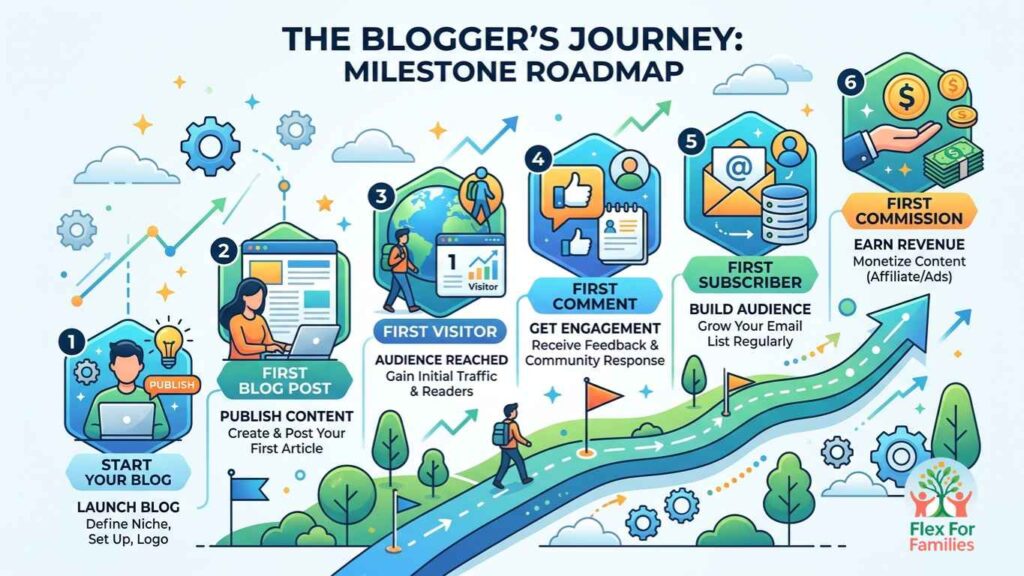
One of the biggest reasons people quit blogging is because their expectations don’t match reality.
- They launch a website.
- Publish a few articles.
- Wait a couple of weeks.
Then assume blogging doesn’t work because nobody is visiting.
The truth is that blogging is usually much slower than people expect.
But it’s also far more powerful than many people realise once momentum starts to build.
The key is understanding what progress actually looks like.
Your First Month
During your first month, most of your time will be spent laying foundations.
You’ll likely be:
- Setting up your website
- Choosing a niche
- Learning basic SEO
- Publishing your first articles
- Figuring out how everything works
At this stage, traffic is usually minimal.
And that’s completely normal.
Many new bloggers see very few visitors during their first few weeks.
Success during this phase isn’t measured by traffic.
It’s measured by getting started.
Months Two to Three
This is where many bloggers begin to see their first signs of life.
You might notice:
- Pages being indexed by Google
- First search impressions
- Occasional visitors
- Clicks from social media
- Early engagement
The numbers are often small.
But they matter.
Your first impression in Google means your content is being discovered.
Your first visitor means somebody found your website.
Those are important milestones.
Months Four to Six
By this stage, your content library is growing.
You may start seeing:
- More impressions in search results
- Consistent visitors each week
- Better rankings for specific keywords
- The first email subscribers
- Your first blog comments
For many bloggers, this is when confidence starts to grow.
The work begins to feel more real because you’re seeing evidence that people are finding your content.
Months Six to Twelve
This is often where momentum starts to build.
Depending on your niche, consistency, and content quality, you may begin seeing:
- Steady traffic growth
- Higher search rankings
- Regular email subscribers
- Affiliate link clicks
- Your first commissions
Some bloggers earn their first affiliate commission during this period.
Others take longer.
Both outcomes are normal.
Blogging timelines vary significantly from one website to another.
After Your First Year
The biggest difference between blogging and many other side hustles is that your work compounds.
- Articles you wrote six months ago can still attract visitors.
- Posts you published last year can continue generating traffic.
- Affiliate links can continue earning commissions.
- Your email list can continue growing.
Instead of starting from zero every day, you’re building on what you’ve already created.
That’s where blogging becomes particularly powerful.
Success Isn’t Always About Money
One thing I’ve learned over the years is that people often define success too narrowly.
They focus entirely on income.
But some of the most important milestones happen long before that.
Success can be:
- Publishing your first article
- Getting your first page indexed
- Seeing your first search impressions
- Receiving your first comment
- Getting your first email subscriber
- Earning your first commission
Those moments matter.
They’re proof that your blog is moving forward.
The Reality Nobody Can Predict
Could you make your first affiliate commission within six months?
Possibly.
Could it take a year?
Also possible.
Could your blog eventually become a meaningful source of income?
Absolutely.
Nobody can predict your exact results because blogging depends on many factors:
- Your niche
- Your consistency
- The quality of your content
- Your willingness to learn
- The amount of time you can dedicate
What we do know is that every successful blogger started with zero traffic, zero subscribers, and zero income.
The difference wasn’t that they found a secret.
They simply kept going when most people stopped.
Focus on the Next Milestone
If you’re thinking about starting a blog in 2026, don’t worry about where you’ll be in five years.
- Focus on the next milestone.
- Launch the website.
- Publish the first article.
- Get indexed.
- Earn the first click.
- Build the first subscriber.
Those small wins stack up over time.
And before you know it, you’ll have something most people never build because they spent too long wondering whether it was too late to start.
Final Verdict: Is It Too Late to Start a Blog in 2026?

No, it’s not too late to start a blog in 2026.
What’s changed is how blogging works.
The days of publishing hundreds of low-quality articles and expecting easy traffic are fading. But people still search for answers, businesses still need content, and bloggers are still building audiences and generating income online.
In fact, new bloggers have access to advantages that didn’t exist a few years ago.
- You can use AI to work more efficiently.
- You can build multiple traffic sources from the beginning.
- You can learn from the mistakes others have already made.
And you can focus on creating genuinely helpful content instead of chasing outdated SEO tactics.
Will blogging make you rich overnight?
No.
Will it require effort, patience, and consistency?
Absolutely.
But if you’re looking for a flexible way to build something of your own, help people, and create long-term income potential around family life, blogging remains one of the best opportunities available.
The biggest mistake isn’t starting a blog in 2026.
It’s spending the next few years wishing you had started today.
Ready to Start Your Blog?
If you’ve been putting off starting a blog because you thought you were too late, hopefully you can see that’s not the case.
The best time to start may have been years ago.
The next best time is today.
That’s exactly why I created the Flex For Families Blogging Starter Kit.
Inside, you’ll discover:
- How to choose a blog niche
- The tools you actually need (and the ones you don’t)
- How to get your blog online
- The basics of traffic and monetisation
- A simple roadmap designed for busy parents
It’s completely free and designed to help you avoid the mistakes that stop most beginners before they ever get started.
🚀 Get the Free Blogging Starter Kit
Discover the simple roadmap I wish I had when I started blogging. Learn how to build a blog around family life and create an income stream that grows over time.
You don’t need to know everything before you begin.
You just need to take the first step.
Still have questions about whether blogging is worth it in 2026? Below are some of the most common questions new bloggers ask before starting their first website.
Frequently Asked Questions
Is blogging still profitable in 2026?
Yes, blogging can still be profitable in 2026. Many bloggers earn income through affiliate marketing, display advertising, digital products, sponsored content, and services. However, blogging is generally a long-term strategy rather than a quick way to make money.
Is blogging dead because of AI?
No. AI has changed how bloggers create content, but it hasn’t replaced the need for human experience, opinions, and expertise. The most successful bloggers use AI as a tool while still adding their own knowledge and perspective.
How long does it take for a new blog to get traffic?
Most new blogs take several months before seeing meaningful traffic from search engines. Some bloggers see their first visitors within weeks, while others may take six months or longer. Consistency and content quality play a major role.
Can beginners still start a successful blog?
Absolutely. Every successful blogger started as a beginner. The key is choosing a clear niche, creating helpful content, learning basic SEO, and staying consistent over time.
Do I need to be an expert to start a blog?
No. You don’t need to be the world’s leading expert. Many successful blogs are created by people sharing their experiences, documenting their journey, and helping others solve problems they’ve already faced.
How much does it cost to start a blog?
You can start a blog for relatively little money. Most beginners can get started with a domain name and web hosting for less than many monthly subscription services. Additional tools can be added later as your blog grows.
What is the best niche for a new blog?
The best niche is usually a combination of your interests, experiences, and topics people actively search for. For parents, this might include family life, personal finance, blogging, education, hobbies, health, or work-from-home topics.
Is it too late to start a blog if there are already so many websites?
No. New websites are launched every day and many go on to attract traffic and generate income. Success comes from helping a specific audience and creating useful content, not from being the first person to cover a topic.
Can you make money blogging without a large audience?
Yes. Many bloggers earn income with relatively small audiences through affiliate marketing, digital products, consulting, coaching, or services. The quality and relevance of your audience often matter more than the size.
Is blogging a good side hustle for parents?
For many parents, blogging is one of the most flexible side hustles available. It can be built around family commitments, requires relatively low startup costs, and has the potential to grow into a long-term income-producing asset.
Let’s Chat
What about you?
Have you been thinking about starting a blog but wondered if you were already too late?
Or maybe you’ve already started and are waiting for those first signs of progress.
I’d love to hear where you are on your blogging journey.
Leave a comment below and let me know:
- What’s stopping you from starting a blog?
- What’s your biggest concern about blogging in 2026?
- Or, if you’ve already started, what’s been your biggest win so far?
Remember, success isn’t always measured in income.
Sometimes it’s your first published article.
Your first indexed page.
Your first search impression.
Your first comment.
Those small wins matter because they’re often the first signs that something bigger is starting to grow.
Let’s chat in the comments.