


Choosing a side hustle can feel harder than starting one.
There are hundreds of ideas competing for your attention. One person recommends freelancing. Another says you should build a blog, sell digital products, start reselling or use your spare room for a product business.
Most of those ideas can work for somebody. That does not mean they will work for your family.
A side hustle with impressive income potential can still be the wrong choice if it requires every evening, creates financial pressure or depends on you being available when your children need you.
The right side hustle should fit your real time, budget, energy and family responsibilities. This guide will help you compare your strongest ideas using the Family Flexibility Filter, then choose one to test for 30 days.
Quick Answer: How Do You Choose the Right Side Hustle?
To choose the right side hustle for your family, compare each idea against your available time, schedule control, startup cost, income timescale, risk and long-term potential.
Remove any option that conflicts with a family non-negotiable. Score up to three remaining ideas, choose the strongest candidate and test it for 30 days before spending heavily or starting another opportunity.
The process has three parts:
- Set your family non-negotiables.
- Score up to three realistic ideas.
- Test one idea and review the evidence.
Why the Highest-Earning Side Hustle May Be the Wrong Choice
Income matters, but the biggest number is rarely the full story.
Headline income claims often ignore:
- Time spent finding customers
- Unpaid administration
- Travel
- Equipment and materials
- Software subscriptions
- Marketing
- Tax
- Customer messages
- Returns or revisions
- Family time lost
A side hustle producing £500 each month may be less useful than one producing £300 if the higher income requires every Friday and Saturday evening.
I learned this through my wedding entertainment business. It could generate income, but weddings naturally took place during evenings and weekends. Those were also the periods when my family was available.
Closing the business was not a statement that it had failed. It meant the model no longer matched what I wanted for my family.
That experience now shapes how I assess any opportunity. I look at the income, but I also ask what the income will cost in time, energy and flexibility.
Start With Your Family’s Non-Negotiables
Before you score any ideas, decide what the side hustle must protect.

Your non-negotiables might include:
- No work during bedtime
- At least three evenings free each week
- No Sunday work
- No debt to start the business
- No large upfront investment
- Ability to pause during school holidays
- No client calls during your employed working hours
- No conflict with your employment contract
- No sharing private information about your children
- No work that regularly affects sleep
These are not weaknesses. They are the boundaries within which your side hustle needs to operate.
If an idea breaks a genuine non-negotiable, remove it before scoring. A high income or flexibility score should not override something essential to your family.
Step 1: Calculate Your Reliable Time
Do not build your plan around your best week.

Calculate three versions instead:
Your Best Week
Everything runs smoothly. Work stays quiet, nobody is unwell and every planned session remains available.
Your Normal Week
This includes the usual school runs, appointments, household tasks, tired evenings and small interruptions.
Your Disrupted Week
A child is unwell, your main job becomes busy or a family commitment removes part of your planned time.
Use your normal week when comparing ideas. Keep the disrupted week in mind when accepting deadlines or appointments.
Also separate time from energy.
You may technically have two hours after bedtime, but that does not mean you have two hours of concentration available. A simple packaging task may fit that period better than writing detailed content or holding a client call.
Your calculation should include:
- Main employment
- School and nursery runs
- Childcare
- Caring responsibilities
- Household tasks
- Travel
- Rest
- Time with your partner
- Side-hustle administration
If five hours per week is genuinely reliable, choose a model that can move forward within five hours.
Step 2: Set a Realistic Income Goal
What does the side hustle need to achieve?
Your answer affects which model makes sense.
Short-Term Support
You may want an extra £100 to £300 per month to cover a bill, family activity or savings goal.
A direct service, tutoring, reselling or local work may fit because these options can produce income without first building a large audience.
A Meaningful Monthly Contribution
You may eventually want £300 to £500 or more each month.
That may require regular clients, a repeatable service, more working hours or an asset that grows over time.
A Longer-Term Income Asset
You may want to build a blog, affiliate website, digital product range or content business.
These models offer more schedule control, but they normally take longer to generate income.
These figures are planning examples, not earnings promises. Your skills, prices, demand and available time will affect your results.
Be honest about when the money is needed. A model that may take 12 months to gain traction is unsuitable for a bill due next month.
Step 3: Set Your Startup Budget
Decide how much your family can afford to lose while testing an idea.
That wording matters. A new side hustle has no guaranteed return.
£0 to £50
Possible options include:
- Freelancing with existing equipment
- Task-based virtual assistance
- Reselling items you already own
- A simple digital product
- Blogging with a basic setup
£50 to £250
This could cover:
- Website and software costs
- Local service equipment
- Initial craft materials
- Insurance
- A small amount of resale stock
More Than £250
Higher-cost options may involve:
- Specialist equipment
- Larger stock purchases
- Advanced software
- Paid training
- 3D-printing equipment
Before buying anything, ask:
- Is this essential for the first test?
- Is there a free or cheaper version?
- Does the cost repeat monthly?
- How many sales would recover it?
- Have I confirmed that anybody wants the offer?
Buying a complete setup can create pressure to continue with an unsuitable idea because money has already been spent.
Step 4: Assess Income Speed
Income speed means how soon the model could realistically produce money, not how quickly somebody in a promotional video claims it will work.

Options That May Earn Sooner
- Freelancing
- Cleaning
- Tutoring
- Pet care
- Reselling items you own
- Task-based virtual assistance
These options connect a customer directly with a service, skill or item.
Medium-Term Options
- Handmade products
- 3D-printed products
- Specialist services
- Reselling purchased stock
You may need product testing, listings, stock or repeat customers before the model becomes consistent.
Longer-Term Options
- Blogging
- Affiliate marketing
- Digital products without an existing audience
- Content creation
These usually require content, traffic, trust or an audience before income becomes meaningful.
My first affiliate commission took around six months. That was not because the model was impossible. I needed to publish consistently and start attracting traffic.
If I had expected quick income, blogging would have been the wrong choice for that immediate goal.
Step 5: Assess Schedule Control
Schedule control measures how much freedom you have over when the work happens.
Ask:
- Can I choose when to work?
- Are appointments fixed?
- Do clients expect immediate replies?
- Can I decline new work?
- Can the business pause?
- Does peak demand clash with family time?
- Will unfinished tasks move into evenings?
Use this guide:
1 point: The customer, client or platform controls most working hours.
3 points: You have some flexibility, but deadlines or appointments remain.
5 points: You control when most tasks are completed.
Blogging may score highly because you choose when to research, draft and edit. Pet care may score lower because the animal needs care at an agreed time.
Neither answer makes an option good or bad. It shows whether the model fits your family.
Step 6: Assess the Risk
Risk is broader than the money you spend.
Financial Risk
How much could you lose through equipment, stock, subscriptions or advertising?
Time Risk
How many unpaid hours are required before you can test demand?
Employment Risk
Could the side hustle conflict with your employer, use confidential information or affect your performance?
GOV.UK confirms that you can run a business and be employed at the same time. However, employment contracts are legally binding agreements, so check your terms and any rules covering secondary work, conflicts of interest or competition. Acas provides current guidance on employment contracts and the law.
Family Risk
Could the work regularly affect sleep, relationships, childcare or essential family time?
Use a red-flag rule. Remove an idea if it creates an unacceptable employment, financial, safety or family risk. Do not let points in other categories cancel it out.
Step 7: Assess Long-Term Potential
Long-term potential should match what you want from the project.
You might want:
- Extra income for a current expense
- A repeatable freelance service
- Skills that support your career
- A business that could grow
- A longer-term content asset
- A creative family project
A short-term side hustle does not need unlimited growth potential. Reselling unused items may be valuable if it produces money for a specific family goal.
Blogging may score higher if you want to build an asset over several years. It may score lower if you need reliable income soon.
The Family Flexibility Filter Scorecard

Choose no more than three side-hustle ideas. Give each one a score from 1 to 5 in the six categories below.
| Category | 1 Point | 3 Points | 5 Points |
|---|---|---|---|
| Time fit | Rarely fits | Fits some weeks | Fits normal weeks |
| Schedule control | Mostly fixed | Partly flexible | You control most tasks |
| Startup cost | Creates pressure | Manageable | Minimal pressure |
| Income speed | Misses your timescale | Could meet it | Closely matches it |
| Risk | High or unclear | Manageable | Low and understood |
| Long-term potential | Little value to you | Some future value | Supports your goal |
The maximum score is 30.
24 to 30 Points
This is a strong candidate for a small test, provided it passes your red-flag check.
18 to 23 Points
The idea could work, but you should address the weaker categories before committing.
12 to 17 Points
The model may create practical difficulties in your current situation.
Below 12 Points
This is probably a poor fit for your family right now.
The score helps you organise your reasoning. It does not make the decision for you.
Should Every Category Have Equal Weight?
No. Families have different priorities.

A parent who needs money soon may give income speed double weight.
A parent with unpredictable caring responsibilities may double time fit and schedule control.
A family protecting limited savings may double startup cost and risk.
Use this method:
- Choose the two categories that matter most.
- Double those two scores.
- Compare the revised totals.
- Check the result against your non-negotiables.
Do not change the weighting simply to make your favourite idea win. Choose the priorities before completing the scorecard.
Worked Example: Comparing Three Side Hustles
Imagine a parent is comparing freelance website support, blogging and 3D-printed products.
| Category | Website Support | Blogging | 3D Printing |
|---|---|---|---|
| Time fit | 4 | 5 | 3 |
| Schedule control | 4 | 5 | 4 |
| Startup cost | 5 | 4 | 2 |
| Income speed | 4 | 2 | 3 |
| Risk | 4 | 5 | 3 |
| Long-term potential | 3 | 5 | 4 |
| Total | 24 | 26 | 19 |
Blogging has the highest total because it offers strong schedule control and long-term potential.
Website support may still be the better choice if the parent needs income sooner. If income speed receives double weight, its advantage becomes more important.
3D printing could remain attractive as a creative family project. I am currently exploring it with my son. It offers shared learning and product potential, but equipment, licences, failed prints, finishing and customer service all affect the decision.
The example shows why the highest total is only the starting point. Your priorities decide what the numbers mean.
Match the Side Hustle to Your Current Situation
Working Parents
Give extra attention to energy, employment terms and the total workload. The side hustle should not become a second full-time job.
Stay-at-Home Parents
Consider childcare reliability, school hours, holidays and what happens when children are unwell.
Single Parents
Schedule control, backup arrangements and financial risk may need heavier weighting because fewer responsibilities can be transferred to another adult.
Parents of Children With Additional Needs
Work that can stop quickly may be more useful than a model with fixed appointments or immediate response expectations.
Parents Who Need Income Soon
Direct services and reselling may be more realistic than waiting for traffic or an audience to grow.
Parents Building for the Future
Blogging, affiliate marketing and digital products may fit if you can accept a longer development period and uncertain early results.
Common Side-Hustle Selection Mistakes
Choosing Based on Income Claims
An income screenshot tells you little about hours, costs, previous experience or family support.
Buying Tools Before Testing Demand
Software and equipment do not create customers. Test the problem and offer first.
Underestimating Unpaid Work
Messages, travel, bookkeeping, promotion and preparation all count.
Ignoring School Holidays
A model that works in term time still needs a holiday plan.
Assuming Every Evening Is Available
Rest and family time need space in the schedule.
Starting Several Ideas at Once
Multiple setups divide your attention and make it harder to judge what works.
Copying Somebody With a Different Life
Their childcare, skills, savings and audience may be completely different.
Confusing Flexibility With Passive Income
Choosing when to work does not remove the work.
Ignoring Employment Restrictions
Check your contract before approaching customers or operating in a related industry.
Continuing Because You Already Spent Money
Previous spending does not make an unsuitable model more likely to fit.
Why Strategy-Hopping Costs Time and Money
Changing direction can be sensible when evidence shows that an idea is unsuitable.
Constant switching because progress feels slow creates repeated setup work:
- New accounts
- New software
- New training
- New audiences
- New systems
- New learning curves
You never remain with one approach long enough to collect useful evidence.
Blogging provides a good example. My first affiliate commission took around six months. Changing the entire strategy after two weeks would not have allowed time for content to be published, indexed and found.
Ask why you want to switch.
If the model breaks a non-negotiable or evidence shows no demand, change may be sensible.
If you are switching because another opportunity looks easier, return to your scorecard and original goal.
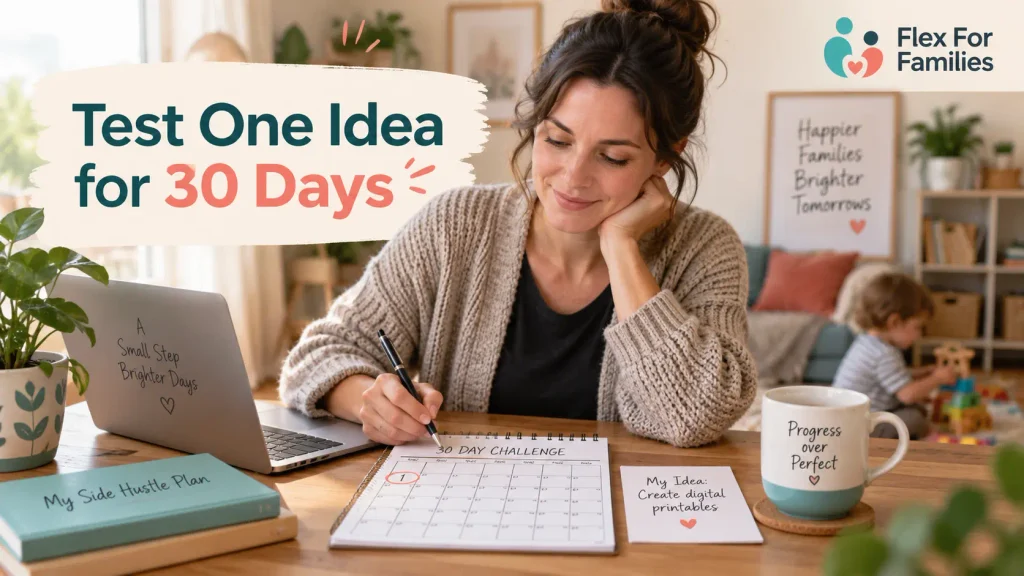
Use a 30-Day Test Before Committing
A 30-day test does not need to build a complete business. Its purpose is to test fit and early demand.
Week 1: Define the Test
- Choose one narrow offer, product or publishing goal
- Decide how many hours you will use
- Set a spending limit
- Choose two or three measures of progress
Week 2: Create a Basic Version
- Prepare a simple service description
- Create one product sample
- List existing items for resale
- Publish the first useful content
- Show the idea to potential customers or readers
Week 3: Look for Real Evidence
- Approach potential clients
- Request feedback
- Publish more content
- Test a marketplace listing
- Record enquiries and objections
Week 4: Review What Happened
Track:
- Hours worked
- Money spent
- Enquiries
- Sales or commissions
- Content published
- Skills learned
- Stress created
- Family disruption
- Desire to continue
Some models will not produce income in 30 days. Blogging is an obvious example. In that case, look for evidence that you followed the process, developed useful content and can sustain the routine.
How to Review Your Score After 30 Days
Score the idea again using real experience.

Ask:
- Did the work fit the planned schedule?
- How much unpaid time was involved?
- Did costs stay within budget?
- Did anybody show genuine interest?
- Could the work pause when required?
- Did it affect sleep or family time?
- Do I want to continue learning?
- Would a narrower version fit better?
You can then choose to:
- Continue for another 30 days
- Change the offer
- Reduce the workload
- Pause until circumstances change
- Stop and test the next shortlisted idea
Stopping a poor fit is useful evidence. It can prevent months of unnecessary spending and pressure.
Remember UK Tax and Record Keeping
If you start selling goods or services regularly for profit, you may be trading and may need to report income or set up the business correctly. Check the current GOV.UK guidance on working for yourself.
HMRC provides a trading allowance of up to £1,000 for qualifying annual gross trading income. Gross means income before expenses. Exceptions and reporting requirements apply, so check the current HMRC trading allowance guidance.
Keep records of income, costs, invoices and payments from the beginning.
This is general information, not personal tax or legal advice. Speak to HMRC or a qualified professional if you are unsure.
Final Thoughts
The right side hustle is specific to your family and its current circumstances.
A sensible choice should:
- Fit your normal week
- Respect your non-negotiables
- Stay within your budget
- Match your income timescale
- Create manageable risk
- Provide enough schedule control
- Support your current goal
You do not need to find the perfect side hustle. You need one sensible option you can test without creating unnecessary financial or family pressure.
Your score may also change over time. An idea that is unsuitable with young children may become realistic once school hours, childcare or your employment situation changes.
Choose for the family life you have now.
Take Your Next Step
If blogging or affiliate marketing scores well for your family, the free Parent Blogging Starter Kit can help you turn that choice into a manageable first plan.
It includes practical tools for choosing a niche, planning content and organising your limited working time.
Get the Parent Blogger Starter Kit
If you still need ideas to compare, read Side Hustle Ideas for Busy Parents: 15 Realistic Options for 2026.
Frequently Asked Questions
How Do I Know Which Side Hustle Is Right for Me?
Compare your strongest ideas against your reliable time, schedule control, startup cost, income timescale, risk and long-term goal. Remove anything that breaks a family non-negotiable. Score the remaining options and test the strongest candidate for 30 days.
What Should I Consider Before Starting a Side Hustle?
Consider how many hours you can sustain, when you need income, what you can afford to lose, whether customers control your schedule and what happens during illness or holidays. If you are employed, also check your contract for rules covering secondary work or conflicts of interest.
Should I Choose a Side Hustle Based on Income Potential?
Income potential should be one factor, not the entire decision. Consider the hours, costs, unpaid administration and family time required to earn it. A lower-income option may provide more practical value if it fits your schedule and creates less pressure.
How Much Time Do I Need for a Side Hustle?
Some side hustles can progress with five reliable hours per week. Service work may need longer appointments or fixed deadlines. Blogging and digital products can use shorter blocks but take longer to build. Choose a model that fits your normal week, not your best week.
How Much Should I Spend When Testing a Side Hustle?
Spend only what your family can comfortably afford to lose. Use existing skills, equipment and free tools where possible. Confirm demand before buying specialist equipment, large amounts of stock, expensive training or several monthly subscriptions.
What If Two Side Hustles Receive the Same Score?
Double the scores for the two categories that matter most to your family. You can also choose the option that costs less or is easier to test. If both remain equal, run a small, time-limited test for each rather than launching both fully.
How Long Should I Test a Side Hustle Before Changing Direction?
Start with a 30-day fit and demand test. Service businesses may show early interest within that period. Blogging and other long-term models need more time, so judge whether you followed the process and can sustain it rather than expecting immediate income.
Let’s Chat
Which two factors matter most to your family: income speed, flexibility, low cost, low risk or long-term potential?
What are the three side-hustle ideas you would put through the Family Flexibility Filter?