
If you’ve been looking for ways to save money on household bills or earn a bit extra from home, you may have come across Utility Warehouse.
It’s a UK-based company that offers everyday services like energy, broadband, mobile, and insurance, all bundled into one place.
You’ll often see it promoted as a way to both reduce your monthly bills and earn money by recommending the service to others.
On the surface, that sounds practical. You’re not selling products people might not need. You’re offering services most households already use.
But here’s the key question. Can you actually save and earn money with Utility Warehouse, or does it take more time and effort than most people expect?
In this review, you’ll get a clear breakdown of how it works, what it costs, and whether it’s a realistic option for parents looking to manage finances and earn from home.
Utility Warehouse Review: Quick Verdict
Company: Utility Warehouse
Founded: 1996
Type: Multi-Service Provider with MLM-style Partner Programme
Startup Cost: Low entry, but ongoing effort required
Earning Potential: Low to moderate for most people
Verdict: Utility Warehouse offers a practical way to bundle household services and earn referral income, but most people find earnings are limited without ongoing conversations, customer referrals, and consistent effort. The bigger question isn’t whether Utility Warehouse is legitimate. It’s whether it creates the flexibility most parents are actually looking for.
Best For: People comfortable recommending services and building a small customer base
Not Ideal For: Busy parents looking for scalable or passive income
Not Sure Which Path Is Right for Your Family?
If you’re exploring MLMs, surveys, side hustles, or online business opportunities, it can be difficult to know which options genuinely fit around family life.
Before you commit your time and money, take a look at the approach that changed how I think about earning online.
Read This Before Choosing a Side Hustle »What Is Utility Warehouse?
Utility Warehouse is a UK-based company that provides everyday household services in one place.
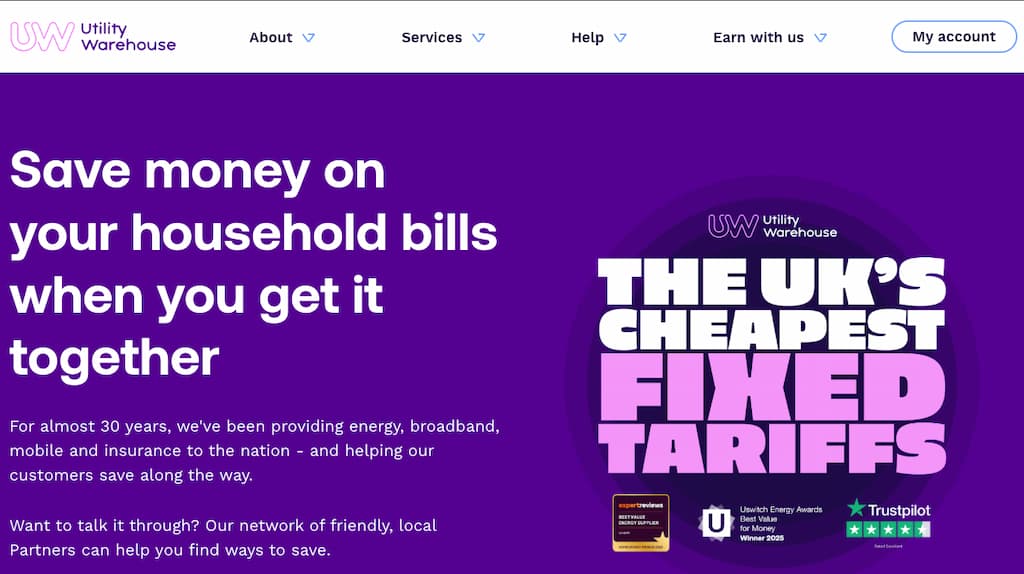
Instead of selling products, it offers a bundle of essential services, including:
- Gas and electricity
- Broadband and home phone
- Mobile SIM plans
- Insurance options
The idea is simple.
You combine multiple services under one provider and manage them through a single account.
How It Works in Simple Terms
- You sign up as a customer and use the services
- You can choose to become a “Partner”
- You recommend Utility Warehouse to others
- You earn income based on the customers you bring in
This makes it different from traditional MLMs.
You are not selling physical products. You are recommending services people already use.
What Makes Utility Warehouse Different
There are a few key differences compared to other MLM-style opportunities:
- Focus on essential services, not optional products
- UK-specific
- Emphasis on saving money as well as earning
This can make it feel more practical and easier to explain.
What This Means in Practice
While the concept is simple, success still depends on:
- Finding people willing to switch providers
- Explaining the benefits clearly
- Building a small customer base over time
Even though you are not selling products, you are still:
- Promoting a service
- Convincing people to switch
- Building trust
New to MLMs?
If you are still figuring out how MLMs work, what the risks are, and whether this type of model fits around family life, start with my full MLM for Parents guide.
Read the Full GuideWho Owns Utility Warehouse?
Utility Warehouse is part of Telecom Plus, a UK-listed company.
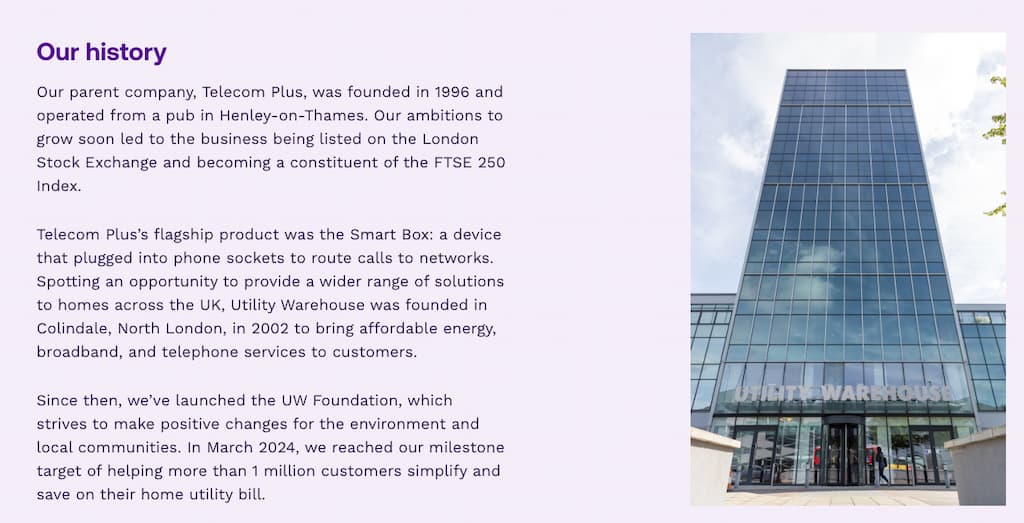
It was founded by Charles Wigoder in 1996.
Telecom Plus is listed on the London Stock Exchange, which means it operates as a regulated public company.
Why This Matters
This adds a level of credibility.
- It is a UK-based, regulated business
- It provides real, essential services
- It has been operating for decades
But as with any opportunity, the company itself is only part of the picture.
Your results still depend on:
- Your ability to find customers
- The time you can commit
- How consistently you promote the service
Quick Note: I’m John Crossley, founder of Flex For Families. I review online business opportunities through the lens of family life, focusing on costs, time commitments, risks, and whether they genuinely help parents create more flexibility.
What Services Does Utility Warehouse Offer?
Utility Warehouse focuses on services most households already pay for.
That’s what makes it feel more practical than product-based MLMs.
Energy, Gas and Electricity
One of the main services is energy supply.
- Gas and electricity for your home
- Fixed or variable tariff options
- Managed through one account
This is often the starting point for many customers.
Broadband and Home Phone
Utility Warehouse also offers home connectivity services.
- Broadband packages
- Home phone services
- Bundled deals with other utilities
The aim is to simplify everything under one provider.
Mobile SIM Plans
You can also get mobile services.
- SIM-only plans
- Family-friendly bundles
- Combined billing with other services
This adds another layer to the “all-in-one” approach.
Insurance and Other Services
Utility Warehouse includes additional services such as:
- Home or appliance cover
- Insurance options
- Optional extras depending on your setup
These are often used to increase value and savings.
Do These Services Actually Appeal?
This is where Utility Warehouse feels different.
The services are:
- Essential, people already need them
- Easier to explain than niche products
- More practical for everyday households
But there are still challenges:
- People are often reluctant to switch providers
- Savings are not always clear upfront
- You need to build trust before someone commits
How Does Utility Warehouse Work in Practice?
The model is simple, but the day-to-day reality still requires effort.
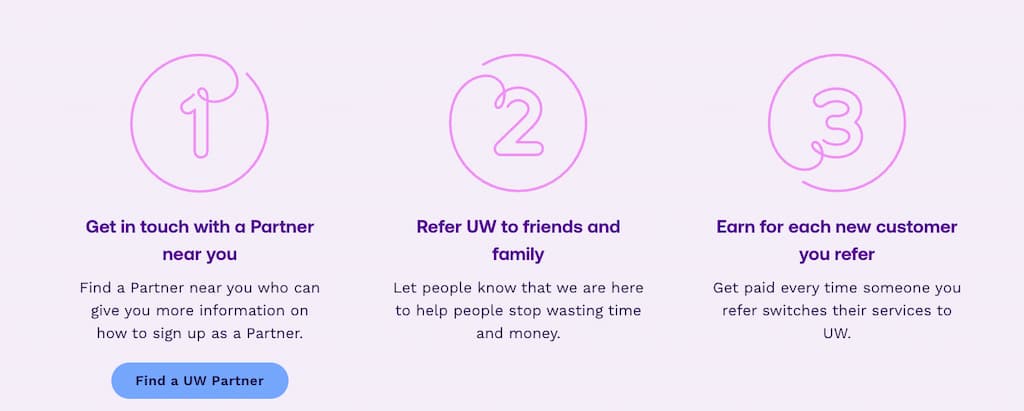
1. Become a Customer
Most partners start by using the services themselves.
- You bundle your utilities
- You understand how the system works
- You can speak from experience
2. Recommend to Others
- You share your experience
- You explain the benefits
- You encourage others to switch
This usually happens through:
- Conversations with friends and family
- Social media posts
- Local recommendations
3. Build a Customer Base
- You earn income based on the customers you bring in
- The more customers you have, the more you can earn
- Some partners also build small teams
The Day-to-Day Reality
In practice, most partners spend time:
- Talking to people about their bills
- Explaining potential savings
- Following up with interested customers
- Building trust before someone switches
What This Means for Parents
This can feel more manageable than selling products.
But it still requires:
- Conversations
- Consistent effort
- Time to build a customer base
If you’re short on time, progress can be slow.
What Does This Mean for Family Life?
One reason Utility Warehouse appeals to parents is that you’re recommending services people already need.
You’re not selling supplements, beauty products, or wellness programmes.
That can make the conversations feel more natural.
However, income still depends on building trust and encouraging people to switch providers.
Many partners spend time:
- Talking to friends and family
- Explaining potential savings
- Following up with interested customers
- Answering questions about switching
- Maintaining relationships over time
None of these activities are particularly difficult.
The challenge is that they still require ongoing effort.
For parents, it’s worth considering whether you want to spend your limited free time having conversations about utility bills and switching providers.
This is why I encourage parents to ask:
Will this create more flexibility for my family, or simply create more work?
How Do You Make Money With Utility Warehouse?
Utility Warehouse works differently from product-based MLMs.
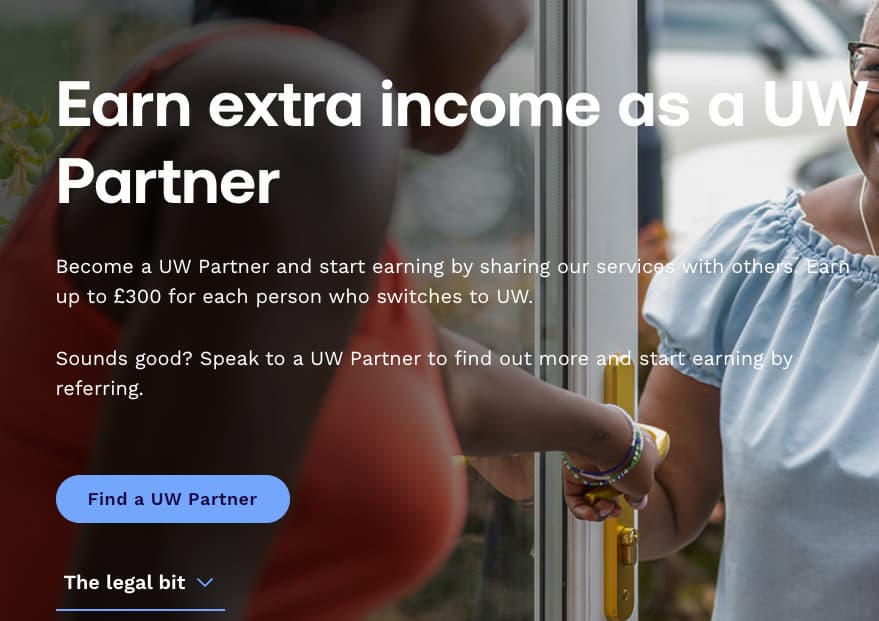
You are not selling items. You are recommending services people already use.
There are two main ways to earn.
1. Customer Commissions
- You introduce people to Utility Warehouse
- They switch their services
- You earn ongoing commission from their accounts
This is the core income stream.
The more customers you have, the more you can earn over time.
2. Building a Team
There is also the option to grow income further.
- You bring in other partners
- They build their own customer base
- You earn a percentage from their activity
This creates an additional layer of income.
The Reality Most People Experience
On paper, this model looks simple.
In practice, most people find:
- Getting people to switch providers takes time
- Savings need to be clear to convince someone
- Progress depends on building trust
Unlike product MLMs, you are dealing with:
- Contracts
- Household decisions
- Financial considerations
That can slow things down.
How Much Does It Cost to Join Utility Warehouse?
The entry cost is relatively low compared to many opportunities.
Typical costs include:
- Partner sign-up fee
- Access to the platform and tools
Ongoing Costs to Consider
- Time spent speaking to potential customers
- Marketing or promotional efforts
- Optional training or events
There are fewer product-related costs, which is a plus.
But your main investment is time.
Can You Realistically Make Money?
This is where expectations need to be clear.
Some people do earn money with Utility Warehouse, especially those who build a steady customer base.
But for most people:
- Earnings start small
- Growth takes time
- Income depends on consistent effort
There is no guaranteed income.
What This Means for You as a Parent
This model can feel more realistic than selling products.
You are offering something people already need.
But you still need:
- Conversations
- Follow-ups
- Trust-building
If you don’t have time for that, income will be limited.
Are You Building Recurring Income or Building an Asset?
One of the most attractive parts of Utility Warehouse is the idea of recurring income.
Once a customer signs up, you can continue earning while they remain a customer.
That sounds appealing, and it can create a more stable income stream than many product-based MLMs.
However, it’s important to understand the difference between recurring income and ownership.
Your customer base belongs to Utility Warehouse.
The services belong to Utility Warehouse.
The pricing and partner programme are controlled by Utility Warehouse.
You’re building recurring commissions, but you’re not building an asset that you own and control.
That’s not necessarily a bad thing.
But it’s worth understanding the distinction before deciding whether this is the right long-term path for your family.
What Are You Actually Building?
When evaluating any business opportunity, I think it’s worth asking another important question:
What am I actually building here?
With Amway, you’re building a business inside a system owned and controlled by the company.
The products, compensation plan, policies, and rules are all set by Amway.
That’s not necessarily a problem. Many people are perfectly happy working within an established system.
But it is something to consider.
Your success depends not only on your own effort, but also on:
- The products remaining competitive
- The compensation plan staying attractive
- Your ability to recruit and retain team members
- The company’s future decisions
For some parents, that’s an acceptable trade-off.
Others prefer to focus their time on building assets they own and control themselves.
That’s one reason I became interested in blogging.
Every article, guide, and piece of content becomes part of an asset that belongs to you. You’re not relying on an upline, a downline, or a compensation plan to determine your future opportunities.
Neither approach is right or wrong.
The important thing is understanding the difference before you invest your time and energy.
As a parent, I believe it’s worth asking:
Am I building my own asset, or helping build someone else’s business?
That question alone can bring a lot of clarity when comparing MLMs with other ways of earning from home.
Not Sure Which Path Is Right for Your Family?
If you’re exploring MLMs, surveys, side hustles, or online business opportunities, it can be difficult to know which options genuinely fit around family life.
Before you commit your time and money, take a look at the approach that changed how I think about earning online.
Read This Before Choosing a Side Hustle »Online Reviews of Utility Warehouse
Utility Warehouse tends to have more balanced reviews than typical MLM-style opportunities.
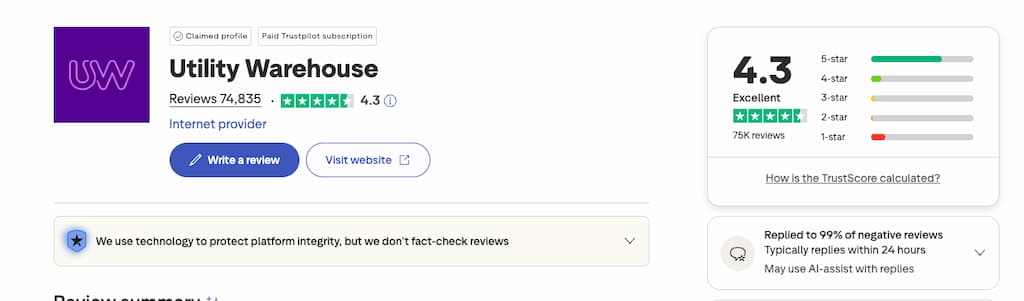
That’s mainly because it offers essential services rather than optional products.
Positive Reviews
Many customers and partners highlight the practical benefits.
Common positives include:
- Convenience of bundling multiple services in one place
- Potential savings on household bills
- Simple model based on recommending services
- Ongoing commission from customers
Some partners also like the idea of building a small, steady income over time.
Negative Reviews
There are still common concerns that come up.
- Savings are not always as high as expected
- Switching providers can feel like a hassle for customers
- Income grows slowly without consistent effort
- Customer service experiences can vary
Some partners also mention:
- It takes time to build a meaningful customer base
- Conversations about bills can be harder than expected
What Most Reviews Agree On
Across both sides, a few clear patterns stand out:
- It’s easier to explain than product-based MLMs
- Earnings tend to be modest for most people
- Progress depends on consistent conversations and trust
What This Means for You
Utility Warehouse may feel more practical.
But the same rule still applies.
You need time and consistency to see results.
For busy parents, that can be the deciding factor.
Utility Warehouse Review: Pros and Cons
Before you decide if Utility Warehouse is right for you, it helps to look at both sides clearly.
There are some strong advantages, but also limitations to consider.
Pros
- Focus on essential services people already use
- Potential to save money as a customer
- Ongoing income from customer base
- Lower costs compared to product-based MLMs
- UK-focused and easy to explain
Cons
- Earnings are usually modest for most people
- Requires ongoing conversations and follow-ups
- Growth can be slow
- Customers may be reluctant to switch providers
- Income depends on consistent effort
- Not passive or scalable without increasing workload
Who Is Utility Warehouse For and Who Should Avoid It?
Not every opportunity fits every lifestyle. This is where you decide if this model works for you.
Who It’s For
Utility Warehouse may suit you if:
- You are comfortable talking to people about bills and savings
- You like the idea of recommending practical services
- You want a simple way to build a small side income
- You are happy to grow income gradually over time
- You can stay consistent with outreach and conversations
Who Should Avoid It
Utility Warehouse is likely not the best fit if:
- You are a busy parent with limited time
- You want income that grows without ongoing effort
- You are not comfortable approaching people about switching providers
- You need predictable or faster income
- You prefer something more scalable
What This Means in Simple Terms
If you are happy to build slowly through conversations, this can work.
But if you want something that grows with less ongoing effort, this model has clear limits.

About the Reviewer
Hi, I’m John Crossley, founder of Flex For Families.
I’m a parent, blogger, and online business owner who helps families find realistic ways to create more flexibility through blogging, affiliate marketing, and online business.
Like many people, I’ve spent years researching online opportunities, testing platforms, and learning how to separate genuine business models from expensive hype. I’ve also experienced the frustration of chasing opportunities that promised freedom but demanded more time away from family.
Today, I use that experience to review courses, side hustles, AI opportunities, and online business programmes through a simple lens:
Will this genuinely help parents create more flexibility, or will it create more pressure?
Every review on Flex For Families focuses on costs, time commitments, risks, and realistic expectations, so you can make informed decisions before investing your time or money.
Utility Warehouse Review: FAQ Section
Is Utility Warehouse a scam?
Utility Warehouse is not a scam. It is a legitimate UK-based company that provides real household services like energy, broadband, and mobile. However, most people earn only modest income from the partner programme, and results depend on consistent effort.
Is Utility Warehouse an MLM?
Utility Warehouse is not a traditional product-based MLM, but it does use a referral and partner model that shares some MLM-style features. Partners can earn from customer sign-ups and from building a team.
Can you really make money with Utility Warehouse?
Yes, some people do make money with Utility Warehouse, but for most people earnings are modest. Income usually builds slowly and depends on how many customers you bring in and how consistently you promote the service.
How much does it cost to join Utility Warehouse?
Utility Warehouse usually has a relatively low joining cost for partners. There are no product stock costs, but you still need to invest time and effort into recommending the service and following up with potential customers.
Is Utility Warehouse a good option for parents?
Utility Warehouse may suit parents who are comfortable recommending practical services and building income slowly. However, it is less suitable for parents who want scalable income or something that grows without constant outreach.
Final Verdict: Is Utility Warehouse Worth It for Parents?
Utility Warehouse offers something many MLMs don’t.
It focuses on services people already use every day.
That makes it easier to understand, easier to explain, and potentially easier to recommend.
For some parents, that simplicity is appealing.
But legitimacy and suitability are not the same thing.
To make Utility Warehouse work, you’ll typically need to:
- Build trust with potential customers
- Have regular conversations about savings and services
- Follow up consistently
- Grow and maintain a customer base over time
For some people, that may be a worthwhile trade-off.
For many busy parents, however, the challenge is that income still depends heavily on ongoing activity.
That’s why I believe the most important question isn’t:
“Can you make money with Utility Warehouse?”
It’s:
“Will Utility Warehouse create the flexibility you’re looking for?”
If your goal is more control over your time, more ownership of what you’re building, and a business that can continue growing without constant outreach, it’s worth exploring all of your options before committing.
Utility Warehouse may suit some parents.
But for many, there are other paths that offer greater flexibility, ownership, and long-term potential.
Want a Better Way to Make Money From Home?
Before you commit to Utility Warehouse…
Will this opportunity actually give your family more flexibility, or will it simply require you to keep selling to keep earning I explore that question in detail here: The goal isn’t just more income. It’s more flexibility.
Let’s Chat
Have you looked into Utility Warehouse or similar referral-style opportunities before?
Did the idea of saving and earning at the same time appeal to you, or did it feel like more effort than expected?
Drop a comment below and share your experience. It will help other parents make a more informed decision 👍