

SEO is still one of the most reliable ways for bloggers to build traffic that lasts.
Social platforms change. Algorithms shift. Trends fade. Search traffic keeps working when your content solves real problems and ranks well.
In 2026, bloggers have more SEO training options than ever. Some are free. Some are expensive. Some teach theory. Others show you exactly what to do.
That choice can feel overwhelming, especially if you are building a blog alongside work, family, and real life.
This guide breaks down the best SEO training programs for bloggers in 2026, based on practical use, learning curve, support, and long term value. I have included free platforms, advanced courses, and full blogging systems so you can choose what fits your goals and your schedule.
If you want traffic that compounds instead of chasing the next platform, this post will help you choose the right SEO path.
Why SEO Still Matters for Bloggers in 2026
SEO still matters because it brings consistent traffic you control. Social platforms change. Algorithms shift. Email lists need traffic first. Search traffic keeps working when posts are written well and maintained.

In 2026, SEO looks different, but it is not weaker.
- Google still sends billions of clicks every day to blogs and content sites.
- AI summaries increase competition, but they also reward clear, helpful, experience-based content.
- Parents and niche readers still search for answers before they buy or sign up.
SEO now rewards depth and intent, not shortcuts.
What has changed is how bloggers should approach it.
- Keyword stuffing no longer works.
- Thin content gets ignored.
- Real experience, clarity, and structure win rankings.
For bloggers, especially parents building long-term income, SEO offers three key advantages.
- Traffic compounds. One post can bring visits for years.
- You are not dependent on ads or posting daily on social platforms.
- SEO supports every monetisation method, affiliates, ads, email lists, and products.
The bloggers who succeed in 2026 are not chasing hacks. They are building helpful content libraries that answer real questions better than anyone else.
That is why learning SEO properly still matters. The tools and tactics may evolve, but search intent does not.
What Makes SEO Training Worth It in 2026

Google updates, AI search, and user intent
Google search has changed fast over the last two years. AI summaries now appear above many results. Helpful content signals matter more than keyword density. Search intent decides whether a post ranks or disappears.
In 2026, Google rewards pages that:
- Answer a clear question.
- Show real experience.
- Match intent, not just keywords.
- Keep users engaged.
SEO training that ignores these shifts will not help you grow traffic.
Why outdated SEO advice no longer works
Old tactics still float around online, and they hurt blogs.
Examples of outdated advice:
- Stuffing keywords into every paragraph.
- Writing short, thin posts to “test” rankings.
- Chasing backlinks without content quality.
- Publishing dozens of posts with no clear topic focus.
These approaches worked years ago. They now lead to slow growth or ranking drops.
If SEO training does not address Google’s recent updates, AI-driven search results, and content quality standards, it is already behind.
What bloggers actually need from SEO training today
In 2026, good SEO training focuses on skills you can apply long term.
Effective SEO training should teach you:
- How to choose topics based on real search intent.
- How to structure posts for humans first, search engines second.
- How to build topical authority, not random traffic.
- How to use tools without relying on them blindly.
- How SEO fits into monetisation, not just traffic charts.
For bloggers, especially busy parents, SEO training must be clear, current, and realistic. You need strategies that work with limited time, not systems that require daily technical tweaks.
If training does not help you publish better content and make smarter decisions, it is not worth your time in 2026.
Free vs Paid SEO Training: What’s the Real Difference?
Free SEO training has improved a lot. Paid SEO training has also changed. The gap between them is no longer about quality alone. It is about depth, guidance, and application.
What Free SEO Training Does Well
Free SEO training in 2026 is excellent for fundamentals.
Platforms like Google, Ahrefs, and SEMrush explain:
- How search engines work.
- What keywords are.
- How on-page SEO functions.
- Why backlinks matter.
- How to read basic SEO data.
This is enough to help you understand SEO language and avoid obvious mistakes. For brand-new bloggers, free training removes confusion and builds confidence without risk.
If your goal is learning concepts, free SEO training is often enough.
Where Free SEO Training Falls Short
Free SEO training rarely shows you how to apply SEO to a real blog over time.
Common gaps include:
- No step-by-step system from zero traffic to consistent growth.
- No feedback on your content or site structure.
- No accountability when motivation drops.
- No integration with monetisation, email lists, or long-term blog strategy.
Free courses also tend to stay neutral. They explain how SEO works, but they do not tell you what to do next or what to prioritise.
That is where many bloggers stall.
What Paid SEO Training Adds
Paid SEO training is not about secret tactics. It is about structure.
Good paid programs provide:
- A clear roadmap from setup to traffic growth.
- Prioritisation so you know what matters now.
- Examples based on real sites, not theory.
- Support through communities, coaching, or live sessions.
- SEO taught alongside content, monetisation, and site growth.
You are not paying for information. You are paying for direction and time saved.
For busy parents and bloggers, this matters.
When Free SEO Training Is Enough
Free SEO training works well if:
- You are just starting and want to learn basics.
- You enjoy self-directed learning.
- You have time to experiment and troubleshoot.
- Your blog is still in the early planning stage.
Many bloggers should start here before spending money.
When Paid SEO Training Makes Sense
Paid SEO training becomes valuable when:
- You already publish content but traffic is stuck.
- You want predictable growth, not guesswork.
- You need help choosing keywords that actually convert.
- You want SEO aligned with income goals.
- You value community support and clarity.
At this stage, direction often matters more than information.
The Smart Approach in 2026
The best path for most bloggers is not free or paid. It is both.
Start with free SEO training to understand the fundamentals. Then move to paid training when you want consistency, clarity, and momentum.
SEO still rewards patience in 2026. The right training simply helps you waste less of it.
The Best Free SEO Training for Bloggers in 2026
Free SEO training can still be useful in 2026, but only if you understand its limits. These options work best when you want to learn fundamentals, test interest, or support paid training later.
Here are the strongest free SEO training options for bloggers right now.
Grow with Google SEO Training
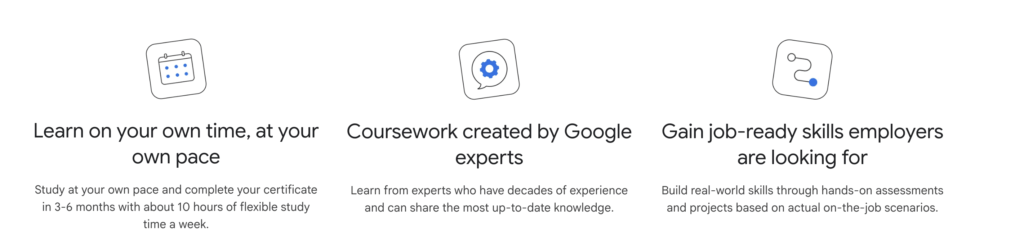
This is Google’s own beginner-level training. It explains how search works, what Google looks for, and how visibility is created online.
- Best for understanding search basics straight from the source
- Covers indexing, relevance, and visibility concepts
- No blogging strategy, monetisation, or implementation guidance
- No community or feedback
Use this if you want context and terminology. Do not expect it to grow a blog on its own.
Ahrefs Academy
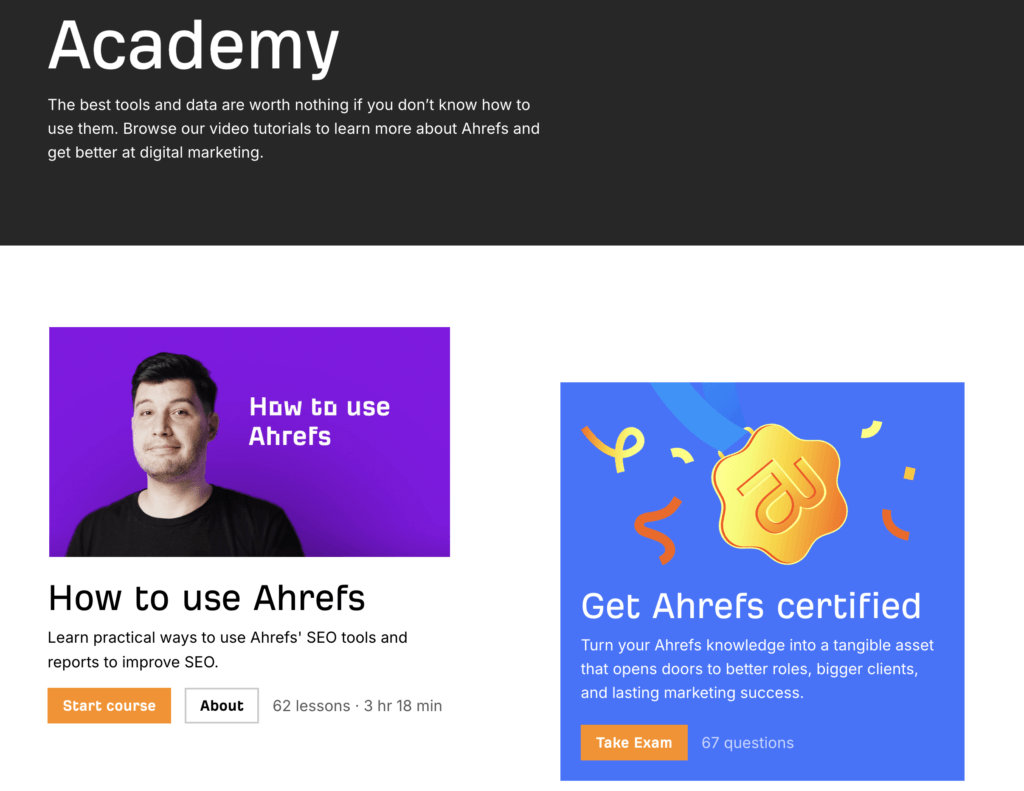
Ahrefs Academy focuses on SEO fundamentals and tool-based learning. It teaches keyword research, backlinks, and content analysis using Ahrefs examples.
- Strong for learning how modern SEO tools work
- Clear explanations of keywords, links, and competitors
- Free training, but tools require a paid plan to practise fully
- No coaching or structured blogging roadmap
This is useful if you plan to use SEO tools and want practical exposure.
SEMrush Academy

SEMrush Academy offers the widest range of free SEO and marketing courses. It includes SEO, content marketing, PPC, and analytics.
- Multiple free courses with certificates
- Good overview of SEO concepts and workflows
- Heavily tool-focused in places
- No blogging income strategy or support
This works well for skill building, but not for building a blog business.
Free SEO Blogs and YouTube Channels
Many bloggers rely on free content from trusted SEO educators.
- Backlinko, Ahrefs Blog, Semrush Blog
- YouTube channels explaining SEO updates and tactics
- Great for staying current
The downside is fragmentation. You get tips, not a system.
The Key Limitation of Free SEO Training
Free SEO training teaches what SEO is. It rarely teaches:
- How to apply SEO consistently on a real blog
- How SEO fits into content planning and monetisation
- How to avoid wasting months on the wrong keywords
- How to get feedback when things don’t work
That gap is where most bloggers stall.
Next, we’ll look at paid SEO training and when it actually makes sense to invest.
The Best Paid SEO Training for Bloggers in 2026
Free SEO training is a good starting point. Paid SEO training is where most bloggers get clarity, structure, and results. The difference is guidance. Paid programs show you what to do first, what to ignore, and how to apply SEO to a real blog.
Here are the paid options that stand out for bloggers in 2026.
Wealthy Affiliate

Wealthy Affiliate offers SEO training as part of a full blogging system. You learn keyword research, content structure, internal linking, and long-term traffic strategy alongside site building and monetisation.
- Best for beginners who want step by step guidance
- Includes hosting, tools, and training in one place
- Strong community support and weekly live classes
- Free starter access available
This works well if you want SEO tied directly to building income, not just rankings.
SEO That Works by Brian Dean
SEO That Works is advanced SEO training focused on ranking competitive content. It goes deep into link building, content promotion, and authority growth.
- Best for experienced bloggers
- High cost and limited enrolment
- Strong results if you already understand SEO basics
This is not beginner friendly. It suits bloggers who already have traffic and want to scale.
Blog-Focused SEO Courses
There are several mid-priced SEO courses built specifically for bloggers. These usually focus on keyword research, content clusters, and on-page optimisation.
- Easier to follow than advanced SEO programs
- Less support than full platforms
- Quality varies by creator
These work best if you already have a blog and want focused SEO help without a full membership platform.
Which Paid SEO Training Makes Sense?
Choose based on where you are now.
- If you are starting from scratch, you need structure and support
- If you already rank content, you need advanced tactics
- If you want income, SEO must connect to monetisation
For most bloggers in 2026, the best paid SEO training is the one that removes guesswork and keeps you consistent.
How to Choose the Right SEO Training for Your Blog
Not all SEO training is worth your time. In 2026, the right choice depends less on hype and more on fit. Here’s how to decide what actually works for you and your blog.
Start With Your Current Skill Level
Be honest about where you are right now.
If you are brand new to SEO:
- Look for beginner-friendly training.
- Focus on how search works, keywords, and content structure.
- Free platforms like Google, Ahrefs, or SEMrush Academy make sense.
If you already publish content:
- Choose training that goes deeper into rankings, optimisation, and traffic growth.
- Look for real examples, audits, and implementation steps.
- Paid programs often deliver more structure here.
If you already get traffic:
- You need advanced strategy.
- Look for training focused on intent, content clusters, and authority.
- Avoid beginner refreshers that repeat basics.
Decide How Much Support You Need
This is where many bloggers struggle.
Ask yourself:
- Do you learn well on your own?
- Or do you stall without feedback and accountability?
If you prefer self-paced learning:
- Free academies work fine.
- Expect to research answers yourself.
- Progress depends entirely on your discipline.
If you want guidance:
- Choose platforms with community support.
- Look for live classes, Q&A, or forums.
- This reduces overwhelm and speeds up progress.
Check Whether It’s Blog-Focused
Some SEO training is built for agencies or corporate marketers.
For bloggers, training should include:
- Keyword research for blog posts.
- Writing content that matches search intent.
- Internal linking and site structure.
- Monetisation-friendly SEO, not just traffic.
If the course focuses heavily on clients, reports, or enterprise tools, it may not fit a personal blog.
Look for Updated, Ongoing Training
SEO changes constantly.
Good SEO training in 2026 should:
- Acknowledge AI search and Google updates.
- Focus on helpful content, not loopholes.
- Teach principles that still work next year.
Avoid:
- Old keyword stuffing advice.
- Backlink shortcuts.
- Courses that haven’t been updated in years.
Match the Investment to Your Goals
Free training is great for learning fundamentals.
Paid training makes sense when:
- You want faster progress.
- You value support and structure.
- You plan to monetise your blog long term.
For many bloggers, the best path is:
- Start with free SEO education.
- Move into a supported system once you commit to growth.
My Practical Recommendation
If you want:
- SEO plus blogging fundamentals.
- Clear steps.
- Ongoing support and updates.
A platform like Wealthy Affiliate fits well for bloggers who want SEO taught as part of a complete blogging system, not in isolation.
If you only want SEO theory or tool training:
- Free academies are enough to get started.
- Just expect to piece things together yourself.
Section 6: My Top SEO Training Recommendations for Bloggers in 2026
Not all SEO training is created equal. Some are free and great for foundations, others go deep into advanced strategy, and a few combine training with community and support. Here are my top picks for bloggers in 2026, based on skill level, budget, and long-term goals.
⭐ Best Free SEO Training for Beginners
Grow with Google SEO Training
- Best for: New bloggers with no SEO experience
- Strength: Official insights from Google on how search and visibility work
- Why I Recommend It: You get foundational SEO principles straight from the source at zero cost
SEMrush Academy
- Best for: Beginners and intermediate bloggers
- Strength: Broad digital marketing and SEO lessons with certificates
- Why I Recommend It: High-quality lessons covering keyword research, on-page SEO, and more — all free
Ahrefs Academy
- Best for: Bloggers who want to learn SEO tools and basics
- Strength: Tool-driven lessons that teach real keyword research and site analysis
- Why I Recommend It: Great bridge between conceptual SEO and practical application
💡 Best Mid-Level Paid SEO Training
Wealthy Affiliate
- Best for: Bloggers who want SEO inside a complete blogging system
- Strength: Integrated SEO training, content strategy, community support, and tools
- Why I Recommend It: SEO isn’t taught in a vacuum here; it’s part of growing a blog that earns
Blog-Specific SEO Courses ($97–$297)
- Best for: Bloggers focused on search traffic but not ready for premium training
- Strength: Practical SEO tactics tailored to blog content and traffic growth
- Why I Recommend It: Offers more depth than free options but keeps costs reasonable
🚀 Best Advanced SEO Training
SEO That Works
- Best for: Experienced bloggers or marketers ready for deep strategy
- Strength: Advanced frameworks for link building, content promotion, and competitive analysis
- Why I Recommend It: When you need traction in competitive niches and long-term traffic growth
My Pick By Goal
| Goal | Best Training |
|---|---|
| Start learning SEO without paying | Grow with Google + SEMrush Academy |
| Understand tools and hands-on practice | Ahrefs Academy |
| Grow a blog with ongoing support | Wealthy Affiliate |
| Advanced SEO strategy & link building | SEO That Works |
| Budget-friendly blogger-focused SEO | Mid-level blog-specific SEO courses |
Why These Matter in 2026
SEO today is not just about keywords. It’s about understanding user intent, semantic search, content authority, and technical performance. The trainings above cover different pieces of that puzzle depending on where you are in your blogging journey.
- Free training gives you essentials without financial risk
- Mid-level paid courses give you support plus real case lessons
- Advanced options prepare you for competitive niches and long-term success
Final Verdict: The Best SEO Training for Bloggers in 2026
SEO still works in 2026, but only if you learn it the right way.
Free training is enough to understand how search works and avoid bad advice. Paid training becomes valuable when you need structure, support, and a clear path from traffic to income.
If you are just starting, free platforms like Grow with Google, SEMrush Academy, and Ahrefs Academy give you solid foundations without risk. They teach concepts, tools, and terminology well.
If your goal is to build a blog that earns, SEO needs to sit inside a bigger system. That means content planning, keyword intent, monetisation, and consistency, not isolated tactics.
That is why, for most bloggers and parents in 2026, an all-in-one approach beats piecing things together.
Next Steps: A Smarter Way to Learn SEO and Build Income
If you want SEO training that connects directly to blogging, content, and long-term income, this is where I would start.
Let’s Chat
Where are you right now with SEO?
- Just starting and overwhelmed
- Getting traffic but struggling to grow
- Writing content that does not rank
- Unsure which training path fits your time and budget
Drop a comment and tell me where you are. I read and reply to every message, and it helps others see they are not alone on this journey.




I just read your Best SEO Training for Bloggers in 2026 guide and found it incredibly thorough and practical. I appreciate how you break down the difference between free and paid SEO options and explain why understanding search intent and quality content matters more than outdated tricks. It’s clear you want bloggers to succeed long term without feeling overwhelmed by complicated tactics. I’m curious, have you noticed any specific SEO tools or strategies that consistently help newer bloggers see results when they’re just starting out?
Thanks so much, Hanna. I really appreciate you taking the time to read it and share this.
That question comes up a lot, especially from newer bloggers who feel like SEO is a moving target.
From what I’ve seen, the biggest early wins don’t come from fancy tools. They come from a few simple strategies done consistently.
First, search intent over keywords. New bloggers who focus on answering very specific questions tend to see traction faster. Think “how do I…”, “is X worth it for…”, or “best way to…” style posts. One clear problem per post works better than broad topics.
Second, Google Search Console. It’s free and massively underused. Even with low traffic, it shows you what impressions you’re already getting. Tweaking titles and headings around those queries can move posts from page two to page one over time.
Third, simple on-page structure. Clear headings, short paragraphs, bullet points, and answering the question early. That alone improves readability and SEO without touching anything technical.
Tool-wise, I still think one basic SEO plugin is enough at the start, paired with something like Jaaxy or low-cost keyword tools just to sanity-check demand. No need to stack subscriptions early on.
Most importantly, publishing consistently and improving old posts beats chasing every new tactic.
Are you at the stage of starting fresh with SEO, or trying to optimise content you’ve already published?
John
I really appreciated how clearly you laid out SEO training options for bloggers — it feels like a friendly roadmap instead of a confusing list, which makes me want to dig into learning rather than feel overwhelmed. I’m curious: which course made your biggest SEO breakthrough and what specific result did you see from it? That personal example would really spark discussion and help readers connect with the recommendations. Overall, it’s super practical and supportive — just a little personal insight would make it even more engaging for everyone!
Hi Lori,
Thank you, I really appreciate that feedback. I’m glad the guide felt more like a roadmap than a wall of information; that was exactly the aim.
If I’m honest, my biggest SEO breakthrough didn’t come from one single advanced trick. It came from finally understanding search intent and consistency rather than chasing keywords alone. The course that really made that click for me was the foundational SEO training inside Wealthy Affiliate. It shifted how I approached content completely.
The specific result was pretty simple but powerful. I stopped writing broad posts and started answering very clear questions. Within a few months, I began seeing posts move from no impressions to steady clicks in Google Search Console. Even more motivating was when real people started landing on those posts and leaving comments or asking follow-up questions. That was the moment SEO stopped feeling abstract and started feeling real.
After that foundation, other SEO courses made much more sense because I could filter what mattered and ignore the noise. The breakthrough was not overnight traffic, but predictable progress and confidence that I was building something Google could actually understand.
That’s a great suggestion about adding more personal examples, so thank you for that. Are you just starting with SEO, or are you trying to improve posts you’ve already published?
John
Your article touched on a very important aspect in the life of a blogger. SEO, the cave of secrets and mysteries. I think you have done a great job of breaking down the often confusing world of SEO training into clear, practical advice for bloggers. .
Your comparison between free and paid options is helpful by framing the choice not as one being better, but as tools for different stages. Free courses for learning concepts and paid programs for getting direction and saving time.
Yes, I agree with you that in 2026, good SEO is not about learning a bag of tricks but about building a helpful content library. This shifts the focus from technical hacks to developing a sustainable, reader-centric blogging practice, which is much more aligned with creating a real, long-term asset.
You mention that a key feature of good paid training is having a community for support and accountability. For a blogger who is naturally self-directed and prefers working alone, what are the other tangible benefits of that community aspect beyond just motivation?
Thank you for such a thoughtful comment. I really like how you described SEO as the “cave of secrets and mysteries” – that’s exactly how it feels to most bloggers at the beginning.
You’ve nailed the shift I was trying to highlight. SEO in 2026 is far less about tricks and far more about building a useful, well-organised library of content that genuinely helps readers. When bloggers understand that, everything becomes calmer and more sustainable.
That’s a great question about community, especially for people who prefer working independently. Even for self-directed bloggers, the community side offers a few very practical benefits beyond motivation.
One big benefit is perspective. Seeing how others interpret an update, structure content, or approach a topic can save hours of second-guessing. You’re still working alone, but you’re not working in a vacuum.
Another is pattern recognition. Communities often surface what’s working or not working much faster than any single person could spot on their own. That can help you adjust early instead of months down the line.
There’s also clarity and validation. Sometimes you don’t need encouragement; you need confirmation that you’re not missing something obvious. A quick question answered by someone a few steps ahead can prevent overcomplicating your approach.
And finally, communities act as a filter for noise. Instead of chasing every new SEO trend, you can see which ideas are actually being tested and producing results in real time.
So even for bloggers who enjoy working solo, community becomes less about accountability and more about efficiency and informed decision-making.
Really appreciate you adding to the discussion here.
John