


Affiliate marketing can be a great fit for parent bloggers because you can build income in small pockets of time.
But it only works when your posts feel helpful, clear, and real.
A lot of people hear “affiliate post” and think it has to sound salesy. It does not.
The best converting posts usually read like a friend sharing what actually worked, what did not, and what is worth trying next.
In this post, I’m sharing 10 simple affiliate blog post ideas that convert, plus how to write them in a way that builds trust with busy parents. You do not need a huge audience. You need the right post types and a consistent, family-first approach.
Why Some Affiliate Posts Convert, and Others Do Not

Some affiliate posts earn consistently for years. Others get clicks but no conversions. The difference is usually not the tool. It is the intent behind the post.
Affiliate posts convert when they do three things well:
- They solve a real problem.
- They make the next step obvious.
- They help the reader feel confident in their choice.
This matters even more for parents. Parents do not want extra noise. They want a shortcut that saves time, reduces stress, or helps them make progress without overwhelm.
Posts that do not convert often fall into these traps:
- They try to cover too much in one post.
- They recommend tools without context.
- They focus on features instead of real outcomes.
- They feel generic, like they could apply to anyone.
When your post feels specific to family life, it builds trust quickly. And trust is what drives conversions.
10 Simple Affiliate Blog Post Ideas That Convert

Here are some simple affiliate blog post ideas that you could use on your blog that actually convert:
#1 The Honest Review Post
- What it is: A detailed review of one tool or platform, written from a real user perspective.
- Why it converts: Readers are already close to deciding. They need clarity and reassurance.
- Example headline: “Is [Tool] Worth It for Parent Bloggers? My Honest Take”
#2 The “What I Use” Tools Post
- What it is: A behind-the-scenes look at the tools you use to run your blog.
- Why it converts: It feels personal and practical. Parents love real workflows.
- Example headline: “The Blogging Tools I Use as a Busy Parent (And Why)”
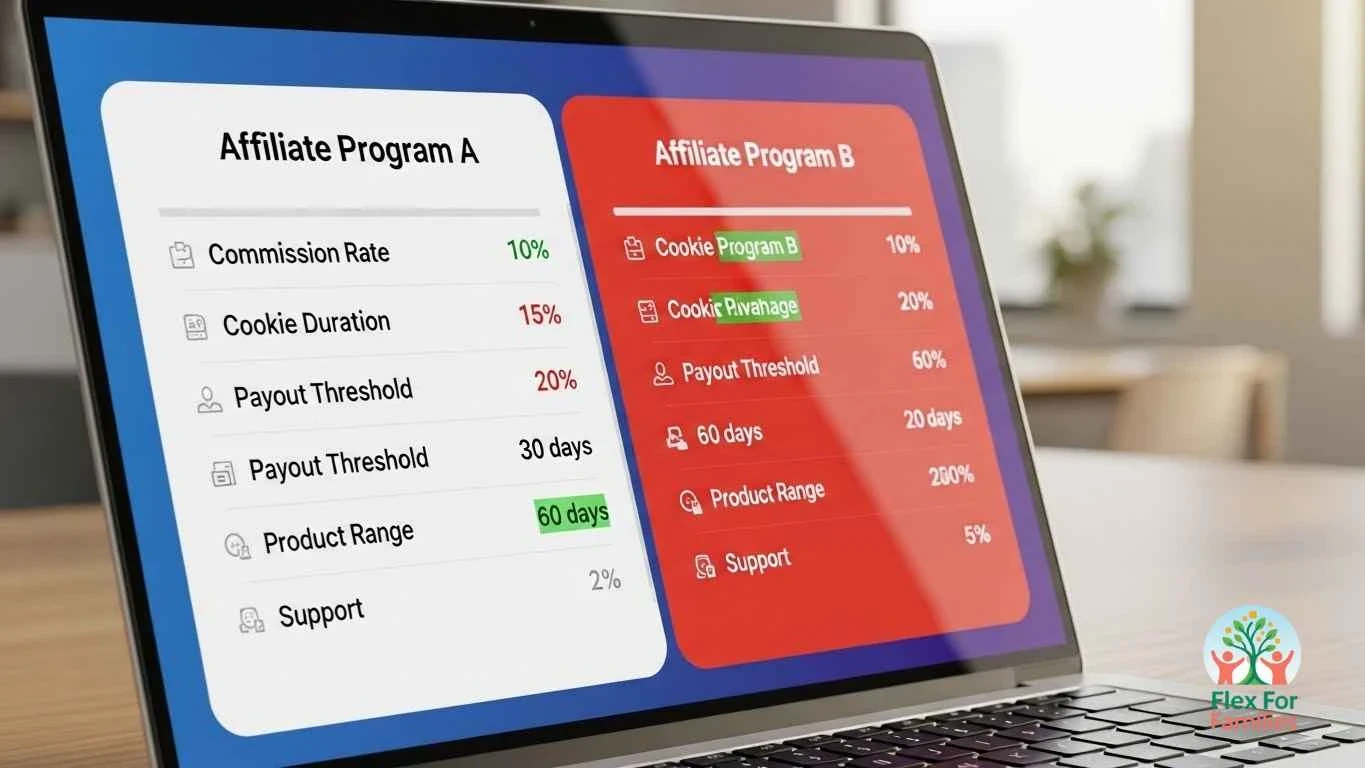
#3 The Comparison Post
- What it is: Two or more options compared side by side, with clear guidance on who each is for.
- Why it converts: It reduces overwhelm and helps readers make a decision fast.
- Example headline: “[Tool A] vs [Tool B], Which Is Best for Parent Bloggers?”
#4 The Problem + Solution Post
- What it is: A post focused on one pain point, with one main tool or program that helps.
- Why it converts: Readers feel seen, then they see a clear next step.
- Example headline: “How to Start Affiliate Marketing Without Spending a Fortune”
#5 The Step-by-Step Beginner Guide
- What it is: A simple guide that teaches the basics and naturally includes tools along the way.
- Why it converts: It gives parents structure, and links feel natural in context.
- Example headline: “How to Start Affiliate Marketing as a Busy Parent”
#6 The Mistakes to Avoid Post
- What it is: A post that calls out common beginner mistakes and shows how to avoid them.
- Why it converts: Parents want to avoid wasting time and money.
- Example headline: “7 Affiliate Marketing Mistakes Parent Bloggers Make”
#7 The “Is It Worth It?” Post
- What it is: A post designed to answer the exact doubts people have before buying.
- Why it converts: It matches buyer intent and tackles hesitation head-on.
- Example headline: “Is Canva Pro Worth It for Parent Bloggers?”
#8 The Budget-Friendly Roundup
- What it is: A curated list of low-cost or free options, with one suggested upgrade path.
- Why it converts: It aligns with real budgets and builds trust.
- Example headline: “Budget-Friendly Tools for Parent Bloggers (Free and Paid Options)”
#9 The Real Life Workflow Post
- What it is: A post that shows your exact process, like how you plan, write, or design in short sessions.
- Why it converts: Parents relate to routines and time-saving systems.
- Example headline: “My Nap Time Blogging Workflow (Tools Included)”
#10 The Resource Hub Post
- What it is: A simple page that lists your favourite tools and links to deeper guides and reviews.
- Why it converts: It is evergreen and becomes a trusted reference page.
- Example headline: “Parent Blogging Toolkit, My Favourite Tools and Resources”
How to Write Affiliate Posts That Feel Helpful, Not Pushy

You do not need to change your voice to write affiliate content. You just need a few simple rules that keep posts clear and trustworthy.
Here’s what works best for parent blogs:
Lead with the problem, not the product.
Start by describing the struggle in real life terms. Then introduce the tool as a possible solution.
Give a clear outcome.
Instead of listing features, explain what the tool helps parents do, like save time, stay consistent, or reduce tech stress.
Be specific about who it is for and not for.
This builds trust fast. It also reduces refunds and regret, which keeps your audience confident in you.
Use one main offer per post.
If a post tries to sell five different things, readers lose focus. One clear next step converts better.
Place links where they make sense.
A link should feel like the next natural action, not a random interruption.
Keep your CTA calm.
Invite them to learn more, compare options, or read your full review. Pressure kills trust.
If you stay honest and keep it simple, affiliate posts can feel just like the rest of your content. Helpful. Parent-first. Real.
Where Affiliate Links Work Best in Parent Blogs
Where you place affiliate links matters just as much as what you link to. Parents are quick to tune out anything that feels pushy or out of place, especially when they are reading during short breaks.
The best-performing affiliate links usually appear where the reader is already expecting help.
Here are the placements that work well in parent blogs:
Contextual links within the content
These are links placed naturally in a sentence when you mention a tool or resource. They feel helpful because they appear at the exact moment a reader is thinking, “That sounds useful.”
Mid-post, after the value has been delivered
Once you have explained a concept or shared a personal example, a link feels like a logical next step. By this point, trust has already been built.
End-of-post CTAs
Parents who reach the end of a post are engaged. A calm call to action at the end feels like an invitation, not a push.
Resource or tools pages
Hub-style pages work well for affiliate links because readers are actively looking for recommendations. They are already in a decision-making mindset.
What tends to hurt trust is link overload. Too many links in one paragraph, repeated links to the same offer, or links placed before you have explained the why can feel distracting.
One clear link, placed with intention, almost always performs better than several scattered links.
How These Post Types Fit Into a Family-Friendly Content Plan
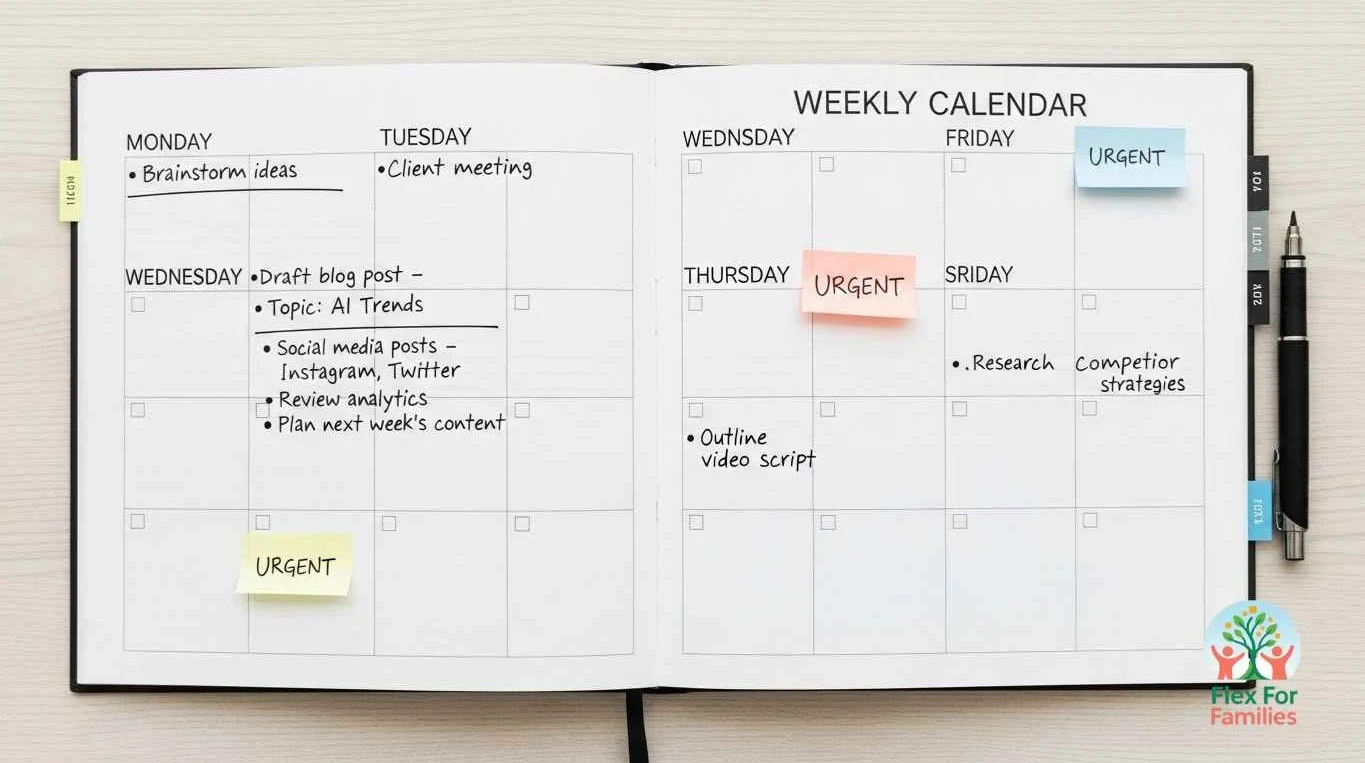
Affiliate posts do not need to dominate your blog to be effective. In fact, they work best when they are part of a balanced content plan that supports both your readers and your family life.
For parent bloggers, a simple rhythm works well:
Educational posts build trust
These posts answer questions, explain concepts, and support parents without selling anything. They create the foundation.
Affiliate posts provide solutions
When a parent already trusts you, affiliate posts feel helpful instead of promotional. They show how to move forward.
Personal or story-driven posts deepen connection
Sharing real experiences reminds readers there is a human behind the blog, not a sales page.
You do not need to publish affiliate content constantly. Even one strong affiliate post per week, or a few per month, can work well when paired with helpful, non-monetised content.
This approach also keeps blogging sustainable. You are not always “selling.” You are guiding, sharing, and supporting, which fits much better into busy family routines.
A content plan that mixes education, support, and occasional recommendations allows you to grow income without sacrificing trust or balance.
Common Affiliate Blogging Mistakes Parents Make

Most affiliate blogging mistakes are not caused by laziness or lack of effort. They usually come from trying to do too much, too quickly, while juggling family life.
One common mistake is promoting tools before trust is built. If a reader does not yet understand why a tool matters, they are unlikely to click, let alone buy. Helpful content always needs to come first.
Another is trying to include too many affiliate links in one post. Parents already deal with decision fatigue. When a post recommends five different tools at once, it becomes overwhelming instead of useful.
Some parents avoid affiliate posts altogether because they worry about sounding salesy. In reality, skipping affiliate content entirely often slows progress and leads to frustration later on. Honest recommendations are part of helping, not something to avoid.
There is also the mistake of promoting tools you do not use or understand. Parents value lived experience. Even a simple explanation of how something fits into your routine builds far more trust than a polished feature list.
Finally, many parent bloggers underestimate the value of consistency. One strong affiliate post that helps real people will outperform ten rushed ones every time.
Affiliate blogging does not need to feel complicated. When your focus stays on helping first and earning second, mistakes become learning points, not roadblocks.
FAQ
Do affiliate blog posts work on new or small blogs?
Yes. Affiliate posts work when they solve a clear problem. You do not need lots of traffic. You need the right post for the right reader.
How many affiliate posts should I publish?
There is no fixed number. One strong affiliate post mixed in with helpful, non-monetised content works well for most parent blogs.
Do I need to be an expert to write affiliate content?
No. Parents trust real experience more than expertise. Sharing what worked for you is enough.
Is it okay to promote paid tools to parents?
Yes, when you are honest. Parents appreciate knowing what saves time or stress, especially when you explain who it is for and who it is not for.
Where should affiliate links go in a post?
Place them where they feel useful. After explaining a problem. At the end of a post. Or within a resources section. Avoid overloading pages with links.
10 Simple Affiliate Blog Post Ideas That Convert: Conclusion

Affiliate blogging does not need complex funnels or constant selling. It works best when it feels like help.
Simple affiliate posts convert because they answer real questions, reduce overwhelm, and guide parents toward clear next steps. You do not need to write differently. You just need to stay honest and focused on helping first.
Start with one post type that feels comfortable. Build from there. Over time, those small steps can turn into steady, family-friendly income.
Let’s Chat
Let’s talk.
Which affiliate post idea feels easiest for you to start with?
A review. A comparison. Or a problem and solution post.
Drop a comment and tell me what you are working on.
You are not building this alone.



You are right on the button here. If you make it sound salesy, people are turned off, but on the other hand if you address a problem they have and propose a solution, you will have way more success. Think of talking to a friend and then in the conversation mention what is working for you. Isn’t that how many items are recommended after all – word of mouth?
I also like the ‘is it worth it’ post, as I often click on these sorts of posts when I am looking at buying something, so I know from personal experience that this works.
Thanks so much, Michel. You’ve described that balance perfectly.
That “talking to a friend” mindset is exactly how affiliate content should feel. When you focus on the problem first and then naturally mention what’s worked for you, it stops being marketing and starts being a genuine recommendation. You’re right, that’s essentially how word-of-mouth works, just written down.
I’m glad you mentioned the “is it worth it” posts, too. Those are such a strong signal of buying intent, and as you said, most of us actively look for them when we’re close to making a decision. When they’re honest and balanced, they build trust very quickly.
Really appreciate you sharing your experience here. It reinforces that helping first almost always leads to better results than trying to sell upfront.
John
Hey John,
This is a smart, practical list. My best performers have been problem–solution guides with clear outcomes, side-by-side comparisons tied to use cases, and checklists that end with a single, helpful CTA. I also tag every link with UTMs so I know which posts actually earn and then double down on those angles.
Which formats convert best for you on cold traffic versus warm email readers? And how do you balance depth with a single CTA so posts feel helpful rather than salesy?
Marios
Hey Marios,
Love how you’ve laid that out. That problem–solution + clear outcome combo is hard to beat, especially when you’re tracking properly and letting the data guide the next move. UTMs from day one is such a smart habit, most people skip that and end up guessing what worked.
For me, cold traffic converts best with intent-led content. Things like:
“Is X worth it for Y?”
Comparisons framed around a specific use case
Clear “what to do next” posts where the reader already knows they have a problem
Those visitors usually want clarity, not depth overload. One strong CTA that naturally matches the post works best there.
With warm email readers, depth wins. I can share more context, personal experience, and even trade-offs without hurting conversions. The CTA tends to be softer, more like “this is what I use and why,” rather than a hard recommendation.
The balance piece is really about earning the CTA. I try to:
Solve the problem fully in the post
Be upfront about who the recommendation is and isn’t for
Keep it to one primary CTA so the reader isn’t pulled in five directions
If the content genuinely helps first, the CTA feels like a next step rather than a pitch.
Curious, do you adjust CTAs by traffic source as well, or keep them consistent and let performance decide?
Thanks,
John