

Seeing your survey earnings dry up just as you got into the swing of things is no fun. I remember that first week when surveys popped up every time I checked my email. Five bucks here, a couple of dollars there – the extra cash felt steady and real.
But before long, the notifications slowed down, most surveys started rejecting me before I finished, and my payout progress crawled almost to a stop. Turns out, this is a really common thing, especially for busy parents looking for simple ways to make money from home.
Why Earnings Are High At The Start: The Onboarding Surge
Most survey sites kick things off by keeping you busy and making you feel like earnings are within reach. I got hit with surveys left and right in my early days. It’s not just by chance; survey companies actually roll out the red carpet for newbies.
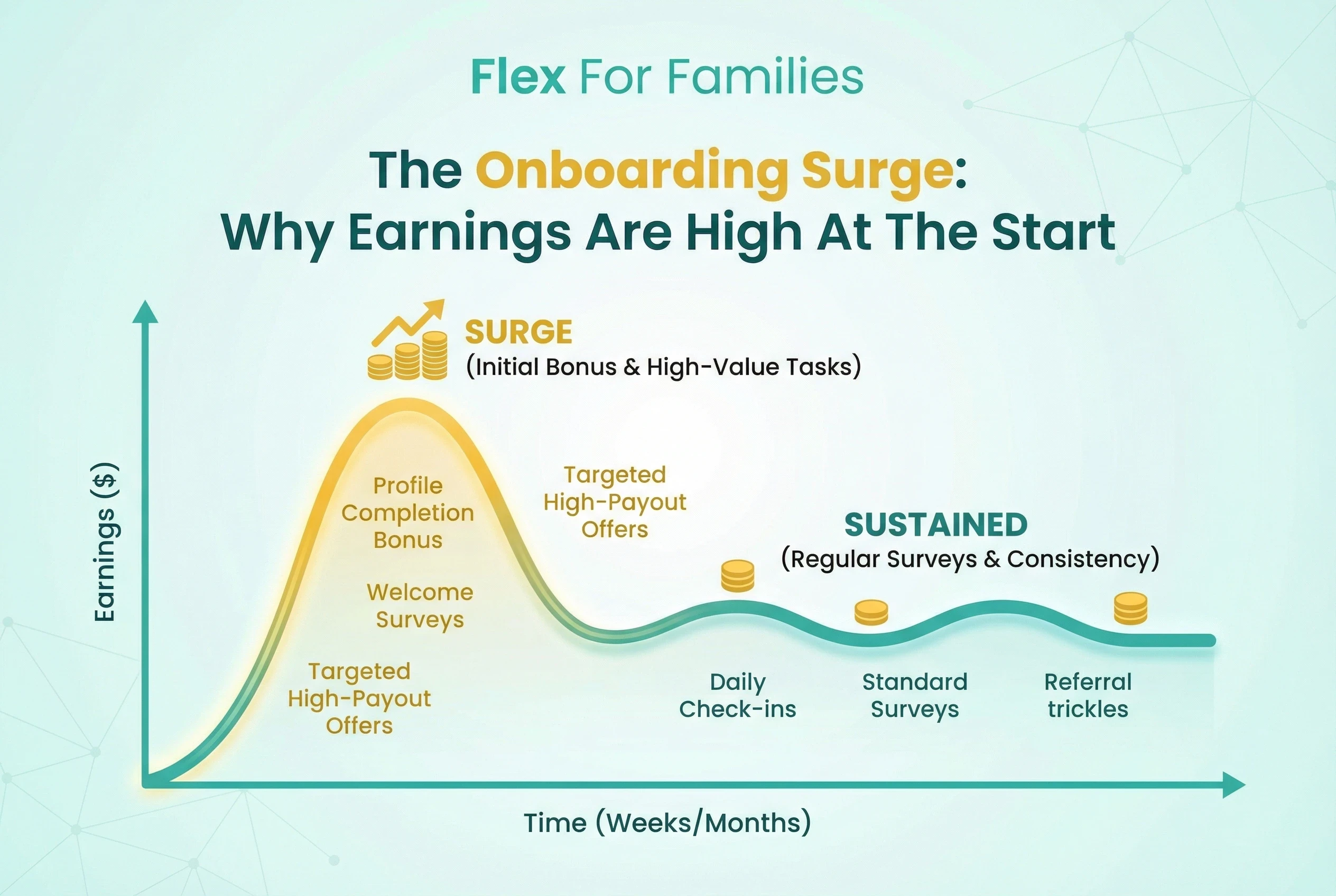
- New User Priority: Survey panels want to impress new members, so they show lots of available surveys right away. It gives you a sense of momentum and gets you invested in the platform.
- Profile Testing: The first batch of surveys is tailored to learn more about you. By answering a range of questions, you help them figure out where you fit in their system. These early surveys are usually easy to qualify for, and some are even disguised as earning opportunities when they’re really about sorting users into buckets.
- Initial Qualification Boost: In the beginning, many platforms purposely qualify you for more surveys to warm you up. It’s a little nudge to stick around and get comfortable.
All this early excitement can make survey sites look like a great way to earn. But for most people, that vibe doesn’t last very long.
Why Survey Opportunities Run Out: Dry Spell Explained
The sudden slowdown in survey offers usually starts by week two or three, and here’s why. Most survey panels have a specific demand for different types of people. Once they have enough data from a certain group, their need drops drastically.
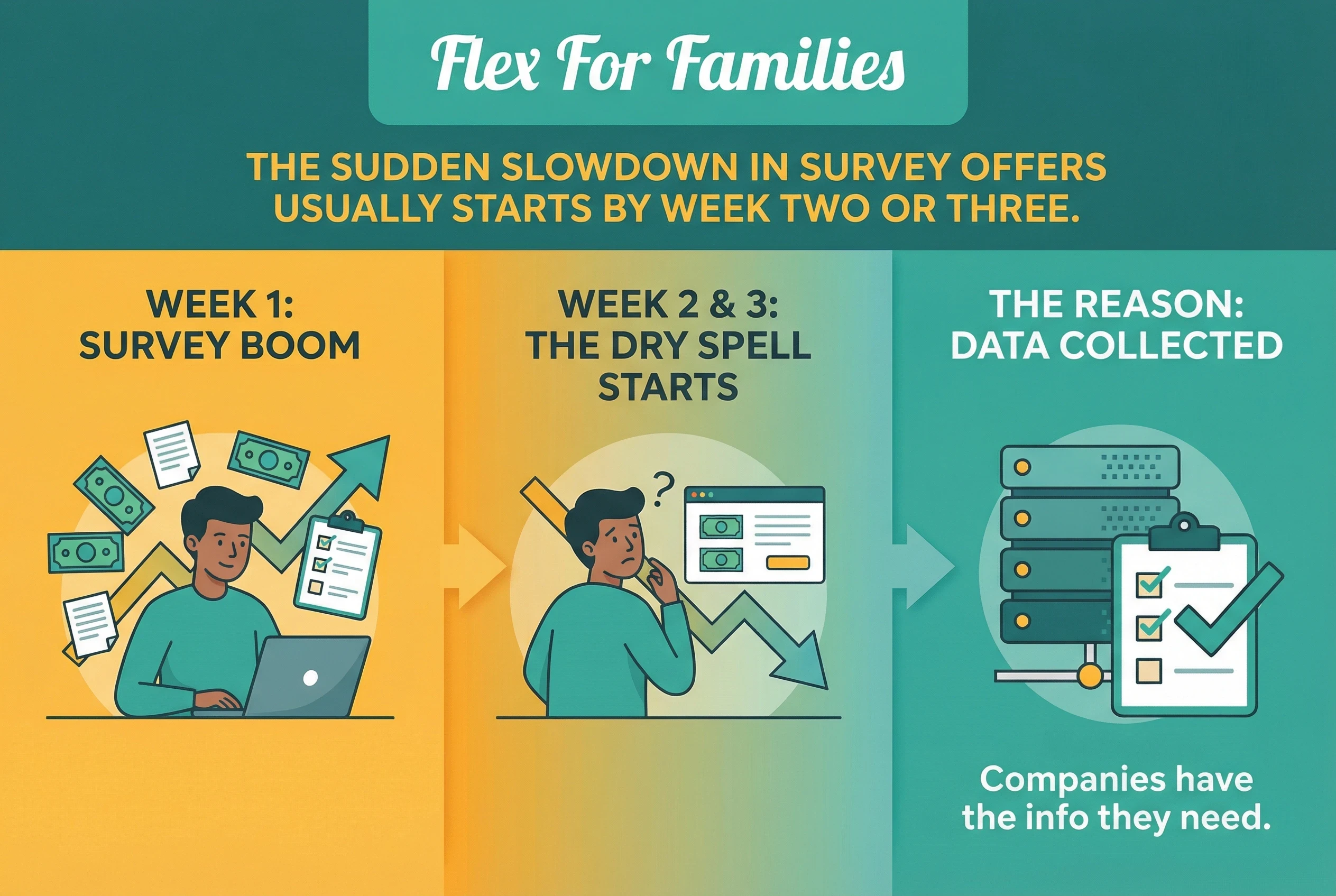
- Demographic Saturation: Brands want a cross section of the population, but some groups (especially parents in certain age or income brackets) fill up fast. Once your demographic quota is met, survey opportunities thin out quickly.
- Overqualified Users: Sometimes, if you answer honestly and hit every screener perfectly, you make yourself too specific. The site no longer has a steady stream of surveys tailored to you, and the invites slow down.
- Limited Brand Demand: Not every company is looking for every kind of user all the time. Some days, there’s nothing for your profile to work on.
At this point, it can feel like you’re being left out on purpose, but it really boils down to the shifting needs of survey clients and the way panels balance their pools of respondents. In some ways, it’s very much like being benched after the starting lineup is filled. The system isn’t personal—it just reacts dynamically to the changing needs of brands and advertisers, which can leave you on the sidelines without warning.
Why You Start Getting Disqualified More Often
At first, I breezed through survey qualifiers without much trouble. Over time, though, I started running into dead ends. Survey after survey would screen me out partway through. Here’s what’s happening behind the scenes.
- Tighter Targeting: After the onboarding phase, surveys become much more selective. Panels now have enough info on you to only send opportunities where your answers need to be a really close match. The room for “close enough” is gone.
- Pre-Screen Failures: You might not even realise how many screeners you’re taking and failing. Most platforms do these before you even realise you’re being evaluated, so you see way more “Sorry, not a match” messages.
- Time Wasted: The more this happens, the more time you spend answering unpaid screener questions. This leads to frustration fast, especially if you’re balancing survey work with childcare or other gigs.
Getting disqualified stings, and after a while, it makes the whole thing start to feel like a waste of time. For some, it’s a cue to give up, but most keep trying in hopes that things pick up again. Unfortunately, the more often you face these lockouts, the harder it gets to stay patient. It’s a grind that can turn what felt like fun pocket money into an annoyance.
Some start to second-guess whether they’re answering something “wrong,” or if there’s a secret to staying in the game, but really, panels are just zeroing in on super-specific data points for their clients.
How Survey Platforms Manage Their Users
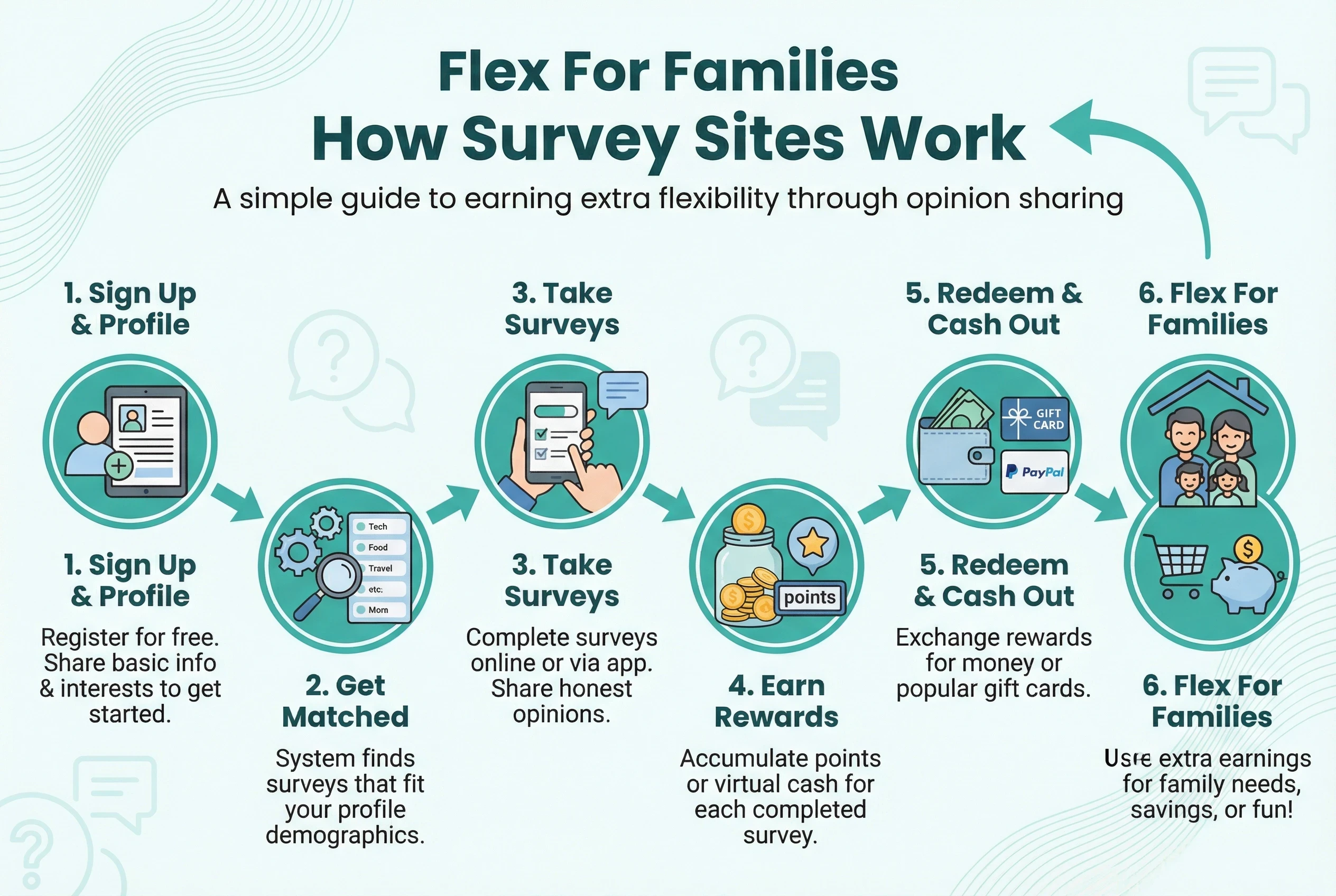
If all of this feels pretty mysterious, that’s by design. The inner workings of survey panels aren’t something they put in the FAQs, but there are a few patterns I’ve noticed (and heard from others in the same boat).
- Active Users Get Cycled: Platforms want to avoid using the same people for every survey. The more active you are, the less likely you are to keep getting access to the easy, high-paying surveys. This helps them avoid survey fraud and keeps their data “fresh.”
- Inactive Users Lose Priority: If you take a break, return, and are surprised your dashboard is bone dry, this could be why. Logins and activity are tracked, and many panels switch more surveys to new or frequently responding members.
- No Transparency: There’s no way to check your “priority” or see how many available surveys you’ve missed. It keeps things feeling random, even when patterns are at play.
Panels do this to protect data, keep brands coming back, and make new users excited. Unfortunately, this system often leaves returning or consistent users frustrated and confused. What’s even trickier is that many survey sites are owned by larger networks, so the same controls and algorithms might be affecting your chances across several websites at once. Each panel is juggling a roster of users against a list of client studies, optimising for “freshness” and varied responses.
Why The Experience Feels So Misleading, Especially For Parents
Parents, more than anyone, need the survey hustle to work. You want some flexible, honest extra cash you can earn during nap time or between school runs. When things slow down, it feels almost like a bait and switch.
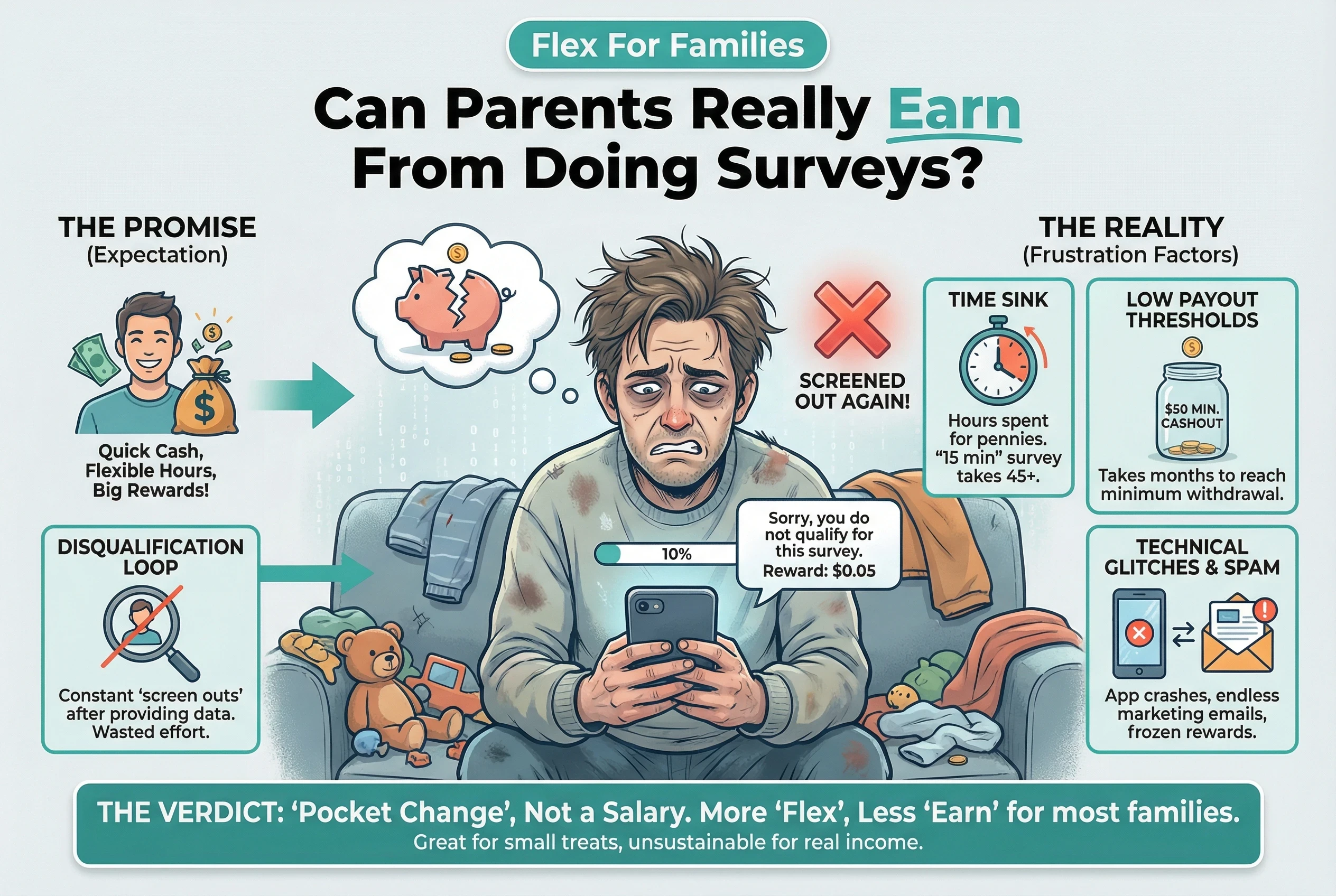
- Expectations Clash With Reality: When you hear about quick, simple money for sharing your opinion, your mind fills in the gaps with how much you can really earn. The initial rush only doubles the hope.
- Marketing And Hype: Survey sites rarely tell you about the “slow season.” The ads and landing pages focus on big payout totals, fast signup bonuses, and easy cashouts, skipping over the dry spells and small print.
- Social Proof Bias: Seeing reviews and testimonials from people cashing out $300 in gift cards can make it easy to believe anyone can do the same. What’s not talked about is how many users hit a wall just weeks after signing up.
I totally get why this frustrates people! It certainly had me questioning whether any survey site was actually legit or worth my time. It feels rough, especially if you were counting on those little wins to cover kid expenses or treat yourself. Some parents even schedule survey times, setting up routines, only to find the earnings just aren’t meeting expectations anymore. All that hype up front only makes this letdown feel sharper.
What Most Parents Do Right After Earnings Drop
Hitting a slowdown doesn’t stop most folks. My first move was to search for “more survey sites” and pile on as many new signups as I could manage. Maybe this time, things would go differently.

- Apply To More Panels: It feels like the most practical next step. If one slows down, why not multiply your chances by trying three or more sites?
- Spend More Time Searching: Many end up jumping from site to site, looking for active surveys and juggling different dashboards. Before long, it feels like part-time work chasing pennies.
- Earnings Even Out: Despite all this work, most people (myself included) only see a slight bump in total earnings per month. There’s still a cap on available surveys across all platforms because they tap into similar advertiser pools.
Some keep chasing the next “best” panel, while others decide the rewards aren’t worth the energy. If you’re here, you’re definitely not alone. Many parents trade stories in online forums, giving tips or sharing which panels gave them bonus payouts, but very few see a real, lasting boost from this tactic.
In fact, registering for too many sites can mean more notifications, more time wasted answering screeners, and more frustration when real payouts never line up. It’s easy to lose perspective and clock more and more hours for little return, especially if you’re hoping for that big gift card or payout to finally land at the end of the month.
How To Break Out Of The Survey Hamster Wheel
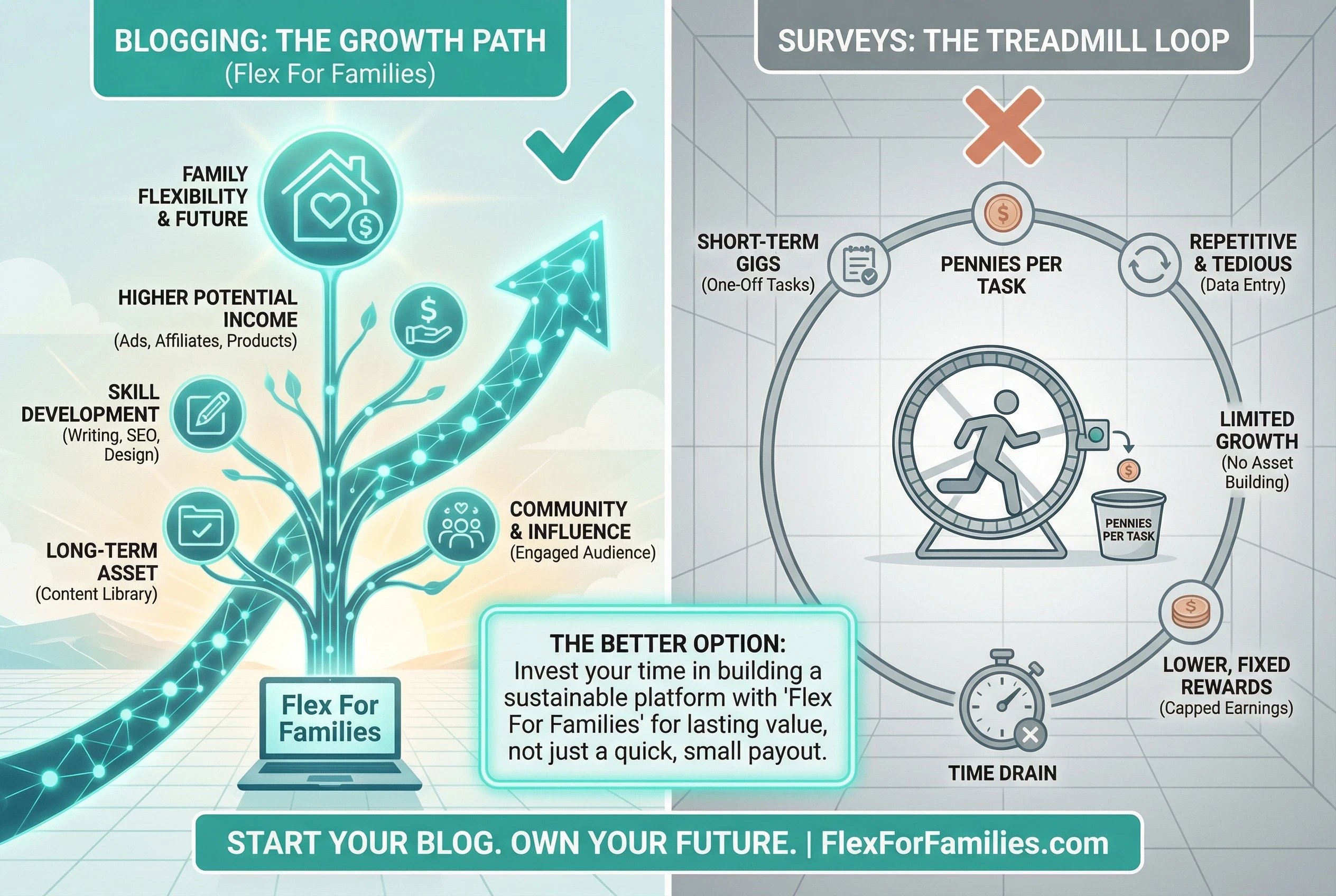
There’s a real difference between spinning through survey panels and building something that grows for you. Most panels reset your progress every week. There’s no momentum. Every survey is brand new, for pennies, with the same disqualification struggle.

The approach that felt different for me was building assets, like a blog or side business, that can compound and grow over time, letting you earn while you sleep (or make school lunches, or take a walk). It’s not “easy money” up front, but it scales in a way that surveys just don’t. The slow start can be frustrating, but the upside is lasting: every post, small side gig, or new offering can add up and give you more freedom down the road. And unlike survey platforms that control who gets paid, this kind of work puts you back in the driver’s seat.
If you’re still torn, I’ve put together a guide for parents weighing surveys, MLMs, and other side hustles. You can find it here: Thinking About Surveys, MLMs, Or Side Hustles? Read This First.
If you want to keep surveys as a tiny side hustle, try spreading your activity across two or three trusted sites and take long breaks to avoid survey fatigue. Look for special promotions or referral programs as well. But don’t expect the onboarding surge to repeat. Instead, consider growing a side project or freelance gig that gives you upside over time, not just scraps here and there.
Time To Rethink How You Earn (And Spend Your Time)
If you’re feeling let down that your survey site stopped paying out, you’re not wrong; this is a really common cycle. I found it super helpful to step back and look at where my time could pay off more, instead of letting someone else control my earnings week by week. If you’re curious about building something that can actually multiply what you put in, check out the guide above.
You might find that a little effort in a new direction is a lot more satisfying (and less frustrating) than constantly refreshing your survey dashboard. Small shifts in focus can set you up for bigger wins over time, so don’t hesitate to experiment until you stumble upon the approach that fits your life the best.
Let’s Chat
Did this slowdown happen to you too?
Many parents notice strong earnings at first, then hit a wall a few weeks in.
Did you try joining more survey sites, or did you step back and rethink how you wanted to earn?
Share your experience below. Talking about the frustrating parts can really help other parents feel less alone and make better choices going forward.



Hey John,
Spot on. Most survey sites front-load easy, high-paying screeners, then earnings taper as quotas fill, targeting narrows, and your device or profile gets flagged for speed, VPN, or inconsistent answers. I have seen pay recover a bit by tightening profiles, turning off VPNs, using one device, and focusing on a few reputable panels instead of chasing dozens. Still, it is a low ceiling game.
Which red flags have you found most likely to throttle invites, inconsistent demographics, device fingerprint issues, or speeding metrics? And have you seen reliable lift from niche panels tied to a profession or location versus general consumer panels?
Marios
Hey Marios,
You’ve nailed it. That early spike followed by the slow taper is exactly what catches people out, and your point about profiles and device hygiene is spot on.
From what I’ve seen, the fastest throttles usually come from a mix of:
Speeding through surveys, even when answers are accurate. The systems flag pace before quality.
Inconsistent demographics across panels. Updating a job title or household detail in one place but not another is a big one.
Device fingerprint issues, switching phones, browsers, or locations too often, or using VPNs, even briefly.
Over-qualifying. Being “perfect” for everything can look suspicious and reduce invites over time.
On niche panels, yes, I’ve seen a more stable invite rate when someone genuinely fits a specific profile, like healthcare, education, trades, or location-specific panels. The volume is lower, but qualification rates tend to be higher, which feels less draining. General consumer panels throw more invites early, but the drop-off is sharper.
That said, like you said, it’s still a low-ceiling game. Even when everything is dialled in, you’re optimising friction, not unlocking scale. That’s usually where parents start rethinking how much mental energy they want to give it.
Really appreciate you sharing such a grounded take. It adds a lot of clarity for anyone reading who’s wondering if they’re “doing something wrong” when earnings dip.
Regards,
John
Hey John –
At one point, I was also stuck in the survey loop – if you will. Completing many surveys for little pay is frustrating. But I know why this happens brands have met their demographic quota. Users are overqualified or there is limited brand demand. Either way, people become ever more frustrated by the menial payouts.
Instead of toiling on surveys, there are other ways to earn passive income and blogging is viable option. I have been blogging for a while and find it rewarding.
What do you find challenging/rewarding about blogging?
G.
That “survey loop” description is painfully accurate. Once quotas are filled or your profile no longer matches what brands want, it really does start to feel like you’re putting in more effort for less return, which is exactly where the frustration sets in.
I agree with you, that’s often the point where people start questioning whether their time could be better spent building something longer term. Blogging isn’t instant or effortless, but at least the work compounds instead of resetting to zero each day.
For me, the most challenging part of blogging is staying patient in the early stages. You can do the work consistently and still feel like nothing is happening for a while. That gap between effort and visible results is tough, especially alongside family and life commitments.
The most rewarding part, though, is when real people start engaging. When someone comments, asks a follow-up question, or says something you wrote helped them make a decision, that’s the moment it clicks. You’re no longer trading minutes for pennies, you’re building something that actually serves people and can grow over time.
Really appreciate you sharing your experience. It adds a lot of context for readers who are currently stuck in that same loop and wondering what’s next.
John