

Why Goal Setting Matters for Parent Bloggers
When I started blogging, my goals looked great on paper… Post twice a week, master SEO, grow my traffic, and somehow do it all between school runs and bedtime stories. It didn’t take long to realise I’d set myself up for frustration.
Parent life doesn’t pause for perfect schedules. There are surprise colds, homework chaos, and days when your brain feels like it’s buffering. That’s why realistic blogging goals matter so much. They keep you moving forward without adding more guilt or stress.

You don’t need 10 hours a day or a flawless routine. You need flexible, family-friendly goals that match your season of life. Over time, those small steps create big change.
If you haven’t already, grab the 12-Week Blog Plan Schedule Template. It’ll help you map out goals that fit around your family’s rhythm, not the other way around.
Why Most Blogging Goals Fail (and What To Do Instead)
Here’s the truth: most blogging goals collapse under their own weight. They sound inspiring, but they ignore the reality of life with kids.

Common mistakes I see all the time:
- Copying another blogger’s timeline. You don’t see their behind-the-scenes help, free time, or full-time hours.
- Setting vague goals. “Grow my traffic” isn’t clear enough to measure or celebrate.
- Trying to do everything at once. It’s better to make steady progress in one area than burn out across five.
The problem isn’t a lack of ambition. It’s building goals that don’t fit your real life.
Instead, focus on progress you can repeat:
- One published post every two weeks.
- Updating a single old post per month.
- Learning one new skill each quarter.
These are realistic, measurable, and sustainable – exactly what family bloggers need.
If you’re struggling to make a plan that adapts when family life shifts, my post on How To Create a Content Calendar That Works for Family Life will help. It’s all about flexibility that actually sticks.
Step 1 – Define What “Success” Means for You
Before setting goals, take a moment to define why you’re blogging in the first place.

Are you hoping to earn a little side income? Build a supportive community? Or simply have a creative outlet that’s yours?
Your “why” keeps you grounded when progress feels slow. Without it, you’ll chase other people’s goals instead of your own.
Here’s a quick exercise I still use:
If you only had two hours a week for your blog, what would you spend it on?
That answer usually reveals your true priority – whether it’s writing, connecting, or learning. Once you’re clear on what matters most, every goal you set becomes easier to stick with.
And if you’ve ever wondered what realistic income looks like for family bloggers, check out The Truth About Passive Income in Blogging. It shows how genuine results come from steady effort, not overnight success stories.
Step 2 – Break Goals Into Family-Friendly Time Blocks
The best goals work with your daily rhythm, not against it. Parent life changes by the week, so give yourself goals that bend without breaking.

Instead of saying, “I’ll write three blog posts a week,” try this:
- Outline one post during nap time.
- Edit on Thursday evenings.
- Publish one post every two weeks.
Those smaller, time-friendly steps keep you consistent even when plans shift. Think of it like fitting blogging into the cracks of your day, not forcing your day around blogging.
If you ever feel stuck on where to start, revisit your planner or calendar and jot down the windows of time that genuinely exist. Even if it’s just 20 minutes before the kids wake up.
And remember, slow progress is still progress. A single published post is more powerful than ten half-written drafts sitting in your folder.
Step 3 – Track Progress Without Pressure
Tracking doesn’t mean obsessing over analytics or follower counts. It means noticing what’s working and what’s improving, and giving yourself credit for it.
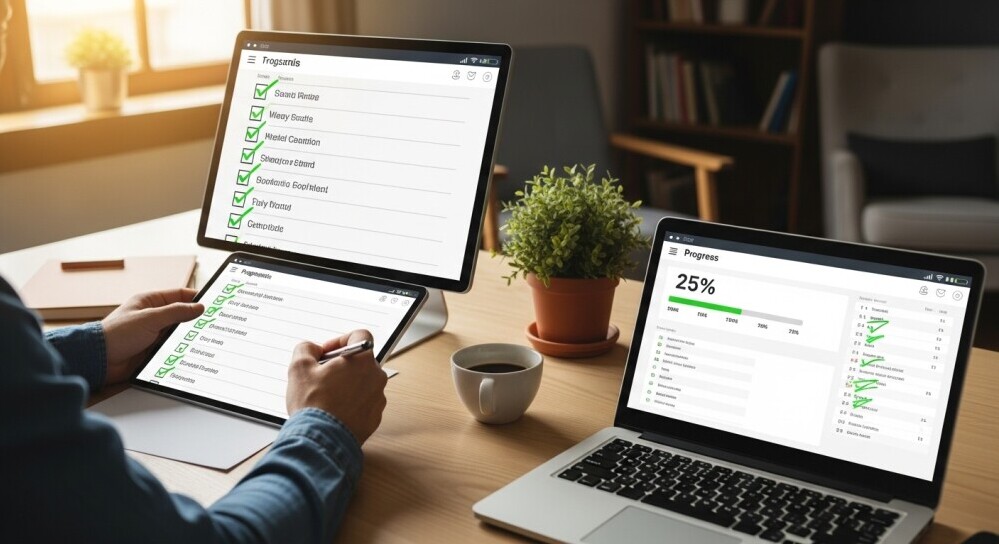
Try tracking effort instead of outcomes:
- How many blog posts did you start this month?
- How often did you engage with your audience?
- Did you stick with your writing routine, even if you missed a post?
Every small step builds momentum. The more you see that progress written down, the easier it is to stay motivated through unpredictable weeks.
You can use your phone, a notepad, or a digital tool like Google Sheets. But if you prefer something already designed for real-life blogging schedules, the 12-Week Blog Plan Schedule Template makes it simple to see your wins in one place.
Step 4 – Review and Reset Every 12 Weeks
Big yearly goals sound great, but family life changes too fast for that to work well. The 12-week cycle is perfect because it’s long enough to see real results, but short enough to adjust when life gets messy.

At the end of each cycle, take 15 minutes to review:
- What worked? Did you stay consistent with writing or promotion?
- What needs tweaking? Maybe a posting day didn’t fit your routine.
- What are you proud of? Celebrate even the small wins – they’re what keep you going.
Don’t beat yourself up for unfinished goals. Just move what matters forward and let go of what doesn’t. Your blog should grow with your family, not compete with it.
If you like structure for reviews, the 12-Week Blog Plan Template makes this process quick and satisfying. And if you want to go deeper on weekly routines, you’ll find loads of practical ideas in Time-Blocking Routines for Stay-at-Home Parent Bloggers.
Step 5 – Stay Accountable With Support
Blogging can feel lonely if you’re doing it solo. Having someone to check in with, share ideas, or vent to on tough days makes all the difference.

That’s why I built the Parent Blogging Hub. It’s a space where moms and dads at every stage of blogging share what’s working, ask questions, and cheer each other on. You don’t need to figure it out alone. We’re all learning together, one post at a time.
Accountability doesn’t have to mean pressure. It just means showing up, being honest about your progress, and celebrating even the smallest wins. A single “Hey, I finally hit publish!” message can spark the motivation another parent needs that day.
Frequently Asked Questions
How many goals should I set as a new blogger?
Start with one or two that feel achievable. Focus on consistency before adding more. Once your blog rhythm feels steady, expand naturally.
What if I keep missing my deadlines?
It happens to every parent blogger. Treat each miss as feedback, not failure. Adjust your expectations or change your timing. That’s how real progress happens.
How do I stay motivated when results are slow?
Track small wins. Seeing how many posts you’ve written or how many comments you’ve replied to proves you’re moving forward.
Should I change my goals if family life shifts?
Absolutely. Your goals should move with your life, not against it. Revisit and tweak them regularly, especially during busy family seasons.
Focus on Progress, Not Perfection
Blogging success doesn’t come from doing everything at once. It comes from showing up, even when the week feels chaotic. Every small action adds up.

By setting family-friendly goals, tracking small wins, and leaning on community, you’ll build momentum that actually lasts.
So take a deep breath, open your planner, and map out one goal you can hit this week. You’ve got this, and you’re not doing it alone.
Let’s Chat!
Setting goals as a parent blogger isn’t always easy, but it’s so rewarding when you start seeing those small wins stack up. I’d love to know… What’s one realistic blogging goal you’re working toward right now?
Whether it’s publishing your first post, growing your email list, or finally getting consistent again, share it in the comments below. You might inspire another parent who’s on the same journey!