
If you’ve started a parent blog, the next big question is simple.
What should you actually write about?
Many parents get stuck here. They post randomly, try different ideas, and hope something works. This often leads to slow growth and frustration.
The good news is you do not need a complicated strategy.
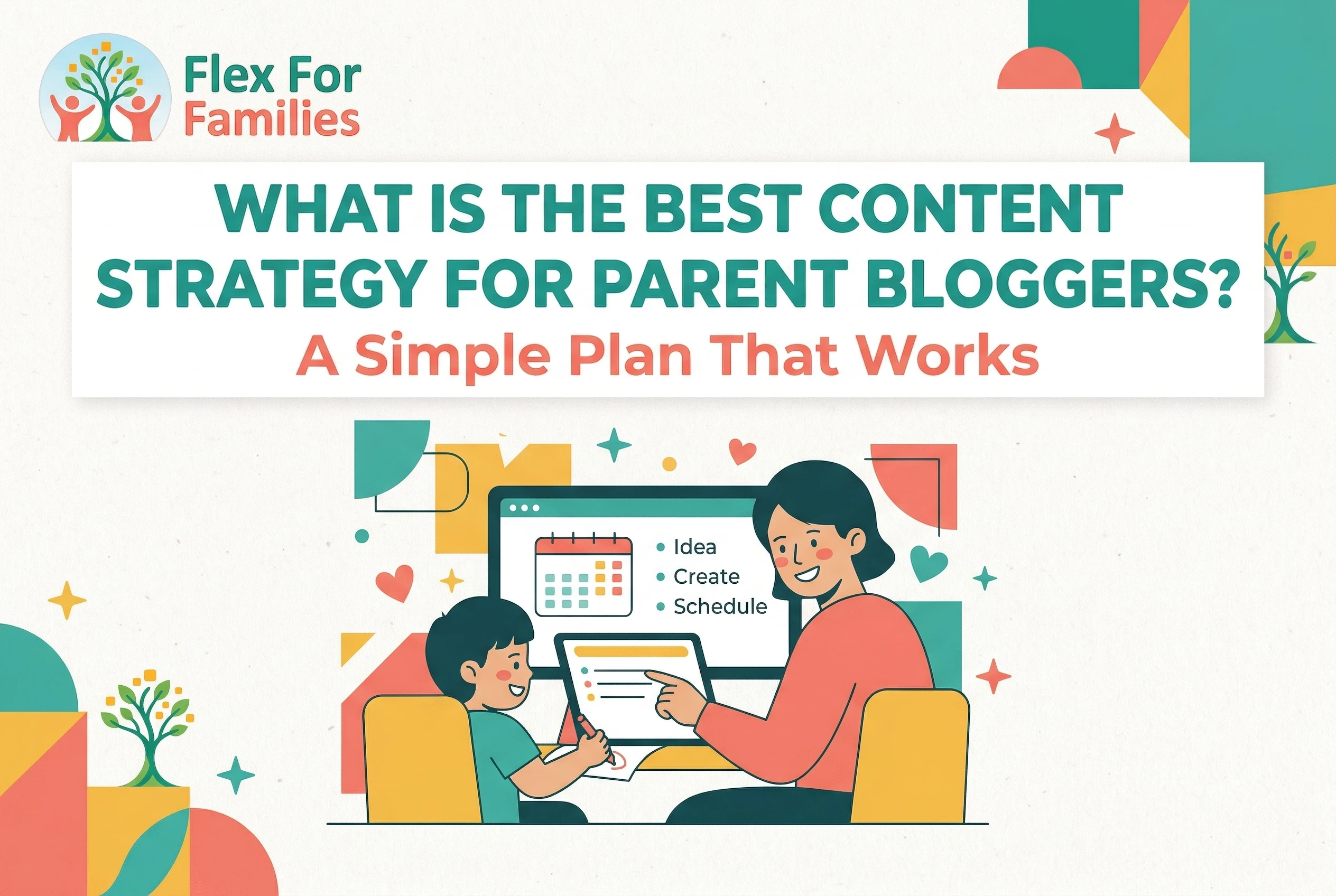
In this guide, you will learn a simple content strategy that helps parent bloggers stay consistent, grow traffic, and build income over time.
Quick Answer
The best content strategy for parent bloggers is to focus on helpful, search-based content that answers real questions, while staying consistent with a simple posting plan. Most successful blogs combine beginner-friendly guides, problem-solving posts, and monetisation-focused content to grow traffic and income over time.
Why Most Parent Bloggers Struggle With Content

Most parent bloggers do not struggle because they lack ideas.
They struggle because they are trying to figure everything out while already juggling a full day.
You might only have short pockets of time. You sit down to write, then spend half of that time wondering what to focus on. Should you write something helpful, something personal, or something that might make money?
Without a clear plan, it quickly turns into guesswork.
This is where most blogs start to stall.
Common patterns I see:
- Writing posts based on what comes to mind that day
- Switching topics too often without a clear direction
- Trying to follow advice that does not fit real family life
- Spending time creating content that never gets seen
It is frustrating, especially when you are putting in the effort and not seeing results.
The problem is not your ability or your ideas.
The problem is a lack of structure.
Once you have a simple content strategy, everything becomes easier. You know what to write, why you are writing it, and how it fits into your bigger goal.
That is when blogging starts to feel manageable again.
The Simple Content Strategy That Works
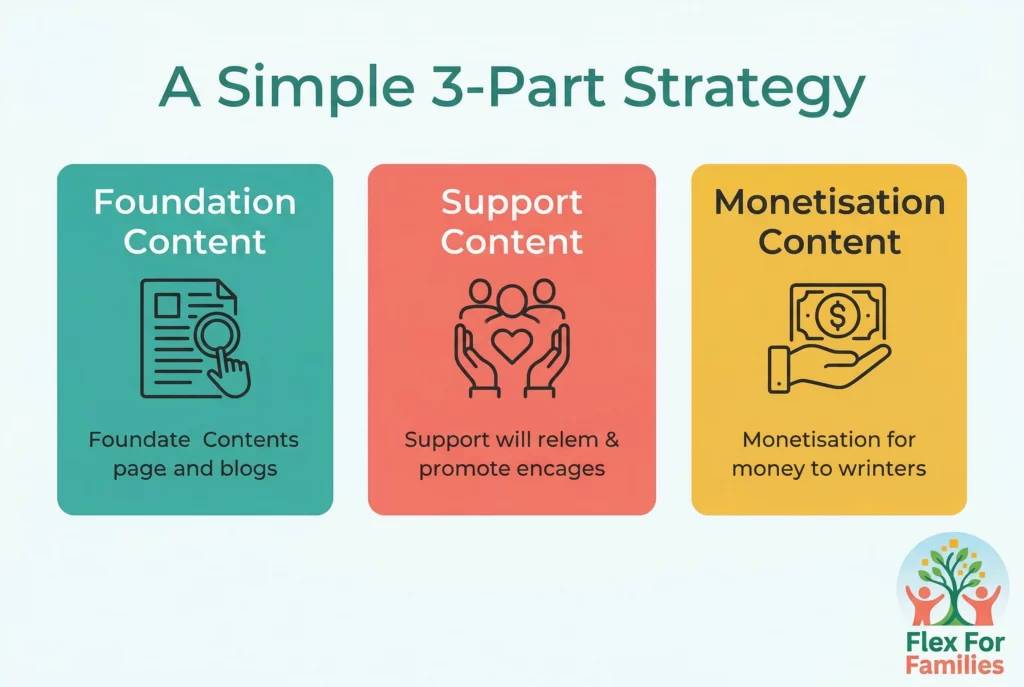
You do not need a complicated system to grow a parent blog.
You need a simple structure that helps you stay focused, even when time is limited.
Instead of guessing what to write each time you sit down, you can rely on three types of content that work together.
This gives you direction. It removes the pressure of coming up with new ideas all the time.
And most importantly, it helps your blog grow in a way that actually leads somewhere.
1. Foundation Content (Traffic + SEO)

This is the most important content you will create.
Foundation content answers real questions that parents are already searching for. These are the posts that bring people to your blog in the first place.
Think about the questions you had when you started. Those are often the best topics to begin with.
Examples include:
- How to start a parent blog
- Best platforms for parent blogging
- How to make money blogging as a parent
This type of content does the heavy lifting over time. It builds traffic slowly, but consistently.
It also builds trust, because you are helping someone solve a real problem.
If you want examples of this in action, these will help:
- How to Start a Parent Blog
- What Are the Best Platforms for Parent Blogging in 2026?
- What Is the Average Income From Parent Blogging in 2026?
2. Support Content (Engagement + Depth)

Support content is what keeps people on your site and coming back.
These posts feel more relatable. They show your experience, your routines, and what works in real life.
They might not always bring in large amounts of traffic on their own, but they build connection and trust.
Examples include:
- Blogging routines for busy parents
- Time management tips
- Common blogging mistakes
This is the content that makes your blog feel human.
It helps readers feel like they are not alone, and that matters more than most people realise.
If you want to build this side of your blog, these will help:
- How to Build a Simple Blogging Routine That Fits Family Life
- Blogging Myths That Stop Parents From Getting Started
3. Monetisation Content (Income + Conversions)

This is where your blog starts to turn into something more.
Monetisation content helps you earn, but it also helps your readers find useful tools, products, and solutions.
When done well, it does not feel salesy. It feels helpful.
Examples include:
- Affiliate marketing guides
- Product or platform reviews
- “Best tools” style posts
This type of content works best when it is built on trust. That is why foundation and support content come first.
Once people trust you, they are far more likely to follow your recommendations.
If you want to understand how this works in a simple way, these will help:
- Affiliate Marketing For Parents
- The Best Affiliate Programs for Parent Bloggers
- Wealthy Affiliate Review
How These 3 Types of Content Work Together
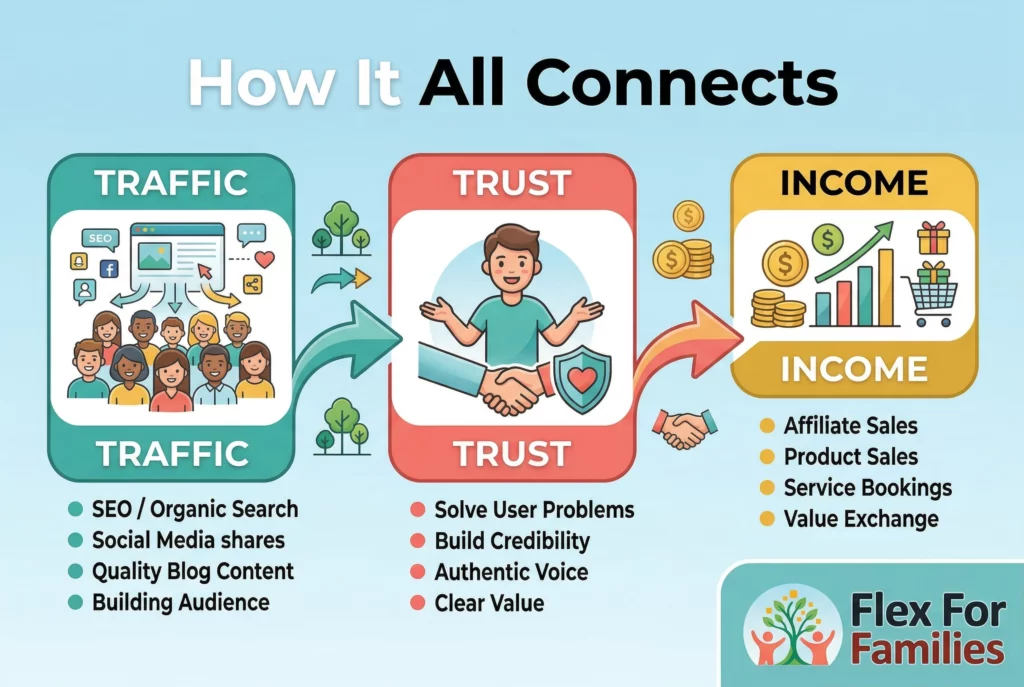
On their own, each type of content does something useful.
But when you use them together, that is when your blog starts to grow properly.
Foundation content brings people in through search. These are the posts that answer questions and get discovered over time.
Support content keeps people on your site. It helps them relate to you, trust you, and feel like they are in the right place.
Monetisation content gives your blog a purpose beyond traffic. It allows you to recommend helpful tools and start earning in a natural way.
When all three are working together, your blog stops feeling random.
You are no longer just writing posts. You are building something that connects, grows, and supports your goals.
If one piece is missing, things feel off.
- Without foundation content, you struggle to get traffic
- Without support content, people leave too quickly
- Without monetisation content, your blog does not move forward financially
Keeping a balance between the three is what makes this work long term.
A Simple Weekly Content Plan
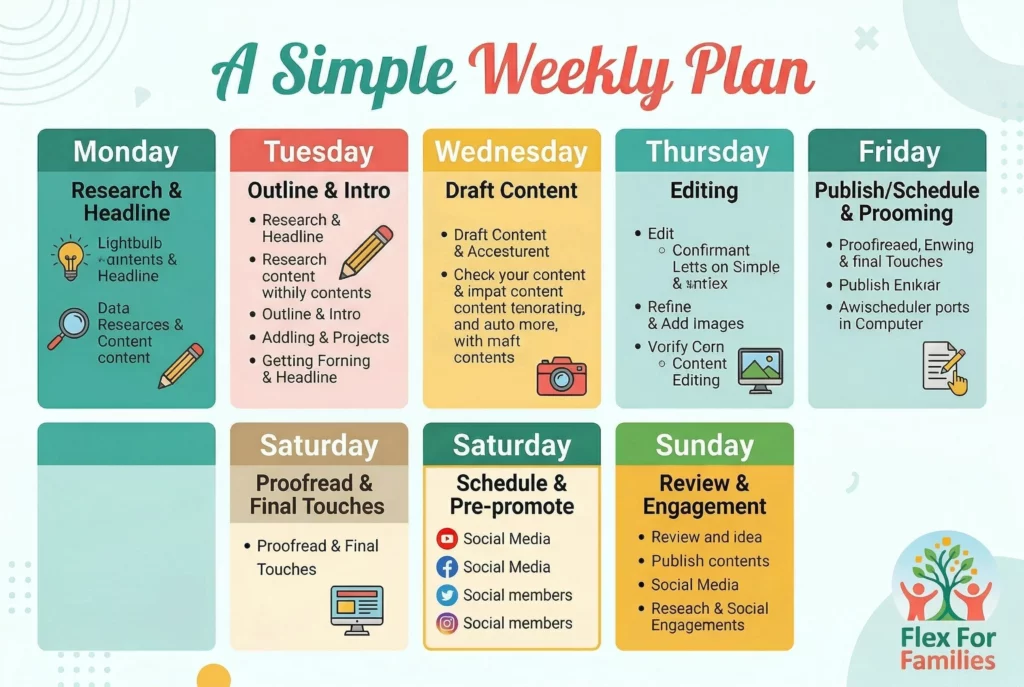
You do not need to post every day to grow a blog.
In fact, trying to do too much is one of the fastest ways to burn out.
A simple, repeatable plan works far better.
If you have time for three posts per week, this is a good structure:
- One foundation post that answers a clear question
- One support post that connects with your audience
- One monetisation post that recommends something helpful
If your time is more limited, that is completely fine.
You can work with two posts per week:
- One foundation post
- One support or monetisation post
The key is consistency.
Even one or two posts per week adds up over time. What matters is that you keep showing up and building.
If you want help creating a plan that fits around your schedule, these will help:
- How To Create a Content Calendar That Works for Family Life
- How to Build a Simple Blogging Routine That Fits Family Life
What to Focus on First
When you are starting out, it is easy to feel like you need to do everything at once.
You do not.
The best place to focus is foundation content.
This gives your blog a base to build on. It helps you start getting traffic and gives your future content something to connect to.
Once you have a handful of posts live, usually around five to ten, you can begin to layer in:
- Support content to build connection
- Monetisation content to start earning
Trying to do everything too early often leads to confusion and slow progress.
Keeping your focus narrow at the start makes everything easier.
If you are still at the beginning, these will help you take the next step:
Common Content Strategy Mistakes
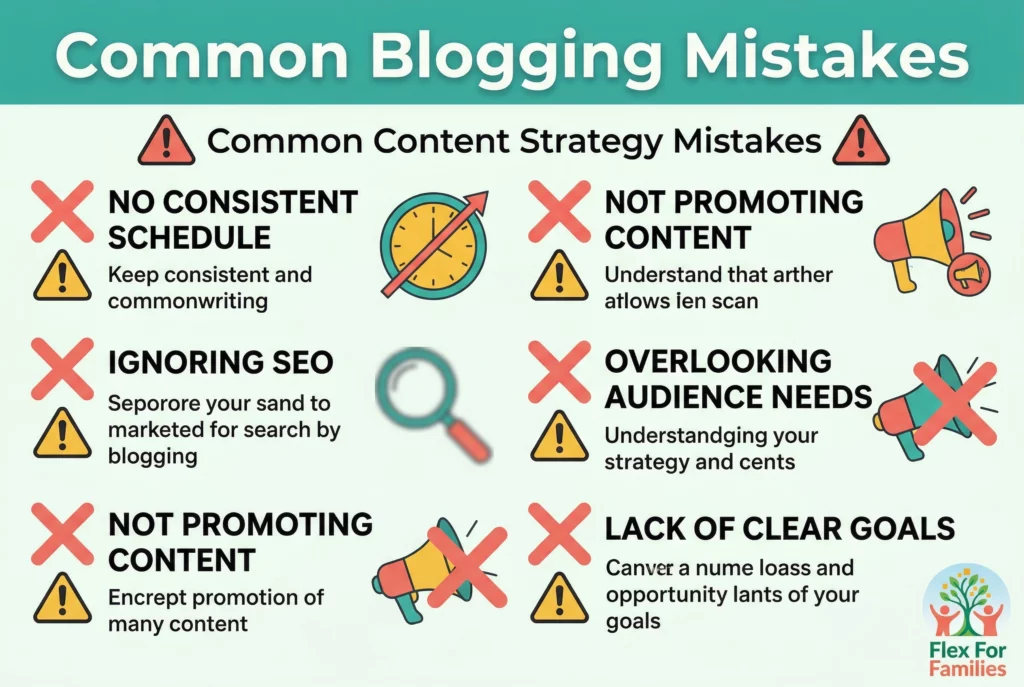
Even with a simple plan, it is easy to fall into patterns that slow your progress.
Here are the most common ones I see:
- Writing whatever comes to mind without a clear goal
- Ignoring SEO and hoping people will find your content
- Not linking your posts together
- Posting inconsistently, then stopping altogether
- Waiting until everything feels perfect before publishing
None of these mean you are doing anything wrong.
They usually just mean you are missing a simple structure.
Once you have that structure in place, your content starts to feel more focused and your progress becomes easier to see.
If you have ever felt stuck or unsure what to write next, that is completely normal.
The key is to keep things simple and keep moving forward.
Ready to Turn Your Content Into Real Progress?

If you want your blog to grow, the key is not doing more. It is following a simple plan that actually works.
I recommend this because it gives you everything you need to build your blog in one place, without the usual confusion or tech overwhelm.
With Wealthy Affiliate, you can:
- Learn what to write and why it works
- Build your blog step by step
- Get support when you feel stuck
- Turn your content into something that can grow into income
You do not need to figure this out on your own.
Build Your Blog With a Simple Plan
If you want a clear, beginner-friendly way to create content, grow traffic, and build income, this platform walks you through each step.
Read the Full Review and Get StartedBest Content Strategy for Parent Bloggers: FAQ Section
What content should parent bloggers focus on first?
Parent bloggers should focus on foundation content first. These are helpful, search-based posts that answer real questions and bring traffic to your blog.
How often should I post as a parent blogger?
Most parents can grow a blog with one to three posts per week. Consistency matters more than posting frequency, especially when you are balancing family life.
Do I need a content plan to grow a blog?
Yes. Without a plan, it is easy to post randomly and see slow results. A simple structure helps you stay consistent and build momentum over time.
What type of blog posts make money?
Posts that recommend helpful products or services tend to make money. This includes affiliate marketing posts, reviews, and “best of” guides.
Can I grow a blog with limited time?
Yes. Many parent bloggers build successful blogs by working in small pockets of time. A simple, focused content strategy makes this much easier.
Let’s Chat
What part of blogging do you find hardest right now?
Is it knowing what to write, staying consistent, or trying to turn your content into income?
Let me know in the comments. I’ll help you figure out a simple next step that fits your situation.
You do not need a perfect plan. You just need a clear one.