
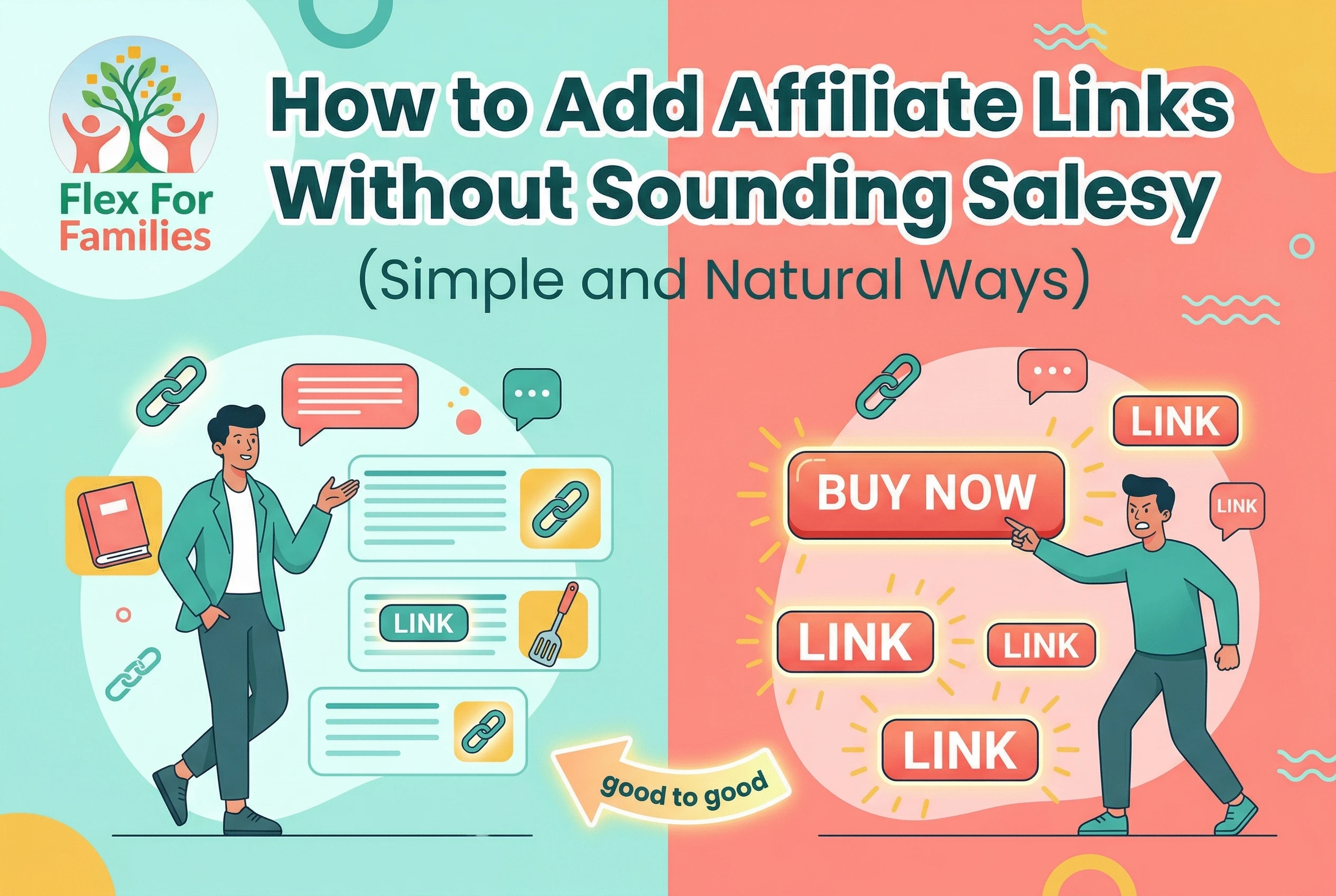
Adding affiliate links to your blog can feel uncomfortable at first.
You want to earn from your content, but you do not want to come across as pushy or overly promotional.
That is where many parent bloggers hesitate.
You might find yourself:
- Avoiding affiliate links altogether
- Adding them but not mentioning them clearly
- Or worrying that readers will switch off the moment they see one
This usually leads to one result.
No clicks. No sales.
The truth is, affiliate links are not the problem.
It is how they are used.
When done well, they feel like a natural part of your content. They help your reader take the next step. They add value instead of taking it away.
In this guide, you will learn how to add affiliate links in a way that feels helpful, builds trust, and actually leads to clicks, without changing your tone or sounding like you are trying to sell.
Quick Answer
To add affiliate links without sounding salesy, focus on helping first and recommending second. Introduce links naturally within useful content, explain why the product or tool matters, and guide the reader clearly to the next step. When your content solves a real problem, affiliate links feel like helpful suggestions rather than promotions.
If you are still working towards your first sale, this guide will walk you through exactly how it happens step by step:
Why Affiliate Links Feel “Salesy”
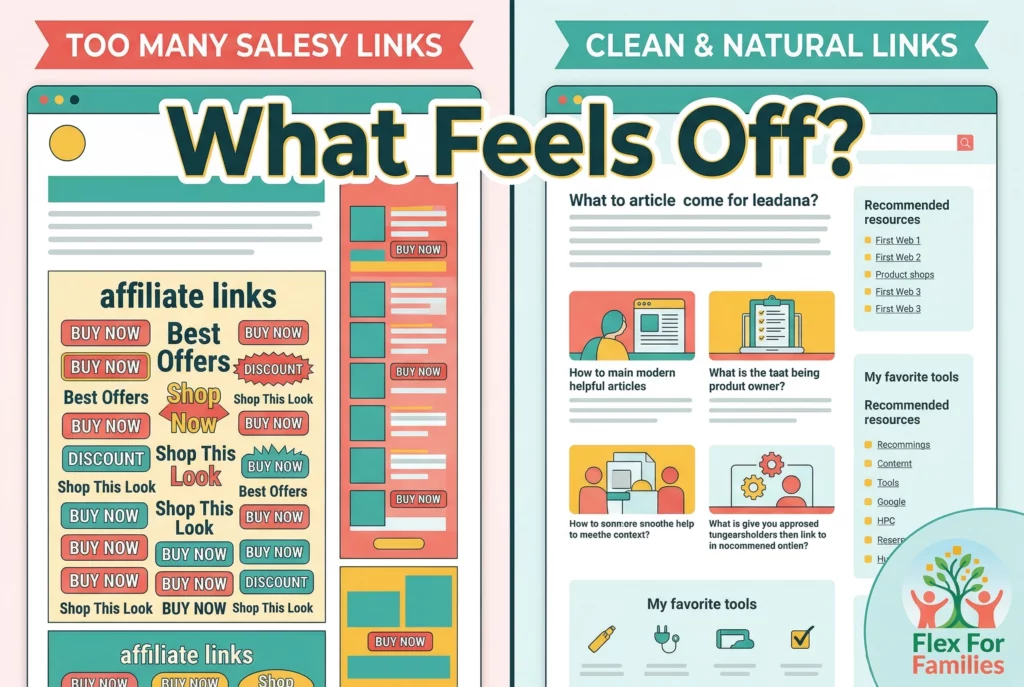
Most affiliate links do not feel salesy because of the link itself.
They feel salesy because of how they are introduced.
When something feels forced, unclear, or out of place, readers notice straight away.
Here is where that usually comes from.
Adding Links Without Context
Dropping a link into a post without explaining it creates friction.
The reader is left thinking:
- What is this?
- Why should I click it?
- How does it help me?
Without context, even a good recommendation feels random.
Recommending Too Much at Once
When a post includes multiple products, tools, or links, it can feel overwhelming.
Instead of helping, it creates noise.
Readers do not know where to focus, so they often do nothing.
Clarity always beats quantity.
Writing With Income in Mind First
This is easy to fall into.
You start thinking about:
- Where to place links
- How to increase clicks
- How to earn more
But when that becomes the focus, the content changes.
It starts to feel like it is trying to lead somewhere, rather than help.
Readers can sense that shift.
Using Language That Feels Promotional
Phrases that sound overly enthusiastic or vague can reduce trust.
For example:
- “This is the best tool ever”
- “You need this to succeed”
Without explanation, these statements feel more like selling than helping.
Readers are more likely to step back than lean in.
A lot of this comes down to small habits that are easy to miss. If you want to see the most common ones and how to fix them, this will help:
What Actually Makes a Link Convert
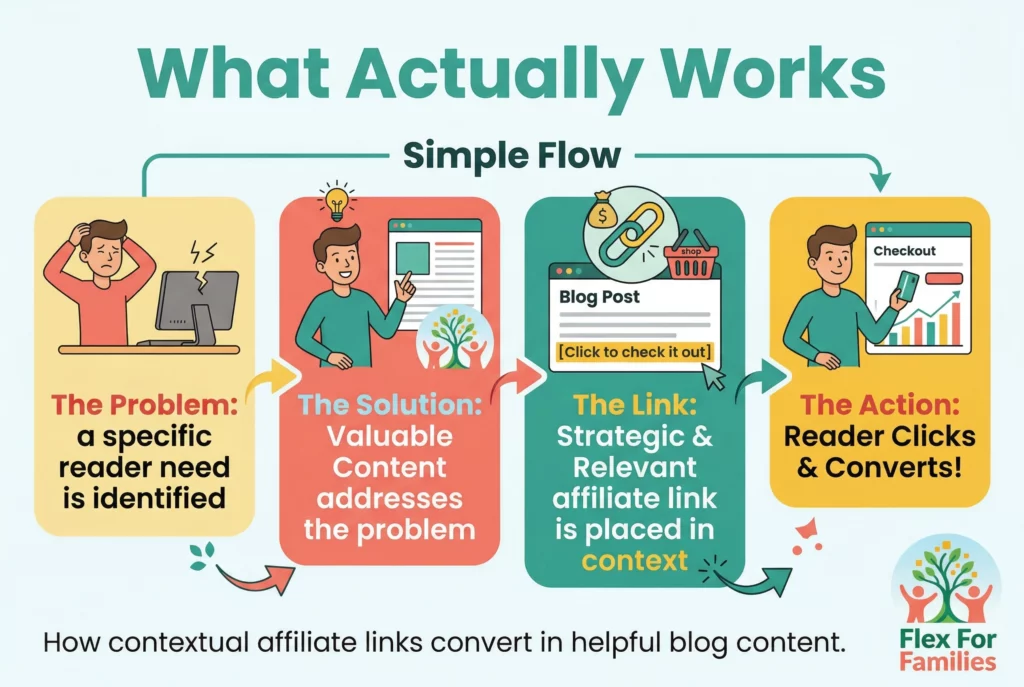
Affiliate links work best when they feel like a natural part of the solution.
Not something extra, but something that helps the reader move forward.
Here is what makes the difference.
If you want to understand how affiliate marketing fits into blogging as a whole, this guide explains it in a simple, parent-friendly way:
👉 Affiliate Marketing For Parents: Flexible Income, Family-First Approach
Clear Connection to a Problem
A link works when it solves something specific.
If your reader is thinking:
“This is exactly what I need”
They are far more likely to click.
This is why focused content performs better than general advice.
If your content is not getting clicks or interaction, it often comes down to how well it connects with the reader. This will help you improve that:
Simple, Honest Explanation
People want to understand what they are clicking.
Not in detail, just enough to feel confident.
Explain:
- What it is
- Why it helps
- When to use it
That is usually enough.
Relevance to the Reader’s Situation
The more your recommendation matches the reader’s situation, the better it performs.
For example:
- A beginner needs something simple
- A busy parent needs something time-saving
When your recommendation fits their reality, it feels natural.
A Clear Next Step
Many readers will not take action unless you guide them.
Even if they are interested.
Simple direction makes a big difference.
For example:
- “This is a good place to start”
- “This will help you set things up”
- “You can try this here”
It does not need to feel pushy.
Just clear.
The Key Shift
Affiliate links are not about convincing people to buy.
They are about helping people decide.
When your content does that well, the link becomes part of the solution.
Not something separate.
Simple Ways to Add Affiliate Links Naturally
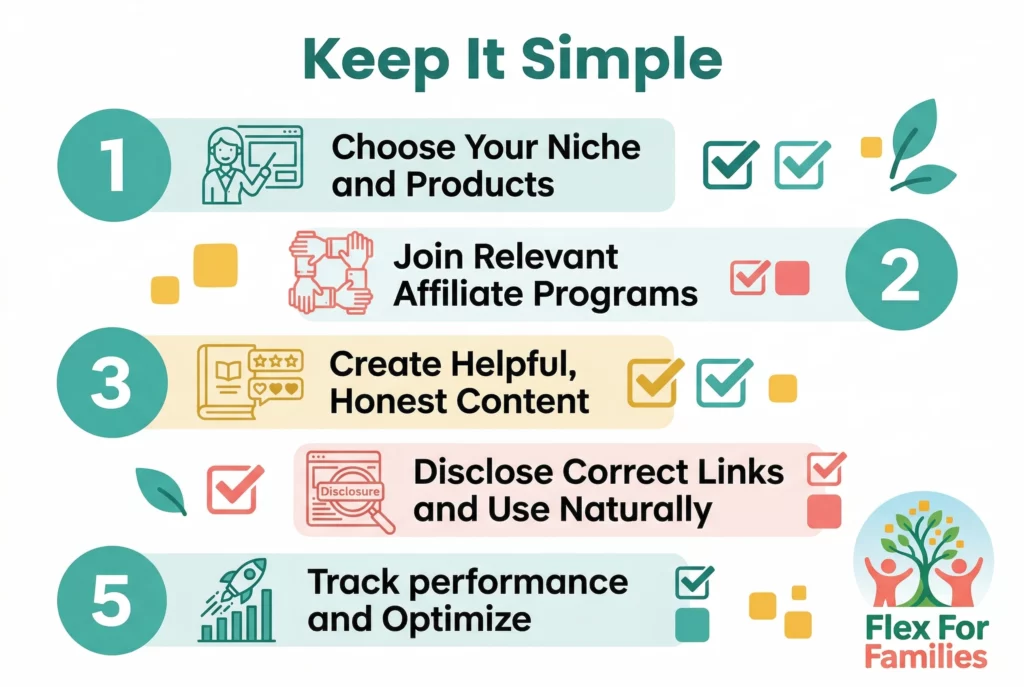
You do not need special techniques to make affiliate links work.
You just need to place them where they make sense.
When your content is clear and helpful, the link becomes part of the flow.
Here are the simplest ways to do that.
1. Place Links After Solving a Problem
This is one of the most effective places to add a link.
You explain something clearly.
You help the reader understand what to do.
Then you show them the tool or resource that helps them take that step.
It feels natural because:
- The problem is already clear
- The solution makes sense
- The link feels like the next step
2. Use Links as Part of a Recommendation
Instead of dropping links randomly, build up to them.
Explain:
- What you tried
- What worked
- Why you recommend it
Then add the link.
This makes the recommendation feel real, not forced.
3. Add Links in Step-by-Step Guides
Guides are one of the best places for affiliate links.
When you are walking someone through a process, they often need tools along the way.
For example:
- Step 1: Do this
- Step 2: Use this tool
- Step 3: Move forward
Because the link is part of the process, it feels helpful.
4. Keep It to One Main Recommendation
More links do not mean more clicks.
They often mean less.
When you give one clear recommendation, it is easier for the reader to decide.
Clarity leads to action.
5. Keep Your Language Simple and Direct
You do not need to “sell” anything.
Just explain things clearly.
For example:
- What it is
- Why it helps
- What to do next
That is enough.
If you are still building your blog or refining your setup, this guide will help you get the basics right from the start:
👉 How to Start a Parent Blog And Build Flexible Income From Home
Real Examples (What This Looks Like in Practice)
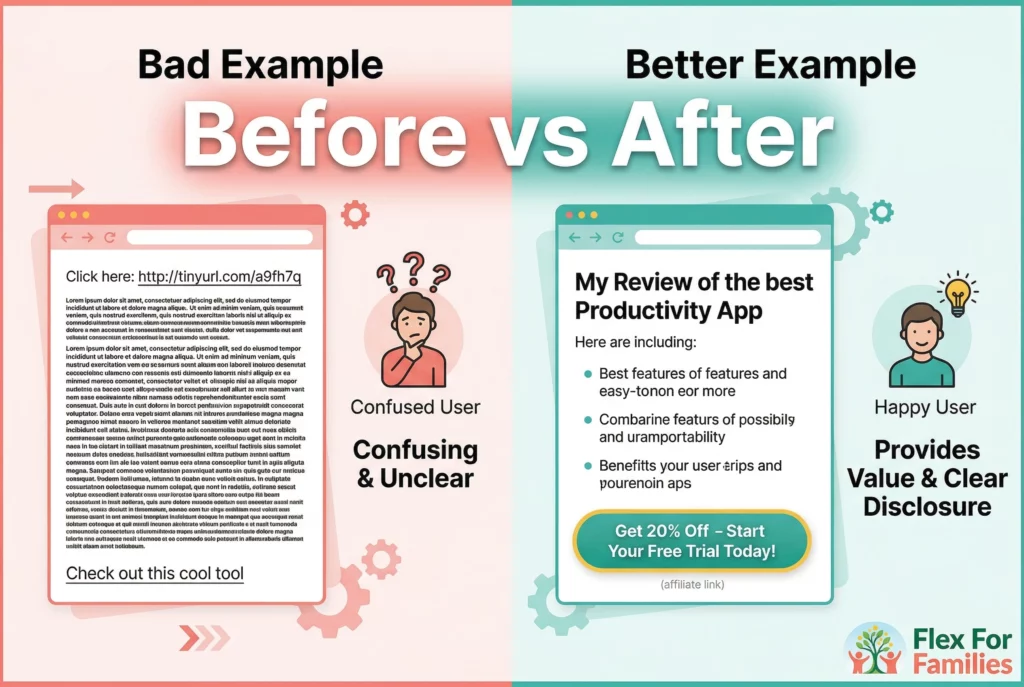
This is where the difference becomes clear.
Example 1: Without Context (What Not to Do)
You should start your blog using this platform.
[Insert Link]
This feels sudden.
There is no explanation.
The reader has no reason to click.
Example 1: With Context (Better Approach)
If you want a simple way to get your blog set up without dealing with technical steps, this platform is a good place to start. It walks you through everything step by step and keeps things manageable.
You can see how it works here:
[Insert Link]
Now the reader understands:
- What it is
- Why it helps
- Why it is relevant
Example 2: Too Many Options (What Not to Do)
Here are some tools you can use:
[Tool A]
[Tool B]
[Tool C]
This creates confusion.
There is no clear direction.
Example 2: One Clear Recommendation (Better Approach)
If you are just starting out, it is easier to focus on one platform that keeps everything in one place and guides you step by step.
This is the one I recommend starting with:
[Insert Link]
Now the reader has clarity.
Example 3: Vague Language (What Not to Do)
This is an amazing tool that will help you succeed.
[Insert Link]
This feels generic.
It does not build trust.
Example 3: Clear and Specific (Better Approach)
This tool helps you create blog content, learn how to structure your posts, and understand how to start earning from your blog without feeling overwhelmed.
If that is what you need right now, you can check it out here:
[Insert Link]
Now it feels useful.
If you want a bigger picture view of how all of this fits together, this guide breaks down how parent blogs actually make money:
What You Should Take From This
The difference is not the link.
It is everything around it.
When your content:
- Explains clearly
- Solves a problem
- Guides the reader
Your affiliate links stop feeling salesy.
They start feeling helpful.
Common Mistakes When Adding Affiliate Links
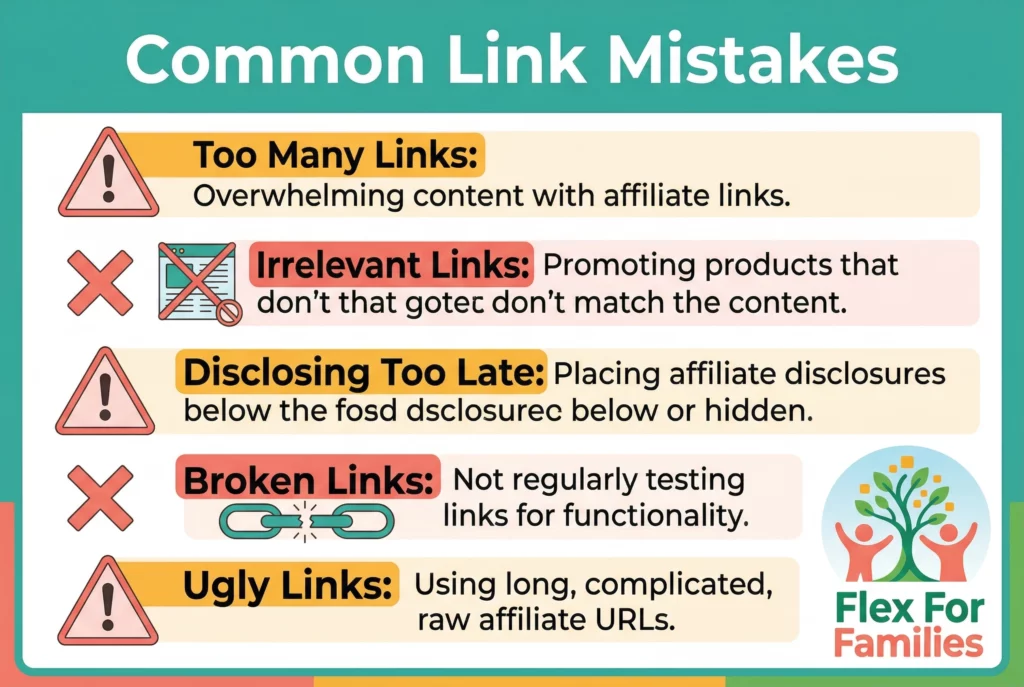
Most affiliate link issues come down to small habits that are easy to fix.
Once you spot them, your content usually improves quickly.
Adding Links Too Early
If a link appears before the reader understands the problem, it feels out of place.
There is no reason to click yet.
Build context first.
Explain the situation, then introduce the link as the next step.
Using Too Many Links
More links do not mean more chances to earn.
They usually create confusion.
When a reader sees multiple options, they hesitate.
Focus on one clear recommendation where possible.
Not Explaining the Recommendation
If you add a link without explaining it, most people will skip it.
They need to know:
- What it is
- Why it helps
- Why you are recommending it
Without that, the link feels random.
Forcing Links Into Every Post
Not every post needs an affiliate link.
Trying to add one everywhere can make your content feel unnatural.
It is better to:
- Add links where they fit
- Skip them where they do not
This keeps your content focused and trustworthy.
Writing for Clicks Instead of Help
When the goal becomes “get the click,” the content changes.
It becomes less helpful and more promotional.
That usually leads to fewer clicks, not more.
Focus on helping first.
Clicks follow.
Consistency also plays a big role here. If your content is not being published regularly, it is harder to build momentum:
Simple Check Before You Add a Link
Before adding any affiliate link, ask:
- Does this solve a clear problem?
- Have I explained why it helps?
- Does this feel like the next step?
If the answer is yes, it is likely a good fit.
Once your content and links are in place, simple promotion can help bring the right people to your posts. This guide shows you how to do that without overcomplicating things:
Want a Simpler Way to Do This Properly?

If you want to use affiliate links with confidence, it helps to follow a clear system.
I recommend Wealthy Affiliate because it shows you how to create content, add recommendations naturally, and build income step by step.
With Wealthy Affiliate, you can:
- Learn how to write content that leads to clicks
- Understand where and how to add links
- Follow a simple structure that works
- Get support as you build
You do not need to guess your way through it.
Learn How to Add Affiliate Links the Right Way
If you want a simple, step-by-step way to grow your blog and use affiliate links naturally, this is a great place to start.
How to Add Affiliate Links Without Sounding Salesy: FAQ Section
How do I add affiliate links without sounding pushy?
Focus on helping first. Explain the problem, offer a solution, and introduce the link as the next step. This keeps it natural.
Where should I place affiliate links in a blog post?
The best place is after you have explained a problem and introduced a solution. This makes the link feel relevant.
How many affiliate links should I use in one post?
It is better to focus on one main recommendation. Too many links can reduce clarity and clicks.
Do I need affiliate links in every post?
No. Only add them where they make sense. Forcing links into every post can reduce trust.
Why are my affiliate links not getting clicks?
Common reasons include lack of context, too many options, or not clearly explaining the benefit. Improving these areas usually increases clicks.
Let’s Chat
How are you adding affiliate links right now?
Are you holding back because you do not want to sound salesy, or have you already tried adding them but not seen results?
Let me know in the comments. I can help you tweak what you already have so it works better without changing your tone.
You do not need to sound different. You just need to guide your reader more clearly.