

If you are a parent looking at Digital Course Academy, chances are you are thinking beyond blogging.
Maybe you like the idea of creating a course instead of relying on traffic. Maybe you want something that feels more direct, more controlled, or more scalable once it is built.
The appeal is obvious. Build once. Sell many times. No waiting months for search traffic.
The real question for parents is whether this model fits real family life. Creating a course takes focus, upfront effort, and confidence. That can be hard to balance when your time comes in short, unpredictable windows.
In this review, I look at Digital Course Academy through a parent lens. I break down what the program actually teaches, how much time it realistically takes, the cost involved, and who this is and is not a good fit for.
The goal is simple. Help you decide if this path makes sense for you before you invest the time, money, and energy.
- Course Name: Digital Course Academy
- Creator: Amy Porterfield
- Type: Online course creation and launch training
- Price: High-ticket, typically paid upfront
- Refund Policy: Limited time refund window during launch period
- Best For: Parents with expertise who want to build and sell a digital course
- Not Ideal For: Parents starting from scratch or with very limited time
- Support: Course portal, community access, and live launch support
- Overall Rating: 4.1 / 5
What Is Digital Course Academy?
Digital Course Academy is an online training program that teaches you how to create, package, and launch your own digital course. It walks you through everything from identifying your expertise to building the course content, setting up your sales systems, and planning your first launch.
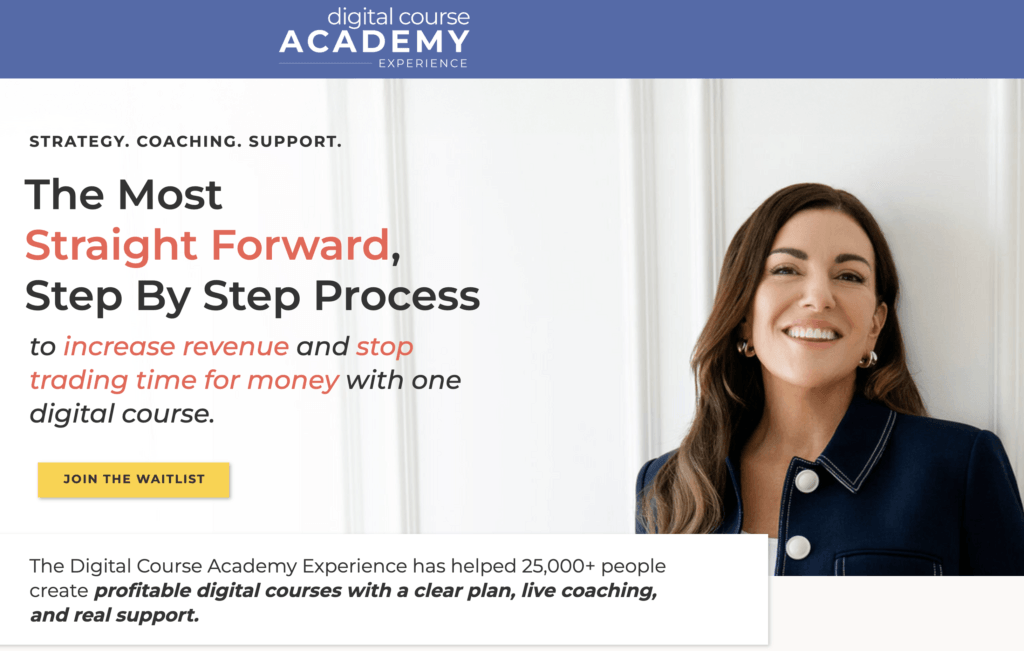
This is not a generic blogging course. It is specifically about teaching others through a paid course format. Instead of building traffic first and monetising with ads or affiliates, you are building a product you sell directly to your audience.
The training includes modules on:
- Clarifying your topic and audience
- Designing course curriculum and lessons
- Choosing the right platform and tech setup
- Pricing, sales pages, and launch strategy
- Enrolment and engagement planning
For parents, the appeal is obvious: build something once, sell it many times. But the early phases demand concentrated planning, content creation, and confidence in presenting your expertise.
It is a project-based model with milestones rather than a platform you log into every day. That difference matters when your available time is fractured by family life.
Who Is Behind Digital Course Academy?
Digital Course Academy was created by Amy Porterfield, a well-known online marketing educator who focuses on course creation, email list building, and launch strategies.

Amy has built her own online business around teaching digital courses and has a long track record of helping creators, coaches, and small business owners turn expertise into paid online programs.
Her teaching style is:
- Step-by-step
- Strategic with clear goals
- Focused on launch planning and marketing
The program reflects her approach: systematic but with expectations. It works well for people who already have some clarity about what they want to teach and who their audience is.
For parents, this matters because the framework assumes you can define your expertise and commit to building and launching in a structured way. It is less about learning general skills and more about executing a launch plan for a specific product.
Is Digital Course Academy A Scam?
No. Digital Course Academy is not a scam.
It is a widely recognised, legitimate training program created by Amy Porterfield, a respected teacher in the online course space. Many people have completed the program and gone on to launch successful digital courses.
What you should understand up front:
- The program does not guarantee income
- Results depend on your effort, niche, and how effectively you launch
- Success takes time, consistency, and ongoing learning
The program teaches real methods, not shortcuts or “get rich quick” schemes. The messaging emphasises strategy and execution, not hype. That’s important, especially for parents whose time and budget are precious.
The biggest risk for parents is expectation mismatch, not legitimacy. If you expect instant income or minimal work, any course – including this one – will feel disappointing. But if you understand that building and launching a course is a project with real effort required, this program is legitimate and useful.
How Does Digital Course Academy Work?
Digital Course Academy is structured around a sequence of modules you work through step by step. It’s not drip-fed weekly content, but it does encourage you to work through the roadmap in a paced way.

Here’s a realistic pattern for most parent learners:
Weeks 1 – 2: Clarify topic and audience
- Define what you will teach
- Identify who you’re serving
- Start sketching your course outline
This takes focused thinking and clarity, which can feel heavy in short time windows.
Weeks 3 – 5: Build core content
- Flesh out course lessons
- Create recordings, text, slides, or worksheets
- Organise modules logically
This phase usually takes the most focused time.
Weeks 6 – 8: Set up tech and delivery platforms
- Choose your course platform
- Upload content
- Set up delivery and access
This requires both planning and execution.
Weeks 8–10: Plan your launch
- Create sales page
- Map out launch emails
- Prepare marketing strategy
This is where the course starts to feel like a full project, not just lessons.
Beyond week 10: Launch and iterate
- Run your launch
- Collect feedback
- Improve future cohorts
For parents, time commitment typically looks like:
- 5 to 10+ hours per week during build phases
- Less time later once the course is launched
- Blocks of focused time rather than many short sessions
The program gives structure and templates for each step, but you still need to execute. If you miss weeks, momentum can slip, and getting back on track requires deliberate effort.
This program works best when you treat it like a project with stages and checkpoints, not a casual course to dip in and out of.
Digital Course Academy Costs + Refund Policy
Digital Course Academy is a premium program, and the price reflects that positioning.
Digital Course Academy Pricing
- Digital Course Academy is typically priced as a high-ticket program, often around the $1,997 to $2,997 range
- Payment plans are usually offered during open enrolment periods
- Access is not subscription-based. You pay upfront for the training
What you are paying for
- A complete course creation and launch framework
- Step-by-step training modules
- Templates, worksheets, and planning resources
- Live launch support during enrolment periods
- Community access
What is not included
- Website hosting
- Email marketing software
- Course hosting platforms
- Paid traffic or marketing tools
Most parents will still need to budget separately for tools to build and sell their course.
Digital Course Academy Refund policy
- Refunds are typically available for a short window after purchase, usually around 14 days
- Refund terms only apply during official launch periods
- Refunds are not available after the window closes
For parents, this matters because the financial commitment is front loaded. Once the refund window passes, you are committed to seeing the program through to get value from it.
Digital Course Academy Support & Community
Support in Digital Course Academy is designed around structured guidance and community, rather than personal coaching.
Here is what support usually looks like.
Training support
- Clear lessons delivered through a dedicated course portal
- Action steps at the end of each module
- Templates to guide planning and execution
Community access
- Private student community during enrolment periods
- Peer discussion and shared progress
- Encouragement and accountability from other students
Live support
- Live sessions or Q&A during launch windows
- Replays available if you cannot attend live
- Guidance is general, not personalised
What support is not
- No one-on-one mentoring
- No direct review of your course content
- No guaranteed response times to individual questions
How this feels for parents
For parents who like structure and community energy, this can be motivating. You are surrounded by others working toward the same goal, which helps momentum.
For parents who need fast, personalised help or who struggle to attend live sessions, support can feel limited. Most of the progress depends on your ability to follow the roadmap independently.
Digital Course Academy Review: Pros & Cons
Digital Course Academy: Pros
- Clear framework: Step-by-step process for creating and launching a course.
- Proven model: Built around a launch strategy that many creators have used successfully.
- Strong templates: Worksheets and checklists reduce guesswork.
- Community energy: Being in a cohort can boost motivation during launch phases.
- Scalable outcome: A successful course can generate income without relying on traffic alone.
Digital Course Academy: Cons
- High upfront cost: A significant investment for most families.
- Time intensive upfront: Course creation requires focused blocks of time.
- No tools included: You still need email software, course hosting, and a website.
- Pressure to launch: Momentum drops quickly if you miss the ideal build window.
- Not beginner-friendly: Assumes clarity, confidence, and some audience awareness.
Who Digital Course Academy Is For / Not For
Digital Course Academy is a good fit if you are a parent who:
- Already has clear expertise in a specific topic
- Is comfortable being visible and selling their own product
- Can commit focused time blocks over several weeks
- Likes structured projects with defined milestones
- Wants to build a scalable product rather than rely on traffic
Digital Course Academy is not ideal if you are a parent who:
- Is still figuring out what niche or topic to focus on
- Has very limited or unpredictable time
- Prefers learning in short, flexible sessions
- Needs tools and hosting included
- Wants to start with lower financial risk
In short:
Digital Course Academy works best for parents who are ready to build and launch a product with intent. If you are still in the learning and experimentation phase, a more flexible, lower-pressure path is often a better place to start.
What Others Are Saying
When you look at reviews and feedback from people who have gone through Digital Course Academy, several consistent themes appear across the board.
Positive feedback you’ll see a lot of:
- Many creators say the framework helped them clarify and build a course they otherwise might never have finished.
- People appreciate the templates and planning resources – they reduce overwhelm.
- Some note that the community and cohort energy motivate them to stick with the program.
These points tend to come from students who already had some clarity about their niche and could protect regular work time.
Common critiques that show up in reviews:
- A number of people mention that the time commitment is heavier than expected, especially during build and launch phases.
- The upfront cost is often cited as steep, particularly for those without an existing audience.
- Some students say they wished for more personalised feedback rather than group coaching.
These critiques are not about the program being illegitimate, but about mismatch between expectations and experience.
Overall sentiment:
Most feedback suggests Digital Course Academy is useful if you go in with eyes open about the time and cost involved. The biggest friction points come from time demands and upfront risk, which are real concerns for parent bloggers.
What Are The Alternatives
If Digital Course Academy is intriguing but not the right fit for your current stage of life, here are several strong alternatives parents often consider, each with its own strengths.
1. Wealthy Affiliate
- All-in-one platform with training, hosting, and tools included
- Flexible pacing that works well with limited time
- Step-by-step support and a large community
Often easier for parents to start with than a high-cost, project-based course.
2. Blogging and Affiliate Marketing Courses
- Courses like Income School Membership or Niche Site Academy focus on blog traffic and monetisation
- Helps you build skills that also support course marketing later
Good for parents who want to grow an audience before launching products.
3. Free or Lower-Cost Course Creation Training
- YouTube tutorials, Udemy, and Skillshare offer inexpensive starting points
- Not as structured but lower risk
Good for testing the idea before investing heavily.
4. Email and Launch Strategy Training
- If you already have a blog or audience, dedicated email and launch strategy courses can help you convert existing followers.
- Works well as a complement to lower-cost course creation training.
5. Hybrid Learning Paths
- Learn blog traffic and audience building first
- Then take a structured course like Digital Course Academy when you have momentum
This phased approach reduces pressure and spreads investment over time.
In short:
There are lower-cost, more flexible ways to build your blogging and audience foundation before investing in a premium course. Many parents find combining training paths gives them both confidence and results.
FAQ. Digital Course Academy for Parent Bloggers
Is Digital Course Academy worth it for parent bloggers?
It can be worth it if you already have clear expertise and can commit focused time to build and launch. If your schedule is unpredictable, the workload and upfront cost can feel high pressure.
How much time do parents need each week?
Most parents should plan for 5 to 10 hours per week during the build phase, plus extra time for recording lessons, creating worksheets, and writing launch emails. Short sessions work, but focused blocks help a lot.
Is Digital Course Academy beginner friendly?
It is beginner friendly in the sense that it teaches the process step by step. It is not beginner friendly if you are still unsure what you want to teach or you have no confidence selling a product yet.
Do you need an email list before taking Digital Course Academy?
You do not need a huge list to start, but you do need a plan to reach people. If you have no audience at all, you may need extra time to build visibility before a launch performs well.
What tools do you need alongside Digital Course Academy?
You will usually need an email marketing platform and a course hosting platform. You may also need a website and basic design tools for your sales page and course materials.
Is Wealthy Affiliate a better starting point for parents?
For many parents, yes. Wealthy Affiliate can be easier to start with because it is flexible, lower risk, and focused on building skills and income gradually around family life.
Final Verdict on Digital Course Academy
Digital Course Academy is a legitimate, well-built program for creating and launching an online course. The framework is clear, the training is thorough, and the approach has helped many creators turn expertise into a paid product.
For parents, the decision comes down to readiness.
If you already know what you want to teach, are comfortable being visible, and can protect focused time over several weeks, this program can work. The structure helps you move from idea to launch without guessing.
If you are still figuring out your niche, building confidence, or working in short, unpredictable time windows, the pressure can feel high. The upfront cost and project-style workload mean it is not forgiving when family life takes over.
For many parents, starting with a more flexible path makes sense. Building skills, confidence, and momentum first often leads to better outcomes later, including launching a course when the timing is right.
Let’s Chat
Choosing between blogging, courses, or a mix of both is rarely straightforward as a parent.
Are you at the stage where you want to build an audience first, or are you ready to package and sell what you already know?
What feels like the biggest constraint for you right now, time, confidence, or budget?
Share where you are in the comments. I read every reply and I am happy to help you think it through.