
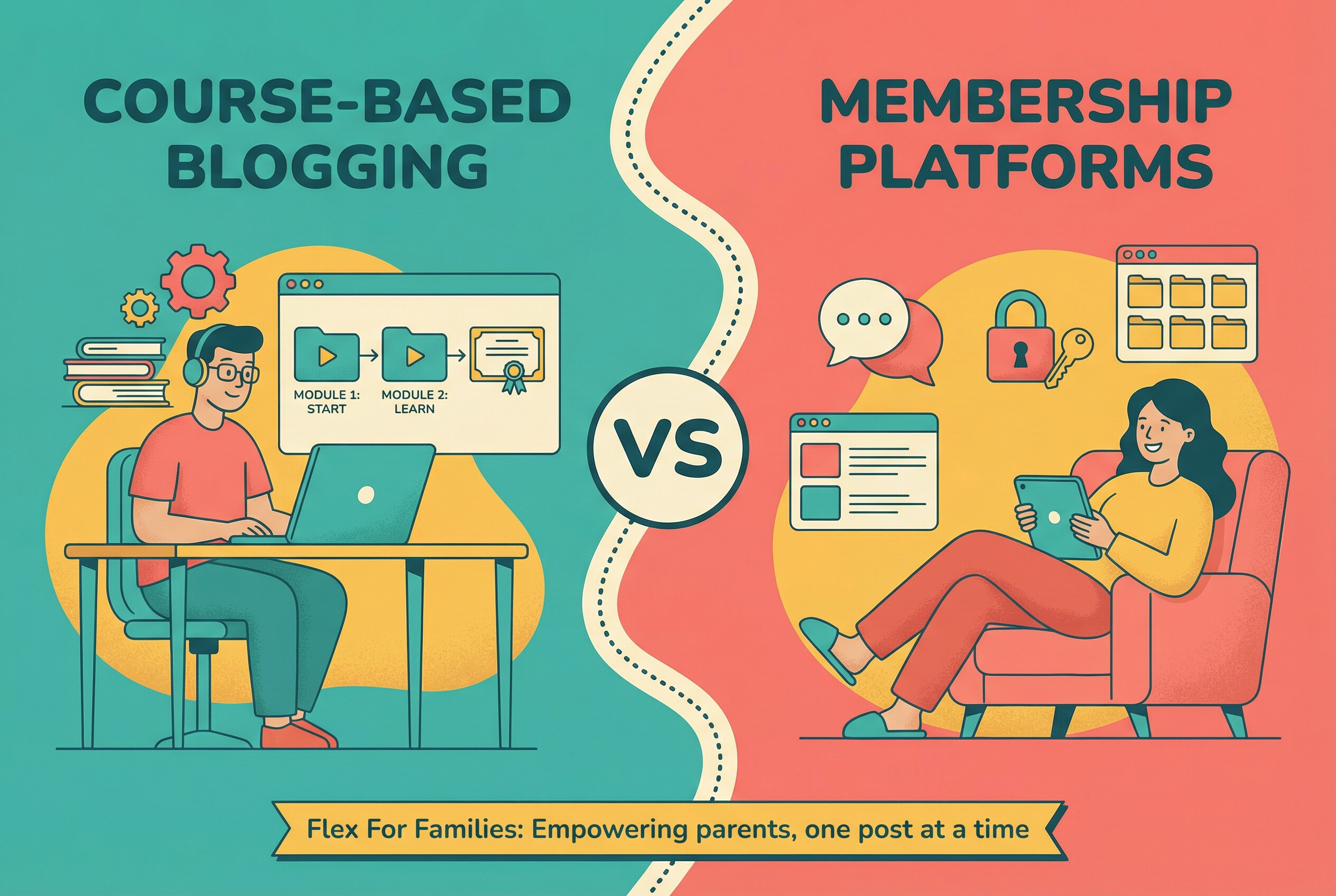
If you are a parent exploring blogging education, this choice often comes up sooner than expected.
Do you buy a course, work through it, and apply what you learn on your own.
Or do you join a membership platform that combines training, tools, and support in one place.
Both models work. Both are used by successful bloggers. The difference is how they fit around family life.
- Course-based blogging promises clarity and structure. You buy once, follow a roadmap, and move at your own pace.
- Membership platforms promise flexibility and support. You get ongoing training, tools, and a community that grows with you.
For parents, the question is not which model is better in theory. It is which one you can realistically stick with when time is limited, and priorities change.
This guide compares course-based blogging and membership platforms through a parent lens. It looks at time demands, cost, pressure, and long-term sustainability, so you can choose the path that fits your current season of life.
Quick Verdict. The Short Answer for Parents
For most parents, membership platforms are the better starting point.
They reduce setup friction, spread cost over time, and offer support when you get stuck. That flexibility matters when progress happens in short, unpredictable windows.
Course-based blogging can work well for parents who already have focus, confidence, and protected time. The structure helps, but only if you can follow it consistently.
If you are just starting out or rebuilding momentum, a membership platform is usually the safer and more forgiving choice. Course-based blogging fits better later, once routines are stable and you know exactly what you want to build.
What Course-Based Blogging Actually Looks Like
Course-based blogging usually means buying a structured program and working through it largely on your own.
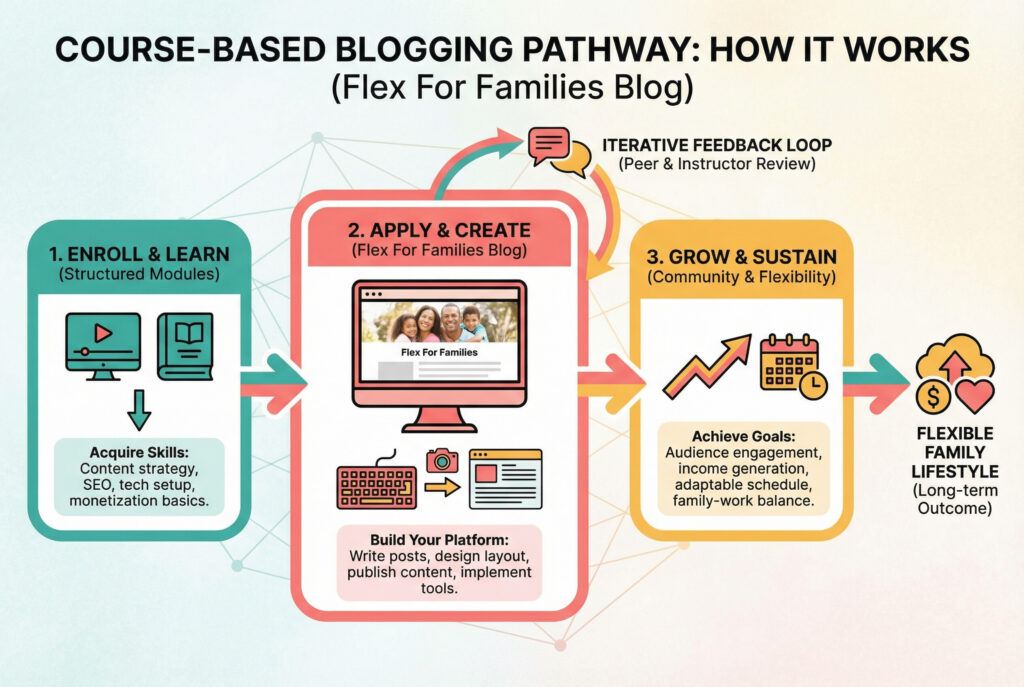
How it typically works:
- You purchase a course upfront
- You follow a defined roadmap or framework
- You implement lessons independently
- Support is limited to cohorts, forums, or set time windows
Examples of course-based blogging models you’ve covered include Income School, Authority Hacker, and Digital Course Academy.
The strengths of this model:
- Clear structure and direction
- Focused curriculum
- Often faster to understand the strategy
The challenges for parents:
- Progress depends heavily on consistency
- Missed weeks can break momentum
- Tools and hosting are usually separate costs
- Support is often time-limited or less flexible
Course-based blogging works best when you can protect regular work time and already know what you want to build. When family life interrupts, it can feel hard to restart without guidance.
How Membership Platforms Work
Membership platforms bundle training, tools, and community into one ongoing service.
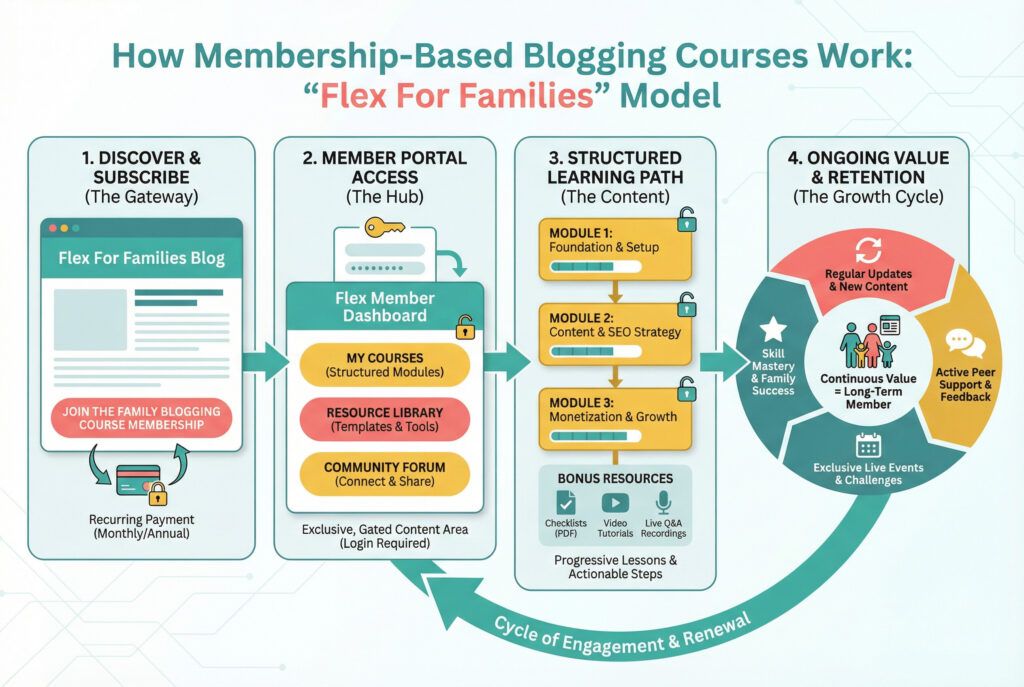
How they typically work:
- You pay monthly or annually
- Training is released in stages or libraries
- Hosting and tools are often included
- Community support is always available
The clearest example you’ve reviewed is Wealthy Affiliate.
In a membership model:
- You can learn in short sessions
- You are not locked into a single roadmap
- Support is available whenever you log in
- You can pause and resume without falling behind
For parents, this flexibility is the key difference.
Instead of feeling pressure to “finish a course,” you build skills gradually. When life gets busy, the platform is still there when you return.
This model trades speed for sustainability. Progress may feel slower week to week, but it is often easier to maintain over months and years.
Time Commitment and Workload Comparison

Course-based blogging workload
Course-based blogging concentrates work into defined phases.
What this usually looks like:
- Longer study sessions to get through lessons
- Clear milestones to hit
- Pressure to keep pace with the course
- Catch-up work if life interrupts progress
For parents, the workload often feels front-loaded. You need consistent time to move forward. When weeks are missed, restarting can feel heavy because the course has moved on or motivation has dipped.
This model works best when:
- You can protect regular work blocks
- Your schedule is predictable
- You are comfortable working independently
Membership platform workload
Membership platforms spread work over time.
What this usually looks like:
- Short lessons you can dip into
- No fixed deadlines
- Ongoing access to training and support
- Ability to slow down without penalty
For parents, the workload feels lighter but longer-term. You are not rushing to finish anything. You build skills gradually and apply them at your own pace.
This model works best when:
- Your schedule changes week to week
- You work in short sessions
- You value flexibility over speed
In simple terms:
- Course-based blogging pushes momentum
- Membership platforms protect consistency
Cost and Risk Comparison
Course-based blogging cost and risk
Course-based programs usually involve:
- Higher upfront fees
- One-time access to training
- Separate costs for hosting and tools
The main risk for parents is commitment risk. Once you buy, the cost is sunk. If time disappears or priorities change, it can feel like wasted money even if the training is solid.
Membership platform cost and risk
Membership platforms usually involve:
- Monthly or annual fees
- Lower upfront commitment
- Training, hosting, and tools bundled
The main risk here is longer timelines. Progress depends on steady effort rather than rapid completion. The upside is flexibility. You can pause, slow down, or stop without losing a large upfront investment.
For parents, this often matters more than total cost:
- Course-based blogging concentrates risk early
- Membership platforms spread risk over time
Which Option is Best for Parent Bloggers?
Where Course-Based Blogging Fits in a Parent Journey
For most parents, course-based blogging works best later, not first.
Early stage parent bloggers
If you are still learning how blogging fits into your life, a course can feel intense. The structure is helpful, but the pressure to keep up often clashes with unpredictable schedules.
At this stage, flexibility and experimentation usually matter more than speed.
Growth stage parent bloggers
Once you understand the basics, have some confidence, and can protect regular work time, course-based blogging becomes more realistic. The structure helps turn ideas into action when routines are more stable.
Later stage parent bloggers
For parents who already treat blogging like a scheduled project, courses can accelerate progress. At this point, the upfront cost and focused workload feel intentional rather than stressful.
In simple terms, course-based blogging is often a second step, not a starting point. Many parents benefit from beginning with a flexible membership platform, then using a course later to sharpen strategy and move faster.
Final Verdict for Parents
When it comes to course-based blogging versus membership platforms, the better choice for parents usually comes down to flexibility.
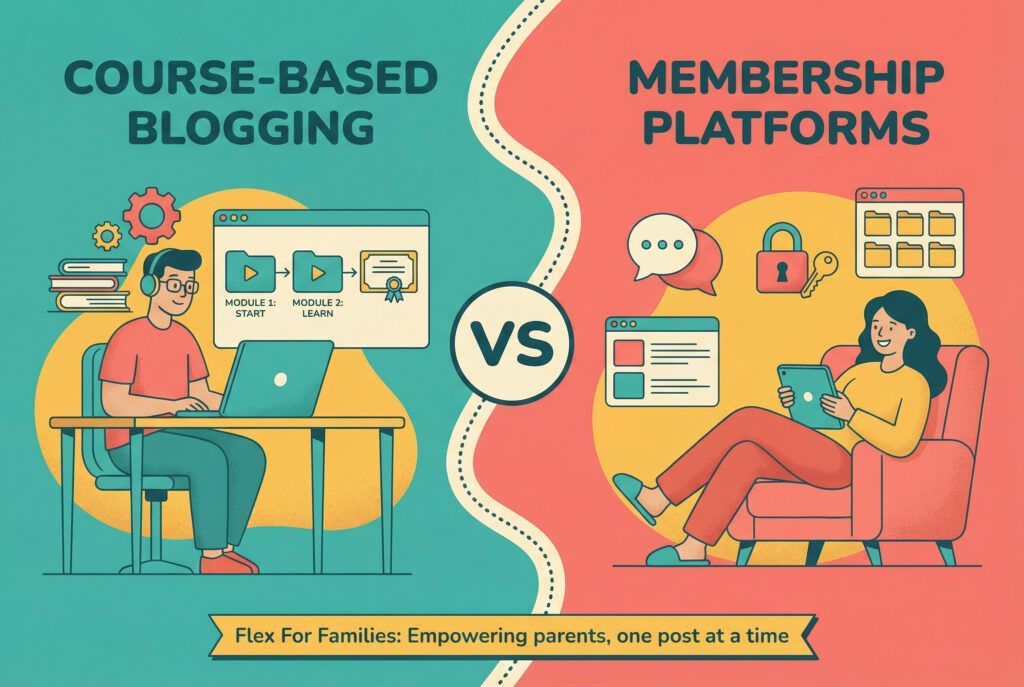
For most parents, membership platforms are the better starting point.
They reduce setup friction, spread cost over time, and give you support when life interrupts progress. You are not racing to finish a course. You are building skills steadily in a way that fits real family life.
Course-based blogging is not a bad option. It is a later option.
It works best once you already know what you are building, can protect focused work time, and want structure to move faster. Without that stability, the pressure to keep up can outweigh the benefits.
If you want a path that forgives missed weeks and adapts to changing schedules, a membership platform is usually the safer and more sustainable choice.
Let’s Chat
Are you leaning toward a course or a membership platform right now?
What feels harder for you at the moment, staying consistent or staying focused?
Share where you are in the comments. I read every reply and I am happy to help you think it through.


Hello John!
This was such a refreshing and practical read — thank you! I’ve bounced around the idea of both course‑based blogging and membership platforms as ways to grow my online work, but it always felt like every article was trying to sell one or the other instead of actually explaining the real differences. Your breakdown made it feel way more doable and realistic for someone juggling family life and business goals at the same time.
I’m wondering — for parents who’ve tried both, do you find one model actually feels less overwhelming when life gets chaotic (like school events, sick days, or just plain busy seasons)? And when your audience is small but engaged, does one of these usually feel like a better fit to build community and momentum without burning out? This definitely gave me a lot to think about as I plan my next steps!
Angela M 🙂
Hey Angela ????
I’m really glad this breakdown helped. You’re right, a lot of content around this topic pushes one model hard instead of explaining how they actually feel to run alongside real life.
From what I’ve seen and experienced, course-based blogging usually feels less overwhelming during chaotic seasons. You can build a course slowly, in chunks, and once it’s live there’s no daily obligation to show up. If school events, sick days, or life in general take over for a week or two, the course doesn’t fall apart. That flexibility matters a lot for parents.
Memberships can be powerful, especially for community and momentum, but they do come with ongoing pressure. People expect regular content, interaction, and presence, which can feel heavy if your time suddenly disappears. For some parents that rhythm works, but for many it’s better as a second step, not a starting point.
When an audience is small but engaged, a course often feels like the calmer fit. You’re serving deeply without committing to constant output, and you can always layer in community elements later, like a private group or occasional live sessions, once things feel stable.
Thanks for such a thoughtful question. It’s exactly the kind of reflection parents need when choosing something that supports their life, not competes with it.
Regards,
John
John, this is how it plays out for me too. A course feels clean and decisive on day one, then real life interrupts and you come back to a big gap and a guilty feeling. With a membership setup like Wealthy Affiliate, I can show up for 20 minutes, write one section, ask one question, and keep the habit alive.
My only caution is that memberships can turn into “always learning, not publishing” if someone is not careful. What weekly minimum would you tell a busy parent to hit so they keep building and do not get stuck watching training?
John
You’ve described that pattern perfectly, the “clean start, messy middle” is exactly how most courses play out once real life kicks in. That guilt gap after time away is real, and it’s one of the biggest reasons parents quietly drop off.
You’re also spot on with the caution. Memberships can absolutely drift into learning mode if there isn’t a simple floor for action.
For a busy parent, I’d keep the weekly minimum very small and very clear:
One piece of progress that moves the site forward.
That could be one post section, one full post, one update to an old article, or even outlining the next piece properly.
In time terms, I’d say:
• 2–3 short sessions of 20–30 minutes per week
• At least one of those sessions must end with something published or updated
That “something live” rule matters more than how much training you consume. Training should support what you’re building that week, not replace it.
If someone can say, “This week, my site is better than it was last week,” they’re doing it right, even if progress feels slow.
Really appreciate you raising this. It’s an important distinction that a lot of parents need to hear before they slip into passive learning mode.
John